
Community
Renee Sharpe Follows in Elders’ Footsteps as a Longshorewoman
ILWU Profile: Renee Sharp, Local 10

Jobs in Oakland Series
“I grew up in Southern California, then moved to Sacramento as a sophomore in high school. I’m proud to share that I’m a longshore worker and my registration number is 101650, Local 10.
“Prior to working on the waterfront, I was a sign language interpreter for 15 years. I was married to a Sacramento longshore worker, Local 18 and he heard that San Francisco Local 10 was hiring, which had a more expedited hiring process.
“He said ‘Let’s go to San Francisco and apply for this position.’ It was 1999 and I stood in line with hundreds of people, applied and then heard nothing for years and years. Later, when I moved, I made sure to keep up my change of address with Pacific Maritime Association because I didn’t want to miss the job opportunity.
“In 2007, I got a letter to start the interview process, which included strength and agility testing and I waited for training. Then in 2008, the economy crashed, and the hiring process was frozen. In 2012, I got another letter which said they were hiring, and I started training and became a Longshore Worker Casual.
“Initially, I worked with no benefits and at the lowest pay, lashing container ships, doing highly physical jobs and/or signaling. Working on the ship is good exercise; it’s hard work, like cross-fit training. Cross-fit training was the mindset I had to have to physically get through my shift.

“I joined the ILWU Drill Team and did color guard drills for prominent civil rights leaders that passed away. We lead civil rights marches for Juneteenth and other special celebrations. At a Juneteenth celebration in 2020, we escorted Angela Davis to the stage to receive her recognition as an Honorary Longshoreman. In history, she’s the 2nd honorary longshoreman with Martin Luther King, Jr. as the first. It was the biggest honor of my life to escort her and to be a part of that ceremony.
“Currently, I have two step-ons along with other relatives at the Sacramento port. I go to the hall in San Francisco as much as I can and hope to get work, which took three years before my first promotion to getting a B-book which I had for five years.
“I was trained to drive yard semi-trucks to carry containers to/from the ship. Other jobs I’ve had were to drive new cars off ships – export Tesla, Toyota – working the docks, driving trackers – you don’t do just one job. In 2020, I finally received my A-Book and received top-pick operator training where I will stack containers to/from the ship when I pick up that job.
“I believe that ILWU was the best union job that I could attain because of the equality. I can have a job and get paid the same as a man, have top notch benefits and job flexibility and I’m set up for good retirement – even starting as an older person.
“I chose to do this type of work because I was influenced by a good number of people. In 1976, in Sacramento, I had a father figure who was a longshoreman. Oftentimes, I went to the hall with him and watched the process of getting jobs.
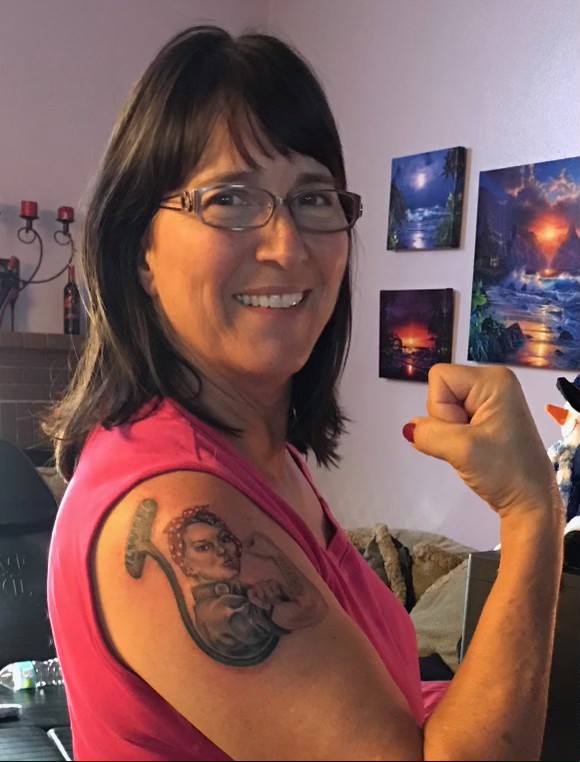
“At that time, as a female, I wasn’t allowed to become a longshore worker. My father-in-law was a walking boss. My maternal grandmother was a “Rosie the Riveter,” where she built airplanes for 25 years. Her work for our country and how she stepped up and did a man’s work motivated me on the waterfront when the work was hard and physical. Because she did it, I know I can do it.
“The Oakland Port will be negatively impacted should the A’s come to Howard Terminal. With truckers and trains coming and going, bringing in cargo — which is a 24/7 operation — is noisy and not conducive for people to live on the working waterfront. The pollution and noise will generate complaints from residents and occupants of the high-rise luxury condos and offices.
“Locals will not be able to afford to live down there and gentrification will continue. I feel, slowly but surely, it will phase out the longshore work and displace our good union jobs. The A’s should give a face-lift to or rebuild the structure where they currently play at the Coliseum. There they have the infrastructure, parking, and a transportation hub; it couldn’t be more convenient.
“Rebuild it and they will come.”










Business
OPINION: 57,000 Empty Apartments and Not a Word of Apology – City Limits
BLACKPRESSUSA NEWSWIRE — “Short-term rental income was, for many of these families, not a luxury. It was the margin between keeping the house and losing it. Local Law 18 closed that door, and the people who closed it are now waving away 57,000 empty apartments as statistical noise.”

Every indicator in New York City’s housing market is pointing in the wrong direction.
Rents are at historic highs. Foreclosure notices are climbing in Black and brown neighborhoods that never fully recovered from the last crisis. Deed theft, the predatory stripping of generational wealth from families who built their equity over decades, continues to devastate communities from Brownsville to Jamaica.
On top of all these factors, there were more than 57,000 rent-stabilized apartments sitting completely empty as of April last year. That number grew by 8,000 units in a single year, with the sharpest increases hitting Brooklyn and Queens hardest.
Brooklyn and Queens. My neighborhoods. Your neighborhoods.
You would think that news of 57,000 empty affordable apartments in the middle of a housing emergency would produce outrage, emergency hearings, and demands for accountability. Instead, New Yorkers got a collective shrug from opinion leaders.
Read that again: 57,000 families could be housed in those apartments. Households currently paying market rent, doubled up, couch-surfing, or one missed paycheck away from the street could have relief. And silence from the city’s housing leadership, activists, and coalitions.
In my experience as chair of the Subcommittee on Affordable Housing in the Assembly, that is not advocacy. That is surrender.

These are the same voices, the same institutions, the same political class that successfully lobbied to effectively ban short-term rentals in New York City through Local Law 18. At its peak, Airbnb had roughly 20,000 listings in New York City, nearly a third the number of apartments currently sitting vacant and padlocked in the rent-stabilized system. The campaign against those listings was relentless, loud, and wrapped in the language of affordability and housing justice.
Where is that energy now?
Where are the press conferences about landlords warehousing stabilized units while families sleep in shelters? Where is the legislation with teeth? Where is the outrage that was apparently plentiful when a Black homeowner in Bed Stuy wanted to rent out her spare bedroom to make ends meet?
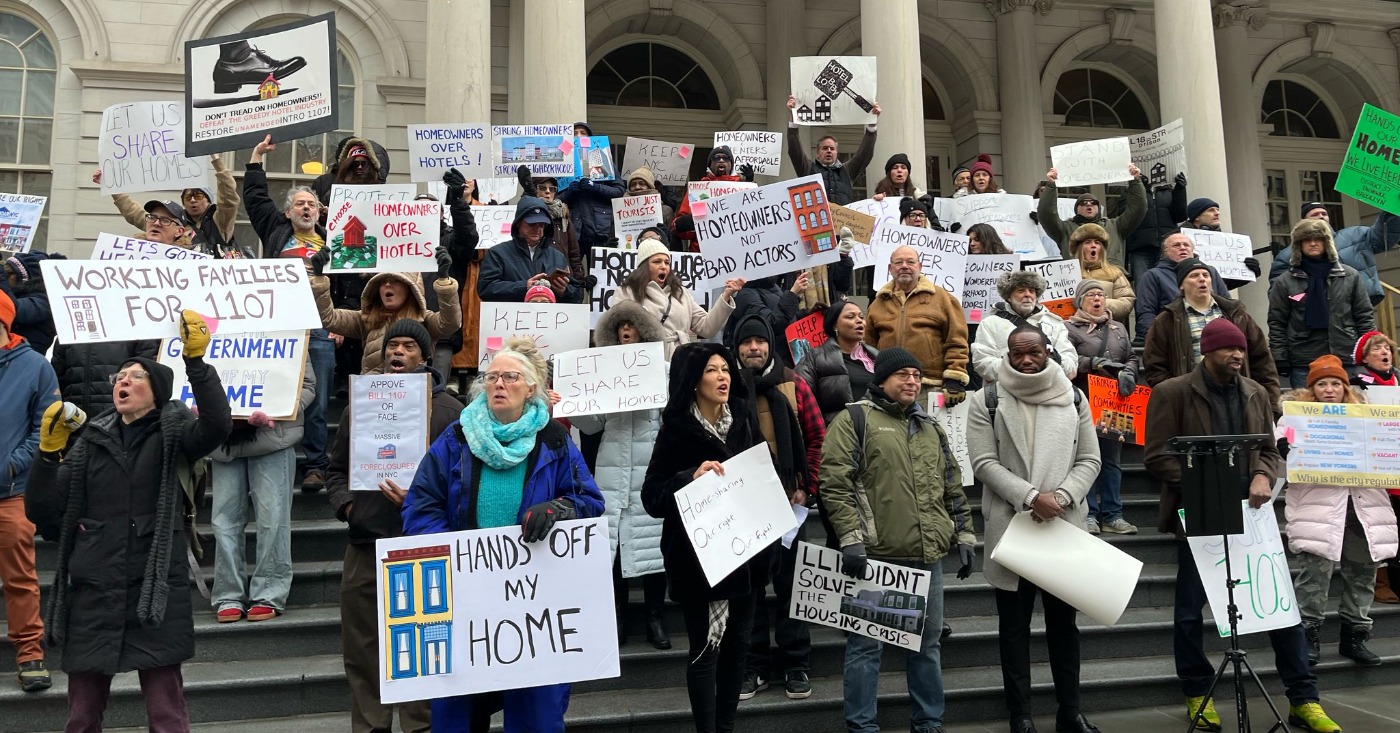
Because that is exactly who Local Law 18 hit hardest. Not the corporate bad actors. Not the hedge funds. The struggling homeowner, disproportionately Black, disproportionately in Brooklyn and Queens, who used their home as a small economic engine to survive in a city that grows more expensive by the month.
Those families were told their activity was destabilizing the housing market. Those families were fined, delisted, and legislated out of a livelihood. And now we learn that 57,000 stabilized units are sitting empty while rents spiral and foreclosures mount, and the response from housing advocates is essentially: that’s just how big numbers work.
This is not sound policy. This is politics. And the communities paying the price know the difference.
I have spoken with homeowners across Central Brooklyn who are barely holding on. They bought their homes, sometimes one generation removed from the Great Migration, and they have watched the equity they built become both their greatest asset and their greatest vulnerability. Predatory lenders, deed theft schemes, and rising property taxes all circle that equity like wolves.
Short-term rental income was, for many of these families, not a luxury. It was the margin between keeping the house and losing it. Local Law 18 closed that door, and the people who closed it are now waving away 57,000 empty apartments as statistical noise.
Everyone in this fight knows what needs to happen but will not say it out loud: Local Law 18 needs reform. Common sense reform. The kind that distinguishes between an investor running a ghost hotel and a homeowner renting a room. The kind that actually targets bad actors instead of penalizing the most economically vulnerable property owners in the city.
I hear it in private conversations with elected officials, with housing attorneys, with planners. The consensus is there. The political will is not, because the same advocacy groups and political donors who pushed the original law are still in the room, and nobody wants to take their call.
What this moment requires is courage, not calculation.
Every month that passes with 57,000 empty stabilized apartments is a month of families in crisis, of shelter costs ballooning, of neighborhoods destabilizing. Every month that Local Law 18 remains unreformed is another month a Black homeowner in Flatbush or Hollis faces impossible choices that wealthier New Yorkers simply never have to make.
You cannot ban the small and ignore the large. You cannot mobilize armies of lobbyists against a homeowner’s spare bedroom while shrugging at tens of thousands of warehoused affordable units. You cannot claim to stand for housing justice and then tell 57,000 families worth of empty apartments that the math just works out this way.
The hypocrisy has to stop. Politics have to give way to people. And the officials and advocates who have the power to fix this, who know what needs to be done, have to decide which side they are actually on.
Because from where I stand, in the communities I have served for decades, it is very clear who is being left out in the cold.
Dr. Annette Robinson is a former member of both the State Assembly and City Council in Brooklyn.

Black History
Oakland Protesters Rally to Defend Haitian Immigrants and TPS
The Haiti Action Committee traces its roots to the international movement that emerged following Haiti’s 1991 military coup, which overthrew the nation’s first democratically elected president, Jean-Bertrand Aristide. Political violence sent thousands of Haitians fleeing the country, while U.S. policies resulted in refugees being intercepted at sea, repatriated, or detained at Guantanamo Bay.
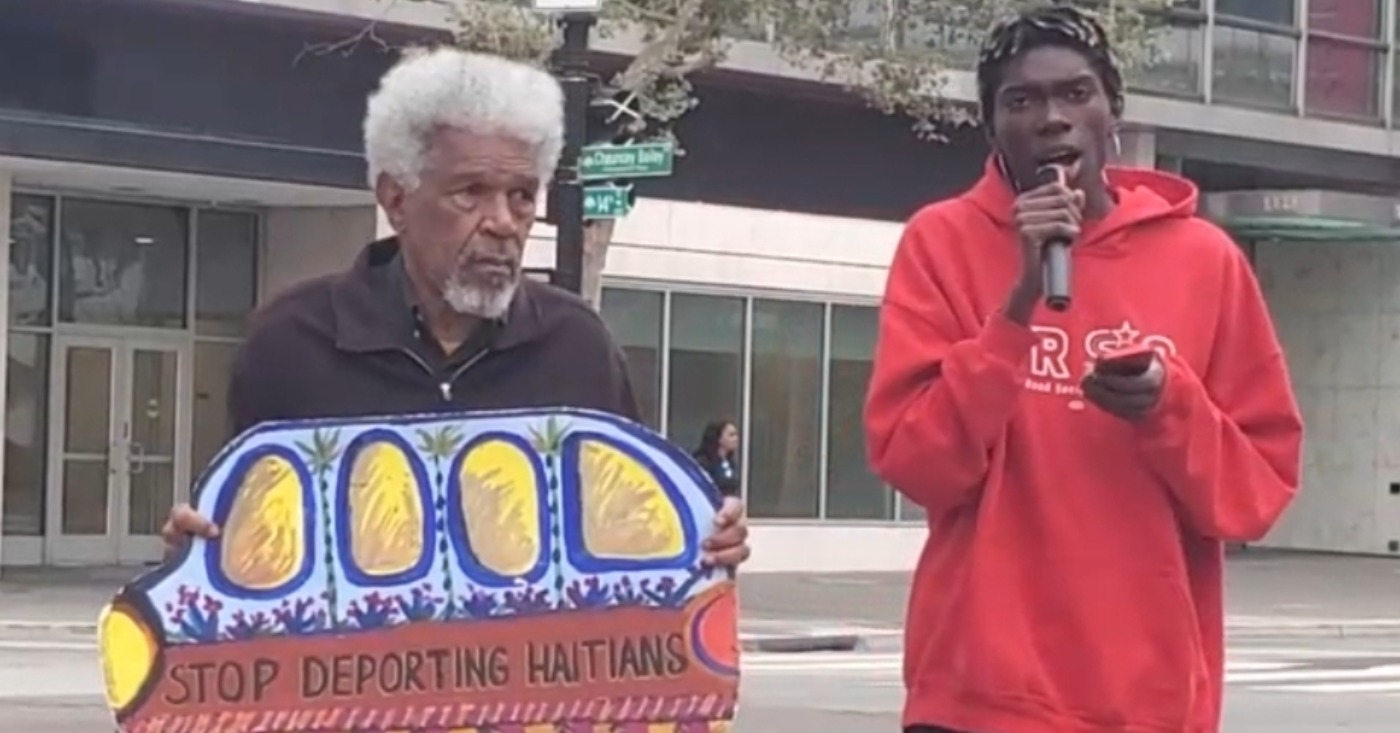
Protesters gathered in downtown Oakland near City Hall at 14th Street and Broadway on Thursday, Aug. 13, calling for protections for Haitian immigrants and an end to deportation policies affecting Haitian communities across the United States.
Organized as a call to action by the Legalization for All Network and supported by the Haiti Action Committee and other community organizations, the demonstration carried a clear message: “Defend TPS! Legalization, Not Deportation!”
Participants focused attention on the termination of Temporary Protected Status, or TPS, for Haiti and immigration policies protesters described as continuing attacks on Haitian immigrants under the Trump administration.
Haitian Romaine Charite of the Freedom Road Socialist Organization urged demonstrators to stand with Haitian families and led chants:
“When Haitians are under attack, what do we do? We fight back.”
Injustice to one is an injustice to us all.”
“Dump Trump!”
Charite and other protesters condemned the federal government’s treatment of Haitian immigrants, describing the policies as an attack on a population already facing extraordinary hardship.

Haiti’s TPS designation was terminated effective July 27, 2026, removing temporary deportation protections and work authorization for hundreds of thousands of Haitian beneficiaries who lacked another legal basis to remain in the United States.
Gerald Smith, a protester and former member of the Black Panther Party during the 1970s, said Haitians were being unfairly targeted and warned that ending TPS would have a devastating impact on Haitian families and communities.
“These policies are racially motivated and unfair,” Smith said. “Everyone deserves the right to self-determination and protection from persecution.”
The Haiti Action Committee cited the continuing political, economic and humanitarian crisis in Haiti as evidence that returning large numbers of immigrants to the country could place already vulnerable people at greater risk.
The Oakland gathering, which drew about 20 participants, reflected a decades-long history of Bay Area activism surrounding Haitian democracy, refugee rights and U.S. immigration policy.
The Haiti Action Committee traces its roots to the international movement that emerged following Haiti’s 1991 military coup, which overthrew the nation’s first democratically elected president, Jean-Bertrand Aristide. Political violence sent thousands of Haitians fleeing the country, while U.S. policies resulted in refugees being intercepted at sea, repatriated or detained at Guantanamo Bay.
Those policies sparked protests involving Haitian communities, Black activists, artists, college students, churches, labor organizations and human rights advocates. Prominent figures, including dancer and activist Katherine Dunham, tennis champion Arthur Ashe, and TransAfrica leader Randall Robinson, joined campaigns challenging the treatment of Haitian refugees.
In 1992, Haiti Action Committee joined other Bay Area organizations in a dramatic demonstration on San Francisco Bay. Boats carrying Haitian participants were intercepted by the U.S. Coast Guard while supporters gathered along the waterfront and reportedly chanted, “Let Them Land!”
More than three decades later, protesters have returned to the streets of Oakland, centering on protecting Haitian immigrants, opposing deportation and pressing for immigration policies that provide families with a pathway toward permanent legal residency.
For more information, visit Haitisolidarity.net.
Community
First 5 Alameda County Celebrates First Year of Measure C’s Implementation
Measure C, a community-led and voter-approved half-cent sales tax, was designed to generate approximately $150 million annually for early care and education. During its first year, the initiative reached more than 20,000 children and supported more than 6,400 early educators and caregivers throughout the county.
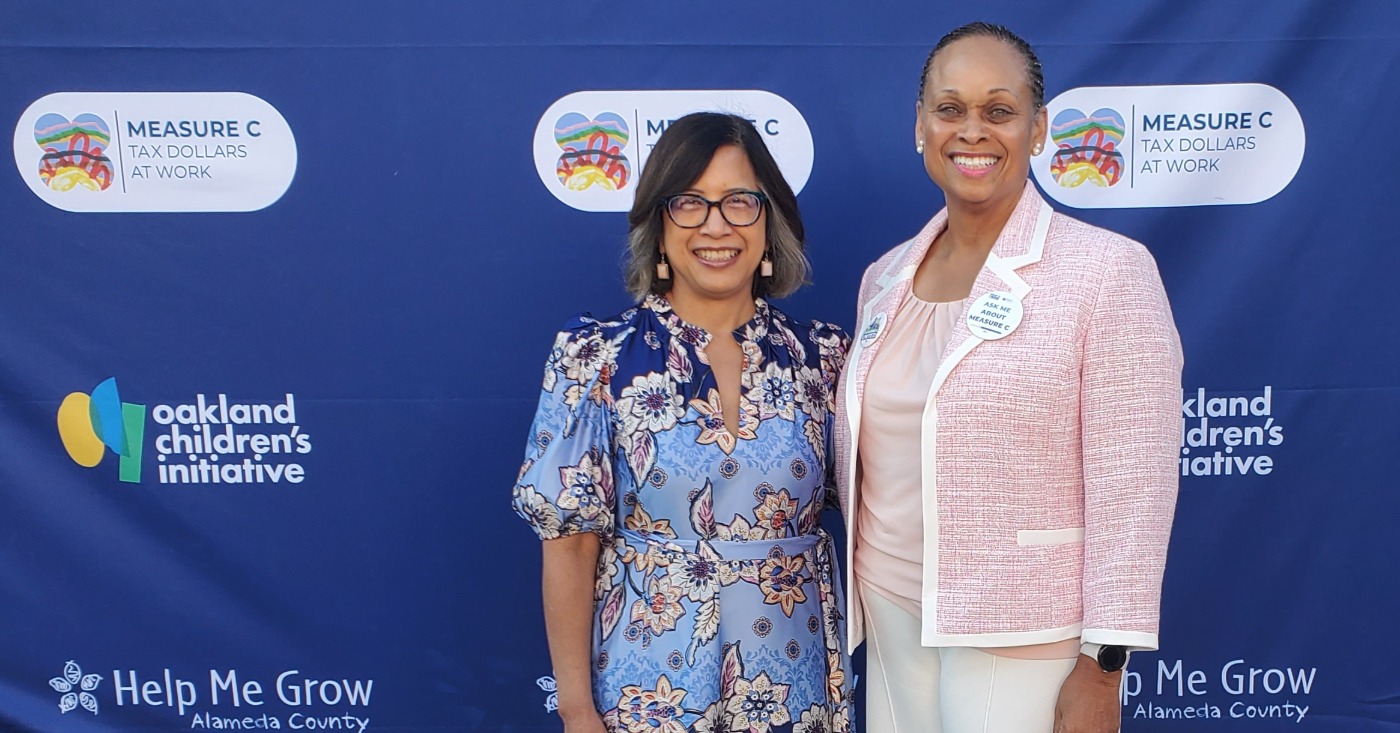
First 5 Alameda County marked the first anniversary of the impact of Measure C with a community celebration Friday, Aug. 7, at Children’s Fairyland in Oakland, highlighting more than $135 million invested to strengthen early childhood education, families and caregivers across Alameda County.
The celebration brought together families, educators, caregivers, advocates, elected officials and community leaders for an evening of music, cultural performances, and children’s activities.
“Oakland is on the move,” said Oakland Mayor Barbara Lee, commending all the advocates who helped win the victory for early childhood education and their providers.
Measure C, a community-led and voter-approved half-cent sales tax, was designed to generate approximately $150 million annually for early care and education. During its first year, the initiative reached more than 20,000 children and supported more than 6,400 early educators and caregivers throughout the county.
First 5 Alameda County CEO Kristin Spanos said, “In the first 10 months of Measure C being available after the Board of Supervisors adopted the 5-year plan, we’ve had over $135 million put directly into the community supporting children and providers with emergency grants, investments, and stipends.”
First 5 Alameda County, the public agency responsible for administering Measure C, focused on quickly moving voter-approved dollars into local communities while developing partnerships, accountability measures, and infrastructure intended to create long-term impact.
Alameda County District 5 Supervisor Nikki Fortunato Bas: “We’re celebrating the first year of getting money into families’ pockets and childcare providers’ pockets. This is about deploying very vital resources over the course of five years. It’s a billion-dollar impact.”
Community Advisory Council member Nancy Harvey said, “We are totally excited. It was a 10-year fight, and we fought tooth and nail. We had so much support from County Supervisors Nate Miley and Nikki Fortunato Bas, the unions, and the late Supervisor Wilma Chan. This is a historic event – people are watching Measure C all over the nation.”
Harvey explained that small childcare providers received a $40,000 grant, and larger providers received a $50,000 grant.
Childcare advocate and provider Lisa Zarodney of Livermore said, “When I got my emergency funds, I was about to close. The stipend allowed me to continue through 2026 and get all the babies on my wait list.”
In business for 27 years, Zarodney said she is now caring for the children of past clients.
“I couldn’t continue my legacy, my dream, and my passion without the funding from Measure C.”
Harvey emphasized that he next leg of the fight is to ensure workers have a sustainable wage.
“We are now pushing to raise the wage of workers to $25 to keep doors open and people employed,” she said.
First 5 Alameda County’s vision is to build an integrated and equity-centered early childhood system supporting children, families, and communities regardless of race, income, or neighborhood. As administrator of Measure C, the agency has worked to expand access to early care and education, strengthen family stability, and support the providers and caregivers families rely upon.
Through Measure C and partnerships with initiatives including the Oakland Children’s Initiative, First 5 Alameda County has sought to reduce fragmented services and better coordinate public resources.
HASHTAGS
#CarlaThomas #PostNewsGroup #OaklandPost #San FranciscoPost #MeasureC #First5AlamedaCounty #AlamedaCounty #Oakland #EarlyChildhoodEducation #EarlyLearning #ChildCare #ChildrenAndFamilies #FamilySupport #EarlyEducators #ChildCareProviders #CommunityInvestment #CommunityImpact #OaklandFamilies #BayAreaFamilies #EquityInEducation #StrongStart #InvestInChildren #OaklandNews #BayAreaNews

WORK FROM HOME
Home-based business with potential monthly income of $10K+ per month. A proven training system and website provided to maximize business effectiveness. Perfect job to earn side and primary income. Contact Lynne for more details: Lynne4npusa@gmail.com 800-334-0540


OPINION: 57,000 Empty Apartments and Not a Word of Apology – City Limits

Oakland Protesters Rally to Defend Haitian Immigrants and TPS

First 5 Alameda County Celebrates First Year of Measure C’s Implementation

From Palestine to Oakland: Seeds for Liberation Examines Shared Struggles for Freedom

NABJ Convention Brings Black Journalists, Civic Leaders Together in Atlanta

At Sacramento Summit, Becerra Discusses Policy; Uses “Family” Metaphor to Frame Case for National Political Unity

$5 Billion Coliseum Vision Puts Oakland Jobs, Businesses at Center

Gov. Newsom Nominates 3 Black Women Judges to Serve on State Courts of Appeal

Oakland Observes Black August with Block Parties, Film Showings, Workshops

NPRC Elder Justice Symposium Invites Community to Join Effort to Protect Alameda County Elders
Episode 4: Grow Stronger After 50
Episode 4: Grow Stronger After 50

Four Candidates, Including Incumbent Barbara Lee, Qualify for Oakland Mayor’s Race

Oakland Observes Black August with Block Parties, Film Showings, Workshops

Oakland Post: Week of August 12 – 18, 2026

Department of Homeland Security Demands California Secretary of State Shirley N. Weber Scrub Voter Rolls

New Judge Could Decide if Karmelo Anthony Gets a New Trial

Oakland Children’s Hospital Workers and Patients Rally for Pediatric Medical Care

“The Power to See Threats Sooner”: Gov. Newsom, Safety Officials Showcase California’s Investments in Hi-Tech Wildfire Prevention

Alpha Kappa Alpha Sorority, Inc. Celebrates New North Atlantic Regional Director

Surveillance Pricing Fight: State Senate Debates Bill Banning Retailers from Using AI to Set Prices Based on a Buyer’s Profile

Mount Zion MBC, Church of Jesus Christ of Latter-day Saints Partner to Bring 29,000 Meals to Alameda County

California Sen. Padilla Joins Colleagues to Introduce Bill Imposing Term Limits on Supreme Court Justices

Less Affluent School Districts, Including Sacramento City, Face Threat of State Takeover

Car Wash Workers Cope with Lingering Impacts of ICE Raids

Starting This Summer, California Car Buyers Can Get an Instant $3500 Off the Cost of Electric Vehicles

COMMENTARY: You Are Already Paying for the AI Boom

California Bill Would Let Abuse Victims Use Trauma as Legal Defense for Violent Crime

Fed Court to Decide Landmark First Amendment Case

Gov. Gavin Newsom Signs Law Streamlining Affordable Housing Rules

The Conversation With Al McFarlane 6/23/26

Media Monday 6/22/26

LIVE! ASK ALMA! — TUES. 6.23.26 7PM EST

Car Buying Secrets: 4 Hidden Checks Before You Sign!

Is This 550 HP Charger Worth YOUR Money? AutoNetwork Review

Celebrating Juneteenth – Frederick Douglass on education and resistance

LIVE! — ASK ALMA! — TUES. 6.19.26 7PM EST

Hyundai Ioniq 5 Parking, Safety, and 360 View #shorts

2025 Ioniq 5 New Wiper & Powerful Performance! #shorts

Electric SUV Range: Is 259 Miles Enough? #shorts

EV Charging: How Fast Can You Charge an Electric Vehicle? #shorts

Biometric Cooling… Messaging Seats…Come on! 2025 Infiniti QX80 Autograph 4WD

Charged Up: Witness the Magic of a Fully Electric Car! #shorts

Range Rover Sport PHEV Included…: See What’s Inside This Luxury SUV! #shorts

Invisible Hood View: Perfect Parking with X-Ray Vision! #shorts
-
 Featured2 weeks ago
Department of Homeland Security Demands California Secretary of State Shirley N. Weber Scrub Voter Rolls
-
 #NNPA BlackPress3 weeks ago
New Judge Could Decide if Karmelo Anthony Gets a New Trial
-
 Environment2 weeks ago
“The Power to See Threats Sooner”: Gov. Newsom, Safety Officials Showcase California’s Investments in Hi-Tech Wildfire Prevention
-
 Business4 weeks ago
Oakland Children’s Hospital Workers and Patients Rally for Pediatric Medical Care
-
 Black History3 weeks ago
Alpha Kappa Alpha Sorority, Inc. Celebrates New North Atlantic Regional Director
-
 Business4 weeks ago
Surveillance Pricing Fight: State Senate Debates Bill Banning Retailers from Using AI to Set Prices Based on a Buyer’s Profile
-
 Business4 weeks ago
Mount Zion MBC, Church of Jesus Christ of Latter-day Saints Partner to Bring 29,000 Meals to Alameda County
-
 Featured2 weeks ago
California Sen. Padilla Joins Colleagues to Introduce Bill Imposing Term Limits on Supreme Court Justices
