
In Memoriam
Remembering Ron Dellums: A Leader for These Times

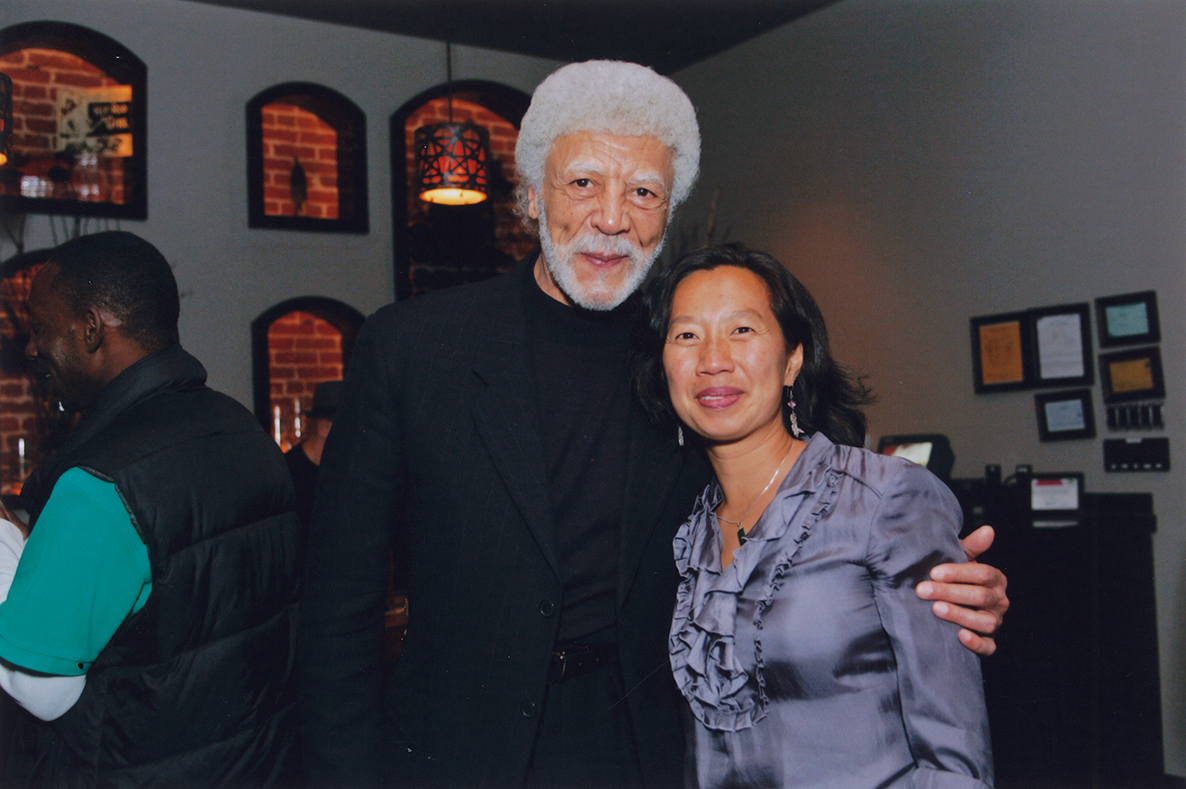
As we approach the second anniversary of Ron Dellums’ transition, I’ve been thinking a lot about Ron. The New York Times article about Ron’s life framed him as being 20 years ahead of his time, be it leading on South Africa anti-apartheid, national security, climate change, HIV/AIDs.
Many have spoken about Ron’s brilliant mind, his great courage, and his compassion for all. Today, I want to talk about one of Ron’s magic powers and my relationship with him in order to uplift Black and Asian solidarity. Ron had an uncanny superpower of seeing the inside of people, our true selves, our light. And in that seeing, he would bring out the best in us. A shy person would speak with eloquence and confidence. A grumpy person would still emanate light and joy. Ron’s magic power of seeing the best in people, lifting them up to their highest potential transformed my own life.
Ron Dellums changed my life even before I met him. In my last year of law school, after years of struggle, I had a job offer from a big corporate law firm. My mother, an immigrant single mom who was denied a college education and sacrificed so much for her children, was so proud of me. Despite this, I couldn’t help but feel my soul leave my body on the way to work. In the midst of my inner turmoil, I came across an article about Ron Dellums where he spoke about the times of loneliness when he was following his conscience. In that instance, I knew then that I wanted to be like Ron Dellums. I wanted to be a person of courage, a person of conviction, a person who felt so passionate about justice. Reading Ron’s words gave me the inner strength to pursue my dreams of justice.
As fate would have it, years later, serendipity struck and I met Ron Dellums, who changed my life again, this time in person. I was serving as the attorney for an anti-displacement coalition during the Jerry Brown years in Oakland when fighting against displacement was a very lonely battle. Ron flew across the country to come home and help us; I was assigned by the coalition to serve as his liaison. Ron’s stance with the coalition turned the political tides and ultimately compelled City officials to address displacement impacts.
At a personal level, I experienced Ron’s magic powers at work. During a heated meeting with the angry and privileged white developers who saw my role as a personal threat, Ron not only intervened but uplifted my leadership. Ron’s grace towards me enabled me to touch my own grace and rise above the attacks, rather than being taken down.
Later as mayor of Oakland, Ron and his wife Cynthia asked me along with others to join their City Administration. I wanted to help them but was anxious about going into the inside of City Hall, a place I perceived as a den of back-stabbing and petty politics. Throughout the years, others have encouraged me to run for office or take on high profile jobs. I always declined because I held fear of holding power. I was afraid of going into the proverbial monster’s cave and becoming the monster.
Working at the City for Ron transformed my perspective. I saw firsthand the power that government has to change the systems and structures of oppression, to heal the past injustices. For example, despite the Great Recession, under Ron’s leadership, the Dellums Administration reduced homicides by 40%, created the national model Green Jobs Corp to fight poverty and climate change, and invested in re-entry jobs.
Because of Ron’s belief and trust in me and his other staff, I witnessed my own ability to hold power with honor, love, and integrity. My transformation, of becoming into myself, of breaking bonds of racist and sexist conditioning that told me that I was not worthy, occurred because of Ron Dellums’ magic.
Today with so much at stake, we share many of Ron’s inspiring talks and images at The Dellums Institute for Social Justice.
May Ron Dellums’ magic power to bring out our best selves live on in you.







Black History
IN MEMORIAM: Dolly Parton Dead at 80 — How She Built a Legacy of Love and Earned Her Place in Black Culture
BAYOU BEAT NEWS — For Black audiences, the bridge to Dolly will always run through Whitney Houston. Parton wrote “I Will Always Love You” as she prepared to leave Porter Wagoner’s television show and released it in 1974. The original was tender and restrained, a country goodbye delivered with grace. Then Whitney got hold of it.


Before some of us knew Dolly Parton as the Queen of Country Music, we knew her as the woman behind Whitney Houston’s song. We knew the blonde hair, the rhinestones, and that unmistakable Tennessee voice. But somewhere along the way, Black America came to understand something deeper about Dolly; when she said she loved people, she had the receipts to prove it.
The community is now left to mourn the icon who passed away at the age of 80, on Aug. 25, after dealing with an unknown medical condition. Known for her chart-topping country music hits, Dolly never felt as though she belonged only to one genre, or one kind of person. She showed up with humor, humility and a generosity that did not ask who you voted for before offering a helping hand. She made room for people, and in return, people from every corner of the culture made room for her.
The Song That Brought Dolly and Whitney Together
For Black audiences, the bridge to Dolly will always run through Whitney Houston. Parton wrote “I Will Always Love You” as she prepared to leave Porter Wagoner’s television show and released it in 1974. The original was tender and restrained, a country goodbye delivered with grace. Then Whitney got hold of it.

Houston’s 1992 rendition for “The Bodyguard” did not merely update the record. She took it to church, then carried it around the world. That opening a cappella moment, the controlled stillness and the key change that made everybody reach for a note they had no business trying to hit turned Parton’s country ballad into a global anthem. The single spent 14 consecutive weeks at No. 1 on the Billboard Hot 100, became the best-selling physical single by a woman and earned two Grammy Awards.
And instead of trying to deny contribution or rush to remind everyone who wrote the song, she celebrated the way Houston’s voice transformed it. In an industry with a long history of taking from Black artists while denying them proper credit, Dolly understood that acknowledging Whitney’s greatness did not diminish her own. One woman wrote an extraordinary song. Another woman revealed everything else that song could become.
“This is the house that Whitney built.”
— Dolly Parton
Parton later shared that she used some of the royalties from Houston’s recording to purchase commercial property in a predominantly Black Nashville neighborhood. She called it “the house that Whitney built.” There was something beautiful about that acknowledgment. Whitney’s voice had generated wealth, and Dolly wanted part of that wealth rooted among people she described as Whitney’s people, and her people, too.
Dolly’s relationship with Black America was not built on pretending she did not see color. She saw us. In a 2020 Billboard interview, she made her position plain: “Of course Black lives matter. Do we think our little white asses are the only ones that matter? No!”
It was blunt, funny, and completely on brand. But Dolly also understood that allyship could not stop with a quote. After learning why the word “Dixie” was offensive and painful to many people, she removed it from the name of her Civil War-themed dinner attraction. She called her previous understanding “innocent ignorance.” More important, she fixed it.
That willingness to listen mattered. Dolly did not perform perfection or become defensive when someone pointed out harm. She showed that loving people means caring enough to learn, change and do better. In a time when public figures often double down just to avoid admitting they were wrong, Dolly simply chose not to be cruel.
Dolly’s love also arrived in the mail. Inspired by her father, who could not read or write, she launched the Imagination Library in 1995. The program began in Sevier County, Tennessee, sending one free, age-appropriate book each month to enrolled children from birth to age 5. What started in the rural community that raised her grew into an international literacy movement. By the end of 2025, the program had distributed more than 300 million books and was mailing about 3.4 million books each month.
Those books found their way into homes in big cities as well as small towns. In New York City, the Imagination Library has been promoted through public schools and community organizations in the Bronx. For urban families navigating tight budgets, limited bookstore access or neighborhoods where children’s books are not always easy to find, a brand-new book addressed directly to a child can mean more than one package. It tells that child, “This belongs to you. Your imagination matters.”
That was Dolly’s kind of giving: personal, useful and rooted in dignity. She also funded scholarships, supported hospitals, invested in medical research and helped families recover from disasters. Her $1 million donation to Vanderbilt University Medical Center supported research connected to the Moderna COVID-19 vaccine. She turned the money she made entertaining people into opportunities to help them live, learn and rebuild.
A preschooler opening one of Dolly’s books in the Bronx did not need to know “Jolene.” A parent reading that book at bedtime did not need to be a country music fan. Her generosity crossed racial and economic lines because it met families in real life, at the mailbox, in a hospital room or after the unthinkable happened.
A Legacy That Felt Like Love
Dolly Parton leaves behind thousands of songs, beloved films, major businesses and enough rhinestones to keep heaven sparkling for a while. But her greatest legacy may be the way she made strength feel soft without ever making it weak. She knew exactly who she was, yet she never needed anyone else to become smaller so she could shine.
For Black listeners, her bond will always be part of that story. “I Will Always Love You” was never about choosing between the white woman who wrote it and the Black woman who took it somewhere new. Dolly gave the world the words. Whitney gave those words wings. Together, they created a piece of American music that refuses to stay inside one genre or belong to only one community.
That is why this loss feels personal, even to people who never met her. Dolly reminded us that tenderness can be powerful. She showed us that changing your mind can be a sign of character, that celebrating another woman’s brilliance does not steal your light and that love means very little if it never becomes action.
Country music will forever call Dolly Parton one of its queens. But Black culture recognized something in her, too: a woman who respected our greatness, spoke up for our humanity and invested in our children. She did not simply leave this world loved. In the ways that mattered most, Dolly loved us back.

Black History
EDITORIAL: Justice Requires the Truth
WASHINGTON INFORMER — The deaths of Lorenzo Salgado Araujo and Nolan Xavier Wells have prompted calls for independent, transparent, and thorough investigations. Salgado Araujo was fatally shot by an Immigration and Customs Enforcement (ICE) agent in Texas, while Wells, an 18-year-old Black college football player, disappeared during a boating outing in Mississippi and was later found deceased.

Independent Investigations Are the Only Way to Preserve Public Trust in an Era of Deep Division
The deaths of Lorenzo Salgado Araujo, who was fatally shot by an Immigration and Customs Enforcement (ICE) agent in Texas, and Nolan Xavier Wells, the 18-year-old Black college football player whose body was recovered after he disappeared during a boating outing in Mississippi, have once again raised questions that demand answers.
While the circumstances surrounding these two cases are very different, the principle is the same: there must be independent, transparent, and thorough investigations that follow the facts wherever they lead.
This is not simply about two tragic deaths. It is about the state of public trust in America.
We are living in a political climate in which nearly every institution is viewed with skepticism. Government agencies, law enforcement, the media, and even the courts are routinely questioned by large segments of the public. Whether justified or not, confidence has eroded to the point that every controversial death is immediately viewed through the lenses of politics, race, ideology, or immigration.
That is precisely why independence matters.
Reports indicate that ICE agents were attempting to apprehend another individual when Salgado Araujo was shot and killed. His family deserves a full accounting of what happened, free from any appearance of institutional bias. Likewise, Wells’ family has raised legitimate questions about the events that led to his death after spending time on the water with several friends. Their request for additional scrutiny should not be dismissed as mere suspicion or speculation. It should be respected as a reasonable demand for transparency.
An independent investigation is not an accusation. It is a safeguard.
If government officials acted appropriately, an impartial review would strengthen public confidence in that conclusion. If mistakes were made — or misconduct occurred — those responsible should be held accountable. Justice works only when the public believes the process is fair, impartial, and free from political influence.
America has learned, often the hard way, that institutions investigating themselves rarely inspire confidence. Families deserve more than assurances. Communities deserve more than press releases. They deserve evidence, transparency, and accountability.
No one should prejudge either case. Facts — not rumors, politics, or social media — must determine the outcome. But allowing independent investigators to examine every witness statement, every piece of physical evidence, and every official action is the surest way to establish those facts.
Equal justice cannot depend on a person’s race, immigration status, political affiliation, or the agency involved. It must rest on truth.
In a nation already strained by polarization and distrust, independent investigations are not merely procedural exercises — they are essential to preserving the public’s faith in justice itself. The families of Salgado Araujo and Wells deserve clear answers. So does the American people. Truth, pursued without fear or favor, remains the strongest foundation upon which justice — and public trust — can stand.
Based on reporting by Washington Informer.
Black History
IN MEMORIAM: D.C. Mourns Vernon Hawkins, Organizer Who Helped Shape Five Decades of Black Civic Life
WASHINGTON INFORMER — Vernon Hawkins, a veteran organizer and public servant, died on July 2 at age 87. For over 50 years, Hawkins significantly influenced Washington D.C.’s political, civic, and civil rights landscape, often working behind the scenes. Friends and officials remember him as a strategist whose counsel was widely sought.
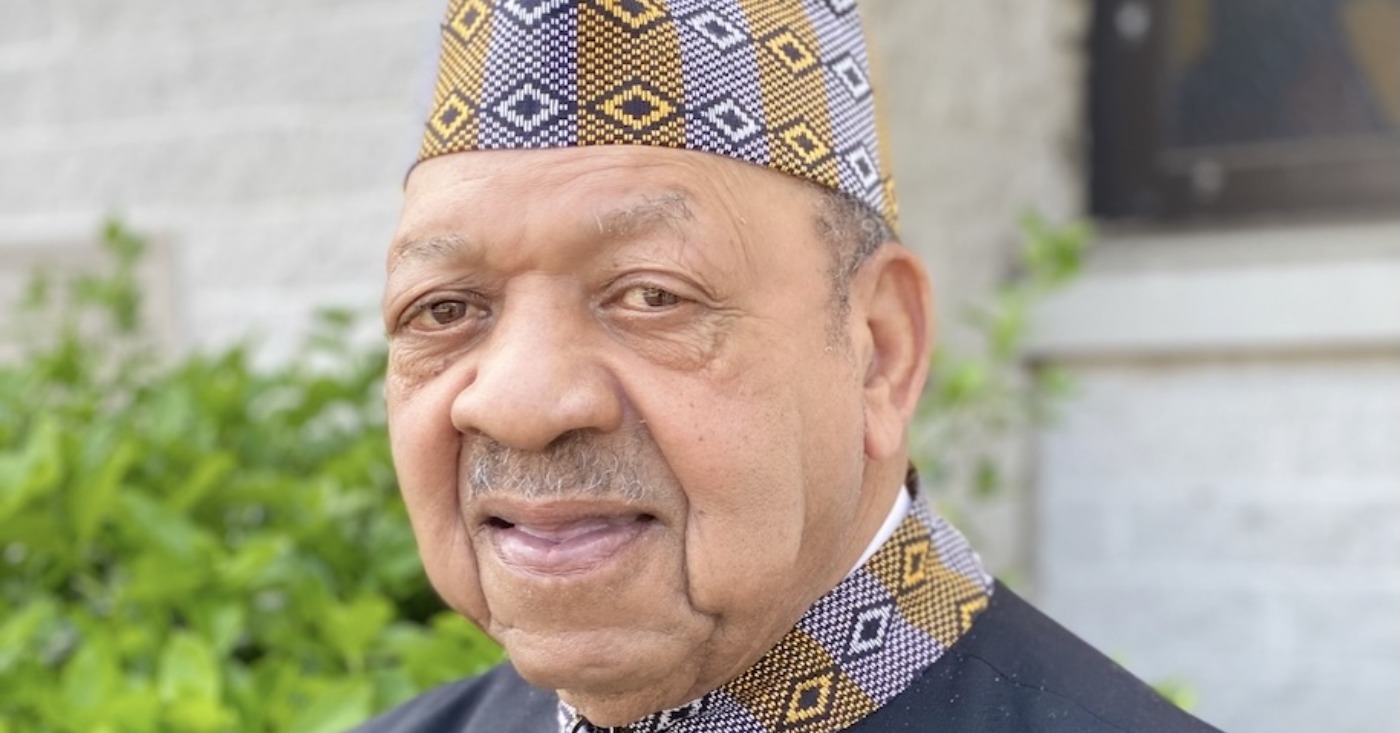
For more than half a century, Vernon Hawkins helped shape Washington in ways that often escaped public attention but touched nearly every major political, civic and civil rights effort in the nation’s capital.
Hawkins, a veteran organizer, public servant and longtime advocate for Black Washington, died July 2 at the age of 87. Friends, elected officials, clergy and community leaders remember him as one of the city’s most influential behind-the-scenes strategists, a man whose counsel was sought across generations and whose commitment to improving the lives of Black residents never wavered.
“Vernon was certainly a brother with max organizing skills,” Charles Stephenson, former director of legislative affairs at the U.S. House of Representatives, stated in a social media post. “His fingerprints are on all major events that occurred in D.C. over the last 50 years. He is a respected brother for his dedication to improve the lives of Black people. His legacy will live forever. My sincere condolences to his family and friends. Rest in Power Vernon!”
Hawkins was born June 6, 1939.
While many Washingtonians knew him through Union Temple Baptist Church or his decades of political involvement, his public service stretched back to the height of the civil rights movement.
In 1963, he worked for the National Committee for Children and Youth, where he designed and operated an education and work release program for young people sentenced under the Youth Act of 1962. The initiative helped youthful offenders earn college degrees and secure employment, offering opportunities at a time when rehabilitation programs were still uncommon.
His civil rights work also extended beyond the District. Working alongside the NAACP, Hawkins established voter registration programs in 12 states, contributing to efforts that expanded Black political participation during one of the nation’s most consequential periods of social change.
His commitment to second chances continued throughout his career. Hawkins designed the District of Columbia Department of Corrections’ first work release program for misdemeanor offenders before moving to the Department of Rehabilitation Services, where he focused on mental health services and employment training for people with disabilities.
He later directed programs serving homeless families, welfare recipients and youth offenders and eventually led the D.C. Department of Human Services, overseeing five agencies responsible for mental health, rehabilitation, social services and physical health programs.
His work also reached women preparing to return to their communities after incarceration. Hawkins developed a 12-step drug treatment program for women nearing release from the D.C. Department of Corrections.
Through Union Temple Baptist Church, he later designed employment training programs for mothers receiving public assistance and people living with HIV.
Outside government, Hawkins became known as one of Washington’s most trusted organizers.
He served as the District coordinator for the Civil Rights March on Washington and developed a reputation as the person political leaders, clergy and activists called when they needed coalitions built, neighborhoods organized or complicated initiatives brought together.
Friends say his influence extended across mayoral administrations, neighborhood organizations, churches, advocacy groups and political campaigns, even if his name rarely appeared in headlines.
“There was no meaningful political work done in Washington, D.C., over the last 50 years without his leadership and input,” longtime friends said in remembering Hawkins.
Throughout his lifetime, Hawkins earned numerous honors for public service, including the National Rehabilitation Association’s E.B. Whitten Silver Medallion Award, the organization’s highest service recognition.
Yet those closest to him say awards never defined his work.
Instead, they point to decades spent mentoring younger leaders, building organizations, opening doors for people who had been overlooked and remaining committed to strengthening Black communities across the District.
Margaret A. Moore, retired visiting associate professor at the University of the District of Columbia, said Hawkins’greatest impact was often measured not by public recognition but by the lives he changed.
“My heart and deepest condolences go out to the family of Vernon,” Moore declared. “Though considered an outsider by many in D.C., Vernon embraced me as family, introduced me to Union Temple Baptist Church and the teachings of Rev. Wilson. He stood by me during some of the most challenging times of my professional career. I will forever remember my brother, friend and counselor. Rest in peace Vernon.”
All services honoring Hawkins’ life will take place at Union Temple Baptist Church, 1225 W Street SE, Washington, D.C., including a visitation on Wednesday, July 15, from 5:30 p.m. until 7 p.m.; a viewing Thursday, July 16, at 9:30 a.m., followed by a funeral at 11 a.m.

Stacy M. Brown
- Stacy M. Brown is a senior writer for The Washington Informer and the senior national correspondent for the Black Press of America. Stacy has more than 25 years of journalism experience and has authored… More by Stacy M. Brown
Based on reporting by Washington Informer.


Port of Oakland, Army Corps Sign Historic Harbor Design Agreement

Democratic Clubs Interview Candidates for Oakland School Board

Nuna Phillips-McKee Celebrates 100 Years: ‘A Century of Faith, Family and God’s Amazing Grace!’

D.A. Ursula Jones Dickson: Terminix to Pay $3.15 Million Over Illegal Disposal of Pesticides, Customer Records

REPORT: Community Level Policy Is Impacting Homelessness and Drug Abuse in California

OPINION: AI Needs to Know Who Is the Boss
Goldi-Locs and Two (or Three) Bears in the Forest in California Hills

Election Watch 2026: 85% of Eligible Voters in California Are Registered

Don’t Let scammers Crash Your School Year

BOOK REVIEW — Curved Air: A Biography of Sickle Cell Anemia and the Quest to Cure the First Molecular Disease

California’s Legal Cannabis Market Hits $8 Billion as State Touts Progress on Fighting Drugs, Crime

Blacks and Latinos Clash Over LA’s Barrio Run; Mayor Karen Bass Calls for Dialogue Across Racial, Neighborhood Lines

Asm. Smallwood-Cuevas’s Bill Repealing ‘Racist’ CalWORKs ‘Man-in-the-House’ Rule Clears Legislature

Asm. Smallwood-Cuevas’s Bill Repealing ‘Racist’ CalWORKs ‘Man-in-the-House’ Rule Clears Legislature

‘Ready to See These Bills Become Law’: Sen. Weber’s Package of 15 Bills Advance to Gov. Newsom’s Desk

Department of Homeland Security Demands California Secretary of State Shirley N. Weber Scrub Voter Rolls

“The Power to See Threats Sooner”: Gov. Newsom, Safety Officials Showcase California’s Investments in Hi-Tech Wildfire Prevention

Alpha Kappa Alpha Sorority, Inc. Celebrates New North Atlantic Regional Director

California Sen. Padilla Joins Colleagues to Introduce Bill Imposing Term Limits on Supreme Court Justices

Less Affluent School Districts, Including Sacramento City, Face Threat of State Takeover

Car Wash Workers Cope with Lingering Impacts of ICE Raids

ESSAY: California Can Close Its Colorectal Cancer Gap

Oakland Post: Week of August 5 – 11, 2026

As Part of Your Back-to- School Checklist, Vaccinate

Oakland ‘Port Serves as a Powerful Engine for Good Jobs and Economic Development

Gov. Newsom Signs New Affordable Housing Legislation

Gov. Newsom Announces $109.6 Million in Funding for 278 Supportive Homes in Bakersfield, Contra Costa, Sacramento and Fresno

California Hispanic Chambers of Commerce Unveils: ‘Powering the Future’ Theme for 47th Annual Statewide Convention

Closing the Gap: What the Data and Frontline Experiences Reveal About Cancer in Black California

Congresswoman Simon Demands Investigation into Trump’s Abuse of Emergency Powers for Coal Export Terminal in West Oakland

The Conversation With Al McFarlane 6/23/26

Media Monday 6/22/26

LIVE! ASK ALMA! — TUES. 6.23.26 7PM EST

Car Buying Secrets: 4 Hidden Checks Before You Sign!

Is This 550 HP Charger Worth YOUR Money? AutoNetwork Review

Celebrating Juneteenth – Frederick Douglass on education and resistance

LIVE! — ASK ALMA! — TUES. 6.19.26 7PM EST

Hyundai Ioniq 5 Parking, Safety, and 360 View #shorts

2025 Ioniq 5 New Wiper & Powerful Performance! #shorts

Electric SUV Range: Is 259 Miles Enough? #shorts

EV Charging: How Fast Can You Charge an Electric Vehicle? #shorts

Biometric Cooling… Messaging Seats…Come on! 2025 Infiniti QX80 Autograph 4WD

Charged Up: Witness the Magic of a Fully Electric Car! #shorts

Range Rover Sport PHEV Included…: See What’s Inside This Luxury SUV! #shorts

Invisible Hood View: Perfect Parking with X-Ray Vision! #shorts
-

 Commentary2 weeks ago
Standoff for Justice: Our Homes Are Worth Fighting For
-

 Business2 weeks ago
Gubernatorial Candidate Steve Hilton Blasts California New Tire Rules; Newsom Hits Back
-

 Activism2 weeks ago
Oakland Post: Week of August 26 – September 1, 2026
-

 Education2 weeks ago
Gov. Newsom’s Latest Appointees Include Sacramento Advocate for Formerly Incarcerated Students; State’s New Tech Chief
-

 Business2 weeks ago
Frontier Airlines’ Return to Oakland Airport Brings Flights, Jobs and Opportunity
-

 Business2 weeks ago
Oakland Coliseum Project Opens Door for Small Businesses to Build Bigger
-

 Business2 weeks ago
Chef Sharon Lee Blends Culinary Excellence, Education and Empowerment
-

 Community2 weeks ago
Big City Mayors Ask for “Yes” Vote on Housing Bond Measure; Conservatives Say “No”
