
News
Post Salon: City Needs Jobs Policy That Overturns Discrimination in Hiring

Adopt a policy that benefits everyone, not just side agreement with Building Trades, say speakers
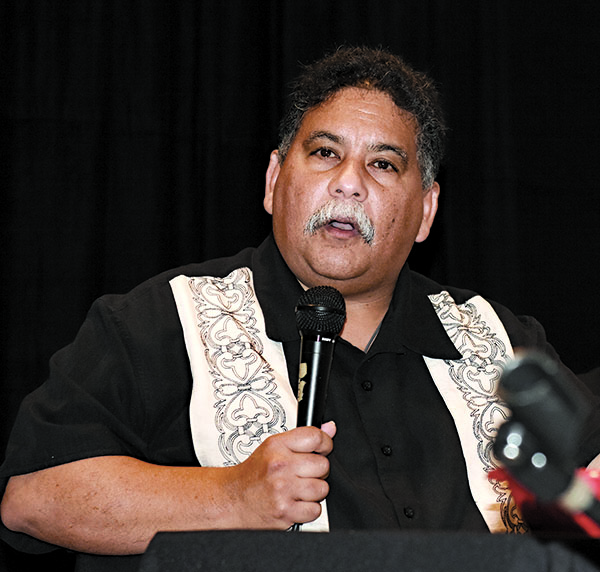
The Post Salon Community Assembly last Sunday addressed the critical need to create opportunities for decent jobs at decent wages for Black workers, seeking to ramp-up community efforts to end discrimination against African-Americans on city-funded building projects.
The panel of speakers included City Councilmembers Desley Brooks and Rebecca Kaplan; Pete Varma, president of the National Association of Minority Contractors, Northern CA Chapter; Miguel Galarza, president of Yerba Buena Engineering & Construction; and Dexter Vizinau, president of CyberTran International and member of OaklandWORKS.
Recent statistics show that African Americans get only 9 percent of the hours on city-funded construction projects, though they make up 27 percent of the Oakland’s population. At the same time, the official unemployment rate for African Americans stands at 7.7 percent, almost double the rate for whites.
Within this context, some City Council members are considering proposals to pass a Project Labor Agreement (PLA) with the Building Trades, which means the city would sign a contract guaranteeing that nearly all jobs on city-funded projects would go through the unions and union hiring halls, which have few or no Black members in building trades unions.
Councilmember Brooks said that Project Labor Agreements have a bad track record when it comes to equity.
“We should not tinker at the margins,” she said. “PLAs have not worked for communities of color, particularly for Black folks. We can ill afford not to have jobs for people in this community.
“The city has the ability with its own money to ensure people in this community have jobs.”
Mayor Libby Schaaf has advocated signing a PLA, and another proposal is being developed by Councilmember Abel Guillén, according to Councilmember Kaplan.
The building trades—locally and nationally—have for years resisted publically releasing the ethnic breakdown of their membership.
According to many people familiar with the construction trades in the Bay Area, African Americans are excluded. There are larger numbers of Latinos in lower-paid trades, such as the Laborers Union.
But many of the other more highly paid trades are almost exclusively white, such as Glaziers, Electricians, Plumbers, Elevator Technicians and others.
At present, most Black workers in construction are hired by small, non-union contractors who are Black. As Black contractors are forced out and existing ones are forced to hire through the union hiring halls, Black workers become more and more scarce.
The elite craft unions exclude people of color, said Galarza, who works on equity issues in construction in San Francisco and San Jose.
“Electricians at $70 an hour plumbers at $80 an hour, you will not find people of color in those unions,” he said.
Galarza said that equity amendments were approved by the City Council in San Jose, but the building trades refused to sign the amended PLA.
In San Francisco, the building trades walked away from a million-dollar construction project because they would have been required by a Consent Decree to release the ethnic composition of the unions, he said.
Vizinau said Black contractors are disappearing.
“There used to be a lot of Black contractors in Oakland,” he said. “We built downtown. Now, I can’t find more than five (Black contractors).”
“Proposition 209 did away with affirmative action. That was the beginning of the decline.”
Passed in 1996, Prop. 209 was a California ballot proposition that amended the state constitution to prohibit state governmental institutions from considering race, sex, or ethnicity in the areas of public employment, public contracting and public education.
“I am not anti-union,” continued Vizinau. “I know what unions can do and what they should represent. We just have to get them there.”
Councilmember Kaplan said the city has the responsibility to ensure that “jobs and contracts are provided fairly throughout the community.”
She said she supports “ban the box” so the formerly incarcerated can be hired on city-funded construction projects. She also backed Councilmember Brooks’ proposal to use city funds to support pre-apprenticeship training programs, like Cypress Mandela Job Training center
“There has to be money for pre-apprenticeship,” said Kaplan. “There has to be access to pathway to these jobs.”
Varma said minority contractors are not at the table when developers and contractors decide who is going to do the work.
“There’s a huge problem,” he said. The people with the money and are jobs are “not talking to minority contractors, they are not talking to small contactors—who need work.”
An action proposal came out of the meeting:
City officials should work with the community to develop a fair jobs policy, which the city should adopt instead of signing a PLA.
A new city policy can incorporate the “good” parts a PLA that protect workers’ rights, as well as protect the the rights of African Americans, women and other groups: The Building Trades unions must release their membership by ethnicity and adopt concrete goals for improving equity.
Ask the city’s Department of Race and Equity to mprepare a report on the equity implications of the various jobs policies.
Utilize the results of a long-awaited Disparity Study to pinpoint policies that will level the playing field for small minority and women-businesses that seek contracts.








Activism
Oakland Post: Week of September 23 – 29, 2026
The printed Weekly Edition of the Oakland Post: Week of September 23 – 29, 2026

To enlarge your view of this issue, use the slider, magnifying glass icon or full page icon in the lower right corner of the browser window.
Activism
Oakland Post: Week of September 16 – 22, 2026
The printed Weekly Edition of the Oakland Post: Week of September 16 – 22, 2026

To enlarge your view of this issue, use the slider, magnifying glass icon or full page icon in the lower right corner of the browser window.
#NNPA BlackPress
NFL: Week Two Recap | Jalen Hurts did not fold; Caleb Williams exits game with injury
Philadelphia Eagles quarterback Jalen Hurts found Darius Cooper with nine seconds left for the game winning touchdown as his team beat the Tennessee Titans 24-20 in Nashville. Hurts finished the day 26/37 for 264 yards. He threw for two touchdowns and two interceptions. Prior to the final drive, the Eagles ran 25 plays for 45 […]
The post NFL: Week Two Recap | Jalen Hurts did not fold; Caleb Williams exits game with injury appeared first on BlackPressUSA.
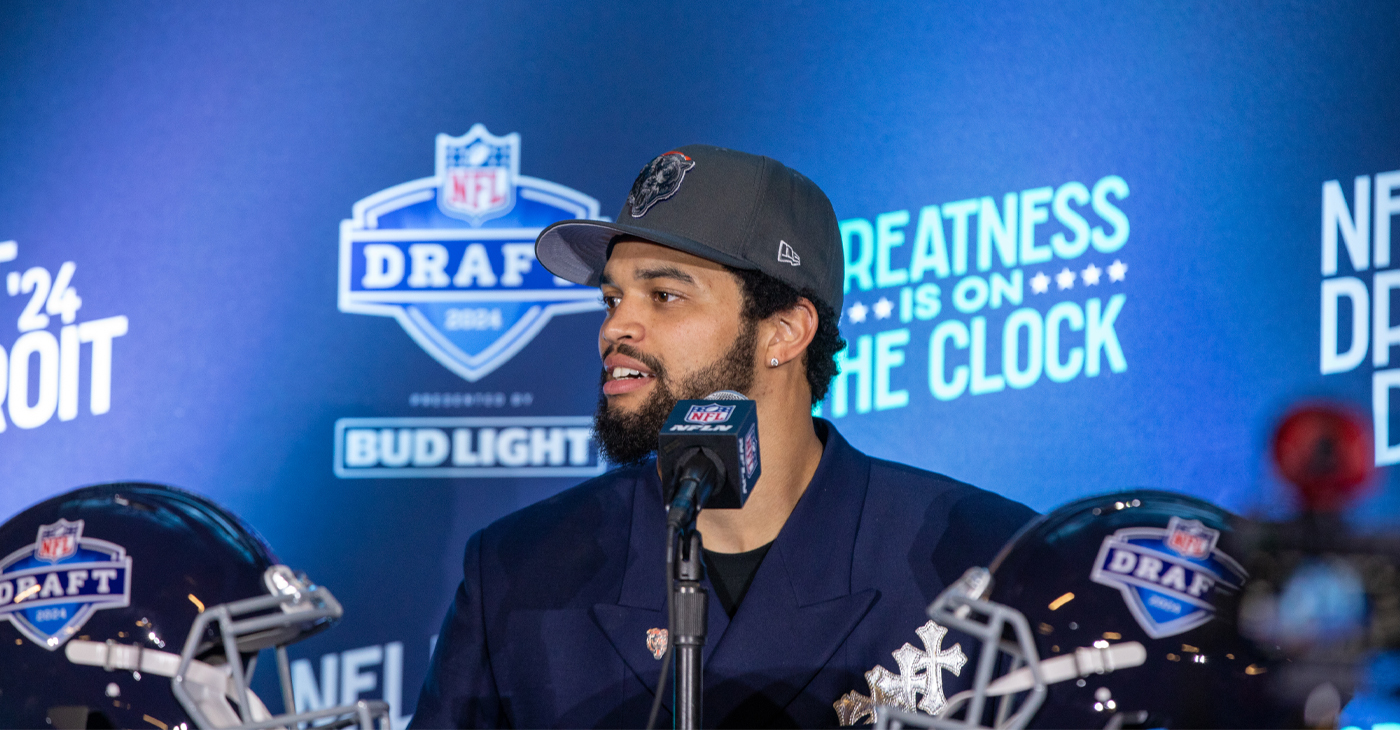
Philadelphia Eagles quarterback Jalen Hurts found Darius Cooper with nine seconds left for the game winning touchdown as his team beat the Tennessee Titans 24-20 in Nashville. Hurts finished the day 26/37 for 264 yards. He threw for two touchdowns and two interceptions.
Prior to the final drive, the Eagles ran 25 plays for 45 yards. During the final drive Hurts went 6-8 with 61 passing yards and the touchdown. Titans defensive tackle — and team captain — Jeffery Simmons said this week that the way to defend Jalen Hurts is to make him “play quarterback.”
Hurts said to Simmons after today’s game: “You started that sh**. I had to finish it.”
Running back Saquon Barkley suffered a stinger in the first half but he ultimately finished the game. He had four carries and nine yards and one catch for eleven yards. He will get an MRI for his injury, but admitted to Cameron Wolfe of the NFL Network he was fine.
Caleb Williams leaves game against Vikings with apparent lower-body injury
Chicago Bears quarterback Caleb Williams was helped off the field with a right leg injury with 7:42 remaining in the fourth quarter. Williams was down, writhing in pain after scrambling to his left. After departing the injury tent, Williams raised his right fist, acknowledging the crowd while expressing his frustration. Testing will commence on Monday to find out more details about his injury.
“We’ll know tomorrow,” Johnson admitted regarding Williams’ injury. “He’s in good spirits. He’s a team player.”
Williams finished the day with 138 passing yards and one interception.
“I’m actually happy it’s nothing with the knee — that was my first inclination,” Johnson said. “But, a hamstring could be pretty damaging as well. So, we’ll see. We’ll see how bad it is tomorrow and we’ll go from there.”
Bryce Young once again dominated the Falcons
Carolina Panthers quarterback Bryce Young is 5-1 against the Atlanta Falcons and is undefeated at Mercedes-Benz Stadium. Today, Young threw for 287 yards and three touchdowns as he led the Panthers to a 34-3 dismembering of the Atlanta Falcons. Georgia Tech alumnus Darren Waller caught two touchdowns and linebacker Devin Lloyd returned one of his two interceptions for a touchdown.
Cooper Rush started his second straight game for the Falcons and it did not go well. The partisan crowd voiced their displeasure after Rush completed 10/17 passes for 86 yards and two interceptions. Jack Strand entered the game for Rush prompting cheers from the Falcons fans. The rookie threw a pick-six on his first career pass attempt. Strand was the first QB to accomplish that feat since Sam Darnold in 2018 and is the first Falcons player to do that since Brett Favre in 1991. Strand finished the day with 59 passing yards and 16 rushing yards.
According to reports, quarterback Michael Penix, Jr. is expected to make his season debut this Thursday at the Green Bay Packers. His return should help the Falcons. They are the first team since the 2008 Rams to not run any plays in the red zone after the first two games to open a season.
The bright spots for the Falcons today were the Spelman College Jaguarettes performing with the Falcons cheerleaders and Florida A&M’s marching band, The Marching 100, also performed during halftime!
Jayden Daniels gets carted off after apparent arm injury
Washington Commanders quarterback Jayden Daniels appeared to injure his left elbow on the final play of the first half in his game against the Dallas Cowboys. During the play, Daniels got stepped on, braced himself for the fall, and his elbow bent the wrong way. Daniels draped a towel over his head as he exited the field on the cart.
He was later ruled out.
Daniels suffered a dislocated elbow to the same arm during week nine of last season against the Washington Commanders, which led to him being shut down for the remainder of the season.
The post NFL: Week Two Recap | Jalen Hurts did not fold; Caleb Williams exits game with injury appeared first on BlackPressUSA.



Asm. Corey Jackson Announces Launch of 24-Hour Childcare in His District

IN MEMORIAM: The Rev. Leon “Sonny” Clark, Longtime Orange County Pastor and Community Leader, Dies at 72

Poll: Becerra Widens His Lead Over Hilton; Californians Split on Wealth Tax

From Historic Memories to New Possibilities: Oakland Celebrates Coliseum 60

County Office of Education Says OUSD Finances Are Getting Healthier, Materially Stronger

LIVE FREE Sunday Dinner Brings Faith, Fellowship and Civic Conversation to Oakland

Remembering Chauncey Bailey as Student Journalists Face Threats to Truth-Telling

BLACspace Cooperative Invites Bay Area to Experience Oakland’s Black Cultural Ecosystem Through a BLAC Map Tour + Party

In Wake of Death on Doorstep, Williams Chapel Baptist Church Calls for Better Care, Funding for Unhoused

Oakland Centenarian Nuna McKee Honored!

Caribbean Nations Produce Action Plan Calling for UK Reparations Over Slavery

Oakland Post: Week of September 23 – 29, 2026

Doulas Are Helping Black California Moms Navigate Pregnancy–Even as High Mortality Rates Persist

Newsom Signs Addictive Social Media Law to Protect Kids

On Your November Ballot: Prop 38 Would Allocate $8.4 Billion to Immunology and Immunotherapy Funding

Standoff for Justice: Our Homes Are Worth Fighting For

Oakland Post: Week of August 26 – September 1, 2026

Frontier Airlines’ Return to Oakland Airport Brings Flights, Jobs and Opportunity

Gubernatorial Candidate Steve Hilton Blasts California New Tire Rules; Newsom Hits Back

Chef Sharon Lee Blends Culinary Excellence, Education and Empowerment

Jackie Wright Champions Bay Area Stories, Filmmakers and Cultural Institutions

Big City Mayors Ask for “Yes” Vote on Housing Bond Measure; Conservatives Say “No”

Oakland Coliseum Project Opens Door for Small Businesses to Build Bigger

Gov. Newsom’s Latest Appointees Include Sacramento Advocate for Formerly Incarcerated Students; State’s New Tech Chief

Misnamed ‘Parent’ PAC Seeks to Influence Oakland School Board Elections

Longtime BWOPA Member Brendalyn Goodall Appointed to California Workforce Development Board

Gov. Newsom Signs Law Shielding Immigration Aid Workers From Doxing Threats

Secretary of State Shirley N. Weber Urges Californians to Vote Early as Voter ID Battle Intensifies

From Palestine to Oakland: Seeds for Liberation Examines Shared Struggles for Freedom

IN MEMORIAM: Dolly Parton Dead at 80 — How She Built a Legacy of Love and Earned Her Place in Black Culture

The Conversation With Al McFarlane 6/23/26

Media Monday 6/22/26

LIVE! ASK ALMA! — TUES. 6.23.26 7PM EST

Car Buying Secrets: 4 Hidden Checks Before You Sign!

Is This 550 HP Charger Worth YOUR Money? AutoNetwork Review

Celebrating Juneteenth – Frederick Douglass on education and resistance

LIVE! — ASK ALMA! — TUES. 6.19.26 7PM EST

Hyundai Ioniq 5 Parking, Safety, and 360 View #shorts

2025 Ioniq 5 New Wiper & Powerful Performance! #shorts

Electric SUV Range: Is 259 Miles Enough? #shorts

EV Charging: How Fast Can You Charge an Electric Vehicle? #shorts

Biometric Cooling… Messaging Seats…Come on! 2025 Infiniti QX80 Autograph 4WD

Charged Up: Witness the Magic of a Fully Electric Car! #shorts

Range Rover Sport PHEV Included…: See What’s Inside This Luxury SUV! #shorts

Invisible Hood View: Perfect Parking with X-Ray Vision! #shorts
-
 Community2 weeks ago
Misnamed ‘Parent’ PAC Seeks to Influence Oakland School Board Elections
-

 Activism3 weeks ago
Oakland Post: Week of September 2 – 8, 2026
-

 Community2 weeks ago
Richmond Tiny House Village Farm & Garden Set to Open Gates on Sept. 26
-

 Black History2 weeks ago
Latest Massacre in Haiti Reveals Cruelty U.S. Deportations
-

 Black History2 weeks ago
OPINION: Nolan Wells’ Death One of Several Signifying Racial Terror Lives on in U.S. South
-

 Activism2 weeks ago
Oakland Post: Week of September 9 – 15, 2026
-

 Community2 weeks ago
Democratic Clubs Interview Candidates for Oakland School Board
-
 Featured2 weeks ago
‘Ready to See These Bills Become Law’: Sen. Weber’s Package of 15 Bills Advance to Gov. Newsom’s Desk
