
Bay Area
Parents Push Back Against School District Plan to Close and Merge Schools

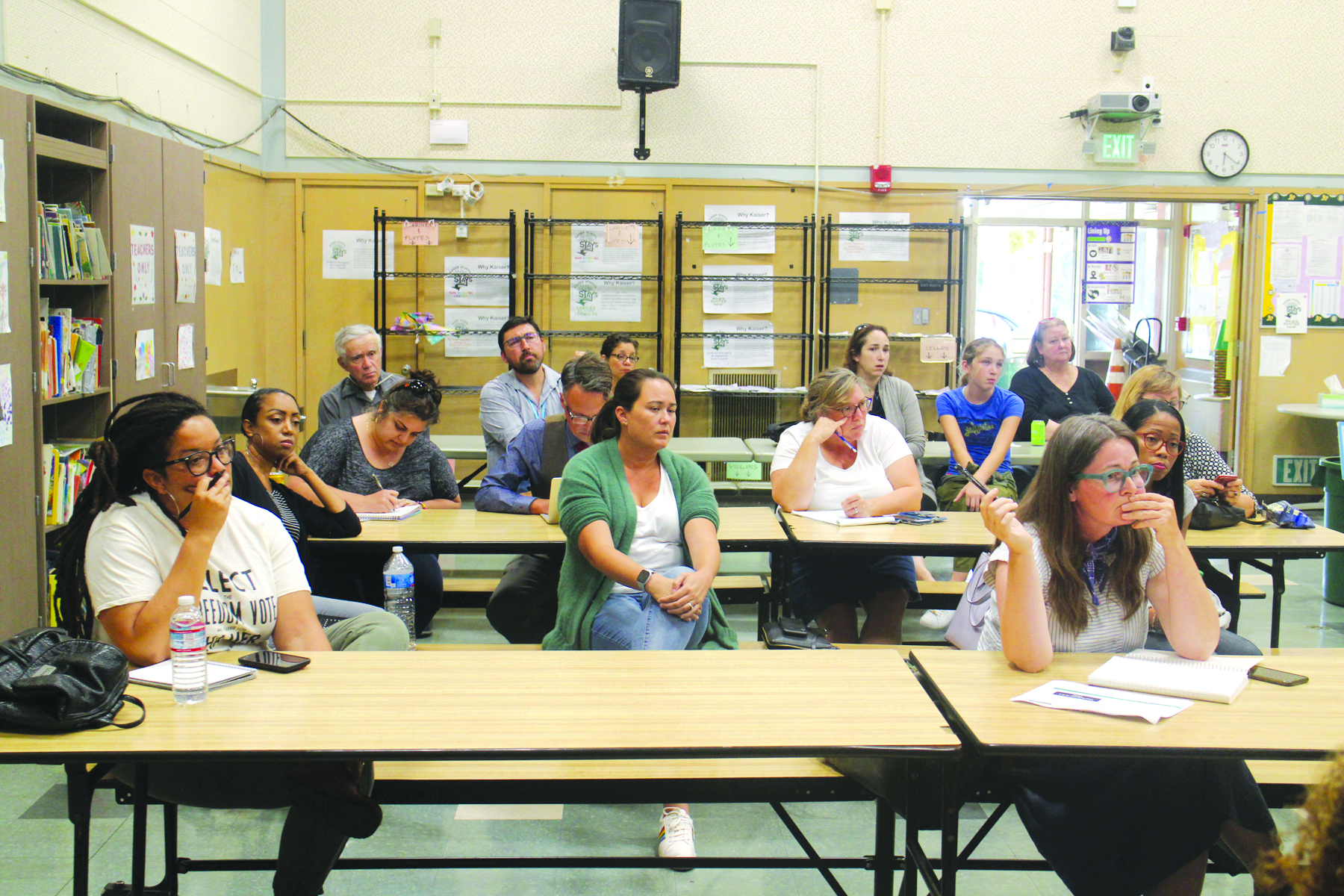
Running into a wall of outrage from school families and community groups, the Oakland Unified School District (OUSD) administration and the Oakland Board of Education are struggling to come up with a coherent rationale and reasonable plans to close Oakland neighborhood schools that they hope Oaklanders would be willing to accept.
OUSD is currently operating under the supervision and fiscal austerity regime imposed by the State of California’s local representatives – the Alameda County Office of Education and the state-funded Fiscal Crisis Management and Assistance Team (FCMAT) – which are demanding that the district close 24 or more schools in the next few years, which variously has been called right-sizing, merging, relocating or consolidating.
None of the euphemisms for school closing seem to have gained much credibility from parent groups that are fighting to keep from losing their established school communities or face major upheavals as they move to new schools or try to adapt to new groups of students and teachers on their campuses with what they fear will be inadequate planning, lack of resources and little to no school community input.
In past presentations to the board and press interviews, FCMAT has said the district has too many schools and cannot afford to operate them, while acknowledging that school closures do not save money.
This year, the administration, under Cohort 2 plans, is urging the school board to close the Henry J. Kaiser campus and merge the school’s students, families and teachers with Sankofa Academy in North Oakland.
Variations of the plan, backed by individual school board members, would merge Kaiser and Sankofa with Peralta Elementary School or Santa Fe Elementary (which is presently closed but temporarily serving the Glenview Elementary community, while their campus is being rebuilt).
The Cohort 2 plan also calls to expand Melrose Leadership Academy and move Oakland SOL, which are outgrowing their campuses. Impacted schools could be Sherman Elementary, Frick Middle School and Maxwell Park.
The district says the merging and closing of schools will free up resources and funds, according to the OUSD Blueprint for Quality Schools Action Plan, is to create “high quality and sustainable schools in every neighborhood,” particularly in flatland schools that have been historically under-resourced and have faced institutionalized disparities.
Speaking at last week’s board meeting, Kaiser parents pleaded with the board not to close their school.
In a Facebook post, the Kaiser advocacy Committee urged the pubic to attend last week’s school board meeting to “make your voice heard and stand with us as we advocate that the board do right by Oakland children and put a stop to all school closures and consolidations.”
Facing criticisms as a privileged hill school, Kaiser parents emphasized the school’s diversity, high test scores and significantly increasing test scores for African American students.
Kaiser’s student population, which is fairly stable at 268 students, is 21 percent African American, 16 percent Latino and 36 percent white. A majority of the students come from outside the school’s neighborhood attendance area.
If the school were closed, students in the Kaiser attendance area would be eligible to attend Chabot Elementary, where 3.9 percent of the students are African American. Students from outside the Kaiser attendance area would go to Sankofa or could apply to another school in the district.
Parents from Sankofa told the school board that they are open to merging with any other school at their campus, as long as they receive resources and support from the district.
Over the course of a number of years and different superintendents, according to parents and district administrators, many promises were made to Sankofa, including active support, new programs and other resources. But the promises were never kept, and existing resources continued to dry up.
At present, Sankofa has 189 students, 71 percent African American, 11 percent Latino and 3 percent white.
Speakers at the board meeting from Oakland SOL, Frick Middle and Melrose Leadership Academy told the board they needed more time to make sure the moves at their campuses would strengthen, not undermine their schools. Rather than the board adopting a timeline that institutes changes next school year, they asked board members to give them an additional year to develop collaborative relationships with their newly merged school communities.
Most of the school board members who spoke supported the closure of the Kaiser site but had differing ideas about combining the Kaiser, Santa Fe, Peralta and Sankofa school communities. However, breaking with the board’s approach, Boardmember Rosie Torres sharply criticized the plan.
She said the district’s promises of supporting the schools – “the ideas, the dreams and pipelines – are not realistic in my view” because OUSD does not have sufficient central office staff to do the work.
When the district closed Roots Academy in June, it promised the school community resources. “(But) we barely offered Roots boxes, when we told them (they would receive) counseling and help transitioning. We’re not doing it right. Let’s not pretend we’re going to do it any better next time.”
She criticized the superintendent’s and staff’s timeline as unrealistic.
Interrupting Torres, School Boardmember Gary Yee accused her of disrespecting the superintendent. “I find that offensive,” he said. Supt. Kyla Johnson-Trammell told Torres said the board member should not disrespect her staff.
The board is scheduled to vote on the Cohort 2 mergers and closures at its Wednesday, Sept. 11 meeting.











Activism
Oakland Post: Week of September 23 – 29, 2026
The printed Weekly Edition of the Oakland Post: Week of September 23 – 29, 2026


To enlarge your view of this issue, use the slider, magnifying glass icon or full page icon in the lower right corner of the browser window.

Activism
Oakland Post: Week of September 16 – 22, 2026
The printed Weekly Edition of the Oakland Post: Week of September 16 – 22, 2026

To enlarge your view of this issue, use the slider, magnifying glass icon or full page icon in the lower right corner of the browser window.
Activism
Oakland Post: Week of September 9 – 15, 2026
The printed Weekly Edition of the Oakland Post: Week of September 9 – 15, 2026

To enlarge your view of this issue, use the slider, magnifying glass icon or full page icon in the lower right corner of the browser window.



Asm. Corey Jackson Announces Launch of 24-Hour Childcare in His District

IN MEMORIAM: The Rev. Leon “Sonny” Clark, Longtime Orange County Pastor and Community Leader, Dies at 72

Poll: Becerra Widens His Lead Over Hilton; Californians Split on Wealth Tax

From Historic Memories to New Possibilities: Oakland Celebrates Coliseum 60

County Office of Education Says OUSD Finances Are Getting Healthier, Materially Stronger

LIVE FREE Sunday Dinner Brings Faith, Fellowship and Civic Conversation to Oakland

Remembering Chauncey Bailey as Student Journalists Face Threats to Truth-Telling

BLACspace Cooperative Invites Bay Area to Experience Oakland’s Black Cultural Ecosystem Through a BLAC Map Tour + Party

In Wake of Death on Doorstep, Williams Chapel Baptist Church Calls for Better Care, Funding for Unhoused

Oakland Centenarian Nuna McKee Honored!

Caribbean Nations Produce Action Plan Calling for UK Reparations Over Slavery

Oakland Post: Week of September 23 – 29, 2026

Doulas Are Helping Black California Moms Navigate Pregnancy–Even as High Mortality Rates Persist

Newsom Signs Addictive Social Media Law to Protect Kids

On Your November Ballot: Prop 38 Would Allocate $8.4 Billion to Immunology and Immunotherapy Funding

Standoff for Justice: Our Homes Are Worth Fighting For

Oakland Post: Week of August 26 – September 1, 2026

Frontier Airlines’ Return to Oakland Airport Brings Flights, Jobs and Opportunity

Gubernatorial Candidate Steve Hilton Blasts California New Tire Rules; Newsom Hits Back

Chef Sharon Lee Blends Culinary Excellence, Education and Empowerment

Jackie Wright Champions Bay Area Stories, Filmmakers and Cultural Institutions

Big City Mayors Ask for “Yes” Vote on Housing Bond Measure; Conservatives Say “No”

Oakland Coliseum Project Opens Door for Small Businesses to Build Bigger

Gov. Newsom’s Latest Appointees Include Sacramento Advocate for Formerly Incarcerated Students; State’s New Tech Chief

Misnamed ‘Parent’ PAC Seeks to Influence Oakland School Board Elections

Longtime BWOPA Member Brendalyn Goodall Appointed to California Workforce Development Board

Gov. Newsom Signs Law Shielding Immigration Aid Workers From Doxing Threats

Secretary of State Shirley N. Weber Urges Californians to Vote Early as Voter ID Battle Intensifies

From Palestine to Oakland: Seeds for Liberation Examines Shared Struggles for Freedom

IN MEMORIAM: Dolly Parton Dead at 80 — How She Built a Legacy of Love and Earned Her Place in Black Culture

The Conversation With Al McFarlane 6/23/26

Media Monday 6/22/26

LIVE! ASK ALMA! — TUES. 6.23.26 7PM EST

Car Buying Secrets: 4 Hidden Checks Before You Sign!

Is This 550 HP Charger Worth YOUR Money? AutoNetwork Review

Celebrating Juneteenth – Frederick Douglass on education and resistance

LIVE! — ASK ALMA! — TUES. 6.19.26 7PM EST

Hyundai Ioniq 5 Parking, Safety, and 360 View #shorts

2025 Ioniq 5 New Wiper & Powerful Performance! #shorts

Electric SUV Range: Is 259 Miles Enough? #shorts

EV Charging: How Fast Can You Charge an Electric Vehicle? #shorts

Biometric Cooling… Messaging Seats…Come on! 2025 Infiniti QX80 Autograph 4WD

Charged Up: Witness the Magic of a Fully Electric Car! #shorts

Range Rover Sport PHEV Included…: See What’s Inside This Luxury SUV! #shorts

Invisible Hood View: Perfect Parking with X-Ray Vision! #shorts
-
 Community2 weeks ago
Misnamed ‘Parent’ PAC Seeks to Influence Oakland School Board Elections
-

 Activism3 weeks ago
Oakland Post: Week of September 2 – 8, 2026
-

 Community2 weeks ago
Richmond Tiny House Village Farm & Garden Set to Open Gates on Sept. 26
-

 Black History2 weeks ago
Latest Massacre in Haiti Reveals Cruelty U.S. Deportations
-

 Black History2 weeks ago
OPINION: Nolan Wells’ Death One of Several Signifying Racial Terror Lives on in U.S. South
-

 Activism2 weeks ago
Oakland Post: Week of September 9 – 15, 2026
-

 Community2 weeks ago
Democratic Clubs Interview Candidates for Oakland School Board
-

 Featured2 weeks ago
‘Ready to See These Bills Become Law’: Sen. Weber’s Package of 15 Bills Advance to Gov. Newsom’s Desk
