
Antonio Ray Harvey
Our Mistrust of Medicine: Black Health Group Hosts Critical Conversation
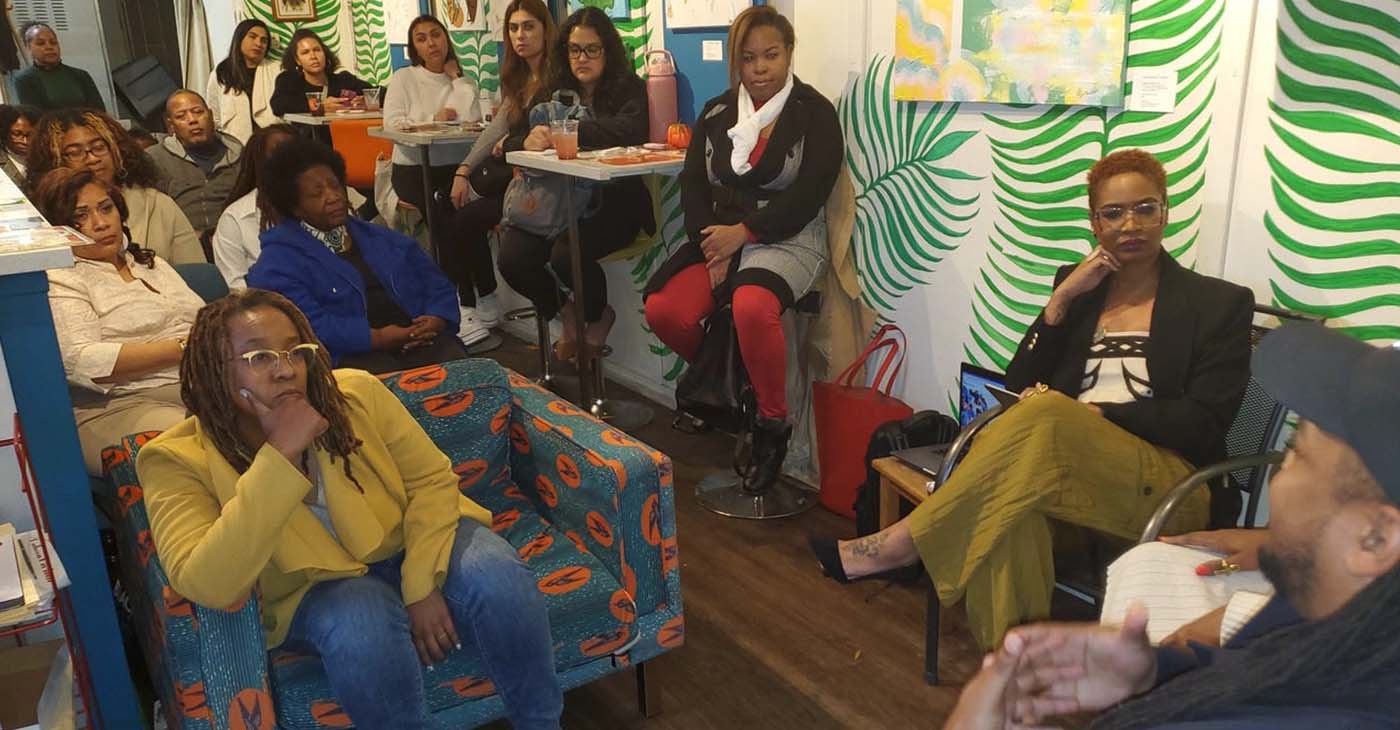
The California Black Health Network (CBHN) hosted a conversation focused on the mistrust of healthcare providers among Black Americans at Black-owned Drip Espresso, a popular coffee shop in Sacramento and a community partner of the organization. The CBHN’s Health4Life initiative discussion, “Health Care in Your Hands: Taking the Power to the People,” drew a full house of attendees.

By Antonio Ray Harvey
California Black Media
The California Black Health Network (CBHN) hosted a conversation focused on the mistrust of healthcare providers among Black Americans at Black-owned Drip Espresso, a popular coffee shop in Sacramento and a community partner of the organization.
The CBHN’s Health4Life initiative discussion, “Health Care in Your Hands: Taking the Power to the People,” drew a full house of attendees.
“Tonight’s event is one of many efforts to connect with the community and educate all of us about how to get better results and have better interactions with the health care system,” said the event’s moderator Amber Bolden, director of communications and development at Voice Media Ventures, a Black-owned-and-operated firm in Riverside that specializes in community outreach and engagement.
“In short: It was to arm the community with tools to have more positive interactions with the health care system,” Bolden continued.
The first speaker, Dr. Italo Brown, is a board-certified emergency room physician, health equity advocate and an assistant professor in Emergency Medicine at Stanford University School of Medicine.
He shared his personal journey as a medical professional, emphasizing that there is no “perfect strategy” in the pursuit of the best health care available.
“What I encourage people to do is be open enough with your health journey to exchange what’s working with other people,” Brown said. “You have to build a community in your health practice. Information sharing is highly beneficial.”
The second speaker was Mo’Nique Campbell, a Black trans woman and health educator who is a Trans Service Program manager at San Francisco Community Health Center. Her work centers on medical and mental healthcare.
Campbell encourages patients to learn as much as they can about their practitioner and develop a long-lasting relationship with healthcare providers.
“It’s not an interview where I am giving you, like, a simple job. This is my life. My body is my fortress and I’m leaving you responsible for it,” Campbell said.
There is a well-documented history of the medical establishment mistreating and misdiagnosing Black patients and approaching their care with deep racial biases.
There is also a troubling history of conducting experiments on enslaved people, enforcing sterilizations of Black women and the infamous Tuskegee syphilis study that denied treatment to about 400 Black men for decades as doctors monitored the progression of the disease in their bodies.
At CBHN’s community session, the case of Henrietta Lacks was discussed. Lacks was one of a diverse group of patients who unknowingly donated cells at Johns Hopkins University in 1951. The donation of Henrietta Lacks’ cells began what was the first, and, for many years, the only human cell line able to reproduce indefinitely.
Her cells, known as ‘HeLa cells’ for Henrietta Lacks, remain a remarkably durable and prolific line of cells used in research around the world. Lacks’ story impacted medical science and the field of bioethics.
In January 2022, Dr. Carolyn Roberts, a professor at Yale University, raised the issue of the medical establishment’s troubled historical relationship with African Americans during her testimony at the California Task Force to Study and Develop Reparation Proposals for African Americans.
“It is important for us to recognize that many critical issues that we are wrestling with today have long, old and deep historical roots,” Roberts said. “These include racial bias and disparate medical treatment, race- based medicine, and medical exploitation.”
The Health4Life program is a “Healthy Black People” campaign that empowers all Black Californians with “How Do I…” information and resources needed to help them navigate the system, advocate for friends, family, and individuals, and act when faced with discrimination.
During the conversation, Bolden referenced the California Health Care Foundation (CHCF)’s “Listening to Black California” study.
The CHCF compiled the report after listening to Black Californians’ experiences with racism and healthcare.
Considered as one of the most comprehensive studies focused on the healthcare experiences of Black Californians to date, the study included a survey of 3,325 Black Californian adults, in-depth interviews with 100 Black Californians, and 18 statewide focus groups.
“It is one of, if not, the largest study exploring the experiences of Black Californians in the state’s health care system,” Bolden told attendees.
According to the report by CHCF, Black Californians are highly intentional in their pursuit of physical and mental health. Most Black Californians report focusing on their mental health (79%); getting appropriate screenings or preventive care (77%); and tracking health indicators, such as blood pressure and cholesterol (71%).







Activism
Black Caucus Members Join Legislative Democrats to Condemn Fatal Shootings by Federal Agents
Lawmakers expressed concern and outrage over the killings of Alex Pretti, a Veterans Affairs ICU nurse, and Renee Nicole Good, a poet, writer, and mother of three. Sen. Laura Richardson (D–San Pedro) spoke on behalf of the CLBC, criticizing federal immigration enforcement practices and calling for accountability.
By Antonio Ray Harvey, California Black Media
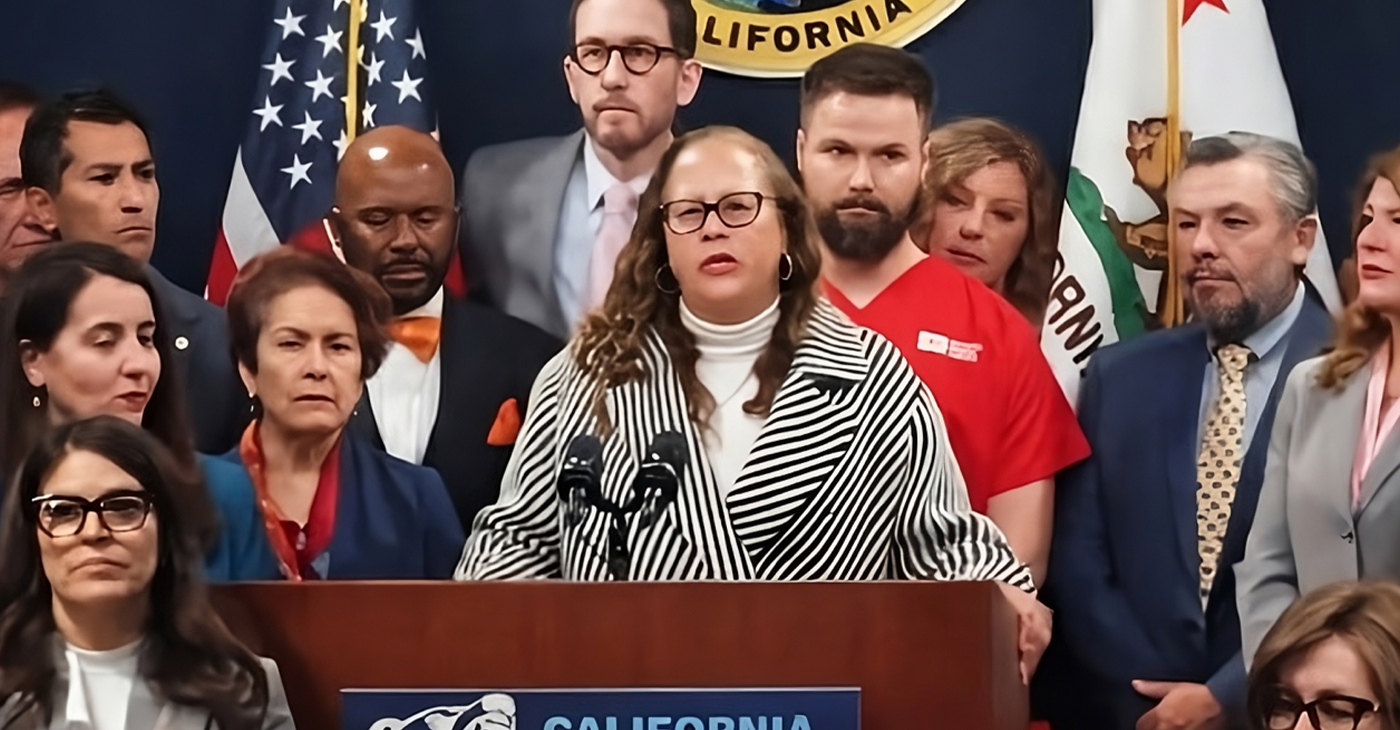
Led by Assembly Speaker Robert Rivas (D–Salinas) and Senate President Pro Tem Monique Limón (D–Santa Barbara), California Democratic lawmakers, including members of the California Legislative Black Caucus (CLBC), held a news conference in Sacramento on Jan. 26 to address recent fatal shootings of civilians by federal immigration agents in Minnesota and California.
Lawmakers expressed concern and outrage over the killings of Alex Pretti, a Veterans Affairs ICU nurse, and Renee Nicole Good, a poet, writer, and mother of three.
Sen. Laura Richardson (D–San Pedro) spoke on behalf of the CLBC, criticizing federal immigration enforcement practices and calling for accountability.
Richardson, who said she was previously married to a police officer, argued that Immigration and Customs Enforcement (ICE) and U.S. Border Patrol agents are not “making sure lawful activity is occurring.” She invoked the words of civil rights leader Dr. Martin Luther King Jr. to condemn what she described as public silence in the face of injustice.
“We are Californians. We are Americans, and we will not be silent. We will be here every time, every day, until this stops,” Richardson said.
Assemblymember Mark González (D–Los Angeles) recalled the names of people who were allegedly shot in January during enforcement operations involving ICE or U.S. Border Patrol agents.
On New Year’s Eve, Keith Porter Jr., 43, was allegedly shot and killed by an off-duty ICE agent in Northridge, Los Angeles. Authorities said the confrontation occurred outside an apartment complex after the agent alleged Porter fired celebratory gunshots into the air.
“What’s been happening there is not isolated. It’s part of a dangerous pattern of federal power turning inward on the people it claims to serve,” González said.
Following the news conference, Democratic lawmakers announced a slate of legislative proposals to increase oversight and limit state law enforcement’s involvement in federal immigration enforcement.
During the briefing, Rivas described the fatal incidents as an “assault on the American right to life” and characterized federal agents’ actions as a form of “out-of-control violence.”
On Jan. 6, Assemblymember Isaac Bryan (D–Ladera Heights) introduced Assembly Bill 1537, titled “Peace Officers: Secondary Employment.” The bill would prohibit California peace officers from taking secondary employment, contract work, or volunteer roles with the U.S. Department of Homeland Security (DHS), its contractors, or any entity involved in immigration enforcement.
“Right now, California’s law enforcement officers can take second jobs with ICE,” Bryan, a member of the CLBC, wrote in a Jan. 27 Instagram post. “AB 1537
Activism
At Sac Summit, California African American Chamber of Commerce Shows Growing Clout; Lays Out Top Goals
With the theme “Driving Equity Through Economic Innovation,” discussions at the CAACC summit focused on the intersection of policy and commerce, aiming to widen access to California’s economic landscape for historically underfunded communities.
By Antonio Ray Harvey, California Black Media
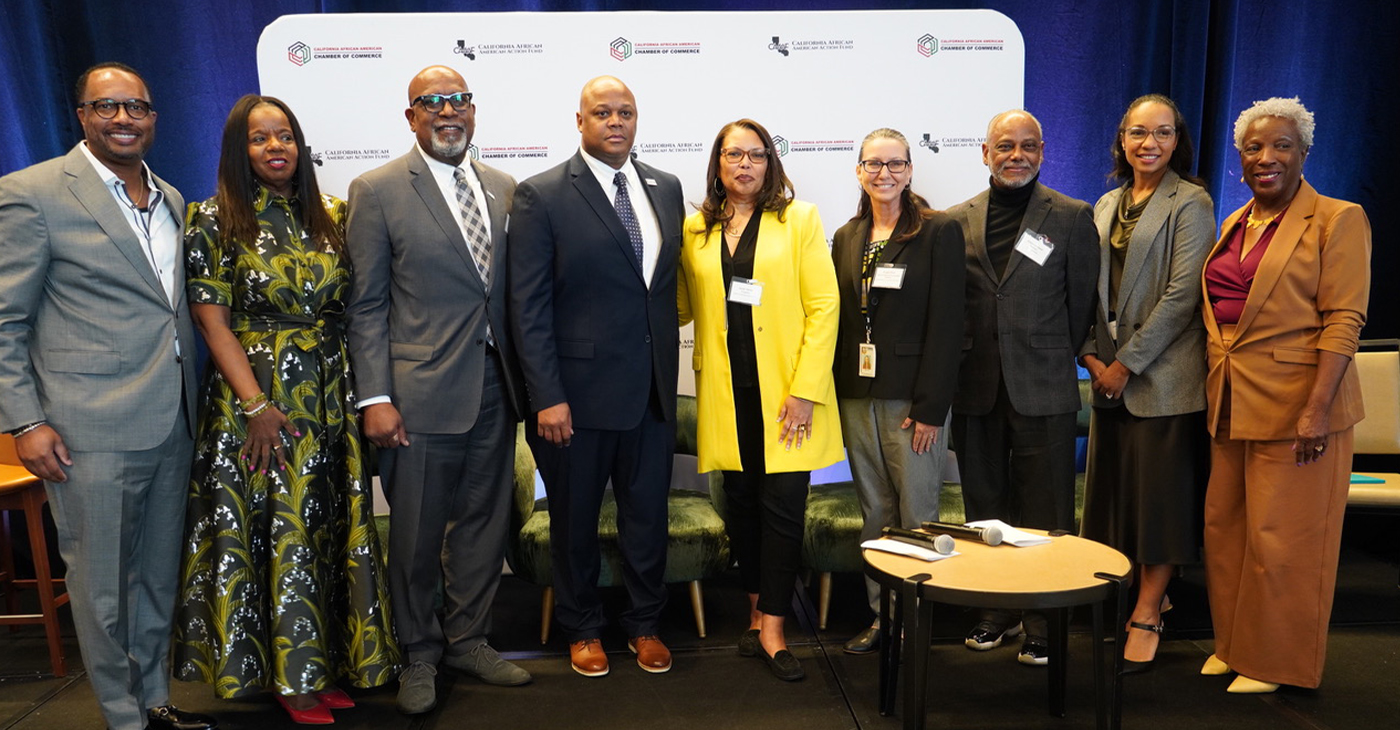
In step with its commitment to drive economic growth, equity, and wealth creation for African American businesses in the Golden State, the California African American Chamber of Commerce (CAACC) held its third annual California American Economy Summit at the Kimpton Sawyer Hotel in Sacramento on Jan. 28.
Organized by CAACC President and CEO Ahmad Holmes, along with CB Communications, members and the board of directors of the statewide organization shared the group’s current priorities and talked about its growing influence across California.
“This is about all of the information we are gathering for our CAACC membership that trickles down to all the chambers across the state,” said Chairperson Patricia Watts, who is also the proprietor of Cerritos-based FCI Management, an energy and water consulting firm.
“The idea is that we are one voice — especially when it comes to policy issues and information sharing. We’re only stronger if we work together,” Watts said, speaking about the CAACC’s growing influence.
With the theme “Driving Equity Through Economic Innovation,” discussions at the CAACC summit focused on the intersection of policy and commerce, aiming to widen access to California’s economic landscape for historically underfunded communities.
The agenda included plenary sessions with topics covering building economic power through artificial intelligence (AI), strengthening Black businesses, increasing state contracting opportunities and cross-sector collaboration to drive business growth.

“We’re grateful for all the entrepreneurs that were here, all the corporate leaders, the policymakers, investors, and community champions all in one single room,” Holmes said.
Gov. Gavin Newsom delivered a video message opening the summit.
State officials like California State Controller Malia Cohen and State Treasurer Fiona Ma also attended.
Ma participated in a fireside chat with Regina Brown Wilson, the Executive Director of California Black Media (CBM).
Their conversation focused on economic development, infrastructure investment, and fiscal stewardship aimed at driving long-term growth in California. In addition, Ma shared insights into state-level initiatives to expand access to capital and support the growth of small businesses for underserved entrepreneurs.
Closing out the event, Toks Omishakin, California secretary of the State Transportation Agency; Danetta Jackson of the Department of General Services; and former Major League Baseball player and 2022 World Series–winning manager Dusty Baker were honored with community recognition awards.
Derek Smith, a CAACC board member who chairs both the Audit Committee and the Political Action Committee, said the organization continues to expand its membership, raise its profile, and execute a strategic plan to reach every region of the state.
“This summit is the best one I’ve ever been a part of. We are becoming a force, and I think the state has been waiting for someone to step up,” Smith says. We had a few chambers out there, but we’re finally stepping in and taking control. We’re going to lead for as long as we can.”
Antonio Ray Harvey
$96 Million Allocated So Far to Black-Owned Firms as High-Speed Rail Project Expands Jobs, Boost Local Economies
Sen. Lola Smallwood-Cuevas (D-Los Angeles), a member of the California Legislative Black Caucus (CLBC) and Chair of the Senate Committee on Labor, Public Employment and Retirement, says the rail project “is exactly the kind of investment” California needs.

By Antonio Ray Harvey, California Black Media
As of May 31, the most recent data from the California High-Speed Rail Authority shows that 47 African American-owned firms are participating in the project as Disadvantaged Business Enterprises (DBEs).
A total of 936 Certified Small businesses are working on the high-speed rail program statewide, representatives of the high-speed rail project say.
The number of Black-owned DBE firms (5.2%) accounts for $96 million of the $1.136 billion allocated to minority firms thus far.
Sen. Lola Smallwood-Cuevas (D-Los Angeles), a member of the California Legislative Black Caucus (CLBC) and Chair of the Senate Committee on Labor, Public Employment and Retirement, says the rail project “is exactly the kind of investment” California needs.
Smallwood-Cuevas, speaking in Aug. 25 at the State Capitol Swing Space Annex — along with a coalition of Democratic state legislators and union leaders — provided an update on the California High-Speed Rail project and its efforts to employ people from the Black community and businesses.
“It builds a cleaner, more connected California while creating thousands of union jobs,” said Smallwood-Cuevas. “And we must ensure workforce equity, with pathways that open doors for workers who too often have been left out of good-paying careers.”
The remaining DBE minority-owned firms received the following amounts:
- Asian Subcontinent: 24 firms received approximately $65 million
- Asian-Pacific Islander: 52 firms received approximately $86 million
- Native American: 6 firms received approximately $39 million
- Hispanic/Latino: an unspecified number of DBE businesses received approximately $848 million
There are currently 328 certified DBEs participating in the project, according to the California High Speed Authority. The multi-billion-dollar project is billed to be committed to small, disabled, disadvantaged, and diverse businesses playing a major role in building the statewide high-speed rail project.
“As a Central Valley native, I know firsthand how transformative high-speed rail will be for our communities,” stated Assemblymember Lori D. Wilson (D-Suisun City) a member of the CLBC and Chair of the Assembly Transportation Committee.
“Stable and sustained funding is essential to delivering this project and fulfilling the promise made to voters.”
The news conference was hosted by Senate Transportation Chair, Sen. Dave Cortese (D-San Jose), who was promoting Senate Bill (SB) 545. He and the California High-Speed Rail Authority (CHSRA) urged the Legislature to commit to a steady, annual investment from a cap-and-trade program to fund the high-speed rail project.
Dr. Melanie Okoro, the Principal and Chief Executive Officer of Eco-Alpha, attended the briefing. Eco-Alpha is a Sacramento-headquartered small, women-owned, minority-certified firm.
The company, not classified as a DBE, earned its status as a certified small business and a certified women-minority small business through the California Public Utilities Commission (CPUC) and the Department of General Services (DGS). The certification allowed Eco-Alpha to be featured by CHSRA as a small business working on the project.
The Black-owned firm provides engineering and environmental services to the California High-Speed Rail project, primarily focused on facilities operation and Maintenance.
Okoro said laborers are not the only workers benefiting from the project. Professionals of color in engineering, with specialized knowledge and problem-solving skills to design, build, and maintain a wide array of structures, systems, and products, are looking forward to these “great opportunities.”


WORK FROM HOME
Home-based business with potential monthly income of $10K+ per month. A proven training system and website provided to maximize business effectiveness. Perfect job to earn side and primary income. Contact Lynne for more details: Lynne4npusa@gmail.com 800-334-0540


Black Artists in America, Installation Three Wraps at the Dixon Gallery and Gardens

Grief, Advocacy, and Education: A Counselor Reflects on Black Maternal Health

Future of Florida’s Black History Museum in Limbo

New Research Shows the Many Benefits of Early Learning

South Hampton K-8 Students Among Top 10 Finalists for Samsung’s ‘Solve for Tomorrow’ Competition

Cuba: No Negotiation with US on the President or Political System

Brooklyn Academy of Music Names Jamaican-Born Tamara McCaw as President

Trinidad & Tobego – U.S. Launches WhatsApp Channel for American Citizens in the Country

Oakland Post: Week of March 18 – 24, 2026

AI Innovation vs. Ethics and Environmental Impact

AI, Web3, and Digital Reparations

What If You Owned Your AI Agent?

Season 7, Episode 3 – January Reporter’s Roundtable 📱

Season 7, Episode 3 – January Reporter’s Roundtable

AI, Media, and Power | Part 2, Real-World Impacts and Tradeoffs

Oakland Post: Week of February 11 – 17, 2026

Reflecting on Black History Milestones in Birmingham AL

CITY OF SAN LEANDRO STATE OF CALIFORNIA PUBLIC WORKS DEPARTMENT ENGINEERING DIVISION NOTICE TO BIDDERS FOR ANNUAL STREET OVERLAY/REHABILITATION 2019-21 – PHASE III

Oakland Post: Week of February 18 – 24, 2026

PRESS ROOM: NBA Hall of Fame Nominee Terry Cummings Joins 100 Black Men of DeKalb County to Launch Victory & Values Initiative

Oakland Post: Week of February 25 – March 3, 2026

Trump’s MAGA Allies are Creating Executive Order Plan to Steal the 2026 Midterms

U.S. manufacturing rebounds – how foundry services are adapting to rising demand

OP-ED: One Hundred Years of Black Workers Telling the Truth

Chase Oakland Community Center Hosts Alley-Oop Accelerator Building Community and Opportunity for Bay Area Entrepreneurs

Advancements in solar technology that are changing the way we power the world

Poll Shows Support for Policies That Help Families Afford Child Care

Oakland Post: Week of March 4 – 10, 2026

PRESS ROOM: Civil Rights TV Launches in Selma as the World’s First 24/7 Civil Rights Television Network

Woman’s Search for Family’s Roots Leads to Ancestor John T. Ward – A Successful Entrepreneur and Conductor on the Underground Railroad

Hyundai Ioniq 5 Parking, Safety, and 360 View #shorts

2025 Ioniq 5 New Wiper & Powerful Performance! #shorts

Electric SUV Range: Is 259 Miles Enough? #shorts

EV Charging: How Fast Can You Charge an Electric Vehicle? #shorts

Biometric Cooling… Messaging Seats…Come on! 2025 Infiniti QX80 Autograph 4WD

Charged Up: Witness the Magic of a Fully Electric Car! #shorts

Range Rover Sport PHEV Included…: See What’s Inside This Luxury SUV! #shorts

Invisible Hood View: Perfect Parking with X-Ray Vision! #shorts

AI Is Reshaping Black Healthcare: Promise, Peril, and the Push for Improved Results in California

ESSAY: Technology and Medicine, a Primary Care Point of View

Sanctuary Cities

The RESISTANCE – FREEDOM NOW

STATE OF THE PEOPLE: Freddie

ECONOMIC BOYCOTT DAY!!!!!

I told You So
-
 #NNPA BlackPress4 weeks ago
Poll Shows Support for Policies That Help Families Afford Child Care
-
 Activism4 weeks ago
Oakland Post: Week of March 4 – 10, 2026
-
 #NNPA BlackPress3 weeks ago
Woman’s Search for Family’s Roots Leads to Ancestor John T. Ward – A Successful Entrepreneur and Conductor on the Underground Railroad
-

 #NNPA BlackPress4 weeks ago
OP-ED: NNPA Launches 2026 “Leadership Matters” Video Series
-

 #NNPA BlackPress3 weeks ago
Advocates Raise Alarm Over ICE Operation, MOU and Detention Risks in Baltimore County
-

 #NNPA BlackPress3 weeks ago
COMMENTARY: Women of Color Shape Our Past and Future
-

 #NNPA BlackPress3 weeks ago
Pete Buttigieg to Join Mayor Randall Woodfin for Community Town Hall in Birmingham
-

 Activism2 weeks ago
Oakland Post: Week of March 11 -17, 2026
