
Activism
OPINION: Politics, Football and Identity in Trump’s America
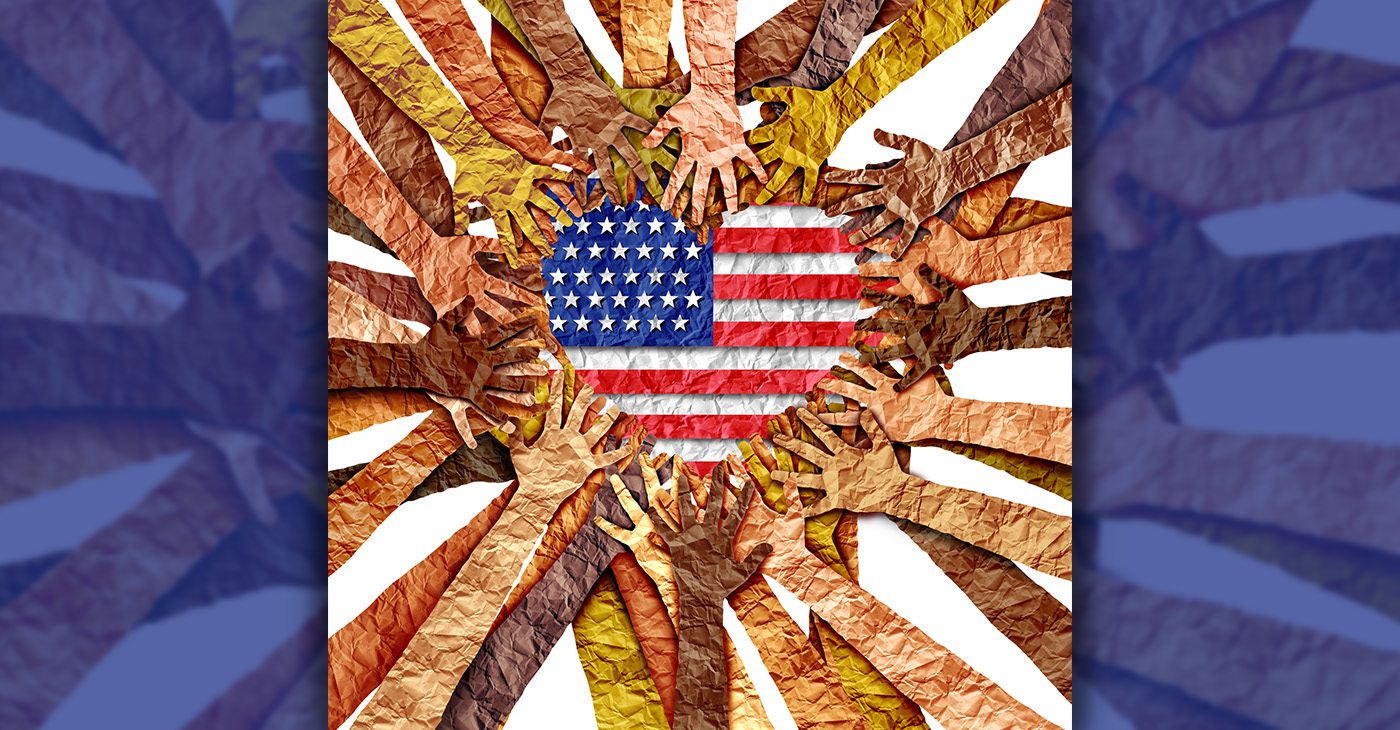
If you haven’t noticed, all Americans are engaged in an even bigger game that means so much more than the Super Bowl. Our democracy is falling apart.

By Emil Guillermo

Two Filipino American stories made headlines recently.
First, Nikko Remigio, the Filipino and African American kick returner for the Kansas City Chiefs, did not win Super Bowl LIX.
The other, Alameda’s Rob Bonta said no to running for governor. I don’t blame him. It’s not like a mass of people wanted him to run.
But I did.
Whenever there is a Filipino American in a place you don’t expect, I’m rooting for that person.
As California’s Attorney General, Bonta is probably the most active defender among Blue States pushing back against Trump’s Extreme-Right agenda.
I’d like to Bonta run for California’s top job, but he’s better off waiting in line. The Democrats need a spot for Kamala Harris, and Bonta not running obliges the hierarchy.
History can wait. Bonta’s just 52.
Harris has held off speculation of her next move, saying she just moved back to the state. But it seems governor is the path for her.
For now, Bonta needs to continue taking the fight to Trump in the courts.
Football and Identity Politics
My dad, whose birthday would have been Super Bowl weekend, came to the US in 1928 as a colonized Filipino, an “American National,” where he couldn’t be a citizen, vote, own property or even marry the person he wanted.
Not if they were White.
Still, he believed in America. He never gave up.
Sort of like Nikko Remigio.
My dad would have loved Nikko.
If you haven’t noticed, all Americans are engaged in an even bigger game that means so much more than the Super Bowl. Our democracy is falling apart.
You want to get passionate about Eagles and Chiefs?
Let’s be passionate about our Founding Fathers, too.
Nikko didn’t change the game. He touched it three times and provided more yards than all of KC’s running backs.
That’s all I needed to see.
He’s our Filipino guy.
Detractors may call it “identity politics.”
People don’t seem to understand the fight for visibility. To be recognized. To be seen. It’s all wrapped up in the big idea of Civil Rights.
I was nowhere near as good as Nikko when I played. But when you are blessed to play football, you play your hardest.
For me, that was when I was 12 and 13 playing Pop Warner football in San Francisco. I was MVP for my team as a running back.
But I was ashamed of my dad. He wasn’t like the other dads. And I remember going to the team banquet to retrieve my trophy alone.
I didn’t realize it probably meant more to him than I thought.
I wish I had shared my MVP moment with him like Nikko shared his joy with his dad, Mark, born in Seattle to two Filipino immigrants, and his mom, whose mixture of Black and White made Nikko the picture of diversity.
Filipino American and Black and White at the Super Bowl.
But don’t forget, there is one game bigger.
The Super Bowl for Democracy. We’re battling for it every day Trump pushes a cockamamie idea that shakes the foundation of our Democracy.
About the Author
Emil Guillermo is an award-winning journalist and commentator. Watch his micro-talk show “Emil Amok’s Takeout/What Does an Asian American Think?” on www.YouTube.com/emilamok1 Or join him on http://www.patreon.com/emilamok








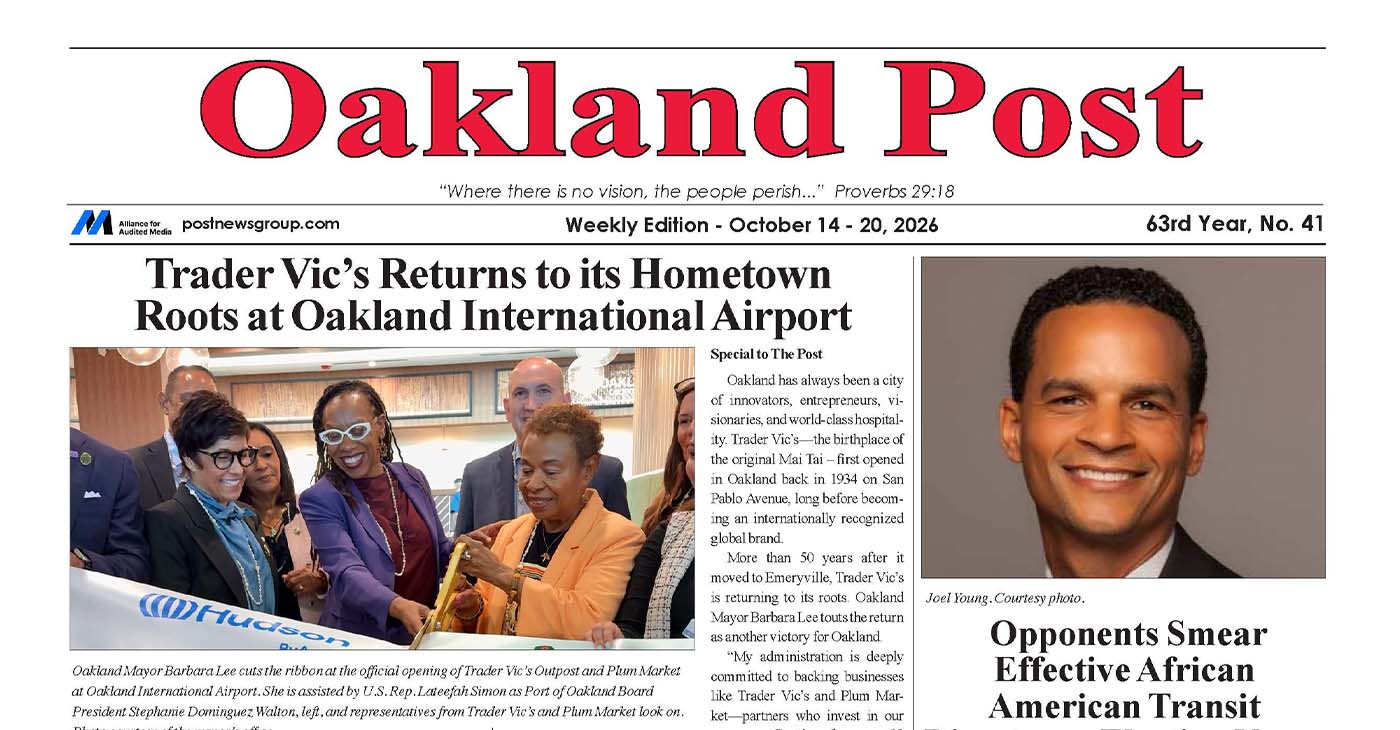
To enlarge your view of this issue, use the slider, magnifying glass icon or full page icon in the lower right corner of the browser window.
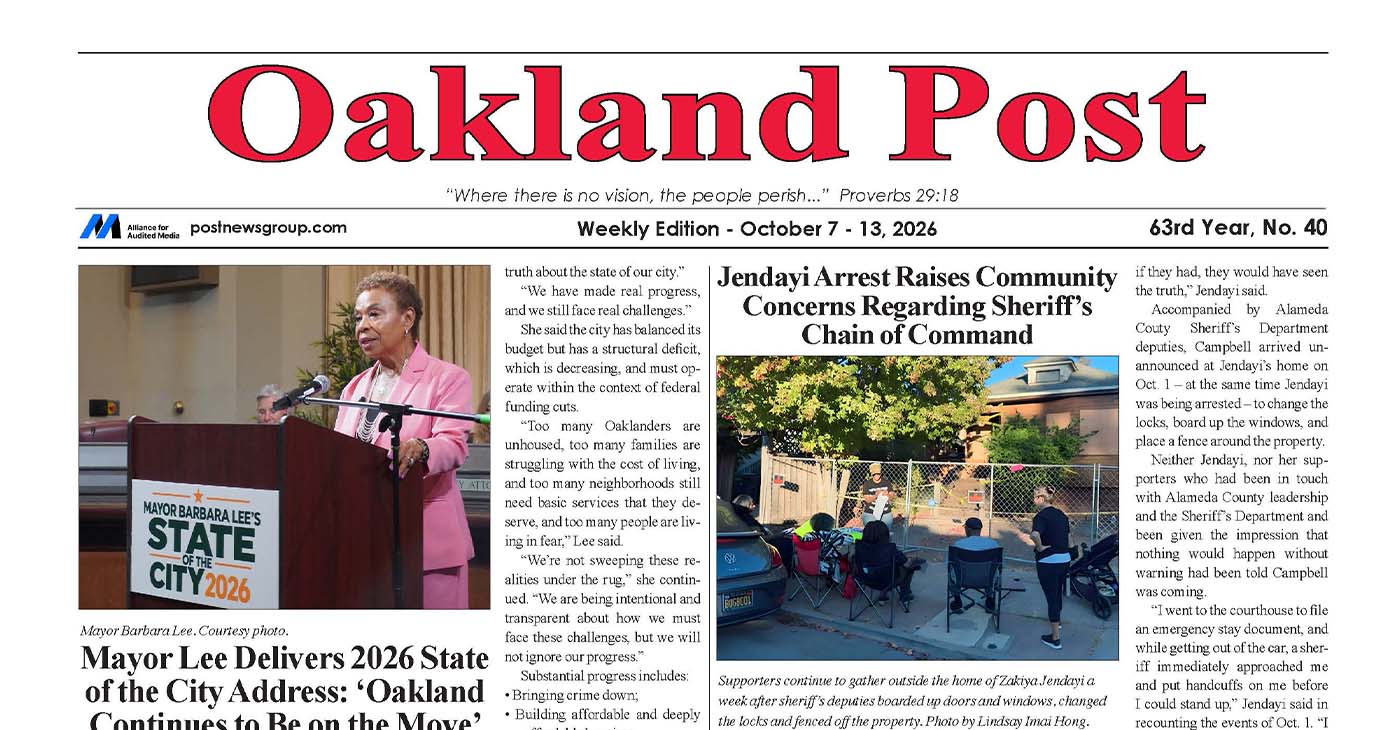
To enlarge your view of this issue, use the slider, magnifying glass icon or full page icon in the lower right corner of the browser window.
Activism
Oakland Post: Week of September 30 – October 6, 2026
The printed Weekly Edition of the Oakland Post: Week of September 30 – October 6, 2026
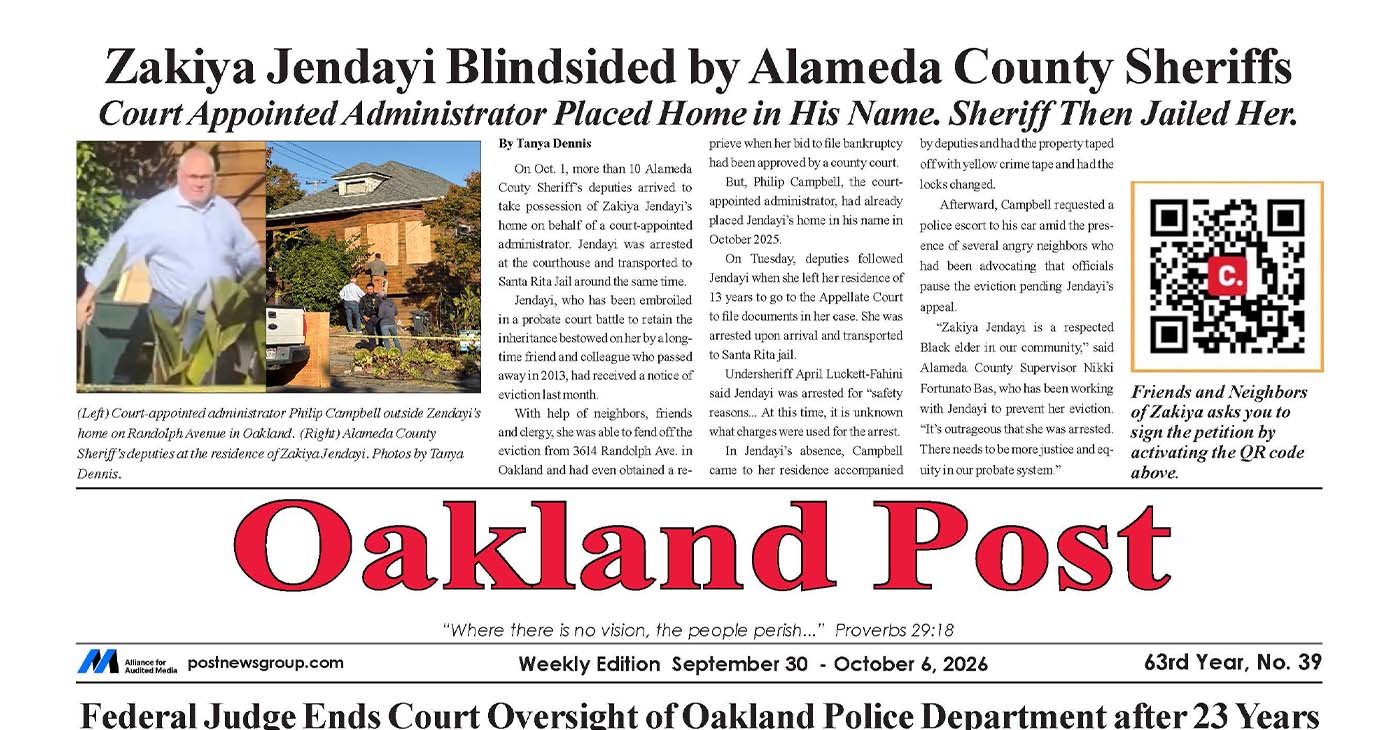
To enlarge your view of this issue, use the slider, magnifying glass icon or full page icon in the lower right corner of the browser window.


Mayor Barbara Lee Holds Special State of the City Address in Deep East Oakland

Practitioners of African Traditional Spirituality Offer Ancestral Reverence Ritual Oct. 31

It’s Time to Lose Weight Before the Holidays

Trader Vic’s Returns to Its Oakland Roots

Oakland Coal Terminal Backed by Trump Would Be Bigger, Dirtier Than Promised, Says Report

Opponents Smear Effective African American Transit Director as Election Nears

Oakland Post: Week of October 14 – 20, 2026

OP-ED: The Black Church Writes AI’s Next Chapter

OP-ED: The Black Church Writes AI’s Next Chapter

WCCUSD Joins Statewide Organic School Food Purchasing Cooperative

Democrats, Community Groups Back Measure EE to Change How Oakland Is Governed

Four Tips to Help You Plan a Holiday “Staycation”

Veterans Housing Project Proposed for South Richmond
PRESS ROOM: Transformative Justice Coalition 2026 Voting Rights Champion Awards Reception ‘Yesterday Is Today: The Battle For Voting Rights

Mayor Lee Delivers 2026 State of the City Address: ‘Oakland Continues to Be on the Move’

Misnamed ‘Parent’ PAC Seeks to Influence Oakland School Board Elections

Poll: Becerra Widens His Lead Over Hilton; Californians Split on Wealth Tax

Listening as a Lifeline: A Doula’s Witness to Black Maternal Health

Oakland Post: Week of September 9 – 15, 2026

County Office of Education Says OUSD Finances Are Getting Healthier, Materially Stronger

Richmond Tiny House Village Farm & Garden Set to Open Gates on Sept. 26

Mayor Lee Announces $1 Million Kaiser Permanente Grant for Pilot Program to Address Homelessness, Clean Up Public Spaces throughout Oakland

Latest Massacre in Haiti Reveals Cruelty U.S. Deportations

Zakiya Jendayi Arrested, Locked Out of Home by Sheriff’s Deputies

OPINION: Nolan Wells’ Death One of Several Signifying Racial Terror Lives on in U.S. South

Doulas Are Helping Black California Moms Navigate Pregnancy–Even as High Mortality Rates Persist

BLACspace Cooperative Invites Bay Area to Experience Oakland’s Black Cultural Ecosystem Through a BLAC Map Tour + Party

Oakland Post: Week of September 16 – 22, 2026

Oakland People’s Arms Embargo Coalition Demands End to Military Shipments Thru Oakland

Democratic Clubs Interview Candidates for Oakland School Board

The Conversation With Al McFarlane 6/23/26

Media Monday 6/22/26

LIVE! ASK ALMA! — TUES. 6.23.26 7PM EST

Car Buying Secrets: 4 Hidden Checks Before You Sign!

Is This 550 HP Charger Worth YOUR Money? AutoNetwork Review

Celebrating Juneteenth – Frederick Douglass on education and resistance

LIVE! — ASK ALMA! — TUES. 6.19.26 7PM EST

Hyundai Ioniq 5 Parking, Safety, and 360 View #shorts

2025 Ioniq 5 New Wiper & Powerful Performance! #shorts

Electric SUV Range: Is 259 Miles Enough? #shorts

EV Charging: How Fast Can You Charge an Electric Vehicle? #shorts

Biometric Cooling… Messaging Seats…Come on! 2025 Infiniti QX80 Autograph 4WD

Charged Up: Witness the Magic of a Fully Electric Car! #shorts

Range Rover Sport PHEV Included…: See What’s Inside This Luxury SUV! #shorts

Invisible Hood View: Perfect Parking with X-Ray Vision! #shorts
-
 Economy4 weeks ago
Poll: Becerra Widens His Lead Over Hilton; Californians Split on Wealth Tax
-
 Black History3 weeks ago
Listening as a Lifeline: A Doula’s Witness to Black Maternal Health
-
 Business4 weeks ago
County Office of Education Says OUSD Finances Are Getting Healthier, Materially Stronger
-
 Lead Story3 weeks ago
Zakiya Jendayi Arrested, Locked Out of Home by Sheriff’s Deputies
-
 Black History4 weeks ago
Doulas Are Helping Black California Moms Navigate Pregnancy–Even as High Mortality Rates Persist
-
 Art4 weeks ago
BLACspace Cooperative Invites Bay Area to Experience Oakland’s Black Cultural Ecosystem Through a BLAC Map Tour + Party
-
 Business4 weeks ago
From Historic Memories to New Possibilities: Oakland Celebrates Coliseum 60
-
 Community4 weeks ago
Asm. Corey Jackson Announces Launch of 24-Hour Childcare in His District
