
Oakland
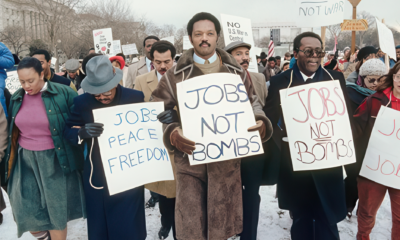
Opinion: Oakland Should Reject Jobs Policies that Increase Discrimination


By Oakland Community Leaders
There is a 13-to-1 racial wealth gap between the median White family and the median Black family in the U.S.
You can see one of the causes if you walk by any construction site and count up the number of Black workers you can find. One study listing the 33 whitest jobs in America found a large portion of them to be in the construction industry.
Ninety percent or more of electricians, painters, construction supervisors, tool and die makers, cement masons and others are white, according to a 2013 article in The Atlantic magazine.
Another national study found that minority-owned firms received only 57 cents for every dollar they would be expected to receive based on their availability in government contracting.
Women-owned firms obtained only 29 percent of the dollars they would be expected to receive.
In Oakland, African-American workers obtain 5 percent of the work on most city-funded construction projects, in spite of being 27 percent of the population.
The only project where the numbers are slightly better required a year-long battle by community groups to establish slightly more supportive hiring provisions, and even then some of the agreed-upon provisions were eliminated in the Project Labor Agreement negotiations when community groups were not allowed to be present.

Yet, the Building and Construction Trades Council of Alameda County has requested the City of Oakland (City) adopt a Project Labor Agreement (PLA) on projects funded by the Measure BB Transportation and Housing Bond Measure (Bond) approved by residents of Oakland for $346 million.
If and when the construction unions eliminate these racial disparities such a PLA might be reasonable. In the meantime, it would only reinforce discrimination, and mean that once again Black workers are paying heavy taxes for the building of projects where they are not allowed to work, and minority and women-owned companies are underrepresented.
The U.S. needs a stronger labor movement, and it can only be strong and united when individual unions purposefully and aggressively take on discrimination within their industries. The ILWU has a history of such action.
More recently, the hotel workers’ union has successfully demanded that hotels show progress in integrating their work force. Black workers have a higher percentage of unionization than any other ethnic group in the U.S., when they have the opportunity to join the unions in their industry.
The Building Trades should withdraw its request and work with creativity and enthusiasm on a set of policies that would reduce the deeply discriminatory situation for women and racially underrepresented workers and businesses in Oakland.
Now is the time, when jobs are a bit more plentiful and divisive competition is especially unwarranted. Among the needed steps:
- acknowledge the history of unfairness that has led to Black workers having less than 10 percent of the jobs on such projects as the 880 freeway replacement project;
- release figures on union membership by ethnicity, and release figures on the utilization of African-American journeymen;
- remove job requirements that serve as barriers, and provide support services to increase the numbers of African-American journeymen and apprentices;
- expand local apprenticeships in targeted zip codes and increase the percent of local Oakland hiring among apprentices;
- engage organizations that represent people of color and women in a massive campaign to integrate the industry;
- move apprenticeship programs to locations that are accessible to low-income urban residents;
- repudiate the arguments that hold up the precious banner of the labor movement in support of discriminatory policies;
- support Councilmember Desley Brooks’ ordiance to provide city funding for contruction job training, the Cypress Mandela Training Program and Citywide Job Centers.
In the meantime, it is the responsibility of the City of Oakland and its elected representatives to implement its own jobs policies that protect both labor and working conditions and the economic and job needs of Black, Latino, Asian, indigenous and female communities.
No policy which could potentially have a negative impact on Black workers and businesses should even be introduced for discussion until the disparity study the Council mandated years ago is finally completed and acted upon.
Any other course of action enhances both discrimination and gentrification.
Submitted by:
Kitty Kelly Epstein, PhD, Professor of Education and Urban Affairs; member of OaklandWORKS, author of “Organizing to Change a City”;
(2012)Margaret Gordon, Co-Director, West Oaklamd Environmental Indicators Project, former Port Commissioner;
Pastor Anthony L. Jenkins Sr., Taylor Memorial United Methodist Church;
Brian Beveridge, Co-Director West Oakland Environmental Indicators Project, OaklandWORKS Alliance;
Robyn Hodges, OaklandWORKS Alliance;
Paul Cobb, Publisher, Post News Group






Activism
Oakland Post: Week of February 25 – March 3, 2026
The printed Weekly Edition of the Oakland Post: Week of – February 25 – March 3, 2026
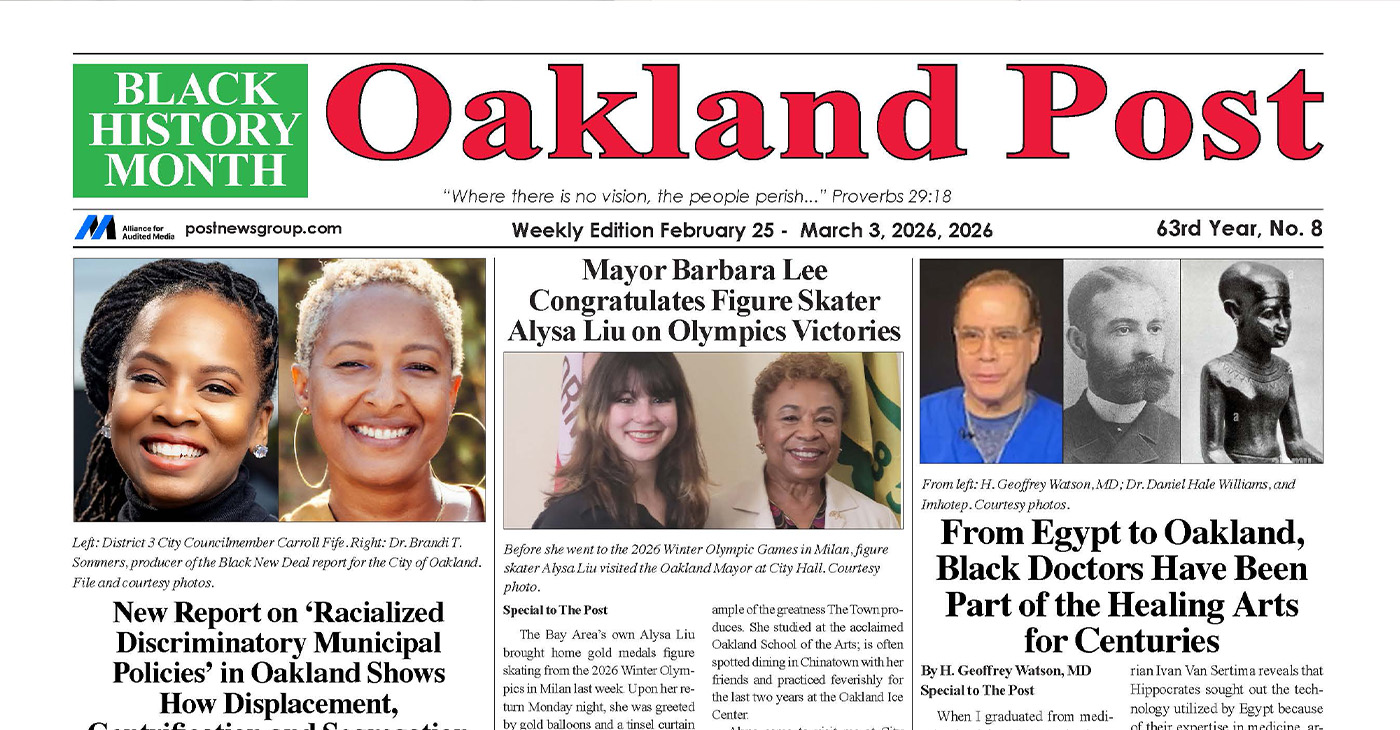
To enlarge your view of this issue, use the slider, magnifying glass icon or full page icon in the lower right corner of the browser window.

Activism
Oakland Post: Week of February 18 – 24, 2026
The printed Weekly Edition of the Oakland Post: Week of – February 18 – 24, 2026
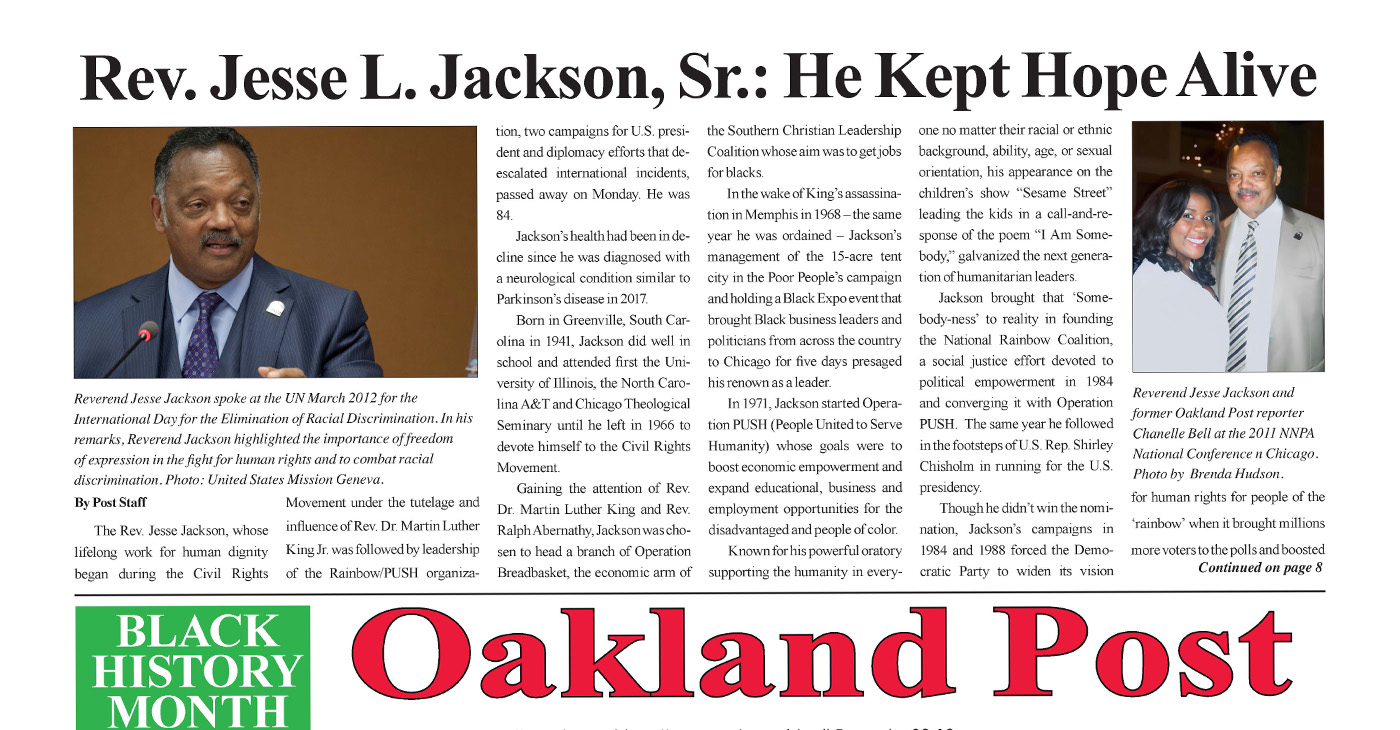
To enlarge your view of this issue, use the slider, magnifying glass icon or full page icon in the lower right corner of the browser window.
Activism
Oakland Post: Week of February 11 – 17, 2026
The printed Weekly Edition of the Oakland Post: Week of – February 11 – 17, 2026

To enlarge your view of this issue, use the slider, magnifying glass icon or full page icon in the lower right corner of the browser window.
WORK FROM HOME
Home-based business with potential monthly income of $10K+ per month. A proven training system and website provided to maximize business effectiveness. Perfect job to earn side and primary income. Contact Lynne for more details: Lynne4npusa@gmail.com 800-334-0540


Poll Shows Support for Policies That Help Families Afford Child Care

Oakland Post: Week of February 25 – March 3, 2026

Trump’s MAGA Allies are Creating Executive Order Plan to Steal the 2026 Midterms

PRESS ROOM: NBA Hall of Fame Nominee Terry Cummings Joins 100 Black Men of DeKalb County to Launch Victory & Values Initiative

Reflecting on Black History Milestones in Birmingham AL

OP-ED: One Hundred Years of Black Workers Telling the Truth

PRESS ROOM: Civil Rights TV Launches in Selma as the World’s First 24/7 Civil Rights Television Network

Advancements in solar technology that are changing the way we power the world

U.S. manufacturing rebounds – how foundry services are adapting to rising demand

Why has blood testing become so popular in today’s world?

Ghana Mourns a Son of the African World

OP-ED: Trump’s Policies Hurt Black America—and Everyone Else

OP-ED: Meta Deleted Me. I Still Don’t Know Why. And neither will you.

More than a Mission: Paying It Forward for the Future of Education

Avoid Eviction This Season: Landlord Checklist for Stable Tenancies

Life Expectancy in Marin City, a Black Community, Is 15-17 Years Less than the Rest of Marin County

Oakland Post: Week of January 28, 2025 – February 3, 2026

Community Celebrates Turner Group Construction Company as Collins Drive Becomes Turner Group Drive

California Launches Study on Mileage Tax to Potentially Replace Gas Tax as Republicans Push Back

Discrimination in City Contracts

Oakland Post: Week of January 21 – 27, 2026

Book Review: Books on Black History and Black Life for Kids

COMMENTARY: The Biases We Don’t See — Preventing AI-Driven Inequality in Health Care

Post Newspaper Invites NNPA to Join Nationwide Probate Reform Initiative

Medi-Cal Cares for You and Your Baby Every Step of the Way

Black History Events in the East Bay

Art of the African Diaspora Celebrates Legacy and Community at Richmond Art Center

COMMENTARY: The National Protest Must Be Accompanied with Our Votes

After Don Lemon’s Arrest, Black Officials Raise Concerns About Independent Black Media

New Bill, the RIDER Safety Act, Would Support Transit Ambassadors and Safety on Public Transit

Hyundai Ioniq 5 Parking, Safety, and 360 View #shorts

2025 Ioniq 5 New Wiper & Powerful Performance! #shorts

Electric SUV Range: Is 259 Miles Enough? #shorts

EV Charging: How Fast Can You Charge an Electric Vehicle? #shorts

Biometric Cooling… Messaging Seats…Come on! 2025 Infiniti QX80 Autograph 4WD

Charged Up: Witness the Magic of a Fully Electric Car! #shorts

Range Rover Sport PHEV Included…: See What’s Inside This Luxury SUV! #shorts

Invisible Hood View: Perfect Parking with X-Ray Vision! #shorts

AI Is Reshaping Black Healthcare: Promise, Peril, and the Push for Improved Results in California

ESSAY: Technology and Medicine, a Primary Care Point of View

Sanctuary Cities

The RESISTANCE – FREEDOM NOW

STATE OF THE PEOPLE: Freddie

ECONOMIC BOYCOTT DAY!!!!!

I told You So

-
 Activism3 weeks ago
Community Celebrates Turner Group Construction Company as Collins Drive Becomes Turner Group Drive
-
 Business3 weeks ago
California Launches Study on Mileage Tax to Potentially Replace Gas Tax as Republicans Push Back
-
 Activism3 weeks ago
Discrimination in City Contracts
-
 Arts and Culture3 weeks ago
Book Review: Books on Black History and Black Life for Kids
-
 Activism3 weeks ago
COMMENTARY: The Biases We Don’t See — Preventing AI-Driven Inequality in Health Care
-
 Activism3 weeks ago
Post Newspaper Invites NNPA to Join Nationwide Probate Reform Initiative
-
 Alameda County3 weeks ago
Black History Events in the East Bay
-
 Activism3 weeks ago
Art of the African Diaspora Celebrates Legacy and Community at Richmond Art Center
