
Opinion
Opinion: Bail Bond System is Fundamentally Unjust

 By Paul Clermont
“Innocent until proven guilty” is a fundamental principle of decent societies worldwide.
So is the idea that people who cause harm should be held accountable.
But what if you are innocent of the crime? Shouldn’t that mean you receive no punishment? Of course, but that’s not always how it works in the real world, thanks to our country’s money bail policies.
What’s wrong with them? Simply put, they’re unjust.
Here’s why.
Suppose you’re arrested, perhaps only for a minor or non-violent crime. For whatever reason, the court decides not to release you on personal recognizance until the trial date, so it sets a cash bail amount.
Your choice is to post the bail or sit in jail.
If you’re unemployed or have one of the many millions of poorly paid jobs, raising cash bail poses a major problem. But if you can come up with 10 percent of the bail amount, a bail bondsman will put up the rest so you can be released while your case moves forward.
Then your case comes to trial or charges are dropped. Had you not needed the bail bondsman, your money would be returned in full minus a few administrative fees.
But if you couldn’t raise the bail money yourself, the bail bondsman gets to keep the 10% you did put in; no crime but you’re punished nevertheless.

If you don’t like that deal—who would?—you stay in jail awaiting trial. In the meantime, you probably lose your income while you’re there and perhaps your job.
Again no crime, but punishment anyway.
Unsurprisingly, the impact of these policies is greatest on the poor and those with moderate incomes, because if you have enough money (California’s median bail amount is $50,000.) you post your own bail and go about your business, with at most only travel restrictions, getting your money back when you show up for the trial, or sooner if charges are dropped.
Now suppose you are found guilty.
If you’re wealthy enough to have posted the full bail, you get your punishment but your bail money is returned. If you needed the bail bondsman, you get the punishment plus the equivalent of a fine—10 percent of your bail. Guilty or innocent, this hardly constitutes equal treatment before the law, and if it seems frighteningly un-American, that’s because it is.
We still have serious injustices that need rectifying, and our system of money bail is one of them.
The theory behind bail is that the court wants to guarantee that a defendant who doesn’t need to be detained as a public safety risk will show up for trial.
Yet despite its substantial bail requirements, California has the lowest court appearance rates in the country. Other states have passed reforms with great success.
For example, Kentucky releases about 70 percent of the people awaiting trial, and 89 percent of them make all their court appearances. What’s more, 92 percent of them are not re-arrested while they’re on pretrial release.
So if a practice is fundamentally unjust and also doesn’t accomplish what its supporters claim, isn’t it time to get rid of it? This is not a left versus right or a partisan issue, nor is it a soft- versus tough-on-crime issue. It’s the righting of a basic unfairness that has lingered far too long.
In the next month, our Legislature votes on a bail reform bill that addresses these injustices without compromising the ability to protect against flight risk and keeping our communities safe.
If bail reform sounds like a common-sense reform that is long overdue, let your Assembly Member know where you stand and that it’s time to act.
California has long been a leader on reforms that make our society more just and fair; let’s keep it that way by changing the way we approach money bail.
Paul Clermont is from the Bay Area chapter of Bend the Arc Jewish Action.










Activism
Oakland Post: Week of September 9 – 15, 2026
The printed Weekly Edition of the Oakland Post: Week of September 9 – 15, 2026

To enlarge your view of this issue, use the slider, magnifying glass icon or full page icon in the lower right corner of the browser window.
Activism
Oakland Post: Week of September 2 – 8, 2026
The printed Weekly Edition of the Oakland Post: Week of September 2 – 8, 2026
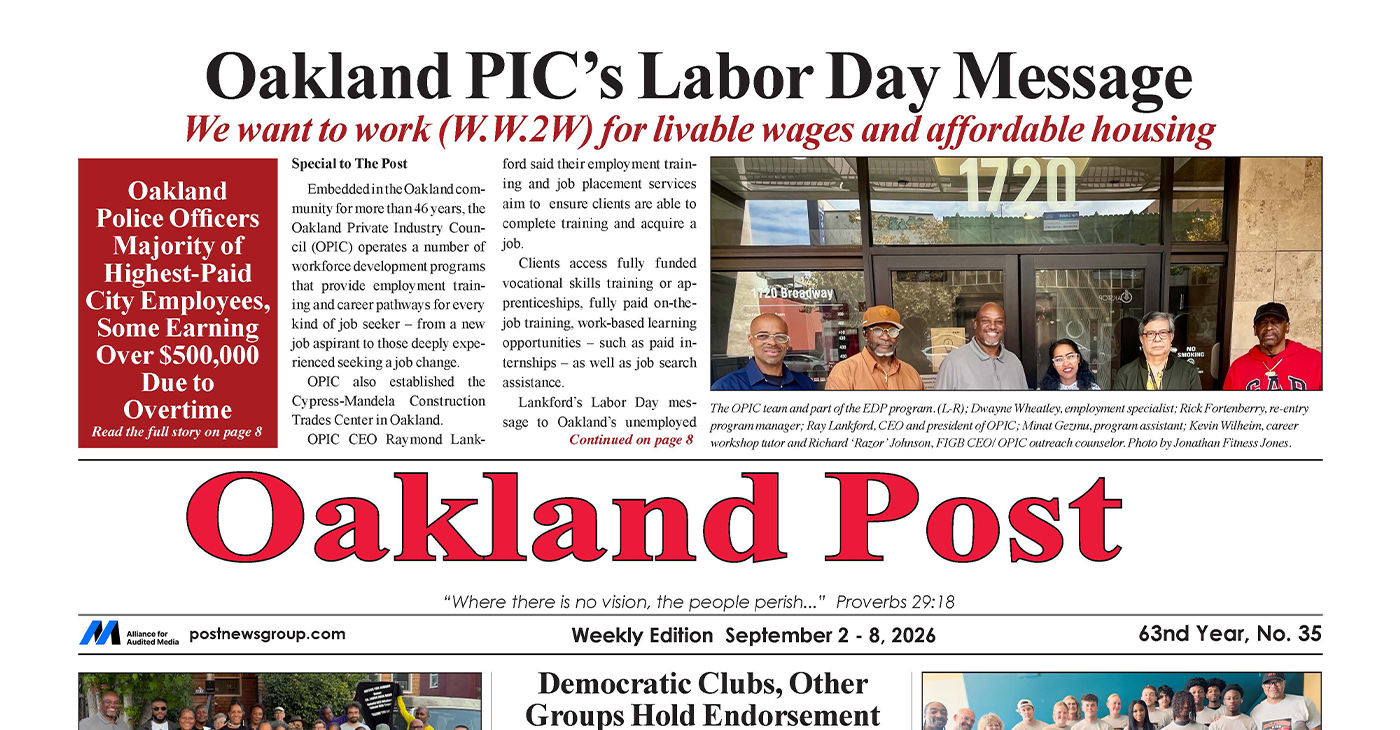
To enlarge your view of this issue, use the slider, magnifying glass icon or full page icon in the lower right corner of the browser window.
Activism
Oakland Post: Week of August 26 – September 1, 2026
The printed Weekly Edition of the Oakland Post: Week of August 26 – September 1, 2026
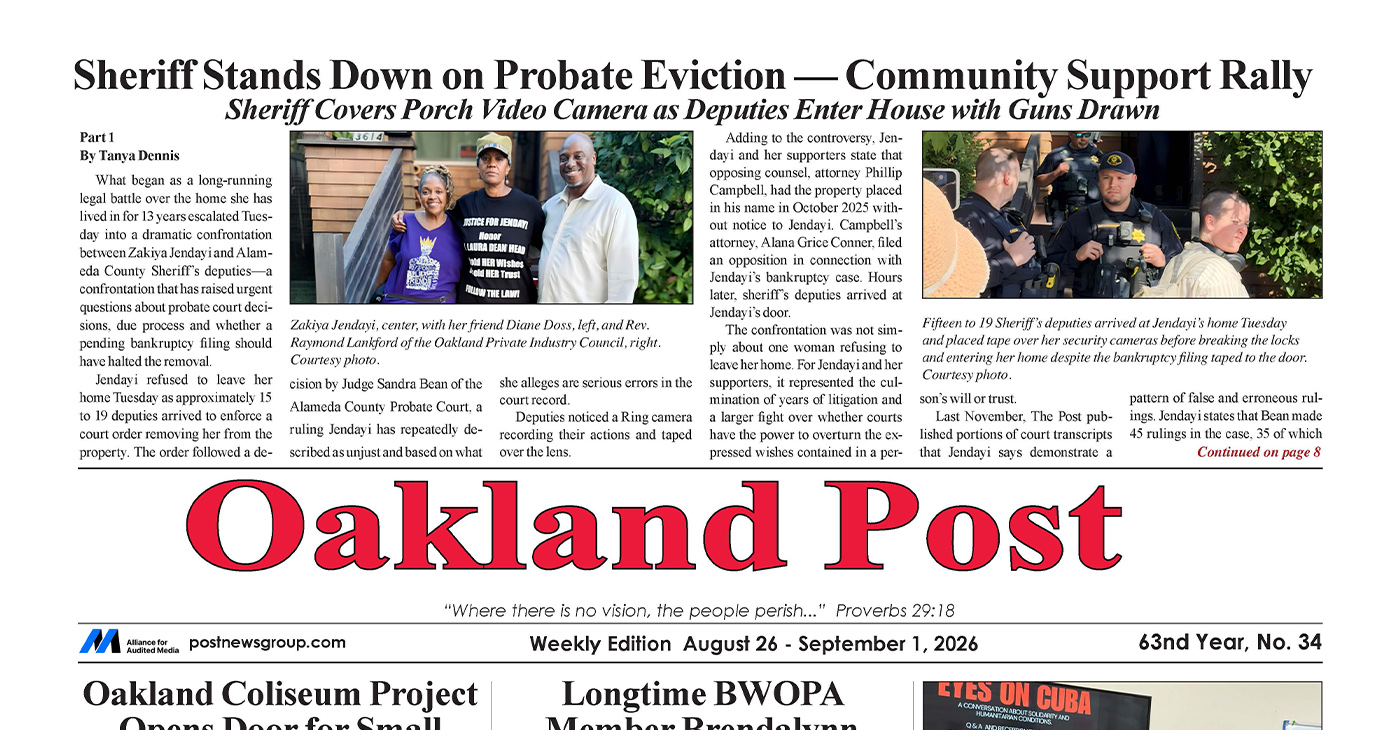
To enlarge your view of this issue, use the slider, magnifying glass icon or full page icon in the lower right corner of the browser window.



Port of Oakland, Army Corps Sign Historic Harbor Design Agreement

Democratic Clubs Interview Candidates for Oakland School Board

Nuna Phillips-McKee Celebrates 100 Years: ‘A Century of Faith, Family and God’s Amazing Grace!’

D.A. Ursula Jones Dickson: Terminix to Pay $3.15 Million Over Illegal Disposal of Pesticides, Customer Records

REPORT: Community Level Policy Is Impacting Homelessness and Drug Abuse in California
OPINION: AI Needs to Know Who Is the Boss
Goldi-Locs and Two (or Three) Bears in the Forest in California Hills

Election Watch 2026: 85% of Eligible Voters in California Are Registered

Don’t Let scammers Crash Your School Year

BOOK REVIEW — Curved Air: A Biography of Sickle Cell Anemia and the Quest to Cure the First Molecular Disease

California’s Legal Cannabis Market Hits $8 Billion as State Touts Progress on Fighting Drugs, Crime

Blacks and Latinos Clash Over LA’s Barrio Run; Mayor Karen Bass Calls for Dialogue Across Racial, Neighborhood Lines

Asm. Smallwood-Cuevas’s Bill Repealing ‘Racist’ CalWORKs ‘Man-in-the-House’ Rule Clears Legislature

Asm. Smallwood-Cuevas’s Bill Repealing ‘Racist’ CalWORKs ‘Man-in-the-House’ Rule Clears Legislature

‘Ready to See These Bills Become Law’: Sen. Weber’s Package of 15 Bills Advance to Gov. Newsom’s Desk

Department of Homeland Security Demands California Secretary of State Shirley N. Weber Scrub Voter Rolls

New Judge Could Decide if Karmelo Anthony Gets a New Trial

“The Power to See Threats Sooner”: Gov. Newsom, Safety Officials Showcase California’s Investments in Hi-Tech Wildfire Prevention

Alpha Kappa Alpha Sorority, Inc. Celebrates New North Atlantic Regional Director

California Sen. Padilla Joins Colleagues to Introduce Bill Imposing Term Limits on Supreme Court Justices

Less Affluent School Districts, Including Sacramento City, Face Threat of State Takeover

Car Wash Workers Cope with Lingering Impacts of ICE Raids

Oakland Post: Week of July 29 – August 4, 2026

How Oakland’s Courtsmith is Scaling its Business and Local Impact

ESSAY: California Can Close Its Colorectal Cancer Gap

Oakland Post: Week of August 5 – 11, 2026

As Part of Your Back-to- School Checklist, Vaccinate

Oakland ‘Port Serves as a Powerful Engine for Good Jobs and Economic Development

Gov. Newsom Signs New Affordable Housing Legislation

Gov. Newsom Announces $109.6 Million in Funding for 278 Supportive Homes in Bakersfield, Contra Costa, Sacramento and Fresno

The Conversation With Al McFarlane 6/23/26

Media Monday 6/22/26

LIVE! ASK ALMA! — TUES. 6.23.26 7PM EST

Car Buying Secrets: 4 Hidden Checks Before You Sign!

Is This 550 HP Charger Worth YOUR Money? AutoNetwork Review

Celebrating Juneteenth – Frederick Douglass on education and resistance

LIVE! — ASK ALMA! — TUES. 6.19.26 7PM EST

Hyundai Ioniq 5 Parking, Safety, and 360 View #shorts

2025 Ioniq 5 New Wiper & Powerful Performance! #shorts

Electric SUV Range: Is 259 Miles Enough? #shorts

EV Charging: How Fast Can You Charge an Electric Vehicle? #shorts

Biometric Cooling… Messaging Seats…Come on! 2025 Infiniti QX80 Autograph 4WD

Charged Up: Witness the Magic of a Fully Electric Car! #shorts

Range Rover Sport PHEV Included…: See What’s Inside This Luxury SUV! #shorts

Invisible Hood View: Perfect Parking with X-Ray Vision! #shorts
-
 Community4 weeks ago
Less Affluent School Districts, Including Sacramento City, Face Threat of State Takeover
-
 Business4 weeks ago
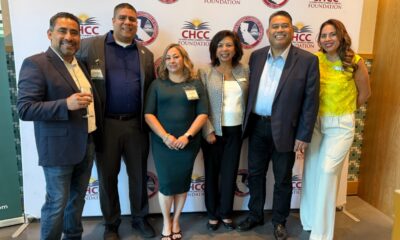
California Hispanic Chambers of Commerce Unveils: ‘Powering the Future’ Theme for 47th Annual Statewide Convention
-

 Community4 weeks ago
Four Candidates, Including Incumbent Barbara Lee, Qualify for Oakland Mayor’s Race
-
 Activism4 weeks ago
Oakland Post: Week of August 12 – 18, 2026
-
 Black History4 weeks ago
Oakland Observes Black August with Block Parties, Film Showings, Workshops
-

 Commentary4 weeks ago
COMMENTARY: Why Local School Tax Measure G1 Will Not Be on the November Ballot
-

 Business4 weeks ago
Returning to Its Roots, the Oakland Black-Eyed Pea Festival Partners with the Freedom Farmers Market Sept. 12
-

 Commentary2 weeks ago
Standoff for Justice: Our Homes Are Worth Fighting For
