
Activism
Open Letter to Mayor Thao: Reject Tidewater Development’s Construction Next to Geoffrey’s Inner Circle
Tidewater’s proposed development will harm Geoffrey’s Inner Circle through its very construction, in much the same way that another nearby Black business, Uncle Willie’s Original Bar-B-Que and Fish, was devastated by construction of a 27-story hotel tower adjacent to the historic building that housed this venerated Black business.

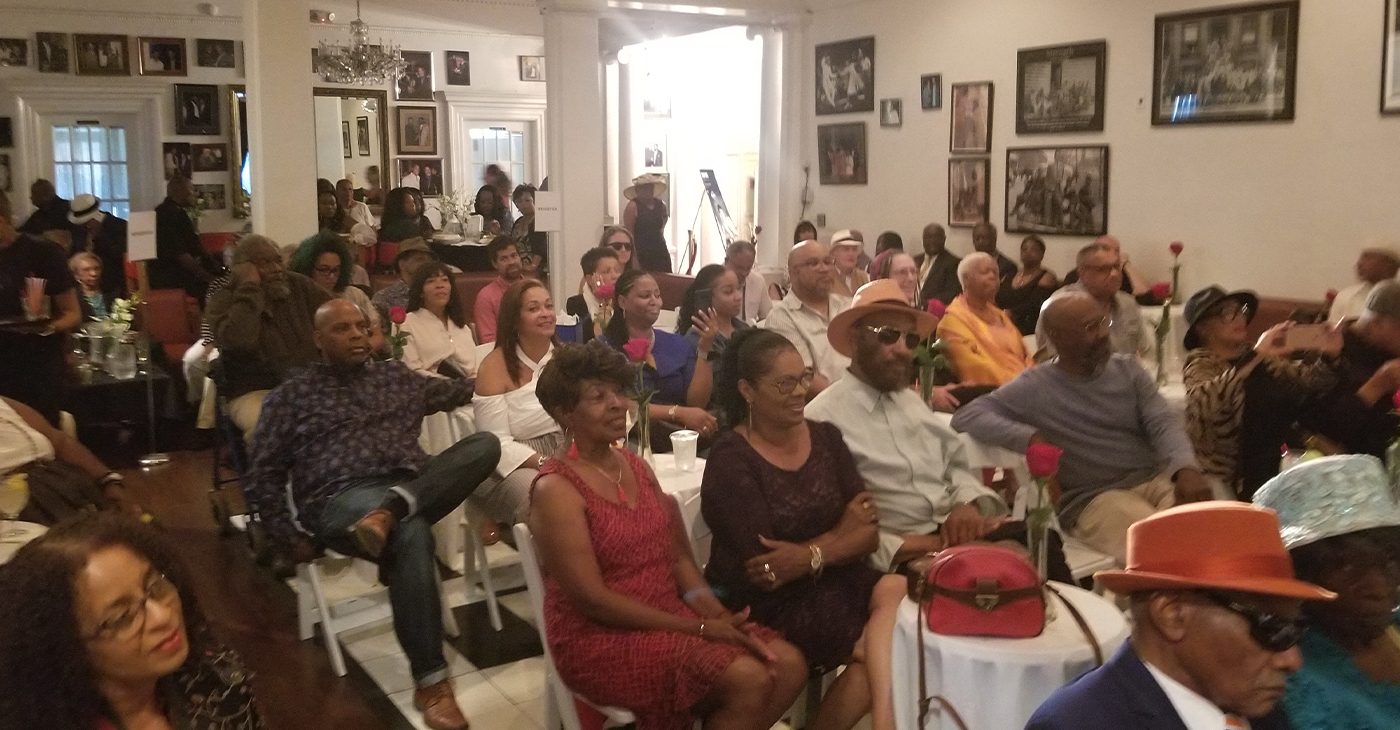
Special to The Post
We respectfully request that you vote “No” on the City Council resolution regarding Tidewater Franklin Street development due to be scheduled on the Jan. 16 City Council agenda.
Tidewater’s proposed development will harm Geoffrey’s Inner Circle through its very construction, in much the same way that another nearby Black business, Uncle Willie’s Original Bar-B-Que and Fish, was devastated by the construction of a 27-story hotel tower adjacent to the historic building that housed this venerated Black business.
Further, the Planning Commission made many errors in its approval process, including but not limited to the following:
- Its members acknowledged that they were not even aware that the Black Arts Movement and Business District existed.
- It ignored the fact that Geoffrey’s was entitled to critical protections as a recognized historic resource.
- It ignored the fact that Tidewater had not sought permits or permission to alter Mr. Pete’s building, although such alterations are an integral part of Tidewater’s proposal.
- The Planning Department did not provide, in a timely manner, relevant Public Records Act information requested by the appellant.
In addition, the Planning Department staff has refused to meet with Mr. Geoffrey Pete throughout the appeal process. Sadly, it also appears that the City’s own Department of Race and Equity has been bypassed on a matter with significant equity implications.
It should also be noted that there are dozens of studies indicating that residential construction like Tidewater’s drives out live entertainment venues. Many cities have laws to regulate such potential conflicts.
Geoffrey’s is a critical business to the Oakland community as a whole, and particularly to the African American community.
It has been a place of comfort and camaraderie for thousands of people who have listened to music, held celebrations, funeral repasts, and community meetings. And, Pete hosts an incubator program which has provided a haven for business owners who would not have had success if not housed in his building with below market-rate rent and other amenities, thus enabling them to survive in the ever-more costly downtown area.
The African American population in Oakland has decreased from 47% in the 1980s to 22% currently. A large part of the reason has been City policies which privilege the desires of wealthy developers over the needs of the Black community.
There are questions about housing and other matters which are too lengthy for this letter; we would be happy to discuss all of these with you.
We urge you in the strongest terms to support Geoffrey’s and refuse to vote in support of any measure presented to you that would allow Tidewater’s construction next to Geoffrey’s.
Signers (partial list):
Organizations
Black Women Organized for Political Action, Oakland Berkeley Chapter
Oakland East Bay Democratic Club
Block by Block Organizing Network
John George Democratic Club, Steering Committee
Niagara Movement Democratic Club
Everett and Jones Bar-B-Que
Uncle Willie’s Bar-b-Que and Fish
Joyce Gordon Gallery
Pastors:
Pastor Phyllis Scott, president, Pastors of Oakland
Rev. Dr. Lawrence Van Hook, Community Church
Rev. Dr. Jasper Lowery, International Outreach Ministries
Pastor Cornell Wheeler, Greater Whittington Temple, COGIC
Rev. Dr. Joe Smith, Good Hope MBC
Bishop Brandon Rheems, Center of Hope Community Church
Pastor Daniel Stevens, GreaterNew Life COGIC
Pastor Joseph Thomas, New Hope COGIC
Bishop Joseph Nobles, Dancey Memorial COGIC
Pastor Edwin Brown, Market Street Seventh Day Adventist
Bishop J.E. Watkins, Jack London Square Chapel COGIC
Rev. Kenneth Anderson, Williams Chapel MBC
Rev. Germaine Anderson, People’s MBC
Bishop Marcel Robinson, Perfecting Ministries
Pastor K J Williams, New Beginnings Church
Rev. Dr. Jeremiah Captain, Glad Tidings
Bishop George Matthews, Genesis Worship Center
Rev. Dr. David Franklin, Wings of Love SDA Church
Bishop Anthony Willis, Lily of the Valley Christian Center
Bishop L E Franklin, Starlight Cathedral
Rev. Dr. Sylvester Rutledge, North Oakland MBC
Pastor Raymond Lankford, MSW, Voices of Hope Community Church
Minister Candi Thornton, Arsola House Ministries
Rev. Dr. Joseph Jones, Alpha and Omega Ministries
Superintendent Dan Phillips, Greater Grace Temple, COGIC
Individuals:
Walter Riley, Attorney at Law
Corrina Gould, Tribal chair of Confederated Villages of Lisjan/Ohlone
Zach Norris, Open Society Foundation Fellow
Raymond Bobbitt, Business
Doug Blacksher
Terryn Niles Buxton, business
Lauren Cherry, School Administrator
Allene Warren
Nirali Jani, PhD, Professor of Education
Frankie Ramos, PhD, community organizer
Henry Hitz, Educator
Sheryl Walton, Community Organizer
Vincent Tolliver, Musician
Eleanor Stovall, Educator
Kitty Kelly Epstein, PhD, Professor of Urban Studies, and Education







Activism
Oakland Post: Week of September 23 – 29, 2026
The printed Weekly Edition of the Oakland Post: Week of September 23 – 29, 2026

To enlarge your view of this issue, use the slider, magnifying glass icon or full page icon in the lower right corner of the browser window.
Activism
Oakland Post: Week of September 16 – 22, 2026
The printed Weekly Edition of the Oakland Post: Week of September 16 – 22, 2026

To enlarge your view of this issue, use the slider, magnifying glass icon or full page icon in the lower right corner of the browser window.
Activism
Oakland Post: Week of September 9 – 15, 2026
The printed Weekly Edition of the Oakland Post: Week of September 9 – 15, 2026

To enlarge your view of this issue, use the slider, magnifying glass icon or full page icon in the lower right corner of the browser window.



Asm. Corey Jackson Announces Launch of 24-Hour Childcare in His District

IN MEMORIAM: The Rev. Leon “Sonny” Clark, Longtime Orange County Pastor and Community Leader, Dies at 72

Poll: Becerra Widens His Lead Over Hilton; Californians Split on Wealth Tax

From Historic Memories to New Possibilities: Oakland Celebrates Coliseum 60

County Office of Education Says OUSD Finances Are Getting Healthier, Materially Stronger

LIVE FREE Sunday Dinner Brings Faith, Fellowship and Civic Conversation to Oakland

Remembering Chauncey Bailey as Student Journalists Face Threats to Truth-Telling

BLACspace Cooperative Invites Bay Area to Experience Oakland’s Black Cultural Ecosystem Through a BLAC Map Tour + Party

In Wake of Death on Doorstep, Williams Chapel Baptist Church Calls for Better Care, Funding for Unhoused

Oakland Centenarian Nuna McKee Honored!

Caribbean Nations Produce Action Plan Calling for UK Reparations Over Slavery

Oakland Post: Week of September 23 – 29, 2026

Doulas Are Helping Black California Moms Navigate Pregnancy–Even as High Mortality Rates Persist

Newsom Signs Addictive Social Media Law to Protect Kids

On Your November Ballot: Prop 38 Would Allocate $8.4 Billion to Immunology and Immunotherapy Funding

Less Affluent School Districts, Including Sacramento City, Face Threat of State Takeover

ESSAY: California Can Close Its Colorectal Cancer Gap

California Hispanic Chambers of Commerce Unveils: ‘Powering the Future’ Theme for 47th Annual Statewide Convention

Four Candidates, Including Incumbent Barbara Lee, Qualify for Oakland Mayor’s Race

Oakland Post: Week of August 12 – 18, 2026

From Blueprint to Breakthrough: Tackling Affordable Housing in Oakland

Oakland Observes Black August with Block Parties, Film Showings, Workshops

COMMENTARY: Why Local School Tax Measure G1 Will Not Be on the November Ballot

Standoff for Justice: Our Homes Are Worth Fighting For

Returning to Its Roots, the Oakland Black-Eyed Pea Festival Partners with the Freedom Farmers Market Sept. 12

Oakland Post: Week of August 26 – September 1, 2026

NPRC Scores First Advocacy Victory: David Shaw Finally Gets His Wish to ‘Go Home’

Frontier Airlines’ Return to Oakland Airport Brings Flights, Jobs and Opportunity

Gubernatorial Candidate Steve Hilton Blasts California New Tire Rules; Newsom Hits Back

Chef Sharon Lee Blends Culinary Excellence, Education and Empowerment

The Conversation With Al McFarlane 6/23/26

Media Monday 6/22/26

LIVE! ASK ALMA! — TUES. 6.23.26 7PM EST

Car Buying Secrets: 4 Hidden Checks Before You Sign!

Is This 550 HP Charger Worth YOUR Money? AutoNetwork Review

Celebrating Juneteenth – Frederick Douglass on education and resistance

LIVE! — ASK ALMA! — TUES. 6.19.26 7PM EST

Hyundai Ioniq 5 Parking, Safety, and 360 View #shorts

2025 Ioniq 5 New Wiper & Powerful Performance! #shorts

Electric SUV Range: Is 259 Miles Enough? #shorts

EV Charging: How Fast Can You Charge an Electric Vehicle? #shorts

Biometric Cooling… Messaging Seats…Come on! 2025 Infiniti QX80 Autograph 4WD

Charged Up: Witness the Magic of a Fully Electric Car! #shorts

Range Rover Sport PHEV Included…: See What’s Inside This Luxury SUV! #shorts

Invisible Hood View: Perfect Parking with X-Ray Vision! #shorts
-
 Commentary4 weeks ago
Standoff for Justice: Our Homes Are Worth Fighting For
-
 Activism4 weeks ago
Oakland Post: Week of August 26 – September 1, 2026
-
 Business4 weeks ago
Frontier Airlines’ Return to Oakland Airport Brings Flights, Jobs and Opportunity
-
 Business4 weeks ago
Gubernatorial Candidate Steve Hilton Blasts California New Tire Rules; Newsom Hits Back
-
 Business4 weeks ago
Chef Sharon Lee Blends Culinary Excellence, Education and Empowerment
-

 Community4 weeks ago
Big City Mayors Ask for “Yes” Vote on Housing Bond Measure; Conservatives Say “No”
-

 Black History4 weeks ago
Jackie Wright Champions Bay Area Stories, Filmmakers and Cultural Institutions
-

 Education4 weeks ago
Gov. Newsom’s Latest Appointees Include Sacramento Advocate for Formerly Incarcerated Students; State’s New Tech Chief
