
#NNPA BlackPress
OP-ED: How one decision set voting rights back 50 years
NNPA NEWSWIRE — Ray Curry, Secretary-Treasurer, UAW — “What a lot of people don’t realize is that many aspects of the VRA are not permanent law. Many of the provisions are temporary and must be renewed by Congress. So, we must continually fight to protect this critical piece of civil rights legislation. We must fight challenges in the courts, fight to ensure the temporary provisions are renewed and fight to maintain the watchdog provisions of the Act at the state and local levels where we see voter suppression.”

The Mountain Standing Right Behind the Mountain Top

A longtime grassroots activist, Ray Curry is a member of Mount Zion Baptist Church in Nashville, a Silver Life member of the NAACP, and member of the NAACP National Board of Directors. He is also an active member of numerous community and social organizations including but not limited to the Michigan State Democratic Party, American Legion Post 177 in Murfreesboro, Tennessee, Unique Masonic Lodge #85, Charlotte Consistory #35, and Rameses Temple #51 in Charlotte, North Carolina, and various others. He resides in Detroit.
By Ray Curry, Secretary-Treasurer, UAW
This month marks the 54th anniversary of the signing of the Voting Rights Act (VRA), one of the most sweeping pieces of civil rights legislation in U.S. history. This ground-breaking measure, fought over and marched over and bleed over on the streets of Selma, Alabama, was signed into law by President Lyndon B. Johnson on August 6, 1965. It was designed to knock down legal barriers at state and local levels that prevented African Americans from exercising their right to vote.
That essential democratic right to have a say in who can best make government work for its people, had been guaranteed by the 15th Amendment to the Constitution, passed in 1870. The amendment stated that the right to vote could not be denied based on “race, color, or previous condition of servitude.”
And even though that sounds clear as a bell, the road to the polls was made instead an arduous and at times even perilous one with Jim Crow smack in the way, installing roadblocks and tripwire at as many turns as he could get away with. As originally written, the Voting Rights Act took an axe to those barriers.
But in 2013, the Supreme Court delivered a decision that, in effect, gutted VRA protections. Since then, we’ve seen numerous court challenges and legal maneuvering designed to further weaken the VRA. Designed to obfuscate that mountain top view of Dr. Martin Luther King Jr.’s promised land, that momentous decision put another mountain of dehumanizing anti-voting measures in place.
The 2013 decision did its dirty work by seizing on one of the most critical temporary provisions, known as Section 4.
What a lot of people don’t realize is that many aspects of the VRA are not permanent law. Many of the provisions are temporary and must be renewed by Congress. So, we must continually fight to protect this critical piece of civil rights legislation. We must fight challenges in the courts, fight to ensure the temporary provisions are renewed and fight to maintain the watchdog provisions of the Act at the state and local levels where we see voter suppression.
A dagger in the heart of the VRA
The devastating 2013 decision rendered moot, Sections 4 and 5, two of the most critical aspects of the law. Section 4, which was struck down, provided a formula for the federal government to identify locations with documented histories of racial discrimination. The locations identified under the provision were: Alabama, Alaska, Arizona, Georgia, Louisiana, Mississippi, South Carolina, Texas and Virginia; three counties in California; five counties in Florida; three counties in New York; 40 counties in North Carolina; two counties in South Dakota; and two Michigan townships.
Section 5 called for locations identified under Section 4 to submit any changes in voting laws to the Department of Justice for pre-approval. Until 2013, Section 5 proved very effective in blocking discriminatory measures. Between 1998 and 2013, 86 proposed election changes were blocked and hundreds more withdrawn.
The effect of scuttling these critically important checks have turned a fire hose on the people the VRA was meant to protect.
Perhaps John Lewis, Georgia U.S. House representative and well known Freedom Rider in the civil rights movement summed up the decision best: “What the Supreme Court did was to put a dagger in the heart of the Voting Rights Act.”
And we felt the pain across the nation.
‘No, you can’t vote’
Here are but a few examples of the rampant assault on voting rights and voting access since 2013.
At least 17 million voters were purged nationwide between 2016 and 2018, according to a Brennan Center for Justice Report. A similar number was purged between 2014 and 2016, leading up to the 2016 presidential election, the first presidential election in 50 years conducted without the full protection of the VRA.
Of note is the fact that those numbers are much bigger than the purge rates in 2006 and 2008. Moreover, purge rates were significantly higher, reaching up to 40%, in those areas identified under Section 4 as having a history of voter suppression along racial lines.
Georgia, (one of the identified states under Section 4), for example, purged twice as many voters between 2012 and 2016 than it did between 2008 and 2012.
Moreover, at least 17 states have enacted new voting restrictions that make it more difficult to register to vote, that curb voter registration drives and decrease opportunities for early voting, and establish requirements for government-issued IDs (a document that millions of Americans don’t have).
That last provision alone has the potential to suppress millions of voters, and it’s clear that strict voter ID laws disproportionately affect African-American, Latino, Asian-American, young, elderly and poor voters.
A Florida measure barred ex-felons from being eligible to vote after serving their sentences, preventing 1.7 million Floridians from voting in 2016, including 1 in 5 black voting-age citizens.
Fighting back
The assault the Supreme Court enabled on voting rights now threatens our democracy and the principles on which this nation was founded. Enter voting rights champion, Stacy Abrams and her group, Fair Fight Action, which is taking on voter suppression in Georgia in the courts. The Georgia suit doesn’t address Sections 4 and 5 directly, but instead challenges the legitimacy of a system that would allow egregious voting disparities.
A May 2019 Vox article on Abrams noted: “Obstacles to voting have created a two-tiered voting system that disproportionately affects voters of color and limits the power of their votes.”
Heading into the 2020 presidential election, we must work harder than ever to protect our democracy — and the right of every U.S. citizen’s voice to be heard at the ballot box, even if it takes moving mountains to do it.











#NNPA BlackPress
NFL: Week Two Recap | Jalen Hurts did not fold; Caleb Williams exits game with injury
Philadelphia Eagles quarterback Jalen Hurts found Darius Cooper with nine seconds left for the game winning touchdown as his team beat the Tennessee Titans 24-20 in Nashville. Hurts finished the day 26/37 for 264 yards. He threw for two touchdowns and two interceptions. Prior to the final drive, the Eagles ran 25 plays for 45 […]
The post NFL: Week Two Recap | Jalen Hurts did not fold; Caleb Williams exits game with injury appeared first on BlackPressUSA.

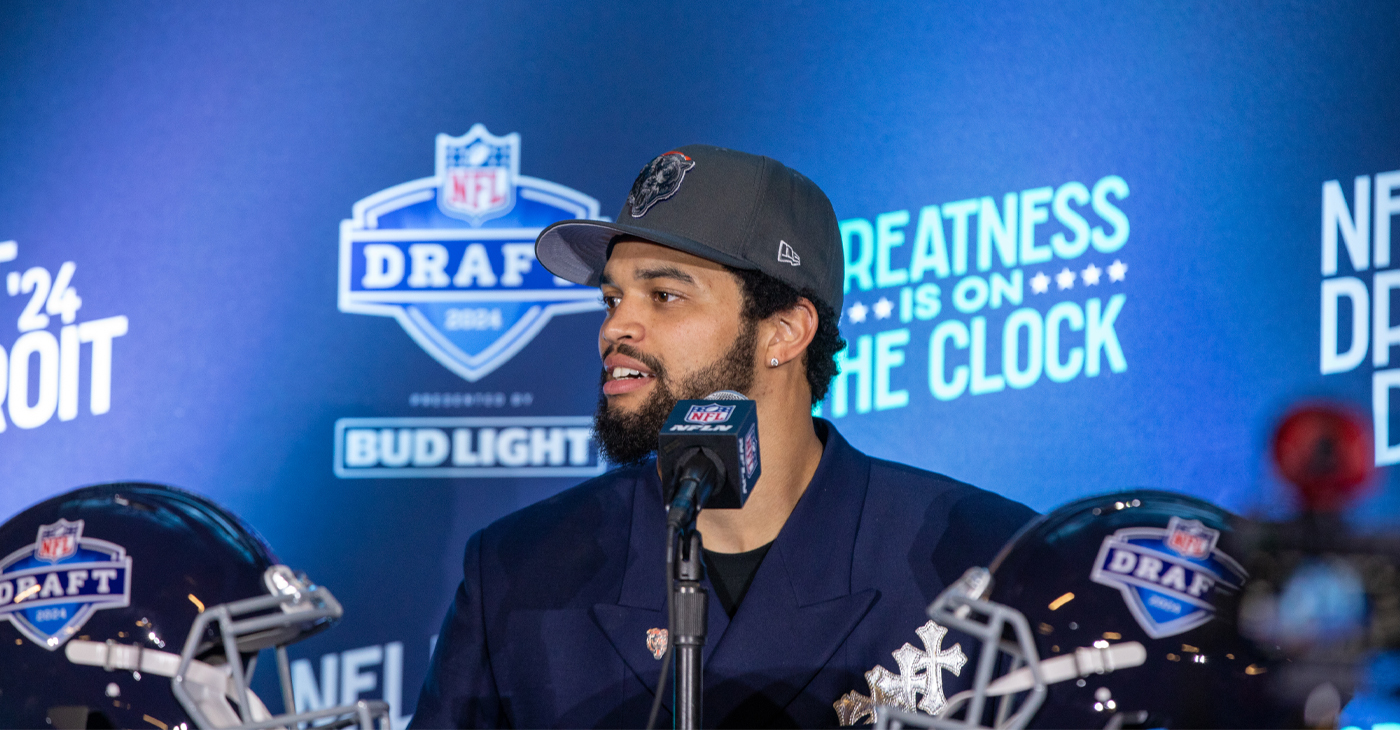
Philadelphia Eagles quarterback Jalen Hurts found Darius Cooper with nine seconds left for the game winning touchdown as his team beat the Tennessee Titans 24-20 in Nashville. Hurts finished the day 26/37 for 264 yards. He threw for two touchdowns and two interceptions.
Prior to the final drive, the Eagles ran 25 plays for 45 yards. During the final drive Hurts went 6-8 with 61 passing yards and the touchdown. Titans defensive tackle — and team captain — Jeffery Simmons said this week that the way to defend Jalen Hurts is to make him “play quarterback.”
Hurts said to Simmons after today’s game: “You started that sh**. I had to finish it.”
Running back Saquon Barkley suffered a stinger in the first half but he ultimately finished the game. He had four carries and nine yards and one catch for eleven yards. He will get an MRI for his injury, but admitted to Cameron Wolfe of the NFL Network he was fine.
Caleb Williams leaves game against Vikings with apparent lower-body injury
Chicago Bears quarterback Caleb Williams was helped off the field with a right leg injury with 7:42 remaining in the fourth quarter. Williams was down, writhing in pain after scrambling to his left. After departing the injury tent, Williams raised his right fist, acknowledging the crowd while expressing his frustration. Testing will commence on Monday to find out more details about his injury.

“We’ll know tomorrow,” Johnson admitted regarding Williams’ injury. “He’s in good spirits. He’s a team player.”
Williams finished the day with 138 passing yards and one interception.
“I’m actually happy it’s nothing with the knee — that was my first inclination,” Johnson said. “But, a hamstring could be pretty damaging as well. So, we’ll see. We’ll see how bad it is tomorrow and we’ll go from there.”
Bryce Young once again dominated the Falcons
Carolina Panthers quarterback Bryce Young is 5-1 against the Atlanta Falcons and is undefeated at Mercedes-Benz Stadium. Today, Young threw for 287 yards and three touchdowns as he led the Panthers to a 34-3 dismembering of the Atlanta Falcons. Georgia Tech alumnus Darren Waller caught two touchdowns and linebacker Devin Lloyd returned one of his two interceptions for a touchdown.
Cooper Rush started his second straight game for the Falcons and it did not go well. The partisan crowd voiced their displeasure after Rush completed 10/17 passes for 86 yards and two interceptions. Jack Strand entered the game for Rush prompting cheers from the Falcons fans. The rookie threw a pick-six on his first career pass attempt. Strand was the first QB to accomplish that feat since Sam Darnold in 2018 and is the first Falcons player to do that since Brett Favre in 1991. Strand finished the day with 59 passing yards and 16 rushing yards.
According to reports, quarterback Michael Penix, Jr. is expected to make his season debut this Thursday at the Green Bay Packers. His return should help the Falcons. They are the first team since the 2008 Rams to not run any plays in the red zone after the first two games to open a season.
The bright spots for the Falcons today were the Spelman College Jaguarettes performing with the Falcons cheerleaders and Florida A&M’s marching band, The Marching 100, also performed during halftime!
Jayden Daniels gets carted off after apparent arm injury
Washington Commanders quarterback Jayden Daniels appeared to injure his left elbow on the final play of the first half in his game against the Dallas Cowboys. During the play, Daniels got stepped on, braced himself for the fall, and his elbow bent the wrong way. Daniels draped a towel over his head as he exited the field on the cart.
He was later ruled out.
Daniels suffered a dislocated elbow to the same arm during week nine of last season against the Washington Commanders, which led to him being shut down for the remainder of the season.
The post NFL: Week Two Recap | Jalen Hurts did not fold; Caleb Williams exits game with injury appeared first on BlackPressUSA.

#NNPA BlackPress
The Complete Negotiation Framework — Every Stage, Every Tactic, Every Win
Master the complete vehicle-purchase negotiation framework with Roosevelt Gist and Roosevelt. Learn every stage, tactic, and win!
The post The Complete Negotiation Framework — Every Stage, Every Tactic, Every Win appeared first on BlackPressUSA.

Roosevelt Gist and Roosevelt deliver the complete vehicle-purchase negotiation framework in Episode 8 of The Color of Our Money Is Green. This episode covers the three foundations of every effective negotiation, the full seven-stage negotiation sequence with exact language for every stage, and five of the most common dealership tactics with the specific response each one requires.
What You Learn in This Episode:
The three foundations that make every negotiation tactic work
The complete seven-stage car-buying negotiation sequence
Exact language for every stage of the dealership conversation
Five common dealership tactics — the turnover, the four-square, the packed payment, spot delivery, and forced add-ons — and how to counter each one
Why signing preliminary paperwork isn’t the same as signing the final contract
___________________________________________________________________
“The Color of Our Money Is Green: A Buyer’s Guide to What Cars Actually Cost” — stan.store/RGist
____________________________________________________________________
AutoNetwork helps serious car shoppers inspect any new vehicle online before walking into a dealership. I’m Roosevelt — I’ve been reviewing cars and shaping digital car buying and credit union auto leasing since before YouTube car reviews existed.
You’ll find detailed walkaround reviews, POV test drives, and buyer-focused breakdowns covering comfort, space, features, and real-world value.
How to use the channel:
Watch the walkaround of the car you’re considering
Visit AutoNetwork.com for the full review
Check CouponsOffersAndDeals.com for current dealer specials
Walk in already knowing what you want — and what it should cost
 AutoNetwork.com
 CouponsOffersAndDeals.com
Affiliate disclosure: some links earn a small commission at no cost to you and help support the channel. Insta360 is one of those partners.
The post The Complete Negotiation Framework — Every Stage, Every Tactic, Every Win appeared first on BlackPressUSA.
#NNPA BlackPress
Mazda CX-90 Luxury: Heated Seats & Premium Comfort! #shorts
Stay toasty in the CX-90! Plush Nappa leather, heated/ventilated seats, and a memory-equipped heated steering wheel deliver ultimate luxury.
The post Mazda CX-90 Luxury: Heated Seats & Premium Comfort! #shorts appeared first on BlackPressUSA.

Experience ultimate comfort in the CX-90. Nappa leather, heated/ventilated seats, 8-way power adjustments, and memory settings for both front passengers. The heated steering wheel with memory tilt/telescope adds premium convenience.
 Watch the full video: https://youtu.be/EH5A4eQ4ipY
#AutoNetwork
The post Mazda CX-90 Luxury: Heated Seats & Premium Comfort! #shorts appeared first on BlackPressUSA.
-

 Business4 weeks ago
Frontier Airlines’ Return to Oakland Airport Brings Flights, Jobs and Opportunity
-

 Business4 weeks ago
Gubernatorial Candidate Steve Hilton Blasts California New Tire Rules; Newsom Hits Back
-

 Business4 weeks ago
Chef Sharon Lee Blends Culinary Excellence, Education and Empowerment
-
 Black History4 weeks ago
Jackie Wright Champions Bay Area Stories, Filmmakers and Cultural Institutions
-

 Community4 weeks ago
Big City Mayors Ask for “Yes” Vote on Housing Bond Measure; Conservatives Say “No”
-

 Education4 weeks ago
Gov. Newsom’s Latest Appointees Include Sacramento Advocate for Formerly Incarcerated Students; State’s New Tech Chief
-

 Business4 weeks ago
Oakland Coliseum Project Opens Door for Small Businesses to Build Bigger
-

 Community2 weeks ago
Misnamed ‘Parent’ PAC Seeks to Influence Oakland School Board Elections
