
Health
OP-ED: Lives Remain In the Balance: 2019
THE AFRO — If President Trump and his Republican allies would seriously consider both their sense of humanity and the lessons of history, they would halt their continuing attacks on the Affordable Care Act (the “ACA” or “ObamaCare”) and work with Democrats to solve the health care challenges that our nation faces.

By Congressman Elijah Cummings
If President Trump and his Republican allies would seriously consider both their sense of humanity and the lessons of history, they would halt their continuing attacks on the Affordable Care Act (the “ACA” or “ObamaCare”) and work with Democrats to solve the health care challenges that our nation faces.
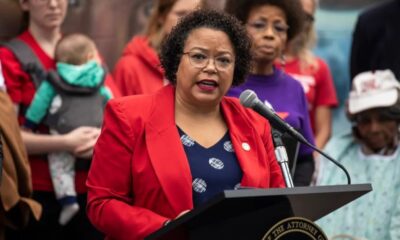
As Congressional Black Caucus Chairwoman Karen Bass of California recently observed, Americans – and, especially, African Americans – will be seriously harmed if the opponents succeed in destroying the ACA.
A humane nation can not allow that carnage – as the lessons of recent history illustrate.
During the current national debate about health care, it is important to recall that, before the ACA, nearly 50 million Americans lacked health insurance<https://www.nytimes.com/2017/05/22/health/obamacare-health-insurance-numbers-nchs.html>, and nearly 10 million of these uninsured were African American. Women were charged more than men for the same care, and insurers could drop coverage, deny coverage, or charge 130 million Americans with pre-existing conditions more for their care.
Chairwoman Bass is also correct in concluding that, on balance, the ACA has been a success.
In the neighborhood of 20 million more Americans, including millions of African Americans, now have access to quality affordable healthcare. Children can remain on their parents’ insurance until the age of 26 – and, perhaps most important of all, health insurance companies can no longer drop or deny care due to a pre-existing condition.
This is not to say, however, that we have solved all the obstacles to assuring that Americans can afford the health care that we all need and deserve. We have yet to adequately control price-gouging in the cost of our prescription drugs – and insurance premiums continue to rise at an unacceptable rate.
My colleagues and I have advanced legislation that would reduce the price-gauging by BIG PHARMA – and reforms are possible that would moderate premium increases.
For example, in my State of Maryland, insurers who originally sought premium increases for 2019 have decreased their premiums because of a state “reinsurance” plan that helps the insurers cover unusually expensive health care claims.
The President and his Republican allies should take note. If they would consider these reforms in the context of the history of this national debate, they would recall that two major forces catalyzed the health care reform process more than a decade ago.
First, even before President Obama and congressional Democrats began the process that resulted in the Patient Protection and Affordable Care Act, the National Institute of Medicine concluded that more than 18,000 Americans were dying prematurely every year because they lacked health insurance, while research from Harvard estimated the number of premature deaths at 55,000.
That avoidable annual death toll was and remains an unacceptable human cost, challenging our basic humanity as a civilized people.
History also reminds us that a second motivation for reform was the accelerating increase in healthcare costs that threatened the budgets of governments, businesses and individual households alike.
The private, largely for-profit insurance system in this country was failing to fully address these challenges a decade ago – and it continues to fail these tests today.
These considerations are why the President and Congress alike must provide the American People with the answer to a fundamental question.
Why should we continue to provide massive public subsidies to a failed system of healthcare financing when it could be more cost-effective and rational to fund healthcare for everyone in the same manner that we already fund health care for our elderly, disabled, veterans, and poor?
The answer to this question is why some of us believed a decade ago (and continue to believe today) that a single-payer system based upon expanding Medicare to everyone would be the most effective strategy.
However, as has always been the case, politics remains the art of what is possible, even if the possible is less than ideal.
Establishing access to affordable healthcare as a civil right through the Affordable Care Act was the progress that we could achieve politically back in 2010 – and the ACA remains our first line of defense today.
That is why I have joined more than 120 of my Democratic House colleagues in co-sponsoring The Protecting Pre-Existing Conditions & Making Health Care More Affordable Act of 2019 [H.R. 1884], proposed reform legislation introduced by Energy and Commerce Chairman Frank Pallone, Jr., along with Education and Labor Chairman Bobby Scott and Ways and Means Chairman Richard Neal.
If enacted, our bill would strengthen protections for people with pre-existing conditions and reverse the Trump Administration’s efforts to sabotage the ACA.
We would make health care more affordable by lowering health insurance premiums for low- and moderate-income Americans by expanding eligibility for premium tax credits beyond 400 percent of the federal poverty line and increasing the size of tax credits for all income brackets.
Finally, following the course charted by Maryland’s Legislature and other states, our legislation would create a national reinsurance program to help cover the costs of consumers with expensive medical conditions, thereby lowering health insurance premiums for everyone.
Lives remain in the balance, and the choice for the President and Congress is clear.
We can do what is both practical and humane to assure affordable health care for everyone – or we will pay for our failure to do so in hemorrhaging budgets and lost American lives. Congressman Elijah Cummings represents Maryland’s 7th Congressional District in the United States House of Representatives.
The opinions on this page are those of the writers and not necessarily those of the AFRO. Send letters to The Afro-American • 1531 S. Edgewood St. Baltimore, MD 21227 or fax to 1-877-570-9297 or e-mail to editor@afro.com.
This article originally appeared in The Afro.










Business
Returning to Its Roots, the Oakland Black-Eyed Pea Festival Partners with the Freedom Farmers Market Sept. 12
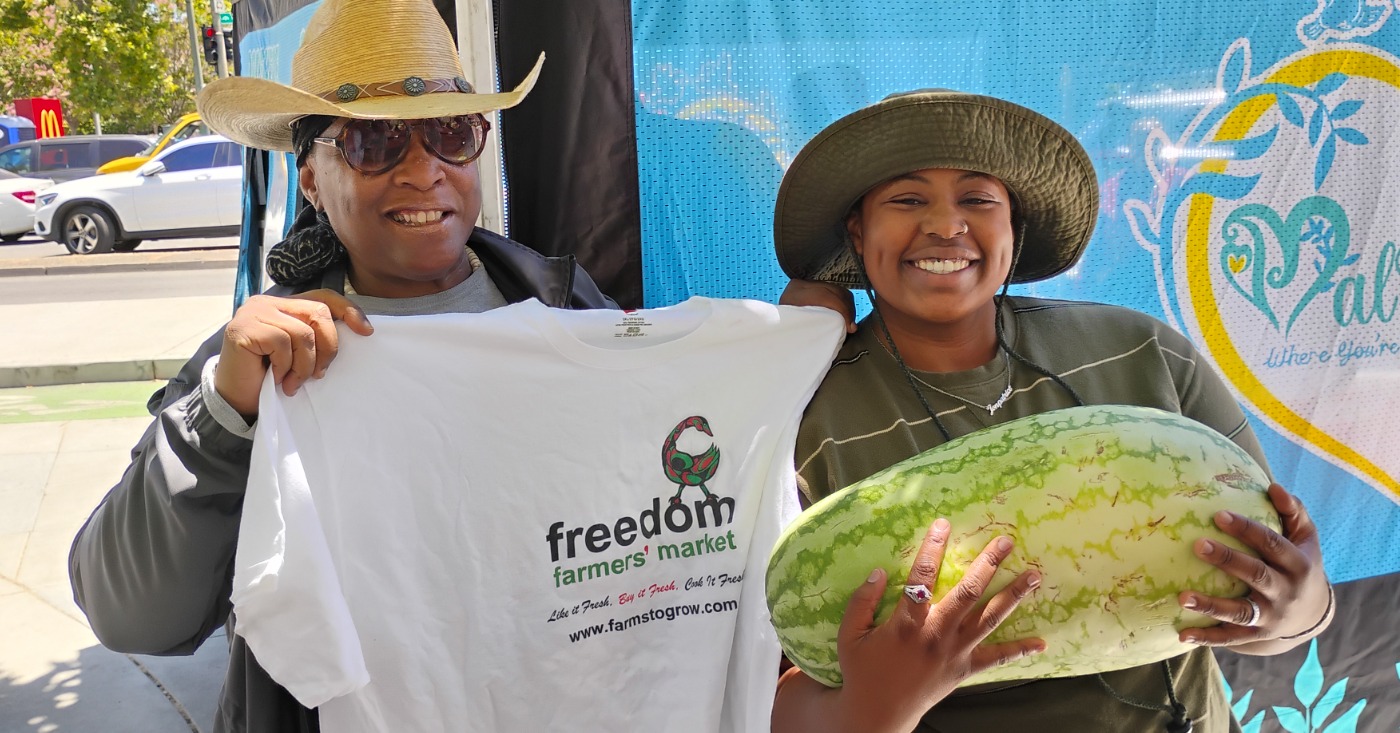
POST NEWS GROUP — Freedom Farmers’ Market (FFM) vendors sell produce and promote wellness and nutrition through organic herbs, massage, and other gift items from July through October on the second and fourth Saturdays at a dozen canopies in the last block of Shattuck Avenue, where it merges with Telegraph Avenue.

By
The Oakland Black-Eyed Pea Festival (BEPF), a celebration of African American traditional music, food and art, will return to its roots through a partnership with Farms to Grow, Inc., the hosts of the Freedom Farmers’ Market on Sept. 12.
Now in its 11th year, the downsized festival sponsored by Omnira Institute will open with presentations by Wakan Wiya Two-Spirit Drum, a drum invocation for the ancestors by Awon Ohun Omnira, a performance by Andre Thierry of Accordion Soul, and most importantly, fresh black-eyed peas for sale.
Freedom Farmers’ Market (FFM) vendors sell produce and promote wellness and nutrition through organic herbs, massage, and other gift items from July through October on the second and fourth Saturdays at a dozen canopies in the last block of Shattuck Avenue, where it merges with Telegraph Avenue.
Over the years, FFM vendors have appeared at the Black-Eyed Pea Festival and vice versa, so this collaboration is like a family reunion.
Farms to Grow, Inc. Executive Director Elaine Smith said the collaboration with Omnira Institute was an opportunity she couldn’t refuse. “People talk about community and unity for Black people – I always want to be an example of what has to be done,” Smith said. “Anyway that we can partner with our people, we want to do that.”

Charlotte Jackson, a longtime vendor with FFM and the festival, had been known for her jellies, jams and chow-chow through Pots n’ Jars. For the last several years, she hasn’t been able to find a commercial kitchen she can afford, so she began selling vegan soap and skin care products that her son and his partner produce under the name Lather and More.
“It’s been a blessing,” said Jackson, who will tell her customers that although they can order the wares from the website, there’s no such thing as ‘smell-avision.” From her table, she encourages passers-by to take a sniff of the soaps, then directs them to the nearby booths.
Jackson functions as a sort of ‘town crier’ of ‘buying Black,’ never failing to encourage Black people to take their mule or Pontiac or Chevrolet and steer it toward Black businesses like Mandela Market.
Likewise, the Black-Eyed Pea Festival was established to encourage Black entrepreneurship by providing a space for Black creatives to sell their handmade or original designs and products without competing with commercially produced goods.
It also served as a way to both commemorate and invigorate memory of the once-thriving Black community of West/North Oakland before it was divided by highways, BART, and then ravaged by the crack cocaine epidemic.
“For one day, I wanted to invoke the success of that community through the sound of music, the taste of soul food and black-eyed peas and the beauty of our art,” Ravernell said.
Once deciding to follow through on the idea of holding a festival celebrating African American traditions, Ravernell settled on using the black-eyed pea as its symbol because of its pride of place in Black people’s consciousness on New Year’s Day and because the peas were originally cultivated in Africa.
Learning that Fresno farmer Wil Scott, former president of the California African American Farmers Association, grew black-eyed peas as well as other legacy crops that are the foundation of a soul food menu, Ravernell was intent on ensuring Scott’s presence at the first festival in 2014. Whenever he could, and whenever the weather yielded a bountiful crop, Scott would bring his black-eyed peas to the festival, shelled or on the pods.
Originally cultivated in Africa, the black-eyed pea is believed to have been brought to the U.S. hidden in the hair of African captives brought to the Western Hemisphere during the holocaust of the Atlantic Slave Trade.
Known to grow plentifully even in poor soil, the pea was associated with abundance in Africa and later, in the U.S., with good luck.
She also learned that black-eyed peas nourish poor soil, that they are a very good source of nutrition, and that they probably contributed to the longevity of the enslaved.
“I thought the black-eyed pea, its story and its significance for Black people made it a great symbol to represent Black culture,” she said. In spite of everything they endured, Black people emerged from slavery and Jim Crow as masters of making a lot from a little, creating a culture that would be emulated and imitated at home and abroad.
Feeling that many people know only the most recent iterations of Black music – Hip Hop and R&B – she created the festival to promote the music of earlier eras, which reflect the thoughts and feelings of Black people over time.
That’s why the festival highlights straight-ahead jazz, gospel, zydeco and the Second Line of the New Orleans jazz funeral.
“It’s not enough to remember,” Ravernell said. “We need to actively nourish the roots of our culture.”

Business
NPRC Scores First Advocacy Victory: David Shaw Finally Gets His Wish to ‘Go Home’
POST NEWS GROUP — The National Probate Reform Coalition (NPRC), formed by the Post Newspaper Group in January following years of reporting on alleged abuses within the probate court system, helped Beverly secure the return of her husband, along with the couple’s property and assets.

For nearly four years, Beverly Shaw fought to bring her husband home.
She watched as David Shaw moved through three nursing homes, became increasingly sedated and repeatedly expressed his desire to return to his wife. Last week, that finally happened.
The National Probate Reform Coalition (NPRC), formed by the Post Newspaper Group in January following years of reporting on alleged abuses within the probate court system, helped Beverly secure the return of her husband, along with the couple’s property and assets.
For NPRC, the Shaw case represents its first major advocacy victory. For David, it means something much simpler: He finally got to go home.
In a letter to the court, Beverly raised serious concerns about her husband’s care at Riverview at the Park Nursing Home.
She alleged that David was frequently heavily sedated and questioned whether his medications were properly documented. She said an aide told her medications were sometimes administered without proper charting, although she acknowledged she had not independently verified that information.
Shaw also said she was unable to obtain David’s medical records and questioned medications he was receiving despite previous medical instructions following his 2023 stroke.
“I believe David has been subjected to abuse, neglect, and unnecessary chemical restraint,” Shaw wrote.
The allegations are Shaw’s account and have not been independently established. But they raise questions central to NPRC’s mission: Who is watching when a vulnerable person becomes subject to guardianship? Who is accountable when family members say they are ignored? And who makes sure the person under guardianship, not the professionals surrounding them, remains the priority?
“Please let me go home”
Perhaps the most compelling part of Shaw’s case was David’s own voice. Shaw told the court she possesses recordings in which David repeatedly expressed his desire to return home.
After 45 years of marriage and four years apart, Beverly argued that David deserved the opportunity to spend his remaining years at home with his wife, receiving individualized care.
NPRC responded with a “Request for Compassion” letter-writing campaign to Judge Thomas Inman, Associate Circuit judge for Ste. Genevieve County, Missouri. The coalition also helped Shaw pursue appropriate legal filings and engaged with her attorney to press for action.
The court ultimately returned David to Beverly’s custody and restored the couple’s property and assets.
“What we have here is the power of coalition,” said Alee Carrino, an NPRC planning committee member. “We applied pressure from all sides, and it worked.”
The victory comes during NPRC’s eighth month of organizing for probate reform. The coalition advocates for greater judicial and governmental oversight, court ombudsmen, mandatory mediation, transparency in probate billing and stronger protections for elders and disabled people.
The Shaw case sends a powerful message: Guardianship is supposed to protect vulnerable people, not permanently separate them from those who love and care for them.
David Shaw asked to go home. His wife fought to bring him home. NPRC supported her every step of the way, and this time, the system listened.
Commentary
ESSAY: California Can Close Its Colorectal Cancer Gap
POST NEWS GROUP — The numbers are stark. From 2014 through 2018, the age-adjusted colorectal cancer incidence rate was 40.2 cases per 100,000 Black Californians, compared with 35.8 among non-Hispanic White Californians. The mortality rate was 25.3 deaths per 100,000 among Black Californians and 17.7 among White Californians—a 43% difference.
Every breakthrough in cancer care carries a promise: earlier detection, better treatment and longer life. California has helped deliver that promise through world-class cancer centers, a statewide cancer registry and major public-health investments. Yet colorectal cancer still exposes a painful divide: Black Californians are more likely to develop the disease and far more likely to die from it than their White neighbors.
The numbers are stark. From 2014 through 2018, the age-adjusted colorectal cancer incidence rate was 40.2 cases per 100,000 Black Californians, compared with 35.8 among non-Hispanic White Californians. The mortality rate was 25.3 deaths per 100,000 among Black Californians and 17.7 among White Californians—a 43% difference.
A later state analysis showed that the incidence gap remained in 2021, at 39.0 versus 35.0 cases per 100,000.
These differences should not be treated as an inevitable consequence of biology. The more revealing explanation lies in what happens—or fails to happen—across the cancer-care continuum: prevention, screening, diagnostic follow-up, treatment and surveillance after treatment.
Colorectal cancer is one of the few cancers that screening can sometimes prevent. Colonoscopy can find and remove precancerous polyps, while stool-based tests can identify people who need further evaluation. The U.S. Preventive Services Task Force recommends screening for average-risk adults from ages 45 through 75, with several acceptable options. But a screening test saves no one if it is never offered, never completed or not followed by a timely colonoscopy after an abnormal result.
California’s cancer-burden report shows both the urgency of the problem and a troubling data gap. Nearly six in 10 colorectal cancers were diagnosed at a regional or distant stage among both Black and White patients from 2009 through 2018. The racial difference in stage was not statistically significant. Yet, the registry report did not include screening information, so it could not show who was offered a test, who completed it or who received the necessary colonoscopy afterward. It also did not assess whether survivors completed recommended follow-up. California can count cancers and deaths, but it cannot yet see every missed opportunity that produced them.
The disparities become clearer after diagnosis. A California Cancer Registry study of nearly 27,000 people with stage I through III colorectal cancer found that Black patients had 39% higher odds of receiving less than guideline-recommended treatment and 78% higher odds of waiting more than 60 days for treatment than White patients. Neighborhood socioeconomic disadvantage explained part of the substandard treatment, but racial differences persisted even after researchers accounted for where patients lived.
Survival reflects the accumulation of these missed opportunities. Among Californians diagnosed from 2009 through 2013, five-year relative survival was 58.8% for Black patients and 65.1% for White patients. After researchers adjusted for age, insurance, neighborhood income, stage, chronic illness and other factors, the survival difference was no longer statistically significant. That does not make the gap less serious. It identifies much of it as potentially preventable: when access, timing and health conditions are unequal, survival will be unequal too.
California already has proof that a better system can work. Kaiser Permanente Northern California built an organized program that identified eligible patients, mailed annual home stool tests to those overdue, offered colonoscopy as an alternative, and tracked abnormal results through follow-up. Screening among Black members rose from about 40% in 2009 to 80% in 2019. Over the same period, their colorectal cancer death rate fell from 54.2 to 20.9 per 100,000, essentially eliminating the Black-White mortality gap within that health system.
The lesson is not that every Californian must join one health plan. It is that equity requires organized care rather than reliance on chance encounters. Mailed screening outreach, patient navigation and guaranteed follow-up colonoscopy should become standard across Medi-Cal, county health systems and community clinics. Health systems should publicly report screening completion; time from a positive stool test to colonoscopy; time from diagnosis to treatment; receipt of guideline-concordant therapy; and completion of post-treatment surveillance—each stratified by race, insurance, and neighborhood.
Transportation, paid time off, bowel-preparation costs, childcare and distrust are not side issues; they determine whether patients can complete care. Community organizations, churches, clinicians and public hospitals should help design outreach from the beginning, not merely deliver messages created elsewhere. Survivors should leave treatment with a clear surveillance plan, navigation support and reminders that do not disappear when active therapy ends.
Closing California’s colorectal cancer gap is achievable. The state has the tests, specialists, data systems and proof of concept. What it needs is the will to connect them. Success should be measured not only by how many cancers we treat, but by how many we prevent, how quickly we act and whether every Californian has an equal opportunity to survive.
About the Authors
Gracie Ann E. Dinkins, MD, FACS, is a Clinical Assistant Professor of Surgery and Surgery Clerkship Director at the Charles R. Drew University College of Medicine, Department of Surgery. Her mission is to help realize the CDU vision: Excellent health and wellness for all in a world without health disparities.
Sydney Y. K. Brown, MA, is a medical student at the Charles R. Drew University College of Medicine whose work focuses on clinical research, community engagement, and health equity. She is committed to advancing equitable access to high-quality care and improving health outcomes in underserved communities.

WORK FROM HOME
Home-based business with potential monthly income of $10K+ per month. A proven training system and website provided to maximize business effectiveness. Perfect job to earn side and primary income. Contact Lynne for more details: Lynne4npusa@gmail.com 800-334-0540


Four Candidates, Including Incumbent Barbara Lee, Qualify for Oakland Mayor’s Race

Oakland Observes Black August with Block Parties, Film Showings, Workshops

Oakland Post: Week of August 12 – 18, 2026

COMMENTARY: Why Local School Tax Measure G1 Will Not Be on the November Ballot

California Hispanic Chambers of Commerce Unveils: ‘Powering the Future’ Theme for 47th Annual Statewide Convention

Returning to Its Roots, the Oakland Black-Eyed Pea Festival Partners with the Freedom Farmers Market Sept. 12

Less Affluent School Districts, Including Sacramento City, Face Threat of State Takeover

From Blueprint to Breakthrough: Tackling Affordable Housing in Oakland

NPRC Scores First Advocacy Victory: David Shaw Finally Gets His Wish to ‘Go Home’

ESSAY: California Can Close Its Colorectal Cancer Gap

Car Wash Workers Cope with Lingering Impacts of ICE Raids

Misty Copeland Shapes Ballet’s Tomorrow

As Part of Your Back-to- School Checklist, Vaccinate

As Part of Your Back-to- School Checklist, Vaccinate

Congresswoman Simon Demands Investigation into Trump’s Abuse of Emergency Powers for Coal Export Terminal in West Oakland

Department of Homeland Security Demands California Secretary of State Shirley N. Weber Scrub Voter Rolls

New Judge Could Decide if Karmelo Anthony Gets a New Trial

Oakland Children’s Hospital Workers and Patients Rally for Pediatric Medical Care

“The Power to See Threats Sooner”: Gov. Newsom, Safety Officials Showcase California’s Investments in Hi-Tech Wildfire Prevention

Alpha Kappa Alpha Sorority, Inc. Celebrates New North Atlantic Regional Director

Surveillance Pricing Fight: State Senate Debates Bill Banning Retailers from Using AI to Set Prices Based on a Buyer’s Profile

Mount Zion MBC, Church of Jesus Christ of Latter-day Saints Partner to Bring 29,000 Meals to Alameda County

California Sen. Padilla Joins Colleagues to Introduce Bill Imposing Term Limits on Supreme Court Justices
Less Affluent School Districts, Including Sacramento City, Face Threat of State Takeover

Starting This Summer, California Car Buyers Can Get an Instant $3500 Off the Cost of Electric Vehicles

COMMENTARY: You Are Already Paying for the AI Boom
Car Wash Workers Cope with Lingering Impacts of ICE Raids

California Bill Would Let Abuse Victims Use Trauma as Legal Defense for Violent Crime

Fed Court to Decide Landmark First Amendment Case

Gov. Gavin Newsom Signs Law Streamlining Affordable Housing Rules

The Conversation With Al McFarlane 6/23/26

Media Monday 6/22/26

LIVE! ASK ALMA! — TUES. 6.23.26 7PM EST

Car Buying Secrets: 4 Hidden Checks Before You Sign!

Is This 550 HP Charger Worth YOUR Money? AutoNetwork Review

Celebrating Juneteenth – Frederick Douglass on education and resistance

LIVE! — ASK ALMA! — TUES. 6.19.26 7PM EST

Hyundai Ioniq 5 Parking, Safety, and 360 View #shorts

2025 Ioniq 5 New Wiper & Powerful Performance! #shorts

Electric SUV Range: Is 259 Miles Enough? #shorts

EV Charging: How Fast Can You Charge an Electric Vehicle? #shorts

Biometric Cooling… Messaging Seats…Come on! 2025 Infiniti QX80 Autograph 4WD

Charged Up: Witness the Magic of a Fully Electric Car! #shorts

Range Rover Sport PHEV Included…: See What’s Inside This Luxury SUV! #shorts

Invisible Hood View: Perfect Parking with X-Ray Vision! #shorts
-
 Featured1 week ago
Department of Homeland Security Demands California Secretary of State Shirley N. Weber Scrub Voter Rolls
-
 #NNPA BlackPress3 weeks ago
New Judge Could Decide if Karmelo Anthony Gets a New Trial
-
 Business3 weeks ago
Oakland Children’s Hospital Workers and Patients Rally for Pediatric Medical Care
-
 Environment1 week ago
“The Power to See Threats Sooner”: Gov. Newsom, Safety Officials Showcase California’s Investments in Hi-Tech Wildfire Prevention
-
 Black History2 weeks ago
Alpha Kappa Alpha Sorority, Inc. Celebrates New North Atlantic Regional Director
-
 Business3 weeks ago
Surveillance Pricing Fight: State Senate Debates Bill Banning Retailers from Using AI to Set Prices Based on a Buyer’s Profile
-
 Business3 weeks ago
Mount Zion MBC, Church of Jesus Christ of Latter-day Saints Partner to Bring 29,000 Meals to Alameda County
-
 Featured1 week ago
California Sen. Padilla Joins Colleagues to Introduce Bill Imposing Term Limits on Supreme Court Justices
