
Opinion
OP-ED: “My Belief in God gives me the Strength to keep the Faith Behind Bars”

By Richard Johnson, Folsom State Prison
What has kept me optimistically hopeful is my belief in God, not man. I truly believe that He never puts too much on our plates for us to contend with.
Each day is a test of our ability to move beyond the trials and tribulations no matter how hard or difficult they may be. I haven’t always been so passionate about a higher power.
The contrary would best describe my previous mindset.
However, my spiritual awakening came as a result of observation coupled with experiencing unimaginable life strengthening situations, that if it were not for divine intervention, all would be lost.
In these situations, my life was clearly at stake, and only by the hand of God was I spared and saved.
I lived a careless existence from day-to-day, not caring what the next held or if it came or not. This attitude was born out of having a thuggish street mentality, under the influence of narcotic stupors that ruled over my entire being.
My most endearing revelation was that being blessed with a god-fearing, devoted mother, whose daily prayers for her wayward son, has helped to shape and open my mind to the necessity of faith, trust and the belief in higher powers.
We’re mere mortals who occupy time and space on this planet by a purposeful design, constructed through a heavenly power. How else can man explain his existence beyond his own conceited illusions about his origins?
The truth is man can’t without arrogantly showing his ignorance and foolish self worth.
Being in prison with a life sentence could bring anyone to a state of inconceivable uncertainty. It can raise questions such as is life worth going on under such conditions?
But, thank God, I now know that when you have a true foundation of faith, conviction and unquestionable belief, that prison isn’t the end of life as you once thought it to be. Faith and optimism is comforting.
My life has been one of ups and downs, mostly downs, instead of conceding to the ills of oppression. My optimistic approach and my faith have given me the power of endurance to prevail as long as it takes.
Some folks seek booze, drugs and foolishness to escape the harsh realities of their imprisonment. These diversions only shade the horrors. They don’t remove them.
Through optimistic introspection and faithful study, I believe if one is steadfast in their conviction, dedicated to a better life, through a spiritual alliance with God, then nothing can detour their life’s course.
Thanks to an alliance with the higher power, I have used critical and exploration thinking to gravitate toward reality, rather than being subjugated to foolery or crusted in nonsensical beliefs and mannerisms that result from one’s perceived hopelessness.
For someone of my faith, it’s unconscionable for me to not realize that without positive insights, constant dread becomes one’s truth.
To avoid gloom and despair, you must reach deep down in your consciousness and awaken your passions to move out of a state of denial and come to know what it is to gain faith, belief and to come to know God in your life and receive all his blessings.
Post Publisher Paul Cobb has informed me that many inmates and their families and supportive congregations are reading my columns. Thank you.
Please send your thoughts and prayers to the Post to be noted online to inspire other inmates. Seize the Time!









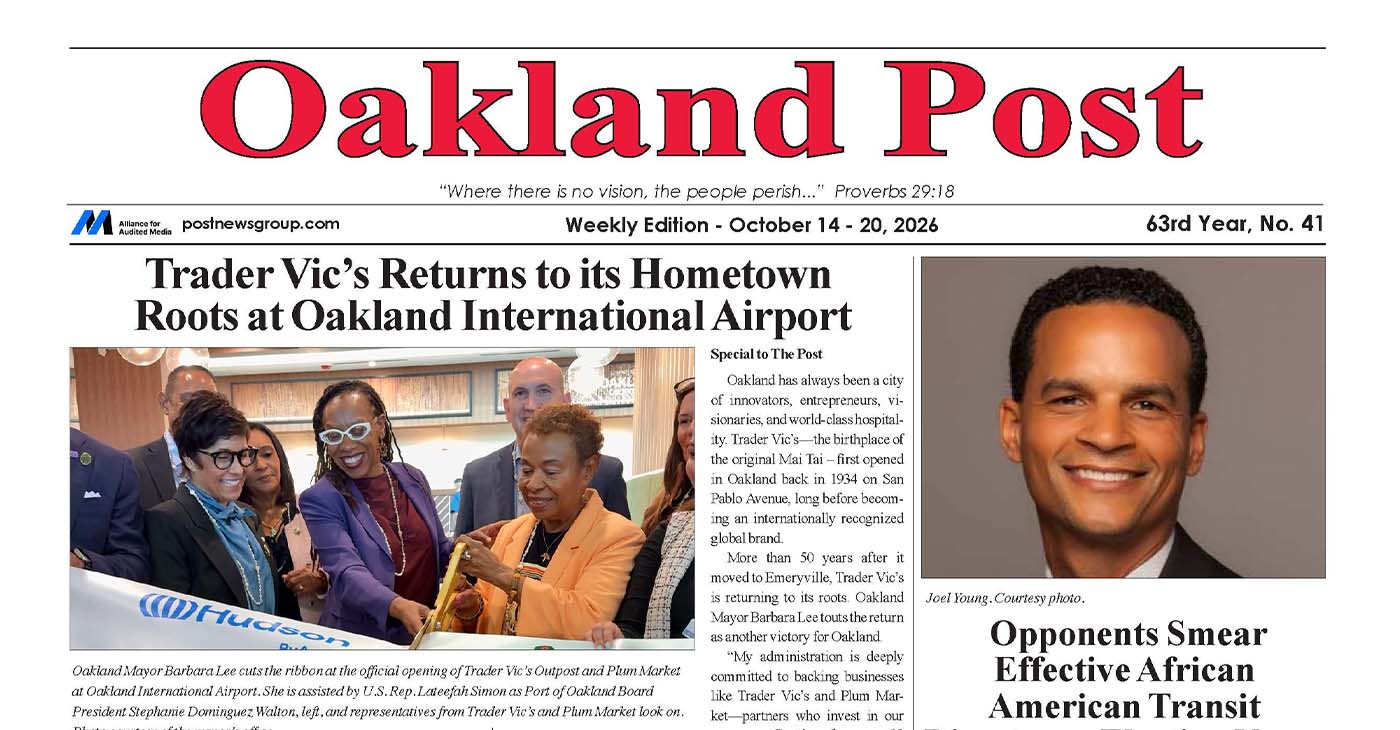
To enlarge your view of this issue, use the slider, magnifying glass icon or full page icon in the lower right corner of the browser window.
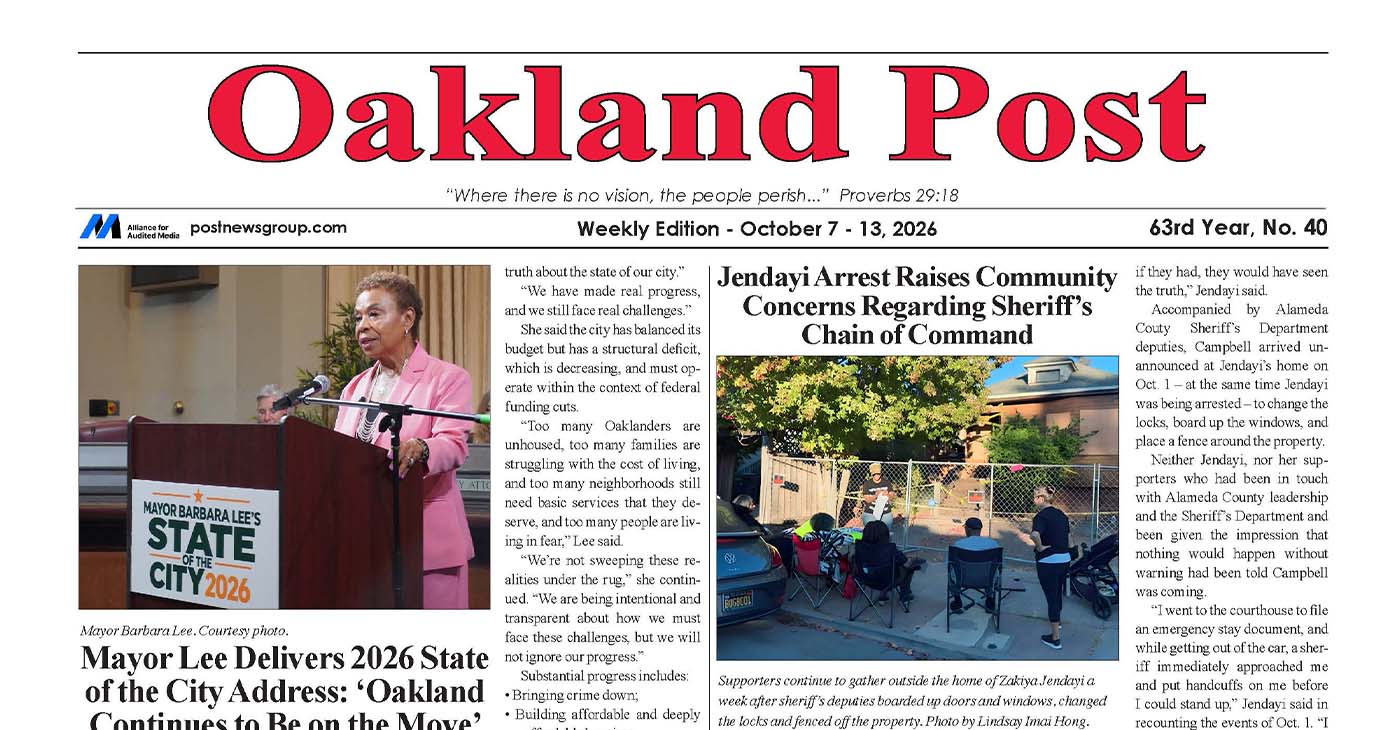
To enlarge your view of this issue, use the slider, magnifying glass icon or full page icon in the lower right corner of the browser window.

Activism
Oakland Post: Week of September 30 – October 6, 2026
The printed Weekly Edition of the Oakland Post: Week of September 30 – October 6, 2026

To enlarge your view of this issue, use the slider, magnifying glass icon or full page icon in the lower right corner of the browser window.


Mayor Barbara Lee Holds Special State of the City Address in Deep East Oakland

Practitioners of African Traditional Spirituality Offer Ancestral Reverence Ritual Oct. 31

It’s Time to Lose Weight Before the Holidays

Trader Vic’s Returns to Its Oakland Roots

Oakland Coal Terminal Backed by Trump Would Be Bigger, Dirtier Than Promised, Says Report

Opponents Smear Effective African American Transit Director as Election Nears

Oakland Post: Week of October 14 – 20, 2026

OP-ED: The Black Church Writes AI’s Next Chapter

OP-ED: The Black Church Writes AI’s Next Chapter

WCCUSD Joins Statewide Organic School Food Purchasing Cooperative

Democrats, Community Groups Back Measure EE to Change How Oakland Is Governed

Four Tips to Help You Plan a Holiday “Staycation”

Veterans Housing Project Proposed for South Richmond
PRESS ROOM: Transformative Justice Coalition 2026 Voting Rights Champion Awards Reception ‘Yesterday Is Today: The Battle For Voting Rights

Mayor Lee Delivers 2026 State of the City Address: ‘Oakland Continues to Be on the Move’

Misnamed ‘Parent’ PAC Seeks to Influence Oakland School Board Elections

Listening as a Lifeline: A Doula’s Witness to Black Maternal Health

Poll: Becerra Widens His Lead Over Hilton; Californians Split on Wealth Tax

Oakland Post: Week of September 9 – 15, 2026

County Office of Education Says OUSD Finances Are Getting Healthier, Materially Stronger

Richmond Tiny House Village Farm & Garden Set to Open Gates on Sept. 26

Mayor Lee Announces $1 Million Kaiser Permanente Grant for Pilot Program to Address Homelessness, Clean Up Public Spaces throughout Oakland

Doulas Are Helping Black California Moms Navigate Pregnancy–Even as High Mortality Rates Persist

Latest Massacre in Haiti Reveals Cruelty U.S. Deportations

OPINION: Nolan Wells’ Death One of Several Signifying Racial Terror Lives on in U.S. South

Zakiya Jendayi Arrested, Locked Out of Home by Sheriff’s Deputies

BLACspace Cooperative Invites Bay Area to Experience Oakland’s Black Cultural Ecosystem Through a BLAC Map Tour + Party

Oakland Post: Week of September 16 – 22, 2026

Democratic Clubs Interview Candidates for Oakland School Board

Oakland People’s Arms Embargo Coalition Demands End to Military Shipments Thru Oakland

The Conversation With Al McFarlane 6/23/26

Media Monday 6/22/26

LIVE! ASK ALMA! — TUES. 6.23.26 7PM EST

Car Buying Secrets: 4 Hidden Checks Before You Sign!

Is This 550 HP Charger Worth YOUR Money? AutoNetwork Review

Celebrating Juneteenth – Frederick Douglass on education and resistance

LIVE! — ASK ALMA! — TUES. 6.19.26 7PM EST

Hyundai Ioniq 5 Parking, Safety, and 360 View #shorts

2025 Ioniq 5 New Wiper & Powerful Performance! #shorts

Electric SUV Range: Is 259 Miles Enough? #shorts

EV Charging: How Fast Can You Charge an Electric Vehicle? #shorts

Biometric Cooling… Messaging Seats…Come on! 2025 Infiniti QX80 Autograph 4WD

Charged Up: Witness the Magic of a Fully Electric Car! #shorts

Range Rover Sport PHEV Included…: See What’s Inside This Luxury SUV! #shorts

Invisible Hood View: Perfect Parking with X-Ray Vision! #shorts
-
 Black History3 weeks ago
Listening as a Lifeline: A Doula’s Witness to Black Maternal Health
-
 Economy4 weeks ago
Poll: Becerra Widens His Lead Over Hilton; Californians Split on Wealth Tax
-
 Business4 weeks ago
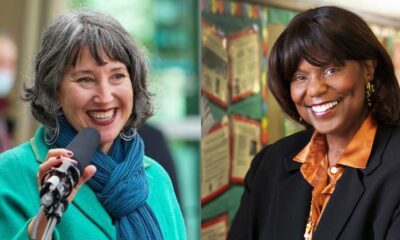
County Office of Education Says OUSD Finances Are Getting Healthier, Materially Stronger
-
 Lead Story3 weeks ago
Zakiya Jendayi Arrested, Locked Out of Home by Sheriff’s Deputies
-
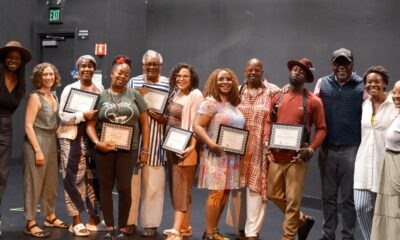 Art4 weeks ago
BLACspace Cooperative Invites Bay Area to Experience Oakland’s Black Cultural Ecosystem Through a BLAC Map Tour + Party
-
 Business4 weeks ago
From Historic Memories to New Possibilities: Oakland Celebrates Coliseum 60
-
 Community4 weeks ago
Asm. Corey Jackson Announces Launch of 24-Hour Childcare in His District
-
 Black History4 weeks ago
IN MEMORIAM: The Rev. Leon “Sonny” Clark, Longtime Orange County Pastor and Community Leader, Dies at 72
