
Activism
Oakland’s Most Vulnerable Neighborhoods Are Struggling to Eat and Stay Healthy
For this story, we focused on eight of the 12 ZIP codes in Oakland, those pertaining to East and West Oakland. The ZIP codes include 94601, 94603, 94505, 94606, 94607, 94612, 94619, and 94621. We chose to concentrate on these specific areas, known as the Oakland Flatlands, due to its longstanding history of extremely low-income households and racial inequalities compared to ZIP codes in the Oakland Hills.

These Are the Contributing Factors
By Magaly Muñoz
On a recent trip to the grocery store in West Oakland, single mom Neemaka Tucker contemplated what’s more important to her family’s needs – expensive fresh produce or cheap instant ramen noodles.
“I’m trying to teach my kids to eat healthy, but then my pocket is like, ‘I’m broke’. Getting the processed foods is going to fill you up faster, even though it’s not good for your body,” Tucker said.
Bay Area residents are spending over $100 more a month on groceries than they were pre-pandemic. Those higher costs are straining wallets and forcing families to choose cheap over healthy, possibly contributing to more health problems. These problems are disproportionately affecting people in East and West Oakland, in neighborhoods primarily of low-income families of color.
Oakland residents are experiencing more health problems linked to poor diets, like diabetes, obesity, and heart disease than before the pandemic, particularly in neighborhoods of East and West Oakland, data shows.
“We see a direct relationship between what we eat and medical problems. What we eat affects our weight, our blood pressure and all those things circle back and have an effect on your diseased state,” said Dr. Walter Acuña, a family physician at Oakland Kaiser Medical.

According to data by UCLA Center for Health Policy Research, about 1 in 10 adults in East Oakland neighborhoods experience food insecurity. That’s twice as many people than in most other parts of the city.
Oakland residents’ health concerns are growing
For this story, we focused on eight of the 12 ZIP codes in Oakland, those pertaining to East and West Oakland. The ZIP codes include 94601, 94603, 94505, 94606, 94607, 94612, 94619, and 94621. We chose to concentrate on these specific areas, known as the Oakland Flatlands, due to its longstanding history of extremely low-income households and racial inequalities compared to ZIP codes in the Oakland Hills.
According to UCLA research, about one out of every five adults under 65 in these areas of East Oakland reported poor or fair health. But these problems weren’t isolated to East Oakland. About one in six adults under 65 reported poor or fair health in areas of West Oakland, like the 94607 ZIP codes.
A handful of ZIP codes (94601, 94603, 94605, 94621) in East Oakland also have the poorest health outcomes of any area in the city. Residents there experience the highest rates of obesity and adult diabetes.
UCLA data shows that there has been a two percent increase in the number of adults diagnosed with diabetes in West Oakland (ZIP code 94607) since 2017- 2018. An estimated 11.8% of adults in 94607 in 2021-22 said they had diabetes, whereas 9.8% reported it several years before.
But the problem is more significant, only a few miles away.
In the 94621 neighborhood in East Oakland, an estimated 16.6% of adult residents reported having diabetes in 2021-2022, and the neighboring ZIPs averaged about 15%, according to UCLA data. 2017-2018 data show that only 11% reported a diabetes diagnosis in the 94621, a 5.6% change from recent numbers. The ZIP code estimates are higher than the states’, county’s, and city estimates—11%, 12.4%, and 12.3%, respectively.
Doctors working with Oakland and the larger Alameda County area are seeing an increase in the number of people coming to their offices with chronic health issues in the last few years.
Acuña said he’s frequently treating more and more adults with diabetes and hypertension.
Patients often tell him that it’s easier to afford unhealthy, cheap food than it is to afford the things that are going to make them feel better and stay healthy, he said
Dr. Steven Chen, Chief Medical Officer of Alameda County’s Recipe4Health, said that he’s seeing more kids across the region suffering from obesity, or adults on the brink of developing chronic illnesses, than in previous years.
“Chronic disease is a big epidemic. What’s the root of it? I think food is a big component,” Chen said.
He has seen evidence of improved health when people have access to better food. People with Type 2 diabetes experience a boost in metabolic and sugar management to healthy levels, and those with high blood pressures experience normal numbers.
Recipe4Health is a county-wide program that uses food-based interventions to treat and prevent chronic conditions, address food insecurity, and improve health and racial equity. The program provides up to 12 weeks of groceries for people who are at risk or are experiencing food insecurity.
It’s important for public sectors to have these kinds of investments locally because the results are tangible, he said.
“If our values are that no one gets left behind and that everyone should have an equal opportunity to health and health equity, then we need always to ensure that we are serving those communities that often are left behind,” Chen said.
Experiencing food insecurity in Oakland
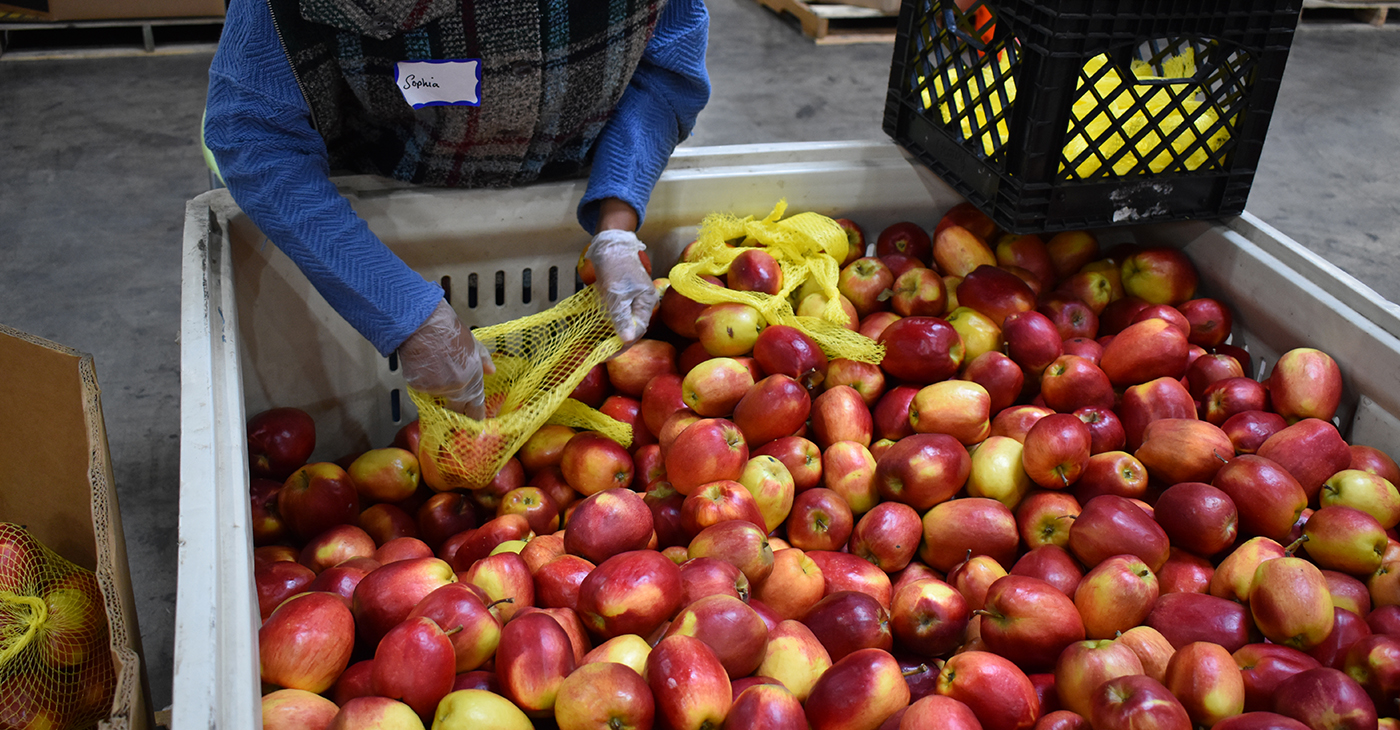
Unfortunately, healthy food is becoming increasingly difficult for Oakland residents to access. Over the last five months, The Oakland Post heard from over 50 residents about their struggles finding and affording healthy food. We visited food banks, talked with people at markets and food distribution events, and distributed an online survey.
We learned that residents are travelling to other nearby cities to get cheaper groceries, financial assistance programs like CalFresh are challenging to navigate, wages are low, and food is getting more expensive while the quality appears to be dropping.
Andres, who asked us not to use his last name due to his undocumented status, said he often relies on food distribution from organizations like the Street Level Health Project for his weekly groceries. He wouldn’t be able to eat complete meals otherwise, due to the lack of consistent employment at his car washing job during the winter months.
With eight people living under one roof and only three adults contributing to the household income, he said things are tight.
“During these months, we’re always backed up on paying our bills, including rent, and we’re trying to do more with what little that we have, which is not much,” Andres said.
Andres’ biggest complaint about grocery shopping is the lack of fresh and healthy food that is affordable and good quality. He’s been to food banks and grocery stores where the produce rots within a day or two of receiving it, forcing him to buy fast food in order to feed his family.
Down the street at the Unity Council’s weekly grocery distribution, Mayra Segovia, a single woman in her 50s, said she visits this location almost every week to get food. Her fixed income on Social Security makes it difficult to afford her basic necessities.
Segovia said she receives CalFresh funding to pay for her groceries, but the almost $300 assistance is not enough to get her through the month, so she gets creative. She often does favors for local vendors in exchange for meals. Even with the Social Security checks of a little over $1,000 a month and other resources like subsidized housing, the cost of living is going up. She’s blaming the government for their contribution to the problem.
“We’re not all rich like Donald Trump and all those corrupt politicians, we don’t have that much money like that,” Segovia said.
Social service assistance is falling short
Several people we spoke with said financial food assistance like CalFresh isn’t supplementing the gaps in their budgets.
Neemaka Tucker, mom of two elementary-aged kids, said she receives $123 a month from CalFresh, yet she’s spending almost $600 on groceries at the store. She feels like she should be getting more assistance, especially considering her lower, single income. “I’m appreciative [of the CalFresh funds] that I get anything because every little bit helps, but it’s still not enough for my family,” Tucker said.
A lack of grocery store options in West Oakland has also made it even harder to get food on the table, Tucker said.
There are more convenience stores than grocery stores within walking distance to her home on the northeast side of West Oakland, and the prices seem to be exacerbated because of their limited food stock, Tucker said. A gallon of milk at the store could run her up to $3.80, but at the local convenience market, it’s nearly $6.
“I just find that the majority of the money that I’m spending is on the travel to get the food, then on the food itself,” Tucker said.
Healthy groceries are a necessity to manage Tucker’s health. She is diabetic and has high blood pressure, so eating and buying fresh produce is important because keeping her symptoms at bay is a must for her health. It’s been difficult to get what she needs for her body to maintain her chronic health problems because she often battles with lack of affordability of what she’s buying, she said.
“I find myself trying to figure out what’s healthy for each person and then have enough of it so we all can [eat well],” Tucker said. “Back in the day, bread and potatoes used to be staples to get your kids full, but food like that makes me sick because that’s too much [carbohydrates] since I have diabetes.”
Both her kids are athletes who also need healthy food. She’s finding that even though her kids don’t eat meat, which tends to be expensive, she’s still spending more than she’d like to on fruit and vegetables.
In Oakland, the local investment is low
In the last year, the city has cut grants to nonprofits like Meals on Wheels, which serves 3,000 hungry seniors, and Street Level Health Project, which provides groceries and meals to undocumented day laborers. Tax measures, like the Sugar-Sweetened Beverage Tax, were intended to help decrease the food and health crisis but are also not being managed in the way Oakland residents voted for, according to community leaders and advisory board members. The majority of the tax money is going towards funding city agencies.
The Oakland Post contacted city and county officials several times for comment but did not get a response.
Across the Bay Area, San Francisco is investing millions to address food insecurity through a pilot program that establishes free grocery stores in food desert districts. Shoppers of the pilot market said they have seen a positive change to the way they feed their families and how much they’re able to save every month.
Oakland resident PC, who chose to use an abbreviated version of his name to protect his privacy, said he’d be interested in seeing a market like the one in San Francisco because it would alleviate the tight budget he has for himself.
PC said he’s had some unpleasant experiences with food distribution workers being rude to residents waiting for grocery bags. “The line is already long as it is and can sometimes feel shameful when you’re going through hard times,” PC said, so an option to get free food in a setting that resembles a market would be ideal.
The garden lead for West Oakland’s People’s Programs, ab banks, helps deliver fresh produce from a local garden to households in the projects, because the need for healthier options has been particularly high in recent years, they said.
People’s Program serves around 170 people in the 94607 area with groceries, along with a mobile health clinic and free breakfast program. Their goal is to serve a community that already deals with its own set of disadvantages, and looks to show people that not everything needs to contribute to a bigger gain and people have the right to use the local land to grow the food they need.
Banks said they see firsthand what the lack of investment in West Oakland has done to folks: homelessness, priced out living situations, environmental racism, and lack of food access.
They explained that although they feel a duty and a calling to the work at People’s Program to help an underserved neighborhood, they questioned how the city is pouring millions of dollars towards finding solutions to Oakland’s biggest problems but no significant change has happened yet. banks said there are basic necessities that should be birthrights and not restricted to what the government thinks people need.
“[The investment] is not enough. There’s no access to fair housing, not enough access to food, not enough access to healthcare. But that’s just not specific to Oakland, that’s a United States problem,” banks said.
Reporter Magaly Muñoz produced this story as part of a series as a 2024 USC Annenberg Center for Health Journalism Data Fellow and Engagement Grantee.







Activism
Chase Oakland Community Center Hosts Alley-Oop Accelerator Building Community and Opportunity for Bay Area Entrepreneurs
Over the past three years, the Alley-Oop Accelerator has helped more than 20 Bay Area businesses grow, connect, and gain meaningful exposure. The program combines hands-on training, mentorship, and community-building to help participants navigate the legal, financial, and marketing challenges of small business ownership.

By Carla Thomas
The Golden State Warriors and Chase bank hosted the third annual Alley-Oop Accelerator this month, an empowering eight-week program designed to help Bay Area entrepreneurs bring their visions for business to life.
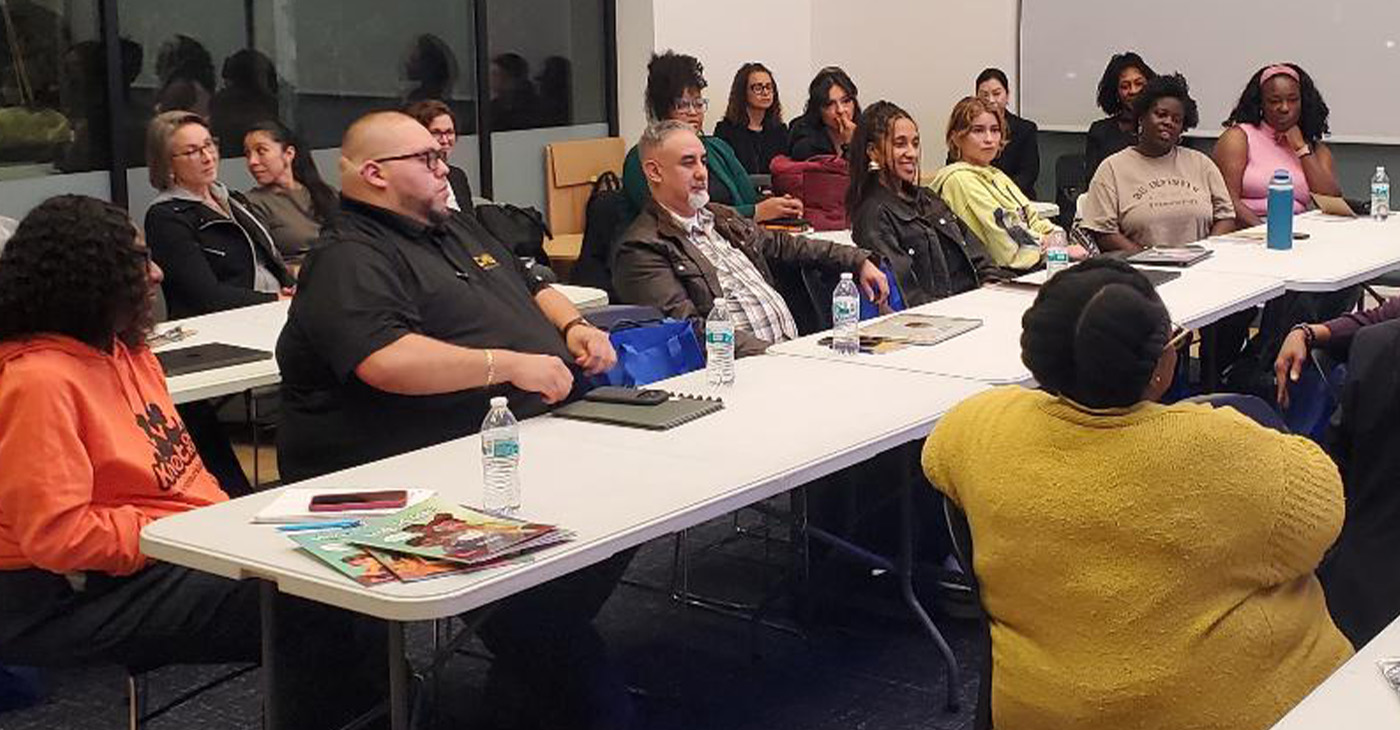
The initiative kicked off on Feb. 12 at Chase’s Oakland Community Center on Broadway Street, welcoming 15 small business owners who joined a growing network of local innovators working to strengthen the region’s entrepreneurial ecosystem.
Over the past three years, the Alley-Oop Accelerator has helped more than 20 Bay Area businesses grow, connect, and gain meaningful exposure. The program combines hands-on training, mentorship, and community-building to help participants navigate the legal, financial, and marketing challenges of small business ownership.
At its core, the accelerator is designed to create an ecosystem of collaboration, where local entrepreneurs can learn from one another while accessing the resources of a global financial institution.
“This is our third year in a row working with the Golden State Warriors on the Alley-Oop Accelerator,” said Jaime Garcia, executive director of Chase’s Coaching for Impact team for the West Division. “We’ve already had 20-plus businesses graduate from the program, and we have 15 enrolled this year. The biggest thing about the program is really the community that’s built amongst the business owners — plus the exposure they’re able to get through Chase and the Golden State Warriors.”
According to Garcia, several graduates have gone on to receive vendor contracts with the Warriors and have gained broader recognition through collaborations with JPMorgan Chase.
“A lot of what Chase is trying to do,” Garcia added, “is bring businesses together because what they’ve asked for is an ecosystem, a network where they can connect, grow, and thrive organically.”
This year’s Alley-Oop Accelerator reflects that vision through its comprehensive curriculum and emphasis on practical learning. Participants explore the full spectrum of business essentials including financial management, marketing strategy, and legal compliance, while also preparing for real-world experiences such as pop-up market events.
Each entrepreneur benefits from one-on-one mentoring sessions through Chase’s Coaching for Impact program, which provides complimentary, personalized business consulting.
Garcia described the impact this hands-on approach has had on local small business owners. He recalled one candlemaker, who, after participating in the program, was invited to provide candles as gifts at Chase events.
“We were able to help give that business exposure,” he explained. “But then our team also worked with them on how to access capital to buy inventory and manage operations once those orders started coming in. It’s about preparation. When a hiccup happens, are you ready to handle it?”
The Coaching for Impact initiative, which launched in 2020 in just four cities, has since expanded to 46 nationwide.
“Every business is different,” Garcia said. “That’s why personal coaching matters so much. It’s life-changing.”
Participants in the 2026 program will each receive a $2,500 stipend, funding that Garcia said can make an outsized difference. “It’s amazing what some people can do with just $2,500,” he noted. “It sounds small, but it goes a long way when you have a plan for how to use it.”
For Chase and the Warriors, the Alley-Oop Accelerator represents more than an educational initiative, it’s a pathway to empowerment and economic inclusion. The program continues to foster lasting relationships among the entrepreneurs who, as Garcia put it, “build each other up” through shared growth and opportunity.
“Starting a business is never easy, but with the right support, it becomes possible, and even exhilarating,” said Oscar Lopez, the senior business consultant for Chase in Oakland.

Activism
Oakland Post: Week of February 18 – 24, 2026
The printed Weekly Edition of the Oakland Post: Week of – February 18 – 24, 2026

To enlarge your view of this issue, use the slider, magnifying glass icon or full page icon in the lower right corner of the browser window.
Activism
Oakland Post: Week of February 11 – 17, 2026
The printed Weekly Edition of the Oakland Post: Week of – February 11 – 17, 2026

To enlarge your view of this issue, use the slider, magnifying glass icon or full page icon in the lower right corner of the browser window.

WORK FROM HOME
Home-based business with potential monthly income of $10K+ per month. A proven training system and website provided to maximize business effectiveness. Perfect job to earn side and primary income. Contact Lynne for more details: Lynne4npusa@gmail.com 800-334-0540


PRESS ROOM: NBA Hall of Fame Nominee Terry Cummings Joins 100 Black Men of DeKalb County to Launch Victory & Values Initiative

Reflecting on Black History Milestones in Birmingham AL

OP-ED: One Hundred Years of Black Workers Telling the Truth

PRESS ROOM: Civil Rights TV Launches in Selma as the World’s First 24/7 Civil Rights Television Network

Advancements in solar technology that are changing the way we power the world

U.S. manufacturing rebounds – how foundry services are adapting to rising demand

Why has blood testing become so popular in today’s world?

Ghana Mourns a Son of the African World

OP-ED: Trump’s Policies Hurt Black America—and Everyone Else

OP-ED: Meta Deleted Me. I Still Don’t Know Why. And neither will you.

More than a Mission: Paying It Forward for the Future of Education

Avoid Eviction This Season: Landlord Checklist for Stable Tenancies

How chronic back problems affect Black communities differently

How cancer care is evolving with modern medicine

Diabetes disparity: Understanding Type 2 risks for Black Americans

Life Expectancy in Marin City, a Black Community, Is 15-17 Years Less than the Rest of Marin County

Oakland Post: Week of January 28, 2025 – February 3, 2026

Jefferson County (AL) Democrats Open Qualifying for 2026 Primary Elections

Skater Emmanuel Savary Sharpens Routines for the 2026 U.S. Championships

COMMENTARY: With Gratitude and Praise for 2026

Community Celebrates Turner Group Construction Company as Collins Drive Becomes Turner Group Drive

California Launches Study on Mileage Tax to Potentially Replace Gas Tax as Republicans Push Back

Oakland Post: Week of January 21 – 27, 2026

Discrimination in City Contracts

OP-ED: The Dream Cannot be Realized Without Financial Freedom

From Civil Rights to ICE Raids, Trump’s Unchecked Power Puts Every Community at Risk

Travis Scott Teaches Us How to Give Forward
From Civil Rights to ICE Raids, Trump’s Unchecked Power Puts Every Community at Risk

After Don Lemon’s Arrest, Black Officials Raise Concerns About Independent Black Media

Four Stolen Futures: Will H-E-B Do The Right Thing?

Hyundai Ioniq 5 Parking, Safety, and 360 View #shorts

2025 Ioniq 5 New Wiper & Powerful Performance! #shorts

Electric SUV Range: Is 259 Miles Enough? #shorts

EV Charging: How Fast Can You Charge an Electric Vehicle? #shorts

Biometric Cooling… Messaging Seats…Come on! 2025 Infiniti QX80 Autograph 4WD

Charged Up: Witness the Magic of a Fully Electric Car! #shorts

Range Rover Sport PHEV Included…: See What’s Inside This Luxury SUV! #shorts

Invisible Hood View: Perfect Parking with X-Ray Vision! #shorts

AI Is Reshaping Black Healthcare: Promise, Peril, and the Push for Improved Results in California

ESSAY: Technology and Medicine, a Primary Care Point of View

Sanctuary Cities

The RESISTANCE – FREEDOM NOW

STATE OF THE PEOPLE: Freddie

ECONOMIC BOYCOTT DAY!!!!!

I told You So
-
 Activism3 weeks ago
Life Expectancy in Marin City, a Black Community, Is 15-17 Years Less than the Rest of Marin County
-
 Activism3 weeks ago
Oakland Post: Week of January 28, 2025 – February 3, 2026
-
 Activism2 weeks ago
Community Celebrates Turner Group Construction Company as Collins Drive Becomes Turner Group Drive
-
 Business2 weeks ago
California Launches Study on Mileage Tax to Potentially Replace Gas Tax as Republicans Push Back
-
 Activism2 weeks ago
Discrimination in City Contracts
-
 Activism3 weeks ago
After Don Lemon’s Arrest, Black Officials Raise Concerns About Independent Black Media
-

 Activism3 weeks ago
Medi-Cal Cares for You and Your Baby Every Step of the Way
-

 Arts and Culture2 weeks ago
Book Review: Books on Black History and Black Life for Kids
