
News
Oakland Raiders News | NFL, City of Oakland Working On New Stadium; Las Vegas Update
According to Alameda County Supervisor Nate Miley, The City of Oakland, the County of Alameda, and the NFL are working on a stadium plan to keep the Oakland Raiders in Oakland – and to head off Las Vegas Raiders plans

Oakland Mayor Libby Schaaf and The Oakland Raiders Town Hall Meeting of last fall of 2015, and held at the Fox Theater, played a mayor roll in the situation that formed the Oakland Raiders news today: the National Football League working with the City of Oakland and the County of Alameda in planning for a new stadium for the Raiders at the Oakland-Alameda County Coliseum Complex.And, as Alameda County Supervisor Nate Miley told me on Saturday, during Oaktoberfest in the Dimond District, talks with the National Football League and Ronnie Lott of what Mr. Miley calls “The Lott Group” are going well.
In fact, they’re going so well, Supervisor Miley worked to downplay progress and the good Oakland Raiders news in my talk with him, as you can see in my Zennie62 on YouTube blog interview above and here.
Contrary to views expressed by some local media types who seem to want the Raiders to leave Oakland for Las Vegas, the fact is the NFL has worked with the City of Oakland, the County of Alameda, and the Oakland-Alameda County Joint Powers Authority on the objective of a new stadium for almost year, now.
Indeed, as explained at Zennie62.com on December 4th, 2015, “the National Football League is forming a plan to keep the Raiders in Oakland, and not have them go down to Carson.”

Oakland Raiders NFL Stadium News Update
As it is happened in January at the NFL Owners Meeting in Houston, NFL Owners rejected the San Diego Chargers / Oakland Raiders plan to build a 65,000-seat stadium in Carson, and approved the then St. Louis Rams’ plan to move to Los Angeles, become the L.A. Rams again, and build a state-of-the-art 80,000 seat stadium complex in Inglewood.
The rabid Oakland fan base and Mayor’s Schaaf’s success at building a positive relationship with NFL Commissioner Roger Goodell and his staff, caused that outcome, even as Raiders Owner Mark Davis has made moves to try and relocate the organization out of Oakland.
According to many talks with NFL Officials, the Oakland Raiders fans gave what one official recently said to me, and for the second time, an “emotional experience” during the crowded Oakland Raiders Town Hall Meeting at the Fox Theater last year. As an aside, you can see what happened and how the NFL staff in attendance reacted via this 18-video playlist from Zennie62 on YouTube:
The NFL Loves The SF Bay Area Media Market
Oakland Mayor Libby Schaaf was invited to give a presentation to the NFL Finance Committee in New York City on November 14th of 2015 (Zennie62Media was one of the press organizations on the scene in NYC). The NFL staffers and owners were, I was told by league officials, “charmed” by Mayor Schaaf, who was asked to show how the Oakland / East Bay Market could support the Raiders in her presentation.
That the NFL asked Mayor Schaaf to focus on the Oakland / East Bay Market and not on new stadium progress was a major news point completely missed by the media. The San Francisco Bay Area has had two NFL teams since 1960 and the media market that has grown over that time now ranks as number six in among NFL city metro areas, but is number three in terms of advertising cost-per-point behind New York and LA.
Moreover, Nielsen reports that of the top six cities, the San Francisco Bay Area is only one of two who have realized an increase in the number of television sets in the most recent, reliable data from 2015.
Where does Las Vegas rank in media market size? 40th. So Mark Davis is essentially asking his NFL Ownership friends to take a media market size and media market rights fee haircut by working on a deal with The State of Nevada and Clark County to build a stadium there, rather than focusing exclusively on staying in Oakland.
The importance of Mark Davis’ efforts can’t be underscored because the NFL’s major revenues come from the sale of the right to broadcast its games. In turn, the rights fees are determined, in part, by what it costs to show commercials in NFL cities – the lower that rate, the less the overall rights fee would be.
In an era of fragmented media stretched between the web, mobile, and television, the NFL games offer the best opportunity for brands to get their products seen by consumers across demographic groups. Since corporations have proven, time and again, that they would pay top dollar to show commercials during NFL contests, the major media networks (which take money from those companies to present their commercials) have been willing to pay the NFL as much as $27 billion in 2011.
And that 2011 deal is up for renewal in 2022.
The NFL wants to walk into the 2022 negotiations being able to show a more valuable overall product to Walt Disney Company and the other media giants by that time, and that explains moving the Rams from St. Louis to Los Angeles, and it is the reason why the league will not allow the Raiders to walk out of Oakland for Las Vegas. Media fragmentation has the NFL very concerned about the future growth of its seed-corn money base, and is working to insure it increases over the next generation.
The Ronnie Lott Group And Oakland Coliseum NFL Stadium Plan Progress
To complete the process of building a new, state-of-the-art NFL stadium for the Oakland Raiders at the Coliseum, on August 26th, the City of Oakland and the County of Alameda entered into a 90-day “memorandum of understanding” with the Oakland City Pro Football Group LLC, which is ran by NFL Hall of Fame Defensive Back Ronnie Lott, who’s joined by NFL alum and USC legend (which is painful for this Cal-Berkeley grad to write) Rodney Peete.
For two months prior to the August MOU date, the Oakland City Pro Football Group LLC was characterized by Oakland officials as consisting of Lott, Peete, and Egbert Perry, the Chairman & Chief Executive Officer of The Integral Group, and Chairman Of The Board of Fannie Mae. But while the MOU itself specifically mentioned Lott and his group, it did not name Perry in any way.
Then, Perry and another LLC he’s part of called Stadium Real Estate Partners LLC sent a letter to Oakland and Alameda County Officials announcing an offer to buy Oakland-Alameda County Coliseum land for $167 million, or about $2 million over the $165 million required to defease the ‘Raiders Bonds’ used to pay for the upgrade of the Oakland Coliseum stadium to bring the Raiders back to Oakland from L.A in 1995., and that the City and County have paid a $20 million annual debt service on since 1996, when the plan to sell ‘personal seat licenses’ fell short of revenue goals, raising only $56 million, when an initial sale of $83 million was required.
That offer by Stadium Real Estate Partners LLC was rejected by The City of Oakland. Mayor Schaaf said to me that “We aren’t considering it for recommendation at this time because we want an agreement with the NFL. I am committed to keeping the Raiders and The League at the center of the deal. We can’t give up our right to control the destiny of what happens to that land (at the Coliseum). A new stadium that keeps the Raiders in Oakland, but is responsible to the team, the league and the taxpayer – and enhances economic vitality around the Coliseum and delivers community benefits.”
The act of rejecting Perry caused some Raiders fans, and this blogger, to believe the entire process of maintaining the Raiders in Oakland was in trouble. But a number of Oakland Officials, and most notably Mayor Schaaf on the record, have made assurances that is not the case.
Indeed, the entire Perry soap opera masks the simple fact that since last year, the Raiders have had drawings of what a new Oakland Coliseum NFL Stadium will look like, and while Oakland officials have seen them, they have never been released to the public. And this year, the Raiders have taken construction bids for a stadium cost study. Additionally, Larry McNeil, the Raiders Vice President of Business Affairs and stadium point person, has worked with Oakland Officials, even meeting with the Mayor and consultants as recently as September 15th.
According to Miley, a stadium plan is expected to be done by January of 2017. And the entire affair has been helped by the news that the Oakland Athletics are interested in building a new baseball stadium at Howard Terminal. For a time so many possible areas were being considered the Oakland A’s might as well have selected Michaan’s Auctions land in Alameda.
The Perry soap opera also masks the news that, as Miley told me in my interview over the weekend, Alameda County is no longer interested in selling its part of the Oakland Coliseum to the City of Oakland, believing it can help in the new stadium planning process by providing its considerable resources for use.
That’s a major change from last year, when, in May, the same Supervisor Miley dropped a bomb of a press release announcing the County’s Board of Supervisors wanted out of, as they put it, ‘the sports business’. The Alameda County Board of Supervisors have obviously cooled its collectively heated emotions, and resolved to work with the City of Oakland as a team. And that has come at the perfect time because of the presence of what Mayor Schaaf calls “The Las Vegas Threat.”
Raiders Las Vegas NFL Stadium Plans And Proposed Nevada Special Session
In late January, Oakland Raiders Owner Mark Davis met with Las Vegas Sands CEO Sheldon Adelson and University of Nevada Las Vegas President Len Jessup to tour possible sites for a new Raiders stadium in Sin City. Davis, rankled that the NFL rejected his Carson stadium proposal, took up an offer by Adelson, who, in turn, was reportedly wooed (via his deputy government affairs representative Andy Abboud) by former Raiders player and Las Vegas resident Napoleon McCallum.
That ignited Las Vegas Sands partnering with The Raiders and Majestic Realty to present a plan for a 65,000 seat stadium in Las Vegas, and before a group formed by Nevada Governor Brian Sandoval and called The Southern Nevada Tourism and Infrastructure Committee, or SNTIC, and that was already meeting over the past year ostensibly on how to pay for expanding the Las Vegas Convention Center (LVCC).
Davis and Adelson wanted the SNTIC to send a recommendation to the Governor that a hotel tax increase and a subsidy of $750 million for a new NFL Stadium in Las Vegas or Clark County should be presented in a bill to the Nevada Legislature. A request that, given the size of the public contribution and the fact that Adelson, worth $29 billion, could pay for the stadium himself, seemed a long shot to get from the SNTIC.
But the Governor’s SNTIC was wired by Adelson and the Las Vegas Casino Industry: many top casino managers sat on it, and in 2015, Las Vegas Sands had given over $25,000 to the campaign of the two elected officials on it: Las Vegas Mayor Carolyn Goodman and Clark County Supervisor Steve Sisolak. (Moreover, Adelson has given over $200,000 to the campaigns of over 20 Nevada elected officials or those running for office over the past two years.)
With that, and the Las Vegas Review-Journal owned by the Adelson family, it should come as no surprise that the SNTIC would eventually approve Davis and Adelson’s request. Now, it’s up to Governor Sandoval to call the special session, which has not happened yet even though he said the meeting date would be between October 7th and October 11th.
It’s October 4th now.
Whatever’s going on to cause what seems to be a delay, Nevada political observers, and Raiders fans close to the story believe that with taxpayer groups loudly crying foul against what is called a welfare give to a billionaire in Adelson, and this being an election year, there’s little desire for the Nevada Legislature to approve the huge level funding.
Moreover, there are concerns with the Raiders / Las Vegas Sands NFL stadium plan and they were left unadressed by the SNTIC, which was rushed to get to a conclusion because the Raiders are anxious to get a Las Vegas proposal before NFL Owners by January of next year:
First, the Raiders plan is without a firm land deal, and one of the two areas selected is right next to Las Vegas McCarran International Airport, an idea that Southwest Airlines has told me it would not be in favor of for reasons of aviation safety.
Second, the proposed legislation calls for a bond issue with a debt coverage ratio that, at 1.5, is below the industry standard of two, or double the revenue from the proposed tax increase. To put it simply, the bond deal by design is in danger of not being able to pay for itself. Governor Sandoval has said he’s convinced the bond deal can work, but then he is considered to be working to meet Adelson’s request. And I’m told a number of Nevada elected officials don’t want to piss off Adelson.
Third, the proposed legislation is written such that there would be no cap on the amount of money the public, known as The Nevada Government and Clark County, would spend on the NFL Stadium over and above the $750 million. The SNTIC rejected the proposal that there should be a cap, and so the public could wind up spending over $1 billion on an NFL stadium if the Nevada Legislature and the NFL Owners gave Davis and Adelson what they wanted.
Sheldon Adelson’s Legal Problems With Money Laundering Claims
Finally, there’s the issue of Adelson himself and the flurry of lawsuits filed and settlement given around allegations of money laundering connected to Chinese high-rollers, some said to have questionable business practices. You can learn more about that in my vlog below, but to what degree does this problem taint the entire deal? Will Nevada Legislators take that into account in an election year that’s just 35 days from conclusion as of this writing?
If not, and the Nevada Legislature approves this gargantuan public subsidy for the Raiders and Las Vegas Sands, the entire matter will fall to The Clark County Board Of Supervisors for a final decision. Because of a newly installed “Home Rule” law in 2015, Clark County gets final say on the $750 million bond issue. I talk about that, here:
Stay tuned and subscribe to Zennie62 on YouTube for up-to-the-minute video-blogs on this story.








Activism
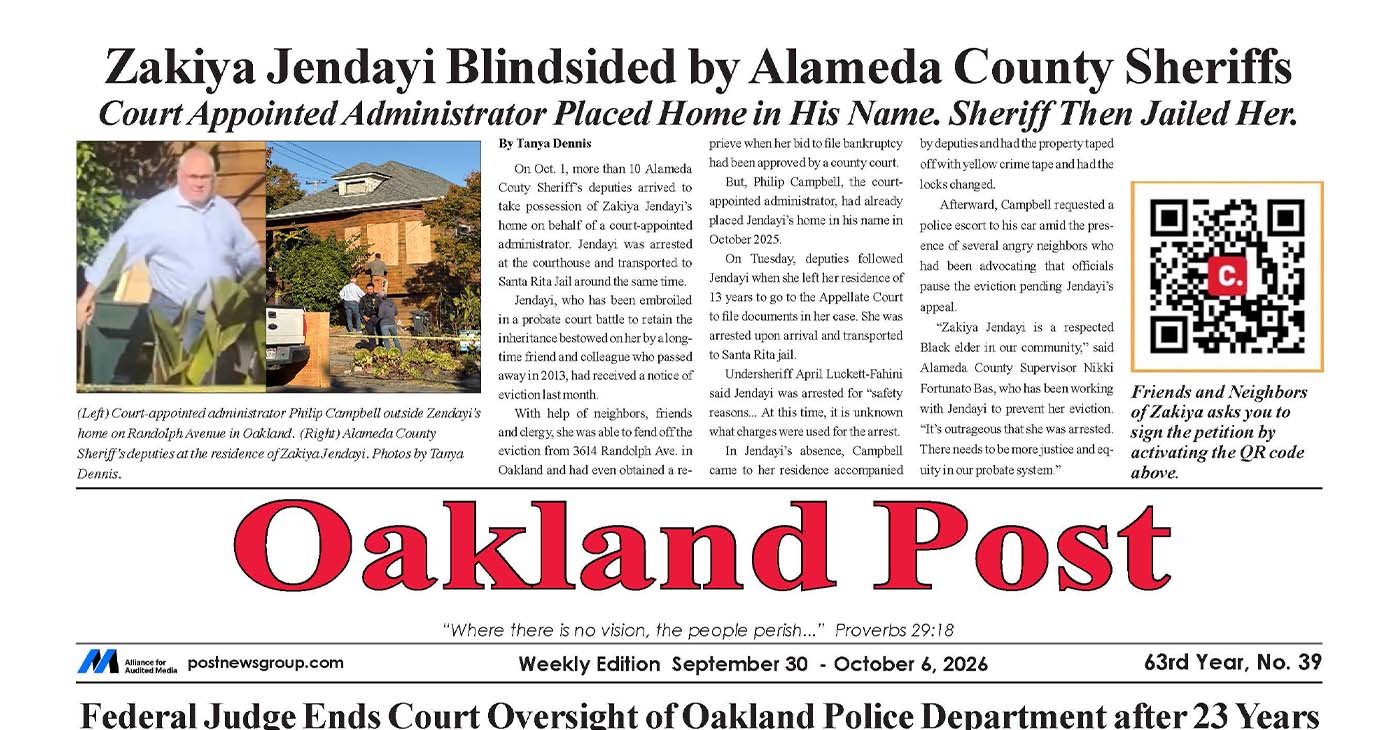
Oakland Post: Week of September 30 – October 6, 2026
The printed Weekly Edition of the Oakland Post: Week of September 30 – October 6, 2026
To enlarge your view of this issue, use the slider, magnifying glass icon or full page icon in the lower right corner of the browser window.
Activism
Oakland Post: Week of September 23 – 29, 2026
The printed Weekly Edition of the Oakland Post: Week of September 23 – 29, 2026

To enlarge your view of this issue, use the slider, magnifying glass icon or full page icon in the lower right corner of the browser window.
Activism
Oakland Post: Week of September 16 – 22, 2026
The printed Weekly Edition of the Oakland Post: Week of September 16 – 22, 2026

To enlarge your view of this issue, use the slider, magnifying glass icon or full page icon in the lower right corner of the browser window.


OP-ED: Proposition 44 Would Put a Price on Trust

OP-ED: Proposition 40: It’s Time to Play Chess, Not Checkers

Listening as a Lifeline: A Doula’s Witness to Black Maternal Health

New Protections for Ticket Buyers: Gov. Newsom Signs Assemblymember Isaac Bryan’s Bill

‘We Don’t Talk Trash — We Pick Up Trash!’

Zakiya Jendayi Arrested, Locked Out of Home by Sheriff’s Deputies

Oakland Post: Week of September 30 – October 6, 2026

Asm. Corey Jackson Announces Launch of 24-Hour Childcare in His District

IN MEMORIAM: The Rev. Leon “Sonny” Clark, Longtime Orange County Pastor and Community Leader, Dies at 72

Poll: Becerra Widens His Lead Over Hilton; Californians Split on Wealth Tax

From Historic Memories to New Possibilities: Oakland Celebrates Coliseum 60

County Office of Education Says OUSD Finances Are Getting Healthier, Materially Stronger

LIVE FREE Sunday Dinner Brings Faith, Fellowship and Civic Conversation to Oakland

Remembering Chauncey Bailey as Student Journalists Face Threats to Truth-Telling

BLACspace Cooperative Invites Bay Area to Experience Oakland’s Black Cultural Ecosystem Through a BLAC Map Tour + Party

Standoff for Justice: Our Homes Are Worth Fighting For

Oakland Post: Week of August 26 – September 1, 2026

Frontier Airlines’ Return to Oakland Airport Brings Flights, Jobs and Opportunity

Gubernatorial Candidate Steve Hilton Blasts California New Tire Rules; Newsom Hits Back

Chef Sharon Lee Blends Culinary Excellence, Education and Empowerment

Jackie Wright Champions Bay Area Stories, Filmmakers and Cultural Institutions

Misnamed ‘Parent’ PAC Seeks to Influence Oakland School Board Elections

Oakland Coliseum Project Opens Door for Small Businesses to Build Bigger

Big City Mayors Ask for “Yes” Vote on Housing Bond Measure; Conservatives Say “No”

Gov. Newsom’s Latest Appointees Include Sacramento Advocate for Formerly Incarcerated Students; State’s New Tech Chief

Longtime BWOPA Member Brendalyn Goodall Appointed to California Workforce Development Board

Gov. Newsom Signs Law Shielding Immigration Aid Workers From Doxing Threats

Oakland Post: Week of September 2 – 8, 2026

Secretary of State Shirley N. Weber Urges Californians to Vote Early as Voter ID Battle Intensifies

IN MEMORIAM: Dolly Parton Dead at 80 — How She Built a Legacy of Love and Earned Her Place in Black Culture

The Conversation With Al McFarlane 6/23/26

Media Monday 6/22/26

LIVE! ASK ALMA! — TUES. 6.23.26 7PM EST

Car Buying Secrets: 4 Hidden Checks Before You Sign!

Is This 550 HP Charger Worth YOUR Money? AutoNetwork Review

Celebrating Juneteenth – Frederick Douglass on education and resistance

LIVE! — ASK ALMA! — TUES. 6.19.26 7PM EST

Hyundai Ioniq 5 Parking, Safety, and 360 View #shorts

2025 Ioniq 5 New Wiper & Powerful Performance! #shorts

Electric SUV Range: Is 259 Miles Enough? #shorts

EV Charging: How Fast Can You Charge an Electric Vehicle? #shorts

Biometric Cooling… Messaging Seats…Come on! 2025 Infiniti QX80 Autograph 4WD

Charged Up: Witness the Magic of a Fully Electric Car! #shorts

Range Rover Sport PHEV Included…: See What’s Inside This Luxury SUV! #shorts

Invisible Hood View: Perfect Parking with X-Ray Vision! #shorts
-
 Community3 weeks ago
Misnamed ‘Parent’ PAC Seeks to Influence Oakland School Board Elections
-

 Activism3 weeks ago
Oakland Post: Week of September 9 – 15, 2026
-

 Community3 weeks ago
Richmond Tiny House Village Farm & Garden Set to Open Gates on Sept. 26
-

 Black History3 weeks ago
Latest Massacre in Haiti Reveals Cruelty U.S. Deportations
-

 Black History3 weeks ago
OPINION: Nolan Wells’ Death One of Several Signifying Racial Terror Lives on in U.S. South
-

 Business2 weeks ago
Mayor Lee Announces $1 Million Kaiser Permanente Grant for Pilot Program to Address Homelessness, Clean Up Public Spaces throughout Oakland
-

 Community3 weeks ago
Democratic Clubs Interview Candidates for Oakland School Board
-
 Uncategorized3 weeks ago
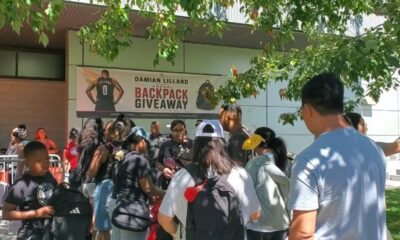
NBA All-Star Damian Lillard Returns Home for 15th Annual Backpack Giveaway
