
Oakland
Naismith Hall of Fame Basketball Legend Nancy Lieberman WNBA team for Oakland
The former player-coach and Gary Reeves, her development partner, have talked with Vice Mayor Rebecca Kaplan and members of the African American Sports Entertainment Group since March.


Nancy Lieberman, one of the most celebrated female basketball players over the last decades, is supporting the push to bring a WNBA (Women’s National Basketball Association) franchise to Oakland.
The former player-coach and Gary Reeves, her development partner, have talked with Vice Mayor Rebecca Kaplan and members of the African American Sports Entertainment Group since March.
Reeves said, “she (was) one of the most successful WNBA executives. In the early stages of the league’s development with the Detroit Monarchs …. she impressively operated the business side of the team into the ‘black’ and drove a fearless community outreach program. This resulted in the team having one of the largest fan bases in a large, urban-based WNBA city.”
Lieberman has spoken at length to Kaplan about possibly joining a female-led and Black-equity ownership group to bring a team to Oakland. Nancy Lieberman Charities is active today, supporting under-resourced communities across the country with PPE, food distribution, academic scholarships, job readiness programs and providing clothes to 100 new Nancy Lieberman Sport Courts for neighborhoods that don’t have up-to-date, safe playing surfaces.
Lieberman told Post Publisher Paul Cobb that she often credits the African American community for protecting her and supporting her as a child, especially when she played hoops at the legendary Rucker Park in New York City.
Kaplan cited the June 2021 cover story of the Sports Illustrated magazine as evidence of the emergence and growth of the WNBA and its potential opportunities for diversity and equity and female and Black ownership potential.
Since Lieberman’s first interview and podcast with the Post, many Oakland-based groups have expressed interest in bringing a WNBA team to Oakland.
Reeves said the initiatives taken by Lieberman and Kaplan should be supported and embraced by the Black community.
Gay Plair Cobb, CEO Emerita of the PIC (Partners In Careers), said “It’s past time for Black women to also participate as co-owners with a diverse group of women investors in major sports franchises.”









Business
From Historic Memories to New Possibilities: Oakland Celebrates Coliseum 60
More than 75 people gathered at Youth UpRising in East Oakland on Friday, September 18, for Coliseum 60, an event marking six decades of sports, entertainment, employment, and community memories at the Oakland-Alameda County Coliseum Complex. Held 60 years to the day after the Coliseum first opened, the celebration featured cultural performances and a mini-documentary highlighting its history. Speakers reflected on the venue’s significant role in the community and its future possibilities. Read more to learn about the individuals and stories honored during this special event.

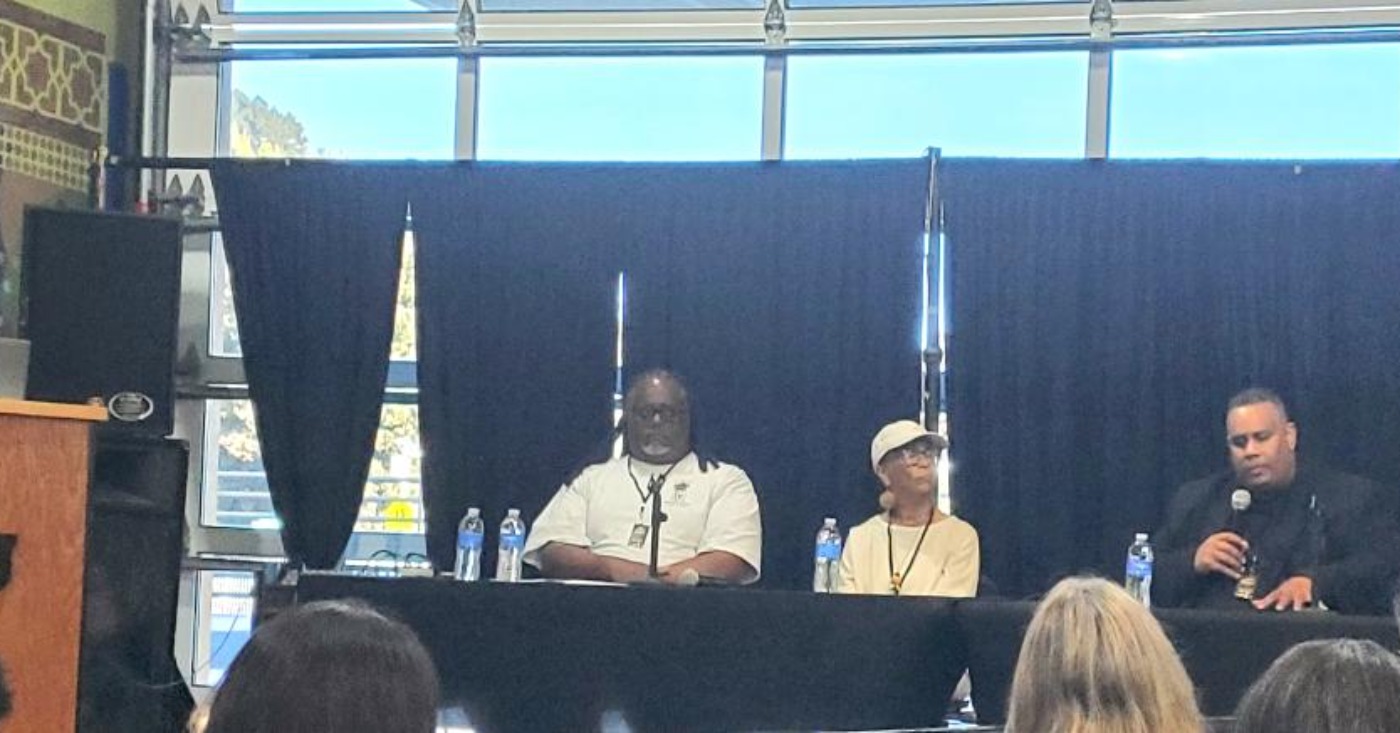
More than 75 people gathered at Youth UpRising in East Oakland on Friday, Sept. 18, for Coliseum 60, a celebration honoring six decades of sports, entertainment, employment and community memories connected to the Oakland-Alameda County Coliseum Complex.
Held 60 years to the day after the Coliseum opened, the event carried the theme, “One Community. One Legacy. One Future. Forward Together.”
The celebration opened with the national anthem performed by sisters Anese Jade, Amina Benjamin and Zaza Benjamin. Diamano Coura West African Dance Company contributed African dance and drumming, bringing movement, rhythm and cultural expression to the program.
A mini documentary highlighted the Coliseum’s sports history and its broader role as an entertainment destination. Archival material recalled performances by Prince and Tina Turner, along with memorable games featuring the Warriors, Oakland A’s and Raiders.
“The Coliseum 60 is about much more than celebrating a building or looking back at 60 years of history,” said event organizer Quixote Atkins of VillageGIVE.
“It’s about the people who made that history possible: the families, workers, athletes, artists, community leaders, fans and generations who gathered there and created memories together.”

A panel exploring that history featured author, historian and former Black Panther Party member Tareka Lewis; stagehand and union representative Keith Brown; and Ray Bobbitt, president of the African American Sports and Entertainment Group AASEG. Lewis described her family as fourth-generation Bay Area pioneers.
“My family and Black families who arrived even earlier helped build the Bay Area, grew businesses and established culture here,” Lewis said. “This should be taught in the public schools.”
Lewis recalled Oakland’s influence on sports, music and literature, from the Raiders’ beginnings at Laney College to stars such as The Pointer Sisters and Rickey Henderson who attended Oakland public schools. She also advocated for school museums, historical timelines, entrepreneurship training and investments benefiting corridors such as Bancroft Avenue and High Street.
Keith Brown, a member of Local 107 of the International Alliance of Theater and Stage Employees (IATSE) who began working at the Coliseum in 2011, remembered the Ringling Bros. and Barnum & Bailey Circus, the Ice Capades, baseball bat giveaways and Nelson Mandela’s 1990 appearance.
“The special events are amazing, but it’s the workers that make the memories real for everyone,” Brown said. “They make the magic happen at the Coliseum.”
The program recognized longtime workers, including beer-stand manager Robert Preston, who served for 40 years, and Kenyatta Gentry, who worked as a vendor for 24 years and used her earnings to purchase her first apartment. Union workers Jose Gonzales and Carmen Sandoval were also honored. Speakers emphasized that Coliseum employment provided generations of residents with union wages and benefits.
Dr. Denise Saddler, the superintendent of the Oakland Unified School District (OUSD) was also honored. Saddler shared her family’s history of working at the Coliseum.
District 7 Oakland City Councilmember Ken Houston discussed the complex ownership arrangements involving the city, county and private interests.
“This was the most complex deal of its kind in the country,” Houston said.
Prior to moving from the East Coast, Alameda County Supervisor and Coliseum Joint Powers Authority Chair Nate Miley recalled learning about Oakland through its three professional sports teams. As an elected official and public servant, Miley fought hard to keep the Golden State Warriors, Oakland As, and the Raiders, but he is hopeful for the future.
“The story is not over for the Coliseum,” Miley said. “We’re entering a new chapter.”
Bobbitt said the departure of three teams had once seemed unimaginable, but he maintained that Oakland’s future remains bright.
“Oakland is a cultural superpower worldwide,” Bobbitt said. “We’re going to write the future where we participate and drive the redevelopment.”
Bobbitt highlighted AASEG’s four-year partnership with Castlemont High School’s architecture program, which engages students in reimagining and creating redevelopment concepts for the Coliseum property. “The youth will always move us forward. They are the future.”
In closing, Atkins said, “September 18 is the celebration, but what we build together afterward is the legacy.”

Community
LIVE FREE Sunday Dinner Brings Faith, Fellowship and Civic Conversation to Oakland
Approximately 50 members and guests gathered at Imani Community Church for a LIVE FREE Sunday Dinner, sharing a meal with Pastor Michael McBride. The event, hosted by Imani Community Church Pastor Jeremy McCants, focused on faith, community preparedness, and civic participation. Participants discussed “sacred resistance” and how communities can collectively respond to challenges, including practical suggestions for emergencies. The conversation also touched upon the importance of civic engagement and voting in the upcoming election. Read more to learn about the specific actions discussed.
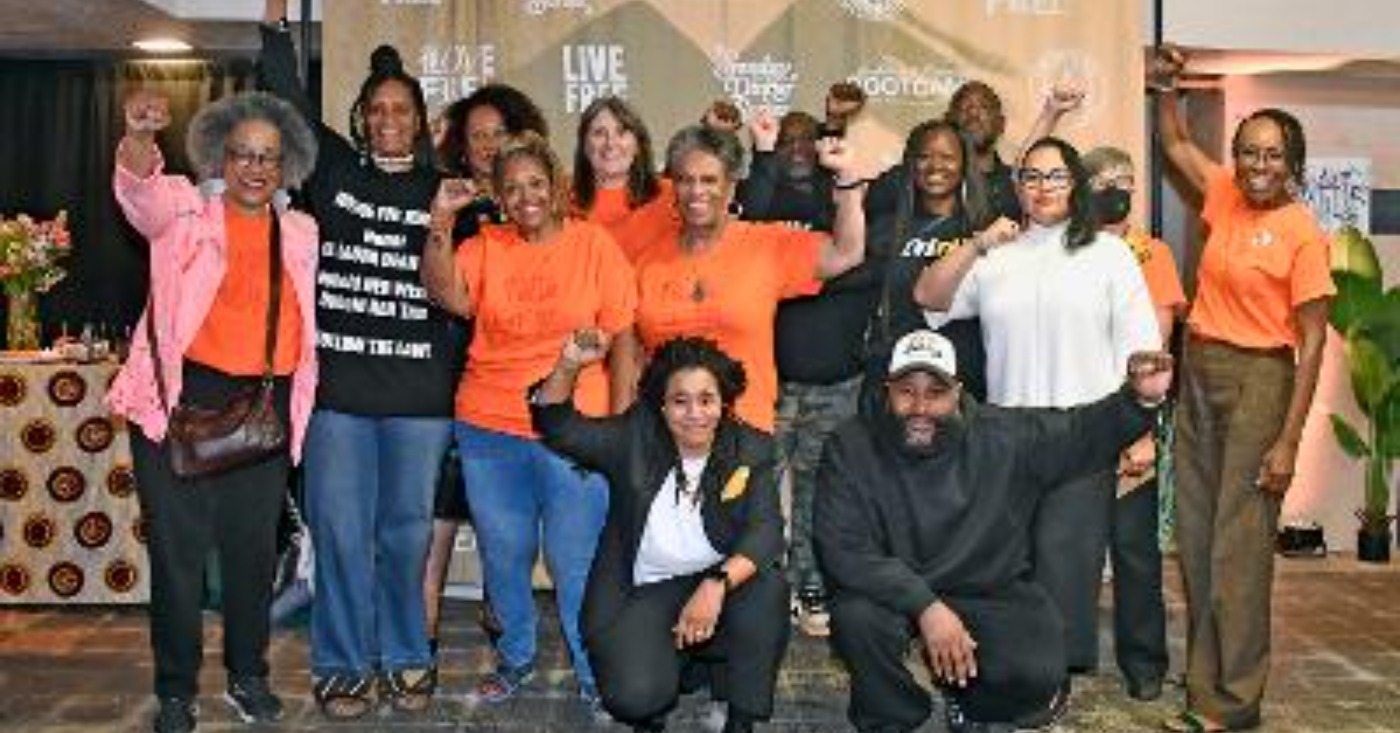
Pastor Michael McBride joins Imani Community Church Members for Food, Faith and Conversation about Community Action
Approximately 50 members and guests of Imani Community Church gathered Sunday afternoon for a LIVE FREE Sunday Dinner, sharing a meal with Pastor Michael McBride while discussing faith, community preparedness and civic participation.
Hosted by Imani Community Church Pastor Jeremy McCants, the Sept. 20 gathering was part of LIVE FREE’s Sunday Dinner initiative, which draws upon the tradition of families, neighbors and faith communities gathering around the Sunday dinner table to break bread and discuss issues affecting their lives.
McBride is founder of LIVE FREE and lead pastor of The Way Christian Center on University Avenue in Berkeley. His Bay Area ministry has deep roots. The congregation traces its history to a church planted by McBride’s grandmother in 1969. McBride returned to the Bay Area in 2005 and became its fourth pastor.
His ministry later expanded into community organizing and national advocacy. McBride founded LIVE FREE in 2011 following organizing work in Oakland and has been involved in efforts addressing gun violence, mass incarceration and civic engagement.

At Imani, the Sunday dinner concept was simple: sit down together, eat together and talk.
McBride recalled a time when Sunday dinner provided families and neighbors an opportunity to discuss what was happening in their communities. LIVE FREE has adapted that tradition into gatherings where faith communities and neighbors can meet, communicate, and consider how to respond collectively to current challenges.
Much of Sunday’s conversation centered on what McBride described as “sacred resistance,” bringing faith into discussions about how communities respond during difficult and uncertain times.
Participants considered a fundamental question: How do we make sense of what is happening around us, and how do we move forward?
The conversation was grounded in faith and prayer, but participants also discussed action and preparation. Attendees talked about not assuming that institutions and everyday systems will always function as expected.
Practical suggestions included keeping basic food staples such as rice and beans available during emergencies. Participants cited the water crisis in Flint, Michigan, as an example as they discussed communities that have experienced disruptions to essential services.
The broader message was one of preparedness and connection: neighbors should know and support one another before a crisis occurs.
The conversation also turned to civic participation and the upcoming election.
McBride’s message was brief: “Vote. We must vote.”
Participants were encouraged to register to vote, verify that their registration is current, and learn what will appear on their ballots. The discussion included researching candidates and ballot measures, voting early, and making a voting plan.
An Oct. 3 workshop was announced as another opportunity for community members to learn more about candidates, volunteer phone banking, ballot measures, and issues before voters.
For Imani’s Social Justice Team, the gathering provided another opportunity to share information with the congregation and surrounding community regarding Imani member Zakiya Jendayi, fighting for her home, and how the community can support her by attending a vigil at her Oakland home every Tuesday from 6-7 p.m. at 3614 Randolph Ave. 94610.
Black History
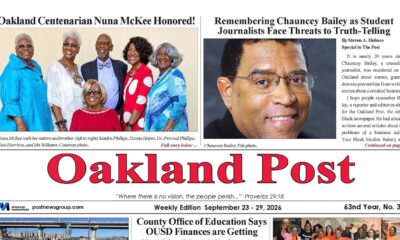
Remembering Chauncey Bailey as Student Journalists Face Threats to Truth-Telling
Nearly two decades ago, Oakland Post reporter and editor-in-chief Chauncey Bailey was tragically murdered for investigating a crooked business. His assassination shocked the journalism world and is remembered as student journalists today face increasing threats and censorship. A former classmate of Bailey and chair of the Student Press Law Center notes a significant rise in calls from students seeking legal advice amid a hostile environment. This situation highlights the importance of protecting young journalists and their pursuit of truth. Read more to learn about Bailey’s legacy and current challenges facing student press.
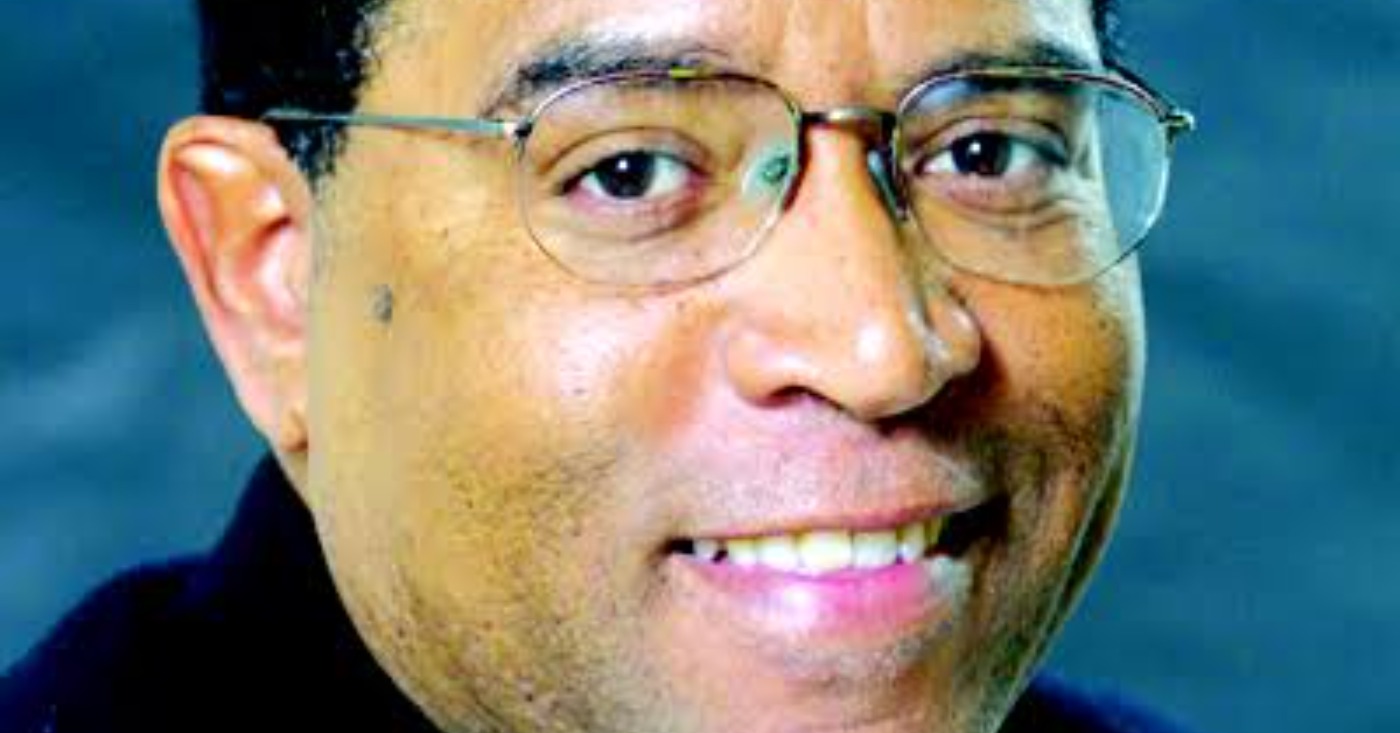
It is nearly 20 years since Chauncey Bailey, a crusading journalist, was murdered
on an Oakland street corner, gunned down to prevent him from writing stories about a
crooked business.
I hope people remember Bailey, a reporter and editor-in-chief for the
Oakland Post, the city’s Black newspaper. He had already written several articles about
the problems of a business called Your Muslim Bakery and was working on another
when the bakery’s owner ordered an employee to kill Bailey.
His murder shocked the journalism world that found the idea of an American
reporter killed for doing his job unfathomable. For me, the shock and sadness were also
personal.
I knew Bailey. In the mid-1970s we were classmates in the Michelle Clark Memorial
Foundation program, the precursor to the Institute for Journalism Education Summer
Program. A program, backed by the Ford Foundation, that provided intensive training
for fledgling minority journalism students and then placed them in jobs at newspapers
and television stations.
I’m reminded of Bailey and that program when I visit the East Bay at the end of
September to discuss the future of student journalism. To me, the visit will not only
evoke memories of Bailey. It will also be an opportunity to hone strategies to protect and
support student journalists who are under attack today, maybe not in the way that took away Chauncey Bailey, but an attack, nonetheless.
Spurred by the hostility toward the free press emanating out of Washington, high
school and college journalists are facing a barrage of censorship and harassment from
school administrators and local officials.
The 24-hour hotline staffed by the Student Press Law Center (SPLC), the non-profit I chair, has seen a 35% increase in calls from student journalists seeking legal advice on censorship, libel and copyright issues during the past two years, as well as a tripling in the number of complaints of harassment, including threats of firing, of faculty advisors.
I am not suggesting today’s national climate is as dangerous as the murderous
intentions of Yusef Bey IV, the man who ordered Bailey’s assassination. But the
harassment of student journalists does kill something else. It can destroy the desire of
student journalists to continue their growth to become professional news gatherers and
producers – something the country will always need.
It is that professional maturation that I’m reminded of when I think back on Chauncey
Bailey.
Truth be told, when we were classmates back in 1974 Bailey was the class clown,
known more for his sardonic wit than his writing or reporting talent. I have vivid
memories of Bailey sitting at his desk in the back of the room regaling us with sarcastic
comments. Sure, he was funny.
And he didn’t exhibit the level of reporting skills of our other classmates such as Milton Coleman who went on to be the Deputy Managing Editor of the Washington Post or Alexis Scott who for years has run the Atlanta Daily World.
After a series of reporting jobs in Hartford, Connecticut, Detroit, Michigan, and Oakland, Bailey had risen in talent and skill to helm this very newspaper. A tip from a source led Bailey to look into the possibility that Bey was running Your Muslim Bakery into bankruptcy. Word that Bailey was working on that story filtered back to Bey who ordered the journalist killed.
On August 2, 2007, Bailey was shot three times at point-blank range as he walked to work.
So, when I think of my trip to the East Bay my thoughts go to journalism’s past
represented by Chauncey Bailey’s sacrifice and what the staff and the board of SPLC
can do to secure the current and future work of student journalists.
Steven A. Holmes is a former Pulitzer Prize-winning journalist. His novel “Black Messiahs” was published in May this year.



Asm. Corey Jackson Announces Launch of 24-Hour Childcare in His District

IN MEMORIAM: The Rev. Leon “Sonny” Clark, Longtime Orange County Pastor and Community Leader, Dies at 72

Poll: Becerra Widens His Lead Over Hilton; Californians Split on Wealth Tax

From Historic Memories to New Possibilities: Oakland Celebrates Coliseum 60

County Office of Education Says OUSD Finances Are Getting Healthier, Materially Stronger

LIVE FREE Sunday Dinner Brings Faith, Fellowship and Civic Conversation to Oakland

Remembering Chauncey Bailey as Student Journalists Face Threats to Truth-Telling

BLACspace Cooperative Invites Bay Area to Experience Oakland’s Black Cultural Ecosystem Through a BLAC Map Tour + Party

In Wake of Death on Doorstep, Williams Chapel Baptist Church Calls for Better Care, Funding for Unhoused

Oakland Centenarian Nuna McKee Honored!

Caribbean Nations Produce Action Plan Calling for UK Reparations Over Slavery

Oakland Post: Week of September 23 – 29, 2026

Doulas Are Helping Black California Moms Navigate Pregnancy–Even as High Mortality Rates Persist

Newsom Signs Addictive Social Media Law to Protect Kids

On Your November Ballot: Prop 38 Would Allocate $8.4 Billion to Immunology and Immunotherapy Funding

Less Affluent School Districts, Including Sacramento City, Face Threat of State Takeover

ESSAY: California Can Close Its Colorectal Cancer Gap

California Hispanic Chambers of Commerce Unveils: ‘Powering the Future’ Theme for 47th Annual Statewide Convention

Four Candidates, Including Incumbent Barbara Lee, Qualify for Oakland Mayor’s Race

Oakland Post: Week of August 12 – 18, 2026

From Blueprint to Breakthrough: Tackling Affordable Housing in Oakland

Oakland Observes Black August with Block Parties, Film Showings, Workshops

COMMENTARY: Why Local School Tax Measure G1 Will Not Be on the November Ballot

Standoff for Justice: Our Homes Are Worth Fighting For

Returning to Its Roots, the Oakland Black-Eyed Pea Festival Partners with the Freedom Farmers Market Sept. 12

Oakland Post: Week of August 26 – September 1, 2026

NPRC Scores First Advocacy Victory: David Shaw Finally Gets His Wish to ‘Go Home’

Frontier Airlines’ Return to Oakland Airport Brings Flights, Jobs and Opportunity

Gubernatorial Candidate Steve Hilton Blasts California New Tire Rules; Newsom Hits Back

Chef Sharon Lee Blends Culinary Excellence, Education and Empowerment

The Conversation With Al McFarlane 6/23/26

Media Monday 6/22/26

LIVE! ASK ALMA! — TUES. 6.23.26 7PM EST

Car Buying Secrets: 4 Hidden Checks Before You Sign!

Is This 550 HP Charger Worth YOUR Money? AutoNetwork Review

Celebrating Juneteenth – Frederick Douglass on education and resistance

LIVE! — ASK ALMA! — TUES. 6.19.26 7PM EST

Hyundai Ioniq 5 Parking, Safety, and 360 View #shorts

2025 Ioniq 5 New Wiper & Powerful Performance! #shorts

Electric SUV Range: Is 259 Miles Enough? #shorts

EV Charging: How Fast Can You Charge an Electric Vehicle? #shorts

Biometric Cooling… Messaging Seats…Come on! 2025 Infiniti QX80 Autograph 4WD

Charged Up: Witness the Magic of a Fully Electric Car! #shorts

Range Rover Sport PHEV Included…: See What’s Inside This Luxury SUV! #shorts

Invisible Hood View: Perfect Parking with X-Ray Vision! #shorts
-
 Commentary4 weeks ago
Standoff for Justice: Our Homes Are Worth Fighting For
-
 Activism4 weeks ago
Oakland Post: Week of August 26 – September 1, 2026
-
 Business4 weeks ago
Frontier Airlines’ Return to Oakland Airport Brings Flights, Jobs and Opportunity
-
 Business4 weeks ago
Gubernatorial Candidate Steve Hilton Blasts California New Tire Rules; Newsom Hits Back
-
 Business4 weeks ago
Chef Sharon Lee Blends Culinary Excellence, Education and Empowerment
-

 Community4 weeks ago
Big City Mayors Ask for “Yes” Vote on Housing Bond Measure; Conservatives Say “No”
-

 Black History4 weeks ago
Jackie Wright Champions Bay Area Stories, Filmmakers and Cultural Institutions
-

 Education4 weeks ago
Gov. Newsom’s Latest Appointees Include Sacramento Advocate for Formerly Incarcerated Students; State’s New Tech Chief
