
#NNPA BlackPress
Multitalented Choreographer Monica Josette Pays Homage with Theatre Under The Stars’ “Rent”
HOUSTON FORWARD TIMES — hough she was familiar with the musical, Josette had never worked on a production of Rent. “Being able to look at the text again and to really understand this story, and to be able to enhance the story with movement has been amazing. I’m really grateful to the director, Ty Defoe, and to TUTS for allowing that expression to be something that could be realized this time, with this production of Rent. I think it’s a different Rent than the Rent that we’ve seen before, but I’m really excited about it. I think that the movement, some of the vocabulary that I’ve included really speaks to the ‘90s,” she says.
The post Multitalented Choreographer Monica Josette Pays Homage with Theatre Under The Stars’ “Rent” first appeared on BlackPressUSA.

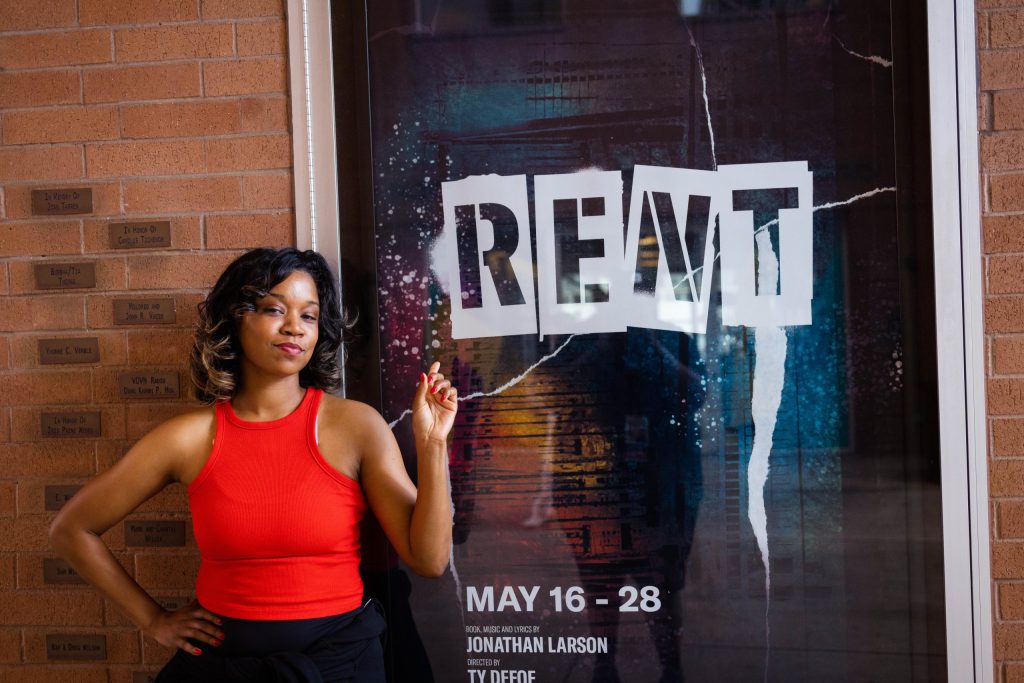
By Terrence Turner | Houston Forward Times
Monica Josette began dancing at an early age. “I started dancing when I was like, three,” she says. “I broke my leg when I was one. My mother was a dancer as well, and so when I turned three, my grandmother suggested that my mom put me in dance classes to help strengthen the leg. Not as like, ‘Oh, we want her to be a dancer so bad,’ but to help have a little more usage and really re-strengthen that, because I learned how to walk with a cast on.
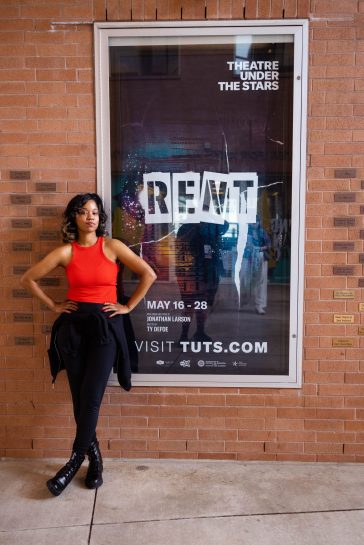
Choreographer Monica Josette (Photo By Forward Times Staff Photographer, Medron White)
“I took lessons from Sallie Bowie Daniels, who actually taught Debbie Allen and Phylicia Rashad. She taught my grandmother; she taught my mom. She’s taught so many people, a few of us who were PVA [High School for the Performing and Visual Arts] alums as well. And it was the Bowie studio.” The Bowie School of Dance was located on Tierwester, in Houston’s 3rd Ward. “I started there when I was 3. I started tap dance and ballet, and she was one of the first African American women to attend Juilliard. So she’s a historical being, and maybe like a year ago I dedicated a film, a tap dance piece to her and her passing [in 2012], because she’s someone who – as I continue to dance through time – is always dancing with me,” Monica expressed.
“She was a huge influence on the start of my experience training as a dancer – and the discipline too, because she was super old-school,” she recalls. “Back in the day when you still got hit with a stick or a lighter under your leg; if your leg wasn’t high enough, you’d feel the heat, so you would raise the leg,” she laughs.
She continued to dance as she entered high school, leading to her entry into High School for the Performing and Visual Arts, known as PVA. “I played several instruments, and I also was an actress as well, because I went to the Ensemble Theatre, too. When I auditioned for PVA I auditioned in theatre, as well as in dance, and also in instrumental music, as a flautist. I actually got in as all three, and I had to choose, so I chose dance,” she says. “I chose dance because I felt like that was the medium that allowed me to express most freely and naturally. I also felt like a natural actor, but I still felt like I wanted to have the codified training in dance as well so that’s where I went.”
She was involved in other dance productions and programs even while studying arts and academics at HSPVA. Was it difficult to balance? Monica admits, “It was. But it also meant that I learned discipline and time management really, really early on. So by the time I got to college, figuring out how to manage schedules and do lots of things at one time was easy for me because I had already been doing that for a long time.”
She continued to pursue dance in college. “I got a BFA, a bachelor in fine arts and dance pedagogy, from the University of Oklahoma,” she says. “I decided to go with pedagogy because I was still able to do all of the performance but I was also able to study pedagogy in a way that put me in alignment with being able to teach and transfer movement to people and to be able to – if I wanted to, at any point – teach on a university level,” she says. “At the time I wasn’t sure that I was aiming to do it; it was just kind of like a safety net. Like, ‘This would be great to have this. And so I should do this, because I’m going to get to perform anyway. So why not also have the pedagogy experience as well?’”
A variety of teachers and genres gave her a wealth of experience to draw on. In addition to Bowie and the PVA dance instructors, “I also had Priscilla Nathan Murphy, from Houston Ballet, who was so fantastic – I believe she’s still there. I was a student of Houston Ballet Academy for a little while, as well.” These experiences enhanced and broadened the skills she learned at HSPVA, making for a rich, eclectic learning experience.
“My experience was very varied. I also come from a lot of cultural dance experience. So, because I am an actress, because I am a dancer that has technically been trained in ballet as well as a lot of the codified modern dance techniques,” she says, “with all of my experience in the cultural and ethnic dances and just in the world, period – in tap dance, musical theatre – my perspective and my gaze on movement is very worldly. I have a lot of information to access to bring to the table, depending on what I’m doing. I have also been a part of the pop world for several years as Santigold’s choreographer as well as dancer.” (Santigold is a Philadelphia-born singer-songwriter whose album Master of My Make-Believe hit No. 1 on the dance chart in 2012. She and Josette have worked together for over a decade.)

The cast of TUTS’ Rent
Monica also mentioned how her vast experience also led her to success in TV and film. “[Working with Santigold] and traveling to over 40 countries and being on tour with different artists, it’s brought even more perspective to the table in terms of movement, how the body moves. I also worked in TV/film. So being able to bring all of that information into that space, I think it’s really valuable for me as well as for the people that I’m working with because I’m not a one-note [performer]. There’s a lot of information over the last 20 something years as a professional to be accessed.”
Indeed. In Atlanta, she wrote and directed a cabaret musical called The Lipstick Junkies featuring Black Caviar and The Ray of Sunshine during 2013-14. That turned into an appearance on the Bravo TV show The New Atlanta. Josette appeared as “Sugar Cane.”
In L.A., she worked as an assistant director and did production work on several short films. But she left the genre “just because it was more clinical; I wanted to move back into artistic,” she says. Josette moved back to Houston after the birth of her son Micah (now 5) and taught dance classes, along with theatre production jobs. She worked on Dreamgirls last January & February for HSPVA. Last fall she worked with the assistant director for The Secret of My Success at TUTS.
Then she was approached about choreographing Rent. “I was super-excited about it,” she says. “I remember being at PVA, and at my high school graduation, the vocal department’s song for graduation was “Seasons of Love,” she recalls. “So it’s a full-circle moment.”
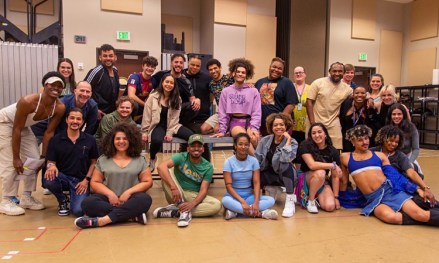
The cast of Theatre Under The Stars’ production of Rent during their first week of rehearsals. (Photo by Ruben Vela)
In more ways than one: two decades ago, her first professional show, Singin’ in the Rain, was at Theatre Under the Stars. Now she’s returning to TUTS as a choreographer — “which is another full circle moment,” she muses. “It actually feels pretty surreal,” she says, “When I got that show 20 years ago, I never considered or even thought that 20 years later, I’d be sitting at the creative table implementing and bringing Monica Josette to any show here. So it definitely feels surreal. But it’s also pretty satisfying.”
Josette says the process included several interviews with the director, “trying to understand his vision, understand how he works. Him understanding how I work and what I bring to the table, what makes my gaze unique or different from others and how we might be able to work together, because we didn’t know each other.” But the collaboration worked.
“I think Ty [Defoe] has really great ideas,” she said. “I also love the way he works; he’s very collaborative and he allows my perspective, input and gaze to be part of his process, and I really appreciate that in him as a director,” Josette expressed.
Though she was familiar with the musical, Josette had never worked on a production of Rent. “Being able to look at the text again and to really understand this story, and to be able to enhance the story with movement has been amazing. I’m really grateful to the director, Ty Defoe, and to TUTS for allowing that expression to be something that could be realized this time, with this production of Rent. I think it’s a different Rent than the Rent that we’ve seen before, but I’m really excited about it. I think that the movement, some of the vocabulary that I’ve included really speaks to the ‘90s,” she says. “I think when people see this one, the first thing they will see that is obviously different is the set. That’s the first thing that’s going to be like an obvious shift. And I also think it’s going to be obvious, the way we’ve incorporated movement,” she adds. “You might even see people doing the butterfly,” she laughs.
Josette, whose older sister is part of the LGBTQ community, worked to incorporate dance forms like vogue and ballroom without appropriating them. “I have been very intentional in my research and the dramaturgy in terms of how people moved during that time,” she says. “There are all these moments to incorporate too, like house and ballroom and voguing. I had to do a lot of research, because I did not want to have a moment where I was imitating something that I was seeing or assimilating. I wanted to make sure that it was coming from an honest place and that the actors who were involved also had input in terms of what I was doing.”
Josette continued speaking about the importance of her intentionality and research: “I mentioned before in hip-hop culture how it was assimilated so much and appropriated. And you know that when you see it and it’s not coming from an authentic place, right then it becomes caricature. I wanted to make sure that that was not happening in some of the moments where I wanted to include some of that house [and] ballroom. I am an ally of that community, but that is not my community…As an African American woman, I understand very well what it means to be able to be an ally and make sure that that community’s culture is protected as it’s translated to stage.”
Josette further explained why it was important to include those dance forms into TUTS’ production of Rent: “I think that if you’re adding a movement character to a piece, then I have to think about, ‘Well, what movement was prevalent at the time?’ So you’ve got to kind of dive into the dramaturgy of what was popular at the time. What was popular in the Lower East Side [of New York] at the time? What was going on in the house and the underground ballroom scene? Also, what’s going on in the hip hop scene at the time? I took a ballroom class for like three months because I also had to incorporate some tango into ‘Tango Maureen.’ So while I was familiar, I went ahead and took an official class so that I could be more authentic about what things I was choosing to put on the actors.”

Teresa Zimmermann as Maureen and Simone Gundy as Joanne in Rent at TUTS. (Photo by Melissa Taylor)
The actors are working with challenging material: the show deals with sobering topics like poverty, homelessness, and the HIV/AIDS epidemic. “This is very heavy material. You have to be able to move the energy out of your body,” Josette says. She brought her meditation practice to the actors to help them do that. “I have my own practice called ‘The Magic of Movement,’ and the magic of movement is a movement meditation practice where I use somatic breathing and I use movement meditation exercises. Basically, I have three iterations. One iteration is to move pain and trauma through the body for pain and trauma release; another iteration focuses on the sacral chakra and our ability to tap into our creativity, our joy, how you make money…all of those things are connected in that space,” she shares. “I also have one for people who maybe have never done movement meditation before.”
All of this took place over an accelerated timeline. “I think we’ve had about 4 weeks,” Josette says. “Three weeks of rehearsal, and then we have one week of tech. So about 4 weeks total – which feels lightning fast when there’s so many things to do. It’s not just choreography; they’ve got to learn music, they’ve got staging…so it’s a lot of information to absorb in a very short amount of time,” she says. But the actors are “absolutely phenomenal, amazing storytellers. I can’t wait for the Houston audience to see these actors. And so many of them are local!”
Josette says she hopes the show will provoke hard but necessary conversations. “I’m really excited for Houston to see Rent 2023 in the space of what’s going on nationally; what we have going on politically, as well as what we have going on in our state, specifically,” she explains. “I’m excited for the conversations that are going to be happening and I’m also excited for them to experience the show with movement, more movement, and more ways for people to connect with the story. I’m excited to know what that impact is,” she says.
“Even in the sense of a younger generation maybe not having the same understanding about what was happening during the HIV/AIDS epidemic…But you understand how crazy it was during COVID, initially. Everyone was freaked out; no one knew what it was. If you had it, it was like no one wanted to come by you or touch you. So there are some parallels. It’s not the same, but there are definitely some parallels,” Josette explains.
Connect with Monica Josette on Instagram @monijomagic.
Catch TUTS’ production of Rent May 16 – 28 at The Hobby Center for the Performing Arts. Tickets are available at tuts.com/shows/rent-2
The post Multitalented Choreographer Monica Josette Pays Homage with Theatre Under The Stars’ “Rent” appeared first on Houston Forward Times.
The post Multitalented Choreographer Monica Josette Pays Homage with Theatre Under The Stars’ “Rent” first appeared on BlackPressUSA.


#NNPA BlackPress
Jovita Moore Mural Still Has Not Been Repainted in Grant Park
ATLANTA VOICE — A mural depicting late journalist Jovita Moore, painted on the exterior wall of a building now occupied by Bellwood Coffee in Grant Park, was painted over in April. Moore passed away in 2021 after decades of working in Atlanta television news. Bellwood Coffee owners stated in May they were unaware of Moore’s identity or significance to the community before painting over the mural.
The post Jovita Moore Mural Still Has Not Been Repainted in Grant Park appeared first on BlackPressUSA.


At the corner of Boulevard, SE. and Rosalia St., SE., directly across the street from an abandoned home and a Methodist Church, is Bellwood Coffee. One of hundreds of coffee shops in Atlanta, this place of business would not be worth a solitary discussion if not for the way its exterior walls are currently painted. There was once a mural depicting the late Jovita Moore, a beloved journalist who worked in Atlanta for decades. Moore, who passed away in 2021, mentored many of the people you see on television newscasts today. Though her legacy will never be forgotten, it was the mural of her image that was erased.
In April, members of the Grant Park community voiced their disgust at the mural, which graced a side wall of the building now occupied by Bellwood Coffee’s Grant Park location, before it was painted over. In its place are the words “Bellwood Coffee; Cocktails, Biscuits, Dry Goods, Air Conditioning. *Heat Too”. In May, the business owners responded to the community pushback on social media by acknowledging they did not know who Moore was before painting over her image. And later admitted that they did not attempt to find out what she meant to the community.
On May 21, the Bellwood Coffee Instagram account had a post about being “in close contact with Jovita’s family and are actively working on next steps in this process.” Two months later, the mural has not been replaced, repainted, or repositioned on the property. Nothing has been done. Black history is often erased, most recently by the current Presidential administration, but oftentimes on a smaller, quieter scale. The mural was originally painted by muralist Tommy Bronx, who had been in contact with the business owners about repainting it. As of July 6, Tommy Bronx had responded to a direct message via his Instagram account from The Atlanta Voice about any updates on his plans to repaint the mural.
“We’re currently working on it. You should see some movement in the weeks to come,” he wrote in a response.
On Monday, July 6, the business had several patrons inside and was running smoothly with three employees manning the counter. The Atlanta Voice dropped by Bellwood Coffee to get a look at the exterior wall where the mural once stood as a memorial to a journalist and mother who lost her life to brain cancer at the young age of 54. Moore’s image added some color to the block. The grey wall in its place does not.
A direct message was sent to the Bellwood Coffee Instagram account, and there hasn’t been a response as of 7 p.m. on Monday.
The post Jovita Moore Mural Still Has Not Been Repainted in Grant Park appeared first on The Atlanta Voice.
Based on reporting by Atlanta Voice.
The post Jovita Moore Mural Still Has Not Been Repainted in Grant Park appeared first on BlackPressUSA.

#NNPA BlackPress
‘Proud to Hang Her from a Tree’: Man Arrested for Threatening Black Senator
ATLANTA DAILY WORLD — A New York man faces felony hate crime charges for allegedly posting a threat against New York State Senator Lea Webb. James A. Crosby, 49, of Binghamton, was arrested by New York State Police after investigators determined he posted a threatening comment on a social media news post about a Juneteenth celebration.
The post ‘Proud to Hang Her from a Tree’: Man Arrested for Threatening Black Senator appeared first on BlackPressUSA.

A New York man is facing felony hate crime charges after allegedly posting that he’d be “proud to hang” New York State Senator Lea Webb from a tree in response to a news story about a Juneteenth celebration.
James A. Crosby, 49, of Binghamton, was arrested June 23 by New York State Police after investigators determined he posted a threatening comment on a WBNG 12 News Facebook post. “I’d be proud to hang her from a tree,” Crosby wrote, according to WBNG.
Crosby was charged with making a terroristic threat as a hate crime, a class C felony, per the New York State Police. He is currently being held at Broome County Jail.
During the subsequent investigation, state police found Crosby was in illegal possession of firearms despite being prohibited from owning them due to a prior felony conviction. Investigators recovered a rifle, a large-capacity ammunition feeding device, and a firearm suppressor — all prohibited under New York state law, per the NYSP.
Crosby was charged with four additional counts of criminal possession of a weapon in the third degree, all class D felonies.
Webb, who represents New York’s 52nd Senate District, had been a featured speaker at a Juneteenth flag-raising ceremony at Binghamton City Hall, where the celebration included prayers and the singing of the Black national anthem.
Police said Crosby’s comment was posted in response to a WBNG news story covering the event.
The day before his arrest, Crosby posted a Facebook apology claiming the comment “was not intended to be racial in any way” and was made in reference to what he described as a “criminal,” citing criticism of Webb over her use of nonprofit legal aid in a foreclosure case — a matter state watchdogs said created an appearance of a conflict of interest, per the Ithaca Voice. He was arrested the following day.
Webb issued a public statement June 25 condemning the threat.
“It was extremely disappointing and hurtful to see the now-deleted threat and attacks on my life in response to a story about Juneteenth, a national holiday that recognizes the ending of slavery in America,” she said. “Feedback and thoughts on policy are one thing, but to make a public call for lethal violence is absolutely unacceptable and dangerous. We must recognize our shared humanity and reject violence in all forms.”
She thanked Gov. Kathy Hochul, Senate Majority Leader Andrea Stewart-Cousins, and law enforcement for their “swift response.”
Following Crosby’s comments, social media users called for a boycott of his contracting business, Crosby Home Improvements.
The Binghamton City Democratic Committee also called for an investigation into the incident before his arrest.
The Black Information Network is your source for Black News! Get the latest news 24/7 on The Black Information Network. Listen now on the iHeartRadio app or click HEREto tune in live.
The post ‘Proud to hang her from a tree’: Man arrested for threatening Black Senator appeared first on Atlanta Daily World.
Based on reporting by Atlanta Daily World.
The post ‘Proud to Hang Her from a Tree’: Man Arrested for Threatening Black Senator appeared first on BlackPressUSA.
#NNPA BlackPress
CARICOM: Strengthen Integration for Future Generations
NEW YORK CARIB NEWS — Outgoing CARICOM Chairman Terrance Drew called on regional leaders to build a stronger and more effective Caribbean Community that benefits future generations. Speaking at the 51st Regular Meeting, Drew urged modernization of governance structures and improved implementation of Community decisions to make CARICOM safer and more prosperous.
The post CARICOM: Strengthen Integration for Future Generations appeared first on BlackPressUSA.

Speaking Sunday at the opening of the 51st Regular Meeting of the Conference of Heads of Government in Saint Lucia, Dr. Terrance Drew said the region must modernize its governance structures, improve the implementation of Community decisions, and ensure CARICOM becomes safer, more prosperous, and more relevant to the lives of its citizens.
The meeting, being held under the theme “CARICOM: From Resilience to Renewal in a Changing World,” coincides with the Community’s 53rd anniversary. During the ceremony, Dr. Drew formally handed over the rotating CARICOM chairmanship to Saint Lucia’s Prime Minister, Philip J. Pierre.
Reflecting on his six-month tenure as chairman, Drew praised fellow regional leaders for maintaining their commitment to democracy, good governance, unity, and the rule of law despite mounting global economic and geopolitical challenges.
“Throughout these challenges, CARICOM chose engagement over isolation. Together, we reaffirmed our commitment to a fair and rules-based international trading system and ensured that the interests of small developing states continued to be heard.”
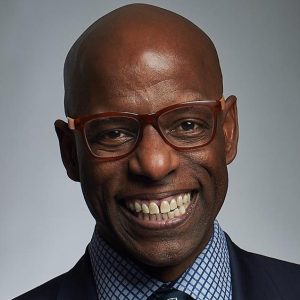
He highlighted progress made in strengthening the CARICOM Single Market and Economy, including deeper trade cooperation, expanded labour mobility, and efforts to lay the foundation for long-term economic growth. Drew also noted the Community’s growing partnerships beyond the Caribbean, particularly with the African Union, while stressing that every international partnership should advance the interests of all parties involved.
The outgoing chairman also expressed appreciation to Dr. Carla Barnett and the CARICOM Secretariat for their professionalism and unwavering support during his tenure.
“Whenever I called, you answered. Whenever support was required, you and your team responded with diligence, competence, and excellence.”
Dr. Drew urged the Secretariat to continue preserving its impartiality while faithfully implementing decisions made by Heads of Government, saying that balance has helped strengthen the regional integration movement.
The conference continues in Saint Lucia with regional leaders expected to deliberate on key issues including regional security, climate resilience, trade, economic integration, food security, Haiti, reparations, and strengthening the CSME.
Based on reporting by New York Carib News.
The post CARICOM: Strengthen Integration for Future Generations appeared first on BlackPressUSA.

WORK FROM HOME
Home-based business with potential monthly income of $10K+ per month. A proven training system and website provided to maximize business effectiveness. Perfect job to earn side and primary income. Contact Lynne for more details: Lynne4npusa@gmail.com 800-334-0540


Why Trade Show Success Depends On Standing Out (Not Just Showing Up)

Gov. Gavin Newsom Signs Law Streamlining Affordable Housing Rules

Smart Home Technology is Becoming a Tool for Preventing Property Damage

Volunteer Work for Black Americans Pays Off By Helping Others and Building Portfolios

Discover What IT Technicians Do: A Complete Guide

Staying Sober: Your Guide to a Joyful Life

Top Strategies to Resolve Operational Issues Effectively

The Part of Buying a Home That No Real Estate Show Ever Prepares You For

When to Say Goodbye: The Unmistakable Signs Your Old Car Has Had Its Last Good Day

COMMENTARY: Property Is Power! Why the Dream Booker T. Washington Preached in 1905 Still Matters Today

Saving Black Mothers Starts Outside the Hospital

The HUB Office Is Gone. Black Elected Power Is Not: Part II

COMMENTARY: Mental Health Crisis Among Black Men — A Growing Concern

COMMENTARY: Our Voices — When Armed Power Appears at the Ballot Box

Councilman Johnson calls for Action to Keep Mavericks in Dallas – Garland Journal
Saving Black Mothers Starts Outside the Hospital


Oakland Celebrates $125 Million Coliseum Sale

IN MEMORIAM: Oakland Dance Legend Reginald Ray-Savage, 67
Gov. Gavin Newsom Signs Law Streamlining Affordable Housing Rules

Oakland Post: Week of June 17 – 23, 2026

UC Berkeley Named Top Public University in the U.S. and No. 7 in the World by ‘U.S. News’

Ferry Fares to Increase July 1 as Ridership Hits Record Highs

NCBW-OBAC Champions Black Women Entrepreneurs at Business en Blaque Expo

Oakland Post: Week of July 1 – 7, 2026

Agricultural Engineer Effie Gant Plans Bay Area Farmers Market Initiative

Oakland Post: Week of June 10 – 16, 2026

Sale of Coliseum to African American Developers Moves Toward Completion
The Part of Buying a Home That No Real Estate Show Ever Prepares You For

NPRC Heads to Washington to Elevate Adult Guardianship Reform at National Whistleblower Summit

The Conversation With Al McFarlane 6/23/26

Media Monday 6/22/26

LIVE! ASK ALMA! — TUES. 6.23.26 7PM EST

Car Buying Secrets: 4 Hidden Checks Before You Sign!

Is This 550 HP Charger Worth YOUR Money? AutoNetwork Review

Celebrating Juneteenth – Frederick Douglass on education and resistance

LIVE! — ASK ALMA! — TUES. 6.19.26 7PM EST

Hyundai Ioniq 5 Parking, Safety, and 360 View #shorts

2025 Ioniq 5 New Wiper & Powerful Performance! #shorts

Electric SUV Range: Is 259 Miles Enough? #shorts

EV Charging: How Fast Can You Charge an Electric Vehicle? #shorts

Biometric Cooling… Messaging Seats…Come on! 2025 Infiniti QX80 Autograph 4WD

Charged Up: Witness the Magic of a Fully Electric Car! #shorts

Range Rover Sport PHEV Included…: See What’s Inside This Luxury SUV! #shorts

Invisible Hood View: Perfect Parking with X-Ray Vision! #shorts
-
 Black History3 days ago
Saving Black Mothers Starts Outside the Hospital
-
 Black History6 days ago
Oakland Celebrates $125 Million Coliseum Sale
-
 Business2 days ago
Gov. Gavin Newsom Signs Law Streamlining Affordable Housing Rules
-
 Activism3 weeks ago
Oakland Post: Week of July 1 – 7, 2026
-
 Activism1 week ago
Agricultural Engineer Effie Gant Plans Bay Area Farmers Market Initiative
-
 Business3 days ago
The Part of Buying a Home That No Real Estate Show Ever Prepares You For
-
 Community1 week ago
NPRC Heads to Washington to Elevate Adult Guardianship Reform at National Whistleblower Summit
-

 Activism4 weeks ago
50 Years Later, ‘Wake Up Everybody!’ Still Resonates During Black Music
