
Antonio Ray Harvey
More Segregated Than Deep South: ACLU Releases Report on Calif. Public Schools
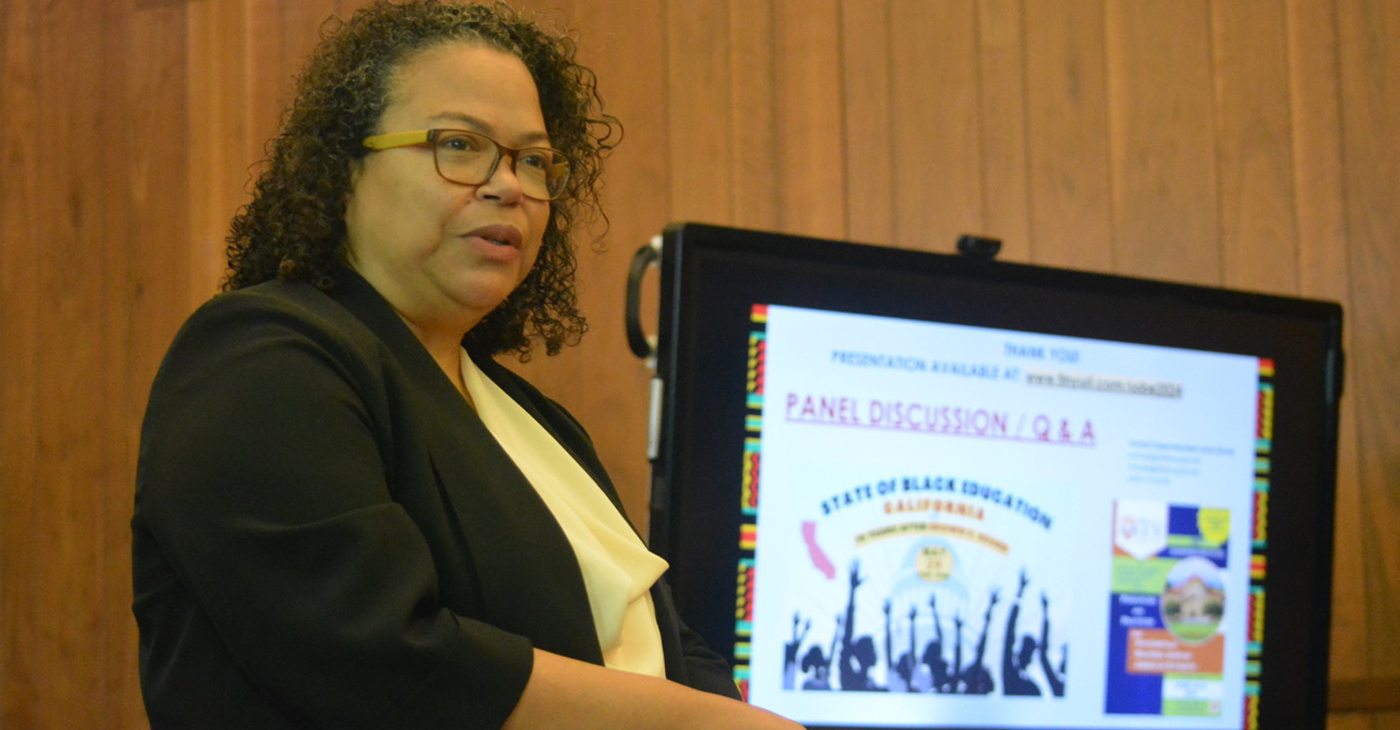
The 2024 State of Black Education: Report Card was recently published by the American Civil Liberties Union California Action (ACLU California Action). It states that California is the third most segregated state for Black students. Co-author of the report, policy counsel Amir Whitaker from ACLU Southern California explained the criteria the ACLU use to rank California during the commemoration of the 70th anniversary of the landmark 1954 U.S. Supreme Court decision Brown vs. Board of Education held at the State Capitol the day after the Memorial Day holiday.

By Antonio Ray Harvey, California Black Media
The 2024 State of Black Education: Report Card was recently published by the American Civil Liberties Union California Action (ACLU California Action).
It states that California is the third most segregated state for Black students.
Co-author of the report, policy counsel Amir Whitaker from ACLU Southern California explained the criteria the ACLU use to rank California during the commemoration of the 70th anniversary of the landmark 1954 U.S. Supreme Court decision Brown vs. Board of Education held at the State Capitol the day after the Memorial Day holiday.
“For every state in the Deep South, California (schools) are more segregated,” Whittaker said. “People often think that California is not segregated or unequal as Deep South states and others. The inequalities here (in California) are actually wider.”
New York and Illinois are ahead of California regarding the racial diversity of their student bodies. According to a report May 2022 report by Stanford Graduate School of Education, the Los Angeles, Philadelphia, and New York City school districts are in the top 10 most racially segregated districts for White-Black, White-Hispanic, and White-Asian segregation based on the average levels from 1991-2020.
In bigger school districts, segregation between low-income (students who are eligible for free lunch) and non-low-income students increased by 47% since 1991, according to the Stanford Graduate School’s report.

“That’s why it’s important to look at this data,” Whitaker said. “When you have millions of people living in places like Los Angeles, Chicago, and New York, the urban areas are a lot more segregated than the south. That’s a big part of it.
A number of factors contribute to the segregation of schools in California such as parents sending their children to private schools, others optioning for homeschooling, and other reasons, Whitaker said.
The Brown v. Board of Education case declared that separating children in public schools based on race was unconstitutional. However, Whitaker pointed to cases after the landmark decision that circumvented that federal law.
According to a 2014 report by the Civil Rights Project, in the 1990s, decisions by the U.S. Supreme Court decision ended federal desegregation orders in San Francisco and San Jose. In addition, court decisions in the state that ordered desegregation in the 1970s were overturned by the 1990s. Legally, California has no school integration policy to adhere to.
“This is why we did this report. There needs to be a report just on this issue (of school segregation),” Whitaker told California Black Media. “Right now, there’s no task force or anything addressing it. I have never seen the California Department of Education talk about it. This is a pandemic (and) a crisis.”
ACLU Northern California hosted an overview of the report and panel discussion at the State Capitol on May 29. California Black Legislative Caucus member Assemblymember Mia Bonta (D-Alameda) and Sen. Steven Bradford were the guest speakers. Parents, students, educators, and Black education advocates from all over the state attended the 90-minute presentation at the State Capitol.
School segregation is the No. 1 issue listed in among the report’s “24 areas of documented inequality,” along with problematic trends of racial harassment, a continuous decline of Black student enrollment, school closures, connection with school staff, chronic absenteeism, low Black teacher representation, and parent participation.











Activism
Black Leadership Council Recognizes Assemblymembers Bonta, Jackson for Leadership and Service
“The Black Leadership Council has been imprinted in my heart because I first met with you all when I was a first-year legislator and we talked about what we wanted for our children and our families,” Bonta said. “It’s just an incredible honor to receive this award and share this honor with my partner in this work, Dr. Corey Jackson.”
By Antonio Ray Harvey, California Black Media
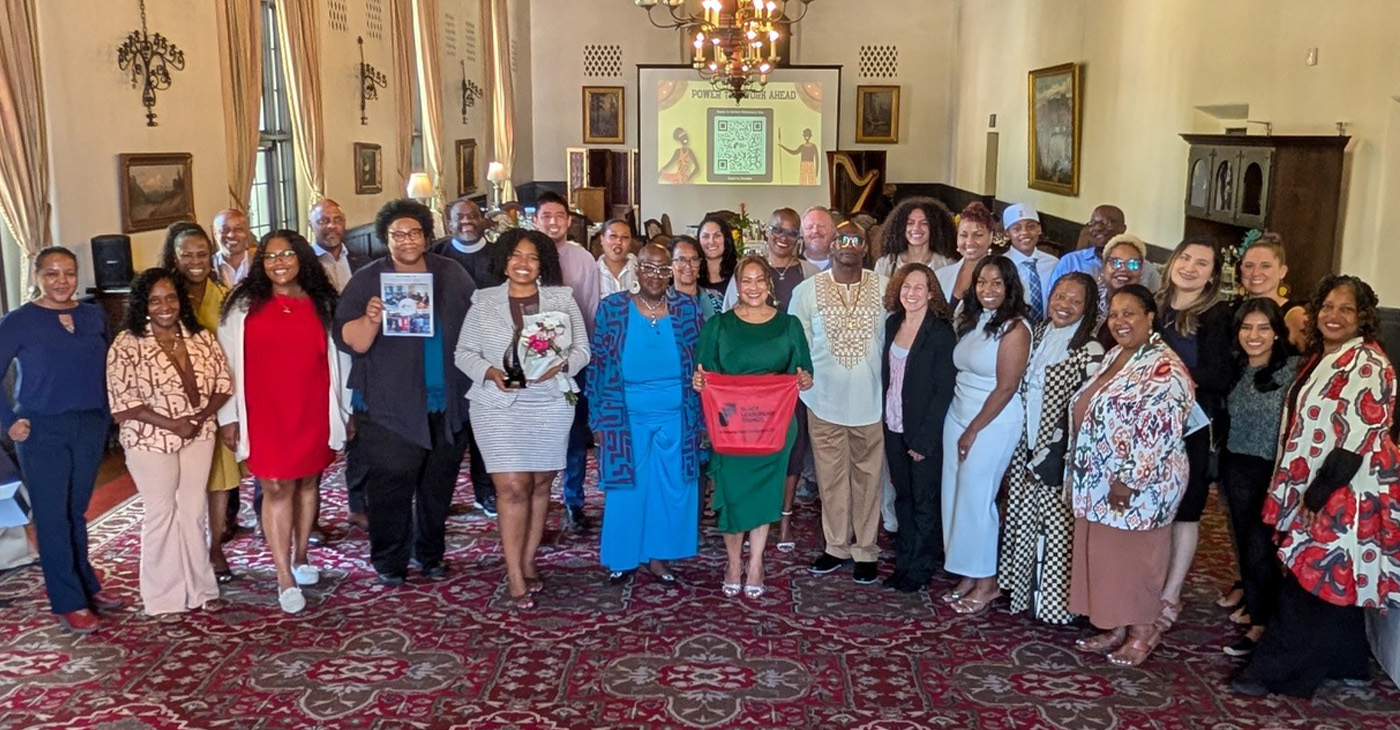
The Black Leadership Council (BLC) honored Assemblymembers Mia Bonta (D-Alameda) and Dr. Corey Jackson (D-Moreno Valley) during its annual Legislative Awards Luncheon for their leadership in advancing racial justice, economic opportunity and community investment.
Both members of the California Legislative Black Caucus (CLBC), Bonta received the Education Equity Champion Award, while Jackson was presented with the Wealth Equity Champion Award.
The luncheon was held June 17 at the Sutter Club in Sacramento following a morning of meetings between BLC members and CLBC senators, assemblymembers and Capitol staff.
“Whenever you’re in the same room and being honored alongside Oakland’s own Mia Bonta, you must be doing something right. One of the things that’s clear is that this nation needs Black leadership more than ever,” Jackson said.
Jackson was recognized for co-authoring legislation that expands economic opportunity, strengthens the social safety net and supports youth and vulnerable communities.
Bonta was honored for establishing the bipartisan California Legislative Children’s Caucus, a bicameral coalition that advocates for investments in childcare, health and education. The caucus promotes evaluating state budgets and public policy through the lens of children’s well-being.
BLC and the CLBC work together to translate community priorities into legislative action. Both lawmakers said the BLC was among the first organizations they met with after taking office.
“The Black Leadership Council has been imprinted in my heart because I first met with you all when I was a first-year legislator and we talked about what we wanted for our children and our families,” Bonta said. “It’s just an incredible honor to receive this award and share this honor with my partner in this work, Dr. Corey Jackson.”
Assemblymember LaShae Sharp-Collins (D-La Mesa) attended the luncheon to celebrate her legislative director, Jerika Edwards, who received the Next Generation Leadership Award. Sharp-Collins credited Edwards with building a distinguished record of civic engagement, public service, voting rights advocacy and social justice leadership.
Nikki A. Beasley, executive director of Richmond Neighborhood Housing Services, received the Housing Equity Champion Award. Carol F. Burton, a health care, criminal justice and behavioral health executive, received the Health Equity Champion Award. BLC member Joya Chavarin, a California-based education researcher, was presented with the Trailblazer Award.
“The Legislative Awards Luncheon offers a valuable opportunity to recognize impactful legislators, their staff, and community leaders,” said Meron Agonafer, a member of the BLC Executive Committee.
Established by PRC, formerly the Positive Resource Center, the BLC is a statewide coalition dedicated to advancing policy and systems change in education, housing, health and justice. Its overarching mission is to achieve “Black prosperity” through statewide advocacy and public policy.
“The council targets a high volume of legislation,” said Dr. Deborah Hawkes, PRC’s chief executive officer, who oversees the BLC’s statewide strategy and community initiatives.
“Freedom means opportunities. It means access to quality education, stable housing, good health, economic security, and the ability for every person to thrive,” Hawkes said. “That work requires investments, it requires leaders who are willing to speak up, organizations that are going to do the work, and partners who are willing to sustain the movement.”
Activism
Black Caucus Bill Requiring Major Corporations in California to Disclose Links to Slavery Moves Forward
“We have a public accounting of the ways that our civic institutions have benefited from chattel slavery and built wealth in the process,” said Asm. Isaac Bryan (D-Ladera Heights), vice chair of the California Legislative Black Caucus (CLBC). “We even had cost estimates of what is true accounting for what that (wealth) would be.”
By Antonio Ray Harvey, California Black Media
In August 2000, the California Legislature confronted a little-known chapter of American history after records uncovered in the state archives revealed that, before the Civil War, some insurance companies issued policies to slaveholders that insured enslaved people against injury, death or escape, treating human beings as property.
That same year, former state Sen. Tom Hayden (D-Los Angeles) authored Senate Bill 2199, landmark legislation requiring insurance companies doing business in California to disclose records of slaveholder insurance policies issued by them or their corporate predecessors.
More than two decades later, California lawmakers are seeking to expand that transparency.
Assembly Bill (AB) 2599, the Truth in Disclosure Act, authored by Asm. Isaac Bryan (D-Ladera Heights), builds on the disclosure framework established by SB 2199. The measure would require certain large corporations to search their historical records and submit sworn affidavits, under penalty of perjury, disclosing documented ties to chattel slavery or profits derived from slavery.
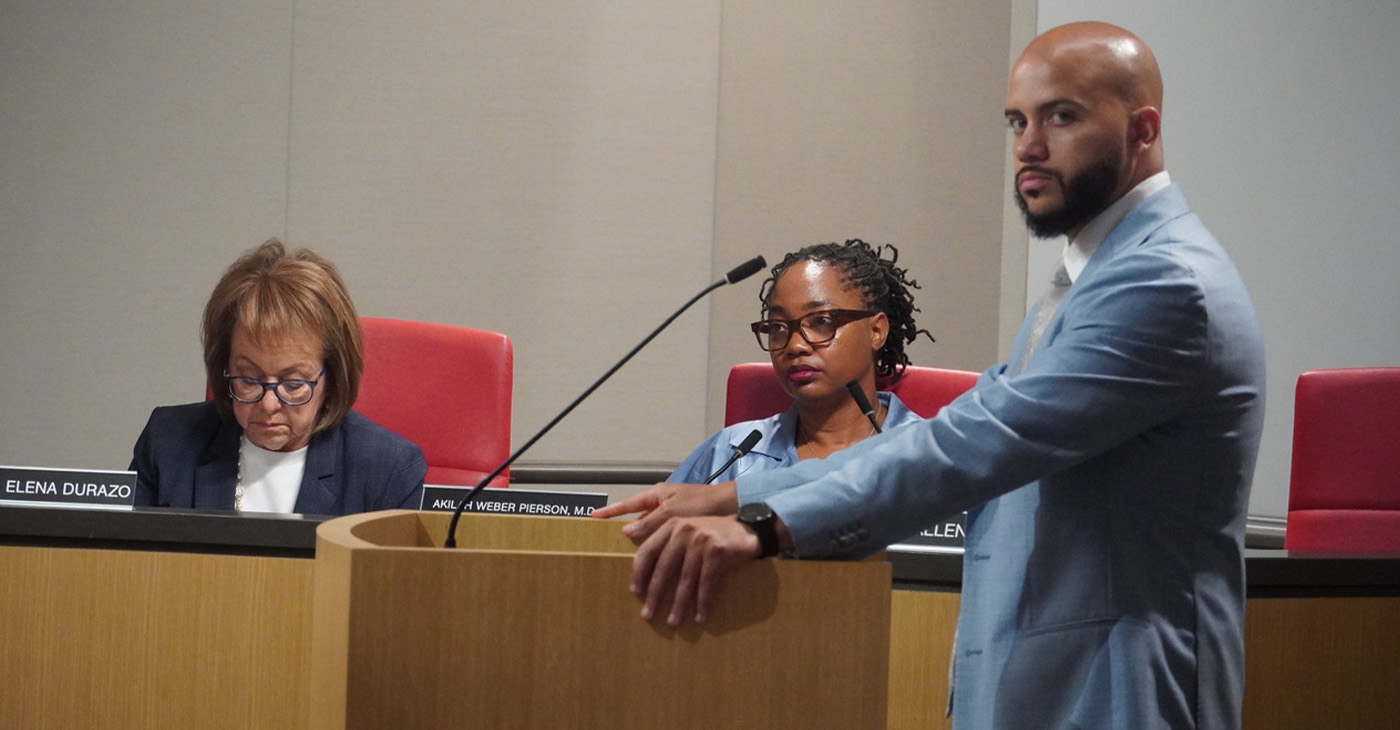
On June 23, AB 2599 passed the Senate Judiciary Committee, chaired by Sen. Tom Umberg (D-Santa Ana), on an 11-1 vote. The measure now heads to the Senate Public Safety Committee.
“We have a public accounting of the ways that our civic institutions have benefited from chattel slavery and built wealth in the process,” said Bryan, vice chair of the California Legislative Black Caucus (CLBC). “We even had cost estimates of what is true accounting for what that (wealth) would be.”
Bryan continued, “This bill is simply about disclosure. We’ve had a conversation about the private sector’s role in extracting that wealth, but this bill starts with that conversation around disclosure.”
Known as the Slavery Era Insurance Policies Act, Hayden’s SB 2199 required insurers licensed in California to examine their archives for antebellum policies covering slaveholders against the loss or death of enslaved people. The results were compiled by the California Department of Insurance.
AB 2599 would extend that transparency requirement beyond the insurance industry. It requires entities doing business in California with more than $100 million in annual worldwide gross receipts to review their records for historical involvement in slavery-related transactions.
The bill specifically identifies industries historically tied to the slave economy, including textile, tobacco, railroad, shipping, rice, sugar, financial and insurance companies.
AB 2599 is the CLBC’s sole priority bill this legislative session, according to Sen. Akilah Weber Pierson (D-San Diego), chair of the caucus and a member of the Senate Judiciary Committee.
Weber Pierson cited several financial institutions and insurance companies that have acknowledged or documented historical ties to slavery, including JPMorgan Chase, Citibank, Bank of America, Wells Fargo, New York Life, AIG and Aetna.
“This bill (AB 2599) is extremely important because it acknowledges that many disparities facing Black Americans did not happen by accident. It also talks about the fact that many of the economic opportunities that benefited major institutions did not also happen by accident — but by their participation in chattel slavery,” Weber Pierson said.
The bill’s primary co-sponsor is the Alliance for Reparations, Reconciliation and Truth. Other supporters include Black Women Organized for Political Action (BWOPA), Congregations Organized for Prophetic Engagement, the Ella Baker Center for Human Rights, Healing Justice Santa Barbara, the Black Power Network, the Inland Empire Black Worker Center, LA Voice, the League of Women Voters of California and Starting Over Inc.
Activism
The Ladies of Delta Sigma Theta Hold Day of Advocacy at the Capitol in Sacramento
A member of the “Divine Nine,” Delta Sigma Theta Sorority, Inc., was founded on Jan. 13, 1913, at Howard University in Washington, D.C. The organization was established by 22 women who sought to shift the group’s focus from social activities to public service, academic excellence, and social activism.
By Antonio Ray Harvey, California Black Media
On May 4, members of the Farwest Region of Delta Sigma Theta Sorority, Inc., convened at the California State Capitol for the organization’s 23rd annual Delta Days in Sacramento.
The two-day advocacy event brings together chapters from across California to engage directly in the legislative process, connect with lawmakers, and advocate for policies impacting Black communities.
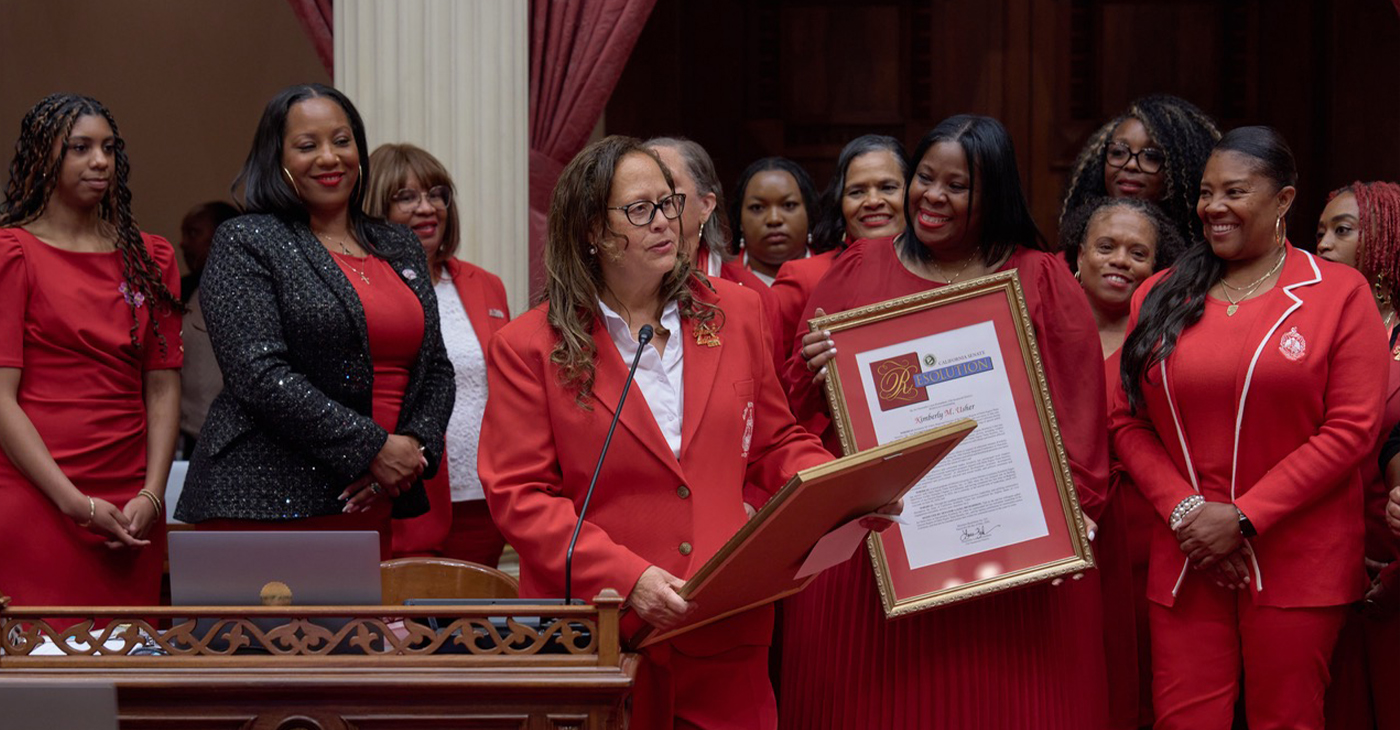
Members of the sorority were honored on the Senate floor by Sen. Laura Richardson (D-San Pedro), who is also a member of Delta Sigma Theta.
Richardson welcomed the Farwest Region during the presentation of a Senate resolution recognizing outgoing Regional Director Kimberly Usher for her leadership and service.
“In addition to the Far West Region, we are led by a fearless leader, regional director Kimberly Usher. She has now served her full term of what’s allowed,” Richardson said. “We are going to be having our regional conference, but we wanted to give it to her here, officially recognizing her service.”
The resolution was co-authored by Richardson and fellow members of the California Legislative Black Caucus (CLBC) and Delta Sigma Theta, Sen. Akilah Weber Pierson (D-San Diego) and Assemblymember Rhodesia Ransom (D-Stockton).
Usher has served in the leadership role since 2022.
A member of the “Divine Nine,” Delta Sigma Theta Sorority, Inc., was founded on Jan. 13, 1913, at Howard University in Washington, D.C. The organization was established by 22 women who sought to shift the group’s focus from social activities to public service, academic excellence, and social activism.
“We are founded on sisterhood that is deeply rooted in scholarship, service, and social action,” said Weber Pierson, a member of the Gamma Alpha chapter of Delta Sigma Theta Sorority.
“Today, we continue a legacy of empowering communities and upholding the high cultural, intellectual, and moral standards established by our founders over a century ago,” she added.



Doulas Are Helping Black California Moms Navigate Pregnancy–Even as High Mortality Rates Persist

Newsom Signs Addictive Social Media Law to Protect Kids

On Your November Ballot: Prop 38 Would Allocate $8.4 Billion to Immunology and Immunotherapy Funding

Ask California: Golden State Releases New AI Chatbot

Asm. Isaac Bryan’s Bill Banning California Police From ICE Side Jobs Reaches Newsom’s Desk

Assemblymember LaShae Sharp-Collins’s Bill Would Pause Law Enforcement’s Use of Shock Gloves Pending Study

BOOK REVIEW: ‘Laws of Solomon’ Reveals Tender Heart of Former Child Soldier

OPINION: The New American Fear – From 9-11 to AI

Passing for White, Fighting for Black America: The Courage of Walter White

Oakland People’s Arms Embargo Coalition Demands End to Military Shipments Thru Oakland

Barbara Lee Mourns Gloria Steinem, Remembers a Friendship Rooted in Equality

Event Preview: ‘Fashion v. Fascism’ – A Runway Revolution Is Coming to the Bay Area

Two Looming Threats Every Alameda County Elder Should Know About

Oakland Mayor Reads to Children at Bookout Block Party at Marcus Books Store

Tradition Comes to the Streets in 11th Annual Black-Eyed Pea Festival at the Freedom Farmers Market

Less Affluent School Districts, Including Sacramento City, Face Threat of State Takeover

ESSAY: California Can Close Its Colorectal Cancer Gap

California Hispanic Chambers of Commerce Unveils: ‘Powering the Future’ Theme for 47th Annual Statewide Convention

Four Candidates, Including Incumbent Barbara Lee, Qualify for Oakland Mayor’s Race

Oakland Post: Week of August 12 – 18, 2026

From Blueprint to Breakthrough: Tackling Affordable Housing in Oakland

Oakland Observes Black August with Block Parties, Film Showings, Workshops

COMMENTARY: Why Local School Tax Measure G1 Will Not Be on the November Ballot

Standoff for Justice: Our Homes Are Worth Fighting For

Returning to Its Roots, the Oakland Black-Eyed Pea Festival Partners with the Freedom Farmers Market Sept. 12

Oakland Post: Week of August 26 – September 1, 2026

NPRC Scores First Advocacy Victory: David Shaw Finally Gets His Wish to ‘Go Home’

Frontier Airlines’ Return to Oakland Airport Brings Flights, Jobs and Opportunity

Gubernatorial Candidate Steve Hilton Blasts California New Tire Rules; Newsom Hits Back

Chef Sharon Lee Blends Culinary Excellence, Education and Empowerment

The Conversation With Al McFarlane 6/23/26

Media Monday 6/22/26

LIVE! ASK ALMA! — TUES. 6.23.26 7PM EST

Car Buying Secrets: 4 Hidden Checks Before You Sign!

Is This 550 HP Charger Worth YOUR Money? AutoNetwork Review

Celebrating Juneteenth – Frederick Douglass on education and resistance

LIVE! — ASK ALMA! — TUES. 6.19.26 7PM EST

Hyundai Ioniq 5 Parking, Safety, and 360 View #shorts

2025 Ioniq 5 New Wiper & Powerful Performance! #shorts

Electric SUV Range: Is 259 Miles Enough? #shorts

EV Charging: How Fast Can You Charge an Electric Vehicle? #shorts

Biometric Cooling… Messaging Seats…Come on! 2025 Infiniti QX80 Autograph 4WD

Charged Up: Witness the Magic of a Fully Electric Car! #shorts

Range Rover Sport PHEV Included…: See What’s Inside This Luxury SUV! #shorts

Invisible Hood View: Perfect Parking with X-Ray Vision! #shorts
-
 Commentary4 weeks ago
Standoff for Justice: Our Homes Are Worth Fighting For
-
 Activism4 weeks ago
Oakland Post: Week of August 26 – September 1, 2026
-
 Business4 weeks ago
Frontier Airlines’ Return to Oakland Airport Brings Flights, Jobs and Opportunity
-
 Business4 weeks ago
Gubernatorial Candidate Steve Hilton Blasts California New Tire Rules; Newsom Hits Back
-
 Business4 weeks ago
Chef Sharon Lee Blends Culinary Excellence, Education and Empowerment
-

 Education4 weeks ago
Gov. Newsom’s Latest Appointees Include Sacramento Advocate for Formerly Incarcerated Students; State’s New Tech Chief
-

 Community4 weeks ago
Big City Mayors Ask for “Yes” Vote on Housing Bond Measure; Conservatives Say “No”
-

 Business4 weeks ago
Oakland Coliseum Project Opens Door for Small Businesses to Build Bigger
