
Business
Media Heads Rule Ranks of Best-Paid CEOs


This photo shows six of the ten highest-paid CEOs in 2014, according to a study carried out by executive compensation data firm Equilar and The Associated Press. Top row, from left: David Zaslav, Discovery Communications; Les Moonves, CBS; and Philippe Dauman, Viacom. Bottom row, from left: Robert Iger, Walt Disney; Brian Roberts, Comcast; and Jeffrey Bewkes, Time Warner. (AP Photo)
STEVE ROTHWELL, AP Business Writers
RYAN NAKASHIMA, AP Business Writers
NEW YORK (AP) — They’re not Hollywood stars, they’re not TV personalities and they don’t play in a rock band, but their pay packages are in the same league.
Six of the 10 highest-paid CEOs last year worked in the media industry, according to a study carried out by executive compensation data firm Equilar and The Associated Press.
The best-paid chief executive of a large American company was David Zaslav, head of Discovery Communications, the pay-TV channel operator that is home to “Shark Week.” His total compensation more than quadrupled to $156.1 million in 2014 after he extended his contract.
Les Moonves, of CBS, held on to second place in the rankings, despite a drop in pay from a year earlier. His pay package totaled $54.4 million.
The remaining four CEOs, from entertainment giants Viacom, Walt Disney, Comcast and Time Warner, have ranked among the nation’s highest-paid executives for at least four years, according to the Equilar/AP pay study.
One reason for the high level of pay in the industry is that its CEOs are dealing with well-paid individuals.
“The talent, the actors and directors and writers, they’re being paid a lot of money,” said Steven Kaplan, a professor of finance at the University of Chicago Booth School of Business. “In industries where the talent makes a lot of money, the CEO makes a lot of money as well.”
Pay packages for CEOs overall grew for the fifth straight year in 2014, driven by a rising stock market that pushed up the value of executive stock awards. Median compensation for the heads of Standard & Poor’s 500 companies rose to a record $10.6 million, up from $10.5 million the year before, according to the Equilar/AP pay study.
Peer pressure is another factor driving up executive compensation. The board members responsible for setting CEO pay typically consider what the heads of similar companies are making. If pay for one goes up, it will likely go up for others.
For the chieftains of media, there are also other factors boosting pay.
Several work at companies where a few major shareholders control the vote.
The media magnate Sumner Redstone controls almost 80 percent of the voting stock at CBS and Viacom. Because of his large holdings, Redstone can easily override the concerns of other investors about the level of CEO pay. Discovery’s voting stock is heavily influenced by the brothers Si and Donald Newhouse and John Malone, another influential investor in the media industry.
At Comcast, which owns NBC and Universal Studios, CEO and Chairman Brian Roberts controls a third of his company’s voting stock. That means he has substantial influence on the pay that he is awarded.
Comcast had no comment when contacted by the AP for this story.
All of the media executives have tried, with varying degrees of success, to maximize the value of their company’s entertainment brands online and on mobile devices.
For example, Moonves at CBS launched the series “Under the Dome” — based on the Stephen King novel — both on the network and on the Amazon Prime streaming service. Besides reaching online customers, the move helped offset production costs. The company, whose shows also include “NCIS” and “The Good Wife,” has attracted 100,000 customers to “CBS All Access,” an online subscription platform that costs $6 a month. Time Warner, under CEO Jeffrey Bewkes, launched HBO Now, which streams shows to computers, tablets and smartphones for $15 a month.
At Disney, CEO Bob Iger has bolstered revenues through canny acquisitions.
The purchase of Marvel in 2009 is reaping dividends with blockbuster superhero movies. “Avengers: Age of Ultron,” pulled in almost $190 million in its opening weekend, making it the second-biggest U.S. movie opening ever. Disney’s purchase of LucasFilms in 2012 means it also owns the highly lucrative “Star Wars” franchise, with the next installment scheduled for release in December.
Disney spokesman David Jefferson said in an email that Iger’s pay award “reflected the company’s outstanding financial performance,” and cited its record earnings. He also said that during Iger’s tenure Disney has returned more than $51 billion to stockholders through share buybacks and dividends.
Media stocks have climbed strongly the past five years. An index of media companies in the S&P 500 index has risen 194 percent compared with a gain of 94 percent for the broader S&P 500.
Discovery’s stock price has climbed almost fivefold since it started trading as a public company in September 2008.
Zaslav, who has led Discovery since 2007, saw his compensation rise last year after he negotiated a new contract that will keep him at the company until 2019. Last year’s pay package included $145 million in stock and options awards, $6 million in cash bonuses, $3 million in base salary, and $1.9 million in perks.
The company has pushed its channels overseas where pay TV penetration is growing faster than in the U.S. Last year, Discovery also grabbed a controlling stake in Eurosport International, making a bet on live sports. The move into European sports has set the stage for renewed growth overseas.
Zaslav has done a terrific job, said Chris Marangi, portfolio manager at GAMCO Investors Inc., which holds more than $150 million in Discovery stock.
The CEO has returned cash to shareholders and increased viewership largely through company-owned reality TV shows like “Say Yes to the Dress” and “Deadliest Catch.”
“He’s a dynamic leader at the helm of a company in a very fast-changing industry,” Marangi said.
Even though Discovery’s stock has slumped over the last 18 months, it is still up 244 percent since Zaslav took the helm in 2007. That compares with a gain of 46 percent for the S&P 500 over the same time.
Discovery declined to comment for this story when contacted by the AP.
The pay package of Viacom CEO Philippe Dauman’s reflects “solid financial results, execution on key operational goals and a return of $3.9 billion to stockholders through stock buybacks and dividends,” company spokesman Jeremy Zweig said in an email.
Top executives are getting paid more because much of their compensation comes from bonuses linked to their company’s financial and stock performance. Only a small part of their pay comes from their base salary.
Structuring pay this way is intended to align the executives’ interests to that of the company and to encourage long-term strategies.
Because corporate earnings have grown consistently, with a near six-year expansion of the economy, executives have met or beaten their earnings targets generally.
Earnings-per-share for the average S&P 500 company rose 7.7 percent in 2014, according to data from S&P Capital IQ. Revenue-per-share climbed 4 percent.
“There should be a strong link between pay and performance. The markets were up in 2014 so it makes sense that (compensation) was going in the same direction,” said Bess Joffe, managing director of corporate governance at TIAA-CREF, an asset management company. “We would also expect, in a downturn, for the compensation numbers to fall.”
The gap between pay for CEOs and that of the average worker narrowed slightly last year, because average wages crept up more than CEO pay did.
A chief executive made about 205 times the average worker’s wage, compared with 257 times the year before, according to AP calculations using earnings statistics from The Labor Department. That gap was still much wider than six years before, during the recession, when executives earned 181 times the average worker’s pay.
The notion that every CEO is a visionary in the mold of Steve Jobs, who led Apple, or Bill Gates, who co-founded Microsoft, is challenged by some.
“There are superstar CEOs that definitely are the driving force of the company, but while they are out there, they are rare,” said Charles Elson, a corporate governance expert at the University of Delaware.
Elson says that boards should look at overall levels of pay within their own company, rather than benchmarking pay against CEOs working in the same industry. He also says companies are paying too much to retain their chief executives when there is little evidence they’ll move to competitors.
For the annual CEO pay study, Equilar assessed data from 338 companies that filed proxy statements with regulators between Jan. 1 and April 30, 2015. To calculate a CEO’s pay package, Equilar and the AP looked at salary, stock and option awards, perks and bonuses.
The study only includes chief executives who have been at the helm of their company for at least two years. Because of these criteria, there are some notable omissions from the list.
Among other findings:
— The industry with the biggest pay increase was basic materials, which includes oil, mining and chemical companies. Median pay at these companies rose by 15 percent last year. Exxon Mobil CEO Rex Tillerson was the highest paid, making $28.4 million last year.
— Female CEOs again had a median pay package worth more than their male counterparts. Last year, women chief executives earned $15.9 million compared with the median salary for male CEOs of $10.4 million. The number of female CEOs included in the study rose to 17 from 12 in the previous year. Yahoo CEO Marissa Mayer was the highest paid, earning $42.1 million, which placed her fifth among CEOs in the survey.
— Richard Hayne, the CEO and co-founder of Urban Outfitters, received the biggest pay bump. His compensation soared 682 percent to $535,636. Most of the increase came from his performance cash bonus, which jumped to $500,000 from $35,000 a year earlier. Hayne returned to lead the company in 2012 after an absence of five years.
___
Nakashima reported from Los Angeles.
Follow Steve Rothwell on Twitter @SteveRothwellAP
Follow Ryan Nakashima on Twitter @rnakashi
___
Online:
http://www.equilar.com/
Copyright 2015 The Associated Press. All rights reserved. This material may not be published, broadcast, rewritten or redistributed.


Books
Oakland Mayor Reads to Children at Bookout Block Party at Marcus Books Store
Booths lined the street with arts and crafts, and children participated in hands-on art projects. A large display of books was on display and each child chose his/her free book to take home. Food and snacks were available, and free water was encouraged to keep all hydrated.

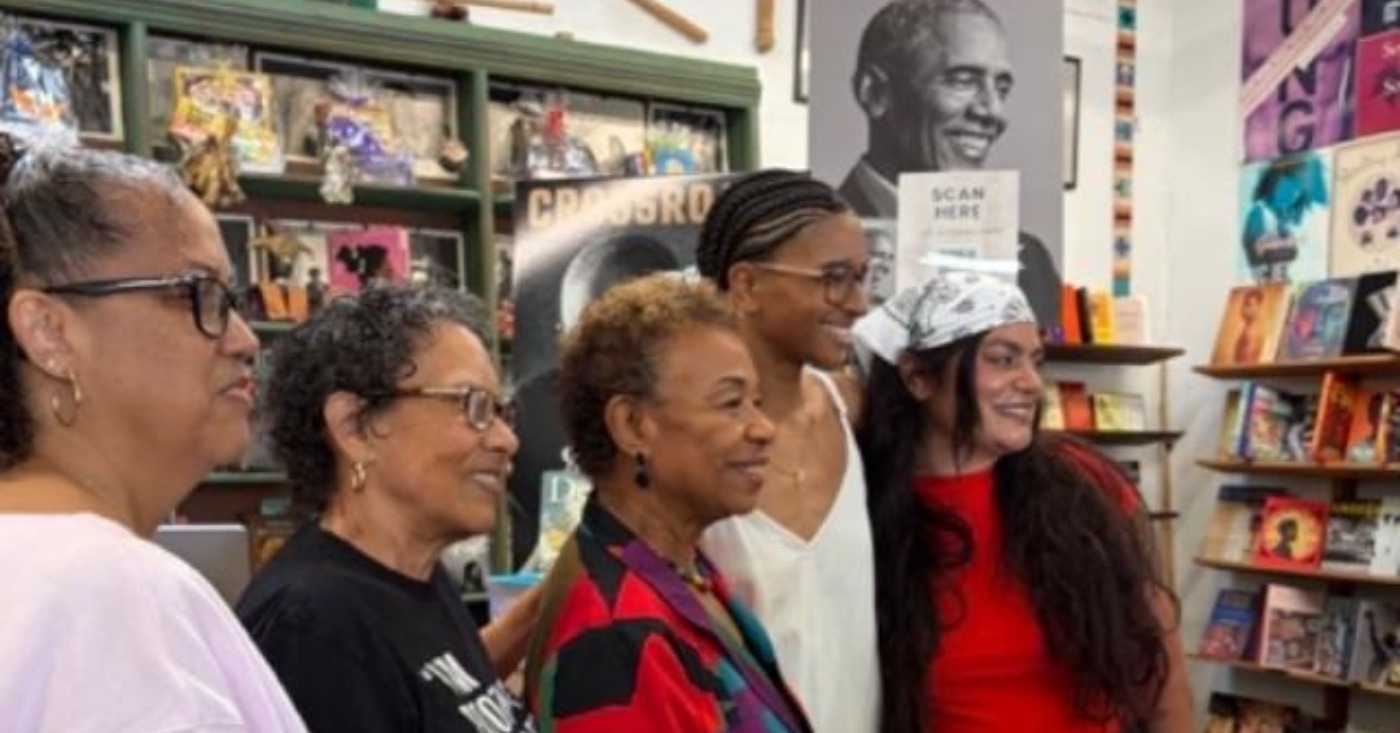
Floating bubbles greeted families on arrival at the Bookout Block Party held on Sat. Sept. 12 at 39th and MLK Blvd. in Oakland.
Sponsored by Marcus Books and Storyland Collective, a wonderland of activity for children stretched to Longfellow School while live music filled the air, courtesy of KWC Complex Jazz Group.
Booths lined the street with arts and crafts, and children participated in hands-on art projects. A large display of books was on display and each child chose his/her free book to take home. Food and snacks were available, and free water was encouraged to keep all hydrated.
A large area of turf was filled with huge bean bags for jumping, rolling, and sitting to listen as families crowded close to listen to Oakland Mayor Barbara Mayor Barbara Lee read a book out loud.
Of the numerous booths present were, “Claim Your Scholarship,” a program for Oakland Public School students and “VOLUNTEER NOW,” a program encouraging volunteers to help boost reading proficiency. Individuals sold their art and products. Free gifts were at many tables and a raffle was held.
The event with Marcus books culminated a summer-long program organized by Storyland Collective, a literacy arts organization bringing children’s ‘storytime,’ local authors, and art activities to Bay Area neighborhoods. Marcus Books is the oldest, independent Black-owned book store in the U.S., featuring books by and about Black people here and abroad.

Black History
Tradition Comes to the Streets in 11th Annual Black-Eyed Pea Festival at the Freedom Farmers Market
Mayor Barbara Lee stops by to support vendors, Winky Dinky Dogs owner Tyranny Allen A streamlined Oakland Black-Eyed Pea Festival took place on Sat. Sept. 12 in the lower Temescal neighborhood on the blocked off street that connect Shattuck and Telegraph avenues. An early start b
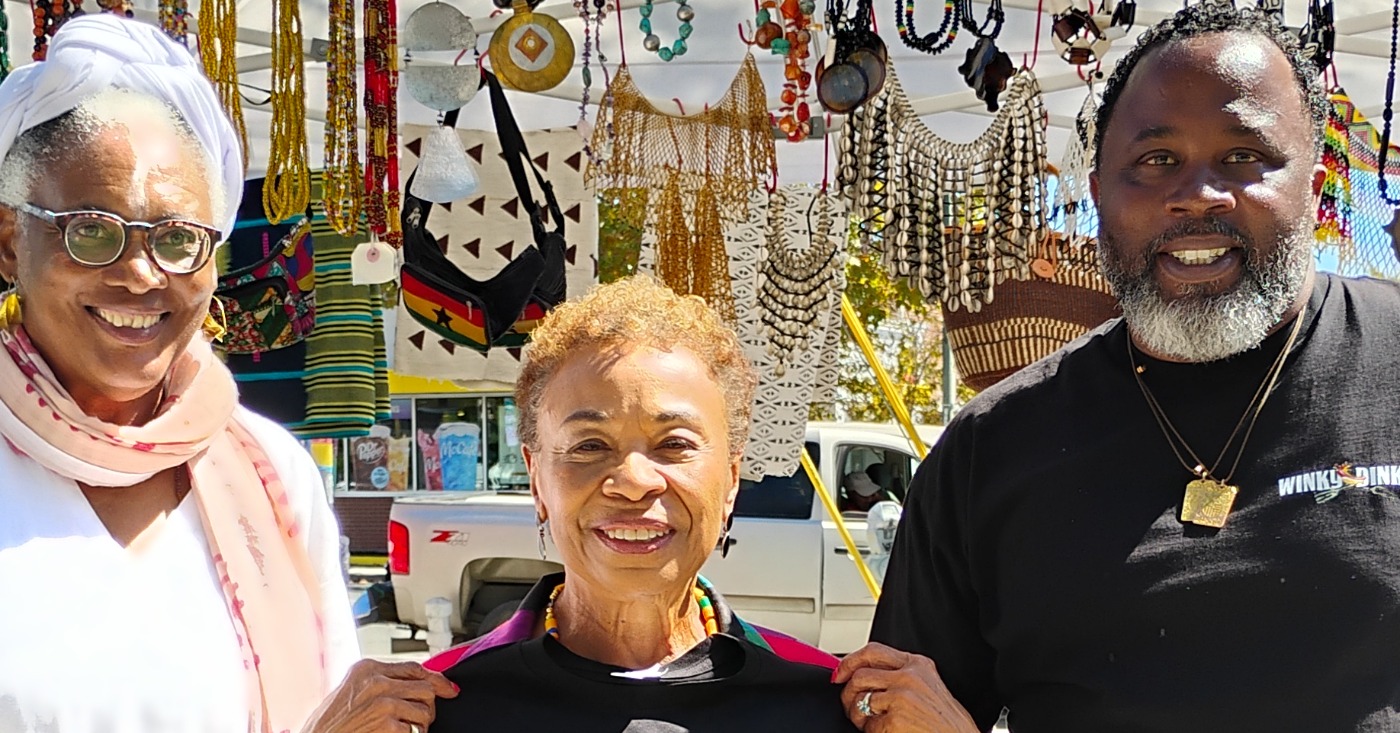
Mayor Barbara Lee stops by to support vendors, Winky Dinky Dogs owner Tyranny Allen
A streamlined Oakland Black-Eyed Pea Festival took place on Sat. Sept. 12 in the lower Temescal neighborhood on the blocked off street that connect Shattuck and Telegraph avenues.
An early start brought together vendor regulars from festival partner, the Freedom Farmers’ Market, and vendors who have supported the festival at its previous location at Marston Campbell Park.
Wanda Ravernell, the festival producer/director was on the verge of cancelling the festival because of funding limitations in May before reaching out to Elaine Smith, president of Farms to grow, Inc., which supervisors the market.
From its start in 2014, the festival has focused on the traditions of African American culture through music, food and art. That emphasis included fresh food vendors, particularly growers of African American legacy crops like black-eyed peas, yams, watermelon, collard greens and okra, which all originate in Africa.
To Fresno farmer Will Scott of Scott Family Farms, the Freedom Farmers’ Market allows him to bring those crops to the inner city – and support the nutrition of African Americans.
Shortly after the festival opened Saturday morning with prayers and salutes to the ancestors by Wakan Wiya Two-Spirit Drum and Awon Ohun Omnira, led M. Zamora and Otobaji Stewart respectively, 86-year-old Scott, the son of a sharecropper, announced that he will put other endeavors aside to dedicate the rest of his life to raise those foods.
Smith shared that Farms to Grow assists Black farmers in helping them overcome one of their main impediments to success – distribution – while creating alliances to help Black people maintain farmland and make it prosperous for younger generations to keep farming and farmland in the family.
As the morning progressed to afternoon, a steady stream of visitors drifted from booth to booth, chatting with vendors and each other.
Scott noted that a market day like this was what he was accustomed to in his youth, where the market was not just about buying things but also a place for valuable social exchange.
The social aspect became even pronounced shortly after midday when Oakland Mayor Barbara Lee stopped by to shop and visit with some of the vendors, including Ellen Bimpeh of Sankofa, and Ravernell who was selling T-shirts designed by Stewart.
Lee is also a fan of Winky Dinky Dogs, an eatery owned by Tyranny Allen whose second brick-and-mortar venture further anchors a hub of businesses at that corner.
As he has in previous years, Andre Thierry of Accordion Soul, closed the festival with a 90-minute set that brought young and the young-at-heart on their feet to dance in a line or as impromptu couples.
And, surprisingly, the man Allen refers to as the mayor of 45th Street, came out on cane and chair to sit by the curb in the sun and listen to music reminiscent of his Louisiana roots. His appearance seemed to echo Scott’s observance about the market: to bring people together.
The Freedom Farmers’ Market is located at 4521 Telegraph Avenue in Oakland and is open on the second and fourth Saturdays of each month until Nov. 14. For more information and to apply to be a vendor, go to https://www.farmstogrow.org/freedomfarmersmarket
Business
Attorney General Rob Bonta Continues Opposition to President Trump’s Tariff Regime
“President Trump is so intent on raising the cost of living for Americans that he is willing to break law after law to continue his tariff regime,” said Bonta.
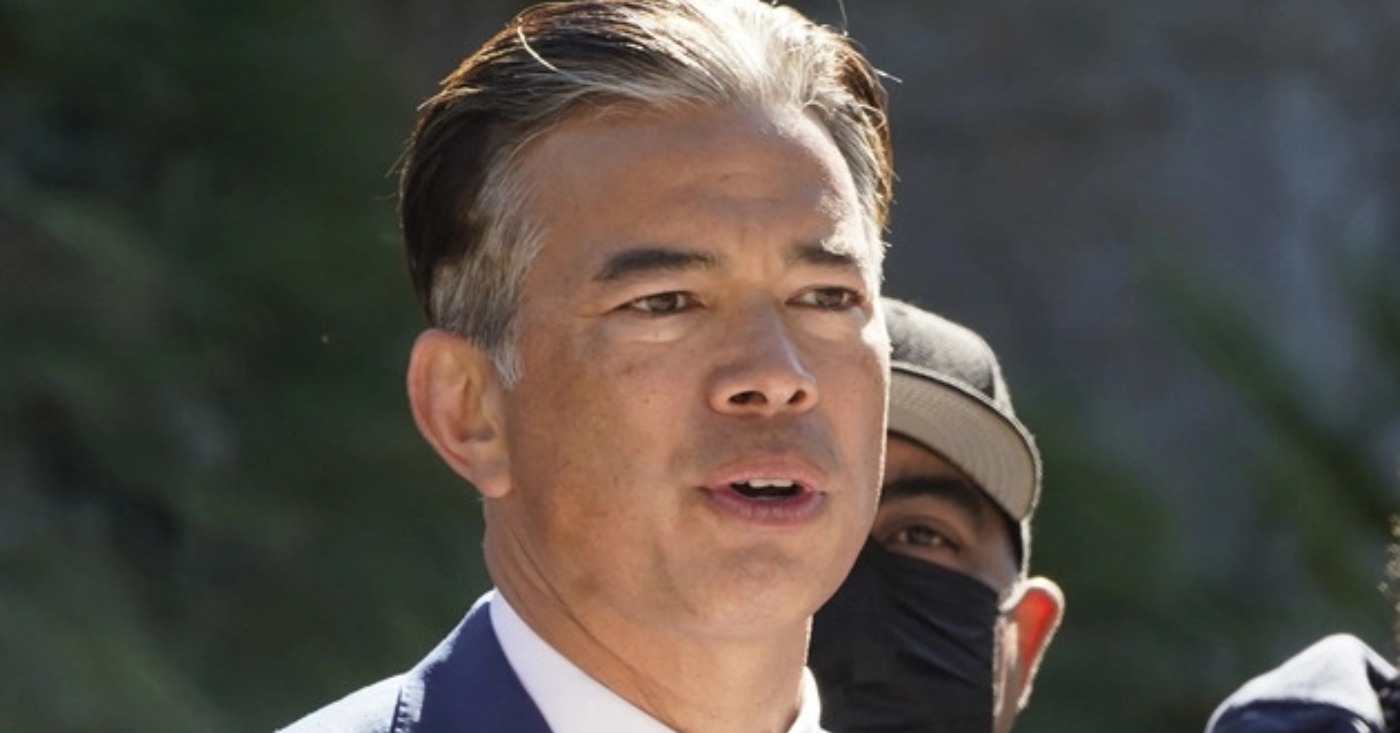
California Attorney General Rob Bonta, as part of a coalition of 25 states, filed an amicus brief in the Court of International Trade in Learning Resources v. Trump, a case challenging President Trump’s latest “unlawful” attempt to tax the states and American consumers through illegal tariffs, according to a media release issued by the California Department of Justice.
In the brief, Bonta argues the latest round of tariffs levied under Section 301 of the Trade Act of 1974 are pretextual and are not targeted to address the purported harms of forced labor, as that statute requires, but instead are designed to re-create the tariffs already declared illegal by various courts.
Last month, Bonta and the coalition filed a lawsuit challenging the administration’s decision to impose these tariffs on over 80 countries that together account for 99.4% of all U.S. imports — costs that will be passed along to Americans already struggling with affordability.
“President Trump is so intent on raising the cost of living for Americans that he is willing to break law after law to continue his tariff regime,” said Bonta.
“Imposing these tariffs under Section 301 has nothing to do with forced labor and everything to do with continuing the President’s failed economic policy and reimposing the global tariffs that the Supreme Court invalidated,” he continued.
“We urge the Court of International Trade to declare the president’s tariffs under Section 301 illegal. Tariffs are taxes, and the American people cannot and should not shoulder the extra costs that come from the president’s illegal tariffs.”



Oakland Mayor Reads to Children at Bookout Block Party at Marcus Books Store

Tradition Comes to the Streets in 11th Annual Black-Eyed Pea Festival at the Freedom Farmers Market

Attorney General Rob Bonta Continues Opposition to President Trump’s Tariff Regime

Neighborhood Empowerment Day in Deep East Oakland Brings Community Together After Recent Tragedy

Community Action Group ‘Friends of Zakiya’ Ask Sheriff for Time

Oakland Launches Aerbits Program to Identify, Report Abandoned Trash

Mayor Lee Announces $1 Million Kaiser Permanente Grant for Pilot Program to Address Homelessness, Clean Up Public Spaces throughout Oakland

Alameda County DA Ursula Jones Dickson Says Key to Optimal Use of DA’s Office Is Knowledge

Oakland Post: Week of September 16 – 22, 2026

NFL: Week Two Recap | Jalen Hurts did not fold; Caleb Williams exits game with injury

The Complete Negotiation Framework — Every Stage, Every Tactic, Every Win

Mazda CX-90 Luxury: Heated Seats & Premium Comfort! #shorts

Car Dashboard Glare: Avoid This Distraction! #shorts

Mazda CX-90 Safety: All Driver Assistance Features Explained #shorts

Subaru Outback: 19-Inch Wheels & 8.8″ Ground Clearance! #shorts

Department of Homeland Security Demands California Secretary of State Shirley N. Weber Scrub Voter Rolls

“The Power to See Threats Sooner”: Gov. Newsom, Safety Officials Showcase California’s Investments in Hi-Tech Wildfire Prevention

California Sen. Padilla Joins Colleagues to Introduce Bill Imposing Term Limits on Supreme Court Justices

Less Affluent School Districts, Including Sacramento City, Face Threat of State Takeover

Car Wash Workers Cope with Lingering Impacts of ICE Raids

ESSAY: California Can Close Its Colorectal Cancer Gap

As Part of Your Back-to- School Checklist, Vaccinate

Oakland ‘Port Serves as a Powerful Engine for Good Jobs and Economic Development

Gov. Newsom Announces $109.6 Million in Funding for 278 Supportive Homes in Bakersfield, Contra Costa, Sacramento and Fresno

California Hispanic Chambers of Commerce Unveils: ‘Powering the Future’ Theme for 47th Annual Statewide Convention

Congresswoman Simon Demands Investigation into Trump’s Abuse of Emergency Powers for Coal Export Terminal in West Oakland

Four Candidates, Including Incumbent Barbara Lee, Qualify for Oakland Mayor’s Race

Oakland Post: Week of August 12 – 18, 2026

From Blueprint to Breakthrough: Tackling Affordable Housing in Oakland

Oakland Observes Black August with Block Parties, Film Showings, Workshops

The Conversation With Al McFarlane 6/23/26

Media Monday 6/22/26

LIVE! ASK ALMA! — TUES. 6.23.26 7PM EST

Car Buying Secrets: 4 Hidden Checks Before You Sign!

Is This 550 HP Charger Worth YOUR Money? AutoNetwork Review

Celebrating Juneteenth – Frederick Douglass on education and resistance

LIVE! — ASK ALMA! — TUES. 6.19.26 7PM EST

Hyundai Ioniq 5 Parking, Safety, and 360 View #shorts

2025 Ioniq 5 New Wiper & Powerful Performance! #shorts

Electric SUV Range: Is 259 Miles Enough? #shorts

EV Charging: How Fast Can You Charge an Electric Vehicle? #shorts

Biometric Cooling… Messaging Seats…Come on! 2025 Infiniti QX80 Autograph 4WD

Charged Up: Witness the Magic of a Fully Electric Car! #shorts

Range Rover Sport PHEV Included…: See What’s Inside This Luxury SUV! #shorts

Invisible Hood View: Perfect Parking with X-Ray Vision! #shorts
-

 Commentary3 weeks ago
Standoff for Justice: Our Homes Are Worth Fighting For
-

 Activism3 weeks ago
Oakland Post: Week of August 26 – September 1, 2026
-

 Business3 weeks ago
Gubernatorial Candidate Steve Hilton Blasts California New Tire Rules; Newsom Hits Back
-

 Business3 weeks ago
Frontier Airlines’ Return to Oakland Airport Brings Flights, Jobs and Opportunity
-

 Business3 weeks ago
Chef Sharon Lee Blends Culinary Excellence, Education and Empowerment
-

 Education3 weeks ago
Gov. Newsom’s Latest Appointees Include Sacramento Advocate for Formerly Incarcerated Students; State’s New Tech Chief
-

 Business3 weeks ago
Oakland Coliseum Project Opens Door for Small Businesses to Build Bigger
-

 Community3 weeks ago
Big City Mayors Ask for “Yes” Vote on Housing Bond Measure; Conservatives Say “No”
