
#NNPA BlackPress
Maryland’s Adult-Use Cannabis Sales Rake in Millions in First Weekend of Legal Recreational Use
THE AFRO — Over the course of the entire weekend, Maryland dispensaries earned $10.4 million for adult-use and medical sales, compared to $3.9 million in 2022 when only medical use was permitted. From July 1 to July 7, Maryland dispensaries grossed $20.9 million in medical and adult-use cannabis sales, according to an MCA report.
The post Maryland’s Adult-Use Cannabis Sales Rake in Millions in First Weekend of Legal Recreational Use first appeared on BlackPressUSA.

By Megan Sayles, AFRO Business Writer,
msayles@afro.com
In 2022, Marylanders voted to pass a referendum on cannabis use for individuals 21 years and older. Recreational use of the drug started on July 1. On that day, state dispensaries racked up more than $3.5 million in adult-use sales, according to a Maryland Cannabis Administration (MCA) report.
Throughout the entire weekend, Maryland dispensaries earned $10.4 million for adult-use and medical sales, compared to $3.9 million in 2022 when only medical use was permitted. From July 1 to July 7, Maryland dispensaries grossed $20.9 million in medical and adult-use cannabis sales, according to an MCA report.
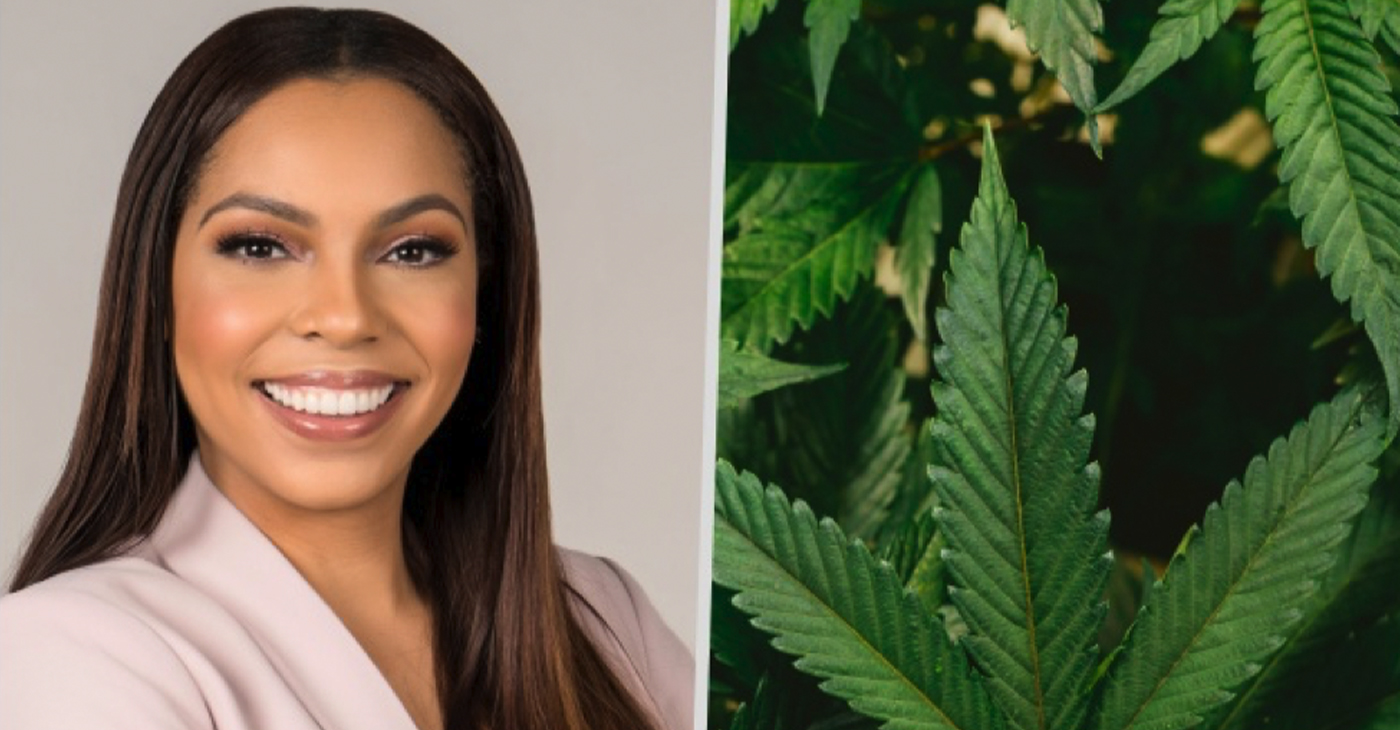
“Of course, every state that goes from medical to adult-use definitely experiences an increase, and in Maryland, the [industry] pretty much did what was predicted,” said Hope Wiseman, founder and owner of Mary and Main dispensary in Capitol Heights, Md. “We saw about three times the sales that we normally experience, and it’s been pretty consistent since July 1.”
At the age of 25, Wiseman became the youngest Black woman to own a cannabis dispensary in the U.S. when she opened Mary and Main as a medical dispensary alongside her mother, Octavia Wiseman, in 2018. The facility operates in her Prince George’s County hometown.
Before adult use was legalized, the state of Maryland provided a pathway for existing medical dispensaries to convert their licenses for dual sales under the Cannabis Reform Act. The facilities had to pay a fee equivalent to eight percent of the previous year’s gross revenue for the conversion.
“Opening weekend, we had lines going around the store. It was pouring down raining, and people got umbrellas out and stood in line,” said Wiseman. “It was really amazing to see.”
Under the Cannabis Reform Act, marijuana users are allowed to purchase up to 1.5 ounces of cannabis flower, including joints and pre-rolls, 12 grams of concentrated cannabis, or a total amount of edible cannabis products that do not surpass 750 milligrams of THC, according to the Maryland Cannabis Administration.
Because cannabis is illegal under federal law, individuals are not permitted to carry the drug over state lines. Mailing cannabis in or out of the state is also prohibited.
Maryland is also the first state in the nation to exclusively target social equity applicants for dispensary licenses, according to the Maryland Cannabis Administration. Under the Cannabis Reform Act, the state will have specific licensing rounds for applicants from communities that have been disproportionately affected by marijuana prohibition and prosecution.
It will also provide grants and no-interest loans to individuals who qualify as social equity applicants. Thirty percent of the tax revenue generated from adult-use sales will be diverted to the Community Reinvestment and Repair Fund, which benefits communities most affected by the war on drugs.
“When the first round of medical licenses came out in 2013, social equity wasn’t even a part of the conversation. This time around, it was at the forefront of the conversation,” said Wiseman. “Potentially, we might be able to have one of the most successful social equity programs to date.”
Since adult use became legal, Maryland law enforcement has altered their policies and procedures and received training to detect cannabis intoxication in drivers.
The Baltimore City Police Department defines a criminal amount of cannabis as more than 2.5 ounces of flower, more than 20 grams of concentrated cannabis or more than 1,250 milligrams of cannabis products containing THC. According to the department, police must try to issue a criminal citation before making any arrests for criminal cannabis possession.
Police are also prohibited from relying on odor to initiate a stop and search of a person or vehicle, according to the department.
“All of our policies are done in collaboration with the U.S. Department of Justice, our Consent Decree Monitoring Team, and our public feedback process,” said Lindsey Eldridge, director of public affairs and community outreach for the Baltimore Police Department (BPD). “Additionally, BPD has five drug recognition experts (DREs), and every sworn member receives a 40-hour training course on controlled dangerous substances.”
In the future, Wiseman said she plans to open a second dispensary with an entrepreneur in Maryland.
“I don’t want to do it alone. I want to grow with my people,” said Wiseman. “I hope to be able to partner with someone that’s looking to get into the space and to offer them security since they will have somebody working with them that’s done it before.”
Megan Sayles is a Report for America Corps member.
Related Articles:
New cannabis expungement rules address systemic injustice
Federal banking rules make funding Maryland cannabis industry tricky
The post Maryland’s adult-use cannabis sales rake in millions in first weekend of legal recreational use appeared first on AFRO American Newspapers .
The post Maryland’s Adult-Use Cannabis Sales Rake in Millions in First Weekend of Legal Recreational Use first appeared on BlackPressUSA.




#NNPA BlackPress
Jovita Moore Mural Still Has Not Been Repainted in Grant Park
ATLANTA VOICE — A mural depicting late journalist Jovita Moore, painted on the exterior wall of a building now occupied by Bellwood Coffee in Grant Park, was painted over in April. Moore passed away in 2021 after decades of working in Atlanta television news. Bellwood Coffee owners stated in May they were unaware of Moore’s identity or significance to the community before painting over the mural.
The post Jovita Moore Mural Still Has Not Been Repainted in Grant Park appeared first on BlackPressUSA.


At the corner of Boulevard, SE. and Rosalia St., SE., directly across the street from an abandoned home and a Methodist Church, is Bellwood Coffee. One of hundreds of coffee shops in Atlanta, this place of business would not be worth a solitary discussion if not for the way its exterior walls are currently painted. There was once a mural depicting the late Jovita Moore, a beloved journalist who worked in Atlanta for decades. Moore, who passed away in 2021, mentored many of the people you see on television newscasts today. Though her legacy will never be forgotten, it was the mural of her image that was erased.
In April, members of the Grant Park community voiced their disgust at the mural, which graced a side wall of the building now occupied by Bellwood Coffee’s Grant Park location, before it was painted over. In its place are the words “Bellwood Coffee; Cocktails, Biscuits, Dry Goods, Air Conditioning. *Heat Too”. In May, the business owners responded to the community pushback on social media by acknowledging they did not know who Moore was before painting over her image. And later admitted that they did not attempt to find out what she meant to the community.
On May 21, the Bellwood Coffee Instagram account had a post about being “in close contact with Jovita’s family and are actively working on next steps in this process.” Two months later, the mural has not been replaced, repainted, or repositioned on the property. Nothing has been done. Black history is often erased, most recently by the current Presidential administration, but oftentimes on a smaller, quieter scale. The mural was originally painted by muralist Tommy Bronx, who had been in contact with the business owners about repainting it. As of July 6, Tommy Bronx had responded to a direct message via his Instagram account from The Atlanta Voice about any updates on his plans to repaint the mural.
“We’re currently working on it. You should see some movement in the weeks to come,” he wrote in a response.
On Monday, July 6, the business had several patrons inside and was running smoothly with three employees manning the counter. The Atlanta Voice dropped by Bellwood Coffee to get a look at the exterior wall where the mural once stood as a memorial to a journalist and mother who lost her life to brain cancer at the young age of 54. Moore’s image added some color to the block. The grey wall in its place does not.
A direct message was sent to the Bellwood Coffee Instagram account, and there hasn’t been a response as of 7 p.m. on Monday.
The post Jovita Moore Mural Still Has Not Been Repainted in Grant Park appeared first on The Atlanta Voice.
Based on reporting by Atlanta Voice.
The post Jovita Moore Mural Still Has Not Been Repainted in Grant Park appeared first on BlackPressUSA.

#NNPA BlackPress
‘Proud to Hang Her from a Tree’: Man Arrested for Threatening Black Senator
ATLANTA DAILY WORLD — A New York man faces felony hate crime charges for allegedly posting a threat against New York State Senator Lea Webb. James A. Crosby, 49, of Binghamton, was arrested by New York State Police after investigators determined he posted a threatening comment on a social media news post about a Juneteenth celebration.
The post ‘Proud to Hang Her from a Tree’: Man Arrested for Threatening Black Senator appeared first on BlackPressUSA.

A New York man is facing felony hate crime charges after allegedly posting that he’d be “proud to hang” New York State Senator Lea Webb from a tree in response to a news story about a Juneteenth celebration.
James A. Crosby, 49, of Binghamton, was arrested June 23 by New York State Police after investigators determined he posted a threatening comment on a WBNG 12 News Facebook post. “I’d be proud to hang her from a tree,” Crosby wrote, according to WBNG.
Crosby was charged with making a terroristic threat as a hate crime, a class C felony, per the New York State Police. He is currently being held at Broome County Jail.
During the subsequent investigation, state police found Crosby was in illegal possession of firearms despite being prohibited from owning them due to a prior felony conviction. Investigators recovered a rifle, a large-capacity ammunition feeding device, and a firearm suppressor — all prohibited under New York state law, per the NYSP.
Crosby was charged with four additional counts of criminal possession of a weapon in the third degree, all class D felonies.
Webb, who represents New York’s 52nd Senate District, had been a featured speaker at a Juneteenth flag-raising ceremony at Binghamton City Hall, where the celebration included prayers and the singing of the Black national anthem.
Police said Crosby’s comment was posted in response to a WBNG news story covering the event.
The day before his arrest, Crosby posted a Facebook apology claiming the comment “was not intended to be racial in any way” and was made in reference to what he described as a “criminal,” citing criticism of Webb over her use of nonprofit legal aid in a foreclosure case — a matter state watchdogs said created an appearance of a conflict of interest, per the Ithaca Voice. He was arrested the following day.
Webb issued a public statement June 25 condemning the threat.
“It was extremely disappointing and hurtful to see the now-deleted threat and attacks on my life in response to a story about Juneteenth, a national holiday that recognizes the ending of slavery in America,” she said. “Feedback and thoughts on policy are one thing, but to make a public call for lethal violence is absolutely unacceptable and dangerous. We must recognize our shared humanity and reject violence in all forms.”
She thanked Gov. Kathy Hochul, Senate Majority Leader Andrea Stewart-Cousins, and law enforcement for their “swift response.”
Following Crosby’s comments, social media users called for a boycott of his contracting business, Crosby Home Improvements.
The Binghamton City Democratic Committee also called for an investigation into the incident before his arrest.
The Black Information Network is your source for Black News! Get the latest news 24/7 on The Black Information Network. Listen now on the iHeartRadio app or click HEREto tune in live.
The post ‘Proud to hang her from a tree’: Man arrested for threatening Black Senator appeared first on Atlanta Daily World.
Based on reporting by Atlanta Daily World.
The post ‘Proud to Hang Her from a Tree’: Man Arrested for Threatening Black Senator appeared first on BlackPressUSA.
#NNPA BlackPress
CARICOM: Strengthen Integration for Future Generations
NEW YORK CARIB NEWS — Outgoing CARICOM Chairman Terrance Drew called on regional leaders to build a stronger and more effective Caribbean Community that benefits future generations. Speaking at the 51st Regular Meeting, Drew urged modernization of governance structures and improved implementation of Community decisions to make CARICOM safer and more prosperous.
The post CARICOM: Strengthen Integration for Future Generations appeared first on BlackPressUSA.

Speaking Sunday at the opening of the 51st Regular Meeting of the Conference of Heads of Government in Saint Lucia, Dr. Terrance Drew said the region must modernize its governance structures, improve the implementation of Community decisions, and ensure CARICOM becomes safer, more prosperous, and more relevant to the lives of its citizens.
The meeting, being held under the theme “CARICOM: From Resilience to Renewal in a Changing World,” coincides with the Community’s 53rd anniversary. During the ceremony, Dr. Drew formally handed over the rotating CARICOM chairmanship to Saint Lucia’s Prime Minister, Philip J. Pierre.
Reflecting on his six-month tenure as chairman, Drew praised fellow regional leaders for maintaining their commitment to democracy, good governance, unity, and the rule of law despite mounting global economic and geopolitical challenges.
“Throughout these challenges, CARICOM chose engagement over isolation. Together, we reaffirmed our commitment to a fair and rules-based international trading system and ensured that the interests of small developing states continued to be heard.”

He highlighted progress made in strengthening the CARICOM Single Market and Economy, including deeper trade cooperation, expanded labour mobility, and efforts to lay the foundation for long-term economic growth. Drew also noted the Community’s growing partnerships beyond the Caribbean, particularly with the African Union, while stressing that every international partnership should advance the interests of all parties involved.
The outgoing chairman also expressed appreciation to Dr. Carla Barnett and the CARICOM Secretariat for their professionalism and unwavering support during his tenure.
“Whenever I called, you answered. Whenever support was required, you and your team responded with diligence, competence, and excellence.”
Dr. Drew urged the Secretariat to continue preserving its impartiality while faithfully implementing decisions made by Heads of Government, saying that balance has helped strengthen the regional integration movement.
The conference continues in Saint Lucia with regional leaders expected to deliberate on key issues including regional security, climate resilience, trade, economic integration, food security, Haiti, reparations, and strengthening the CSME.
Based on reporting by New York Carib News.
The post CARICOM: Strengthen Integration for Future Generations appeared first on BlackPressUSA.

WORK FROM HOME
Home-based business with potential monthly income of $10K+ per month. A proven training system and website provided to maximize business effectiveness. Perfect job to earn side and primary income. Contact Lynne for more details: Lynne4npusa@gmail.com 800-334-0540


Oakland Post: Week of July 22 – 28, 2026

Fed Court to Decide Landmark First Amendment Case

Jordan Walker Leads Call for More Black Youth in Baseball

How Black WNBA Players Became Collateral Damage in the Caitlin Clark Culture War

NAACP Announces $20m Voter Registration Drive at National Convention in Chicago

Starting This Summer, California Car Buyers Can Get an Instant $3500 Off the Cost of Electric Vehicles

Surveillance Pricing Fight: State Senate Debates Bill Banning Retailers from Using AI to Set Prices Based on a Buyer’s Profile

Oakland Children’s Hospital Workers and Patients Rally for Pediatric Medical Care

Opinion: When Politicians Start Sanitizing One Chapter of History, They’re Coming After The Whole Book

Beyond Politics: California Legislators Across Party Lines Celebrate Lori Wilson at 50

NPRC to Meet with California Attorney General’s Office on to Urge Guardianship Reform

Mount Zion MBC, Church of Jesus Christ of Latter-day Saints Partner to Bring 29,000 Meals to Alameda County

Councilmember Houston Helps Deter Trend to Award Contracts to Suburban Companies

Rep. Garamendi, House Democrats Demand Trump Administration Abandon Illegal Plans to Dismantle Civil Rights, Special Ed Offices

Council Gives Approval for $125 Million Oakland Coliseum Sale to AASEG
Oakland Children’s Hospital Workers and Patients Rally for Pediatric Medical Care
Mount Zion MBC, Church of Jesus Christ of Latter-day Saints Partner to Bring 29,000 Meals to Alameda County
Surveillance Pricing Fight: State Senate Debates Bill Banning Retailers from Using AI to Set Prices Based on a Buyer’s Profile

IN MEMORIAM: Oakland Dance Legend Reginald Ray-Savage, 67

Saving Black Mothers Starts Outside the Hospital

Gov. Gavin Newsom Signs Law Streamlining Affordable Housing Rules

Oakland Celebrates $125 Million Coliseum Sale


NPRC Heads to Washington to Elevate Adult Guardianship Reform at National Whistleblower Summit

The Part of Buying a Home That No Real Estate Show Ever Prepares You For

Agricultural Engineer Effie Gant Plans Bay Area Farmers Market Initiative
Starting This Summer, California Car Buyers Can Get an Instant $3500 Off the Cost of Electric Vehicles

Oakland Post: Week of June 17 – 23, 2026

Oakland Post: Week of July 1 – 7, 2026

Ferry Fares to Increase July 1 as Ridership Hits Record Highs

The Conversation With Al McFarlane 6/23/26

Media Monday 6/22/26

LIVE! ASK ALMA! — TUES. 6.23.26 7PM EST

Car Buying Secrets: 4 Hidden Checks Before You Sign!

Is This 550 HP Charger Worth YOUR Money? AutoNetwork Review

Celebrating Juneteenth – Frederick Douglass on education and resistance

LIVE! — ASK ALMA! — TUES. 6.19.26 7PM EST

Hyundai Ioniq 5 Parking, Safety, and 360 View #shorts

2025 Ioniq 5 New Wiper & Powerful Performance! #shorts

Electric SUV Range: Is 259 Miles Enough? #shorts

EV Charging: How Fast Can You Charge an Electric Vehicle? #shorts

Biometric Cooling… Messaging Seats…Come on! 2025 Infiniti QX80 Autograph 4WD

Charged Up: Witness the Magic of a Fully Electric Car! #shorts

Range Rover Sport PHEV Included…: See What’s Inside This Luxury SUV! #shorts

Invisible Hood View: Perfect Parking with X-Ray Vision! #shorts
-
 Business1 day ago
Oakland Children’s Hospital Workers and Patients Rally for Pediatric Medical Care
-
 Business1 day ago
Mount Zion MBC, Church of Jesus Christ of Latter-day Saints Partner to Bring 29,000 Meals to Alameda County
-
 Business1 day ago
Surveillance Pricing Fight: State Senate Debates Bill Banning Retailers from Using AI to Set Prices Based on a Buyer’s Profile
-
 Black History5 days ago
Saving Black Mothers Starts Outside the Hospital
-
 Business3 days ago
Gov. Gavin Newsom Signs Law Streamlining Affordable Housing Rules
-
 Black History1 week ago
Oakland Celebrates $125 Million Coliseum Sale
-
 Community1 week ago
NPRC Heads to Washington to Elevate Adult Guardianship Reform at National Whistleblower Summit
-
 Business4 days ago
The Part of Buying a Home That No Real Estate Show Ever Prepares You For
