Connect with us

Activism

Marin County and Nine Local Jurisdictions File Suit Against Monsanto to Recover Costs Related to Cleanup of Toxic PCBs

Monsanto produced nearly 99% of all PCBs used in the United States since the 1930s and continued until its manufacture was banned by the Toxic Substance Control Act of 1976. According to Monsanto’s own internal documents, company officials knew and were warned about the dangers to human health and the environment from PCBs, but Monsanto wrongfully promoted the product and failed to warn customers about its dangers.

Published

on

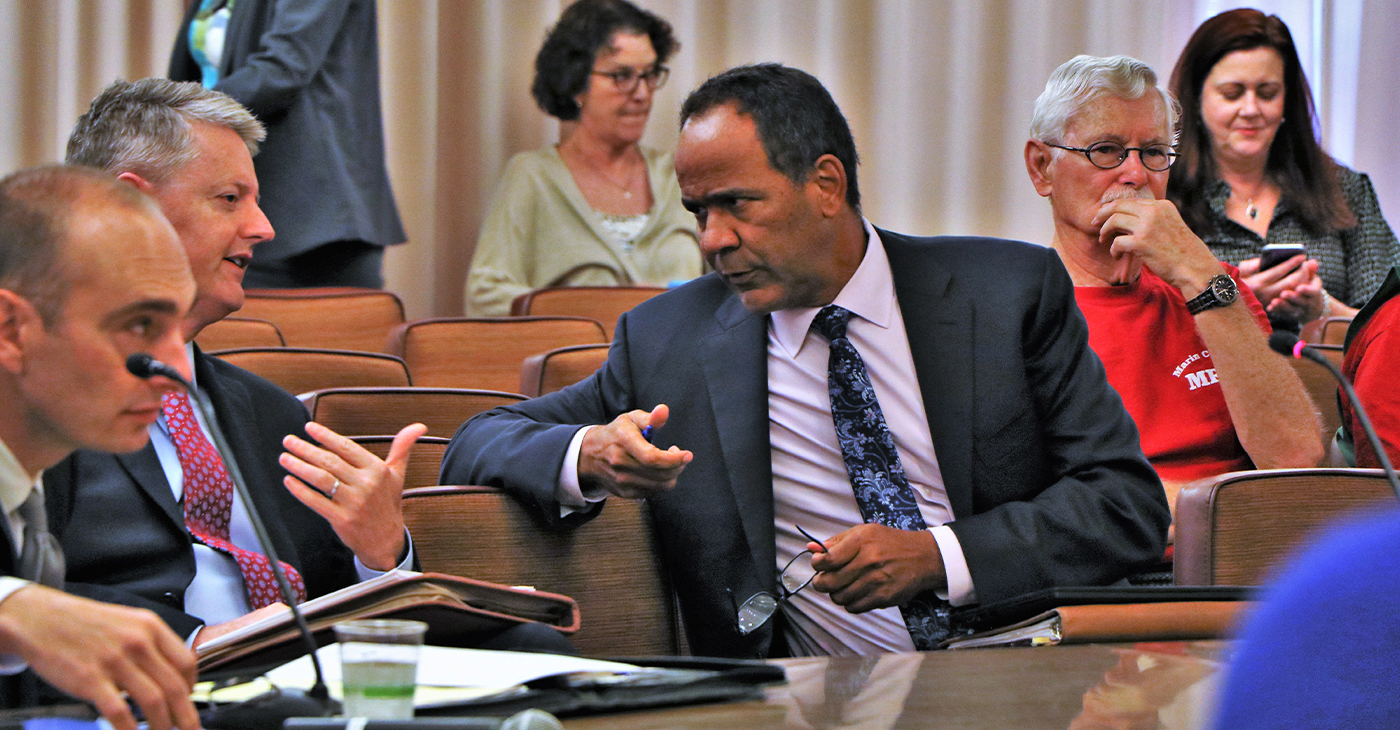
Brian Washington (right) is the Marin County Counsel.

Courtesy of Marin County

The County of Marin, along with nine local jurisdictions, has filed a lawsuit against Monsanto and two other companies to hold them accountable for PCB (polychlorinated biphenyl) contamination in their communities and in San Francisco Bay, and for the enormous costs they will incur to remove those contaminants.

The suit was filed Sept. 8 in Marin County Superior Court with plaintiffs listed as the County of Marin, the cities of Belvedere, Mill Valley, Novato, San Rafael and Sausalito, and the towns of Corte Madera, Ross, San Anselmo and Tiburon. It also names Solutia, Inc., and Pharmacia LLC as defendants in the case.

Marin’s joint lawsuit adds to a growing list of similar lawsuits filed around the U.S. alleging that Monsanto has known about the public health and environmental threats caused by PCBs for more than 50 years. Similar suits have been filed nationwide, with plaintiff agencies alleging that Monsanto deliberately misled the public, environmental regulators, and its own customers so it could reap massive profits from PCB sales.

Brian Washington, Marin County Counsel, said Marin and the other participating jurisdictions opted out of a proposed national class-action settlement because it failed to sufficiently cover the anticipated costs to comply with regulations and prevent further damage.

“PCBs have left a long toxic legacy,” said Washington. “The companies responsible need to contribute to the solution so that the taxpayers do not have to carry the entire burden.”

PCBs, banned from production in the late 1970s, are known or suspected to cause a wide range of cancers including non-Hodgkin’s lymphoma, breast cancer, liver cancer, gallbladder cancer, gastrointestinal cancers, pancreatic cancer and skin cancer. They are implicated in non-cancer health problems such as cardiovascular, endocrine, gastrointestinal, hepatic (liver), immune, neonatal, neurological, ocular, and reproductive harm.

PCB contamination resulting from Defendants’ actions is already widespread across the Bay Area. The entire Bay is classified as “impaired” by PCBs under the federal Clean Water Act. This impairment endangers natural resources and human health. For example, the Bay’s PCB contamination has required state agencies to issue stringent consumption advisories for fish caught in the Bay.

Water and sediment containing PCBs end up in wastewater and stormwater systems, which eventually make their way to the Bay. PCB contamination has been so severe in the bay that the California Office of Environmental Health Hazard Assessment has advised some people not to eat certain types of fish caught in the bay.  For example, children and women ages 18 to 49 are advised not to eat striped bass, sharks and white sturgeon caught in the bay. Everyone is also advised not to eat the skin and fatty tissue of any fish caught in the bay.

When regulations are in full effect, it is anticipated that communities will have to use significant taxpayer dollars to pay for testing and monitoring, develop infrastructure to capture PCBs in runoff, conduct more frequent street sweeping, and deploy other measures to comply with those regulations.

Monsanto produced nearly 99% of all PCBs used in the United States since the 1930s and continued until its manufacture was banned by the Toxic Substance Control Act of 1976. According to Monsanto’s own internal documents, company officials knew and were warned about the dangers to human health and the environment from PCBs, but Monsanto wrongfully promoted the product and failed to warn customers about its dangers. For example, in the 1950s, the U.S. Navy refused to buy one of Monsanto’s PCB products, Pydraul 150, for use in its submarines after the Navy conducted its own tests that showed that Pydraul 150 killed all 100 rabbits exposed to its vapors. Monsanto concealed that information from the public and its customers.

The County of Marin and other towns and cities involved in the suit are represented by their own staff with support from outside counsel Sher Edling LLP of San Francisco. The complaint includes claims of public nuisance, private nuisance and trespass.

Activism

Big God Ministry Gives Away Toys in Marin City

Pastor Hall also gave a message of encouragement to the crowd, thanking Jesus for the “best year of their lives.” He asked each of the children what they wanted to be when they grow up.

Published

on

From top left: Pastor David Hall asking the children what they want to be when they grow up. Worship team Jake Monaghan, Ruby Friedman, and Keri Carpenter. Children lining up to receive their presents. Photos by Godfrey Lee.

By Godfrey Lee

Big God Ministries, pastored by David Hall, gave toys to the children in Marin City on Monday, Dec. 15, on the lawn near the corner of Drake Avenue and Donahue Street.

Pastor Hall also gave a message of encouragement to the crowd, thanking Jesus for the “best year of their lives.” He asked each of the children what they wanted to be when they grew up.

Around 75 parents and children were there to receive the presents, which consisted mainly of Gideon Bibles, Cat in the Hat pillows, Barbie dolls, Tonka trucks, and Lego building sets.

A half dozen volunteers from the Big God Ministry, including Donnie Roary, helped to set up the tables for the toy giveaway. The worship music was sung by Ruby Friedman, Keri Carpenter, and Jake Monaghan, who also played the accordion.

Big God Ministries meets on Sundays at 10 a.m. at the Mill Valley Community Center, 180 Camino Alto, Mill Valley, CA Their phone number is (415) 797-2567.

Continue Reading

Activism

First 5 Alameda County Distributes Over $8 Million in First Wave of Critical Relief Funds for Historically Underpaid Caregivers

“Family, Friend, and Neighbor caregivers are lifelines for so many children and families in Alameda County,” said Kristin Spanos, CEO, First 5 Alameda County. “Yet, they often go unrecognized and undercompensated for their labor and ability to give individualized, culturally connected care. At First 5, we support the conditions that allow families to thrive, and getting this money into the hands of these caregivers and families at a time of heightened financial stress for parents is part of that commitment.”

Published

on

Costco. Courtesy image.

Family, Friend, and Neighbor Caregivers Can Now Opt Into $4,000 Grants to Help Bolster Economic Stability and Strengthen Early Learning Experiences

By Post Staff

Today, First 5 Alameda County announced the distribution of $4,000 relief grants to more than 2,000 Family, Friend, and Neighbor (FFN) caregivers, totaling over $8 million in the first round of funding. Over the full course of the funding initiative, First 5 Alameda County anticipates supporting over 3,000 FFN caregivers, who collectively care for an estimated 5,200 children across Alameda County. These grants are only a portion of the estimated $190 million being invested into expanding our early childcare system through direct caregiver relief to upcoming facilities, shelter, and long-term sustainability investments for providers fromMeasure C in its first year. This investment builds on the early rollout of Measure C and reflects a comprehensive, system-wide strategy to strengthen Alameda County’s early childhood ecosystem so families can rely on sustainable, accessible care,

These important caregivers provide child care in Alameda County to their relatives, friends, and neighbors. While public benefits continue to decrease for families, and inflation and the cost of living continue to rise, these grants provide direct economic support for FFN caregivers, whose wages have historically been very low or nonexistent, and very few of whom receive benefits. As families continue to face growing financial pressures, especially during the winter and holiday season, these grants will help these caregivers with living expenses such as rent, utilities, supplies, and food.

“Family, Friend, and Neighbor caregivers are lifelines for so many children and families in Alameda County,” said Kristin Spanos, CEO, First 5 Alameda County. “Yet, they often go unrecognized and undercompensated for their labor and ability to give individualized, culturally connected care. At First 5, we support the conditions that allow families to thrive, and getting this money into the hands of these caregivers and families at a time of heightened financial stress for parents is part of that commitment.”

The funding for these relief grants comes from Measure C, a local voter-approved sales tax in Alameda County that invests in young children, their families, communities, providers, and caregivers. Within the first year of First 5’s 5-Year Plan for Measure C, in addition to the relief grants to informal FFN caregivers, other significant investments will benefit licensed child care providers. These investments include over $40 million in Early Care and Education (ECE) Emergency Grants, which have already flowed to nearly 800 center-based and family child care providers. As part of First 5’s 5-Year Plan, preparations are also underway to distribute facilities grants early next year for child care providers who need to make urgent repairs or improvements, and to launch the Emergency Revolving Fund in Spring 2026 to support licensed child care providers in Alameda County who are at risk of closure.

The FFN Relief Grants recognize and support the essential work that an estimated 3,000 FFN caregivers provide to 5,200 children in Alameda County. There is still an opportunity to receive funds for FFN caregivers who have not yet received them.

In partnership with First 5 Alameda County, Child Care Payment Agencies play a critical role in identifying eligible caregivers and leading coordinated outreach efforts to ensure FFN caregivers are informed of and able to access these relief funds.FFN caregivers are eligible for the grant if they receive a child care payment from an Alameda County Child Care Payment Agency, 4Cs of Alameda County, BANANAS, Hively, and Davis Street, and are currently caring for a child 12 years old or younger in Alameda County. Additionally, FFN caregivers who provided care for a child 12 years or younger at any time since April 1, 2025, but are no longer doing so, are also eligible for the funds. Eligible caregivers are being contacted by their Child Care Payment Agency on a rolling basis, beginning with those who provided care between April and July 2025.

“This money is coming to me at a critical time of heightened economic strain,” said Jill Morton, a caregiver in Oakland, California. “Since I am a non-licensed childcare provider, I didn’t think I was eligible for this financial support. I was relieved that this money can help pay my rent, purchase learning materials for the children as well as enhance childcare, buy groceries and take care of grandchildren.”

Eligible FFN caregivers who provided care at any time between April 1, 2025 and July 31, 2025, who haven’t yet opted into the process, are encouraged to check their mail and email for an eligibility letter. Those who have cared for a child after this period should expect to receive communications from their child care payment agency in the coming months. FFN caregivers with questions may also contact the agency they work with to receive child care payments, or the First 5 Alameda help desk, Monday through Friday, from 9 a.m. to 5:00 p.m. PST, at 510-227-6964. The help desk will be closed 12/25/25 – 1/1/26. Additional grant payments will be made on a rolling basis as opt-ins are received by the four child care payment agencies in Alameda County.

Beginning in the second year of Measure C implementation, FFN caregivers who care for a child from birth to age five and receive an Alameda County subsidized voucher will get an additional $500 per month. This amounts to an annual increase of about $6,000 per child receiving a subsidy. Together with more Measure C funding expected to flow back into the community as part of First 5’s 5-Year Plan, investments will continue to become available in the coming year for addressing the needs of childcare providers in Alameda County.

About First 5 Alameda County

First 5 Alameda County builds the local childhood systems and supports needed to ensure our county’s youngest children are safe, healthy, and ready to succeed in school and life.

Our Mission

In partnership with the community, we support a county-wide continuous prevention and early intervention system that promotes optimal health and development, narrows disparities, and improves the lives of children from birth to age five and their families.

Our Vision

Every child in Alameda County will have optimal health, development, and well-being to reach their greatest potential. 

Learn more at www.first5alameda.org.

Continue Reading

Activism

2025 in Review: Seven Questions for Assemblymember Lori Wilson — Advocate for Equity, the Environment, and More

Her rise has also included several historic firsts: she is the only Black woman ever appointed to lead the influential Assembly Transportation Committee, and the first freshman legislator elected Chair of the California Legislative Black Caucus. She has also been a vocal advocate for vulnerable communities, becoming the first California legislator to publicly discuss being the parent of a transgender child — an act of visibility that has helped advanced representation at a time when political tensions related to social issues and culture have intensified. 

Published

on

Assemblymember Lori D. Wilson (D-Suisun City). File photo.

By Edward Henderson, California Black Media 

Assemblymember Lori D. Wilson (D-Suisun City) joined the California Legislature in 2022 after making history as Solano County’s first Black female mayor, bringing with her a track record of fiscal discipline, community investment, and inclusive leadership.

She represents the state’s 11th Assembly District, which spans Solano County and portions of Contra Costa and Sacramento Counties.

Her rise has also included several historic firsts: she is the only Black woman ever appointed to lead the influential Assembly Transportation Committee, and the first freshman legislator elected Chair of the California Legislative Black Caucus. She has also been a vocal advocate for vulnerable communities, becoming the first California legislator to publicly discuss being the parent of a transgender child — an act of visibility that has helped advanced representation at a time when political tensions related to social issues and culture have intensified.

California Black Media spoke with Wilson about her successes and disappointments this year and her outlook for 2026.

What stands out as your most important achievement this year?

Getting SB 237 passed in the Assembly. I had the opportunity to co-lead a diverse workgroup of colleagues, spanning a wide range of ideological perspectives on environmental issues.

How did your leadership contribute to improving the lives of Black Californians this year?

The Black Caucus concentrated on the Road to Repair package and prioritized passing a crucial bill that remained incomplete during my time as chair, which establishes a process for identifying descendants of enslaved people for benefit eligibility.

What frustrated you the most this year?

The lack of progress made on getting Prop 4 funds allocated to socially disadvantaged farmers. This delay has real consequences. These farmers have been waiting for essential support that was promised. Watching the process stall, despite the clear need and clear intent of the voters, has been deeply frustrating and reinforces how much work remains to make our systems more responsive and equitable.

What inspired you the most this year?

The resilience of Californians persists despite the unprecedented attacks from the federal government. Watching people stay engaged, hopeful, and determined reminded me why this work matters and why we must continue to protect the rights of every community in our state.

What is one lesson you learned this year that will inform your decision-making next year?

As a legislator, I have the authority to demand answers to my questions — and accept nothing less. That clarity has strengthened my approach to oversight and accountability.

In one word, what is the biggest challenge Black Californians are facing currently?

Affordability and access to quality educational opportunities.

What is the goal you want to achieve most in 2026?

Advance my legislative agenda despite a complex budget environment. The needs across our communities are real, and even in a tight fiscal year, I’m committed to moving forward policies that strengthen safety, expand opportunity, and improve quality of life for the people I represent.

Continue Reading

Subscribe to receive news and updates from the Oakland Post

* indicates required

CHECK OUT THE LATEST ISSUE OF THE OAKLAND POST

ADVERTISEMENT

WORK FROM HOME

Home-based business with potential monthly income of $10K+ per month. A proven training system and website provided to maximize business effectiveness. Perfect job to earn side and primary income. Contact Lynne for more details: Lynne4npusa@gmail.com 800-334-0540

Facebook

From top left: Pastor David Hall asking the children what they want to be when they grow up. Worship team Jake Monaghan, Ruby Friedman, and Keri Carpenter. Children lining up to receive their presents. Photos by Godfrey Lee.
Activism20 hours ago

Big God Ministry Gives Away Toys in Marin City

Costco. Courtesy image.
Activism20 hours ago

First 5 Alameda County Distributes Over $8 Million in First Wave of Critical Relief Funds for Historically Underpaid Caregivers

Assemblymember Lori D. Wilson (D-Suisun City). File photo.
Activism21 hours ago

2025 in Review: Seven Questions for Assemblymember Lori Wilson — Advocate for Equity, the Environment, and More

Assemblymember Tina McKinnor (D-Inglewood). File photo.
Activism21 hours ago

2025 in Review: Seven Questions for Assemblymember Tina McKinnor, Champion of Reparations, Housing and Workers’ Rights

Sen. Laura Richardson (D-San Pedro). File photo.
Activism21 hours ago

2025 in Review: Seven Questions for Sen. Laura Richardson, Who Made Legislative History This Year

Sen. Lola Smallwood-Cuevas (D-Los Angeles). File photo.
Activism21 hours ago

2025 in Review: Seven Questions for Sen. Lola Smallwood-Cuevas – an Advocate for Jobs and Justice

A rendering of Alfred L. Cralle’s ice cream scoop. Public domain.
Black History21 hours ago

Alfred Cralle: Inventor of the Ice Cream Scoop

Book cover of Let Me Be Real With You and author Arshay Cooper. Courtesy of HarperOne.
Advice23 hours ago

BOOK REVIEW: Let Me Be Real With You

Activism5 days ago

Oakland Post: Week of December 24 – 30, 2025

Christmas lights on a house near the writer’s residence in Oakland. Photo by Joseph Shangosola.
Alameda County1 week ago

Bling It On: Holiday Lights Brighten Dark Nights All Around the Bay

At the International Association of Chiefs of Police Conference, Flock Safety introduces new public safety technology – Amplified Intelligence, a suite of AI-powered tools designed to improve law enforcement investigations. Courtesy photo.
Alameda County1 week ago

Oakland Council Expands Citywide Security Cameras Despite Major Opposition

Tania Fuller Bryant, Zirl Wilson, Dremont Wilkes, Tracy Lambert and Dr. Geoffrey Watson. Courtesy Oakland Private Industry
Activism1 week ago

Lu Lu’s House is Not Just Toying Around with the Community

NCAA football history was made this year when Head Coach from Mississippi Valley State, Terrell Buckley and Head Coach Desmond Gumbs both had starting kickers that were Women. This picture was taken after the game.
Activism1 week ago

Desmond Gumbs — Visionary Founder, Mentor, and Builder of Opportunity

Affordable housing is the greatest concern for consumers, it’s followed by the cost of groceries. Courtesy photo.
Activism1 week ago

Families Across the U.S. Are Facing an ‘Affordability Crisis,’ Says United Way Bay Area

Councilmember Carroll Fife celebrates major milestone for Black arts, culture, and economic power in Oakland. Courtesy photo.
Activism1 week ago

Black Arts Movement Business District Named New Cultural District in California

Trending

Copyright ©2021 Post News Group, Inc. All Rights Reserved.