
Health
Man Racially Profiled During Planet Fitness Visit


Chris Edmonds (Courtesy Photo)
By Ashley Johnson
Special to the NNPA from the New Pittsburgh Courier
A Wilkins Township man who has dedicated himself to fitness and helping others, claims that a local gym that advertises a “No Judgment Zone” unjustly kicked him out of their facility and racially profiled him.
Chris Edmonds, owner of Athletic Trauma Unit, a nonprofit that offers free workouts to the community, said a normal trip to the gym with friends turned into a situation unlike any other he has faced in his adulthood.
Edmonds said that after visiting Planet Fitness in Penn Hills on June 8-9 as a guest to work out with his two friends, members Regis Sauers and Tayon Mitchell and without any incidents occurring either day; he received a call hours later from Mitchell informing him that the gym’s general manager said he was no longer welcome at the establishment. The group was accused of working out in a “boot camp” training style, which is viewed as intimidating to other members and prohibited by the gym.
To “clear-up” the situation and restore the reputation of his friends, Edmonds said he and Sauers, the one whose guest pass Edmonds was using, met with Planet Fitness General Manager Sam Travino. According to Edmonds and Sauers, Travino told them that there had been several complaints made to gym staff on both days about their “training” style and that he had also watched footage. When asked why nothing was said to Edmonds, both said they were told it was because the staff “was afraid of him,” that he “intimidating” and seemed “unapproachable.”

Both claim Travino, who is White, said it was because of the way Edmonds looked— a big, bald, bearded, Black man with tattoos. Edmonds and Sauers, who is also White, said what made matters worse, was that they were then complimented by Travino for “being such gentleman” through the whole meeting. They felt it was a slap in the face.
“Your job is to make this a judgment free zone so people feel comfortable, but now I’m uncomfortable. I’m uncomfortable because I walked in here, not knowing that everyone looked at me like the big Black dude who’s working out,” Edmonds said. “For the first time in a long I felt uncomfortable at the gym. Even at LA Fitness (where he is a member and visited after the incident), I felt like, is this what people think about me? Is this how people see me? …I’m thinking to myself, ‘should I shave my beard, wear longer sleeves to cover my tattoos,’ all this is going through my mind as I’m sitting in Planet Fitness.”
Edmonds said he dealt with stereotypes as a youth—living in a certain neighborhood and being judged for the clothes he wore or his haircut—but “now I’m 37 years old and dealing with gym discrimination.”
He went on to say that the whole incident is “really disappointing.”
“I haven’t had to deal with this in a long time,” he said. “It’s bad that they perceive me as intimidating. And to be called that to my face and to tell me it was because I’m big and black and bald with tattoos— All things I can’t change. I can’t change that I’m Black.”
The New Pittsburgh Courier reached out to Travino for comment. He did not return the call, but a statement was sent from Planet Fitness Public Relations Manager Becky Brown. It stated, “To ensure the safety of all members, it is Planet Fitness policy that personal training instruction not provided by certified company instructors is prohibited.”
It went on to say, “At the Penn Hills Planet Fitness, a guest of a Planet Fitness member from another location was part of a group leading training sessions over multiple days. These sessions generated complaints from other members. Planet Fitness managers contacted the group to make them aware of the complaints and club policy, reiterating they all are welcome to work out at Planet Fitness at any time. Planet Fitness is the proud home of the Judgement Free Zone, and we are committed to creating a welcoming environment for all people.”Both, Edmonds and Sauers, maintain that they were not involved in a training session and that it was a workout with friends. The two define training as someone telling someone else what to do and said they barely even interacted. Sauers, who had recently transferred to the Penn Hills location from the Edgewood one, also pointed out that he, Mitchell and another friend worked out together in the same fashion the week before and were never approached by staff about complaints.
He and Edmonds said if there were complaints, which they have not seen proof of; management should have handled the situation better. The statement said that the group was contacted, but both say that it was only Mitchell who was contacted, even though they had Edmonds’ information from him signing in both days as Sauers’ guest.
“If you have kids and your kid brings someone home. You’re not gonna go (talk to someone else), you’re gonna talk to the person that brought them,” Sauers said.
He added, “If the staff would have communicated their issues that they had at the time, there would have been no situation. Being that they didn’t say anything the first day, didn’t say anything the second day, and then just reacted on it, it’s beyond me on how that’s appropriate.
“They make me believe now, and this is my personal belief, that Planet Fitness is a set up for people to go that really don’t want the push, but want to spend the money to make themselves (feel good about going to the gym), They don’t want to see people get better, they don’t want to push people. It’s easier to push yourself and get your goals with a friend and they’re telling us that you can’t work out with a friend, which I misunderstood if that is their policy, because at Planet Fitness in Edgewood we never had a problem.”
Sauers said he and Edmonds had worked out at the Edgewood location as well.
“To tell somebody that they’re really not allowed in their establishment because of their looks, no matter what their looks are, it’s just not right. That’s like telling someone they can’t go to the pool because they’re fat.”
Days after the incident, Planet Fitness in Penn Hills posted a statement on their Facebook page, Planet Fitness-Penn Hills, PA, about their policy prohibiting personal training instruction. It sparked comments from many.
James R Cain III posted “Motivation is feeding your clients pizza to keep them coming back because their ‘training Program’ isn’t working. The ‘complaint’ is BS. All they have to do is say that they can’t disclose the source of the complaint when in all reality the complaint was fabricated. This man inspires not instructs. Guess you’re not allowed to have a workout partner. Your spotter might be taken for an uncertified trainer. (peace sign emoji) deuces!”
And Christine A. Broderick posted, “I complained but not about that. I would have loved someone standing beside me motivating me to push it a little harder. I don’t care about the buff people there I aspire to that. The guy who owns the place needs a lesson in people management start there first he’s not very user friendly.”
Edmonds also took to Facebook and posted about the incident. Some commented that they would be cancelling their memberships.
While the statement from Brown said that all parties were welcome back, Edmonds and Sauers said they do not feel comfortable going back to another Planet Fitness location.
When asked if there was anything that Planet Fitness could do to make the situation better, Edmonds said no. “I’ll never feel comfortable going in a place that has that sign on top of the building.”





Activism
COMMENTARY: The Biases We Don’t See — Preventing AI-Driven Inequality in Health Care
For decades, medicine promoted false assumptions about Black bodies. Black patients were told they had lower lung capacity, and medical devices adjusted their results accordingly. That practice was not broadly reversed until 2021. Up until 2022, a common medical formula used to measure how well a person’s kidneys were working automatically gave Black patients a higher score simply because they were Black. On paper, this made their kidneys appear healthier than they truly were. As a result, kidney disease was sometimes detected later in Black patients, delaying critical treatment and referrals.
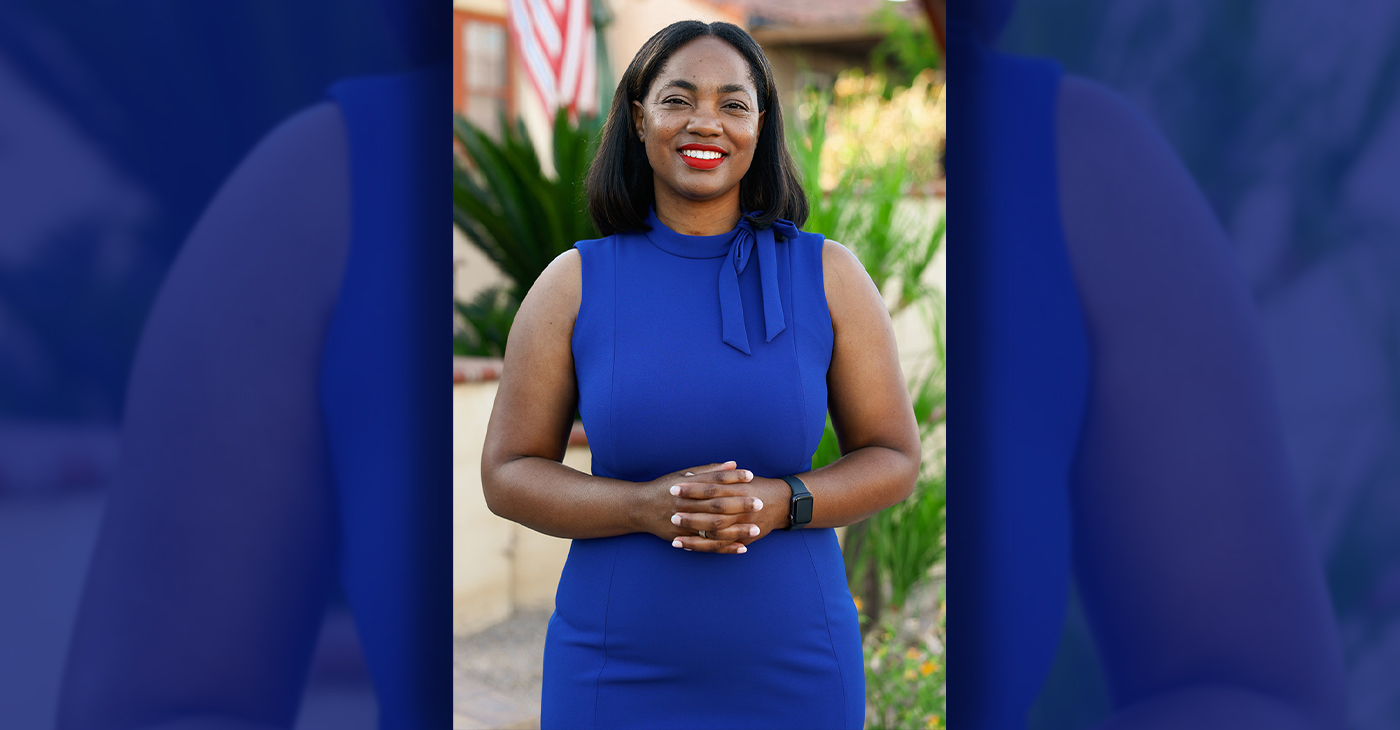
By Sen. Akilah Weber Pierson, M.D., Special to California Black Media Partners
Technology is sold to us as neutral, objective, and free of human flaws. We are told that computers remove emotion, bias, and error from decision-making. But for many Black families, lived experience tells a different story. When technology is trained on biased systems, it reflects those same biases and silently carries them forward.
We have seen this happen across multiple industries. Facial recognition software has misidentified Black faces at far higher rates than White faces, leading to wrongful police encounters and arrests. Automated hiring systems have filtered out applicants with traditionally Black names because past hiring data reflected discriminatory patterns. Financial algorithms have denied loans or offered worse terms to Black borrowers based on zip codes and historical inequities, rather than individual creditworthiness. These systems did not become biased on their own. They were trained on biased data.
Healthcare is not immune.
For decades, medicine promoted false assumptions about Black bodies. Black patients were told they had lower lung capacity, and medical devices adjusted their results accordingly. That practice was not broadly reversed until 2021. Up until 2022, a common medical formula used to measure how well a person’s kidneys were working automatically gave Black patients a higher score simply because they were Black. On paper, this made their kidneys appear healthier than they truly were. As a result, kidney disease was sometimes detected later in Black patients, delaying critical treatment and referrals.

These biases were not limited to software or medical devices. Dangerous myths persisted that Black people feel less pain, contributing to undertreatment and delayed care. These beliefs were embedded in modern training and practice, not distant history. Those assumptions shaped the data that now feeds medical technology. When biased clinical practices form the basis of algorithms, the risk is not hypothetical. The bias can be learned, automated, and scaled.
For us in the Black community, this creates understandable fear and mistrust. Many families already carry generational memories of medical discrimination, from higher maternal mortality to lower life expectancy to being dismissed or unheard in clinical settings. Adding AI biases could make our community even more apprehensive about the healthcare system.
As a physician, I know how much trust patients place in the healthcare system during their most vulnerable moments. As a Black woman, I understand how bias can shape experiences in ways that are often invisible to those who do not live them. As a mother of two Black children, I think constantly about the systems that will shape their health and well-being. As a legislator, I believe it is our responsibility to confront emerging risks before they become widespread harm.
That is why I am the author of Senate Bill (SB) 503. This bill aims to regulate the use of artificial intelligence in healthcare by requiring developers and users of AI systems to identify, mitigate, and monitor biased impacts in their outputs to reduce racial and other disparities in clinical decision-making and patient care.
Currently under consideration in the State Assembly, SB 503 was not written to slow innovation. In fact, I encourage it. But it is our duty must ensure that every tool we in the healthcare field helps patients rather than harms them.
The health of our families depends on it.
About the Author
Sen. Akilah Weber Pierson (D–San Diego) is a physician and public health advocate representing California’s 39th Senate District.
Activism
As California Hits Aging Milestone, State Releases Its Fifth Master Plan for Aging
“California’s Master Plan for Aging started a powerful movement that is shaping the future of aging in our state for generations to come,” Gov. Gavin Newsom said in a statement, calling the initiative a “future-forward” model delivering real results for older adults, people with disabilities, and their families.

By Bo Tefu, California Black Media
On Jan. 27, California released its Fifth Master Plan for Aging Annual Report,titled “Focusing on What Matters Most,” outlining the state’s progress and priorities as its population rapidly grows older.
The report, issued by the California Health and Human Services Agency (CalHHS), provides updates on the Master Plan for Aging’s “Five Bold Goals”: housing, health, inclusion and equity, caregiving, and affordability.
The report comes as Californians aged 60 and older now outnumber those under 18 for the first time, a demographic shift expected to accelerate over the next decade.
“California’s Master Plan for Aging started a powerful movement that is shaping the future of aging in our state for generations to come,” Gov. Gavin Newsom said in a statement, calling the initiative a “future-forward” model delivering real results for older adults, people with disabilities, and their families.
Launched in 2021, the Master Plan for Aging takes a “whole-of- government” and “whole-of-society” approach, coordinating state agencies, local governments, community organizations, and private partners. The annual report highlights significant milestones, including more than 100 California communities joining AARP’s Age-Friendly Network and $4 million in state funding awarded to local organizations to develop aging and disability action plans in 30 communities statewide.
The report also underscores California’s leadership at the national level, noting that dozens of states have followed its example and that federal legislation inspired by the plan was reintroduced in the U.S. Senate in December 2025.
CalHHS Secretary Kim Johnson emphasized the plan’s focus on equity and resilience amid ongoing challenges.
“The Master Plan for Aging continues to provide a vision, a focus, and a platform for collaboration,” Johnson said. “Equity is at the center of all that we do.”
Looking ahead, the report notes that by 2030, one in four Californians will be age 60 or older, positioning the Master Plan for Aging as a central framework for meeting the state’s long-term social, economic, and health needs.
Community
Candidates Vying for Governor’s Seat Debate at Ruth Williams–Bayview Opera House in San Francisco
The gubernatorial debate participants included Antonio Villaraigosa, former Los Angeles mayor; Matt Mahan, San Jose mayor; Betty Yee, former California state controller; Xavier Becerra, former U.S. Secretary of Health and Human Services, and attorney general of California; Steve Hilton, political commentator and political adviser; Tom Steyer, entrepreneur, and Tony Thurmond, California’s superintendent of public instruction.

By Carla Thomas
On Tuesday, Feb. 3, seven candidates took the stage at the historic Ruth Williams–Bayview Opera House in San Francisco for the gubernatorial debate, hosted by the Black Action Alliance (BAA) in partnership with KTVU and sister station KTTV Fox 11 in Los Angeles.
For many voters, it marked a first opportunity to hear directly from several candidates seeking to lead the nation’s most populous state.
The gubernatorial debate participants included Antonio Villaraigosa, former Los Angeles mayor; Matt Mahan, San Jose mayor; Betty Yee, former California state controller; Xavier Becerra, former U.S. Secretary of Health and Human Services, and attorney general of California; Steve Hilton, political commentator and political adviser; Tom Steyer, entrepreneur, and Tony Thurmond, California’s superintendent of public instruction.
Crucial topics and issues addressed throughout the debate included housing, crime, immigration, climate change, health care and homelessness.
The debate was moderated by KTVU political reporter Greg Lee alongside KTVU’s Andre Senior and KTTV Fox 11’s Marla Tellez.
Candidates also addressed inflation and the rising costs across the state, impacting everything from groceries to childcare and health care.
Thurmond vowed to generate 2.3 million units of housing by placing 12 units on each parcel of available land in the 58 counties of California. Steyer agreed that billionaires should pay their fair share of taxes.
Hilton wanted to cut taxes, help working-class families, and end the Democrats “climate crusade and insane regulations.”
Yee offered a more transparent governmental approach with accountability, given the state’s debt.
Gonzalez said, “This debate was a great way to see who has great ideas and who has substance.”
“It’s important to have the debate within a community that requires the most,” said business leader Linda Fadekye.
Attendees included State Controller Malia Cohen, representatives of the National Coalition of 100 Black Women, the National Coalition of 100 Black Men, the San Francisco African American Chamber of Commerce, and Black Women Organized for Political Action, among others.
Event host, the Black Action Alliance (BAA) was established to amplify the voices of the Bay Area’s Black community, whose perspectives have too often been overlooked in politics and public policy.
Loren Taylor, CEO of BAA, said it was important to bring the event to the Bayview in San Francisco and shared his organization’s mission.
“The Black Action Alliance (BAA) stands for practical, community-driven solutions that strengthen public safety, address homelessness, support small businesses, expand affordable housing, and ensure access to quality education—issues at the heart of the Black experience in the Bay Area,” said Taylor.
California’s primary election will take place on June 2 and the general election will take place on Nov. 3.


WORK FROM HOME
Home-based business with potential monthly income of $10K+ per month. A proven training system and website provided to maximize business effectiveness. Perfect job to earn side and primary income. Contact Lynne for more details: Lynne4npusa@gmail.com 800-334-0540


Black Artists in America, Installation Three Wraps at the Dixon Gallery and Gardens

Grief, Advocacy, and Education: A Counselor Reflects on Black Maternal Health

Future of Florida’s Black History Museum in Limbo

New Research Shows the Many Benefits of Early Learning

South Hampton K-8 Students Among Top 10 Finalists for Samsung’s ‘Solve for Tomorrow’ Competition

Cuba: No Negotiation with US on the President or Political System

Brooklyn Academy of Music Names Jamaican-Born Tamara McCaw as President

Trinidad & Tobego – U.S. Launches WhatsApp Channel for American Citizens in the Country

Oakland Post: Week of March 18 – 24, 2026

AI Innovation vs. Ethics and Environmental Impact

AI, Web3, and Digital Reparations

What If You Owned Your AI Agent?

Season 7, Episode 3 – January Reporter’s Roundtable 📱

Season 7, Episode 3 – January Reporter’s Roundtable

AI, Media, and Power | Part 2, Real-World Impacts and Tradeoffs

Reflecting on Black History Milestones in Birmingham AL

CITY OF SAN LEANDRO STATE OF CALIFORNIA PUBLIC WORKS DEPARTMENT ENGINEERING DIVISION NOTICE TO BIDDERS FOR ANNUAL STREET OVERLAY/REHABILITATION 2019-21 – PHASE III

Oakland Post: Week of February 18 – 24, 2026

Oakland Post: Week of February 25 – March 3, 2026

PRESS ROOM: NBA Hall of Fame Nominee Terry Cummings Joins 100 Black Men of DeKalb County to Launch Victory & Values Initiative

Trump’s MAGA Allies are Creating Executive Order Plan to Steal the 2026 Midterms

Oakland Post: Week of March 4 – 10, 2026

U.S. manufacturing rebounds – how foundry services are adapting to rising demand

Chase Oakland Community Center Hosts Alley-Oop Accelerator Building Community and Opportunity for Bay Area Entrepreneurs

Poll Shows Support for Policies That Help Families Afford Child Care

OP-ED: One Hundred Years of Black Workers Telling the Truth

Advancements in solar technology that are changing the way we power the world

Woman’s Search for Family’s Roots Leads to Ancestor John T. Ward – A Successful Entrepreneur and Conductor on the Underground Railroad

PRESS ROOM: Civil Rights TV Launches in Selma as the World’s First 24/7 Civil Rights Television Network

COMMENTARY: Women of Color Shape Our Past and Future

Hyundai Ioniq 5 Parking, Safety, and 360 View #shorts

2025 Ioniq 5 New Wiper & Powerful Performance! #shorts

Electric SUV Range: Is 259 Miles Enough? #shorts

EV Charging: How Fast Can You Charge an Electric Vehicle? #shorts

Biometric Cooling… Messaging Seats…Come on! 2025 Infiniti QX80 Autograph 4WD

Charged Up: Witness the Magic of a Fully Electric Car! #shorts

Range Rover Sport PHEV Included…: See What’s Inside This Luxury SUV! #shorts

Invisible Hood View: Perfect Parking with X-Ray Vision! #shorts

AI Is Reshaping Black Healthcare: Promise, Peril, and the Push for Improved Results in California

ESSAY: Technology and Medicine, a Primary Care Point of View

Sanctuary Cities

The RESISTANCE – FREEDOM NOW

STATE OF THE PEOPLE: Freddie

ECONOMIC BOYCOTT DAY!!!!!

I told You So
-
 Activism4 weeks ago
Oakland Post: Week of March 4 – 10, 2026
-
 #NNPA BlackPress4 weeks ago
Woman’s Search for Family’s Roots Leads to Ancestor John T. Ward – A Successful Entrepreneur and Conductor on the Underground Railroad
-
 #NNPA BlackPress4 weeks ago
COMMENTARY: Women of Color Shape Our Past and Future
-
 Activism3 weeks ago
Oakland Post: Week of March 11 -17, 2026
-

 #NNPA BlackPress4 weeks ago
OP-ED: NNPA Launches 2026 “Leadership Matters” Video Series
-

 #NNPA BlackPress4 weeks ago
Advocates Raise Alarm Over ICE Operation, MOU and Detention Risks in Baltimore County
-

 #NNPA BlackPress4 weeks ago
Pete Buttigieg to Join Mayor Randall Woodfin for Community Town Hall in Birmingham
-

 Advice3 weeks ago
Financial Wellness and Mental Health: Managing Money Stress in College
