
Activism
Losing Income Chief Cause of Homelessness, UCSF Study Finds
Losing income is the No. 1 reason Californians end up homeless — and the vast majority of them say a subsidy of as little as $300 a month could have kept them off the streets. That’s according to a new study out of UC San Francisco that provides the most comprehensive look yet at California’s homeless crisis.


By Marisa Kendall
CalMatters
Losing income is the No. 1 reason Californians end up homeless — and the vast majority of them say a subsidy of as little as $300 a month could have kept them off the streets.
That’s according to a new study out of UC San Francisco that provides the most comprehensive look yet at California’s homeless crisis.
In the six months prior to becoming homeless, the Californians surveyed were making a median income of just $960 a month. The median rent for a two-bedroom apartment in California is nearly three times that, according to Zillow. And though survey participants listed a myriad of reasons why they lost their homes, more people cited a loss of, or reduction in, income than anything else.
The study’s authors say the findings highlight the idea that money, more than addiction, mental health, poor decisions or other factors, is the main cause of — and potential solution to — homelessness.

“I think it’s really important to note how desperately poor people are, and how much it is their poverty and the high housing costs that are leading to this crisis,” said Margot Kushel, a physician who directs the UCSF Benioff Homelessness and Housing Initiative, which conducted the study.
Already the study — which the authors say is the most representative homelessness survey conducted in the U.S. since the mid-1990s — has drawn attention from high places.
The initial idea for the survey came from California Health and Human Services Secretary Mark Ghaly, Kushel said. Ghaly’s office has been involved along the way, though the state didn’t fund the research.
“As we drive toward addressing the health and housing needs of Californian’s experiencing homelessness, this study reinforces the importance of comprehensive and integrated supports,” Ghaly said in a news release. “California is taking bold steps to address unmet needs for physical and behavioral health services, to create a range of housing options that are safe and stable, and to meet people where they are at. We are grateful for the voices of those who participated in this study, as they will help guide our approach.”
The survey comes as local governments press Gov. Gavin Newsom to distribute ongoing funding to fight homelessness, arguing the one-time grants he has doled out so far don’t allow them to make lasting progress. Newsom has resisted that kind of multi-year commitment, although his administration has allocated nearly $21 billion toward homelessness and housing since he took office.
The UCSF team surveyed 3,198 unhoused adults throughout California between October 2021 and November 2022, and conducted in-depth interviews with 365 of those participants.
What drives California’s homeless crisis?
When asked why they left their last home, respondents cited conflict between roommates, not wanting to impose on the person or people they were living with, domestic violence, illness and breakups.
A loss of or reduction in income was the most common response, with 12% of people saying that’s what caused their homelessness. Just 4% blamed their own substance use or drinking.
All of those varied factors that led people to lose their homes often have underlying roots in economic instability, said Jennifer Wolch, a professor emerita at UC Berkeley specializing in homelessness.
“This lack of income and severe instability and housing precarity, it has spillover effects on people’s relationships, their use of alcohol and other kinds of problematic substances,” she said. “It impinges on their health status.”
The story told by one survey participant, identified as Carlos, shows how someone can gradually descend into homelessness. He had to stop working after falling off a ladder and injuring his spine, but wasn’t eligible for workers’ compensation because he had been paid in cash. Unable to afford his rent, he moved out of his apartment and rented a room in a new place. He soon left due to conflicts with his roommates. He then briefly lived with his sister’s family, until they faced COVID-related job loss and he moved out to avoid becoming a burden. He lived in his truck until it was towed due to unpaid parking tickets. Now, he lives in an encampment in a park.
Most of the homeless Californians surveyed said a relatively small amount of cash would have saved them from the street. Seventy percent said a monthly rental subsidy of $300-$500 would have kept them from becoming homeless, while 82% believed a one-time payment of between $5,000 and $10,000 would have worked.
Jennifer Loving, CEO of Santa Clara County nonprofit Destination: Home, hopes the study’s findings will help debunk what she says is a common myth that people are homeless because of their individual failings, rather than because rents are outpacing wages. She’d like to see California’s leaders take notice.
“Hopefully it will inform a statewide strategy,” she said, “because we need a statewide strategy to be able to manage how we are addressing homelessness.”
Another California homeless myth
Another myth the study attempts to dispel is that most homeless people flock to California cities because of warm weather, liberal policies and generous services. In reality, 90% of the people surveyed said they were last housed in California, and 75% live in the same county as where they lost their housing.
That’s important to remember, Wolch said, because it’s easy to disregard unhoused people who we think “aren’t from here” and haven’t paid taxes here.
“People who are homeless are your neighbors,” she said. “People who are homeless live in the same city that you do and they possibly have lived there longer than you have.”
The survey painted a bleak picture of the traumas and tragedies that made survey participants more vulnerable to ending up on the street. People reported growing up in depressed communities with few job opportunities, where they experienced exploitation and discrimination. Nearly three-quarters said they had experienced physical violence during their lives, and one-quarter had experienced sexual violence.
One in three people surveyed attempted suicide at some point.
Mental health and addiction also were a common undercurrent in the lives of many of the unhoused people surveyed, which is to be expected in a population that has suffered so much trauma, according to the researchers. Two-thirds of people reported experiencing mental health symptoms — including depression, anxiety or hallucinations — in the past 30 days. Homelessness and all it entails, including lack of sleep, violence and difficulty accessing medication, exacerbated their symptoms, many people said.
About one-third of people reported using drugs three or more times a week — mostly methamphetamines. And 1 in 5 people who reported regular drug or heavy alcohol use said they wanted addiction treatment but couldn’t get it.
Jail to homelessness pipeline
The study also emphasizes the relationship between incarceration and homelessness, said Alex Visotzky, senior California Policy Fellow for the National Alliance to End Homelessness.
More than three-quarters of people surveyed had been incarcerated at some point during their life. And in the six months before becoming homeless, 43% were in jail or prison, or were on probation or parole. The vast majority of those who had been incarcerated received no help signing up for housing, healthcare or benefits upon release.
“That drove home for me this point: Incarceration, homelessness and then subsequent criminalization are fueling a really vicious cycle for marginalized people, especially Black and Latino Californians, that’s both causing and prolonging homelessness,” Visotzky said.
‘We don’t have enough housing for poor folks’
To solve the homelessness crisis, the main problem California needs to address is the lack of housing that’s affordable for extremely low-income residents, according to the researchers. The state has just 24 affordable and available homes for every 100 extremely low-income households, according to the National Low Income Housing Coalition.
Among the solutions the researchers proposed: expanding vouchers that use federal, state and local dollars to subsidize people’s rent. They also suggested piloting shared housing programs where multiple households live together and split costs, while also providing funds to help people remain with or move in with family or friends.
Kushel hopes the study helps drive public support for these ideas, which in turn will spur politicians to act.
“I hope that it really focuses our efforts on housing, which is the only way out of homelessness,” Kushel said. “It’s almost so obvious it’s hard to speak about. We don’t have enough housing for poor folks.”
The study is available at https://homelessness.ucsf.edu/our-impact/our-studies/california-statewide-study-people-experiencing-homelessness.
Copyright © 2023 Bay City News, Inc. All rights reserved. Republication, rebroadcast or redistribution without the express written consent of Bay City News, Inc. is prohibited. Bay City News is a 24/7 news service covering the greater Bay Area.














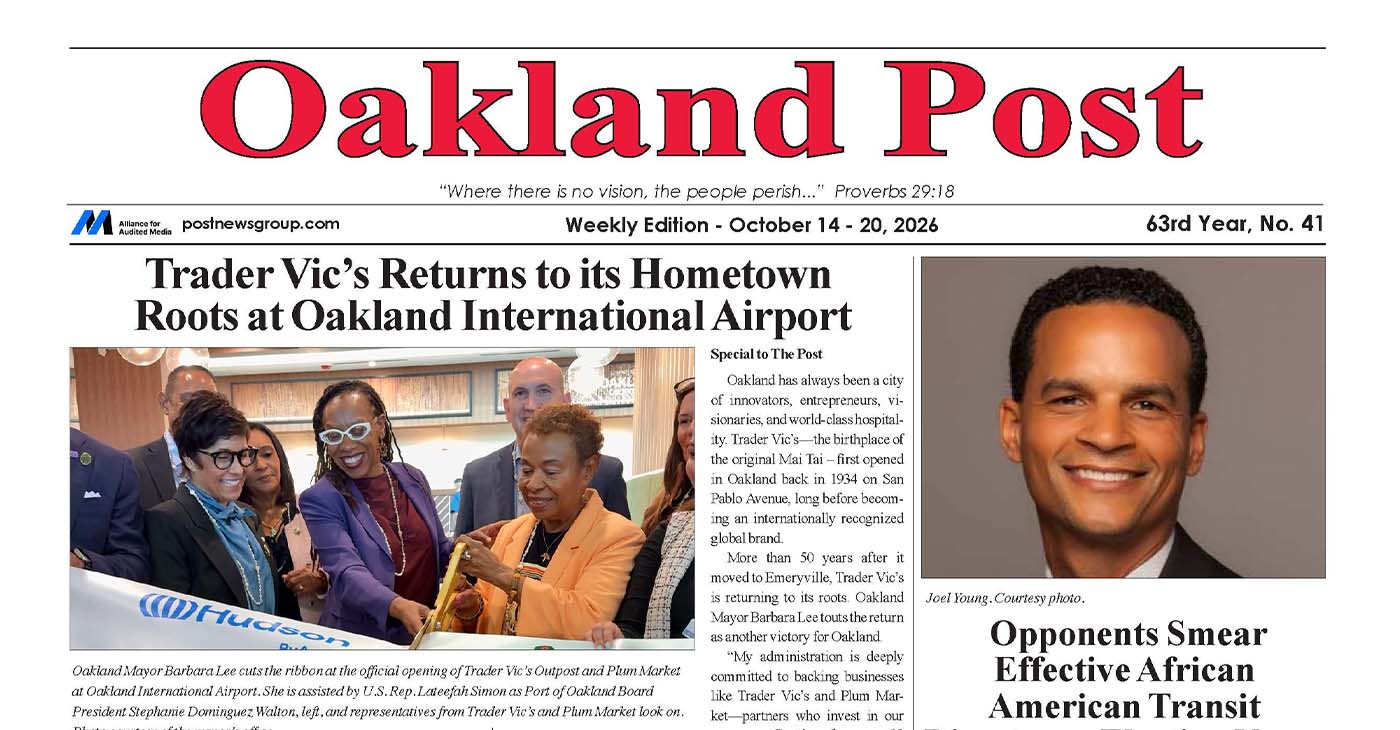
To enlarge your view of this issue, use the slider, magnifying glass icon or full page icon in the lower right corner of the browser window.
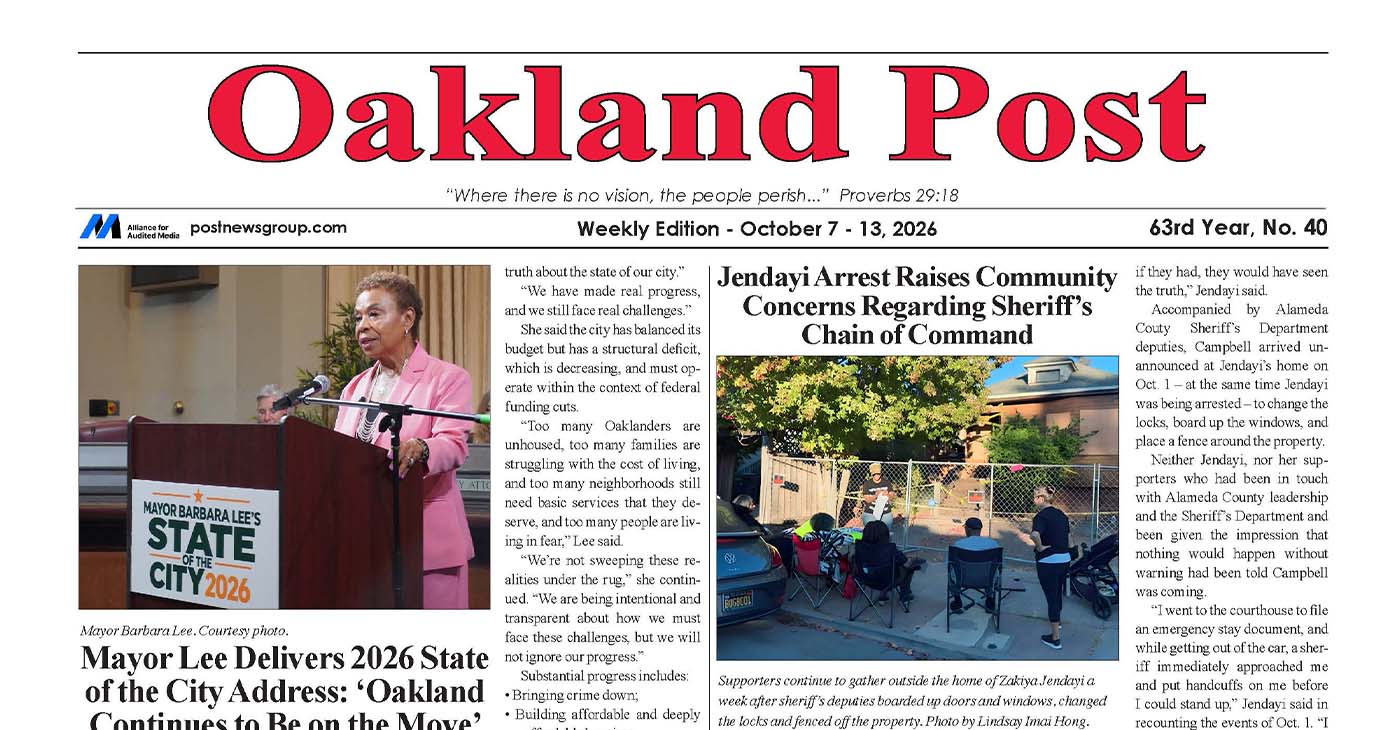
To enlarge your view of this issue, use the slider, magnifying glass icon or full page icon in the lower right corner of the browser window.
Activism
Oakland Post: Week of September 30 – October 6, 2026
The printed Weekly Edition of the Oakland Post: Week of September 30 – October 6, 2026

To enlarge your view of this issue, use the slider, magnifying glass icon or full page icon in the lower right corner of the browser window.


Mayor Barbara Lee Holds Special State of the City Address in Deep East Oakland

Practitioners of African Traditional Spirituality Offer Ancestral Reverence Ritual Oct. 31

It’s Time to Lose Weight Before the Holidays

Trader Vic’s Returns to Its Oakland Roots

Oakland Coal Terminal Backed by Trump Would Be Bigger, Dirtier Than Promised, Says Report

Opponents Smear Effective African American Transit Director as Election Nears

Oakland Post: Week of October 14 – 20, 2026

OP-ED: The Black Church Writes AI’s Next Chapter

OP-ED: The Black Church Writes AI’s Next Chapter

WCCUSD Joins Statewide Organic School Food Purchasing Cooperative

Democrats, Community Groups Back Measure EE to Change How Oakland Is Governed

Four Tips to Help You Plan a Holiday “Staycation”

Veterans Housing Project Proposed for South Richmond
PRESS ROOM: Transformative Justice Coalition 2026 Voting Rights Champion Awards Reception ‘Yesterday Is Today: The Battle For Voting Rights

Mayor Lee Delivers 2026 State of the City Address: ‘Oakland Continues to Be on the Move’

Misnamed ‘Parent’ PAC Seeks to Influence Oakland School Board Elections

Poll: Becerra Widens His Lead Over Hilton; Californians Split on Wealth Tax

Listening as a Lifeline: A Doula’s Witness to Black Maternal Health

Oakland Post: Week of September 9 – 15, 2026

County Office of Education Says OUSD Finances Are Getting Healthier, Materially Stronger

Richmond Tiny House Village Farm & Garden Set to Open Gates on Sept. 26

Mayor Lee Announces $1 Million Kaiser Permanente Grant for Pilot Program to Address Homelessness, Clean Up Public Spaces throughout Oakland

Latest Massacre in Haiti Reveals Cruelty U.S. Deportations

Zakiya Jendayi Arrested, Locked Out of Home by Sheriff’s Deputies

OPINION: Nolan Wells’ Death One of Several Signifying Racial Terror Lives on in U.S. South

BLACspace Cooperative Invites Bay Area to Experience Oakland’s Black Cultural Ecosystem Through a BLAC Map Tour + Party

Doulas Are Helping Black California Moms Navigate Pregnancy–Even as High Mortality Rates Persist

Oakland Post: Week of September 16 – 22, 2026

Oakland People’s Arms Embargo Coalition Demands End to Military Shipments Thru Oakland

Democratic Clubs Interview Candidates for Oakland School Board

The Conversation With Al McFarlane 6/23/26

Media Monday 6/22/26

LIVE! ASK ALMA! — TUES. 6.23.26 7PM EST

Car Buying Secrets: 4 Hidden Checks Before You Sign!

Is This 550 HP Charger Worth YOUR Money? AutoNetwork Review

Celebrating Juneteenth – Frederick Douglass on education and resistance

LIVE! — ASK ALMA! — TUES. 6.19.26 7PM EST

Hyundai Ioniq 5 Parking, Safety, and 360 View #shorts

2025 Ioniq 5 New Wiper & Powerful Performance! #shorts

Electric SUV Range: Is 259 Miles Enough? #shorts

EV Charging: How Fast Can You Charge an Electric Vehicle? #shorts

Biometric Cooling… Messaging Seats…Come on! 2025 Infiniti QX80 Autograph 4WD

Charged Up: Witness the Magic of a Fully Electric Car! #shorts

Range Rover Sport PHEV Included…: See What’s Inside This Luxury SUV! #shorts

Invisible Hood View: Perfect Parking with X-Ray Vision! #shorts
-
 Economy4 weeks ago
Poll: Becerra Widens His Lead Over Hilton; Californians Split on Wealth Tax
-
 Black History3 weeks ago
Listening as a Lifeline: A Doula’s Witness to Black Maternal Health
-
 Business4 weeks ago
County Office of Education Says OUSD Finances Are Getting Healthier, Materially Stronger
-
 Lead Story3 weeks ago
Zakiya Jendayi Arrested, Locked Out of Home by Sheriff’s Deputies
-
 Art4 weeks ago
BLACspace Cooperative Invites Bay Area to Experience Oakland’s Black Cultural Ecosystem Through a BLAC Map Tour + Party
-
 Black History4 weeks ago
Doulas Are Helping Black California Moms Navigate Pregnancy–Even as High Mortality Rates Persist
-

 Business4 weeks ago
From Historic Memories to New Possibilities: Oakland Celebrates Coliseum 60
-
 Community4 weeks ago
Asm. Corey Jackson Announces Launch of 24-Hour Childcare in His District
