
National
Life of Black Man Displayed in Zoo Matters Too


Pamela Newkirk, journalist and author of the book said that, “For more than a hundred years, the story of Ota Benga was told by the same people who exploited him, and that narrative has stuck all of this time.” (Courtesy Photo)
By Jazelle Hunt
NNPA Washington Correspondent
WASHINGTON (NNPA) – An ordinary Internet search on Ota Benga yields black-and-white photos of a petite Black man, almost naked, smiling with a row of spiky teeth. Some accounts say he achieved fame in the early 1900s as part of controversial human zoo exhibitions in the United States.
But a look below the surface reveals a true tale of extreme racism, cruelty, and widespread collusion in the kidnapping and dehumanization of a man.
This is the meat of Spectacle: The Astonishing Life of Ota Benga, a shocking historical biography of Benga’s experience as a museum attraction – most notably as “the pygmy at the [Bronx] Zoo,” on display in an enclosure with an orangutan in 1906. Benga was later relocated to Lynchburg, Va, where he committed suicide.
Due on book stands in June, the historical biography retraces Benga’s journey using primary sources such as published articles, museum archives, and first-person writings from Samuel Phillips Verner, the man who abducted Benga and brought him across the Atlantic.
“So much of what I read in the archives was so chilling,” says Pamela Newkirk, journalist and author of the book. “And I guess the thing that surprised me to was the extent to which the statements of elite men and institutions go unquestioned. For more than a hundred years, the story of Ota Benga was told by the same people who exploited him, and that narrative has stuck all of this time.”
Currently, Ota Benga: The Pygmy in the Zoo, published in 1993, is the book of record for learning more about Benga’s life and death. It tells the story of Verner’s exploits as a missionary in the Congo, his fascination with the racist scientific theories of the day, and his guilt over his treatment of Benga, all culminating in a tenuous friendship between Benga and Verner. This book’s co-author is Verner’s grandson, who died in 2013.
As Newkirk gathered primary sources, she was surprised to find so many news articles, scholarly studies, and first-person accounts, written in real-time as Benga’s life unfolded. And despite clear evidence, some academics were reluctant to have the narrative disturbed.
“There were some institutions that were not as forthcoming as one would hope,” she says. “But I did find a lot more than I ever thought I would. Even if one institution had withheld information, there was a lot more, so I wasn’t overly reliant on one place.”
In reading, she began to understand why some sources seemed so guarded.
“One of the main things I found is that he was hunted, like one would hunt an animal,” Newkirk says, referencing an article Verner had written about his method for capturing the people derogatorily called pygmies. “He was in no way complicit in his exhibition, and he resisted being there. Stories have been told as if he was a happy subject of that degradation.”
According to Newkirk’s research, scientists and anthropology pioneers were among the first and loudest to defend and justify Benga’s confinement. Newkirk explains that the theme of the Louisiana Purchase Exhibition in 1904 – also known as the St. Louis World’s Fair, the first place Benga was held captive – was human advancement. Many indigenous people from around the world were kidnapped or coerced into performing in exhibits depicting man’s progress from “savage” settlements to the “civilized” White Western world.
“It was all predicated on notions of science and anthropology. When The New York Times defended the [Bronx Zoo] exhibition, they defended it in the name of science,” she explains. “There were questions of whether or not he was human, whether he was The Missing Link. It was the most eminent men of New York City who defended and supported this exhibition.”
Newkirk, who is also the director of undergraduate studies at New York University, where she teaches about media representation of marginalized groups, draws parallels between the racist beliefs that enabled what happened to Benga, and today’s racial climate.
She says, “The refrain of ‘Black lives matter’ rings in your ear when you see what people are capable of doing. They said that the African is so close to the ape…. When you look at what was considered ‘educated’ and ‘modern’ and ‘advanced,’ those were the views that were considered progressive in that period.
“This is so deeply rooted in American society – this idea that Black people…are animals. My book is historical…but I leave it to others to see how deeply embedded these ideas are and how they became…the foundation for policy.”
Spectacle: The Astonishing Life of Ota Benga goes on sale June 2. Pre-orders are available now through Amazon and Barnes & Noble.
Newkirk hopes that her book is instrumental in correcting the historical record of Benga’s life in the United States.
“The most important thing for me is to correct the historical record. It’s just such an insult that the man who’s most responsible for exploiting him has been depicted as his friend and savior for a hundred years,” she says.
“[Benga’s] life was worthy of this kind of exploration, because Black lives do matter. I think we owe that to Ota Benga.”
###






Activism
Oakland Post: Week of April 8 – 14, 2026
The printed Weekly Edition of the Oakland Post: Week of April 8 – 14, 2026
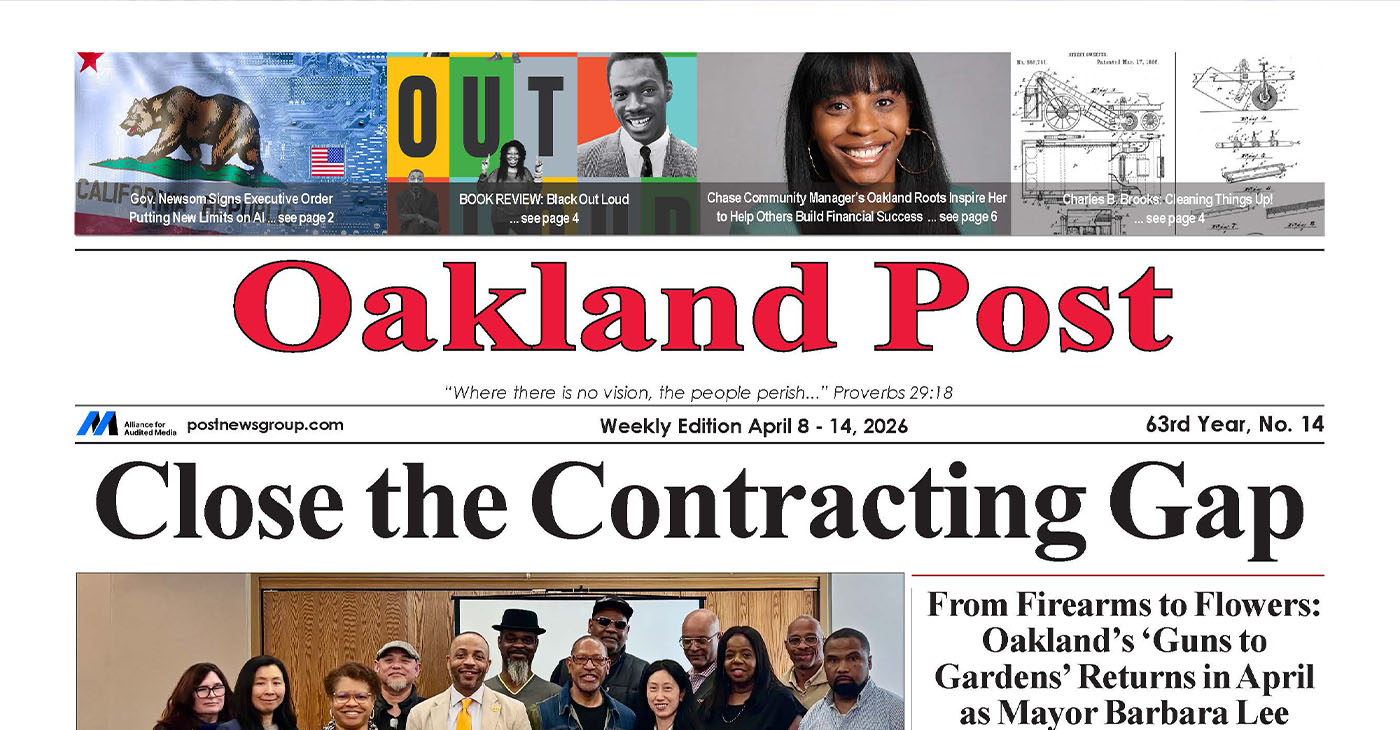
To enlarge your view of this issue, use the slider, magnifying glass icon or full page icon in the lower right corner of the browser window.
Activism
Oakland Post: Week of April 1 – 7, 2026
The printed Weekly Edition of the Oakland Post: Week of April 1 – 7, 2026
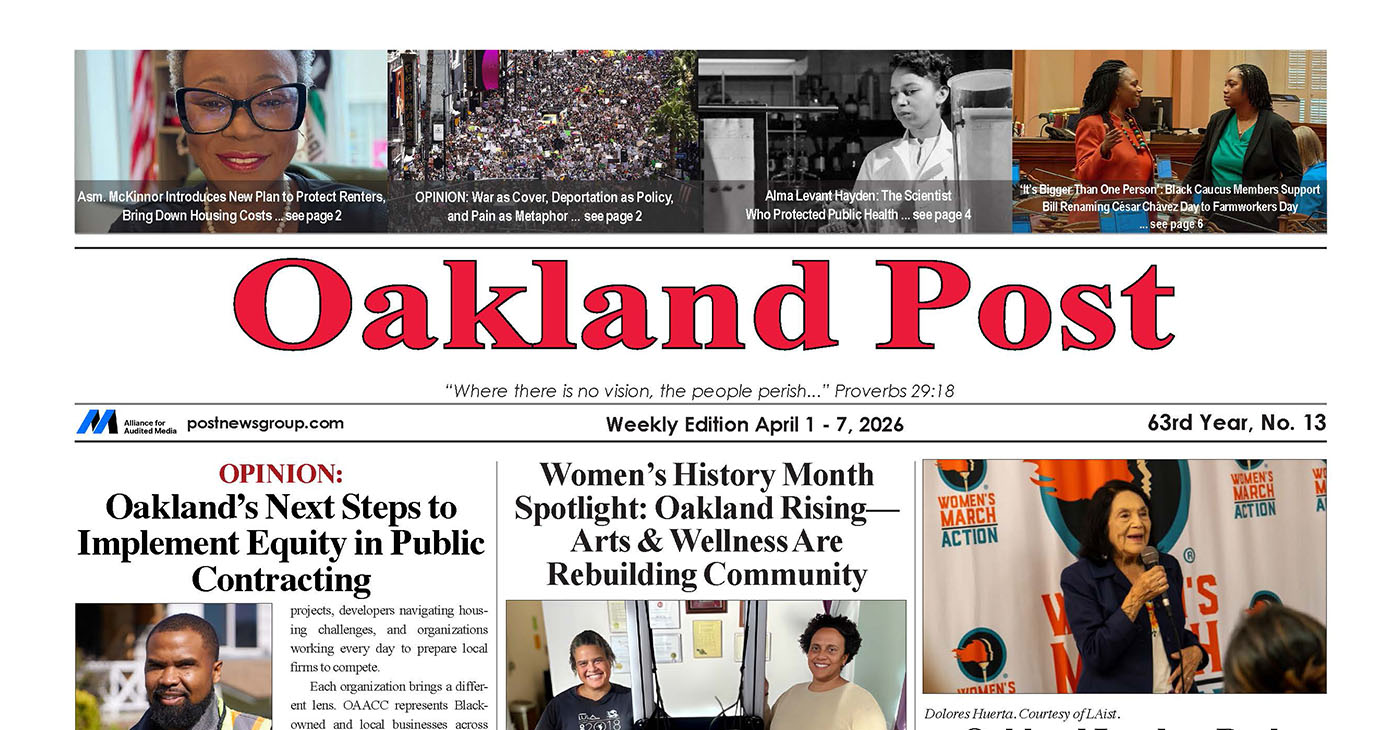
To enlarge your view of this issue, use the slider, magnifying glass icon or full page icon in the lower right corner of the browser window.
#NNPA BlackPress
Black Artists in America, Installation Three Wraps at the Dixon Gallery and Gardens
TRI-STATE DEFENDER — With 50+ paintings, sculptures and assemblages, the exhibit features artists like Varnette Honeywood from Los Angeles, whose pieces appeared in Bill Coby’s private collection (before they were auctioned off) and on “The Cosby Show.” Also included are works by Alonzo Davis, another Los Angeles artist who opened one of the first galleries there where Black Artists could exhibit.

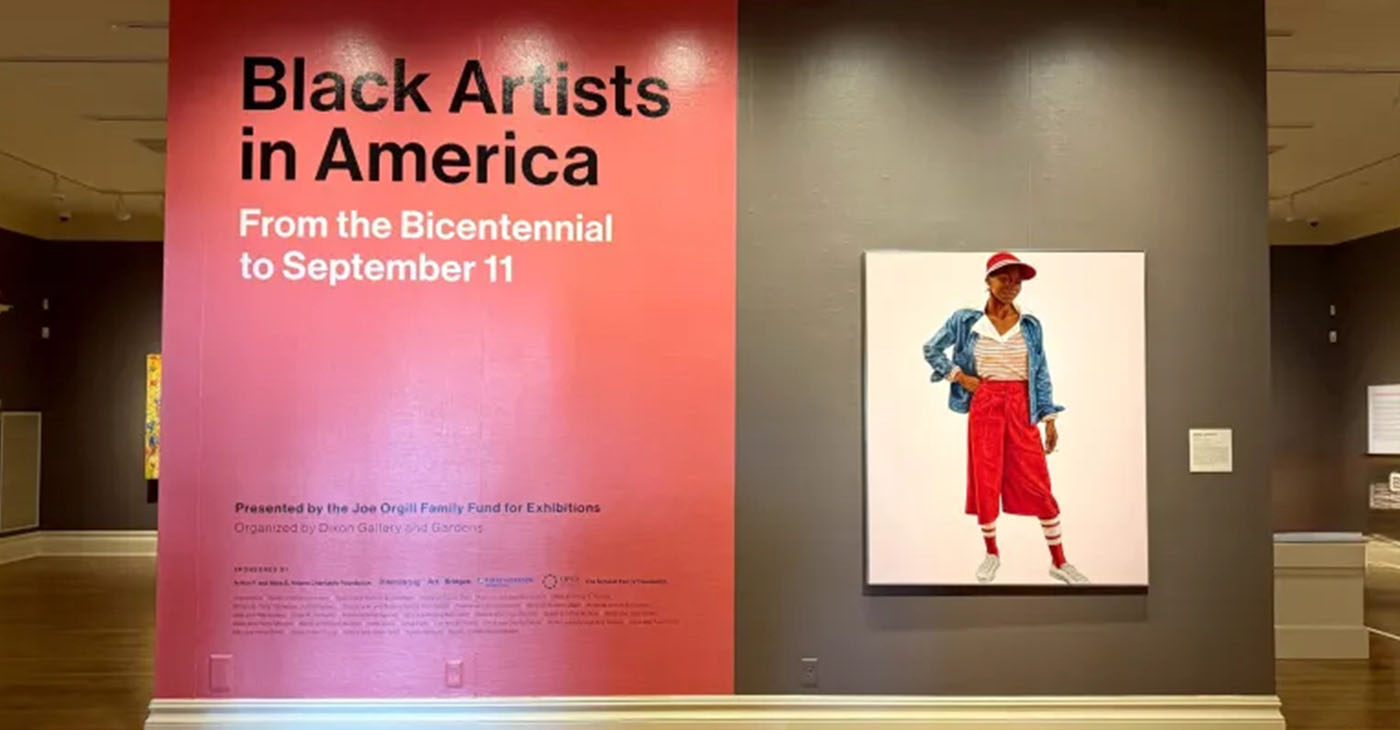
By Candace A. Gray | Tri-State Defender
The tulips gleefully greet those who enter the gates at the Dixon Gallery & Gardens on an almost spring day. More than 650,000 bulbs of various hues are currently on display. And they are truly breathtaking.
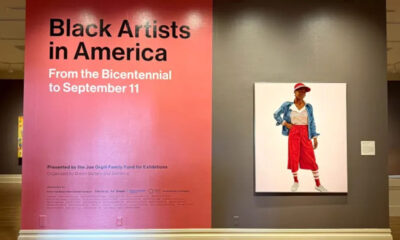
Inside the gallery, and equally as breathtaking, is the “Black Artists in America, From the Bicentennial to September 11” exhibit, which runs through Sunday, March 29. This is the third installment of a three-part series that started years ago and illustrates part of the Black experience through visual arts in the 20th century.
“This story picks up where part two left off,’’ said Kevin Sharp, the Linda W. and S. Herbert Rhea director for the Dixon. “This era is when we really start to see the emergence of these important Black artists’ agency and freedom shine through. They start to say and express what they want to, and it was a really beautiful time.”
With 50+ paintings, sculptures and assemblages, the exhibit features artists like Varnette Honeywood from Los Angeles, whose pieces appeared in Bill Coby’s private collection (before they were auctioned off) and on “The Cosby Show.” Also included are works by Alonzo Davis, another Los Angeles artist who opened one of the first galleries there where Black Artists could exhibit.
“Though [Davis] was from LA, he actually lived in Memphis for a decade,” said Sharp. “He was a dean at Memphis College of Art, and later opened the first gallery in New York owned and operated by black curators.”
Another featured artist is former NFL player, Ernie Barnes. His work is distinctive. Where have you seen one of his most popular paintings, Sugar Shack? On the end scene and credits of the hit show “Good Times.” His piece Saturday Night, Durham, North Carolina, 1974 is in this collection.
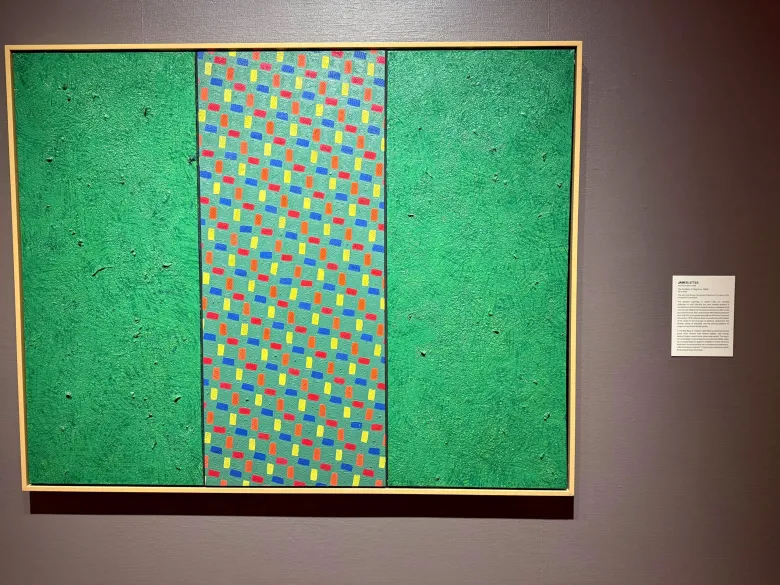
Memphis native James Little’s “The War Baby: The Triptych” is among more than 50 works featured in “Black Artists in America, From the Bicentennial to September 11” at the Dixon Gallery & Gardens, the final installment of a three-part series highlighting the impact and evolution of Black artists through 2011.
The exhibit features other artists with Memphis ties, including abstract painter James Little, who was raised in a segregated Memphis and attended Memphis Academy of Art (before it was Memphis College of Art). He later moved to New York, became a teacher and an internationally acclaimed fixture in the art world in 2022 when he was named a Whitney Biennial selected artist at the Whitney Museum of American Art in New York.
Other artists like Romare Bearden, who had a Southern experience but lived up North, were featured in all three installments.
“During this period of time, he was a major figure,” said Sharp. “He wrote one of the first books on the history of African American art during a time when there were more Black academics, art teachers, more Black everything!”
Speaking of Black educators, Sharp said the head curator behind this tri-part series and Dixon’s partner in the arts is Earnestine Jenkins, Ph.D., an art history professor at the University of Memphis, who also earned a Master of Arts degree from Memphis State University (now UofM). “We began working with Dr. Jenkins in 2018,” he said.
Sharp explained that it takes a team of curators, registrars, counterparts at other museums, and more, about three years to assemble an exhibit like this. It came together quite seamlessly, he added. Each room conjured up more jaw-dropping “wows” than the one before it. Each piece worked with the others to tell the story of Black people and their collective experience during this time period.
One of the last artists about whom Sharp shared information was Bettye Saar, who will turn 100 years old this year. She’s been working in Los Angeles for 80 years and is finally getting her due. Her medium is collages or assemblages, and an incredible work of hers is on display. She’s married to an artist and has two daughters, also artists.
The exhibit catalogue bears some of these artists’ stories, among other scholarly information.
The exhibit, presented by the Joe Orgill Family Fund for Exhibitions, is culturally and colorfully rich. It is a must see and admission to the Dixon is free.
Visit https://www.dixon.org/ to learn more.
Fun Facts: An original James Little design lives in the flooring of the basketball court at Tom Lee Park, and he makes and mixes his own paint colors.


WORK FROM HOME
Home-based business with potential monthly income of $10K+ per month. A proven training system and website provided to maximize business effectiveness. Perfect job to earn side and primary income. Contact Lynne for more details: Lynne4npusa@gmail.com 800-334-0540


Oakland Post: Week of April 8 – 14, 2026

Oakland Post: Week of April 1 – 7, 2026

Black Artists in America, Installation Three Wraps at the Dixon Gallery and Gardens

Grief, Advocacy, and Education: A Counselor Reflects on Black Maternal Health

Future of Florida’s Black History Museum in Limbo

New Research Shows the Many Benefits of Early Learning

South Hampton K-8 Students Among Top 10 Finalists for Samsung’s ‘Solve for Tomorrow’ Competition

Cuba: No Negotiation with US on the President or Political System

Brooklyn Academy of Music Names Jamaican-Born Tamara McCaw as President

Trinidad & Tobego – U.S. Launches WhatsApp Channel for American Citizens in the Country

Oakland Post: Week of March 18 – 24, 2026

AI Innovation vs. Ethics and Environmental Impact

AI, Web3, and Digital Reparations

What If You Owned Your AI Agent?

Season 7, Episode 3 – January Reporter’s Roundtable 📱

Reflecting on Black History Milestones in Birmingham AL

Oakland Post: Week of February 25 – March 3, 2026

Oakland Post: Week of March 4 – 10, 2026

PRESS ROOM: NBA Hall of Fame Nominee Terry Cummings Joins 100 Black Men of DeKalb County to Launch Victory & Values Initiative

Trump’s MAGA Allies are Creating Executive Order Plan to Steal the 2026 Midterms
Oakland Post: Week of March 18 – 24, 2026

U.S. manufacturing rebounds – how foundry services are adapting to rising demand

Oakland Post: Week of March 11 -17, 2026

Poll Shows Support for Policies That Help Families Afford Child Care

OP-ED: One Hundred Years of Black Workers Telling the Truth

Advancements in solar technology that are changing the way we power the world

Financial Wellness and Mental Health: Managing Money Stress in College

Woman’s Search for Family’s Roots Leads to Ancestor John T. Ward – A Successful Entrepreneur and Conductor on the Underground Railroad

COMMENTARY: Women of Color Shape Our Past and Future

PRESS ROOM: Civil Rights TV Launches in Selma as the World’s First 24/7 Civil Rights Television Network

Hyundai Ioniq 5 Parking, Safety, and 360 View #shorts

2025 Ioniq 5 New Wiper & Powerful Performance! #shorts

Electric SUV Range: Is 259 Miles Enough? #shorts

EV Charging: How Fast Can You Charge an Electric Vehicle? #shorts

Biometric Cooling… Messaging Seats…Come on! 2025 Infiniti QX80 Autograph 4WD

Charged Up: Witness the Magic of a Fully Electric Car! #shorts

Range Rover Sport PHEV Included…: See What’s Inside This Luxury SUV! #shorts

Invisible Hood View: Perfect Parking with X-Ray Vision! #shorts

AI Is Reshaping Black Healthcare: Promise, Peril, and the Push for Improved Results in California

ESSAY: Technology and Medicine, a Primary Care Point of View

Sanctuary Cities

The RESISTANCE – FREEDOM NOW

STATE OF THE PEOPLE: Freddie

ECONOMIC BOYCOTT DAY!!!!!

I told You So

-
 Activism3 weeks ago
Oakland Post: Week of March 18 – 24, 2026
-
 Activism4 weeks ago
Oakland Post: Week of March 11 -17, 2026
-
 Advice3 weeks ago
Financial Wellness and Mental Health: Managing Money Stress in College
-
 #NNPA BlackPress3 weeks ago
Brooklyn Academy of Music Names Jamaican-Born Tamara McCaw as President
-
 #NNPA BlackPress2 weeks ago
Grief, Advocacy, and Education: A Counselor Reflects on Black Maternal Health
-
 #NNPA BlackPress2 weeks ago
New Research Shows the Many Benefits of Early Learning
-
 #NNPA BlackPress2 weeks ago
Black Artists in America, Installation Three Wraps at the Dixon Gallery and Gardens
-

 Advice4 weeks ago
Women & Wealth: Tips for Navigating Your Lifelong Financial Journey
