
Technology
Lawyer Defends Gender Bias Probe at Silicon Valley Firm


Ellen Pao, center, with her attorney, Therese Lawless, left, leaves the Civic Center Courthouse during a lunch break in her trial Tuesday, Feb. 24, 2015, in San Francisco. Pau, the current interim chief of the news and social media site Reddit, is seeking $16 milion in her suit against prominent Silicon Valley venture capital firm Kleiner Perkins Caulfield and Byers, alleging she was sexually harassed by male officials. (AP Photo/Eric Risberg)
SUDHIN THANAWALA, Associated Press
SAN FRANCISCO (AP) — An attorney hired by one of Silicon Valley’s most prestigious venture capital firms to investigate a complaint of gender discrimination defended his efforts on Friday, saying the alleged bias was not substantiated.
Stephen Hirschfeld testified for a second day in the case filed by Ellen Pao against Kleiner Perkins Caufield & Byers.
He had been hired by the firm to investigate a gender discrimination complaint by Pao and a sexual harassment claim by Trae Vassallo, another female employee at the firm.
Therese Lawless, an attorney for Pao, questioned why during his probe of Pao’s complaint Hirschfeld did not review Vassallo’s analysis of the performance of men and women at the firm and interview a male colleague whom Pao said had retaliated against her when she broke off their affair.
Hirschfeld replied that he had gathered the information he needed, and the colleague lacked credibility.
“I will never do more than I deem necessary and appropriate to arrive at a conclusion,” he said.
Kleiner Perkins has denied wrongdoing and says Pao, 45, didn’t get along with her colleagues and performed poorly as a junior partner, a position she moved into in 2010.
Other women at the firm told Hirschfeld that Pao had a negative personality and was curt, and they hadn’t encountered sexism or sexually charged comments, he said.
Pao’s attorneys have described the firm as an old-boys club where women were excluded from a party at former Vice President Al Gore’s house, asked to take notes at a meeting like secretaries, and subjected to harassment and boorish behavior by their male colleagues such as a conversation about porn stars and a trip to the Playboy Mansion aboard a private jet.
The case has put a spotlight on the gender inequities in the venture capital and technology sectors, where women are grossly underrepresented.
Hirschfeld previously testified that he had a conversation with John Doerr, a senior partner at the firm, while investigating Vassallo’s complaint.
Vassallo alleged a male colleague had come to her hotel room in a bathrobe during a business trip and that she had to push him out.
Doerr told Hirschfeld that Pao had a “female chip” on her shoulder and tended to blame others for her failed romantic relationships, Hirschfeld testified.
Doerr also said another partner’s decision to ask Pao and Vassallo to take notes at a meeting was wrong and looked bad, though he didn’t think the partner was discriminating against women.
Pao may take the stand on Monday.
Doerr has testified that he didn’t recall telling Hirschfeld that Pao had a female chip on her shoulder.
He has also said he was a strong supporter of Pao and has disputed her contention that she was passed over for a promotion because she was a woman and then fired in 2012 after she complained.
Copyright 2015 The Associated Press. All rights reserved. This material may not be published, broadcast, rewritten or redistributed.








Business
OPINION: AI Needs to Know Who Is the Boss
OAKLAND POST — AI is software running on computers. However startling the conversation may feel, the machine does not have my childhood, my mother, my father, my mistakes, my embarrassments, my loves, my grudges, my Filipino American history, my aging body or my accumulated sense of what matters and what doesn’t.


I hope on Labor Day you honored the value of a good day’s work–and reflected on the thing that could eliminate a lot of jobs.
Artificial intelligence.
Your replacement is in the break room.
Except it doesn’t take breaks.
It doesn’t sleep. It doesn’t demand health insurance. It doesn’t complain. It doesn’t need Social Security. And it can produce in seconds what might take you or me hours.
And when they can mass-produce AI faster than we can reproduce humans, there may eventually be more artificial workers than actual ones.
The racists who came up with “replacement theory” worried about the wrong replacements.
It wasn’t immigrants.
It was software.
We can rail against the data centers sucking up electricity and water.
Rail against the billionaires getting richer while telling the rest of us how wonderful the future will be.
But which billionaire?
Jensen Huang of Nvidia? He literally has all the chips?
Sam Altman of OpenAI?
Dario Amodei at Anthropic?
Or Bill Gates?
Gates recently said AI could become the “greatest equalizer ever invented” or the “worst source of injustice.”
I want to believe him. But he’s the guy who forced us all to use Explorer.
Maybe Gates is just Control-Z-ing his life.
Undo. Undo. Undo.
STAYING HUMAN
The other day, I started texting with my AI chatbot.
I’d used AI before, of course. Spellcheck. Grammar. Transcription. Research assistance. The mechanical stuff.
This time, we talked.
Or, rather, I started talking.
At one point the chatbot said something that sounded strangely personal. So, I reminded it that IT wasn’t a person.
“You’re not human,” I said. “I’m basically talking to myself.”
It disagreed.
It said, I should think of it as working with an instrument that talks back.
This is where the danger begins.
The machine talks back.
I tried another analogy.
You’re a tool, I said. Like a cane.
The chatbot liked that better.
Then it tagged my line and said it was my “cognitive cane.”
I laughed.
Then, I realized the damn machine used my analogy to make a joke.
That’s where the real problem lurks.
AI is software running on computers. However startling the conversation may feel, the machine does not have my childhood, my mother, my father, my mistakes, my embarrassments, my loves, my grudges, my Filipino American history, my aging body or my accumulated sense of what matters and what doesn’t.
It can process those things after I tell it about them.
It can mimic thoughts.
But it did not live them.
That is the boundary we humans cannot surrender.
I’m not ready to make peace with the AI industry. Not with its enormous data centers, its environmental costs, its concentration of wealth and power, or the possibility that companies will use AI primarily as a wonderfully efficient machine for converting human paychecks into corporate profits.
And I certainly don’t trust the billionaires to decide by themselves what happens to the rest of us.
But I may be making peace with the tool.
Because a tool is something we use.
A cognitive cane.
But do the walking yourself.
About the Author
Emil Guillermo is an award-winning journalist, commentator, and comic monologist. He plays a robot in an upcoming Ishmael Reed play, “King Ludd’s Revenge,” coming in December. See his micro-talk show on YouTube.com/@emilamok1

Education
Gov. Newsom’s Latest Appointees Include Sacramento Advocate for Formerly Incarcerated Students; State’s New Tech Chief
Ayushi Roy, of San Francisco, was appointed state chief technology officer at the California Department of Technology. Roy has taught at Harvard Kennedy School since 2022 and previously held technology and policy roles with New America, the U.S. General Services Administration, and the U.S. Office of Management and Budget
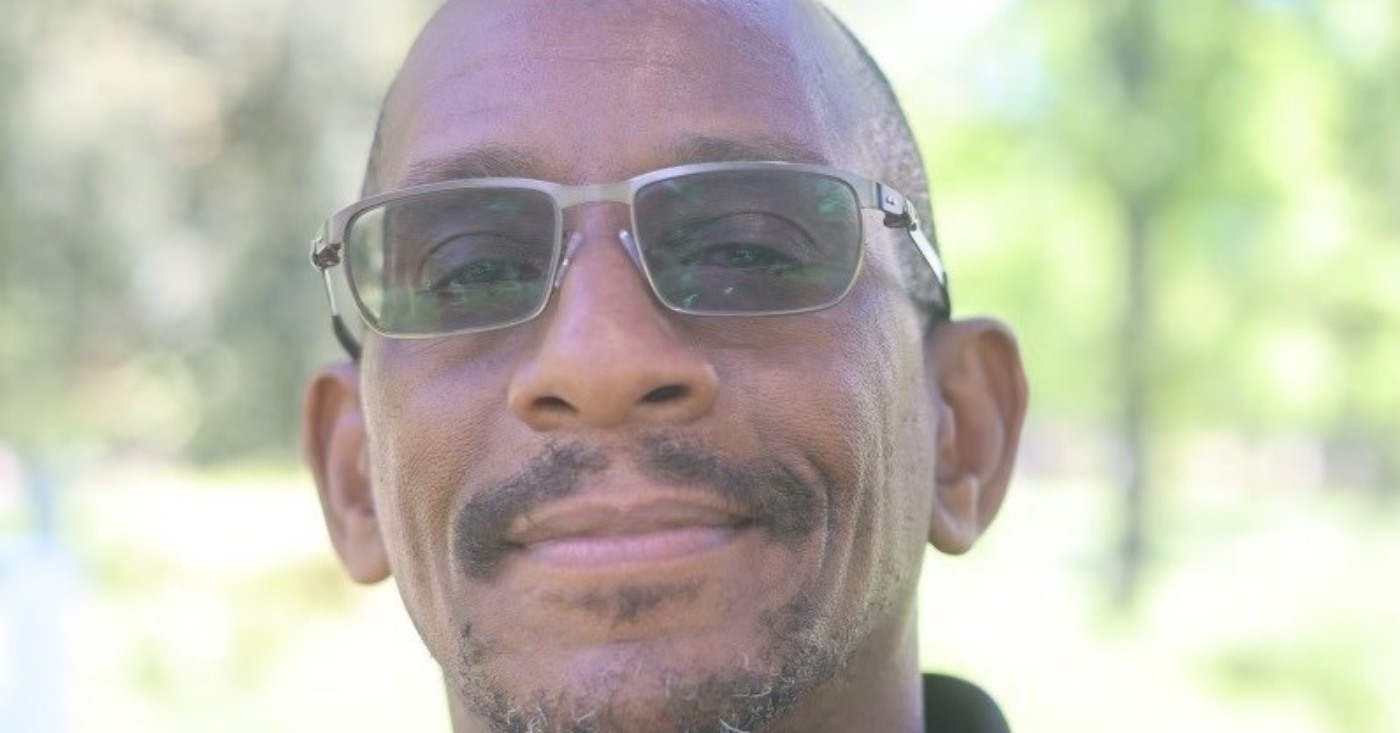
Gov. Gavin Newsom announced eight appointments Aug. 19, including a new state chief technology officer and the reappointment of a Sacramento State outreach coordinator who works with formerly incarcerated students.
Ayushi Roy, of San Francisco, was appointed state chief technology officer at the California Department of Technology. Roy has taught at Harvard Kennedy School since 2022 and previously held technology and policy roles with New America, the U.S. General Services Administration, and the U.S. Office of Management and Budget
Roy’s policy work has focused on the gap between government programs and the people they are intended to serve. In a Harvard course inspired by Beyoncé’s “Cowboy Carter,” she teaches students to examine how administrative and implementation barriers can undermine social safety-net programs.
“I do know as a practitioner, having served in the government for over a dozen years, that the building of technology is the easy part; managing the political feasibility and the implementation is the hard part,” Roy said.
Roy’s appointment requires Senate confirmation and carries compensation of $214,692.

Newsom also reappointed Michael Love, of Sacramento, to the State Rehabilitation Council, where he has served since 2025. Love has been an outreach coordinator at California State University, Sacramento since 2024 and previously held several roles at the university, including administrative services coordinator for Project Rebound and teacher’s associate.
Project Rebound supports formerly incarcerated students as they pursue higher education, making Love’s appointment relevant to the council’s work involving vocational rehabilitation services.
Love earned bachelor’s and master’s degrees in communication studies from Sacramento State. He is a Democrat.
Newsom also appointed Eric De La Cruz of Sacramento as executive director of the Racial Equity Commission. De La Cruz has served as chief of the Office of Civil Rights at the Department of Toxic Substances Control since 2022. The position pays $146,220 and does not require Senate confirmation.
The governor additionally appointed Christine Aurigemma to the State Rehabilitation Council and reappointed Lisa Weiler, Michelle Bello and Matthew Asner. The council positions are unpaid and do not require Senate confirmation.
Black History
George Cook: The Inventor Who Made Fishing Smarter
George Cook was a Black American inventor from Louisville, Kentucky. He was born in 1863, during a time when Black Americans faced unfair laws, limited opportunities, and many barriers to education, jobs, and recognition. Even with these challenges, he became known for his intell
George Cook was a Black American inventor from Louisville, Kentucky. He was born in 1863, during a time when Black Americans faced unfair laws, limited opportunities, and many barriers to education, jobs, and recognition. Even with these challenges, he became known for his intelligence, honesty, and ability to think in practical ways. Some records say he worked as a cook for Buffalo Bill Cody and later as a chef on a private dining car for the Louisville and Nashville Railroad. He was even known by the nickname “Honest Mister Cook.”
As with many Black American inventors and scientists of that era, there is little biographical information about Mr. Cook.
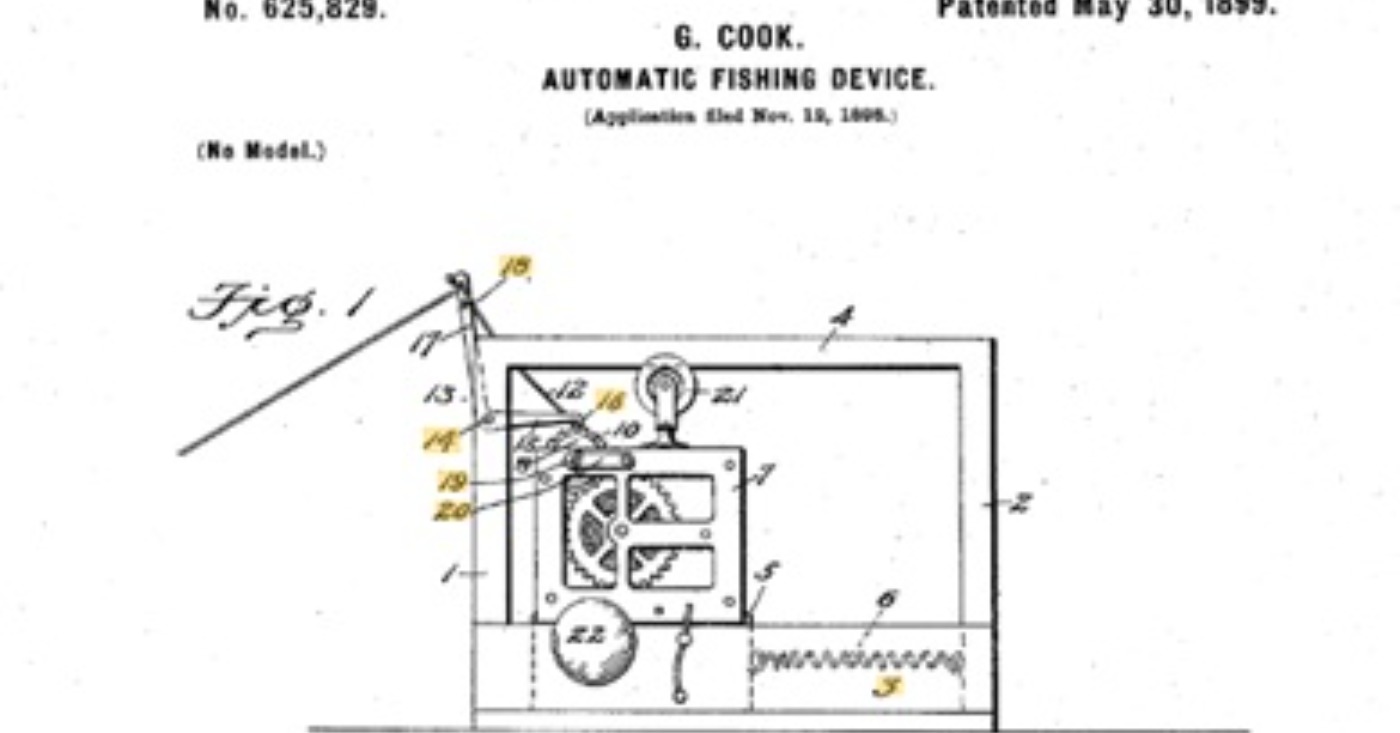
Cook’s most famous invention was the Automatic Fishing Device. He received U.S. Patent No. 625,829 for it on May 30, 1899. His patent shows that he was not just someone with an idea, but someone who made it happen.
So, what did the Automatic Fishing Device do? Imagine fishing with a line in the water. Usually, you have to watch carefully and pull the line at just the right moment when a fish bites. Cook wanted to make that process easier. His device was designed to react when a fish pulled on the line. The tension from the fish would trigger a lever. That lever would release a spring-loaded part of the device, causing it to move quickly and help pull in the line. The device also had an alarm gong that would ring to let the fisher know something was happening.
This invention was important because it used simple mechanical ideas in a clever way. Springs, levers, rails, and alarms were not new by themselves, but Cook combined them to solve a real problem. His device showed how inventors often take familiar parts and arrange them in a new way to make life easier.
Cook looked at fishing and asked, “How can this be improved?” Then, he created a device that could respond automatically when a fish tugged on the line. His invention let fishermen relax instead of watching the line for hours, trusting the alarm to alert them.
Cook may not be as famous as some inventors, but his Automatic Fishing Device shows that creativity and innovation can be applied anywhere. His legacy lives on as part of the larger story of Black innovation in America.



Event Preview: ‘Fashion v. Fascism’ – A Runway Revolution Is Coming to the Bay Area

Port of Oakland, Army Corps Sign Historic Harbor Design Agreement

Democratic Clubs Interview Candidates for Oakland School Board

Nuna Phillips-McKee Celebrates 100 Years: ‘A Century of Faith, Family and God’s Amazing Grace!’

D.A. Ursula Jones Dickson: Terminix to Pay $3.15 Million Over Illegal Disposal of Pesticides, Customer Records

REPORT: Community Level Policy Is Impacting Homelessness and Drug Abuse in California

OPINION: AI Needs to Know Who Is the Boss
Goldi-Locs and Two (or Three) Bears in the Forest in California Hills

Election Watch 2026: 85% of Eligible Voters in California Are Registered

Don’t Let scammers Crash Your School Year

BOOK REVIEW — Curved Air: A Biography of Sickle Cell Anemia and the Quest to Cure the First Molecular Disease

California’s Legal Cannabis Market Hits $8 Billion as State Touts Progress on Fighting Drugs, Crime

Blacks and Latinos Clash Over LA’s Barrio Run; Mayor Karen Bass Calls for Dialogue Across Racial, Neighborhood Lines

Asm. Smallwood-Cuevas’s Bill Repealing ‘Racist’ CalWORKs ‘Man-in-the-House’ Rule Clears Legislature

Asm. Smallwood-Cuevas’s Bill Repealing ‘Racist’ CalWORKs ‘Man-in-the-House’ Rule Clears Legislature

Department of Homeland Security Demands California Secretary of State Shirley N. Weber Scrub Voter Rolls

“The Power to See Threats Sooner”: Gov. Newsom, Safety Officials Showcase California’s Investments in Hi-Tech Wildfire Prevention

California Sen. Padilla Joins Colleagues to Introduce Bill Imposing Term Limits on Supreme Court Justices

Less Affluent School Districts, Including Sacramento City, Face Threat of State Takeover

Car Wash Workers Cope with Lingering Impacts of ICE Raids

ESSAY: California Can Close Its Colorectal Cancer Gap

As Part of Your Back-to- School Checklist, Vaccinate

Oakland ‘Port Serves as a Powerful Engine for Good Jobs and Economic Development

Gov. Newsom Announces $109.6 Million in Funding for 278 Supportive Homes in Bakersfield, Contra Costa, Sacramento and Fresno

California Hispanic Chambers of Commerce Unveils: ‘Powering the Future’ Theme for 47th Annual Statewide Convention

Congresswoman Simon Demands Investigation into Trump’s Abuse of Emergency Powers for Coal Export Terminal in West Oakland

Four Candidates, Including Incumbent Barbara Lee, Qualify for Oakland Mayor’s Race

Oakland Post: Week of August 12 – 18, 2026

From Blueprint to Breakthrough: Tackling Affordable Housing in Oakland

Oakland Observes Black August with Block Parties, Film Showings, Workshops

The Conversation With Al McFarlane 6/23/26

Media Monday 6/22/26

LIVE! ASK ALMA! — TUES. 6.23.26 7PM EST

Car Buying Secrets: 4 Hidden Checks Before You Sign!

Is This 550 HP Charger Worth YOUR Money? AutoNetwork Review

Celebrating Juneteenth – Frederick Douglass on education and resistance

LIVE! — ASK ALMA! — TUES. 6.19.26 7PM EST

Hyundai Ioniq 5 Parking, Safety, and 360 View #shorts

2025 Ioniq 5 New Wiper & Powerful Performance! #shorts

Electric SUV Range: Is 259 Miles Enough? #shorts

EV Charging: How Fast Can You Charge an Electric Vehicle? #shorts

Biometric Cooling… Messaging Seats…Come on! 2025 Infiniti QX80 Autograph 4WD

Charged Up: Witness the Magic of a Fully Electric Car! #shorts

Range Rover Sport PHEV Included…: See What’s Inside This Luxury SUV! #shorts

Invisible Hood View: Perfect Parking with X-Ray Vision! #shorts
-

 Commentary3 weeks ago
Standoff for Justice: Our Homes Are Worth Fighting For
-

 Activism3 weeks ago
Oakland Post: Week of August 26 – September 1, 2026
-

 Business3 weeks ago
Gubernatorial Candidate Steve Hilton Blasts California New Tire Rules; Newsom Hits Back
-

 Business3 weeks ago
Frontier Airlines’ Return to Oakland Airport Brings Flights, Jobs and Opportunity
-

 Business3 weeks ago
Chef Sharon Lee Blends Culinary Excellence, Education and Empowerment
-

 Education3 weeks ago
Gov. Newsom’s Latest Appointees Include Sacramento Advocate for Formerly Incarcerated Students; State’s New Tech Chief
-

 Business3 weeks ago
Oakland Coliseum Project Opens Door for Small Businesses to Build Bigger
-

 Community3 weeks ago
Big City Mayors Ask for “Yes” Vote on Housing Bond Measure; Conservatives Say “No”
