
Health/Environment
Latinx Mothers Experienced Jump in Preterm Births After 2016 Election

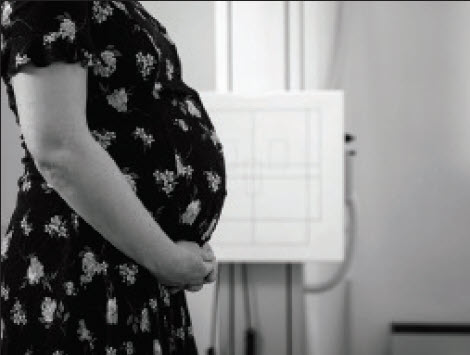
Latina mothers living in the United States experienced a significant jump in preterm births in the nine months following the Nov. 8, 2016, election, according to a study by researchers at UC Berkeley and the Johns Hopkins Bloomberg School of Public Health.
The analysis, based on U.S. government data on more than 33 million live births in the country, found an excess of 2,337 preterm births to U.S. Latina mothers, compared to projections about preterm birth rates.
“Elections have consequences on things beyond our pocketbooks and our debates about policy: They actually can affect our basic biology, and here is an example of that,” said study co-author Ralph Catalano, professor of public health at UC Berkeley.
The study, published July 19 in the journal JAMA Network Open, was prompted by smaller studies that had suggested adverse, stress-related health effects among Latin Americans in the United States after the Trump election.
The analysis revealed peaks in excess preterm births in February and July of 2017 for both male and female infants, which hints that infants conceived or in the second trimester of gestation at the time of the election may have been particularly vulnerable to maternal stress.
“The 2016 election, following campaign promises of mass deportation and the rollback of policies such as DACA, the Deferred Action for Childhood Arrivals program, may have adversely affected the health of Latinas and their newborns,” said study first author Alison Gemmill, assistant professor in the Department of Population, Family and Reproductive Health at the Bloomberg School, who received her Ph.D. from Berkeley in 2017.

“We’ve known that government policies, even when they’re not health policies per se, can affect people’s health, but it’s remarkable that an election and the associated shift in presidential tone appears to have done so,” said Gemmill.

Activism
Asm. Mike Gipson: California Hospitals Are Entering One of the Most Dangerous Eras in History
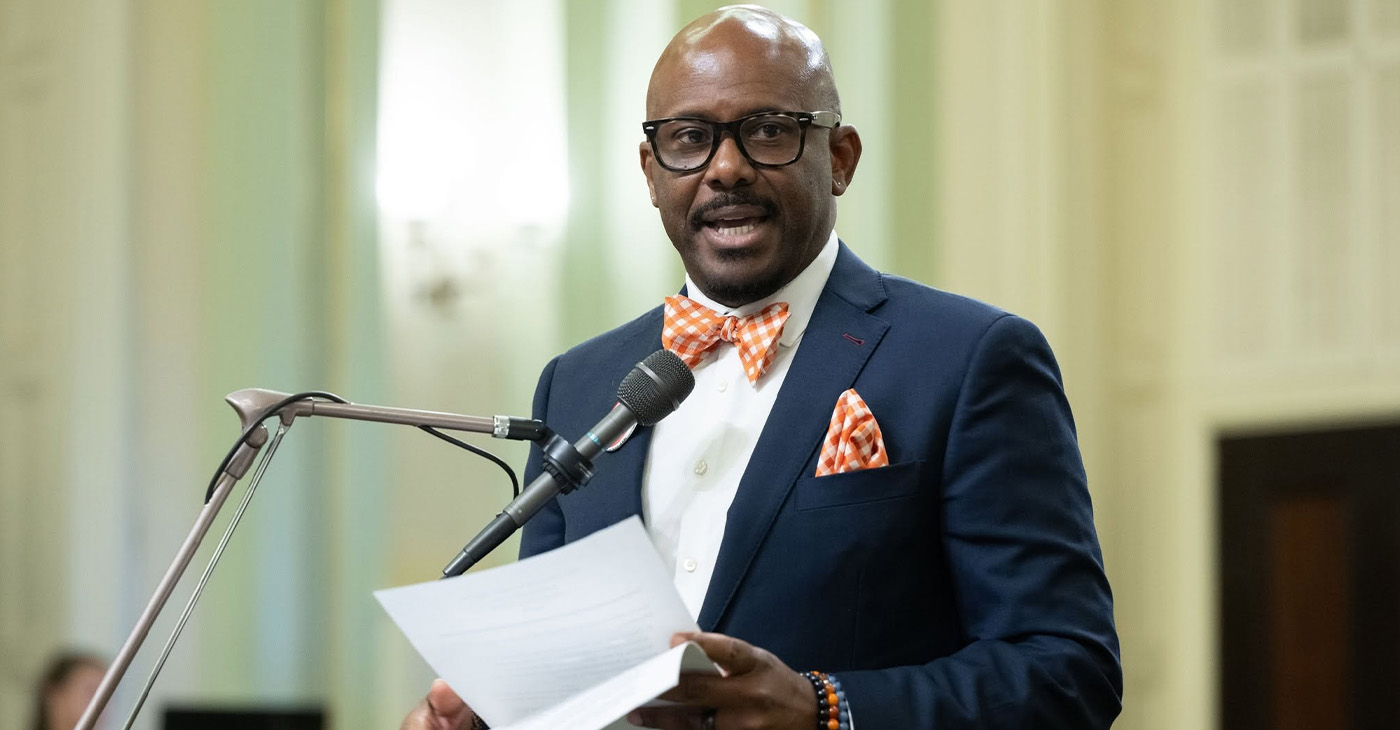
“Our hospitals are entering one of the most dangerous eras that anyone has ever seen, at least in my lifetime,” said Assemblymember Mike Gipson (D-Carson). “Assembly Bill 109 helps preserve access to health care by providing much-needed relief to hospitals across California that are struggling to remain financially viable and to continue to serve their communities.”

By Bo Tefu, California Black Media
California hospitals are facing one of the most precarious periods in decades, Assemblymember Mike Gipson (D-Carson) warned as lawmakers debated Assembly Bill 109, the state’s 2026-27 budget bill.
Included in that bill — and the Senate version of it, Senate Bill (SB) 101— is one-time emergency assistance of $50 million designed to help hospitals in financial distress to stabilize and continue providing care to patients across the state. The bill also allocates an additional $250 million to help California’s 17 public hospital systems cope with mounting losses tied to federal health care cuts.
Speaking on the Assembly floor, Gipson said the legislation is critical to preserving access to health care, particularly for vulnerable communities that depend on public hospitals and Medi-Cal services.
“Our hospitals are entering one of the most dangerous eras that anyone has ever seen, at least in my lifetime,” said Gipson. “Assembly Bill 109 helps preserve access to health care by providing much-needed relief to hospitals across California that are struggling to remain financially viable and to continue to serve their communities.”
Gipson said the financial support to hospitals will help them prepare for future emergencies while protecting access to care.
Drawing on his experience representing South Los Angeles during the COVID-19 pandemic, Gipson described the devastating toll the virus took on his district.
“I’ve seen the coronavirus devastate the Black and Brown communities,” he said. “I’ve seen bodies … piling up in refrigeration systems and delivered in trucks.”
Without the funding, Gipson warned, hospitals would be less prepared to respond to future public health emergencies, increasing the risk of preventable deaths and worsening health outcomes for patients across California.
Gipson, a member of the California Legislative Black Caucus (CLBC), added that the state budget helps prepare counties for potential impacts from HR 1, arguing California must protect vulnerable residents from anticipated federal policy changes.
Gipson pointed to the financial struggles faced by Martin Luther King Jr. Community Hospital, saying he has repeatedly spoken on the Assembly floor over six terms about the importance of preventing hospital closures in his district.
“We cannot afford to let any hospitals close,” Gipson emphasized. “Assembly Bill 109 helps all Californians at all hospitals.”
Following passage of the budget, Gipson said preserving the hospital funding in AB 109 “meant the absolute world to me.” Assemblymember pushes for funding for hospitals and Medi-Cal in budget bill.

Activism
Rep. Kamlager-Dove Introduces Bill to Protect Women in Custody After Reports Detailing Miscarriages and Neglect
The Pregnant Women in Custody Act would expand safeguards beyond the federal prison system to include women detained by U.S. Immigration and Customs Enforcement, U.S. Customs and Border Protection and the Office of Refugee Resettlement. The proposal follows reports of pregnant women being shackled, denied medical care and suffering miscarriages while in immigration detention.

By Bo Tefu, California Black Media
Congresswoman Sydney Kamlager-Dove (D-CA-37) on May 7, reintroduced updated legislation aimed at strengthening protections and healthcare standards for pregnant and postpartum women held in federal custody, including in immigration detention facilities.
The Pregnant Women in Custody Act would expand safeguards beyond the federal prison system to include women detained by U.S. Immigration and Customs Enforcement, U.S. Customs and Border Protection and the Office of Refugee Resettlement. The proposal follows reports of pregnant women being shackled, denied medical care and suffering miscarriages while in immigration detention.
The legislation builds on a bipartisan version previously passed by the House during the 117th Congress. The updated bill includes new standards for healthcare access, mental health and substance use treatment, high-risk pregnancy care, family unity protections and increased federal oversight.
“Proper pregnancy care is a human right, regardless of your immigration or incarceration status,” Kamlager-Dove said in a statement. “It’s unacceptable that there are virtually no legal safeguards for pregnant women in federal custody.”
The bill would also limit the use of restraints and restrictive housing for pregnant women, improve data collection on maternal health in custody and require additional staff training and enforcement measures.
Supporters of the measure said the legislation is intended to address long-standing concerns about maternal healthcare and safety in detention settings, particularly for Black women and low-income women who are disproportionately impacted by incarceration and health disparities.

“Pregnant women in custody should never be subjected to dangerous and inhumane treatment that threatens their health, dignity, or the well-being of their babies,” said Patrice Willoughby, chief of policy and legislative affairs for the NAACP and a longtime public policy and government affairs strategist, in a statement.
A 2021 report estimated there are about 58,000 admissions of pregnant women into U.S. jails and prisons each year. Kamlager’s statement also cited a recent investigation by NBC News and Bloomberg Law that identified allegations of severe mistreatment or medical neglect involving at least 54 pregnant women or families in county jails between 2017 and 2024.
Federal policy under the Department of Homeland Security restricts the detention of pregnant, postpartum and nursing immigrants except in extreme cases. However, the agency reported that ICE deported 363 pregnant, postpartum or nursing women between January 2025 and February 2026, including 16 recorded miscarriages during that period.
The bill is cosponsored by several House Democrats and backed by organizations including the NAACP and the Vera Institute of Justice.
Activism
Advocates Rally at State Capitol to Demand Heat Protections for Incarcerated People; More Funding for DV Survivors
On May 4, Assemblymember Mike Gipson (D-Carson) spoke at the Survivors Speak California Rally at the State Capitol to advocate for AB 2499, which focuses on heat and health protections in state prisons. The three-day event was organized by Californians for Safety and Justice, a project of the Crime Survivors for Safety and Justice network.

By Antonio Ray Harvey, California Black Media
In July 2024, Adrienne Boulware, a 47-year-old mother and grandmother, died from complications related to extreme heat exhaustion while incarcerated at the Central California Women’s Facility (CCWF) in Chowchilla, according to her family.
Assemblymember Mike Gipson (D-Carson) hopes his legislation, Assembly Bill (AB) 2499 — also known as the “Adrienne Act” — will help prevent tragedies like Boulware’s death in California prisons.
“It is no secret that our state prisons have aging infrastructures that have inadequate ventilation systems,” Gipson said. “It should come as no shock that indoor temperatures in these facilities exceed 90 degrees, which means it gets really hot.”
On May 4, Gipson spoke at the Survivors Speak California Rally at the State Capitol to advocate for AB 2499, which focuses on heat and health protections in state prisons. The three-day event was organized by Californians for Safety and Justice, a project of the Crime Survivors for Safety and Justice network.
Boulware’s family attended the rally in support of the measure, which would require the California Department of Corrections and Rehabilitation (CDCR) to establish a pilot program to address extreme heat by July 1, 2027, in at least three prisons across different climate zones.
Boulware’s daughter, Michela Nelson, said her mother frequently complained about heatwaves during the summer months. CDCR stated that Boulware’s death — she was also known as “Twin” — appeared to be related to pre-existing medical conditions rather than extreme heat.
“My mother was not just a mother of four and grandmother of 12. She was a mother to many inside and outside of the prison,” said Nelson, the eldest of Boulware’s children. “My mother didn’t die because she was sentenced to death. She died because she was left in conditions no human being should ever endure.”
AB 2499 would formally create the Climate Justice in Prisons Emergency Response Act. The legislation would require CDCR to develop a long-term plan to install heating, ventilation, and air conditioning (HVAC) systems and shade structures in existing facilities.
The Survivors Speak California Rally coincided with other advocacy events at the Capitol supporting survivors of violent crime.
On May 5, Jazz LedBetter and other advocates rallied nearby to urge lawmakers to include $100 million in the state budget for domestic violence and sexual assault services.
Assemblymember Pilar Schiavo (D-Chatsworth) and Sen. Susan Rubio (D-Baldwin Park) served as keynote speakers. Both lawmakers have publicly shared their own experiences as survivors of assault.
LedBetter, a survivor of human trafficking, is also an author, activist, and artist who uses her experiences to advocate for human trafficking prevention. She shares her story of survival, addiction, and recovery in her self-published book, “Harlot Heart: Tributes To Triumph.”
“Take a moment and think about someone finally reaching out for help, and there’s no one here to answer,” LedBetter said during her presentation on the east lawn of the Capitol.
Advocates said the funding is needed to help close a gap caused by a sharp decline in federal Victims of Crime Act (VOCA) funding.
“I am here because I am proof of what happens when someone gets support. Don’t let this funding (shortfall) be the reason someone doesn’t make it out,” LedBetter said. “The difference between survival and unfortunately common sad stories is whether or not someone is there (to help) when it matters the most.”



Asm. Corey Jackson Announces Launch of 24-Hour Childcare in His District

IN MEMORIAM: The Rev. Leon “Sonny” Clark, Longtime Orange County Pastor and Community Leader, Dies at 72

Poll: Becerra Widens His Lead Over Hilton; Californians Split on Wealth Tax

From Historic Memories to New Possibilities: Oakland Celebrates Coliseum 60

County Office of Education Says OUSD Finances Are Getting Healthier, Materially Stronger

LIVE FREE Sunday Dinner Brings Faith, Fellowship and Civic Conversation to Oakland

Remembering Chauncey Bailey as Student Journalists Face Threats to Truth-Telling

BLACspace Cooperative Invites Bay Area to Experience Oakland’s Black Cultural Ecosystem Through a BLAC Map Tour + Party

In Wake of Death on Doorstep, Williams Chapel Baptist Church Calls for Better Care, Funding for Unhoused

Oakland Centenarian Nuna McKee Honored!

Caribbean Nations Produce Action Plan Calling for UK Reparations Over Slavery

Oakland Post: Week of September 23 – 29, 2026

Doulas Are Helping Black California Moms Navigate Pregnancy–Even as High Mortality Rates Persist

Newsom Signs Addictive Social Media Law to Protect Kids

On Your November Ballot: Prop 38 Would Allocate $8.4 Billion to Immunology and Immunotherapy Funding

Less Affluent School Districts, Including Sacramento City, Face Threat of State Takeover

ESSAY: California Can Close Its Colorectal Cancer Gap

California Hispanic Chambers of Commerce Unveils: ‘Powering the Future’ Theme for 47th Annual Statewide Convention

Four Candidates, Including Incumbent Barbara Lee, Qualify for Oakland Mayor’s Race

Oakland Post: Week of August 12 – 18, 2026

From Blueprint to Breakthrough: Tackling Affordable Housing in Oakland

Oakland Observes Black August with Block Parties, Film Showings, Workshops

COMMENTARY: Why Local School Tax Measure G1 Will Not Be on the November Ballot

Standoff for Justice: Our Homes Are Worth Fighting For

Returning to Its Roots, the Oakland Black-Eyed Pea Festival Partners with the Freedom Farmers Market Sept. 12

Oakland Post: Week of August 26 – September 1, 2026

NPRC Scores First Advocacy Victory: David Shaw Finally Gets His Wish to ‘Go Home’

Frontier Airlines’ Return to Oakland Airport Brings Flights, Jobs and Opportunity

Gubernatorial Candidate Steve Hilton Blasts California New Tire Rules; Newsom Hits Back

Chef Sharon Lee Blends Culinary Excellence, Education and Empowerment

The Conversation With Al McFarlane 6/23/26

Media Monday 6/22/26

LIVE! ASK ALMA! — TUES. 6.23.26 7PM EST

Car Buying Secrets: 4 Hidden Checks Before You Sign!

Is This 550 HP Charger Worth YOUR Money? AutoNetwork Review

Celebrating Juneteenth – Frederick Douglass on education and resistance

LIVE! — ASK ALMA! — TUES. 6.19.26 7PM EST

Hyundai Ioniq 5 Parking, Safety, and 360 View #shorts

2025 Ioniq 5 New Wiper & Powerful Performance! #shorts

Electric SUV Range: Is 259 Miles Enough? #shorts

EV Charging: How Fast Can You Charge an Electric Vehicle? #shorts

Biometric Cooling… Messaging Seats…Come on! 2025 Infiniti QX80 Autograph 4WD

Charged Up: Witness the Magic of a Fully Electric Car! #shorts

Range Rover Sport PHEV Included…: See What’s Inside This Luxury SUV! #shorts

Invisible Hood View: Perfect Parking with X-Ray Vision! #shorts
-
 Commentary4 weeks ago
Standoff for Justice: Our Homes Are Worth Fighting For
-
 Activism4 weeks ago
Oakland Post: Week of August 26 – September 1, 2026
-
 Business4 weeks ago
Frontier Airlines’ Return to Oakland Airport Brings Flights, Jobs and Opportunity
-
 Business4 weeks ago
Gubernatorial Candidate Steve Hilton Blasts California New Tire Rules; Newsom Hits Back
-
 Business4 weeks ago
Chef Sharon Lee Blends Culinary Excellence, Education and Empowerment
-

 Community4 weeks ago
Big City Mayors Ask for “Yes” Vote on Housing Bond Measure; Conservatives Say “No”
-

 Black History4 weeks ago
Jackie Wright Champions Bay Area Stories, Filmmakers and Cultural Institutions
-

 Education4 weeks ago
Gov. Newsom’s Latest Appointees Include Sacramento Advocate for Formerly Incarcerated Students; State’s New Tech Chief
