
Politics
Jamaica’s Prime Minister May Request Exoneration of Garvey When She Meets President Obama in Kingston


Jamaica Prime Minister Portia Simpson-Miller (Collin Reid/AP Photo)
by Tony Best
Special to the NNPA from the New York Carib News
When U.S. President Barack Obama and Portia Simpson-Miller, Jamaica’s leader, meet in Kingston next Thursday, the legacy and the name of Marcus Mosiah Garvey as seen through American and Jamaican eyes may be put on the table for discussion.
The issue may be put there by Simpson-Miller, Jamaica’s Prime Minister, and what may be at stake is a pardon or exoneration for Garvey, a Jamaican national hero who spent more than a dozen years in the United States where he led the largest economic and social mass movement of Blacks in the first half of the 20th century. Garvey advocated economic independence and positive self-awareness for millions of Blacks. At the same time he encouraged a positive cultural identity and self-determination for people of color. However, his message stirred Black and white critics whose complaints and allegations triggered a federal investigation that culminated in a conviction on federal mail fraud charges which many independent legal analysts and Garvey supporters insist to this day were trumped up and therefore didn’t have any basis in fact.
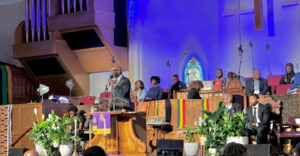
The issue of Garvey’s treatment in the U.S. was raised at a Diaspora town Hall meeting in Manhattan last week by Simpson-Miller who told hundreds of Jamaicans that she might raise it.
“We are a great people. We have produced many great sons and daughters” and they ranged from Bob Marley and Bogle and Samuel Sharpe to Nanny, Queen of the maroons and Marcus Garvey and it was in that context that she said that she would raise the matter.
“As Jamaicans we come from strong bloodlines. Whether it was Bogle, Sharp, Garvey. I think I will have to raise with President Obama when he visits Jamaica, Marcus Garvey,” was the way she put it. “That great man should never be seen as a criminal. That great man. I believe his name should be expunged from the record (of criminals).”
In raising the issue in that way during a short speech devoted to praising the Diaspora and urging nationals to attend the Jamaica Diaspora conference in June, Simpson-Miller didn’t indicate if she would seeking a pardon or exoneration.
Obama is going to Jamaica to meet with Caricom leaders while on his way to Panama to attend next month’s Summit of the America on April 10-11.
Garvey who came to the U.S. in 1916 from Jamaica, founded and led the Universal Negro Improvement Association, which at one stage had about a million members scattered across the United States, Canada and the Caribbean. He formed an array of national corporations and institutions, including the Black Star (Shipping) Line, the Negro Factory Corporation, the Negro World newspaper, and the Black Cross Nurses as well as the Flying Eagles. His message of self-help and independence resonated with Blacks everywhere.
When asked to comment on the Prime Minister’s statement, Garvey’s son, Dr. Julius Garvey, a board certified surgeon who specializes in the diagnosis and treatment of vascular diseases, described his father’s 1920s trial as “unjust” and his conviction was without merit.
“There was no criminal behavior and the whole thing was a miscarriage of justice,” said Dr. Garvey. “It can’t be that he is pardoned of criminal behavior. We are using the means of pardon because we acknowledge that the justice system failed. It was an injustice and this needs to be corrected. While the word may be ‘pardon” it would have to be surrounded by other things which indicate there was no criminal behavior. On the contrary, he was victimized by the judiciary because of the stance he took in terms of supporting Black people at that point in time.
“Whatever the legal term used, it has to state there was no criminal behavior. The trial was basically a farce and it was a miscarriage of justice,” he explained. “It was instigated by Edgar Hoover. Those facts and statement have to be there.”
Like the Prime Minister, Dr. Garvey said his father “was not a criminal” and was simply trying to promote the concerns and well-being of “African peoples worldwide” at a time of widespread colonialism and racism.
A.J. Nicholson, Jamaica’s Foreign Minister who once served as his country’s Attorney-General, told the Carib News that he too was keen on pressing the Garvey case with Obama.
“If I get the chance I will ask the President about Marcus Garvey,” said the Foreign Minister.
During the Town Hall meeting at St. George’s Episcopal Church, both the Prime Minister and the Foreign Minister praised the members of the Jamaican Diaspora for their commitment to their country’s development.
Hermon Lamont, the Jamaica Consul-General in New York, was the chairman of session which was frequently interrupted by gay activists shouting criticisms of the government and the Prime Minister from the rear of the church.




Activism
From Disparity Study to Solutions: Oakland Coalition and Mayor Barbara Lee Renew Commitment to Reform City Contracting
She committed to ensuring the coalition has direct access to City leadership by designating Assistant Deputy City Administrator Chuck Baker the primary liaison. Working alongside Deputy City Administrator Sofia Navarro, DWES Director Emylene Aspilla, Race and Equity Director Darlene Flynn, and other City departments, the coalition will continue advancing these priorities while maintaining regular communication with City leadership.
Special to The Post
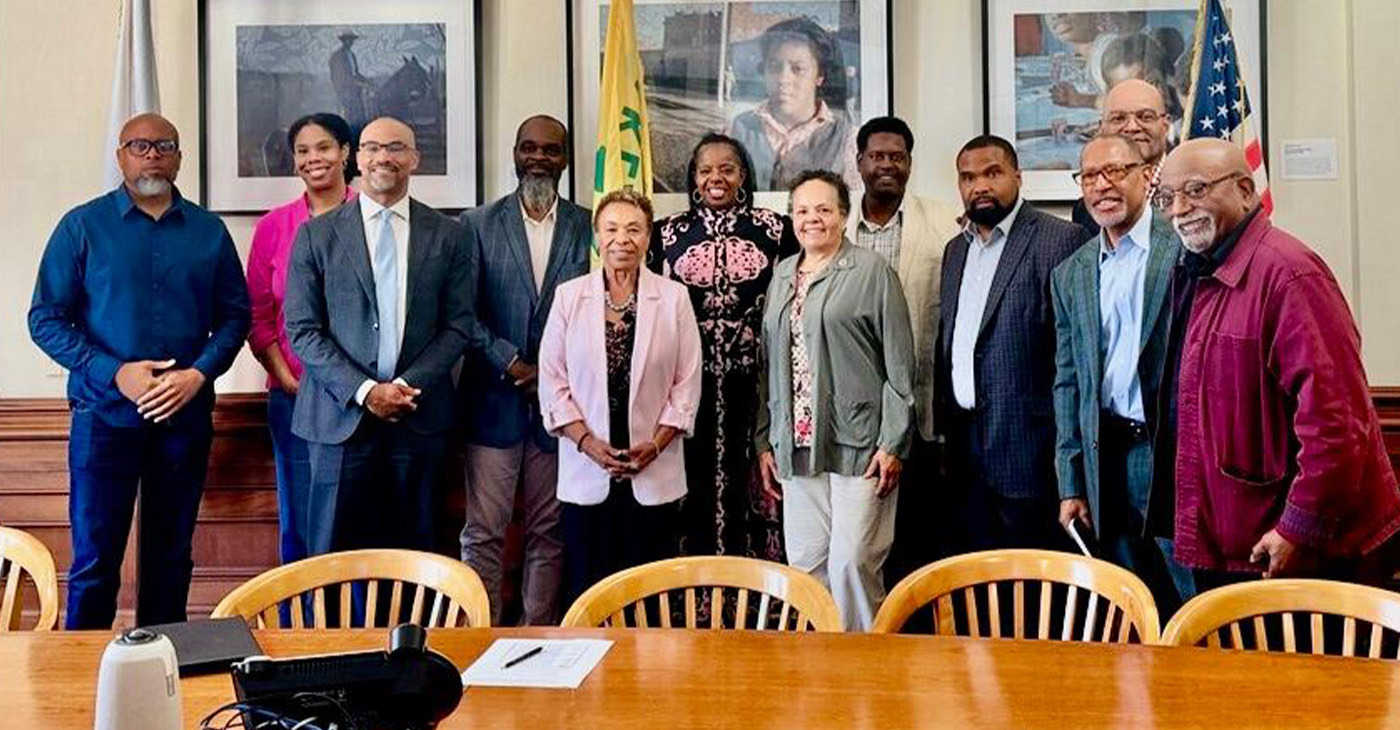
On June 30, a coalition of minority business leaders, contractors and others met with Oakland Mayor Barbara Lee to discuss the City’s commitment to implement recommendations outlined in Oakland’s Disparity Study and eliminate barriers that have historically prevented Black and minority-owned businesses from fully participating in public contracting opportunities.
Representatives of the Oakland African American Chamber of Commerce (OAACC), National Association of Minority Contractors Northern California (NAMC NorCal), Construction Resource Center (CRC), and the East Bay Rental Housing Association (EBRHA) said the meeting represented an important milestone in a process that has been underway for several months.
On April 21, the Oakland City Council’s Life Enrichment Committee received a progress report from the Department of Workplace and Employment Standards (DWES), where Director Emylene Aspilla presented the coalition’s working document and outlined a collaborative implementation plan between the coalition and the City. That report established 30-, 60-, and 90-day objectives focused on five key priorities:
- Reforming Local and Small Local Business Enterprise (L/SLBE) waiver practices
- Strengthening prompt payment compliance
- Improving procurement forecasting and transparency
- Expanding contractor capacity building and business development
- Increasing oversight, accountability, and public reporting
A series of working sessions was scheduled between coalition representatives, DWES, and the City Administrator’s Office to begin implementing those priorities but were temporarily delayed by the resignation of former City Administrator Jestin Johnson.

Rather than allowing that momentum to stall, OAACC President and CEO Cathy Adams requested a meeting with Lee to gain clarity on the City’s direction and reaffirm its commitment to implementing the recommendations contained within the Disparity Study.
Coalition leaders described the meeting as productive, candid, collaborative, and encouraging.
During the meeting, Lee spoke not only from her role as mayor but also from her experience as an 8(a) contractor and business owner, sharing that she understands firsthand what it takes to build and grow a successful company, employ a substantial workforce, compete for public work, and navigate the complexities of municipal contracting.
She committed to ensuring the coalition has direct access to City leadership by designating Assistant Deputy City Administrator Chuck Baker the primary liaison. Working alongside Deputy City Administrator Sofia Navarro, DWES Director Emylene Aspilla, Race and Equity Director Darlene Flynn, and other City departments, the coalition will continue advancing these priorities while maintaining regular communication with City leadership.
Mayor Lee also expressed her commitment to personally participate in future working meetings with the coalition.
“This meeting represents a renewed commitment to partnership,” said Adams. “Mayor Lee listened, engaged, and demonstrated that she wants to move beyond conversation and into implementation.”
CRC’s Len Turner said the roadmap is already in place. ““The City already has the evidence. What’s been missing is execution. …Now it’s time to deliver results.”
Mario Wagner, president of NAMC NorCal agreed that the next phase must focus on implementation, funding, and accountability.
“The coalition is ready to get to work. …The next step is ensuring these initiatives receive meaningful funding in the upcoming fiscal budget cycle. Just as important, the City must establish transparent reporting mechanisms that keep the public informed through regular progress reports, measurable benchmarks, and accountability.”
Coalition leaders also acknowledged that while City leadership has indicated it is reviewing Local and Small Local Business Enterprise waiver practices, the community continues to seek a formal response regarding existing long-term waivers, including waivers extending 10 and 25 years. The coalition believes those waivers should be comprehensively reviewed and, where appropriate, rolled back as part of the City’s broader contracting reforms.
The coalition is also calling on the City to include meaningful funding in the upcoming fiscal budget cycle to support implementation of the Disparity Study recommendations and establish better methods and mechanisms to keep the public informed through regular progress reports, measurable benchmarks, and transparent accountability.
The coalition’s immediate next step is to schedule a working meeting with Baker, Aspilla, Lee, and the appropriate City staff to review what has already been accomplished under the implementation framework.
Black History
The Congressional Seat That Black History Built (florida’s 20th District)
JACKSONVILLE FREE PRESS — Florida’s 20th Congressional District represents a civil rights victory born from immense struggle and sacrifice. The first Black Congressman from Florida, Josiah Thomas Walls, was elected during Reconstruction but was forced from office in 1876. This marked the beginning of a 117-year period without Black representation from Florida in Congress, a silence that deeply impacted generations.

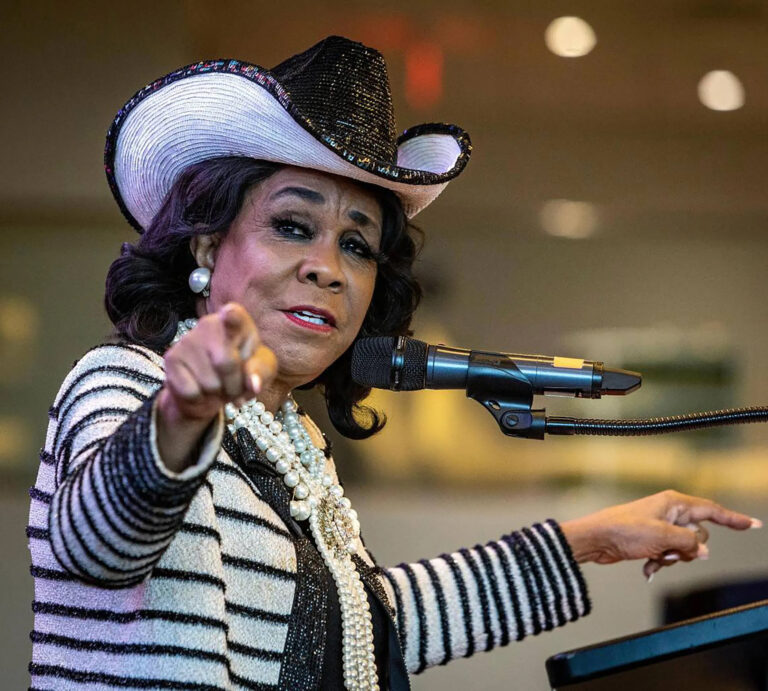
Florida Congresswoman Frederica Wilson speaks to police and youth attending a 5000 Role Models conference at Hard Rock Stadium in Miami Gardens, Florida on Nov. 1, 2022. (Jose A. Iglesias/Miami Herald/TNS
By Rep. Frederica S. Wilson
History has a way of disappearing if no one is willing to tell it.
Too often, we celebrate milestones without remembering the struggle that made them possible. We inherit rights without understanding who fought for them. We walk through doors without knowing who had to break them open. That is why I believe every generation has a responsibility to remember, because when history fades, so does our appreciation for what it took to change it.
This is not an endorsement of any candidate. It is a civics lesson. It is a history lesson. Before you cast your ballot, know the story of District 20.
District 20 is more than a congressional district. It is a civil rights victory.
Its story begins with Josiah Thomas Walls, the first Black Congressman from the State of Florida. His election during Reconstruction represented one of the nation’s earliest promises that democracy could become broader, fairer, and more representative. For a brief moment, Black Floridians saw themselves reflected in the halls of Congress.
That promise did not last.
Across the South, white supremacist violence sought to erase the gains of Reconstruction. Terror replaced hope. Intimidation replaced participation. Organizations such as the Ku Klux Klan worked to drive Black Americans from public life and dismantle the political power they had only just begun to build. Josiah Walls was forced from Congress on April 19, 1876, and with his departure, Florida entered one of the darkest chapters in its democratic history.
For the next 117 years, Florida did not elect another Black Member of Congress.
That is longer than any lifetime. Entire generations were born, raised, and buried without ever seeing Black representation from Florida in the United States Congress. Families taught their children to keep believing even when history gave them every reason to lose hope. Black people died. Black blood was shed. Black skulls were cracked beneath the blows of nightsticks. In the rivers of Florida, the water became an unmarked grave for Black Americans whose only demand was the right to vote, to be fairly represented, and to have their voices heard. Churches became organizing centers. Neighborhoods became movements. Ordinary citizens are still carrying, to this day, extraordinary burdens because they refused to accept that this was permanent.
The story of District 20 is, in many ways, the story of America itself. It is a story of extraordinary progress born from extraordinary sacrifice. It is also a reminder that progress has never followed a straight line. Every advance has been met by resistance. Every victory has required vigilance.
Then, in 1993, history turned.
Corrine Brown, Carrie Meek, and Alcee Hastings were elected to Congress, ending a silence that had lasted 117 years. Their elections did more than fill three seats. They restored a voice that had been absent from Florida’s congressional delegation for more than a century. They reminded the nation that the arc bends towards justice.
Congressman Alcee Hastings would go on to represent what is now Congressional District 20 for many years, carrying forward that legacy of service and advocacy.
District 20 is the legacy of those who refused to be erased.
It is a seat paid for by generations of Black sacrifice.
It exists because countless Black people challenged barriers that once seemed impossible to overcome. Black people organized when organizing carried real risks. Black people marched when marching invited retaliation. Black people voted when others worked tirelessly to deny them that right. Black people understood that democracy is strongest when every community has an opportunity to be represented and every citizen has a voice.
White nationalists marched through our nation’s capital carrying Confederate flags on the Fourth of July just to remind us that Black people cannot be comfortable. Even after more than 400 years of slavery, we still have to continue the fight. The fight for our freedom did not end. It simply became our generation’s responsibility.
That is why the history of District 20 matters.
If Black lives matter, then the history of Black representation matters too.
Representation is not merely symbolic. It shapes conversations and brings lived experiences into the rooms where decisions are made. A representative cannot erase history, but a representative can ensure that history is remembered.
The story of District 20 is also the story of America’s promise and its failures. It reminds us how difficult it has been to expand democracy and how much determination it has taken to make our institutions more representative of the people they serve. It teaches us that progress is not inevitable. It is built, protected, and renewed by each generation.
That is why history deserves our attention.
As the highest-ranking Black elected official in the State of Florida, I have a responsibility to tell you the truth. I know what our ancestors endured to earn a voice in these halls of power, and I know how quickly that voice can be taken away. I know what it costs to lose representation because our history has already lived through that pain.
That is why I am imploring you to vote like your future depends on it, because it does.
We deserve a seat at every table where decisions about our lives, our children, our communities, and our future are made. That seat was not given to us. It was earned through generations of Black sacrifice.
At a time when President Trump and many Republicans are working to undo decades of hard-fought progress, we need a fighter in Congress who understands the lived experiences of Black communities, who knows the history that brought us here, who recognizes what is at stake, and who will never hesitate to defend our right to be heard, represented, and included wherever decisions about our future are made.
So, I am asking you to do more than vote.
I am asking you to honor those who never lived to see this moment because freedom has always demanded participation.
That future is now in your hands.
Every generation must choose whether it will preserve it or surrender it.
When you enter that voting booth, remember that you are carrying the hopes and voices of those who were denied one.
You are carrying the prayers of those who never stopped believing that America could live up to its promise.
Do not leave that legacy behind.
Because District 20 is more than a seat in the United States Congress, it is the seat that Black history built.
Now it is our responsibility to make sure history never has to build it again.
Courtesy of the Westside Gazette
Based on reporting by Jacksonville Free Press.

Black History
COMMENTARY: The Two July 4ths: Which Did You Celebrate?
MILWAUKEE COMMUNITY JOURNAL — The recent Fourth of July holiday presented a duality of experiences across the nation. While hundreds of immigrants celebrated becoming naturalized U.S. citizens, fulfilling a core tenet of the 14th Amendment, others questioned the holiday’s meaning.

It was like a “Tale of Two Cities”: The best of times and the Worst of Times.
It was the best of times for the hundreds of immigrants that were sworn in as U.S. naturalized citizens across this great land. Their swearing in was a manifestation of the provisions of the 14th Amendment creating citizenship status for persons not born in this country; a provision of the 14th Amendment to the Constitution just as important as citizenship by birth. This is the provision that President Trump tried to get the U.S. Supreme Court to nullify, the Birthright Citizenship case which the Court rejected.
While many recited the Preamble to the Declaration of Independence words stating that “We hold these truths to be self-evident, that all men are created equal, that they are endowed by their Creator with certain unalienable Rights; that among these are Life, Liberty and the Pursuit of Happiness, That to secure these rights, Governments are instituted among men, deriving their just powers from the consent of the governed….” Many among us are being denied those very rights today as evidenced by armed troops on the streets of our cities and Federal agents killing and imprisoning immigrants, citizens and anyone who appears to be out of step with this administration.
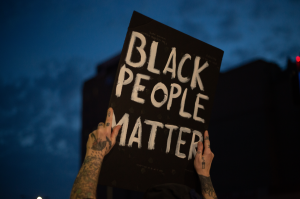
The celebrations, parades and millions of dollars spent on fireworks left many of us to remember to question those events with the immortal words of Federick Douglas when he raised his rhetorical question during the 1852 76th anniversary celebration of America’s independence; “WHAT TO THE NEGRO (BLACK PEOPLE) IS YOUR FOURTH OF JULY….? TODAY ONE HUNDRED AND SEVENTY FOUR YEARS LATER, the question is
still all too real. For those of us concerned about the police state and kingship that Donald Trump would establish, let us take heart in the fact that today we have tools that Douglas did not have. In addition to the Constitution with its 13th, 14th, and 15th Amendments, the only thing we lack to make change is the will to get involved and do so. Let’s start right where we live. Let’s start with the issue of making sure that each of us can vote, register and prepare to do so. Let’s take another look at how we are spending the few dollars we have. Let’s take another look at who we can help as a part of our collective and prepare to use our numbers like never before in all that we do. Let’s create our own fireworks that will last all year long with our involvement and collective agreement to help ourselves before we expect others to do so, and in all this, let’s make a lasting reality out of the change that Frederick Douglas envisioned.
Based on reporting by Milwaukee Community Journal.
WORK FROM HOME
Home-based business with potential monthly income of $10K+ per month. A proven training system and website provided to maximize business effectiveness. Perfect job to earn side and primary income. Contact Lynne for more details: Lynne4npusa@gmail.com 800-334-0540


From Disparity Study to Solutions: Oakland Coalition and Mayor Barbara Lee Renew Commitment to Reform City Contracting

The Congressional Seat That Black History Built (florida’s 20th District)

COMMENTARY: The Two July 4ths: Which Did You Celebrate?

COMMUNITY: What Trump’s Presidency Means for Black Economic Mobility

Trump Administration Shelves Harriet Tubman $20 Bill Plan

COMMENTARY: The Basis of Freedom: Reclaiming Land as an Act of Liberation

Justice and Childhood

Standing Room Only in Raleigh with Leader Sydney Batch and Stacey Abrams

Looking at My Top 10 Black MLB Players List

Preventing Amputation: A Doctor’s Guide for Diabetes Patients

How Four Black Women Bosses Define Wellness

New Minneapolis Mural Imagines Black and Indigenous Futures Among the Stars

Kotelemla Bolinga: a Soundtrack for Resistance and Love

St. Louis Cardinals Outfielder Jordan Walker Claims Franchise’s First Home Run Derby Crown

California’s Unhoused Seniors: a Crisis Within the State’s Homelessness Crisis

After 10-Year Wait, Fillmore Heritage Center Reopens in San Francisco

Oakland Post: Week of June 3 – 9, 2026


Oakland Post: Week of June 17 – 23, 2026

Oakland Post: Week of June 10 – 16, 2026

COMMENTARY: Black Music is the Sound of Black Freedom: Let Us Reclaim Both This Juneteenth

Oakland Director Boots Dazzles Once Again in ‘I Love Boosters’

Sale of Coliseum to African American Developers Moves Toward Completion

2026 World Cup is Here and Atlanta is Ready For It

IN MEMORIAM: Oakland Dance Legend Reginald Ray-Savage, 67

UC Berkeley Named Top Public University in the U.S. and No. 7 in the World by ‘U.S. News’

Ferry Fares to Increase July 1 as Ridership Hits Record Highs

5 Cleveland Police Officers Injured, Gunfire Erupts During East Side Pursuit

A Long Time Coming: School District Kicks Off Massive $97 Million Renovation of West Oakland’s McClymonds High School

Oakland Museum Presents Landmark Retrospective Celebrating Beloved Bay Area Artist Mildred Howard

The Conversation With Al McFarlane 6/23/26

Media Monday 6/22/26

LIVE! ASK ALMA! — TUES. 6.23.26 7PM EST

Car Buying Secrets: 4 Hidden Checks Before You Sign!

Is This 550 HP Charger Worth YOUR Money? AutoNetwork Review

Celebrating Juneteenth – Frederick Douglass on education and resistance

LIVE! — ASK ALMA! — TUES. 6.19.26 7PM EST

Hyundai Ioniq 5 Parking, Safety, and 360 View #shorts

2025 Ioniq 5 New Wiper & Powerful Performance! #shorts

Electric SUV Range: Is 259 Miles Enough? #shorts

EV Charging: How Fast Can You Charge an Electric Vehicle? #shorts

Biometric Cooling… Messaging Seats…Come on! 2025 Infiniti QX80 Autograph 4WD

Charged Up: Witness the Magic of a Fully Electric Car! #shorts

Range Rover Sport PHEV Included…: See What’s Inside This Luxury SUV! #shorts

Invisible Hood View: Perfect Parking with X-Ray Vision! #shorts
-
 Activism3 weeks ago
 -
 Activism4 weeks ago
Oakland Post: Week of June 17 – 23, 2026
-
 Business4 weeks ago
Sale of Coliseum to African American Developers Moves Toward Completion
-
 Arts and Culture3 weeks ago
IN MEMORIAM: Oakland Dance Legend Reginald Ray-Savage, 67
-
 Bay Area3 weeks ago
UC Berkeley Named Top Public University in the U.S. and No. 7 in the World by ‘U.S. News’
-
 Alameda County3 weeks ago
Ferry Fares to Increase July 1 as Ridership Hits Record Highs
-
 Bay Area3 weeks ago
A Long Time Coming: School District Kicks Off Massive $97 Million Renovation of West Oakland’s McClymonds High School
-
 Activism3 weeks ago
Oakland Museum Presents Landmark Retrospective Celebrating Beloved Bay Area Artist Mildred Howard
