
Religion
In Islam, a Long Tradition Against Depicting the Prophet


Flowers and pens and placards lie after being placed to show solidarity with those killed in an attack at the Paris offices of weekly newspaper Charlie Hebdo, in Trafalgar Square, London, Thursday, Jan. 8, 2015. Masked gunmen stormed the Paris offices of a weekly newspaper that caricatured the Prophet Muhammad, methodically killing 12 people Jan. 7, including the editor, before escaping in a car. (AP Photo/Kirsty Wigglesworth)
HAMZA HENDAWI, Associated Press
CAIRO (AP) — It’s not mentioned in Islam’s holy book, the Quran, but the religion’s ban on depicting the Prophet Muhammad — even favorably — has run firm through the centuries.
Religious traditions built over the years have prohibited such depictions out of respect for Muhammad and to discourage idolatry, according to Muslim scholars and clerics. The ban is further rooted in a wider prohibition against images or statues of human beings.
There have been exceptions. A rich tradition of depicting Muhammad emerged in miniatures and illustrations for manuscripts from around 1200 to 1700. The art is mainly from Turkey and Iran, where pictorial traditions were stronger than in the Arab world. The paintings often show traditional stories from Muhammad’s life, such as his journey to heaven, though in some the prophet’s face is obscured by a veil or a plume of flame.
Shiites also differ from Sunnis by depicting Muhammad’s son-in-law Ali, revered by Shiites who see him as the prophet’s rightful successor. His image — and those of his sons Hassan and Hussein — are plentiful among Shiites, adorning posters, banners, jewelry and even keychains. For Sunnis, the ban on depictions extends beyond the prophet to his close companions and wives.
“The Prophet Muhammad enjoys sublime and supreme status among Muslims and it is impossible to let a normal person depict or act the role of the prophet,” said Iraqi Shiite cleric Fadhil al-Saadi. “There is no confirmed information about the shape or the features of the Prophet … So nobody should come up with a painting or an image of him. That would represent an insult to the status of the prophet.”
With no explicit text against depictions — or against images of humans in general — the prohibition comes from deduction by Muslim scholars and interpreters over the centuries from the collections of Hadeeth, or sayings and actions of Muhammad.
The prohibition against depicting humans and other living beings, which emerged from scholars as early as the 9th century, came from reported sayings of Muhammad, in some of which he refused to enter a room with such depictions or challenged their creators to breathe life into them. The presumption was that such art would suggest man can emulate God’s powers of creation — and there were worries that statues in particular could encourage idolatry.
Islamic tradition is full of written descriptions of Muhammad and his qualities — describing him as the ideal human being. But clerics have generally agreed that trying to depict that ideal is forbidden. That puts satirical — and obscene — depictions like those in the French magazing Charlie Hebdo far beyond the pale.
While no one knows Muhammad’s true appearance, followers of the relatively modern, ultraconservative Salafi movement in Islam seek to emulate him as closely as possible — including in what they believe to be his physical features and dress. Hardcore Salafis wear a beard without a moustache, let their hair grow long, line their eyes with kohl or wear robes stopping around mid-shin, contending that was the prophet’s manner.
The ban also extends to his wives, daughters, sons-in-law, the first caliphs who succeeded him and his closest companions. In fact, Egypt’s al-Azhar mosque, the Sunni world’s foremost seat of religious learning, has complained when “Mohammed, Messenger of God,” an epic 1970s Hollywood production, depicted the prophet’s camel.
There is a thriving production of religious TV series in the Arab world depicting the times of the prophet. But Muhammad and his companions are never themselves shown. At times, a white light stands in for Muhammad in the films or in movie posters — and when they are meant to be addressing Muhammad, the actors usually speak into the camera.
Copyright 2015 The Associated Press. All rights reserved. This material may not be published, broadcast, rewritten or redistributed.





Black History
Nuna Phillips-McKee Celebrates 100 Years: ‘A Century of Faith, Family and God’s Amazing Grace!’
OAKLAND POST — Nuna’s life has been one of Christian service. A longtime member of Wings of Love Maranatha Ministries, now Incredible Church, she serves as director of Community Services and is actively involved in the church’s Food Ministries.

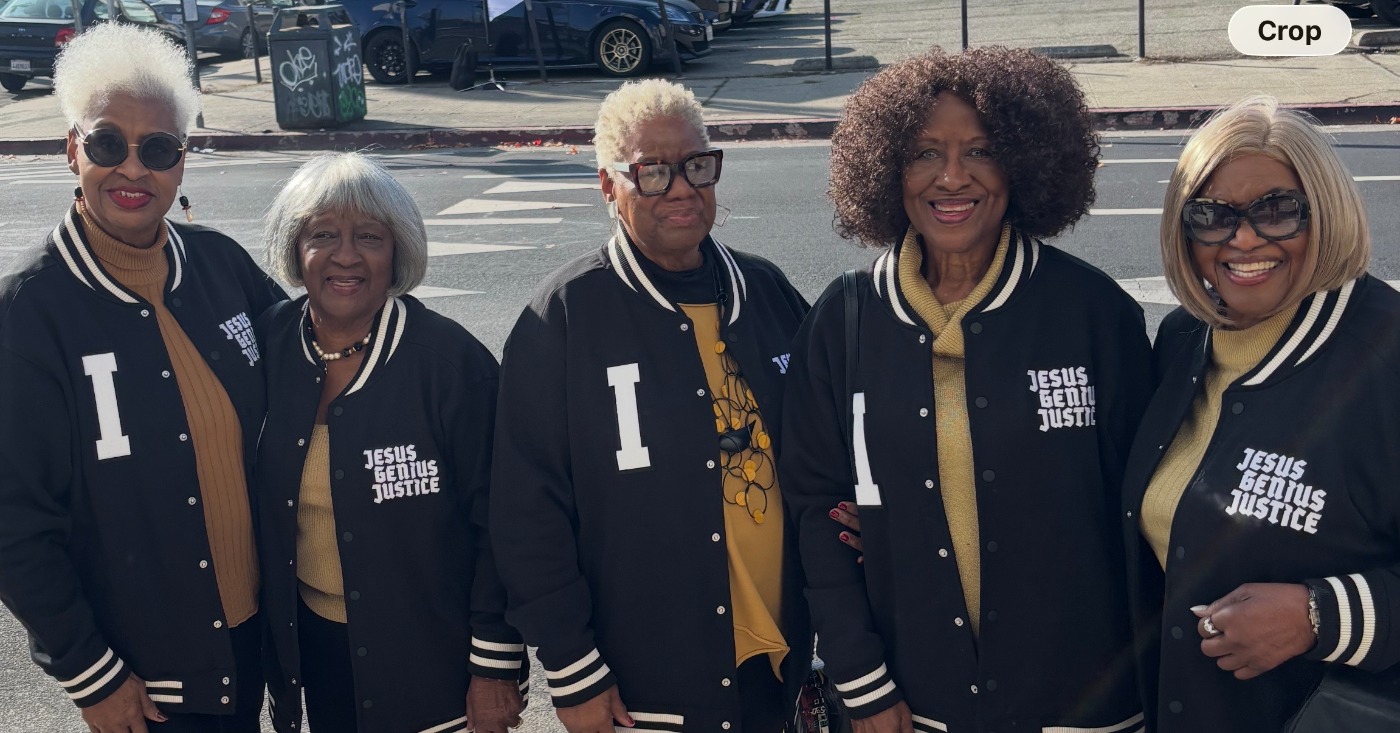
Nuna Phillips-McKee will reach an extraordinary milestone on Sept. 24 —her 100th
birthday, marking a century filled with faith, family, service, laughter and the amazing grace of God.
Born Sept. 14, 1926, in Oakland, Nuna has witnessed a world of change during her lifetime, yet the values that have guided her remain constant: a deep faith in God, devotion to family, a strong work ethic and a heart for serving others.
She enjoyed a distinguished career as a civil servant for more than 40 years, demonstrating the dedication, dependability and strength that have characterized so much of her life.
Nuna’s life has been one of Christian service. A longtime member of Wings of Love Maranatha Ministries, now Incredible Church, she serves as director of Community Services and is actively involved in the church’s Food Ministries.
Through the years, she has continued to help meet the needs of others—not merely with food, but with kindness, compassion and a genuine desire to serve. Her ministry reflects a simple principle by which she lives: when God blesses you, you bless others.
Nuna is the proud mother of one son, whose memory she carries in her heart, and the beloved grandmother of three grandchildren, as well as six great-grandchildren and one great-great-grandchild.
At 100, she has the rare blessing of seeing several generations of her family carrying forward a legacy that began long ago.
She remains the loving, intelligent, witty, and, when the occasion calls for it, delightfully sassy Nuna that her family and friends know so well. Her contagious laugh, quick wit and youthful spirit have endeared her to generations of relatives, church members and friends.
Nuna was born into the large and loving Phillips family of seven sisters and one brother, with bonds that formed in childhood and have remained precious throughout the decades. Their shared love, faith, and family traditions have continued to be a source of joy, strength and countless treasured memories.
As family and friends gather for this special occasion, they will celebrate far more than a number. They will celebrate 100 years of prayers prayed and answered; 100 years of lessons learned and wisdom shared; 100 years of family, faith, laughter and love; 100 years of serving God and serving others.
Most of all, they will celebrate a life that stands as a testimony to God’s faithfulness through every season.
Nuna’s century-long journey can be summed up in the words chosen to commemorate this remarkable occasion: “100 years of God’s amazing grace.”

Black History
COMMENTARY: Our Voices — When Armed Power Appears at the Ballot Box
TEXAS METRO NEWS — “What terrifies me most is how casually these conversations are now happening. We are discussing armed federal presence near elections as though this were a normal political debate. Fifty years ago, Americans would have recognized immediately how dangerous this sounded.”
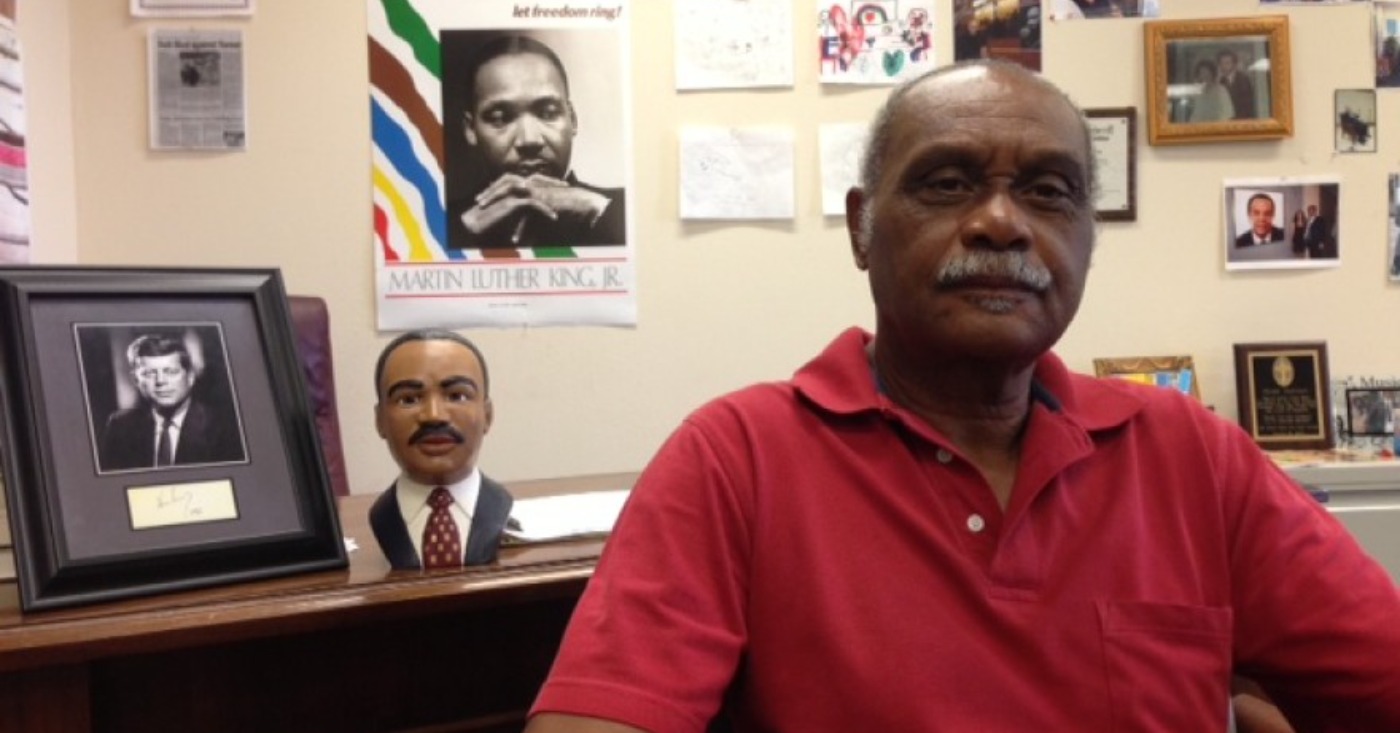
By Rev. Peter Johnson | Texas Metro News
There are sounds you never forget once you have heard them. The slow crunch of gravel beneath a sheriff’s boots outside a voting station. The sound of a shotgun being cocked. The silence of Black citizens standing in line, afraid to make eye contact. The sound of a church mother whispering, “Baby, if I don’t come home tonight, tell your daddy I tried.”
I remember grown men trembling before voter registration tables, not because they were weak, but because they understood exactly what power could do to a Black body in America. I remember pastors watching police cars circle churches where voter meetings were being held. I remember people disappearing from movements overnight. I remember fear sitting beside democracy like an armed guard.
That is why my spirit turned cold when I heard the discussion of ICE agents and Border Patrol officers being present at polling stations. Some of us have seen this movie before, and we know how it ends.
America keeps pretending voter intimidation belongs only to history books. It does not. It evolves. It changes uniforms. It changes language. But it always carries the same message: “Some of you should think twice before showing up here.”
Today, the target may be immigrants, Latino communities, Muslims, asylum seekers, or mixed-status families. Tomorrow it will expand. It always expands. History teaches that once fear is allowed near the ballot box, democracy itself begins gasping for air.
Deputy Attorney General Todd Blanche publicly defended the idea of immigration enforcement officers near polling locations, asking why people would object. The answer is painfully simple: because law enforcement presence has long been used in America to discourage unwanted people from voting.
Not to protect elections. Control them.
During Jim Crow, intimidation was often psychological before it became physical. Officers stood near entrances. White citizens took photographs. Names were written down. Questions were asked loudly enough for everybody else in line to hear. The goal was not merely arrest. The goal was humiliation. The goal was fear. The goal was to make people decide that voting simply cost too much.
And let me say this plainly: federal immigration agents do not symbolize safety to immigrant communities. They symbolize raids, deportation, detention centers, separated children, midnight knocks, and disappeared neighbors.
People in Washington know this. That is exactly why the idea is dangerous.
You do not place armed immigration authority near polling stations unless you understand the chilling effect it creates. A grandmother who is a legal citizen may stay home simply because her undocumented grandson lives with her. A young Latino voter may avoid the polls because he fears being questioned. A Muslim family may decide silence is safer than participation.
Fear spreads faster than policy. That is what America keeps forgetting.
Some readers will accuse me of exaggeration. But I lived through and experienced enough to watch this country repeat sins it swore it had already repented. Every generation believes democracy is sturdier than it really is. It’s not.
Democracy survives only as long as ordinary citizens believe they can approach the ballot box without fear of government intimidation.
The moment fear enters that space, something sacred begins dying.
What terrifies me most is how casually these conversations are now happening. We are discussing armed federal presence near elections as though this were a normal political debate. Fifty years ago, Americans would have recognized immediately how dangerous this sounded.
Now people shrug.
That is how nations drift toward authoritarianism. Not all at once. Slowly. Quietly. One normalized outrage after another. First comes the rhetoric. Then comes the fear. Then comes the silence. Then comes the surrender.
I buried too many of my freedom fighter friends to stay quiet while America plays games with voting rights again. I have stood in churches where old men still carried scars from police beatings tied directly to voter registration efforts. I have spoken with women who were fired from jobs for attempting to vote. I have listened to stories of bodies found hanging from trees because somebody dared believe democracy included them, too.
So no, I will not calmly dismiss this moment, because history whispers before it screams, and what I hear whispering right now sounds disturbingly familiar.
The presence of ICE or Border Patrol near polling stations may begin as “security.” But history warns us that government power, once normalized around elections, rarely retreats peacefully. It expands. It tests limits. It searches for new targets.
That is why every American, regardless of party, should reject this path now. Not later. Now. Once citizens associate voting with fear, democracy is no longer functioning freely. It is surviving on borrowed time.
Peter Jerome Johnson, was the youngest staff member of the Southern Christian Leadership Conference under Dr. Martin Luther King, Jr. An alum of Southern University, he founded the Peter Johnson Institute on Nonviolence.
Black History
COMMENTARY: The Basis of Freedom: Reclaiming Land as an Act of Liberation
AFRO-AMERICAN – WASHINGTON — Rev. Dr. Heber Brown III discusses the importance of land ownership for the Black community, drawing on the teachings of Malcolm X and Queen Mother Audley Moore.
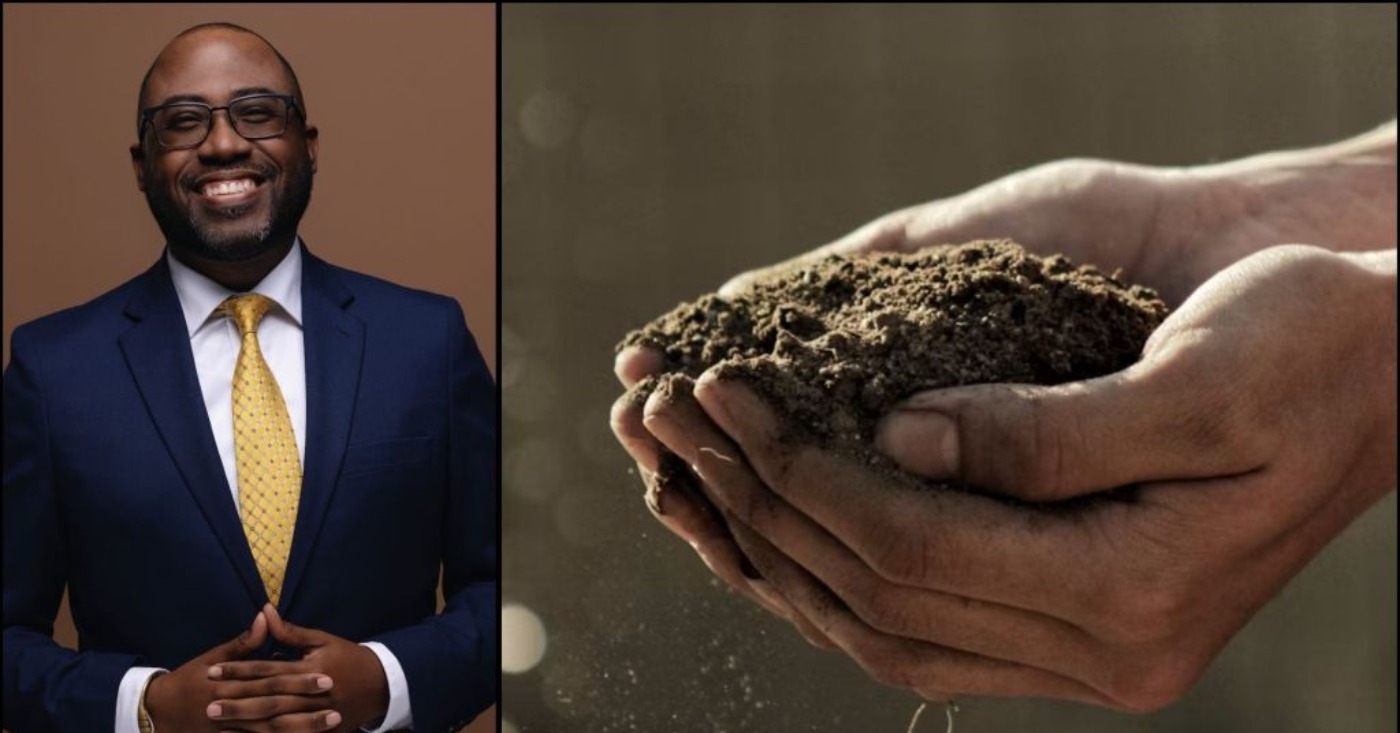
By Rev. Dr. Heber Brown III
I often look to our Ancestors to guide my service to the Black community today. They connect me to the movement that has been and is ongoing. Recently, I have been reflecting on two such inspiring Ancestors: Malcolm X and Queen Mother Audley Moore.
These two leaders at the vanguard of Pan-Africanism and the reparations movement understood the importance of securing land to build power. As Malcolm X said, “Revolution is based on land. Land is the basis of all independence. Land is the basis of freedom, justice and equality.” Queen Mother Moore, in a 1975 speech, declared, “We believe African captives in the USA will not have freedom until they have land of their own.”
Through their wisdom and the examples of so many others, we see how Black-owned land is a source of cultural memory and spiritual grounding. When we hold land, we find freedom.
I learned this firsthand through my great-grandparents’ lives “down the country” in rural Virginia. That land was a respite of sorts from the ravages of racial capitalism found in the city. It was an oasis amid a society that burdens Black people in so many ways. The whole family benefited from having significant landholdings to care for themselves. There was pride in self-sufficiency.
Economic sovereignty joins these attributes that land gives us. Since Black people have lost land — due to racial violence, the discriminatory impact of “heirs’ property” and exclusion from banking and farm programs — our overall wealth has decreased. According to the Federation of Southern Cooperatives, Black people owned 16 to 19 million acres of rural land in 1910, compared to less than 3 million acres today.
This is partly why I founded The Black Church Food Security Network. Pairing Black farmers with churches who own land ties together food justice, community and freedom. While food pantries and food drives are necessary efforts to fulfill an immediate need for those who experience food insecurity, they are not enough. Securing land, infrastructure and the means of production is the key to overcoming food apartheid in our communities. It must also be a primary component of reparations.
African leaders, led by President John Dramani Mahama of Ghana, recently coordinated a United Nations resolution that finally declared that the trafficking of enslaved Africans was the “gravest crime against humanity,” urging the need for reparations as the next step. There is no peace in the world, leaders said, without healing and reparative justice for Africans across the diaspora.
This closely echoes the words of Brother Malcolm; he said our redress should be seen as a violation of human rights, and now the global record acknowledges it as such.
Though further support and action is still required, the UN resolution marks an important step towards the goals of our Ancestors. Queen Mother Moore long advocated for “the long overdue debt of forty acres and two mules, repay in land.” Malcolm X similarly strongly advocated for reparations for land for Black Americans, as the U.S. government has shown is possible.
Both of these leaders sought to bring the issues of land and justice in front of the UN. Now that those issues are there, we hold the hope of progress.
As Queen Mother Moore asserted, our spirits were never removed from Africa. We are still connected to that land and heritage. We have achieved much, but reparations — through land and other means — are required to be truly free from exploitation.
All roads lead back to land ownership. Colonizers erroneously see land as a portal to access resources, from precious minerals, to oil, timber and even people. For the rest of us, land signals security and communal self-reliance.
So, farmers, churches and communities continue working hand-in-hand. This is the unfinished work of our Ancestors. It is up to us to continue their legacy of liberation through collective land ownership.
The opinions expressed in this commentary are those of the writer and not necessarily those of the AFRO.
The post The basis of freedom: Reclaiming land as an act of liberation appeared first on AFRO American Newspapers.
Based on reporting by Afro-American – Washington.


Port of Oakland, Army Corps Sign Historic Harbor Design Agreement

Democratic Clubs Interview Candidates for Oakland School Board

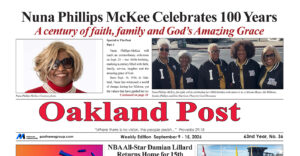
Nuna Phillips-McKee Celebrates 100 Years: ‘A Century of Faith, Family and God’s Amazing Grace!’

D.A. Ursula Jones Dickson: Terminix to Pay $3.15 Million Over Illegal Disposal of Pesticides, Customer Records

REPORT: Community Level Policy Is Impacting Homelessness and Drug Abuse in California

OPINION: AI Needs to Know Who Is the Boss
Goldi-Locs and Two (or Three) Bears in the Forest in California Hills

Election Watch 2026: 85% of Eligible Voters in California Are Registered

Don’t Let scammers Crash Your School Year

BOOK REVIEW — Curved Air: A Biography of Sickle Cell Anemia and the Quest to Cure the First Molecular Disease

California’s Legal Cannabis Market Hits $8 Billion as State Touts Progress on Fighting Drugs, Crime

Blacks and Latinos Clash Over LA’s Barrio Run; Mayor Karen Bass Calls for Dialogue Across Racial, Neighborhood Lines

Asm. Smallwood-Cuevas’s Bill Repealing ‘Racist’ CalWORKs ‘Man-in-the-House’ Rule Clears Legislature

Asm. Smallwood-Cuevas’s Bill Repealing ‘Racist’ CalWORKs ‘Man-in-the-House’ Rule Clears Legislature

‘Ready to See These Bills Become Law’: Sen. Weber’s Package of 15 Bills Advance to Gov. Newsom’s Desk

Department of Homeland Security Demands California Secretary of State Shirley N. Weber Scrub Voter Rolls

“The Power to See Threats Sooner”: Gov. Newsom, Safety Officials Showcase California’s Investments in Hi-Tech Wildfire Prevention

California Sen. Padilla Joins Colleagues to Introduce Bill Imposing Term Limits on Supreme Court Justices

Less Affluent School Districts, Including Sacramento City, Face Threat of State Takeover

Car Wash Workers Cope with Lingering Impacts of ICE Raids

ESSAY: California Can Close Its Colorectal Cancer Gap

Oakland Post: Week of August 5 – 11, 2026

As Part of Your Back-to- School Checklist, Vaccinate

Oakland ‘Port Serves as a Powerful Engine for Good Jobs and Economic Development

Gov. Newsom Announces $109.6 Million in Funding for 278 Supportive Homes in Bakersfield, Contra Costa, Sacramento and Fresno

California Hispanic Chambers of Commerce Unveils: ‘Powering the Future’ Theme for 47th Annual Statewide Convention

Closing the Gap: What the Data and Frontline Experiences Reveal About Cancer in Black California

Congresswoman Simon Demands Investigation into Trump’s Abuse of Emergency Powers for Coal Export Terminal in West Oakland

Four Candidates, Including Incumbent Barbara Lee, Qualify for Oakland Mayor’s Race

Oakland Post: Week of August 12 – 18, 2026

The Conversation With Al McFarlane 6/23/26

Media Monday 6/22/26

LIVE! ASK ALMA! — TUES. 6.23.26 7PM EST

Car Buying Secrets: 4 Hidden Checks Before You Sign!

Is This 550 HP Charger Worth YOUR Money? AutoNetwork Review

Celebrating Juneteenth – Frederick Douglass on education and resistance

LIVE! — ASK ALMA! — TUES. 6.19.26 7PM EST

Hyundai Ioniq 5 Parking, Safety, and 360 View #shorts

2025 Ioniq 5 New Wiper & Powerful Performance! #shorts

Electric SUV Range: Is 259 Miles Enough? #shorts

EV Charging: How Fast Can You Charge an Electric Vehicle? #shorts

Biometric Cooling… Messaging Seats…Come on! 2025 Infiniti QX80 Autograph 4WD

Charged Up: Witness the Magic of a Fully Electric Car! #shorts

Range Rover Sport PHEV Included…: See What’s Inside This Luxury SUV! #shorts

Invisible Hood View: Perfect Parking with X-Ray Vision! #shorts
-

 Commentary3 weeks ago
Standoff for Justice: Our Homes Are Worth Fighting For
-

 Business3 weeks ago
Gubernatorial Candidate Steve Hilton Blasts California New Tire Rules; Newsom Hits Back
-

 Activism3 weeks ago
Oakland Post: Week of August 26 – September 1, 2026
-

 Business3 weeks ago
Frontier Airlines’ Return to Oakland Airport Brings Flights, Jobs and Opportunity
-

 Business3 weeks ago
Chef Sharon Lee Blends Culinary Excellence, Education and Empowerment
-

 Education3 weeks ago
Gov. Newsom’s Latest Appointees Include Sacramento Advocate for Formerly Incarcerated Students; State’s New Tech Chief
-

 Business3 weeks ago
Oakland Coliseum Project Opens Door for Small Businesses to Build Bigger
-

 Community3 weeks ago
Big City Mayors Ask for “Yes” Vote on Housing Bond Measure; Conservatives Say “No”
