
Activism
How to Solve Domestic Violence: Through the Eyes of Black Men
Systemic racism, a history of racist policies, and racist social structures all contribute to Black women and Black men experiencing intimate partner violence at a disproportionately high rate, according to a 2020 study released by the National Coalition Against Domestic Violence (NCADV).
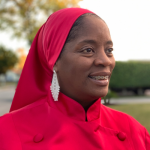

By Charlene Muhammad | Special to the Oakland Post
Black male peace advocates working to eradicate domestic violence in their communities say a key solution is providing more education and resources to those who harm their partners, children or others living in their homes.
Systemic racism, a history of racist policies, and racist social structures all contribute to Black women and Black men experiencing intimate partner violence at a disproportionately high rate, according to a 2020 study released by the National Coalition Against Domestic Violence (NCADV).
That NCADV report found that over 45 % of Black women and over 40 % of Black men have experienced intimate partner physical violence, intimate partner sexual violence or intimate partner stalking in their lifetimes.
Separation is a key to safety and survival, DV experts say, but in some cases, it is only a temporary solution. There are countless stories of women who have filed restraining orders and fled to a safe house with family or friends — sometimes even remote strangers — only to return to toxic environments, where some unfortunately have been killed.
So, advocates feel it is important to increase awareness among males and recruit male allies to become active in making a change.
“That’s one of the things that’s going to be really important in terms of addressing and curbing some of this, other men stepping up to the plate, supporting other men and holding other men accountable to stop the violence by modeling it in on their own lives and through their own behaviors,” said Edward L. Moore, an Oakland-based certified life coach and batterer’s intervention specialist at Men Creating Peace, a community-based organization.
He currently works with Oakland’s violence prevention program helping young men understand how they can avoid domestic violence and intimate partner violence.
“When men do become batters, the approach we take is more punitive,” said Moore, before clarifying that he is not suggesting there shouldn’t be consequences or men shouldn’t be held accountable.
“But the approach has been through a more judicial than social lens,” he observed. “For example, most of the men I get in support groups come through mandatory classes, which feels very punitive to them.”
According to Moore, 85 % of those seeking services are court-ordered and 15 % of them are self-referred – men who have started to feel the impact of their violence and are seeking change. Regardless of race, socio-economic status, background, upbringing, culture or religion, men from all walks of life seek their help, he pointed out.
According to Moore, facilitators do their best to hold batterers accountable, while letting them know they made a mistake that doesn’t necessarily define who they are.
“We really show them not only how to impact themselves, their children, their families, the person that they caused the violence against, but then ultimately, their community,” said Moore.
“The number one thing that gets men’s attention is when I show them how they first of all impact themselves through their violence,” he continued.
His own breakthrough came while incarcerated, during a visit with his own son, who counted the days until they were reunited, and he could freely touch his father’s hand. It also came through reflections on the love of his grandmother. She never drove a car, but had to go miles, then wait in long lines to visit him,” said Moore.
When men join his program, Moore asks them to identify everything they have lost due to their violence. Next, he has them identify what their family and children have lost. Then, he asks them to examine what the person they were violent to lost, and what did their community lose.
“It’s one of the most impactful tools that I’ve used to help men be invested in stopping their own violence,” said Moore.
The men he serves say the biggest thing they need to help make a change is education. Second, they say they need sincere advocates to help hold them accountable.
“Most of the time hurt people hurt people. I often tell the guys the things that happened to you over the course of your life are not your fault, but as an able-bodied adult, it’s your responsibility to get the healing that you need so that you don’t bleed on people that didn’t cut you,” said Moore. “You must temper accountability with compassion, and it’s a delicate dance and you must know when to do which, but both are needed,” he said.
Dr. Aquil Basheer, founder and executive director of the Professional Community Intervention Training Institute (PCITI) – a community-based organization based in Los Angeles – is a certified “violence-intersession, gang-hostility intervention training specialist.”
Basheer has conducted trainings worldwide. Black men who commit acts of domestic violence are attempting to heal themselves, he says.
“When we see traumatized people using what so many of us would consider anti-social means, they’re doing it to get well, using it to try to create some degree of wellness and restoration. Somewhere in the process, they bought into the idea that it was okay,” said Basheer.
According to Basheer, pursuing non-conventional solutions amounts to “thinking systematically.”
“If, in my perception, domestic violence is okay to me, because it creates some degree of wellness and healing for me, I’m going to continue to use it if I have no other options that can give me the same result that the domestic violence is giving me,” Basheer points out.
A key to solving domestic violence is the participation of the whole family in the treatment process, argued Basheer.
The individual cases may differ, and no cookie-cutter approach can be applied, but looking at the root causes, you can find common denominators that help you get to the bottom of the problem among Blacks, Asians, Latinos, and others, Basheer added.
“You’re looking at a perpetuating cycle, where if every individual’s needs and wants are not taken care of, you are going to continue with that broken cycle,” he said.






Activism
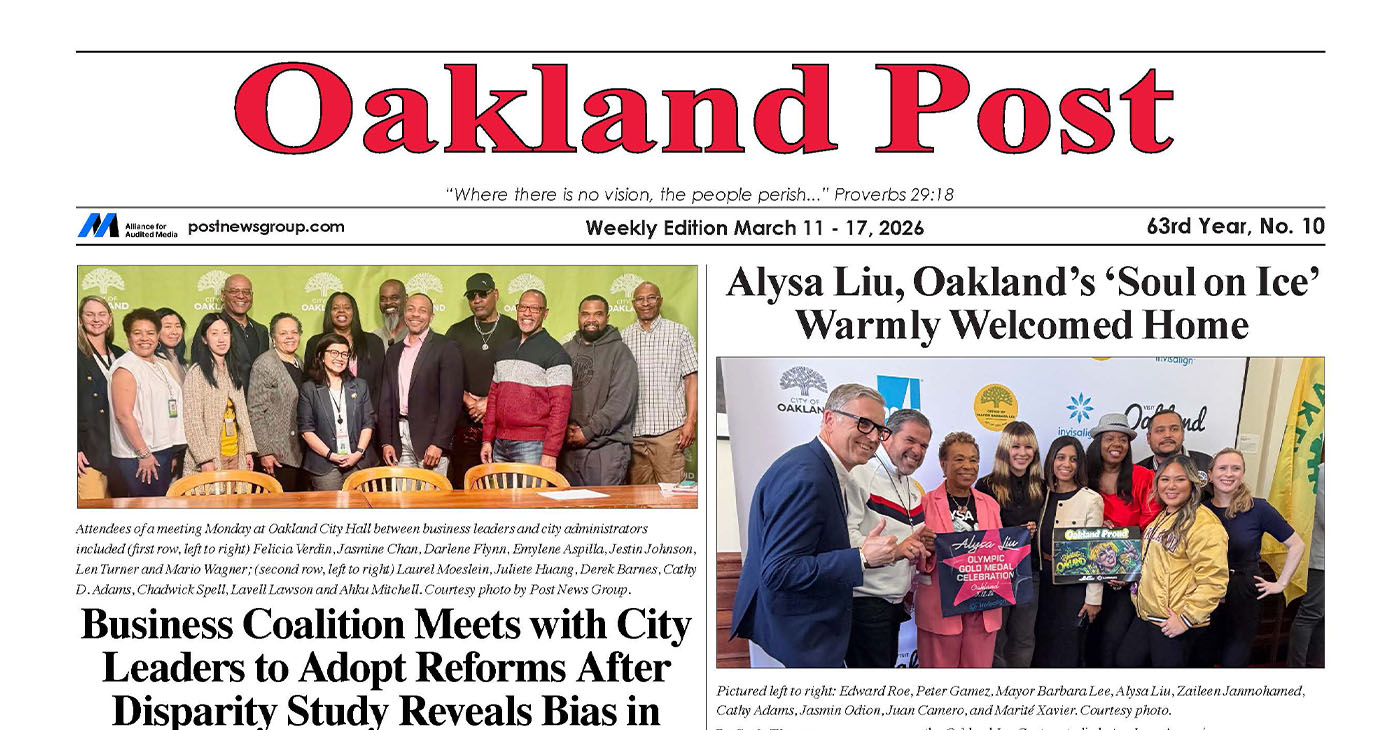
Oakland Post: Week of March 11 -17, 2026
The printed Weekly Edition of the Oakland Post: Week of March 11 – 17, 2026

To enlarge your view of this issue, use the slider, magnifying glass icon or full page icon in the lower right corner of the browser window.

Activism
Oakland Post: Week of March 4 – 10, 2026
The printed Weekly Edition of the Oakland Post: Week of March 4 – 10, 2026

To enlarge your view of this issue, use the slider, magnifying glass icon or full page icon in the lower right corner of the browser window.
Activism
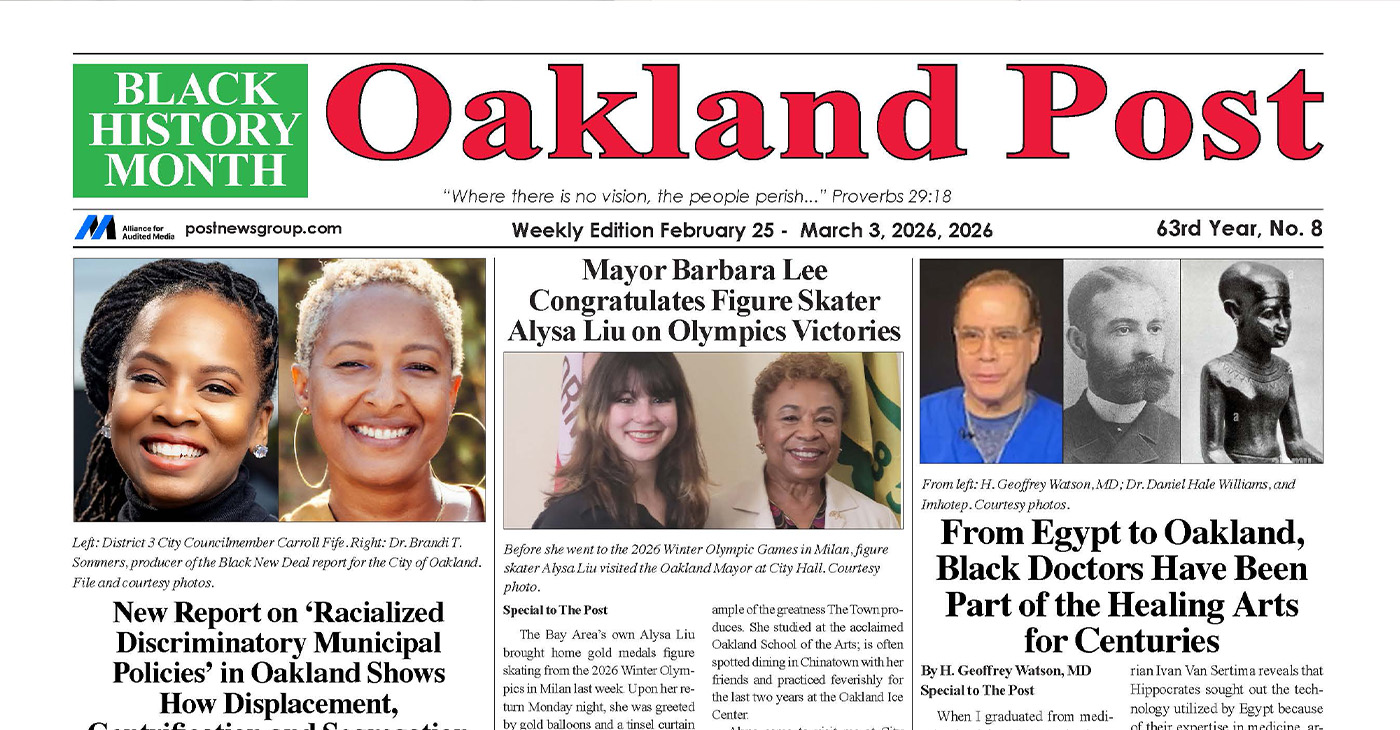
Oakland Post: Week of February 25 – March 3, 2026
The printed Weekly Edition of the Oakland Post: Week of – February 25 – March 3, 2026
To enlarge your view of this issue, use the slider, magnifying glass icon or full page icon in the lower right corner of the browser window.

WORK FROM HOME
Home-based business with potential monthly income of $10K+ per month. A proven training system and website provided to maximize business effectiveness. Perfect job to earn side and primary income. Contact Lynne for more details: Lynne4npusa@gmail.com 800-334-0540


Financial Wellness and Mental Health: Managing Money Stress in College

Oakland Post: Week of March 11 -17, 2026

Women & Wealth: Tips for Navigating Your Lifelong Financial Journey

COMMENTARY: Women of Color Shape Our Past and Future

Woman’s Search for Family’s Roots Leads to Ancestor John T. Ward – A Successful Entrepreneur and Conductor on the Underground Railroad

Advocates Raise Alarm Over ICE Operation, MOU and Detention Risks in Baltimore County

Pete Buttigieg to Join Mayor Randall Woodfin for Community Town Hall in Birmingham

WATCH: Week One – NNPA’s “Leadership Matters” Video Series

Oakland Post: Week of March 4 – 10, 2026

OP-ED: NNPA Launches 2026 “Leadership Matters” Video Series

PRESS ROOM: PMG and Cranbrook Horizons-Upward Bound Launch Journey Fellowship Cohort 2

Los Angeles Summit Brings Together Leaders to Tackle Poverty and Affordability

Civil Rights TV Launches 24/7 Network Focused on Black History, Education and Equity

REVIEW: The Ultimate Hot Girl Summer Getaway: Sunseeker Resort Florida

COMMENTARY: How You Stop a Prescription Medicine is as Important as How You Start

Book Review: Books on Black History and Black Life for Kids

Community Celebrates Turner Group Construction Company as Collins Drive Becomes Turner Group Drive

California Launches Study on Mileage Tax to Potentially Replace Gas Tax as Republicans Push Back

Discrimination in City Contracts

COMMENTARY: The Biases We Don’t See — Preventing AI-Driven Inequality in Health Care

Black History Events in the East Bay

Post Newspaper Invites NNPA to Join Nationwide Probate Reform Initiative

Art of the African Diaspora Celebrates Legacy and Community at Richmond Art Center

New Bill, the RIDER Safety Act, Would Support Transit Ambassadors and Safety on Public Transit

COMMENTARY: The National Protest Must Be Accompanied with Our Votes

Oakland Post: Week of February 4 – 10, 2026

Oakland Post: Week of February 11 – 17, 2026

Dorothy Lee Bolden: Uniting Domestic Workers

After Don Lemon’s Arrest, Black Officials Raise Concerns About Independent Black Media

Reflecting on Black History Milestones in Birmingham AL

Hyundai Ioniq 5 Parking, Safety, and 360 View #shorts

2025 Ioniq 5 New Wiper & Powerful Performance! #shorts

Electric SUV Range: Is 259 Miles Enough? #shorts

EV Charging: How Fast Can You Charge an Electric Vehicle? #shorts

Biometric Cooling… Messaging Seats…Come on! 2025 Infiniti QX80 Autograph 4WD

Charged Up: Witness the Magic of a Fully Electric Car! #shorts

Range Rover Sport PHEV Included…: See What’s Inside This Luxury SUV! #shorts

Invisible Hood View: Perfect Parking with X-Ray Vision! #shorts

AI Is Reshaping Black Healthcare: Promise, Peril, and the Push for Improved Results in California

ESSAY: Technology and Medicine, a Primary Care Point of View

Sanctuary Cities

The RESISTANCE – FREEDOM NOW

STATE OF THE PEOPLE: Freddie

ECONOMIC BOYCOTT DAY!!!!!

I told You So
-
 #NNPA BlackPress4 weeks ago
Reflecting on Black History Milestones in Birmingham AL
-
 #NNPA BlackPress4 weeks ago
PRESS ROOM: NBA Hall of Fame Nominee Terry Cummings Joins 100 Black Men of DeKalb County to Launch Victory & Values Initiative
-

 #NNPA BlackPress4 weeks ago
U.S. manufacturing rebounds – how foundry services are adapting to rising demand
-
 Activism3 weeks ago
Oakland Post: Week of February 25 – March 3, 2026
-

 #NNPA BlackPress4 weeks ago
OP-ED: One Hundred Years of Black Workers Telling the Truth
-

 #NNPA BlackPress4 weeks ago
Trump’s MAGA Allies are Creating Executive Order Plan to Steal the 2026 Midterms
-

 #NNPA BlackPress4 weeks ago
Advancements in solar technology that are changing the way we power the world
-
 #NNPA BlackPress4 weeks ago
PRESS ROOM: Civil Rights TV Launches in Selma as the World’s First 24/7 Civil Rights Television Network
