Connect with us

Activism

How Four California Cities Are Approaching Reparations for Black Residents

The California Reparations Task Force to Study and Develop Reparation Proposals for African Americans will hold its last in-person meeting on June 29 in Sacramento. The meeting will take place in the First Floor Auditorium of the March Fong Eu Secretary of State Building, located at 1500 11th Street. The task force will submit its final report to the California Legislature. If approved, California could become the first state to provide reparations to the descendants of enslaved Black Americans.

Published

on

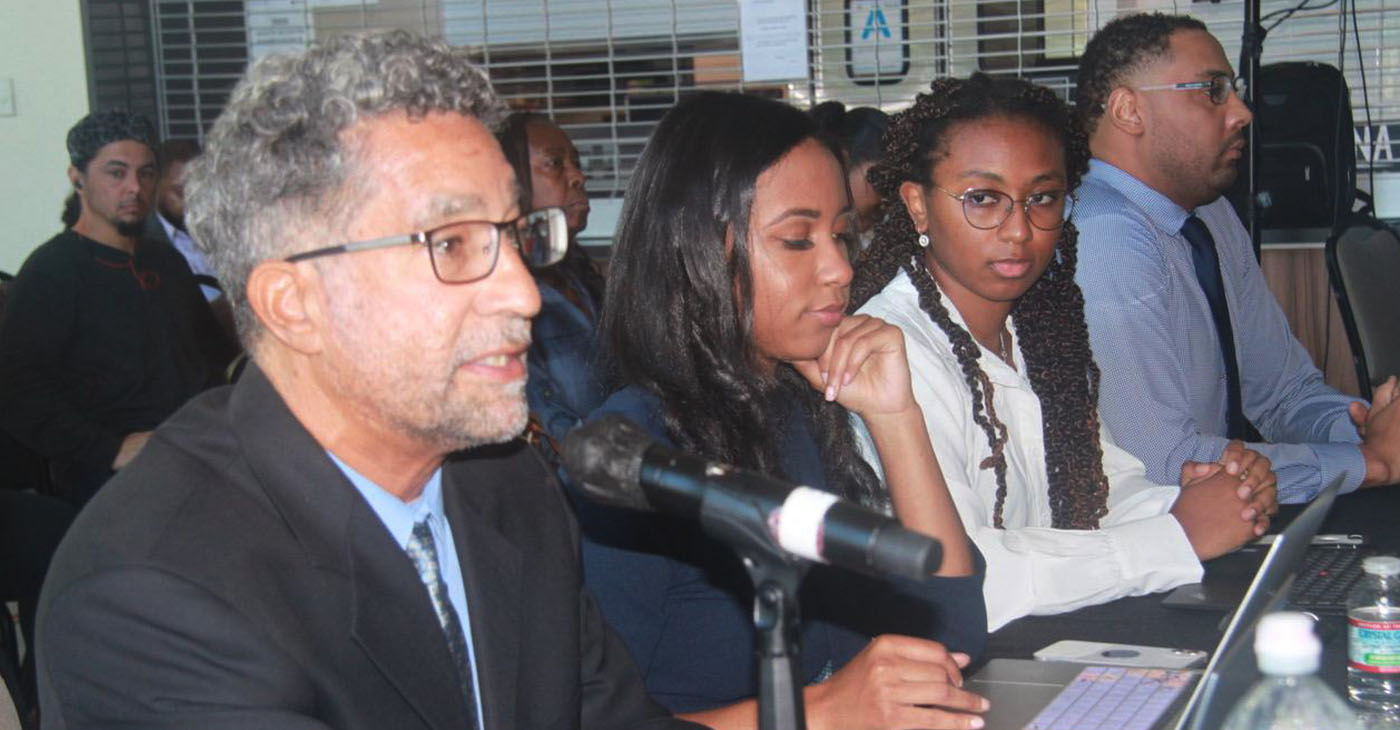
Dr. Michael Stoll, director of UCLA Ralph Bunche Center’s Black Policy Project, testifies before the California Reparations Task Force in Los Angeles about a study, research, and data concerning the Black experience across the state. Right of Stoll are UCLA graduates and scholars Jendayln Coulter, Chinyere Nwonye, and Elliot Wood. Sept.23, 2022. CBM file photo by Antonio Ray Harvey.

By Antonio Ray Harvey
California Black Media

The California Reparations Task Force to Study and Develop Reparation Proposals for African Americans will hold its last in-person meeting on June 29 in Sacramento.

The meeting will take place in the First Floor Auditorium of the March Fong Eu Secretary of State Building, located at 1500 11th Street.

The task force will submit its final report to the California Legislature. If approved, California could become the first state to provide reparations to the descendants of enslaved Black Americans.

Task force vice-chairperson Rev. Amos Brown said the state Legislature must “do the right thing” before leaving San Francisco for a speaking engagement in Jackson, Miss., to recognize the 60th anniversary of NAACP field secretary Medgar Evers assassination on June 12, 1963.

“It’s now time for some deliberate action,” said Brown, the pastor of Third Street Baptist Church in San Francisco. “If they don’t provide support action, or forms of reparations in this nation, and in this state, they will be giving credence to bigotry, racism, and inhumanity towards Black folks.”

During the past 24 months, while the state reparations task force held public hearings and listened to expert testimony to uncover historic wrongdoings and discriminatory policies against descendants of enslaved Blacks in order to determine appropriate compensation, some cities in California started their own reparations efforts.

In June 2021, the city of Los Angeles established the Reparations Advisory Commission (RAC), a seven-member task force comprised of activists, academicians, attorneys, racial justice advocates, and more. It is supported by Los Angeles’ Civil + Human Rights and Equity Department’s Office of Racial Equity.

The RAC advises the city on the formation of a reparations pilot program for Californians who are descendants of enslaved Black Americans in the Los Angeles area, according to Khansa T. “Friday Jones” Jones-Muhammad, a member of the commission. The RAC provides recommendations for the format, function, and goals of the initiative, including strategies and opportunities to seek public or private funding.

In April, RAC hosted its first in-person forum at the California African American Museum.

“African Americans in Los Angeles are overrepresented in homelessness and underrepresented in generational wealth. It is the result of a system that has denied African Americans the ability to fully exercise their God-given liberties,” said RAC Chairperson Michael Lawson at the meeting.

Lawson is the CEO and president of the L.A. Urban League.

“The closure needed is a mutual recognition of the wrongs that have been meted upon the members of the victimized community. I am grateful to everyone who joined us as we take this step forward together,” he added.

In December 2020, the San Francisco Board of Supervisors passed an ordinance establishing the 15-member San Francisco African American Reparations Advisory Committee (AARAC).

Over the course of two years, AARAC developed a San Francisco Reparations Plan that addresses institutional and city-sanctioned wrongdoings against Black communities in San Francisco.

AARAC specifically focuses on improving different aspects of Black life, including education, housing, workforce development, economic opportunities, financial stability, small businesses, access to public transit, and food security.

The committee is committed to reducing violence, addressing health disparities and preventing over-criminalization of African Americans.

In March, AARAC presented to the San Francisco Board of Supervisors more than 100 recommendations, including a proposal to pay each qualifying Black city resident a one-time lump sum reparation payment of $5 million.

In an interview with San Francisco’s KRON 4 News on March 24, Eric McDonnell, the chairperson of AARAC, stated that the recommendations are an estimation of the atrocities experienced by Black Americans.

“Our task (AARAC) was to do the appraisal, and it’s the city’s task to determine, based upon recommendations, what they decide to adopt,” McDonnell said.

In 2020, after the murder of George Floyd, San Diego established the Department of Race and Equity (DRE) to address disparities experienced by individuals in the city.

This initiative was led by San Diego City Councilmember Monica Montgomery-Steppe, who is a member of the state’s reparations task force.

Last year, the city of Sacramento began developing a municipal reparations initiative committed to “truth telling and trust building” called the Sacramento Centered on Racial Equity (SCORE) plan.

SCORE is designed to interrupt patterns and processes rooted in dominant cultural patterns that perpetuate systemic racism and racial hierarchy within the city.

Betty Williams, president of the Sacramento branch of the NAACP, praised the work SCORE has started but she wants to further expand discussions on reparations for the Sacramento Black community.

“I want an outreach team to go out in the community to ask the critical question: ‘Do you want a (reparations) task force and what should it look like?’” Williams told California Black Media.

“That’s the discussion I’ve had with Mayor (Darrell) Steinberg on how to put something like this together. It’s not just monetary. Education, housing, small business — all of those things should be part of the recommendations and of what reparations should look like for Black Sacramentans.”

Activism

Up to the Job: How San Francisco’s PRC Is Providing Work Opportunities That Turn Into Lasting Stability

Each year, PRC serves more than 5,000 clients through a wide range of programs. These include housing navigation, legal advocacy to ensure access to health and public benefits, supportive housing, job and life-skills training, and residential treatment programs. 

Published

on

Black Leadership Council (BLC) Advocacy Day in Sacramento. BLC works to advance meaningful change through policy engagement to unlock the full potential of Black and low-income communities. Photo courtesy of PRC.

By Joe Kocurek, California Black Media

Seville Christian arrived in San Francisco in the 1990s from Kansas City, Mo., a transgender woman coming from a time and place still hostile to who she was.

San Francisco offered a deeper LGBTQ+ history and a more visible community of people like her, but even in a city known for acceptance, building a stable life from scratch was no small task.

After arriving in the city, she turned to Positive Resource Center (PRC) looking for work — and for a foothold — in a new place.

“PRC gave me my first job,” Christian said. “A simple gig — passing out magazines at the San Francisco Pride Parade.”

That first opportunity marked the beginning of a decades-long relationship with PRC, one that has seen Christian grow from client to valued employee, and eventually to policy fellow.

“Today, I’ve been with PRC for 27 years, going on 28,” she said.

Seville Christian’s decades-long relationship with PRC includes as a client, fellow and beloved employee. Photo courtesy of PRC.

Seville Christian’s decades-long relationship with PRC includes as a client, fellow and beloved employee. Photo courtesy of PRC.

Helping people access employment and build sustainable careers has been a cornerstone of PRC’s mission since its inception nearly four decades ago. In its most recent annual impact report, PRC served 443 clients through workforce development services, including career counseling, educational programs, hands-on training, and job search assistance. The average wage earned by PRC clients is $26.48 per hour — approximately 38% above San Francisco’s minimum wage.

To advance this work, organizations like PRC have benefited from funding through California’s Stop the Hate Program, which provides direct support to community-based organizations leading anti-hate initiatives.

Christian’s path was not without challenges. During some rocky years, she experienced periods of housing instability and struggled with addiction. Through PRC, she enrolled in a life-skills program that emphasized using her own lived experience as a means of helping others. The program helped set her on a path toward completing an associate’s degree and ultimately launching a career in case management.

“Today, whether someone is new to the city or has lived here their whole life, I know how to help them navigate to where they need to be,” Christian said.

Each year, PRC serves more than 5,000 clients through a wide range of programs. These include housing navigation, legal advocacy to ensure access to health and public benefits, supportive housing, job and life-skills training, and residential treatment programs.

Members of PRC’s Black Leadership Council meet with a lawmaker in Sacramento. Photo courtesy of PRC.

Members of PRC’s Black Leadership Council meet with a lawmaker in Sacramento. Photo courtesy of PRC.

While PRC was founded to serve people living with HIV, its mission has expanded over the decades to meet the needs of people with disabilities, individuals experiencing homelessness, and those facing mental health and substance use challenges.

According to PRC’s Chief of Public Policy and Public Affairs, Tasha Henneman, some of the organization’s earliest programs remain as vital today as they were at the start.

“Our emergency financial assistance program helped more than 1,200 people this year pay rent, cover medical bills, and keep the lights on,” Henneman said. “And over 1,400 people reached out for legal advocacy, resulting in more than $2.5 million in retroactive benefits unlocked.”

Beyond direct services, PRC is deeply committed to community empowerment and policy change. Programs such as the Black Leadership Council support community leaders in advocating for systemic reform, while the Black Trans Initiative focuses on addressing the unique challenges faced by Black transgender individuals.

A recent study from the Williams Institute highlighted findings that 71% of transgender homicide victims in the U.S. between 2010 and 2021 were Black and that nearly a third of the transgender homicides during that period were confirmed or suspected hate crimes.

PRC’s direct and indirect services can be a lifeline for people experiencing hate and are an example of the resources people can get connected with through the state’s CA vs Hate hotline.

PRC is now also producing a film project that centers the lived experiences of Black trans clients, including individuals like Christian.

PRC welcomed guests to their annual Open House in April, an evening dedicated to connection, reflection, and learning more about the programs and people working every day to support San Franciscans experiencing housing instability, unemployment, and behavioral health challenges. Photo courtesy of PRC.

PRC welcomed guests to their annual Open House in April, an evening dedicated to connection, reflection, and learning more about the programs and people working every day to support San Franciscans experiencing housing instability, unemployment, and behavioral health challenges. Photo courtesy of PRC.

“Our film highlights the health journeys and lived experiences of some of PRC’s Black trans clients,” Henneman said. “Our goal is to give voice, visibility, and agency to the participants — and to bring their stories, both harrowing and inspirational, to policymakers and the broader public.”

The film, expected to be released later this year, is directed by Yule Caise, with assistant director Zarina Codes, a Black transgender San Francisco resident.

Today, Christian continues her relationship with PRC as an ambassador, reflecting on a journey that began with a single job opportunity and grew into a lifelong commitment to service.

“Sometimes I’ll be riding the bus or standing in a grocery store, and someone will come up to me from a women’s shelter,” she said. “They’ll say, ‘Oh, Miss Seville, I just want to thank you. You really helped me with what I was dealing with.’”

She paused, smiling.

“And in those moments,” Christian said, “I think to myself, “Well!.”

A single word that sums up pride in a journey to find the best in herself.

Get Support After Hate:

California vs Hate is a non-emergency, multilingual hotline and online portal offering confidential support for hate crimes and incidents. Victims and witnesses can get help anonymously by calling 833-8-NO-HATE (833-866-4283), Monday to Friday, 9 a.m.–6 p.m. PT, or online at any time. Anonymous. Confidential. No Police. No ICE.

This story was produced in partnership with CA vs Hate. Join them for the first-ever CA Civil Rights Summit on May 11, 2026. More information at www.cavshate.org/summit.

Continue Reading

Activism

Oakland Post: Week of April 22 – 28, 2026

The printed Weekly Edition of the Oakland Post: Week of April 22 – 28, 2026

Published

on

To enlarge your view of this issue, use the slider, magnifying glass icon or full page icon in the lower right corner of the browser window.
Continue Reading

Activism

Up to the Job: How San Francisco’s PRC Is Providing Work Opportunities That Turn Into Lasting Stability

Each year, PRC serves more than 5,000 clients through a wide range of programs. These include housing navigation, legal advocacy to ensure access to health and public benefits, supportive housing, job and life-skills training, and residential treatment programs. 

Published

on

Black Leadership Council (BLC) Advocacy Day in Sacramento. BLC works to advance meaningful change through policy engagement to unlock the full potential of Black and low-income communities. Photo courtesy PRC.

Joe Kocurek | California Black Media  

 Seville Christian arrived in San Francisco in the 1990s from Kansas City, Mo., a transgender woman coming from a time and place still hostile to who she was. 

 San Francisco offered a deeper LGBTQ+ history and a more visible community of people like her, but even in a city known for acceptance, building a stable life from scratch was no small task. 

 After arriving in the city, she turned to Positive Resource Center (PRC) looking for work — and for a foothold — in a new place. 

 “PRC gave me my first job,” Christian said. “A simple gig — passing out magazines at the San Francisco Pride Parade.” 

 That first opportunity marked the beginning of a decades-long relationship with PRC, one that has seen Christian grow from client to valued employee, and eventually to policy fellow. 

 “Today, I’ve been with PRC for 27 years, going on 28,” she said. 

Helping people access employment and build sustainable careers has been a cornerstone of PRC’s mission since its inception nearly four decades ago. In its most recent annual impact report, PRC served 443 clients through workforce development services, including career counseling, educational programs, hands-on training, and job search assistance. The average wage earned by PRC clients is $26.48 per hour — approximately 38% above San Francisco’s minimum wage. 

To advance this work, organizations like PRC have benefited from funding through California’s Stop the Hate Program, which provides direct support to community-based organizations leading anti-hate initiatives. 

Christian’s path was not without challenges. During some rocky years, she experienced periods of housing instability and struggled with addiction. Through PRC, she enrolled in a life-skills program that emphasized using her own lived experience as a means of helping others. The program helped set her on a path toward completing an associate’s degree and ultimately launching a career in case management. 

“Today, whether someone is new to the city or has lived here their whole life, I know how to help them navigate to where they need to be,” Christian said. 

PRC welcomed guests to their annual Open House in April, an evening dedicated to connection, reflection, and learning more about the programs and people working every day to support San Franciscans experiencing housing instability, unemployment, and behavioral health challenges.

PRC welcomed guests to their annual Open House in April, an evening dedicated to connection, reflection, and learning more about the programs and people working every day to support San Franciscans experiencing housing instability, unemployment, and behavioral health challenges.

Each year, PRC serves more than 5,000 clients through a wide range of programs. These include housing navigation, legal advocacy to ensure access to health and public benefits, supportive housing, job and life-skills training, and residential treatment programs. 

While PRC was founded to serve people living with HIV, its mission has expanded over the decades to meet the needs of people with disabilities, individuals experiencing homelessness, and those facing mental health and substance use challenges.  

According to PRC’s Chief of Public Policy and Public Affairs, Tasha Henneman, some of the organization’s earliest programs remain as vital today as they were at the start. 

“Our emergency financial assistance program helped more than 1,200 people this year pay rent, cover medical bills, and keep the lights on,” Henneman said. “And over 1,400 people reached out for legal advocacy, resulting in more than $2.5 million in retroactive benefits unlocked.” 

Beyond direct services, PRC is deeply committed to community empowerment and policy change. Programs such as the Black Leadership Council support community leaders in advocating for systemic reform, while the Black Trans Initiative focuses on addressing the unique challenges faced by Black transgender individuals. 

 A recent study from the Williams Institute highlighted findings that 71% of transgender homicide victims in the U.S. between 2010 and 2021 were Black and that nearly a third of the transgender homicides during that period were confirmed or suspected hate crimes.  

PRC’s direct and indirect services can be a lifeline for people experiencing hate and are an example of the resources people can get connected with through the state’s CA vs Hate hotline.  

PRC is now also producing a film project that centers the lived experiences of Black trans clients, including individuals like Christian.

 “Our film highlights the health journeys and lived experiences of some of PRC’s Black trans clients,” Henneman said. “Our goal is to give voice, visibility, and agency to the participants — and to bring their stories, both harrowing and inspirational, to policymakers and the broader public.” 

The film, expected to be released later this year, is directed by Yule Caise, with assistant director Zarina Codes, a Black transgender San Francisco resident. 

 Today, Christian continues her relationship with PRC as an ambassador, reflecting on a journey that began with a single job opportunity and grew into a lifelong commitment to service. 

“Sometimes I’ll be riding the bus or standing in a grocery store, and someone will come up to me from a women’s shelter,” she said. “They’ll say, ‘Oh, Miss Seville, I just want to thank you. You really helped me with what I was dealing with.’” 

She paused, smiling. 

“And in those moments,” Christian said, “I think to myself, “Well!.” 

A single word that sums up pride in a journey to find the best in herself.  

 Get Support After Hate:

California vs Hate is a non-emergency, multilingual hotline and online portal offering confidential support for hate crimes and incidents. Victims and witnesses can get help anonymously by calling 833-8-NO-HATE (833-866-4283), Monday to Friday, 9 a.m.–6 p.m. PT, or online at any time. Anonymous. Confidential. No Police. No ICE.This story was produced in partnership with CA vs Hate. Join them for the first-ever CA Civil Rights Summit on May 11, 2026. More information at www.cavshate.org/summit.

Continue Reading

Subscribe to receive news and updates from the Oakland Post

* indicates required

CHECK OUT THE LATEST ISSUE OF THE OAKLAND POST

ADVERTISEMENT

WORK FROM HOME

Home-based business with potential monthly income of $10K+ per month. A proven training system and website provided to maximize business effectiveness. Perfect job to earn side and primary income. Contact Lynne for more details: Lynne4npusa@gmail.com 800-334-0540

Facebook

#NNPA BlackPress2 days ago

State of Preschool Yearbook Provides an Annual Snapshot of State-Funded Preschool 

#NNPA BlackPress3 days ago

Which features on the 2026 Volkswagen Golf GTI Autobahn are actually worth having?

#NNPA BlackPress3 days ago

Panoramic Roof & Rear Seats: The Ultimate EV Comfort! #shorts

#NNPA BlackPress3 days ago

Does the 2026 Volkswagen Golf GTI Autobahn actually fit your lifestyle?

#NNPA BlackPress3 days ago

Subaru EV Blends Modern Design with Unmatched Confidence & Power! #shorts

#NNPA BlackPress3 days ago

Subaru Uncharted EV: Confidence, Control, and Daily Usability for You! #shorts

#NNPA BlackPress3 days ago

VW GTI Under the Hood: Turbocharged Engine & DSG #shorts

#NNPA BlackPress3 days ago

2026 Mazda CX‑90 PHEV Premium Plus — Luxury SUV or Overpriced Plug‑In? | Walkaround Review

#NNPA BlackPress3 days ago

Why Time Is the Most Expensive Part of Car Buying | The Color of Our Money Is Green Ep5

#NNPA BlackPress3 days ago

2026 Subaru Unchartered GT: Future of Driving is HERE! #shorts

#NNPA BlackPress3 days ago

Golf GTI Digital Cockpit Pro & HUD: Your Ultimate Driving Experience #shorts

Black Leadership Council (BLC) Advocacy Day in Sacramento. BLC works to advance meaningful change through policy engagement to unlock the full potential of Black and low-income communities. Photo courtesy of PRC.
Activism4 days ago

Up to the Job: How San Francisco’s PRC Is Providing Work Opportunities That Turn Into Lasting Stability

Activism5 days ago

Oakland Post: Week of April 22 – 28, 2026

Black Leadership Council (BLC) Advocacy Day in Sacramento. BLC works to advance meaningful change through policy engagement to unlock the full potential of Black and low-income communities. Photo courtesy PRC.
Activism1 week ago

Up to the Job: How San Francisco’s PRC Is Providing Work Opportunities That Turn Into Lasting Stability

At D. Monaghan’s on the Hill, a resolution declaring April 9 ‘100 Black Men of the Bay Area Day’ was witnessed by (l.-r.) 100 Black Men leaders Maurice Harold, Marco T. Lindsey, Danny Lee Williams, Oakland Mayor Barbara Lee, Oakland City Council President Kevin Jenkins, Port of Oakland Commissioner Derek Mohammad, and Oakland Councilmember Janani Ramachandran. Photo by Carla Thomas.
Activism1 week ago

Mayor Barbara Lee Proclaims April 9 as ‘100 Black Men of the Bay Area Day’

Trending

Copyright ©2021 Post News Group, Inc. All Rights Reserved.