
Activism
Free School Meals for All Here to Stay in California
With 1 in every 6 children facing hunger in the U.S., California is the first state to promise that every public school student — all 6 million of them – will get free school meals.


With 1 in every 6 children facing hunger in the U.S., California is the first state to promise that every public school student — all 6 million of them – will get free school meals.
The universal school meals program, which will launch in the 2022-2023 school year, is part of the landmark state budget agreement reached between Gov. Gavin Newsom and the Legislature last month. Days later, Maine became the second state to commit to offering a universal school meals program with the signing of its budget.
The program ensures that all students will be offered breakfast and lunch at their school, which state Sen. Nancy Skinner, D-Berkeley, said is “essential to learning.” Skinner has led the effort to establish a universal school meal program.
“We know that many California children are food insecure, and if you’re hungry you cannot learn well,” Skinner said. “The whole point of school is learning, and everything we can do to create an environment that allows children to thrive and learn is what we need to do.”
Skinner introduced a bill in March that would have established a universal school meal program. After the program garnered bipartisan support and the California Department of Finance forecast unexpectedly large projected revenues, lawmakers opted to include it in the state budget rather than as a separate bill.
The final agreement between Newsom and the Legislature calls for $650 million through the Proposition 98 fund each year to reimburse school districts starting in 2022, as well as $54 million in the 2021-22 fiscal year to supplement state meal reimbursements. Proposition 98 is the formula that determines what portion of the general fund goes to community colleges and K-12 schools.
The state program is set to begin in the 2022-23 school year because the U.S. Department of Agriculture has already committed to paying for school meals for all students through the 2021-22 school year.
The USDA has reimbursed districts for providing free meals to all students since the start of the pandemic. Before the pandemic, districts were only reimbursed for feeding students who were enrolled in the National School Lunch Program. Advocates said being able to feed students without having to check whether they qualified for free lunches allowed districts to serve more families at a time when many faced hunger and hardship.
Waiving the eligibility requirements allowed the Oakland Unified School District, for example, to distribute as many as 18,000 grab-and-go meals a day during the pandemic, said spokesman John Sasaki.
“That just goes to show the need that was there,” Sasaki said.
Previously, as part of the National School Lunch Program application process, families had to disclose their household income, how many people lived in the household, their children’s immigration status or if their children were homeless or runaways. Some families feared giving out that information, and students may have felt embarrassed to receive a free meal while others paid for it.
Schools in New York City began serving free meals to all students in 2017 after finding that some students would rather go hungry than admit they didn’t have enough money to pay for lunch. The decision followed a national outcry over “lunch shaming” — publicly shaming students for unpaid school meal bills, or even school staff throwing away their lunches rather than allowing them to eat.
Advocates believed that though 3.9 million students – 63% of California’s student body — participated in the program, the need was actually much higher.
“It’s such good news that everybody gets food with no strings attached, but to be able to do it in a way that nobody is called out is the best thing about this,” Sasaki said. “We want to make sure kids are never given a hard time for being who they are or being in the situation they are in.”
Districts will still be asking families to fill out household income eligibility forms, however. That’s because the number of families in the district that make so little that they qualify for the federal free and reduced-price lunch program remains a key factor in the state’s Local Control Funding Formula. The formula gives additional state funds to districts based on the number of low-income students, English learners, foster children and homeless youth they serve.
Tony Wold, the West Contra Costa Unified associate superintendent of business services, said the district was concerned that fewer families would fill out the household income eligibility forms because they didn’t have to in order to receive free meals. That could have potentially led to a reduction in supplemental funds for the cash-strapped district. To help solve the problem, the district had outreach workers call families directly, explaining why it was important for families to submit the information.
The outreach workers’ “big lift” resulted in more families filling out the forms than the previous year, Wold said, which kept the district’s unduplicated pupils percentage constant. That statistic measures the share of a district’s students who are low-income, homeless, foster youth or English learners — all of which drive the Local Control Funding Formula.
Outreach workers at Oakland Unified emphasize to families who are skeptical about the forms that they determine how much money goes to the classroom, Sasaki said.
California School Boards Association spokesman Troy Flint said the organization anticipates it will be harder for districts to collect income eligibility forms with the new universal meals program. The association hopes the state will provide some support to schools’ “diligent and creative efforts” to collect the forms, though the group isn’t calling for any specific change.
“This administration has prioritized steering additional money toward high-need students, particularly into concentration grants, so there’s reason to believe they might be willing to work toward a modification here,” Flint said.











Activism
Diabetes in Black California: Turning the Tide from Crisis to Control
According to the Centers for Disease Control and Prevention (CDC) Behavioral Risk Factor Surveillance System data, nearly 17.9% of Black adults in California have been diagnosed with diabetes — above the national Black adult average of 16.8%, and nearly five points higher than California’s overall adult rate of 12.6% across all races. California ranks 24th out of 39 states with available data for Black adult diabetes rates.


By Charlene Muhammad, California Black Media
Crystal Lambert knew something was terribly wrong with her three-year-old granddaughter as she sped down the street trying to get her to the hospital.
“I thought she got a hold of some poison,” Lambert recalled.
Doctors found Lambert’s granddaughter had a blood sugar level over 800, diagnosing her with Diabetic Ketoacidosis(DKA), a state in which the body, starved of insulin, begins to shut down.
Lambert said she was born with a pancreas that was not fully functioning — it lacked the specialized cells required to produce insulin.
Her granddaughter survived and is five years old today. Now, she gives herself insulin shots, asks endless questions about her condition, and runs like the spirited child she is. But the terror of that night transformed Lambert — and ultimately inspired her to launch the We Fight Back Organization, a mobile health and food access initiative serving underserved communities across California. Lambert is the executive director.
The Crisis by the Numbers
According to the Centers for Disease Control and Prevention (CDC) Behavioral Risk Factor Surveillance System data, nearly 17.9% of Black adults in California have been diagnosed with diabetes — above the national Black adult average of 16.8%, and nearly five points higher than California’s overall adult rate of 12.6% across all races. California ranks 24th out of 39 states with available data for Black adult diabetes rates.

Nationally, according to the U.S. Department of Health and Human Services, Black Americans were 24% more likely than the overall U.S. population to have diabetes in 2024. They also died from diabetes 78% more often than the general population in 2022. Black Americans are also more than twice as likely as the overall population to develop kidney failure caused by diabetes.
According to the California Health Care Foundation’s 2024 Health Disparities Almanac, Black Californians have the shortest life expectancy in the state at just 74.6 years — due in part to chronic conditions like diabetes and its devastating complications.
Leon Rock, co-founder of the African American Diabetes Association, believes statistics, though revealing, only tell part of the story.
“There are a whole bunch of Black folks that don’t tell you that they have diabetes — or don’t know,” he said.
And the disease itself, Rock is careful to note, is not what kills. “They die from the complications. That’s heart attack, that’s stroke, that’s amputations of legs, of feet. Going blind. All those complications are inherent in a system that has impacted Black folks with diabetes in California and across America.”

Crystal Lambert, creator and executive director of the We Fight Back Organization, started out of a need to learn more about diabetes on behalf of her granddaughter. Now she is looking to spread her organization to the valley, on Friday, June 6, 2026 Photo by Solomon O. Smith/ California Black Media
An Information Gap Fuels the Crisis
For Rock, part of the solution is diagnosis. He says the medical and public health systems are failing Black Californians by the absence of information designed for them.
“That is the bottom line. We need good information. Information that is culturally specific,” said Rock.
Telling people to eat healthy or exercise, he added, falls short when culturally specific alternatives are not provided, and when many residents of urban communities do not feel safe exercising in some neighborhoods – or outside at night.
Dr. Khadijah Lang, a family medicine physician and president of the Golden State Medical Association, agrees that the roots of the crisis run deeper than individual behavior — and blaming patients misses the point.
“We are not genetically predisposed to diabetes,” Lang said. “But the system under which we live increases the likelihood that we will develop it.”
What the Body Needs — What Communities Are Denied
Type 2 diabetes, which accounts for 90 to 95% of all diabetes cases, according to the CDC, develops when the body can no longer use insulin effectively to regulate blood sugar. Left unmanaged, it damages nerves, kidneys, eyes, and the cardiovascular system. The hemoglobin A1C test is a blood draw that reveals how the body has processed sugar over the previous three months — not just at the moment of the test. It is the standard tool for both diagnosis and ongoing monitoring.
That distinction matters, Lang emphasized, because patients cannot manipulate three months of blood sugar history the way they might fast for a day before a single blood draw.
“The pill is not meant to undo or control a sugar level that’s being constantly stressed,” Lang said. “It’s meant to work in conjunction with a low-carbohydrate diet and exercise.” She recommended at minimum 30 minutes of physical activity five days a week — breakable into 10-minute sessions for those who need it.
Lang stressed that education must be delivered in language people recognize and can relate to. The goal is to inform them of the choices that serve their health best, she said.
But for many Black Californians, even those informed choices remain out of reach, Lambert said.
“They need access to healthy foods and medication, too” she said.
California has made some critical policy advances. The state has expanded access to the Continuous Glucose Monitor (CGM), which has transformed diabetes care for state residents. Assembly Bill 365, introduced in 2024, proposed requiring Medi-Cal to cover the costs of CGM and other related medical equipment but it failed in the State Senate. Since then, the California Department of Health Care Services (DHCS) reports that the core Medi-Cal CGM benefit now available to eligible patients was solidified through previous budget actions and pharmacy policy updates.
These measures, while meaningful, have not closed the gap for the communities most at risk, according to advocates.
Control Through Community
Health care advocates conclude that the solution must be communal, culturally grounded, and sustained — not a fad, not a celebrity moment, not a single clinic visit. For example, observed Lang, lifestyle shaped by shared values and collective accountability can move the needle where individual prescriptions have not.
Rock is building infrastructure to match the urgency, establishing local chapters of the African American Diabetes Association across the country, with California next.
“We have to do for self, period,” he said. “Health is wealth. We have to eat to live.”
And Lambert, whose granddaughter unknowingly started all of this for her, keeps showing up.
“Diabetes advocacy is about dignity, education, prevention, and hope,” she said.
Video: Diabetes Disparity Exposed in California
This article is supported by the California Health Care Foundation
(CHCF). Visit www.chcf.org

Activism
Oakland Post: Week of July 1 – 7, 2026
The printed Weekly Edition of the Oakland Post: Week of July 1 – 7, 2026
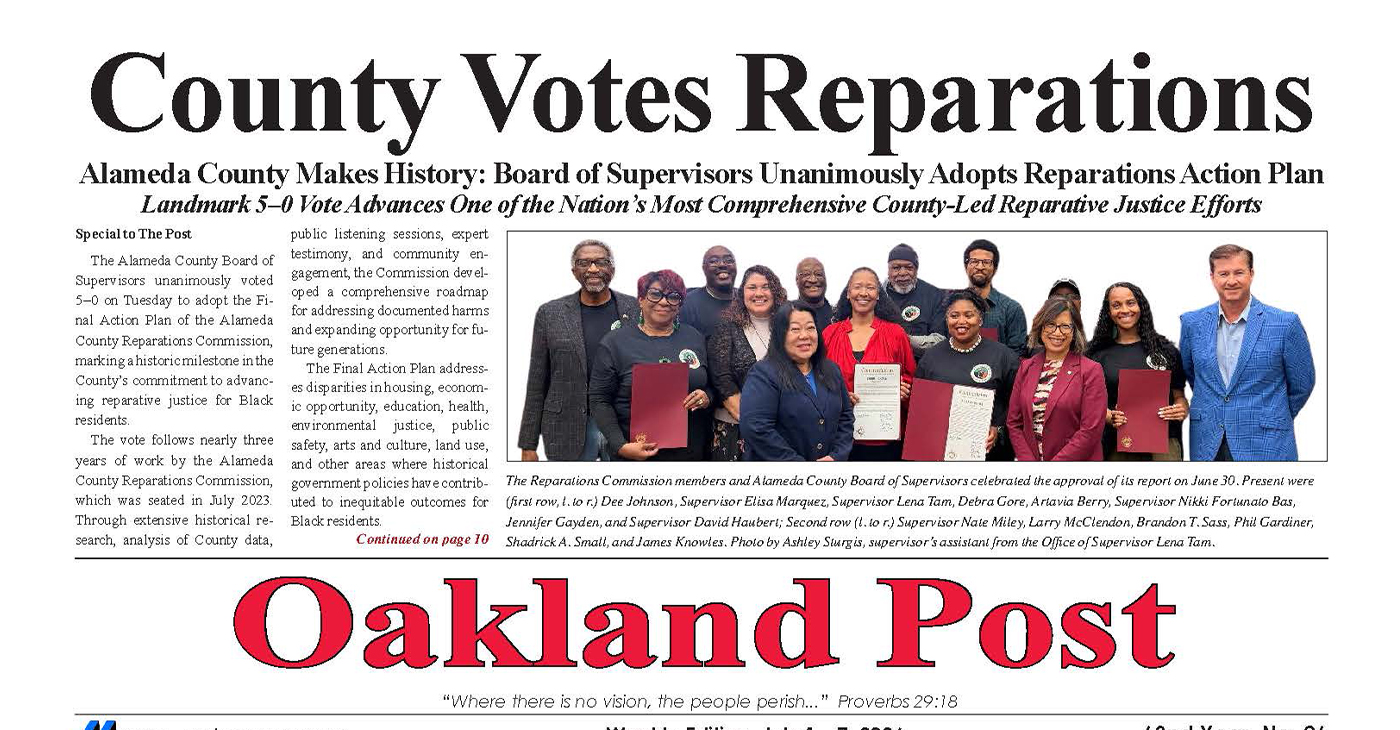
To enlarge your view of this issue, use the slider, magnifying glass icon or full page icon in the lower right corner of the browser window.
Activism
NPRC Joins National Grand Jury Proceedings Seeking Accountability, Constitutional Restoration
Organizers state that testimony will explore historical and political developments that they believe have contributed to the expansion of corporate influence over public institutions and governmental decision-making. Participants are expected to discuss concerns regarding constitutional governance, individual liberties, property rights, and the protection of vulnerable populations, including seniors and persons with disabilities.

Special to The Post
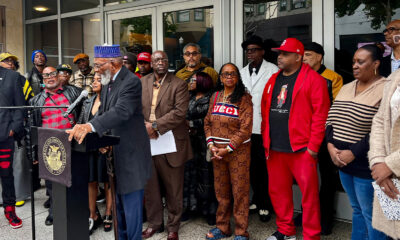
The National Probate Reform Coalition (NPRC) has joined Toll and Roll and a growing coalition of advocacy organizations, victims, whistleblowers, and citizen groups in support of a nationally broadcast People’s Grand Jury proceeding scheduled for July 1 and July 7.
Organizers describe the event as a public forum designed to examine allegations of government abuse, judicial misconduct, legislative failures, and the erosion of constitutional protections affecting millions of Americans.
The proceedings will feature testimony from victims, families, advocates, and organizations from across the country who contend they have experienced harm through government actions, institutional neglect, and failures of oversight.
According to organizers, the People’s Grand Jury will focus on concerns involving probate courts, guardianships, conservatorships, child welfare systems, property rights, civil liberties, and what participants view as a growing disconnect between government institutions and the constitutional rights of the people they are sworn to serve.
NPRC is participating because many of the issues being examined mirror the concerns raised by advocates, victims, and families who have participated in its monthly town halls. For years, families have reported cases involving exploitation of elders, questionable guardianships, estate depletion, denial of due process, and a lack of meaningful oversight within probate court systems.
“This proceeding gives victims and advocates an opportunity to place their experiences on the public record,” said Tanya Dennis, lead facilitator of NPRC. “For too long, families have struggled to have their voices heard regarding elder abuse, probate exploitation, and government inaction. This forum allows those stories to be shared before a national audience.”
Organizers state that testimony will explore historical and political developments that they believe have contributed to the expansion of corporate influence over public institutions and governmental decision-making. Participants are expected to discuss concerns regarding constitutional governance, individual liberties, property rights, and the protection of vulnerable populations, including seniors and persons with disabilities.
In keeping with principles of transparency and fairness, invitations have been extended to legislators, members of the judiciary, law enforcement representatives, and other public officials who may wish to respond to concerns raised during the proceedings or defend actions taken by their respective institutions.
One of the primary outcomes sought by organizers is public consideration and support for the People’s Remedy and Restoration Act, a proposed legislative framework that advocates believe would strengthen oversight, increase accountability, provide remedies for victims of governmental abuse, and restore constitutional protections.
The proceedings are expected to be broadcast nationally, providing citizens throughout the United States an opportunity to observe testimony, review evidence presented, and participate in an ongoing conversation regarding government accountability and the protection of individual rights.
Advocates hope the hearings will encourage meaningful dialogue, legislative reform, and renewed public engagement in the democratic process.
Individuals, organizations, public officials, and members of the media interested in attending or obtaining access information may contact the organizers at tollandroll2025@gmail.com.
As Americans continue to debate the future of constitutional governance, judicial accountability, and the protection of vulnerable citizens, the July proceedings are expected to serve as a significant forum for public testimony and civic engagement. For more information, go to https://tollandroll.com
WORK FROM HOME
Home-based business with potential monthly income of $10K+ per month. A proven training system and website provided to maximize business effectiveness. Perfect job to earn side and primary income. Contact Lynne for more details: Lynne4npusa@gmail.com 800-334-0540


Diabetes in Black California: Turning the Tide from Crisis to Control

Oakland Post: Week of July 1 – 7, 2026

Prescott Circus Theatre Presents Free Summer Performance Series

NPRC Joins National Grand Jury Proceedings Seeking Accountability, Constitutional Restoration

Local Civil Rights Attorney, Activist Walter Riley Reveals Life Lessons from 70 Years in the Movement

50 Years Later, ‘Wake Up Everybody!’ Still Resonates During Black Music

Inaugural Juneteenth Awards Ceremony Celebrates the Fillmore’s Black History, Leadership and Resilience

Thousands Come Out to Celebrate Juneteenth in Richmond

East Oakland COGIC Celebrates Re-Dedication

Black Repertory Group Needs Volunteers to Help Shape the Next Generation of Artists and Leaders

Oakland Post: Week of June 24 – 30, 2026


Oakland Museum Presents Landmark Retrospective Celebrating Beloved Bay Area Artist Mildred Howard

Ferry Fares to Increase July 1 as Ridership Hits Record Highs

Stop the Hate Symposium Brings Oakland Together Through Dialogue, Partnership, and Community Healing

After 10-Year Wait, Fillmore Heritage Center Reopens in San Francisco

Oakland Post: Week of June 3 – 9, 2026

Oakland Post: Week of May 27 – June 2, 2026

COMMENTARY: Black Music is the Sound of Black Freedom: Let Us Reclaim Both This Juneteenth

2026 World Cup is Here and Atlanta is Ready For It

5 Cleveland Police Officers Injured, Gunfire Erupts During East Side Pursuit

Oakland Director Boots Dazzles Once Again in ‘I Love Boosters’

Oakland Post: Week of June 10 – 16, 2026

Sale of Coliseum to African American Developers Moves Toward Completion

Venus Williams Calls a Sabalenka Exit a Tragedy

Oakland Post: Week of June 17 – 23, 2026

COMMENTARY: Using Art, Healing, And Community to Transform Mental Health Dialogue

Study: Waiting Lists for Child Care Assistance Nearly Doubled
Ferry Fares to Increase July 1 as Ridership Hits Record Highs

The Conversation With Al McFarlane 6/23/26

Media Monday 6/22/26

LIVE! ASK ALMA! — TUES. 6.23.26 7PM EST

Car Buying Secrets: 4 Hidden Checks Before You Sign!

Is This 550 HP Charger Worth YOUR Money? AutoNetwork Review

Celebrating Juneteenth – Frederick Douglass on education and resistance

LIVE! — ASK ALMA! — TUES. 6.19.26 7PM EST

Hyundai Ioniq 5 Parking, Safety, and 360 View #shorts

2025 Ioniq 5 New Wiper & Powerful Performance! #shorts

Electric SUV Range: Is 259 Miles Enough? #shorts

EV Charging: How Fast Can You Charge an Electric Vehicle? #shorts

Biometric Cooling… Messaging Seats…Come on! 2025 Infiniti QX80 Autograph 4WD

Charged Up: Witness the Magic of a Fully Electric Car! #shorts

Range Rover Sport PHEV Included…: See What’s Inside This Luxury SUV! #shorts

Invisible Hood View: Perfect Parking with X-Ray Vision! #shorts
-
 Art4 weeks ago
After 10-Year Wait, Fillmore Heritage Center Reopens in San Francisco
-
 Activism4 weeks ago
Oakland Post: Week of June 3 – 9, 2026
-
 Arts and Culture4 weeks ago
COMMENTARY: Black Music is the Sound of Black Freedom: Let Us Reclaim Both This Juneteenth
-
 #NNPA BlackPress4 weeks ago
2026 World Cup is Here and Atlanta is Ready For It
-
 #NNPA BlackPress4 weeks ago
5 Cleveland Police Officers Injured, Gunfire Erupts During East Side Pursuit
-
 Art4 weeks ago
Oakland Director Boots Dazzles Once Again in ‘I Love Boosters’
-
 Activism4 weeks ago
Oakland Post: Week of June 10 – 16, 2026
-
 Activism2 weeks ago
