
#NNPA BlackPress
Framing Our Future: Liberty Bank Celebrates 50 Years
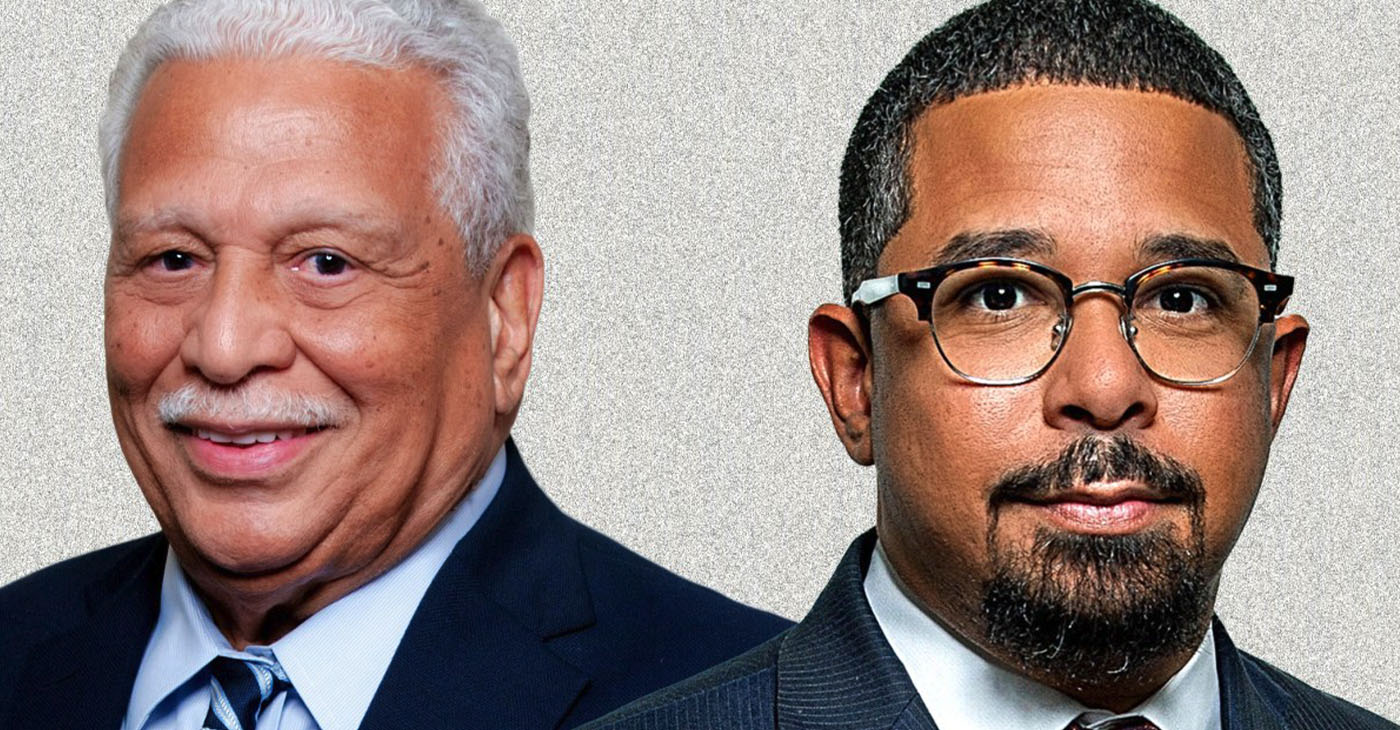
NNPA NEWSWIRE — The elder McDonald, served as president & CEO of Liberty Bank from its founding in 1972, leading and growing the Black-owned bank for the better part of 50 years until earlier this year, when his son Todd, a Morehouse College graduate who earned his MBA from Northwestern University’s Kellogg School of Management, picked up the mantle to lead Liberty into the future.
The post Framing Our Future: Liberty Bank Celebrates 50 Years first appeared on BlackPressUSA.

By Anitra D. Brown | The New Orleans Tribune
Alden J. McDonald and his son Todd have at least two things in common. The first is that neither saw himself as a bank president. In fact, Alden McDonald says it took a novena and Dr. Norman Francis asking him three times to become the president of what would be the newly founded Liberty Bank & Trust before he said “yes.”
“I didn’t’ know whether I was prepared to run a bank.” Alden McDonald once told The New Orleans Tribune. “No one else had walked that plank.”
The truth – he was ready. A graduate of the LSU School of Banking and of Columbia University’s Commercial Banking Management Program, McDonald began his career at International City Bank in New Orleans in 1966, rising to the position of vice president for consumer lending. And during those six years, he zealously learned all he could about the industry, working 12- to 14-hour days.
International City Bank didn’t want him to leave, offering him a senior vice president position to urge him to stay, he says. Instead, he followed advice given to him by the young lady he was dating at the time, Rhesa Ortique, whom he went on to marry. She was the one who suggested he go to a novena in search of guidance and direction.
“So, I did the novena, and I made the decision to do this, right. I am 29 at the time, and to be honest with you, I didn’t know what the hell I was thinking.”
In contrast, it didn’t take a special prayer service for Todd McDonald to know he wanted to be his own boss one day; still, he didn’t see banking in his future. The enterprising youngster, who washed his parents’ friends’ cars while they visited to make extra money, always saw himself as a businessman. However, he thought banking was static and that it would not offer the diverse opportunities he wanted to experience… that was until he had the opportunity to shadow one of his father’s friends, Joe Canizaro, the founder of First Bank & Trust. It was then he realized there was more to banking than, well, banking.
“He brought me into meetings, and I saw how he used the bank as a platform to go into many different businesses. I mean he was building a city in Mississippi; he had the hospitality company; he had a construction company; health care — all these different businesses. And I was like, so you could run a bank and have all of these tentacles out there at the same time. Okay, I would never get tired of doing this.”
At the time, a younger Todd McDonald didn’t really see his father doing all of that at Liberty; but he understood why.
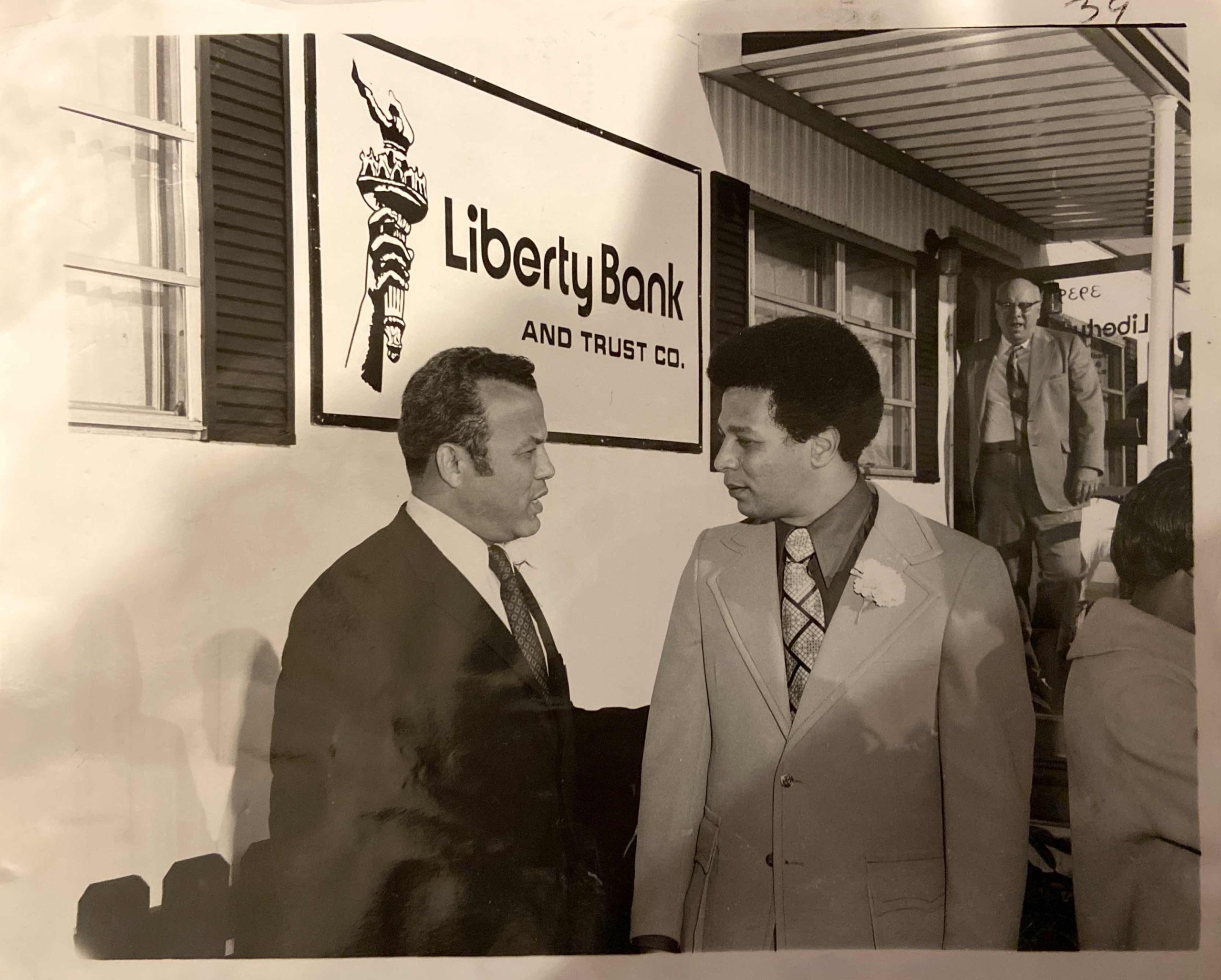
In 1972, with Dr. Norman Francis on its Board of Directors, Alden McDonald as President & CEO and $2 million in assets, Liberty Bank was founded to more Black New Orleanians and other under-served members of the community achieve their dreams. Today, Liberty has branches in 11 states and has $1 billion in assets.
“It was for obvious reasons — a lack of capital,” he says. “I’m sure he could have ventured off in many different ways, as well. But that experience provided me with a vision for myself. How do we leverage a bank charter? You know, I’ve been around my dad for 41 years; but I’ve only been employed with the bank for 19. I heard the stories about him helping people. And so, I’m like, you know, once you start applying the ‘helping people’ with the ‘making money’ and ‘helping other people make money’, it was an easy sell. I’ve dedicated my life to this. I wake up thinking about it. I go to sleep thinking about it.”
And with that, the other thing father and son have in common is that despite each man’s initial misgivings, running a bank is precisely what he has done or is doing.
With his son’s rise to bank president, Alden McDonald, continues to serve as the head of the Liberty Financial Holding Company.
It’s Always Been Huge
The elder McDonald, served as president & CEO of Liberty Bank from its founding in 1972, leading and growing the Black-owned bank for the better part of 50 years until earlier this year, when his son Todd, a Morehouse College graduate who earned his MBA from Northwestern University’s Kellogg School of Management, picked up the mantle to lead Liberty into the future.
The pair took a little time to catch up with The New Orleans Tribune recently to talk about what is now the nation’s largest Black-owned bank. Sitting at a table in the community room of the bank’s headquarters in New Orleans East, the elder McDonald began by mentioning a significant milestone Liberty Bank reached in recent years – $1 billion dollars in assets.
“It was his idea, not mine,” he says with proud smile and a little laughter, nodding in Todd’s direction.
Todd chimes in through the laughter, “That’s what we have to do as a bank to survive. If we don’t get bigger, the cost of operating just gets bigger and you can’t manage the expense side. So, it was very important for us to reach that milestone.”
“It’s a lot of money,” Alden McDonald says. “How many other people do we know that have a billion-dollar company? How many in the city of New Orleans. Just, when you think about it… the significance of it. It’s… it’s…
“Huge,” Todd interjects, finishing the sentence his father started.
“Huge,” Alden McDonald repeats reflectively. “You know, Todd and I, we talked five years ago when he took a real an active role at the bank. He was in charge of strategic planning and visioning. And his vision went beyond my wildest dreams. When he was pushing for a billion dollars, he was looking to make sure we could survive in the banking industry. When I got in the banking industry, there were 35,000 banks. Today, there are less than 5,000 banks. When I got into the business, there were 100 Black banks. Today, there are less than 20. Everything in the industry says a $200 million bank is not going to survive. A $500 million bank is not going to survive. So the benchmark he came up with was a billion.”
The achievement took more than just reaching $1 billion in assets. As Alden McDonald explains, in the banking industry, the rule of thumb is an eight percent capital to asset ratio. In banking terms, capital is the total equity a company has — assets minus liability.
“And then, a couple of years ago, the feds started sending signals. They wanted a 10 percent ratio,” the senior McDonald says.
When Liberty set out to grow to a billion in assets it only had about $60 million in equity. It needed at least $90 million.
It was Todd, who, while serving as Liberty’s executive vice president of corporate strategy, developed national partnerships that produced several new revenue streams that raised $30 million in capital for the bank.
All of this was taking place over the last few years with the pandemic as a backdrop and in the wake of the murder of George Floyd, events that prompted shifts in the nation, one of which included a bit of pressure put on the big boys of banking to help minority banks grow.
And Liberty’s plan for raising the equity it needed to support its growth was realized.
“If it was me, I would asked JP Morgan for $5 million, Citibank for $5 million, Wells Fargo for $5 million and Bank of America for $5 million. Todd goes in, he asks JP Morgan for $30 million. I said, ‘boy, you’re crazy?’ They ended up giving $18 million. Wells gave $5 million. Citi gave $5 million. Bank of America gave $2 million,” the elder McDonald recounts. “I would have been pleased with whatever; but because of the young mind and the young vision, he ended up getting $30 million of non-voting capital. Non-voting. It does not dilute one bit of ownership,”
Perhaps the only thing huger than Liberty Bank reaching that milestone – more than $1 billion in assets the equity to back it up – is the force the bank has been for its customers in New Orleans and across the country.
Even when its assets weren’t, Liberty’s impact has been huge from the start.
Forging a Path to Financial Freedom
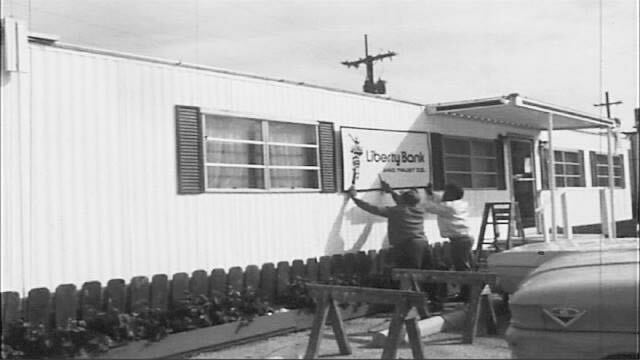
The first Liberty Bank branch was a repurposed construction trailer located on Tulane Avenue.
If Alden McDonald wasn’t ready to lead a Black-owned bank in 1972, Black New Orleans was ready for one.
Beginning in the early 1960s, Alden McDonald and Dr. Norman Francis saw a Black community growing increasingly dissatisfied with inequity and looking for increased opportunity, especially on the economic front. They wanted mortgage loans and loans to start businesses or launch political campaigns without higher interest rates or resorting to subprime finance companies. And if they couldn’t find what they wanted in the mainstream banking industry, they would have to create their own.
That is why Francis asked a young Alden McDonald to leave his comfortable job and start his own bank not once, not twice, but three times — there was a need for a bank that would help more Black New Orleanians and other under-served members of the community achieve their dreams.
Liberty Bank was one of 42 African American-owned banks to open in the U.S. between 1962 and 1979, according to the National Bankers Association. They opened to serve communities that had been all but shut out of the mainstream. When the other banks refused to loan African Americans money or loaned it to them at extraordinarily high interest rates, Black-owned banks were there; and their influence was tangible from the very early history.
There is no telling how many Black New Orleanians own homes and operate businesses because Liberty Bank exists.
Norman Francis once said, “We had a dream to do something special in New Orleans. We started a community bank with a focus on an under-served population.”
From a construction trailer on Tulane Avenue, Liberty now has branches in 11 states and the cyber ability to conduct banking operations nationwide. Liberty Bank has withstood natural disasters and weathered national and regional financial crises. It has not only existed for 50 years, it has thrived. From $2 million in assets in 1972 to the largest African American-owned financial institution in the United States.
More importantly, here in New Orleans, and in other cities across the country, Liberty has helped individuals achieve their financial goals and financial freedom. That is what is meant by “Framing Our Future”, the theme of the bank’s 50-year anniversary.
Big Things Popping
The bank is also a player in helping business owners and investors make major moves. On the day The Tribune met with the McDonalds, they were gearing up for a meeting with a customer about a major project in downtown Minneapolis — the redevelopment of a one-million-square-foot building, Alden McDonald tells.
Financing those types of multi-million-dollar endeavors have become common practice for Liberty Bank.
Just before the pandemic, Alden McDonald says the bank launched a new loan product designed specifically to help African American business owners get into the airport concessions business.
“We were lending money to African Americans with airport contracts,” he says. “Now, we got in it at the wrong time, but we still made out pretty good. We loaned about $30 million to business owners with concessions in airports in New York, New Jersey, Dallas, Los Angeles, and Chicago. We had them all over. It’s helped those businesses grow their capital. When you grow capital, you can hire more people, more Black people. So, the whole pie grows. Despite the pandemic, we only had a problem with one loan and we didn’t lose any money.”
Then there is the project in Houston.
“The mayor in Houston has put together a housing effort there to build maybe 500 homes using all Black folks — the contractors, the developers. And we are financing them. We think that’s going to be a real big signature project with anywhere between $30 million and $50 million in financing from us. And we do a little bit more than just lend the money. For example, this one developer didn’t have much experience, so we put them in touch with another developer we were financing in Houston to partner with him. Then the city gave him a contract that wasn’t to his advantage. So, when we read it, in putting his package together, we said, ‘this ain’t gonna work’. So we helped him to go back to the city, had the city to rework his contract where it made sense and protected him from losing money.”
There are other examples. Too many to include in a single article.
In addition to banking, Liberty has its own insurance agency and a heavy equipment leasing company. It also recently launched its own commercial insurance brokerage firm.
“We intend to be the largest Black-owned commercial insurance brokerage in the country in the next five years,” Alden McDonald says. “What does that mean? It means we are starting another company that will employ additional people. We are going to be able to help other companies in that business to write bigger policies. There is a network of smaller Black-owned commercial insurance brokers across the country, and we are going to help those businesses create more jobs and grow Black wealth. And we’re going to make some money. I always say that you can’t do good, if you don’t do well.”
And if Liberty Bank has its way, it will be doing both well and good into the future.
“We don’t plan on taking another 50 years to reach another $1 billion in assets. He plans on getting there in the next five years,” Alden says, again nodding at Todd.
“My perspective is we have a long runway,” says Todd. “I mean, we have decades ahead of us. You know, it is a lot of work and we’re just taking it step by step. We know organizationally, we can’t be everything to everybody. So, we’ve got to choose our lane and commit to it. We have an amazing underwriting muscle. As my dad mentioned earlier, typically Black-owned institutions didn’t have access to capital. So, the focus is what did we do the first 50 years and how do we leverage that to do it bigger the next 50 years.”
And while Liberty certainly has big things popping, it continues to provide access to basic financial services such as personal checking and savings accounts and multi-faceted products for both individuals and small businesses.
Even as it celebrates 50 years and touts more than a $1 billion in assets, helping everyday people achieve financial freedom is still a primary focus of the bank, says Todd McDonald.
In fact, the smallest loan Liberty offers is $500, it’s the sort of small dollar loan at a low interest rate that Liberty provides to customers to keep them from falling prey to predatory lenders like those in the payday loan industry.
“That’s the least amount of money you can borrow. But to me, that’s the most important product that we have,” says Todd. “I don’t say that a lot, but I prefer to help the average person get out of debt. If I can help someone consolidate from $1,000 a month in payments down to $300 a month in payments, saving them $700 dollars a month, it’s better than making a $1 million loan to me. Now if we repeat that and get a 1,000 people at a time refinancing debt, that’s $700,000 a month back into the pockets of people that look like you and me. Then, we could have the same thousand people start to buy their own homes. Now, if we coordinate efforts like that across the country, we could really pick up some ground. it’s off to the races from that standpoint. So, we’re not just looking at big transactions.”
Celebrating 50 Years with a Golden Jubilee
Liberty Bank’s story of resilience, profitability and empowerment was showcased on Friday, Dec. 2, at Liberty’s “Golden Jubilee” celebration at the Mahalia Jackson Theater. The event was produced by Bright Moments, LLC and was directed by celebrated theater icon Tommye Myrick.
Norman Robinson and Sally Ann Roberts narrated the event that explored the unique role Liberty Bank has played in closing the wealth gap in America. The evening featured song, dance, spoken word and visual renderings that tell the story the African American experience.
The show was led by the musical arrangements of the New Orleans Jazz Orchestra under the direction of Grammy award winner Adonis Rose and featured Irma Thomas, Leah Chase, Jr., Chase Kamata, Sharon Martin, Phillip Manuel, John Boutte, Tonya Boyd-Cannon, the Mystics, the Franklin Avenue Male Chorus, the C Sharpe Gospel Ensemble, the Kia Knight Dance Ensemble, Stilt Walkers, African Drummers, Harold Evans, Gwendolyn Foxworth, Lady Tambourine, Erica Falls, Peteh the Poet, and a host of others.
The post Framing Our Future: Liberty Bank Celebrates 50 Years appeared first on The New Orleans Tribune.
The post Framing Our Future: Liberty Bank Celebrates 50 Years first appeared on BlackPressUSA.












#NNPA BlackPress
NFL: Week Two Recap | Jalen Hurts did not fold; Caleb Williams exits game with injury
Philadelphia Eagles quarterback Jalen Hurts found Darius Cooper with nine seconds left for the game winning touchdown as his team beat the Tennessee Titans 24-20 in Nashville. Hurts finished the day 26/37 for 264 yards. He threw for two touchdowns and two interceptions. Prior to the final drive, the Eagles ran 25 plays for 45 […]
The post NFL: Week Two Recap | Jalen Hurts did not fold; Caleb Williams exits game with injury appeared first on BlackPressUSA.

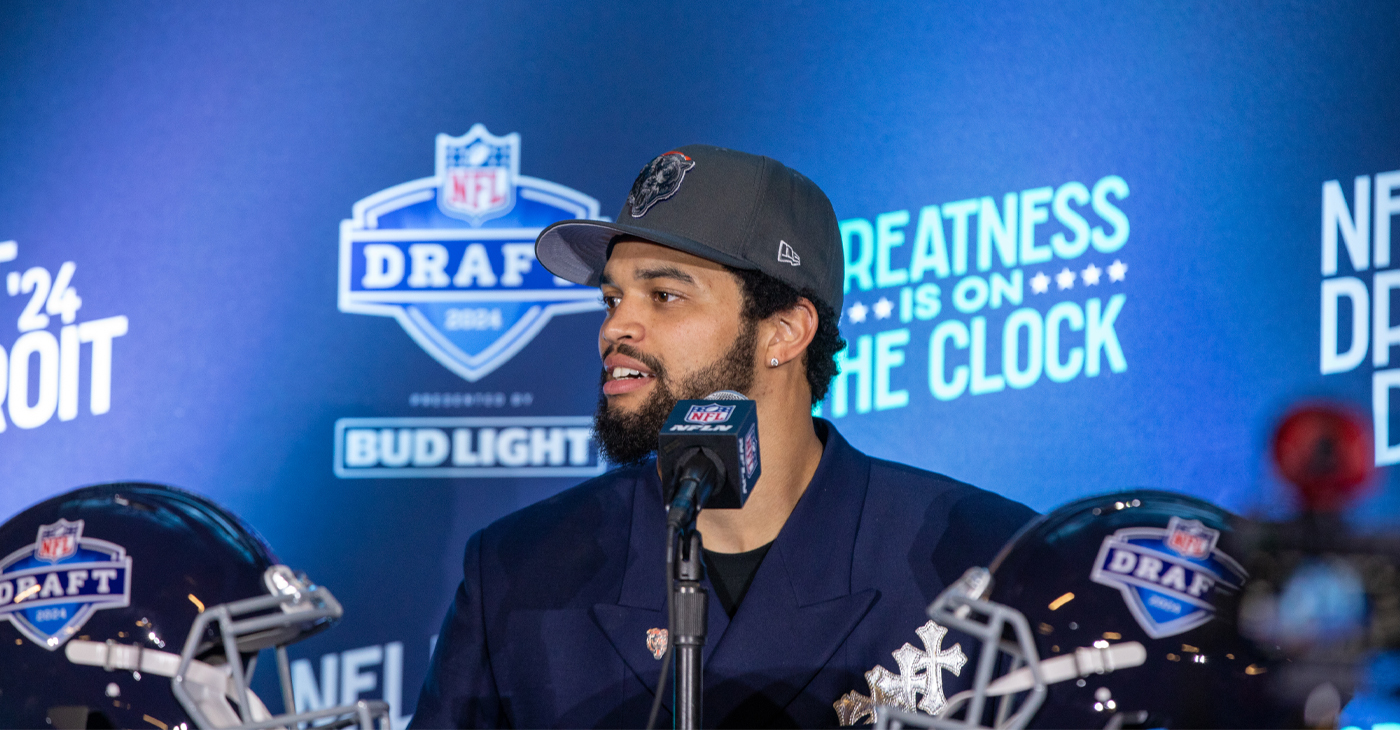
Philadelphia Eagles quarterback Jalen Hurts found Darius Cooper with nine seconds left for the game winning touchdown as his team beat the Tennessee Titans 24-20 in Nashville. Hurts finished the day 26/37 for 264 yards. He threw for two touchdowns and two interceptions.
Prior to the final drive, the Eagles ran 25 plays for 45 yards. During the final drive Hurts went 6-8 with 61 passing yards and the touchdown. Titans defensive tackle — and team captain — Jeffery Simmons said this week that the way to defend Jalen Hurts is to make him “play quarterback.”
Hurts said to Simmons after today’s game: “You started that sh**. I had to finish it.”
Running back Saquon Barkley suffered a stinger in the first half but he ultimately finished the game. He had four carries and nine yards and one catch for eleven yards. He will get an MRI for his injury, but admitted to Cameron Wolfe of the NFL Network he was fine.
Caleb Williams leaves game against Vikings with apparent lower-body injury
Chicago Bears quarterback Caleb Williams was helped off the field with a right leg injury with 7:42 remaining in the fourth quarter. Williams was down, writhing in pain after scrambling to his left. After departing the injury tent, Williams raised his right fist, acknowledging the crowd while expressing his frustration. Testing will commence on Monday to find out more details about his injury.
“We’ll know tomorrow,” Johnson admitted regarding Williams’ injury. “He’s in good spirits. He’s a team player.”
Williams finished the day with 138 passing yards and one interception.
“I’m actually happy it’s nothing with the knee — that was my first inclination,” Johnson said. “But, a hamstring could be pretty damaging as well. So, we’ll see. We’ll see how bad it is tomorrow and we’ll go from there.”
Bryce Young once again dominated the Falcons
Carolina Panthers quarterback Bryce Young is 5-1 against the Atlanta Falcons and is undefeated at Mercedes-Benz Stadium. Today, Young threw for 287 yards and three touchdowns as he led the Panthers to a 34-3 dismembering of the Atlanta Falcons. Georgia Tech alumnus Darren Waller caught two touchdowns and linebacker Devin Lloyd returned one of his two interceptions for a touchdown.
Cooper Rush started his second straight game for the Falcons and it did not go well. The partisan crowd voiced their displeasure after Rush completed 10/17 passes for 86 yards and two interceptions. Jack Strand entered the game for Rush prompting cheers from the Falcons fans. The rookie threw a pick-six on his first career pass attempt. Strand was the first QB to accomplish that feat since Sam Darnold in 2018 and is the first Falcons player to do that since Brett Favre in 1991. Strand finished the day with 59 passing yards and 16 rushing yards.
According to reports, quarterback Michael Penix, Jr. is expected to make his season debut this Thursday at the Green Bay Packers. His return should help the Falcons. They are the first team since the 2008 Rams to not run any plays in the red zone after the first two games to open a season.
The bright spots for the Falcons today were the Spelman College Jaguarettes performing with the Falcons cheerleaders and Florida A&M’s marching band, The Marching 100, also performed during halftime!
Jayden Daniels gets carted off after apparent arm injury
Washington Commanders quarterback Jayden Daniels appeared to injure his left elbow on the final play of the first half in his game against the Dallas Cowboys. During the play, Daniels got stepped on, braced himself for the fall, and his elbow bent the wrong way. Daniels draped a towel over his head as he exited the field on the cart.
He was later ruled out.
Daniels suffered a dislocated elbow to the same arm during week nine of last season against the Washington Commanders, which led to him being shut down for the remainder of the season.
The post NFL: Week Two Recap | Jalen Hurts did not fold; Caleb Williams exits game with injury appeared first on BlackPressUSA.

#NNPA BlackPress
The Complete Negotiation Framework — Every Stage, Every Tactic, Every Win
Master the complete vehicle-purchase negotiation framework with Roosevelt Gist and Roosevelt. Learn every stage, tactic, and win!
The post The Complete Negotiation Framework — Every Stage, Every Tactic, Every Win appeared first on BlackPressUSA.
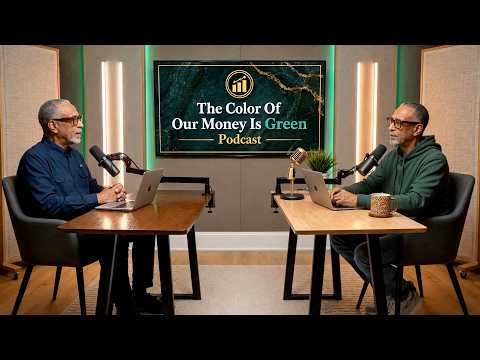
Roosevelt Gist and Roosevelt deliver the complete vehicle-purchase negotiation framework in Episode 8 of The Color of Our Money Is Green. This episode covers the three foundations of every effective negotiation, the full seven-stage negotiation sequence with exact language for every stage, and five of the most common dealership tactics with the specific response each one requires.
What You Learn in This Episode:
The three foundations that make every negotiation tactic work
The complete seven-stage car-buying negotiation sequence
Exact language for every stage of the dealership conversation
Five common dealership tactics — the turnover, the four-square, the packed payment, spot delivery, and forced add-ons — and how to counter each one
Why signing preliminary paperwork isn’t the same as signing the final contract
___________________________________________________________________
“The Color of Our Money Is Green: A Buyer’s Guide to What Cars Actually Cost” — stan.store/RGist
____________________________________________________________________
AutoNetwork helps serious car shoppers inspect any new vehicle online before walking into a dealership. I’m Roosevelt — I’ve been reviewing cars and shaping digital car buying and credit union auto leasing since before YouTube car reviews existed.
You’ll find detailed walkaround reviews, POV test drives, and buyer-focused breakdowns covering comfort, space, features, and real-world value.
How to use the channel:
Watch the walkaround of the car you’re considering
Visit AutoNetwork.com for the full review
Check CouponsOffersAndDeals.com for current dealer specials
Walk in already knowing what you want — and what it should cost
 AutoNetwork.com
 CouponsOffersAndDeals.com
Affiliate disclosure: some links earn a small commission at no cost to you and help support the channel. Insta360 is one of those partners.
The post The Complete Negotiation Framework — Every Stage, Every Tactic, Every Win appeared first on BlackPressUSA.
#NNPA BlackPress
Mazda CX-90 Luxury: Heated Seats & Premium Comfort! #shorts
Stay toasty in the CX-90! Plush Nappa leather, heated/ventilated seats, and a memory-equipped heated steering wheel deliver ultimate luxury.
The post Mazda CX-90 Luxury: Heated Seats & Premium Comfort! #shorts appeared first on BlackPressUSA.
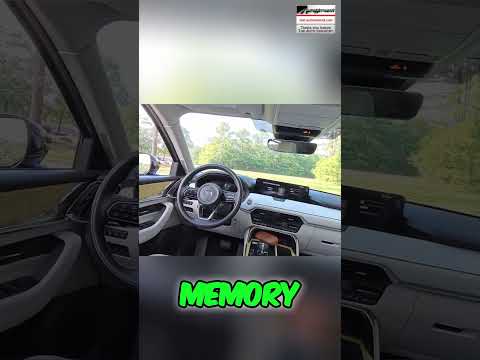
Experience ultimate comfort in the CX-90. Nappa leather, heated/ventilated seats, 8-way power adjustments, and memory settings for both front passengers. The heated steering wheel with memory tilt/telescope adds premium convenience.
 Watch the full video: https://youtu.be/EH5A4eQ4ipY
#AutoNetwork
The post Mazda CX-90 Luxury: Heated Seats & Premium Comfort! #shorts appeared first on BlackPressUSA.



OP-ED: Proposition 44 Would Put a Price on Trust

OP-ED: Proposition 40: It’s Time to Play Chess, Not Checkers

Listening as a Lifeline: A Doula’s Witness to Black Maternal Health

New Protections for Ticket Buyers: Gov. Newsom Signs Assemblymember Isaac Bryan’s Bill

‘We Don’t Talk Trash — We Pick Up Trash!’

Zakiya Jendayi Arrested, Locked Out of Home by Sheriff’s Deputies

Oakland Post: Week of September 30 – October 6, 2026

Asm. Corey Jackson Announces Launch of 24-Hour Childcare in His District

IN MEMORIAM: The Rev. Leon “Sonny” Clark, Longtime Orange County Pastor and Community Leader, Dies at 72

Poll: Becerra Widens His Lead Over Hilton; Californians Split on Wealth Tax

From Historic Memories to New Possibilities: Oakland Celebrates Coliseum 60

County Office of Education Says OUSD Finances Are Getting Healthier, Materially Stronger

LIVE FREE Sunday Dinner Brings Faith, Fellowship and Civic Conversation to Oakland

Remembering Chauncey Bailey as Student Journalists Face Threats to Truth-Telling

BLACspace Cooperative Invites Bay Area to Experience Oakland’s Black Cultural Ecosystem Through a BLAC Map Tour + Party

Standoff for Justice: Our Homes Are Worth Fighting For

Oakland Post: Week of August 26 – September 1, 2026

Frontier Airlines’ Return to Oakland Airport Brings Flights, Jobs and Opportunity

Gubernatorial Candidate Steve Hilton Blasts California New Tire Rules; Newsom Hits Back

Jackie Wright Champions Bay Area Stories, Filmmakers and Cultural Institutions

Chef Sharon Lee Blends Culinary Excellence, Education and Empowerment

Misnamed ‘Parent’ PAC Seeks to Influence Oakland School Board Elections

Oakland Coliseum Project Opens Door for Small Businesses to Build Bigger

Gov. Newsom’s Latest Appointees Include Sacramento Advocate for Formerly Incarcerated Students; State’s New Tech Chief

Big City Mayors Ask for “Yes” Vote on Housing Bond Measure; Conservatives Say “No”

Longtime BWOPA Member Brendalyn Goodall Appointed to California Workforce Development Board

Oakland Post: Week of September 2 – 8, 2026

Gov. Newsom Signs Law Shielding Immigration Aid Workers From Doxing Threats

Secretary of State Shirley N. Weber Urges Californians to Vote Early as Voter ID Battle Intensifies

IN MEMORIAM: Dolly Parton Dead at 80 — How She Built a Legacy of Love and Earned Her Place in Black Culture

The Conversation With Al McFarlane 6/23/26

Media Monday 6/22/26

LIVE! ASK ALMA! — TUES. 6.23.26 7PM EST

Car Buying Secrets: 4 Hidden Checks Before You Sign!

Is This 550 HP Charger Worth YOUR Money? AutoNetwork Review

Celebrating Juneteenth – Frederick Douglass on education and resistance

LIVE! — ASK ALMA! — TUES. 6.19.26 7PM EST

Hyundai Ioniq 5 Parking, Safety, and 360 View #shorts

2025 Ioniq 5 New Wiper & Powerful Performance! #shorts

Electric SUV Range: Is 259 Miles Enough? #shorts

EV Charging: How Fast Can You Charge an Electric Vehicle? #shorts

Biometric Cooling… Messaging Seats…Come on! 2025 Infiniti QX80 Autograph 4WD

Charged Up: Witness the Magic of a Fully Electric Car! #shorts

Range Rover Sport PHEV Included…: See What’s Inside This Luxury SUV! #shorts

Invisible Hood View: Perfect Parking with X-Ray Vision! #shorts
-
 Community4 weeks ago
Misnamed ‘Parent’ PAC Seeks to Influence Oakland School Board Elections
-

 Activism4 weeks ago
Oakland Post: Week of September 9 – 15, 2026
-

 Community4 weeks ago
Richmond Tiny House Village Farm & Garden Set to Open Gates on Sept. 26
-

 Black History4 weeks ago
Latest Massacre in Haiti Reveals Cruelty U.S. Deportations
-

 Black History4 weeks ago
OPINION: Nolan Wells’ Death One of Several Signifying Racial Terror Lives on in U.S. South
-

 Business3 weeks ago
Mayor Lee Announces $1 Million Kaiser Permanente Grant for Pilot Program to Address Homelessness, Clean Up Public Spaces throughout Oakland
-

 Community4 weeks ago
Democratic Clubs Interview Candidates for Oakland School Board
-
 Uncategorized3 weeks ago
Oakland People’s Arms Embargo Coalition Demands End to Military Shipments Thru Oakland
