
Economy
Fight for Equal Pay, Gender Parity Heats Up
WASHINGTON INFORMER — Despite the United States touting itself as the bastion of freedom and equality, women in this country — despite comprising 50.8 percent of the population — have always found themselves in the position of having to fight for salary and wages comparable to men.

By Barrington M. Salmon, Special to The Informer via NNPA Newswire
Despite the United States touting itself as the bastion of freedom and equality, women in this country — despite comprising 50.8 percent of the population — have always found themselves in the position of having to fight for salary and wages comparable to men.
A range of studies show some progress, but stubborn racial and gender wage gaps persist in the United States. Often, researchers point to disparities in education, the fact that many African-American women and other women of color are clustered at the lower end of the pay scale and that the minimum wage hasn’t been increased since 2007 as factors contributing to the wage gap. But what’s often downplayed or ignored is the racism and sexism that’s also at play.
Black women sit at the nexus of race and gender and are buffeted by the twin spectres of these “isms”, and struggle upstream against a current of prejudice and bias which is compounded by gender and race. This intersectional discrimination exacerbates those gender and race gaps, stymies Black women’s ability to access educational opportunities, and has a pervasive and corrosive impact on their careers and career advancement, experts say.
The wage gap has real-world consequences.
Dr. Avis Jones-DeWeever said that over their lifetimes, Black women stand to lose between $800,000 and $1 million because of these disparities.
“While the gender pay gap is an issue for all women, it is an especially wicked problem for black women,”said Dr. Jones-DeWeever, a women’s empowerment expert, international speaker and diversity consultant. “Black women are already economically disadvantaged and face double discrimination within the workforce. The additional burden of a 38 percent pay gap exacerbates the black wealth gap in America. It’s such an engrained problem. The typical Black woman will lose more than $800,000 over her lifetime, and in DC, the inequality means that Black women could lose more than $1 million.”
“A black woman has to earn a B.A. to earn what a white man with a GED would earn. It’s huge and really hardwired into the system,” continued Dr. Jones-DeWeever, who, among her many portfolios, mentors and instructs black women on how to navigate the shoals of business and achieve career and financial success. “It’s devastating because with Black college-educated women making as much as 30 percent less than their white male counterparts, that’s a huge disadvantage. That means not being able to put food on the table, buy clothes for your children, not being able to have a better quality of life or diverting money to wealth-building.”
According to the National Partnership for Women and Families (NPWF), median wages for black women in the United States are $36,227 per year, compared to median wages of $57,925 annually for white, non-Hispanic men. This amounts to a difference of $21,698 each year. In that same report, NPWF also highlighted that if the wage gap were eliminated, on average, a black woman working full time, year-round would have enough money for:
- Two and a half years of child care
- Nearly 2.5 additional years of tuition and fees for a four-year public university, or the full cost of tuition and fees for a two-year community college
- 159 more weeks of food for her family (three years’ worth)
- More than 14 additional months of mortgage and utilities payments
- 22 more months of rent.
The National Women’s Law Center reports that women of every race are paid less than men, at all education levels — and it only gets worse as women’s careers progress.
“Despite the fact that women have made enormous gains in educational attainment and labor force involvement in the last several decades, unequal pay remains pervasive in 97 percent of occupations, showing that no matter what their job, women are paid less than men doing the same job in nearly every sector of work,” an NWLC fact sheet noted.
Women who work full time, year-round in the United States are paid just 80 cents for every dollar paid to their male counterparts. This gap, which amounts to a typical loss of $10,086 per year for a working woman — or $403,440 over a 40-year career — means that women have to work 15 months … to make what men did in the previous 12-month calendar year.”
Studies by gender specialists, academics and women’s activists have statistics showing that the occupations African-American women have does not explain away the Black women’s wage gap, the NWLC said.
- For example, Black women working as physicians and surgeons—a traditionally male, high wage occupation—make 54 cents for every dollar paid to white, non-Hispanic men working as physicians and surgeons.
- Black women working as customer service representatives—a mid-wage, female dominated occupation—make 75 cents for every dollar paid to white, non-Hispanic men working as customer service representatives.
- Black women working as construction laborers—a traditionally male, mid-wage occupation—make 81 cents for every dollar paid to white, non-Hispanic men working as construction laborers.
- Black women working as personal care aides—a heavily female, low wage occupation—make 87 cents for every dollar paid to white, non-Hispanic men working as personal care aides.
In addition, Black women experience a wage gap even in occupations where they are over-represented. More than two in five African-American women (44.8 percent) are employed in one of 10 occupations. In every one of those occupations, Black women are typically paid less than white, non-Hispanic men. Among the 10 most common occupations for Black women, two of those occupations — cashiers and retail salespeople and janitors, building cleaners, maids, and housekeepers — typically pay Black women a very low wage — less than $10 per hour — while they typically pay white, non-Hispanic men substantially more.
Some solutions, NWLC experts say, include strengthening America’s pay discrimination laws, pushing harder to get Congress to pass the Paycheck Fairness Act, The Pregnant Workers Fairness Act, the Family Act and the Schedules That Work Act — all which would address the discrimination women face when they’re pregnant or caregiving and support those who need paid leave, predictable work schedules, and stability for themselves and their families.
Raising the federal minimum wage is yet another way to move towards parity. So far, six states and the District of Columbia have increased the minimum wage to $15 over the next few years.
Another solution is making the Earned Income Tax Credit more widely available to needy recipients. The EITC is a tax credit designed to offset payroll taxes and supplement wages for people working in low-wage jobs, providing the most benefits to low- to moderate-income families with children. The federal EITC lifted more than 1.2 million women 18 and older and nearly 3.5 million children out of poverty in 2017, and 28 states and the District of Columbia currently offer their own EITCs to provide an additional boost.
Dalana A. Brand, vice president of Global Total Rewards at Electronic Arts, Inc., contends that Black women can’t afford to wait, arguing in an opinion piece last year for Blavity, an Internet media company, that in the midst of the flurry of publicity, tweets, posts, hashtags and calls for change, one important element is missing.
“What often gets left out of that discussion is that the hallmark day in April does not apply to black women and other women of color,” she said. “… So, while white women caught up on April 10, black women must wait for over half the year to pass before our wages catch up to what men made a year ago.”
Brand, a highly-sought after salary strategist and career transformation coach, said black women are paid 38 percent less than white men and 21 percent less than white women but “the sad fact is that most people are either unaware or don’t care about the appalling disparity black women face with respect pay equity.”
She added that a study by LeanIn.Org, which partnered with Survey Monkey and the National Urban League, indicates that a third of Americans aren’t aware of the pay gap between black women and white men, and half of them don’t know about a similar gap between black and white women.
Much like the feminist movement, black women are being largely ignored by the equal pay movement,” she added.
Dr. Jones-DeWeever and Brand said that as career strategists and salary consultants, there are a number of things that Black women can and need to do to fight back against wage disparities. The first action is for Black women to embrace their power and value and translate that into dollars and benefits during salary negotiations.
“We don’t understand the basics of negotiating,” Dr. Jones-DeWeever said. “We have to understand our value and how to negotiate. When you’re first hired, that’s when you’re most powerful. I never accept the first offer. The first offer is only the beginning of negotiations. You’d be surprised how much money you can get. You have to negotiate for money, a package and vacation.
Black communities must also take other tacks to confront and topple this problem, they said.
“The reality of racism means that Black women will be offered less,” said Dr. Jones-DeWeever. “In terms of fixing it, we have to have conversations about financial literacy and we also have a responsibility to educate our children about their power, worth and value and empowering them.”
Brand concurred.
To date, she said, much of the equal pay movement has been focused on awareness building campaigns and encouraging women to effectively negotiate their salaries.
“While these are important steps, this is only scratching the surface,” Brand explained. “Getting to pay parity must also involve addressing the corporate systems and state and federal laws that need to change. As black women we must unify and use our collective voices to push pay equality and the racial wealth gap to the top our agenda. Black women have always been at the forefront of the push for equality in our country, whether it was civil rights or social justice, we have been critical forces for change. The equal pay movement should be no different.”
Brand and Dr. Jones-DeWeever are called in frequently to consult with Fortune 500 and other companies. They said Black women should also be actively engaged in tackling the equal pay issue within corporate America by participating in employee resource groups at work and collectively guaranteeing that the companies they work for are held accountable for addressing these issues.
African-American churches, sororities and fraternities and civil society and community organizations need to actively engage in the political process and pressure elected officials to advance additional laws designed to protect against gender discrimination and pay inequality, they said, and concerned people also need to organize efforts and/or sign petitions to demand to push the government to act.
This article originally appeared in the Washington Informer.







Business
Gov. Newsom Announces $109.6 Million in Funding for 278 Supportive Homes in Bakersfield, Contra Costa, Sacramento and Fresno
POST NEWS GROUP — “Every Californian deserves a safe place to call home, particularly the veterans who bravely served our country,” said Newsom in a statement on July 23. “California voters approved Proposition 1 because they know we must do more to address homelessness and behavioral health challenges.”


Last week, Gov. Gavin Newsom announced $109.6 million in Proposition 1 funding to create 278 permanent supportive homes in Bakersfield, Contra Costa County, Sacramento and Fresno, including 103 homes reserved for veterans experiencing or at risk of homelessness.
The funding, awarded through California’s Homekey+ program, is intended to expand permanent supportive housing and behavioral health services for veterans and other Californians experiencing or at risk of homelessness. State officials said the investment advances Proposition 1, the voter-approved measure aimed at increasing housing, treatment and support services for people with behavioral health needs.
“Every Californian deserves a safe place to call home, particularly the veterans who bravely served our country,” said Newsom in a statement on July 23. “California voters approved Proposition 1 because they know we must do more to address homelessness and behavioral health challenges.”
The largest award, nearly $32.6 million, will help the City of Fresno and Parkway Prime LLC convert an interim housing project into 84 permanent supportive homes at Parkway Terrace, including nine units reserved for veterans. The City of Sacramento and Urban Capital LLC will receive nearly $31.9 million to develop the Rio Linda Senior Housing Project, which will include 100 homes, 49 of them reserved for veterans.
Contra Costa County and Satellite Affordable Housing Associates will receive $28.8 million to develop an 82-unit senior housing community, with 62 units designated for people experiencing or at risk of homelessness who have behavioral health challenges, including 30 units for veterans. In Bakersfield, Community Action Partnership of Kern will receive nearly $14.1 million to convert a 38-room motel into 30 permanent supportive homes, with 15 units reserved for veterans.
State officials also announced an additional $2.3 million for three previously awarded Homekey+ projects in Olivehurst, Sanger and Stockton, primarily to support operating costs and increase veteran housing.
Since its launch, Homekey+ has awarded $968.4 million to 54 permanent supportive housing projects expected to create 2,749 affordable homes statewide, including 723 homes reserved for veterans. Officials said Proposition 1 is expected to expand California’s behavioral health system by funding additional supportive housing, treatment facilities and services for people experiencing homelessness and behavioral health challenges.

Business
100 Black Wings’ Team Oakland Youth Athletes Heading to Taiwan for 2026 International Children’s Games
By Post Staff The Bay Area Chapter of 100 Black Men is sending nine youth athletes from its 100 Black Wings’ Team Oakland Delegation to Taiwan on Thursday, July 30, to represent the City of Oakland at the 58th International Children’s

By Post Staff
The Bay Area Chapter of 100 Black Men is sending nine youth athletes from its 100 Black Wings’ Team Oakland Delegation to Taiwan on Thursday, July 30, to represent the City of Oakland at the 58th International Children’s Games (IGC) in Hualien County, Taiwan.
The Games will bring together young athletes ages 12 to 15 from 76 city delegations around the world. The opening ceremony is scheduled for Aug. 2, and athletic competitions take place Aug. 3-5.
While many international competitions center around national teams, the ICG brings young people together as representatives of their respective cities. This year’s theme – “Shining Hualien, Shining Together!” – reflects the host city’s vision of using sports, education, culture, and tourism to promote friendship, peace, inclusion, and sustainable development.
“Team Oakland’s participation demonstrates what can happen when young people are given opportunity, preparation, and a community that believes in them,” said Danny L. Williams, chairman of 100 Black Men of the Bay Area, Inc.
“These athletes will carry Oakland’s talent, strength, and spirit onto an international stage while building relationships that can extend far beyond the competition,” he said.

Team Oakland will compete in track and field events including the 100-meter and 400-meter races, hurdles, long jump, shot put, javelin, and traditional and mixed 4×100-meter relays.
The athletes representing Oakland are: DeWayne Littlepage, Gia Goodlow, Abisewolu Redmond, Mahari Moore, Marvin Thomas, Najae Ellison, Royal Moore, Sir Kamryn Lloyd, and Jasani Highsmith.
The delegation’s coaching leadership includes Head Coach Dr. Tommie Smith, the
1968 Olympic gold medalist in the 200-meter sprint; Senior Coach Margaret Dixon;
Girls Coach Evangela Dixon; Strength and Conditioning Coach Nola Turnage;
and Boys Coach Michael Flood, Jr.
Delegation leadership also includes Williams, Head of Delegation Juanita Metters-Upshur, and city representative Dr. Mark Alexander.
“Our athletes have trained with tremendous discipline, but this journey represents much more than competition,” said Metters-Upshur, head of delegation. “They will have the opportunity to travel internationally, proudly represent Oakland, experience another culture, and form friendships with young people from communities across the world. We are incredibly proud of them and grateful to the families, coaches, partners, and supporters who have helped make this experience possible.”
In addition to track and field, the games will feature swimming, tennis, table tennis, Taekwondo, archery, football, and 3×3 basketball. Hualien County is located between Taiwan’s Central Mountain Range and the Pacific Ocean and hosts the International Children’s Games for the first time this year.
The International Children’s Games were founded in 1968 by Slovenian coach Metod Klemenc, based on the belief that sports can bridge differences in culture, religion, and race.
The ICG is approved by the International Olympic Committee and emphasizes friendship, fair play, teamwork, perseverance, and cultural understanding among young people.
The Oakland delegation’s participation reflects the 100 Black Wings’ programmatic commitment to developing young people through athletic achievement, discipline, leadership, cultural exposure, and global citizenship.
Team Oakland is supported by a network of families, coaches, community partners, and advocates who believe that international experiences can expand how young people view themselves and their possibilities.
Business
Oakland ‘Port Serves as a Powerful Engine for Good Jobs and Economic Development
POST NEWS GROUP — Summing up the theme of his talk on Saturday, July 25, at Youth Uprising in East Oakland, Mr. Muhammad said, “Rather than advocating a particular policy, the presentation sought to increase public understanding of one of Oakland’s most important public assets by connecting the city’s history, labor movement, transportation network, and global economy into a single narrative.”
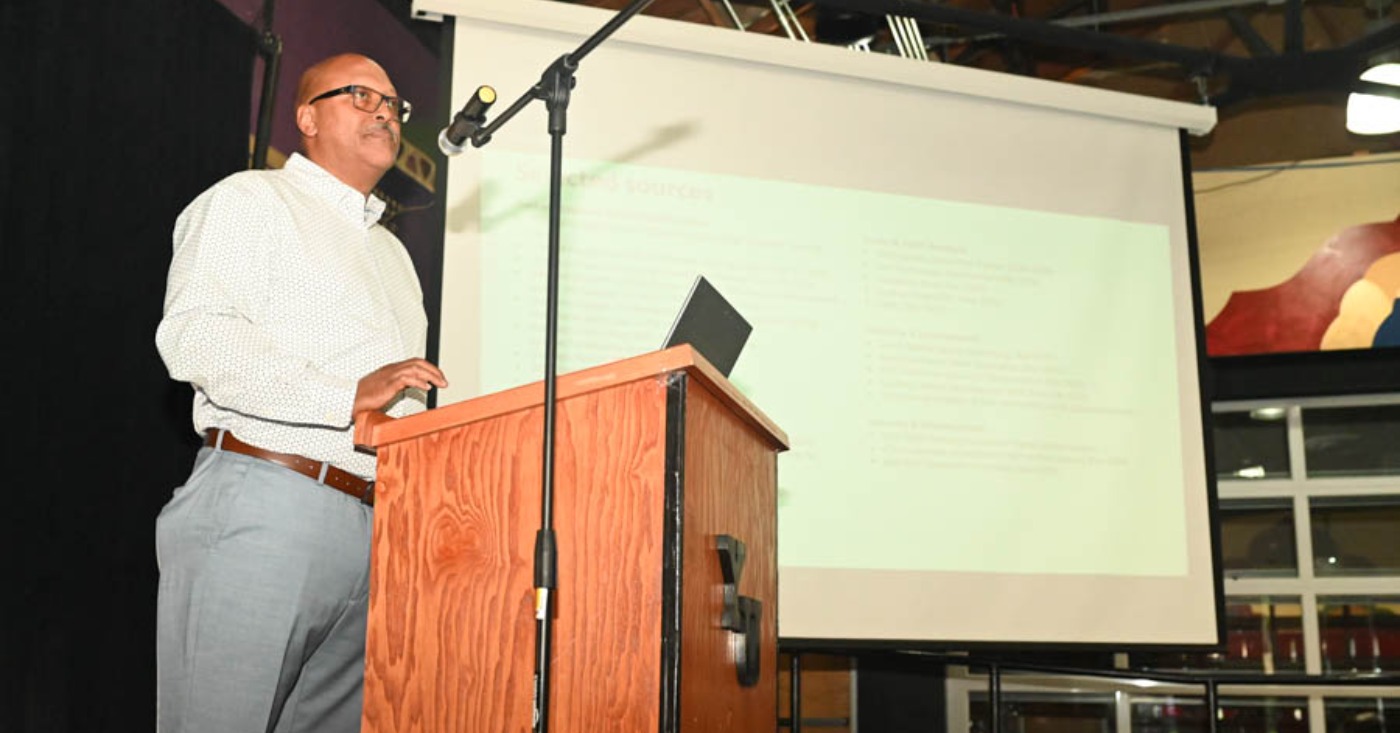
In a speech to an audience of local residents and community leaders, Port Commissioner and Maritime Attorney Derrick Muhammad delivered a presentation recently to answer a question that might seem simple on its surface but one that has many aspects that are crucial for the future of the East Bay. “What does it mean for the City of Oakland to be a port city?”
Summing up the theme of his talk on Saturday, July 25, at Youth Uprising in East Oakland, Mr. Muhammad said, “Rather than advocating a particular policy, the presentation sought to increase public understanding of one of Oakland’s most important public assets by connecting the city’s history, labor movement, transportation network, and global economy into a single narrative.”
In attendance were many East Bay residents and community leaders, including retired third-generation longshoreman and prominent Black labor leader Clarence Thomas, civil rights attorney and former Alameda County District Attorney Pamela Price, Secretary-Treasurer of Alameda Labor Council Keith Brown, Isaac Kos-Read of Kos-Read Group, president of the National Council of Negro Women, and Alameda County Aisha Williams.
Quiana Canada, C.O.O. of Youth UpRising, said she was excited to learn
about the pathways and workforce development opportunities for our youth. This weekend provided a wonderful introduction to the history and impact of being a Port City. We thank all of the organizers and sponsors for their ongoing commitment to the future of our youth.”
Commissioner Muhammad explored the evolution of Oakland as a Port City,
how rail, the waterfront, and wartime expansion were catalysts for the growth of West Oakland, both locally and for the development of containerization and global trade.
He also examined the Port of Oakland’s role as an economic engine and its contributions to creating career pathways into the maritime economy, developing small-business opportunities connected to the waterfront, advancing environmental stewardship and modernization, and shaping potential futures for the port.
He also emphasized that the Port is much more than ships and cranes that the public can see as it passes by on the highway. It is a major economic engine that provides a gateway to middle-class careers, international trade, a public asset, and an important part of Oakland’s historic identity.
The presentation concluded with a question-and-answer session that addressed topics including contracting, automation, workforce development, international trade, environmental sustainability, and maritime careers.
Looking ahead, this presentation was intended to become part of an ongoing community education initiative designed to increase public understanding of the maritime economy and encourage broader civic engagement around Oakland’s waterfront.
Future presentations are expected to expand on additional topics related to transportation, logistics, labor history, international trade, and economic opportunity.
WORK FROM HOME
Home-based business with potential monthly income of $10K+ per month. A proven training system and website provided to maximize business effectiveness. Perfect job to earn side and primary income. Contact Lynne for more details: Lynne4npusa@gmail.com 800-334-0540


Car Wash Workers Cope with Lingering Impacts of ICE Raids

Misty Copeland Shapes Ballet’s Tomorrow

As Part of Your Back-to- School Checklist, Vaccinate

As Part of Your Back-to- School Checklist, Vaccinate

Congresswoman Simon Demands Investigation into Trump’s Abuse of Emergency Powers for Coal Export Terminal in West Oakland

OPINION: The Philippines Isn’t Foreign When Your Family Still Lives There

Asm. McKinnor’s Bill Banning Drones Above Outdoor Entertainment Events Awaits Senate Decision

California Sen. Padilla Joins Colleagues to Introduce Bill Imposing Term Limits on Supreme Court Justices

Department of Homeland Security Demands California Secretary of State Shirley N. Weber Scrub Voter Rolls

George Cook: The Inventor Who Made Fishing Smarter

Gov. Newsom Announces $109.6 Million in Funding for 278 Supportive Homes in Bakersfield, Contra Costa, Sacramento and Fresno

Rep. Kamlager Dove Demands Care, Justice for Man Shot by ICE

“The Power to See Threats Sooner”: Gov. Newsom, Safety Officials Showcase California’s Investments in Hi-Tech Wildfire Prevention

100 Black Wings’ Team Oakland Youth Athletes Heading to Taiwan for 2026 International Children’s Games

Oakland ‘Port Serves as a Powerful Engine for Good Jobs and Economic Development
Department of Homeland Security Demands California Secretary of State Shirley N. Weber Scrub Voter Rolls

Oakland Children’s Hospital Workers and Patients Rally for Pediatric Medical Care
“The Power to See Threats Sooner”: Gov. Newsom, Safety Officials Showcase California’s Investments in Hi-Tech Wildfire Prevention

New Judge Could Decide if Karmelo Anthony Gets a New Trial

Surveillance Pricing Fight: State Senate Debates Bill Banning Retailers from Using AI to Set Prices Based on a Buyer’s Profile

Alpha Kappa Alpha Sorority, Inc. Celebrates New North Atlantic Regional Director

Mount Zion MBC, Church of Jesus Christ of Latter-day Saints Partner to Bring 29,000 Meals to Alameda County
California Sen. Padilla Joins Colleagues to Introduce Bill Imposing Term Limits on Supreme Court Justices

Starting This Summer, California Car Buyers Can Get an Instant $3500 Off the Cost of Electric Vehicles

COMMENTARY: You Are Already Paying for the AI Boom

California Bill Would Let Abuse Victims Use Trauma as Legal Defense for Violent Crime

Fed Court to Decide Landmark First Amendment Case

Gov. Gavin Newsom Signs Law Streamlining Affordable Housing Rules

Oakland Celebrates $125 Million Coliseum Sale

Saving Black Mothers Starts Outside the Hospital

The Conversation With Al McFarlane 6/23/26

Media Monday 6/22/26

LIVE! ASK ALMA! — TUES. 6.23.26 7PM EST

Car Buying Secrets: 4 Hidden Checks Before You Sign!

Is This 550 HP Charger Worth YOUR Money? AutoNetwork Review

Celebrating Juneteenth – Frederick Douglass on education and resistance

LIVE! — ASK ALMA! — TUES. 6.19.26 7PM EST

Hyundai Ioniq 5 Parking, Safety, and 360 View #shorts

2025 Ioniq 5 New Wiper & Powerful Performance! #shorts

Electric SUV Range: Is 259 Miles Enough? #shorts

EV Charging: How Fast Can You Charge an Electric Vehicle? #shorts

Biometric Cooling… Messaging Seats…Come on! 2025 Infiniti QX80 Autograph 4WD

Charged Up: Witness the Magic of a Fully Electric Car! #shorts

Range Rover Sport PHEV Included…: See What’s Inside This Luxury SUV! #shorts

Invisible Hood View: Perfect Parking with X-Ray Vision! #shorts
-
 Featured4 days ago
Department of Homeland Security Demands California Secretary of State Shirley N. Weber Scrub Voter Rolls
-
 Business3 weeks ago
Oakland Children’s Hospital Workers and Patients Rally for Pediatric Medical Care
-
 Environment4 days ago
“The Power to See Threats Sooner”: Gov. Newsom, Safety Officials Showcase California’s Investments in Hi-Tech Wildfire Prevention
-
 #NNPA BlackPress2 weeks ago
New Judge Could Decide if Karmelo Anthony Gets a New Trial
-
 Business2 weeks ago
Surveillance Pricing Fight: State Senate Debates Bill Banning Retailers from Using AI to Set Prices Based on a Buyer’s Profile
-
 Black History1 week ago
Alpha Kappa Alpha Sorority, Inc. Celebrates New North Atlantic Regional Director
-
 Business3 weeks ago
Mount Zion MBC, Church of Jesus Christ of Latter-day Saints Partner to Bring 29,000 Meals to Alameda County
-
 Featured4 days ago
California Sen. Padilla Joins Colleagues to Introduce Bill Imposing Term Limits on Supreme Court Justices
