
Entertainment
Ferrell, Hart Defend ‘Get Hard’ After a Jolt of Criticism


In this image released by Warner Bros. Entertainment Inc., Kevin Hart, right, and Will Ferrell appear in a scene from “Get Hard.” (AP Photo/Warner Bros. Entertainment Inc., Patti Perret)
JAKE COYLE, Associated Press
MICHAEL CIDONI LENNOX, Associated Press
NEW YORK (AP) — In the annals of film festival flops — from unexpected boos to red-carpet gaffes — the premiere of the Will Ferrell, Kevin Hart comedy “Get Hard” will go down as a doozy.
After the film premiered last week at the South By Southwest Film Festival, during a Q&A with director Etan Cohen, an audience member voiced not so much a question as a harsh judgment. “This film seems racist,” he said, using an expletive. Another audience member also asked if the film, about a hedge fund manager (Ferrell) who witlessly hires a law-abiding acquaintance (Hart) to prepare him for maximum security prison after being sentenced for fraud, was perpetuating stereotypes.
That sound you might have heard emanating from Austin was the loud cursing of marketing executives for the film, which opens Friday.
Though film festival Q&As are often filled with questionable observations, these atypically blunt rebukes received outsized attention, drawing headlines from The Los Angeles Times and others. The damage continued with early reviews that also questioned the movie’s handling of homosexuality in various scenes.
Much of the film’s comedy rests on the Ferrell character’s fears of being raped in prison, and among his preparations is an attempt to have oral sex with a gay man in a bathroom stall. A critic for The Guardian wrote that future viewers “will be astonished that such a negative portrayal of homosexuality persisted in the mainstream in 2015.” Variety wrote that the film was “undone by some of the ugliest gay-panic humor to befoul a studio release in recent memory.”
After initially seeking to avoid the controversy (Cohen, Ferrell and Hart cancelled interviews with The Associated Press before Ferrell and Hart rescheduled them), the film’s stars and producers are vigorously defending their comedy as not a representation of stereotypes but a satire of them.
“Any time you’re going to do an R-rated comedy, you’re going to offend someone,” said Ferrell in an interview alongside Hart. He continued: “But that’s kind of what we do. We provoke. We prod. We also show a mirror to what’s already existing out there. We’re playing fictitious characters who are articulating some of the attitudes and misconceptions that already exist.”
“Get Hard” was written by Cohen along with Jay Martel and Ian Roberts, writing-producers from the sketch comedy show “Key and Peele.” This is Cohen’s directorial debut after penning screenplays to films like “Idiocracy” and “Tropic Thunder,” a film that memorably flirted with racially sensitive territory in Robert Downey Jr.’s lampoon, in black face, of a Method actor run amok.
In many ways, the comedy of “Get Hard” works similarly. Just as the humor of Downey’s actor wasn’t in his favor but about his own self-obsessive, racist delusions, Ferrell’s character is a parody of the narrow perspective of the elitist one percent. He hires Hart’s carwash owner and family man under the mistaken presumption that he’s been to prison, that he’s “hard.”
“You’re looking at two characters that judged each other by their cover,” said Hart. “And after peeling off some of the layers to their onion, they realize that, ‘Oh my God, this isn’t the person I thought it was from the jump. It’s a completely different person.’ And that road to friendship ensues.”
“Get Hard” was conceived as a way to pair Hart and Ferrell, two of the most popular and bankable stars in comedy. Whether the film succeeds on its own terms or not, it’s an attempt (one generally uncommon in wide-release studio films) to comment on contemporary issues of inequality and race within the context of a broad, often crude comedy.
Adam McKay, Ferrell’s longtime collaborator and a producer of “Get Hard,” said any backlash has been overinflated by “lazy journalism.”
“Given that we’re a country with runaway income inequality, more people in jail than any other country, this is what people are crowing about? Trying to in a funny way deal with these issues?” said McKay in a phone interview with fellow producer Chris Henchy. “It really kind of got me mad. It’s just cheap is what it is.”
McKay said the film was fashioned as “a silly, filthy comedy” on the outside, but a satire of income inequality underneath. Seeing the film as racist, he says, is “kind of ridiculous and disheartening,” since its intention is to parody those who live in bubbles of wealth and prejudice. To claims of homophobia he protested: “Any individual going to maximum security prison would be afraid of violence and sexual assault. To equate that with homosexuality is ridiculous.”
Others have agreed, albeit more skeptically. In reviewing the movie for Vanity Fair, Eric D. Snider wrote that the film wasn’t offensive to him as a homosexual; it’s just not funny enough.
“It’s not mean-spirited, and it’s panicky straight guys, not gays, who are the target,” wrote Snider. “It’s just disappointing, that’s all.”
Any bad buzz for “Get Hard” has likely been partially alleviated by the goodwill both Ferrell and Hart have in storage, as well as the distraction of Ferrell’s dependably entertaining late-night appearances. The NAACP and GLAAD have not commented on the film.
“Here’s the beautiful thing about Will and myself: You’re looking at two guys that are no strangers to criticism,” said Hart. “The critic’s job is to critique. I don’t think I’ve ever had a great review on a film that I’ve done. Not one. Everybody always has had something to say. And if they’re not talking, then you have a problem.”
Whether the talking around “Get Hard” will affect it at the box office remains to be seen.
“People will go see it and there probably will be some people who are offended. It’s definitely a very dirty movie and it’s harsh,” says McKay. “It’s a good-hearted movie at its root. Everything comes out in the wash with movies because they hang around for, like 78 years. You always end up seeing what a movie really is in the long run.”
___
Lennox reported from Los Angeles.
Copyright 2015 The Associated Press. All rights reserved. This material may not be published, broadcast, rewritten or redistributed.









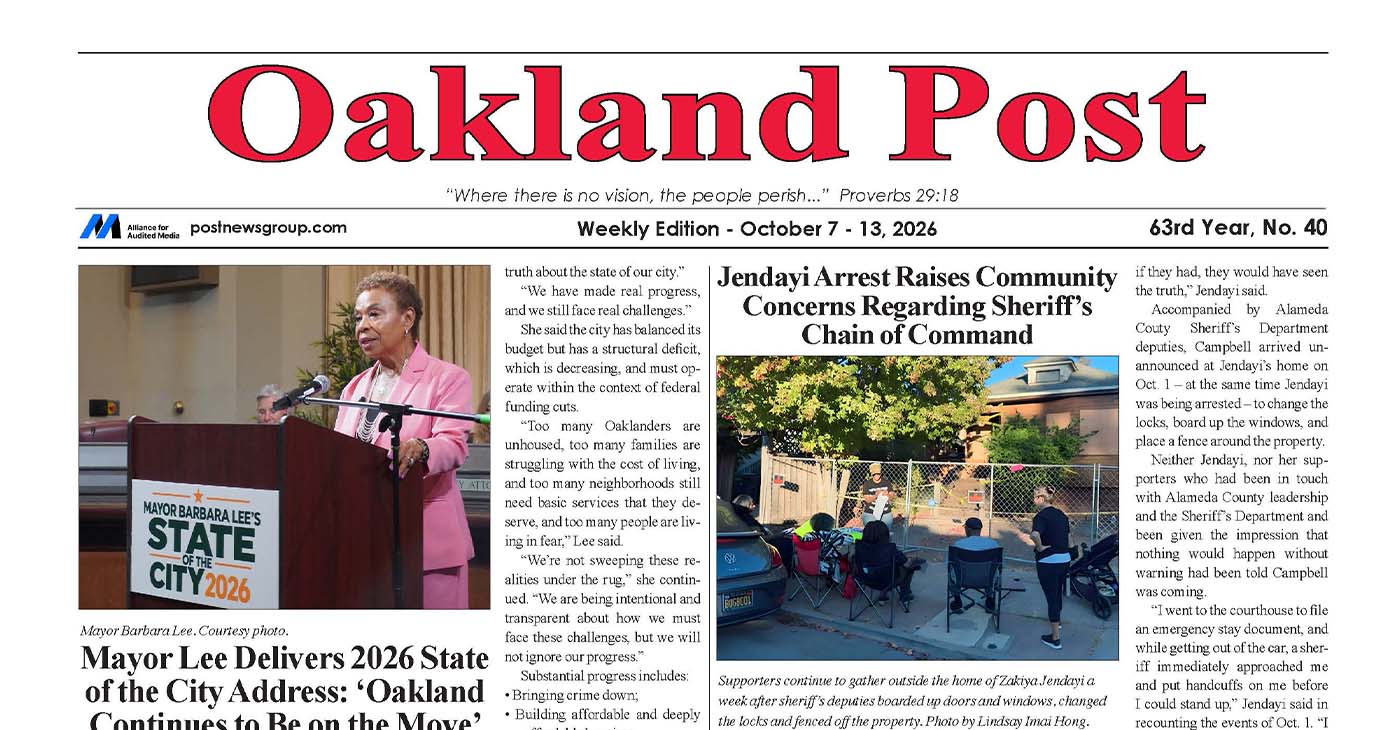
To enlarge your view of this issue, use the slider, magnifying glass icon or full page icon in the lower right corner of the browser window.
Activism
Oakland Post: Week of September 30 – October 6, 2026
The printed Weekly Edition of the Oakland Post: Week of September 30 – October 6, 2026
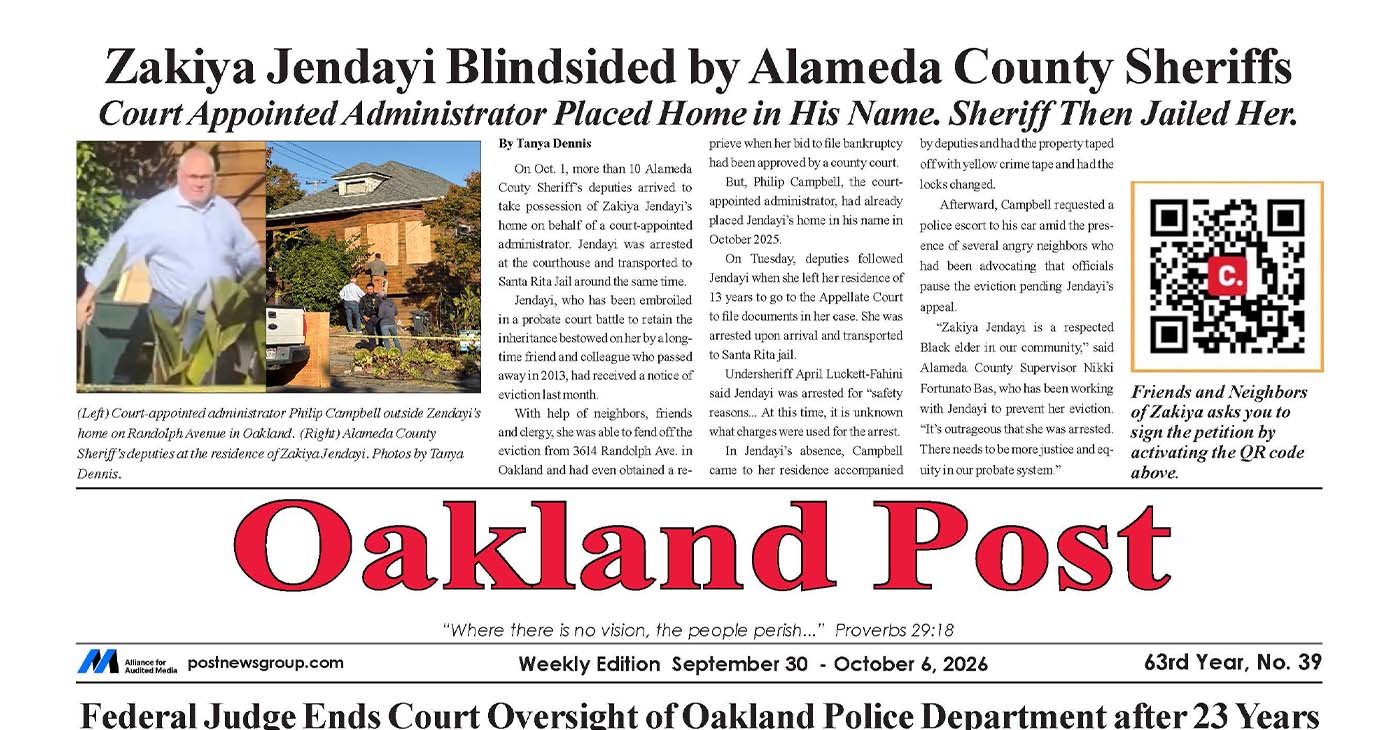
To enlarge your view of this issue, use the slider, magnifying glass icon or full page icon in the lower right corner of the browser window.

Business
From Historic Memories to New Possibilities: Oakland Celebrates Coliseum 60
More than 75 people gathered at Youth UpRising in East Oakland on Friday, September 18, for Coliseum 60, an event marking six decades of sports, entertainment, employment, and community memories at the Oakland-Alameda County Coliseum Complex. Held 60 years to the day after the Coliseum first opened, the celebration featured cultural performances and a mini-documentary highlighting its history. Speakers reflected on the venue’s significant role in the community and its future possibilities. Read more to learn about the individuals and stories honored during this special event.

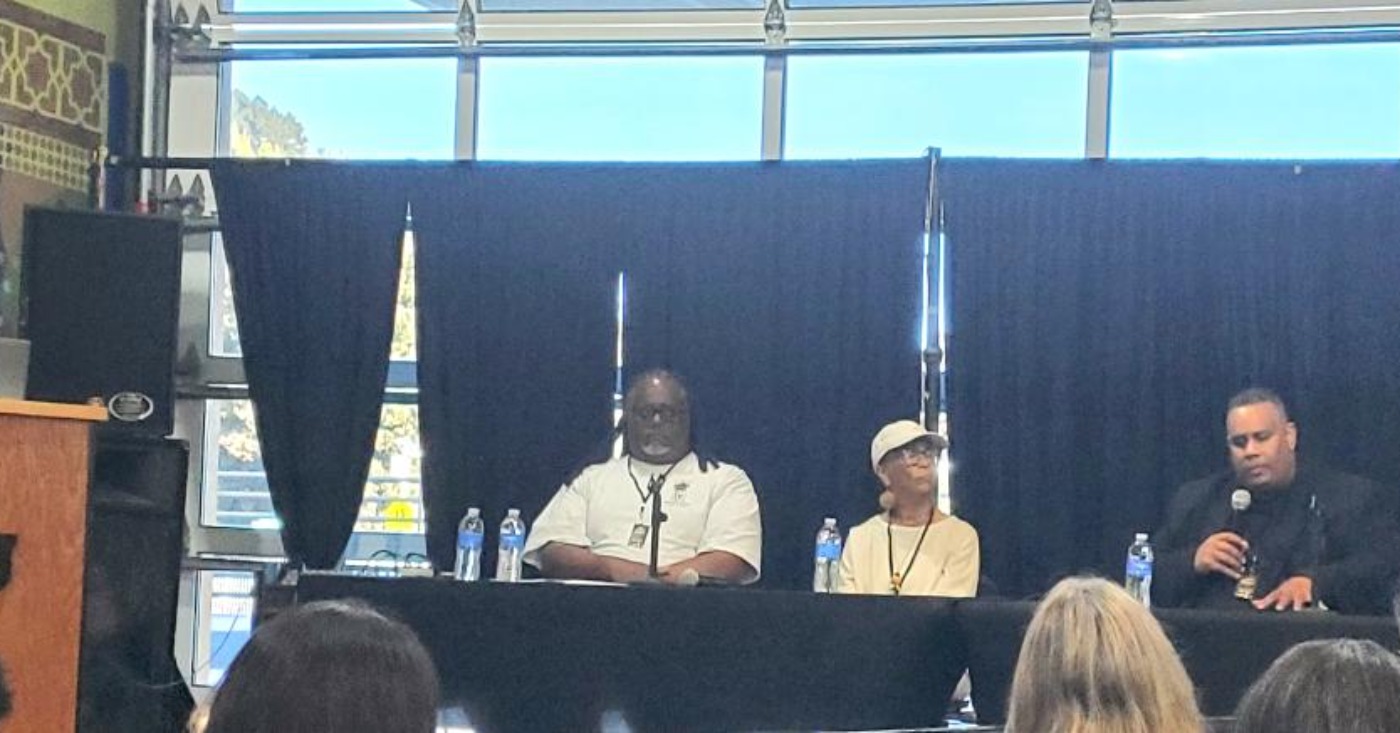
More than 75 people gathered at Youth UpRising in East Oakland on Friday, Sept. 18, for Coliseum 60, a celebration honoring six decades of sports, entertainment, employment and community memories connected to the Oakland-Alameda County Coliseum Complex.
Held 60 years to the day after the Coliseum opened, the event carried the theme, “One Community. One Legacy. One Future. Forward Together.”
The celebration opened with the national anthem performed by sisters Anese Jade, Amina Benjamin and Zaza Benjamin. Diamano Coura West African Dance Company contributed African dance and drumming, bringing movement, rhythm and cultural expression to the program.
A mini documentary highlighted the Coliseum’s sports history and its broader role as an entertainment destination. Archival material recalled performances by Prince and Tina Turner, along with memorable games featuring the Warriors, Oakland A’s and Raiders.
“The Coliseum 60 is about much more than celebrating a building or looking back at 60 years of history,” said event organizer Quixote Atkins of VillageGIVE.
“It’s about the people who made that history possible: the families, workers, athletes, artists, community leaders, fans and generations who gathered there and created memories together.”
A panel exploring that history featured author, historian and former Black Panther Party member Tareka Lewis; stagehand and union representative Keith Brown; and Ray Bobbitt, president of the African American Sports and Entertainment Group AASEG. Lewis described her family as fourth-generation Bay Area pioneers.
“My family and Black families who arrived even earlier helped build the Bay Area, grew businesses and established culture here,” Lewis said. “This should be taught in the public schools.”
Lewis recalled Oakland’s influence on sports, music and literature, from the Raiders’ beginnings at Laney College to stars such as The Pointer Sisters and Rickey Henderson who attended Oakland public schools. She also advocated for school museums, historical timelines, entrepreneurship training and investments benefiting corridors such as Bancroft Avenue and High Street.
Keith Brown, a member of Local 107 of the International Alliance of Theater and Stage Employees (IATSE) who began working at the Coliseum in 2011, remembered the Ringling Bros. and Barnum & Bailey Circus, the Ice Capades, baseball bat giveaways and Nelson Mandela’s 1990 appearance.
“The special events are amazing, but it’s the workers that make the memories real for everyone,” Brown said. “They make the magic happen at the Coliseum.”
The program recognized longtime workers, including beer-stand manager Robert Preston, who served for 40 years, and Kenyatta Gentry, who worked as a vendor for 24 years and used her earnings to purchase her first apartment. Union workers Jose Gonzales and Carmen Sandoval were also honored. Speakers emphasized that Coliseum employment provided generations of residents with union wages and benefits.
Dr. Denise Saddler, the superintendent of the Oakland Unified School District (OUSD) was also honored. Saddler shared her family’s history of working at the Coliseum.
District 7 Oakland City Councilmember Ken Houston discussed the complex ownership arrangements involving the city, county and private interests.
“This was the most complex deal of its kind in the country,” Houston said.
Prior to moving from the East Coast, Alameda County Supervisor and Coliseum Joint Powers Authority Chair Nate Miley recalled learning about Oakland through its three professional sports teams. As an elected official and public servant, Miley fought hard to keep the Golden State Warriors, Oakland As, and the Raiders, but he is hopeful for the future.
“The story is not over for the Coliseum,” Miley said. “We’re entering a new chapter.”
Bobbitt said the departure of three teams had once seemed unimaginable, but he maintained that Oakland’s future remains bright.
“Oakland is a cultural superpower worldwide,” Bobbitt said. “We’re going to write the future where we participate and drive the redevelopment.”
Bobbitt highlighted AASEG’s four-year partnership with Castlemont High School’s architecture program, which engages students in reimagining and creating redevelopment concepts for the Coliseum property. “The youth will always move us forward. They are the future.”
In closing, Atkins said, “September 18 is the celebration, but what we build together afterward is the legacy.”



WCCUSD Joins Statewide Organic School Food Purchasing Cooperative

Democrats, Community Groups Back Measure EE to Change How Oakland Is Governed

Four Tips to Help You Plan a Holiday “Staycation”

Veterans Housing Project Proposed for South Richmond
PRESS ROOM: Transformative Justice Coalition 2026 Voting Rights Champion Awards Reception ‘Yesterday Is Today: The Battle For Voting Rights

Mayor Lee Delivers 2026 State of the City Address: ‘Oakland Continues to Be on the Move’

Oakland Awarded More than $14 Million in State Funding

Jendayi Arrest Raises Community Concerns Regarding Sheriff’s Chain of Command

Marin County Supes Expand Small Business Options with Home Kitchen Pilot Program

Allen Temple Baptist Church Hosts Free Prostate Cancer Screenings on Oct. 17

AC Transit Labor Unions Back Director Joel Young

Locals Can Get Locally Grown Produce Delivered Through Urban Tilth

‘ICE-Free Marin’ Supporters Press Supervisors as County Drafts Enforcement Restrictions

Oakland Post: Week of October 7 – 13, 2026

Ghana’s Ministry of Foreign Affairs Publishes Global Circle’s Vatican Reparations Call in Special Edition Alongside Heads of State

Misnamed ‘Parent’ PAC Seeks to Influence Oakland School Board Elections

Oakland Post: Week of September 2 – 8, 2026

Oakland Post: Week of September 9 – 15, 2026

Richmond Tiny House Village Farm & Garden Set to Open Gates on Sept. 26

Latest Massacre in Haiti Reveals Cruelty U.S. Deportations

OPINION: Nolan Wells’ Death One of Several Signifying Racial Terror Lives on in U.S. South

Poll: Becerra Widens His Lead Over Hilton; Californians Split on Wealth Tax

Mayor Lee Announces $1 Million Kaiser Permanente Grant for Pilot Program to Address Homelessness, Clean Up Public Spaces throughout Oakland

County Office of Education Says OUSD Finances Are Getting Healthier, Materially Stronger

Democratic Clubs Interview Candidates for Oakland School Board

Oakland People’s Arms Embargo Coalition Demands End to Military Shipments Thru Oakland

Oakland Post: Week of September 16 – 22, 2026

BLACspace Cooperative Invites Bay Area to Experience Oakland’s Black Cultural Ecosystem Through a BLAC Map Tour + Party

Two Looming Threats Every Alameda County Elder Should Know About

Zakiya Jendayi Arrested, Locked Out of Home by Sheriff’s Deputies

The Conversation With Al McFarlane 6/23/26

Media Monday 6/22/26

LIVE! ASK ALMA! — TUES. 6.23.26 7PM EST

Car Buying Secrets: 4 Hidden Checks Before You Sign!

Is This 550 HP Charger Worth YOUR Money? AutoNetwork Review

Celebrating Juneteenth – Frederick Douglass on education and resistance

LIVE! — ASK ALMA! — TUES. 6.19.26 7PM EST

Hyundai Ioniq 5 Parking, Safety, and 360 View #shorts

2025 Ioniq 5 New Wiper & Powerful Performance! #shorts

Electric SUV Range: Is 259 Miles Enough? #shorts

EV Charging: How Fast Can You Charge an Electric Vehicle? #shorts

Biometric Cooling… Messaging Seats…Come on! 2025 Infiniti QX80 Autograph 4WD

Charged Up: Witness the Magic of a Fully Electric Car! #shorts

Range Rover Sport PHEV Included…: See What’s Inside This Luxury SUV! #shorts

Invisible Hood View: Perfect Parking with X-Ray Vision! #shorts
-
 Economy2 weeks ago
Poll: Becerra Widens His Lead Over Hilton; Californians Split on Wealth Tax
-
 Business3 weeks ago
Mayor Lee Announces $1 Million Kaiser Permanente Grant for Pilot Program to Address Homelessness, Clean Up Public Spaces throughout Oakland
-
 Business2 weeks ago
County Office of Education Says OUSD Finances Are Getting Healthier, Materially Stronger
-
 Uncategorized3 weeks ago
Oakland People’s Arms Embargo Coalition Demands End to Military Shipments Thru Oakland
-
 Activism3 weeks ago
Oakland Post: Week of September 16 – 22, 2026
-
 Art2 weeks ago
BLACspace Cooperative Invites Bay Area to Experience Oakland’s Black Cultural Ecosystem Through a BLAC Map Tour + Party
-
 Community3 weeks ago
Two Looming Threats Every Alameda County Elder Should Know About
-
 Lead Story2 weeks ago
Zakiya Jendayi Arrested, Locked Out of Home by Sheriff’s Deputies
