
Bay Area
Data Shows Some Bay Area Populations Struggling Financially in Post-COVID Economy
As the Bay Area’s economy continues its up-and-down recovery from the worst effects of the COVID-19 pandemic, recent data shows that many low-income households and communities of color are getting left behind. In a January report based on data analyzed via the “Bay Area Recovery Tracker” online tool, the Bay Area Equity Atlas found that despite some promising economic gains, the hope that a rising tide would lift all boats appears to be floundering.

By Kiley Russell
Bay City News
As the Bay Area’s economy continues its up-and-down recovery from the worst effects of the COVID-19 pandemic, recent data shows that many low-income households and communities of color are getting left behind.
In a January report based on data analyzed via the “Bay Area Recovery Tracker” online tool, the Bay Area Equity Atlas found that despite some promising economic gains, the hope that a rising tide would lift all boats appears to be floundering.
“We’re finding this consistently, that low-income adults and people of color are continuously struggling to cover their usual expenses,” said the report’s author Simone Robbennolt.
The report found that six in 10 low-income adults in the Bay Area — people living in households earning less than $50,000 a year — and almost half of adults of color still report having a somewhat or very difficult time paying for usual expenses, compared to 21 percent of white people and 22 percent of people with higher incomes.
“That’s anything from buying groceries to paying house and utility bills or just keeping up with monthly card payments, and so we’re seeing consistently that this number is not really shifting and we’re kind of seeing almost a stagnation for some of these indicators where we would want to see progress almost three years out, four years out,” said Robbennolt, an associate with PolicyLink, which produces the Bay Area Equity Atlas along with the San Francisco Foundation and University of Southern California’s Equity Research Institute.
This comes amid an environment where many economic indicators continue to show some promise, despite worries over inflation, rising interest rates and tech-sector layoffs.
For example, data from the U.S. Department of Commerce shows that gross domestic product is estimated to have increased by 3.2 percent nationally in the third quarter of 2022 compared to the previous quarter and by 2.7 percent in the fourth quarter.
Also, gross domestic product — the value of goods and services produced in specific areas — increased by nearly 4 percent in California during the third quarter, with personal income growth hitting 5.2 percent in the state.
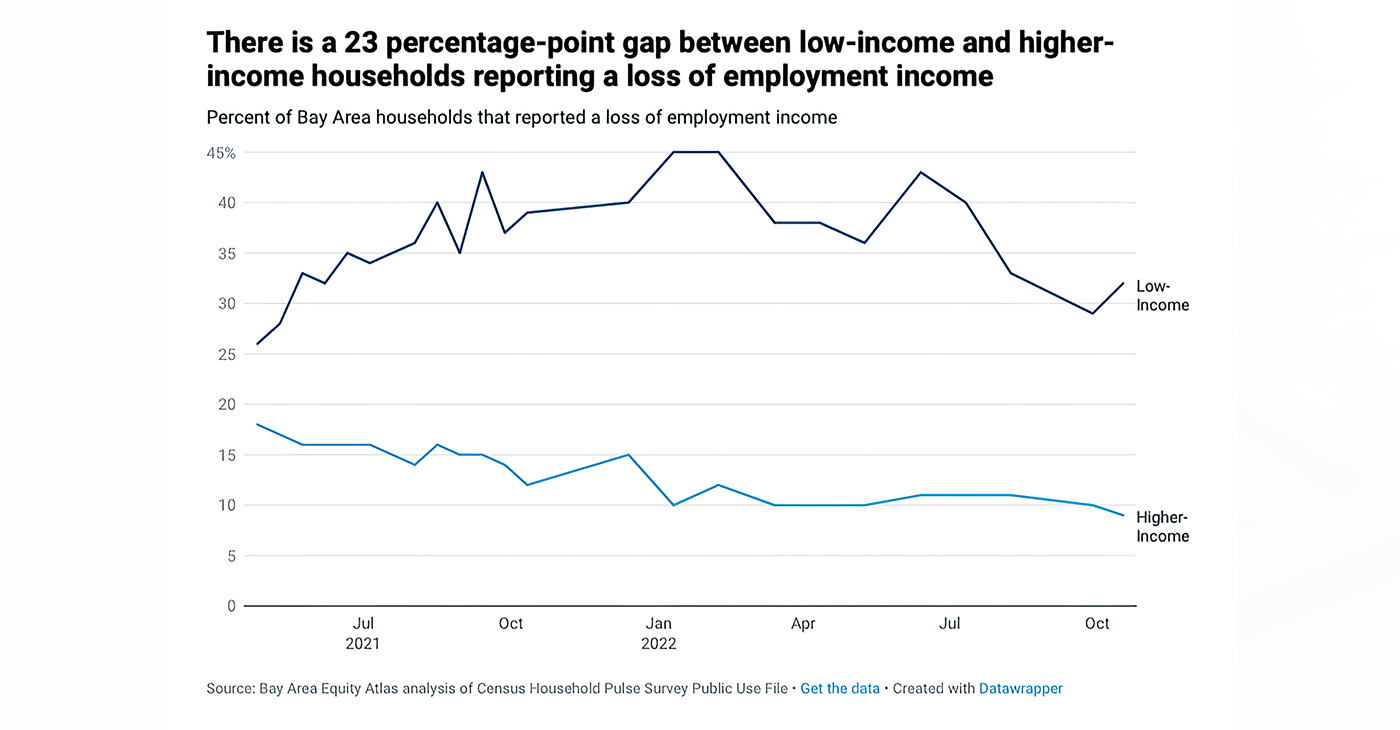
But by October 2022, 26 percent of people of color in the Bay Area reported a loss of income due to job loss or a reduction in hours or wages, while just 8 percent of white people reported a similar loss of income, according to data incorporated into the Equity Atlas dashboard from the U.S. Census Household Pulse Survey.
“We’re also seeing a gap widening between lower-income and higher-income households experiencing loss of employment income,” Robbennolt said. “When the pandemic first hit, there was about an 8 percentage point gap between these two groups and since then it’s increased threefold and we’re seeing a 23 percentage point gap.”
This appears to show that while higher-income white people are steadily recovering from the worst of the COVID downturn, lower-income people of color are heading in the opposite direction, despite some efforts to ensure an equitable economic recovery with policies like direct COVID relief payments and expanded unemployment benefits.
The report points out that there have long been “stark differences in income inequality” in the Bay Area, where income grew by 69 percent for very-high-wage earners and by 53 percent for high-wage workers from 1980 to 2019.
During the same period, income grew by 17 percent for middle-income workers and actually dropped by 2 percent for low-wage earners and 9 percent for very-low-wage earners.
“The pandemic, in a lot of ways, laid bare a lot of the existing inequities and made a lot of them worse,” said Louise Auerhahn, director of economic and workforce policy at Working Partnerships USA, a Silicon Valley organization that works to foster a more equitable regional economy, among other things.
It was “forcibly brought home” during the pandemic that the majority of jobs deemed essential — things like retail, food service and long-term care — are not well compensated or “valued in proportion to the value they bring to the economy,” Auerhahn said.
“The overwhelming majority of those in-person essential jobs are done by workers of color, immigrants and women in the Bay Area,” she said.
This phenomenon of “occupational segregation,” wherein workers of color are overrepresented in low-wage and low-quality jobs, is a consistent factor in the region’s racial pay gaps, according to the report.
For example, in San Mateo County, Latino workers account for 25 percent of the total working-age population but make up 74 percent of building and grounds cleaning and maintenance workers, while white workers are 38 percent of the working population and hold 54 percent of management jobs.
To help lower-wage workers keep afloat during the pandemic, many federal, state and local governments implemented a variety of emergency policies, including food assistance, expanded unemployment benefits, direct payments and utility shutoff and eviction moratoriums.
“There’s a lot of data that those worked, that they really reduced poverty and people entering homelessness,” Auerhahn said. “But all of those are ended or are ending. It’s quite likely to get a lot worse in the next year if we don’t take some actions to mitigate the end of these supports that have helped people hang on.”
The report suggests several policies that could help foster a more equitable economic recovery, including implementation of a living wage, ensuring workers have health care, paid leave, retirement accounts and stable working environments, as well as ensuring people have the right to unionize.
“I think a lot of things are still in flux and there’s still an opportunity to make (the recovery) more equitable,” Auerhahn said. “You have to understand that our economy, as it is now, as it was before the pandemic, is very deeply and structurally inequitable, so if we proceed with business as usual it’s going to increase inequality.”
A link to the full report can be found at https://bayareaequityatlas.org/recovery-tracker/economic-security.
Copyright © 2023 Bay City News, Inc. All rights reserved. Republication, rebroadcast or redistribution without the express written consent of Bay City News, Inc. is prohibited. Bay City News is a 24/7 news service covering the greater Bay Area.








Activism
Oakland Post: Week of April 8 – 14, 2026
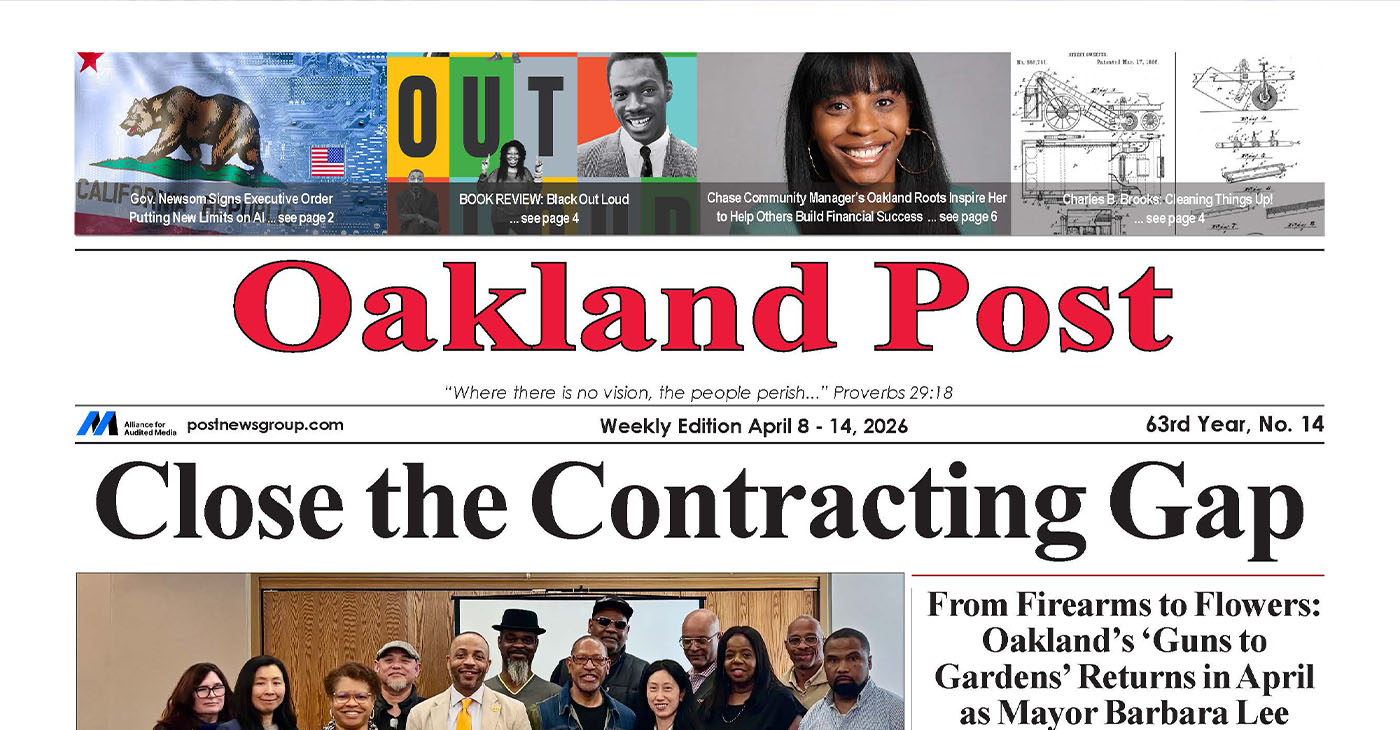
The printed Weekly Edition of the Oakland Post: Week of April 8 – 14, 2026
To enlarge your view of this issue, use the slider, magnifying glass icon or full page icon in the lower right corner of the browser window.
Activism
Oakland Post: Week of April 1 – 7, 2026
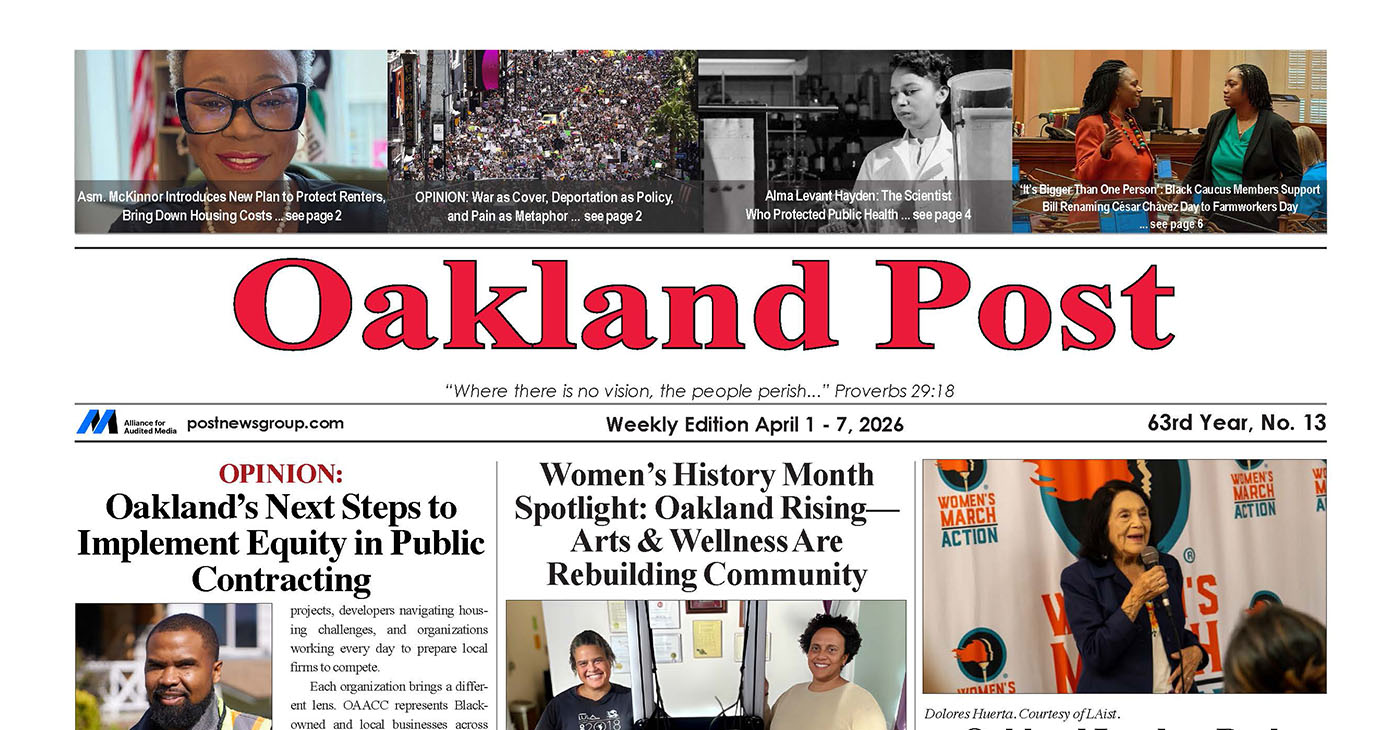
The printed Weekly Edition of the Oakland Post: Week of April 1 – 7, 2026
To enlarge your view of this issue, use the slider, magnifying glass icon or full page icon in the lower right corner of the browser window.
Activism
Oakland Post: Week of March 18 – 24, 2026
The printed Weekly Edition of the Oakland Post: Week of March 18 – 24, 2026

To enlarge your view of this issue, use the slider, magnifying glass icon or full page icon in the lower right corner of the browser window.

WORK FROM HOME
Home-based business with potential monthly income of $10K+ per month. A proven training system and website provided to maximize business effectiveness. Perfect job to earn side and primary income. Contact Lynne for more details: Lynne4npusa@gmail.com 800-334-0540


Oakland Post: Week of April 8 – 14, 2026

Oakland Post: Week of April 1 – 7, 2026

Black Artists in America, Installation Three Wraps at the Dixon Gallery and Gardens

Grief, Advocacy, and Education: A Counselor Reflects on Black Maternal Health

Future of Florida’s Black History Museum in Limbo

New Research Shows the Many Benefits of Early Learning

South Hampton K-8 Students Among Top 10 Finalists for Samsung’s ‘Solve for Tomorrow’ Competition

Cuba: No Negotiation with US on the President or Political System

Brooklyn Academy of Music Names Jamaican-Born Tamara McCaw as President

Trinidad & Tobego – U.S. Launches WhatsApp Channel for American Citizens in the Country

Oakland Post: Week of March 18 – 24, 2026

AI Innovation vs. Ethics and Environmental Impact

AI, Web3, and Digital Reparations

What If You Owned Your AI Agent?

Season 7, Episode 3 – January Reporter’s Roundtable 📱

Reflecting on Black History Milestones in Birmingham AL

Oakland Post: Week of February 25 – March 3, 2026

Oakland Post: Week of March 4 – 10, 2026

PRESS ROOM: NBA Hall of Fame Nominee Terry Cummings Joins 100 Black Men of DeKalb County to Launch Victory & Values Initiative

Trump’s MAGA Allies are Creating Executive Order Plan to Steal the 2026 Midterms

U.S. manufacturing rebounds – how foundry services are adapting to rising demand

Poll Shows Support for Policies That Help Families Afford Child Care

Oakland Post: Week of March 11 -17, 2026
Oakland Post: Week of March 18 – 24, 2026

OP-ED: One Hundred Years of Black Workers Telling the Truth

Advancements in solar technology that are changing the way we power the world

Financial Wellness and Mental Health: Managing Money Stress in College

Woman’s Search for Family’s Roots Leads to Ancestor John T. Ward – A Successful Entrepreneur and Conductor on the Underground Railroad

COMMENTARY: Women of Color Shape Our Past and Future

PRESS ROOM: Civil Rights TV Launches in Selma as the World’s First 24/7 Civil Rights Television Network

Hyundai Ioniq 5 Parking, Safety, and 360 View #shorts

2025 Ioniq 5 New Wiper & Powerful Performance! #shorts

Electric SUV Range: Is 259 Miles Enough? #shorts

EV Charging: How Fast Can You Charge an Electric Vehicle? #shorts

Biometric Cooling… Messaging Seats…Come on! 2025 Infiniti QX80 Autograph 4WD

Charged Up: Witness the Magic of a Fully Electric Car! #shorts

Range Rover Sport PHEV Included…: See What’s Inside This Luxury SUV! #shorts

Invisible Hood View: Perfect Parking with X-Ray Vision! #shorts

AI Is Reshaping Black Healthcare: Promise, Peril, and the Push for Improved Results in California

ESSAY: Technology and Medicine, a Primary Care Point of View

Sanctuary Cities

The RESISTANCE – FREEDOM NOW

STATE OF THE PEOPLE: Freddie

ECONOMIC BOYCOTT DAY!!!!!

I told You So
-
 Activism3 weeks ago
Oakland Post: Week of March 11 -17, 2026
-
 Activism3 weeks ago
Oakland Post: Week of March 18 – 24, 2026
-
 Advice3 weeks ago
Financial Wellness and Mental Health: Managing Money Stress in College
-
 #NNPA BlackPress3 weeks ago
Brooklyn Academy of Music Names Jamaican-Born Tamara McCaw as President
-
 #NNPA BlackPress2 weeks ago
Grief, Advocacy, and Education: A Counselor Reflects on Black Maternal Health
-
 #NNPA BlackPress2 weeks ago
New Research Shows the Many Benefits of Early Learning
-
 #NNPA BlackPress2 weeks ago
Black Artists in America, Installation Three Wraps at the Dixon Gallery and Gardens
-

 Advice4 weeks ago
Women & Wealth: Tips for Navigating Your Lifelong Financial Journey
