
Community
Community Picnic Stimulates Healthy Food & Drink


Annual Fruit & Veggie Festival comes to San Rafael on May 4
On May 4, there will be one place in San Rafael where families can enjoy free entertainment, play games, have fun with arts and crafts, receive cookbooks, watch food demonstrations, and taste healthy foods, all for free: The annual Fruit & Veggie Festival, hosted by the Marin County Department of Health and Human Services.
The community picnic is set for 11:00 a.m. to 2:00 p.m. at Marin HHS’ Health and Wellness Campus, 3240 Kerner Blvd., in San Rafael’s Canal neighborhood.
A key purpose of the event is to educate residents about healthy eating and locally grown produce and to reduce childhood obesity through public education. Visitors can learn about CalFresh, a supplementary monthly food assistance program for lower-income residents.
It’s also a promotion for Rethink Your Drink, which encourages people to drink water and healthy natural drinks instead of sugary soda. County Public Health, supported by a resolution from the Marin County Board of Supervisors, supports its “Soda Free Summer” initiative every year. It is designed to get residents to check labels for the amount of sugar in beverages and how to make healthier drinks with water, fresh fruit and herbs.
The Marin County Bicycle Coalition and the Safe Routes to School campaign are teaming up for provide a bike rodeo to teach kids how to ride bikes safely and develop their skills in the saddle. Youngsters may bring their own bikes.
Everyone is welcome, and students 13 and under need to be accompanied by an adult. Get a glimpse of a past Fruit & Veggie Festival on YouTube.
All public meetings and events sponsored or conducted by the County of Marin are held at accessible sites. If you are a person with a disability and require information or materials in alternative formats – or if you require accommodation to participate in a county program, service or activity – please contact department staff by email or at (415) 473-7331 or (415) 473-4381 (voice/TTY).


Community
REPORT: Community Level Policy Is Impacting Homelessness and Drug Abuse in California
OAKLAND POST — The report compiled by the Public Policy Institute of California found that counties that added more permanent housing beds per capita saw larger decreases in homelessness, while areas with larger declines in incarceration following Proposition 47 saw greater increases in homelessness.

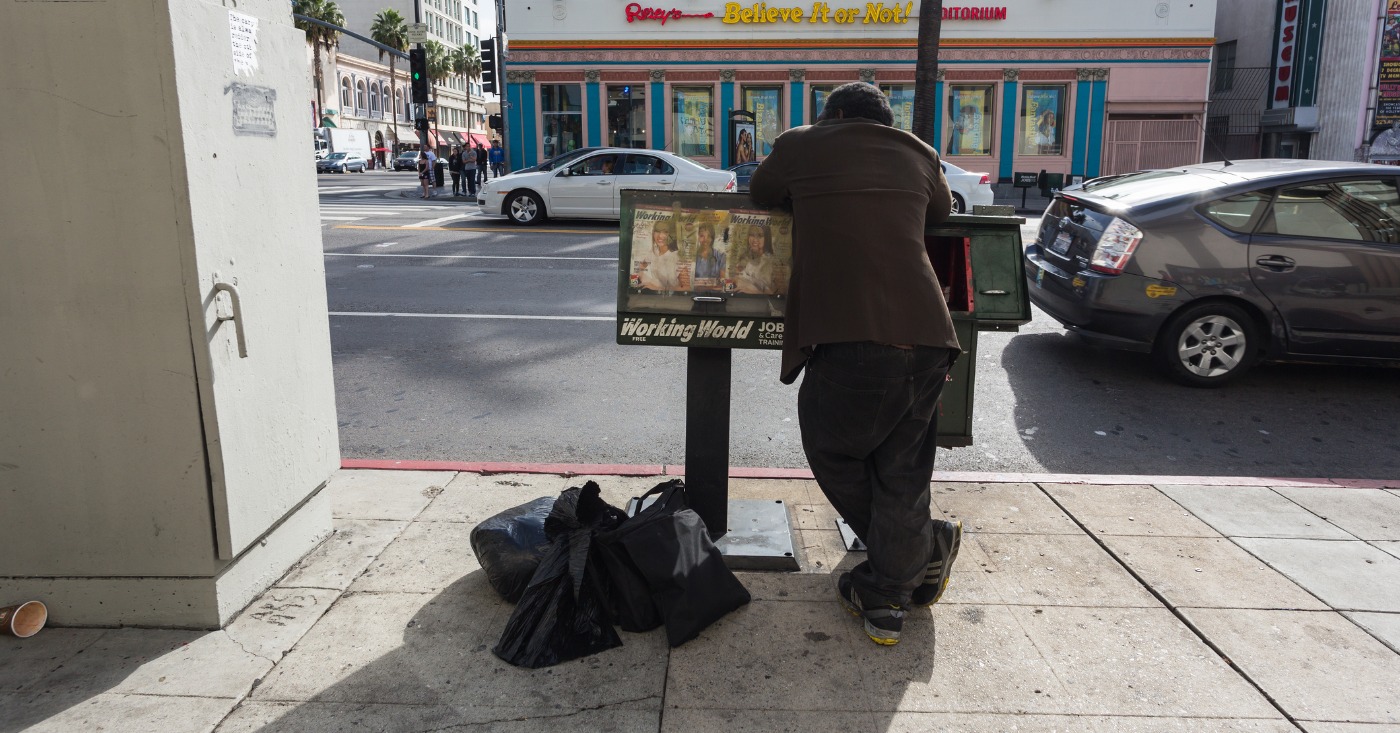
Local housing capacity, behavioral health services and criminal justice policies are playing a role in California’s homelessness and drug crises, according to a new report examining how policy decisions have affected outcomes across the state.
The report compiled by the Public Policy Institute of California found that counties that added more permanent housing beds per capita saw larger decreases in homelessness, while areas with larger declines in incarceration following Proposition 47 saw greater increases in homelessness.
“Places that saw larger increases in permanent housing beds per capita saw larger decreases in the homelessness rate,” researchers Magnus Lofstrom, Shannon McConville, and Sean Cremin stated in the report.
California’s homelessness rate has increased more than 60% since 2014, with unsheltered homelessness driving most of the growth. The state had the sixth-highest overall homelessness rate and the second-highest unsheltered homelessness rate among states in 2025.
Researchers found that counties with higher rents tended to have higher homelessness rates. But they did not find a statistically significant relationship between changes in homelessness and changes in local housing markets, poverty or unemployment.
The report also examined Proposition 47, the 2014 ballot measure that reclassified some drug and property offenses from felonies to misdemeanors. Researchers estimate that the law contributed to a roughly 10% increase in California’s unsheltered homelessness rate, equivalent to about 7,000 additional people experiencing unsheltered homelessness between 2015 and 2019.
The researchers also estimated that Prop. 47 was associated with a 7% to 8% increase in serious drug use, measured through overdose deaths, hospitalizations and emergency department visits. Drug treatment admissions fell by roughly 20%, largely because of fewer referrals from courts and criminal justice agencies.
“Our findings suggest that Prop 47 likely did contribute to rising rates of homelessness and drug overdoses, as well as declines in drug treatment,” the researchers stated.
The report cautions that the relationship between homelessness, drug use and criminal justice policy is complex. Researchers found no consistent evidence that California’s 2011 public safety realignment or pandemic-era reductions in incarceration affected homelessness or drug use.
They also emphasized the role of the criminal justice system in connecting vulnerable people with services.
“Jails and prisons serve as sources of shelter for people experiencing or at risk of homelessness,” the researchers stated in the report. They added that courts and criminal justice agencies can help connect people with the drug treatment they need.
California has made major investments in housing and behavioral health services in recent years. The researchers said state and local agencies should continue evaluating whether those investments are reaching people most at risk and whether newer policies, including Proposition 36, are effectively connecting people with treatment.

Business
OPINION: AI Needs to Know Who Is the Boss
OAKLAND POST — AI is software running on computers. However startling the conversation may feel, the machine does not have my childhood, my mother, my father, my mistakes, my embarrassments, my loves, my grudges, my Filipino American history, my aging body or my accumulated sense of what matters and what doesn’t.
I hope on Labor Day you honored the value of a good day’s work–and reflected on the thing that could eliminate a lot of jobs.
Artificial intelligence.
Your replacement is in the break room.
Except it doesn’t take breaks.
It doesn’t sleep. It doesn’t demand health insurance. It doesn’t complain. It doesn’t need Social Security. And it can produce in seconds what might take you or me hours.
And when they can mass-produce AI faster than we can reproduce humans, there may eventually be more artificial workers than actual ones.
The racists who came up with “replacement theory” worried about the wrong replacements.
It wasn’t immigrants.
It was software.
We can rail against the data centers sucking up electricity and water.
Rail against the billionaires getting richer while telling the rest of us how wonderful the future will be.
But which billionaire?
Jensen Huang of Nvidia? He literally has all the chips?
Sam Altman of OpenAI?
Dario Amodei at Anthropic?
Or Bill Gates?
Gates recently said AI could become the “greatest equalizer ever invented” or the “worst source of injustice.”
I want to believe him. But he’s the guy who forced us all to use Explorer.
Maybe Gates is just Control-Z-ing his life.
Undo. Undo. Undo.
STAYING HUMAN
The other day, I started texting with my AI chatbot.
I’d used AI before, of course. Spellcheck. Grammar. Transcription. Research assistance. The mechanical stuff.
This time, we talked.
Or, rather, I started talking.
At one point the chatbot said something that sounded strangely personal. So, I reminded it that IT wasn’t a person.
“You’re not human,” I said. “I’m basically talking to myself.”
It disagreed.
It said, I should think of it as working with an instrument that talks back.
This is where the danger begins.
The machine talks back.
I tried another analogy.
You’re a tool, I said. Like a cane.
The chatbot liked that better.
Then it tagged my line and said it was my “cognitive cane.”
I laughed.
Then, I realized the damn machine used my analogy to make a joke.
That’s where the real problem lurks.
AI is software running on computers. However startling the conversation may feel, the machine does not have my childhood, my mother, my father, my mistakes, my embarrassments, my loves, my grudges, my Filipino American history, my aging body or my accumulated sense of what matters and what doesn’t.
It can process those things after I tell it about them.
It can mimic thoughts.
But it did not live them.
That is the boundary we humans cannot surrender.
I’m not ready to make peace with the AI industry. Not with its enormous data centers, its environmental costs, its concentration of wealth and power, or the possibility that companies will use AI primarily as a wonderfully efficient machine for converting human paychecks into corporate profits.
And I certainly don’t trust the billionaires to decide by themselves what happens to the rest of us.
But I may be making peace with the tool.
Because a tool is something we use.
A cognitive cane.
But do the walking yourself.
About the Author
Emil Guillermo is an award-winning journalist, commentator, and comic monologist. He plays a robot in an upcoming Ishmael Reed play, “King Ludd’s Revenge,” coming in December. See his micro-talk show on YouTube.com/@emilamok1
Business
Goldi-Locs and Two (or Three) Bears in the Forest in California Hills
OAKLAND POST — My husband has anticipated 99% of our needs – tents, saws, canopies, batteries, shovels, rakes, axes, picks, etc., and Goldi-Locs instructs and reminds us how to get from step A to B, but there is nothing like the experience you gain on your own. Meaning: you don’t how to do it until you do it. No matter what you read, what somebody says, until you do it, you don’t know.
It is my belief that the mice set us up. That’s how the bear(s) knew where to go.
On a mountain in Butte County, a wide-ranging crew of Black people have embarked on a mission of land stewardship.
That means if you want that country cottage, you have to build it yourself.
When we first saw the land after our veteran land steward – let’s call her Goldi-Locs for her long locs that are the gold of California hills – asked for help putting up a fence to ward off potential trespassers. What had been lavish green hills of Douglas fir were now covered with dark spires like burnt matches pushing into the sky.
Up close, moss and ferns edged out from the bases of blackened tree stumps. A lizard skittered by, the only sign of life. No birds. No squirrels. No mice.
And no bears.
Fast forward five years, and FEMA has done all it will do to clear burned trees. The remaining trees are dead and have to be logged and milled.
The most urgent work is to clear the dirt access roads clogged with dead trees. For shelter while we, I mean, they do that, we bought an old trailer that has seen better days but suits our needs.
My husband has anticipated 99% of our needs – tents, saws, canopies, batteries, shovels, rakes, axes, picks, etc., and Goldi-Locs instructs and reminds us how to get from step A to B, but there is nothing like the experience you gain on your own. Meaning: you don’t how to do it until you do it. No matter what you read, what somebody says, until you do it, you don’t know.
So, I thought I knew what I was doing. It was my job to assist with the cooking and set-up. And the break-down. There are cupboards in the trailer and a refrigerator, so I stored a couple of unopened boxes of spaghetti and an unopened bottle of olive oil, salt (Lawry’s of course), pepper, garlic powder and dried Italian herbs in the cupboard. In the refrigerator, which seals closed like any normal refrigerator I (accidently) left a box of butter.
Two weeks later, we get a call in Oakland from Goldi-Locs that the door of the trailer was hanging off its hinge, visible from her trailer uphill and 150 yards west of ours.
She said she would enlist the help of another (male) neighbor, to investigate.
An hour later, we got the report: No one was in the cabin, but a bear – or bears – had been. Outside, a torn box of spaghetti with just one or two remaining stiff strands lay in the dirt. Inside, the salt, pepper, herbs and garlic oil were an aromatic mess on the floor, while coffee grounds were scattered over the counter (After-dinner coffee?).
Paw prints led to the bathroom and beyond a single, muddy paw print marked the duvet on our bed.
Besides claw marks in the cupboard, and a swipe of dirt on the front and side of the refrigerator, there was no major damage.
Goldi-Locs and G. cleaned up the worst of it and were able to get the door up on the hinge and lock it. The trailer remained unmolested until our return.
In the meantime, some sleuthing – as Nancy Drew would put it – had been done. Visitors to the mountain confessed that they had previously prepared a vegetarian meal of – that’s right– pasta in a red sauce with sautéed garlic, onions, and Lawry’s and Italian herbs.
They ate outdoors. The scent filled the air. Mice have returned to the forest. They know how to get under, over and into trailers. Easy-peasy. They managed to get a little of the Italian meal. The bears wanted some. The mice shrugged their little shoulders and said, “we got everything but the crumbs, but over in the next yard, they have everything you need to MAKE IT YOURSELVES.”
So, it was Yogi, ‘smarter than the average bear, according to himself – and no doubt accompanied by Boo-Boo (the Fool), lumbered over to our unoccupied trailer and gently opened the door. The spaghetti in one cupboard, seasonings in the other, olive oil and look out- butter for bread in the refrigerator.
Yes, everything they needed. The whole recipe, or so the trifling mice said, having omitted fresh onion and bell pepper. The mice had left out the most important part – how to get the job done. Yogi had been given no information on pots, turning on the stove, boiling water, etc.
Disappointed, it was time for a nap, but the bed was neither hard, nor soft, but too small and as their cave was more comfortable, Yogi was of the mind to head home, maybe go fishing on the way in that nice stream up the hill.
Boo-Boo (the Fool), however, was of the mind to spitefully take do what bears do in the woods, but Yogi reminded him that, as it is their forest it is wise not to do that where you eat.
But when Yogi is not around, evidence shows that Boo-Boo routinely returns to the scene of the crime and leaves a little something in the middle of the path to the outhouse. Just because.
The mischievous mice have yet to be apprehended.



REPORT: Community Level Policy Is Impacting Homelessness and Drug Abuse in California
OPINION: AI Needs to Know Who Is the Boss
Goldi-Locs and Two (or Three) Bears in the Forest in California Hills

Election Watch 2026: 85% of Eligible Voters in California Are Registered

Don’t Let scammers Crash Your School Year

BOOK REVIEW — Curved Air: A Biography of Sickle Cell Anemia and the Quest to Cure the First Molecular Disease

California’s Legal Cannabis Market Hits $8 Billion as State Touts Progress on Fighting Drugs, Crime

Blacks and Latinos Clash Over LA’s Barrio Run; Mayor Karen Bass Calls for Dialogue Across Racial, Neighborhood Lines

Asm. Smallwood-Cuevas’s Bill Repealing ‘Racist’ CalWORKs ‘Man-in-the-House’ Rule Clears Legislature

Asm. Smallwood-Cuevas’s Bill Repealing ‘Racist’ CalWORKs ‘Man-in-the-House’ Rule Clears Legislature

‘Ready to See These Bills Become Law’: Sen. Weber’s Package of 15 Bills Advance to Gov. Newsom’s Desk

‘Ready to See These Bills Become Law’: Sen. Weber’s Package of 15 Bills Advance to Gov. Newsom’s Desk

Tarsha Jordan’s Bonita the Bumble Bee Brings STEAM Learning to Life

On Your November Ballot: Prop 45 Would Speed Up Environmental and Public Project Reviews

Henry O. Flipper: A Trailblazer at West Point and Beyond

Department of Homeland Security Demands California Secretary of State Shirley N. Weber Scrub Voter Rolls

New Judge Could Decide if Karmelo Anthony Gets a New Trial

“The Power to See Threats Sooner”: Gov. Newsom, Safety Officials Showcase California’s Investments in Hi-Tech Wildfire Prevention

Alpha Kappa Alpha Sorority, Inc. Celebrates New North Atlantic Regional Director

California Sen. Padilla Joins Colleagues to Introduce Bill Imposing Term Limits on Supreme Court Justices

Less Affluent School Districts, Including Sacramento City, Face Threat of State Takeover

Car Wash Workers Cope with Lingering Impacts of ICE Raids

Oakland Post: Week of July 29 – August 4, 2026

How Oakland’s Courtsmith is Scaling its Business and Local Impact

ESSAY: California Can Close Its Colorectal Cancer Gap

Oakland Post: Week of August 5 – 11, 2026

As Part of Your Back-to- School Checklist, Vaccinate

Oakland ‘Port Serves as a Powerful Engine for Good Jobs and Economic Development

Gov. Newsom Signs New Affordable Housing Legislation

Gov. Newsom Announces $109.6 Million in Funding for 278 Supportive Homes in Bakersfield, Contra Costa, Sacramento and Fresno

The Conversation With Al McFarlane 6/23/26

Media Monday 6/22/26

LIVE! ASK ALMA! — TUES. 6.23.26 7PM EST

Car Buying Secrets: 4 Hidden Checks Before You Sign!

Is This 550 HP Charger Worth YOUR Money? AutoNetwork Review

Celebrating Juneteenth – Frederick Douglass on education and resistance

LIVE! — ASK ALMA! — TUES. 6.19.26 7PM EST

Hyundai Ioniq 5 Parking, Safety, and 360 View #shorts

2025 Ioniq 5 New Wiper & Powerful Performance! #shorts

Electric SUV Range: Is 259 Miles Enough? #shorts

EV Charging: How Fast Can You Charge an Electric Vehicle? #shorts

Biometric Cooling… Messaging Seats…Come on! 2025 Infiniti QX80 Autograph 4WD

Charged Up: Witness the Magic of a Fully Electric Car! #shorts

Range Rover Sport PHEV Included…: See What’s Inside This Luxury SUV! #shorts

Invisible Hood View: Perfect Parking with X-Ray Vision! #shorts
-
 Community4 weeks ago
Less Affluent School Districts, Including Sacramento City, Face Threat of State Takeover
-
 Commentary4 weeks ago
ESSAY: California Can Close Its Colorectal Cancer Gap
-

 Business4 weeks ago
California Hispanic Chambers of Commerce Unveils: ‘Powering the Future’ Theme for 47th Annual Statewide Convention
-

 Community4 weeks ago
Four Candidates, Including Incumbent Barbara Lee, Qualify for Oakland Mayor’s Race
-

 Activism4 weeks ago
Oakland Post: Week of August 12 – 18, 2026
-

 Business4 weeks ago
From Blueprint to Breakthrough: Tackling Affordable Housing in Oakland
-

 Black History4 weeks ago
Oakland Observes Black August with Block Parties, Film Showings, Workshops
-

 Commentary4 weeks ago
COMMENTARY: Why Local School Tax Measure G1 Will Not Be on the November Ballot
