
Black History
COMMENTARY: Will Reparations Become Democrats’ Campaign Theme?
NNPA NEWSWIRE — “America has an ugly history of racism,” Senator Elizabeth Warren said after addressing Democrats at an annual state dinner in New Hampshire, according to The Boston Globe. “We need to confront it head-on. And we need to talk about the right way to address it and make change.”

By Stacy M. Brown, NNPA Newswire Correspondent
@StacyBrownMedia
A new refrain could be taking center stage during the 2020 Presidential Campaign.
Senators Kamala Harris of California and Elizabeth Warren of Massachusetts, both 2020 presidential candidates, said they support reparations for African Americans to redress the legacy of the slavery.
The senators’ statements came as many are observing the 500th anniversary of the transatlantic slave trade and the 400th year since the first African was brought to Virginia.
“I think that we have got to address that again. It’s back to the inequities,” Harris said during in an interview with The Breakfast Club radio show. “America has a history of slavery. We had Jim Crow. We had legal segregation in America for a very long time,” she said.
Harris continued:
“We have got to recognize, back to that earlier point, people aren’t starting out on the same base in terms of their ability to succeed and so we have got to recognize that and give people a lift up.”
When she told the radio show’s host, Charlamagne Tha God, that “Livable Incomes for Families Today,” the Middle Class Act tax cut plan is one way to address the rising costs and the inequities of living in the U.S., the host asked if her comments were about reparations.

“Yes,” Harris said.
She also noted the “systemic racism” in the criminal justice system.
“We have a problem with mass incarceration in particular of black and brown men,” Harris said. “There is no question that no mother or father in America should have to sit down when their son turns 12 and start having the talk with that child about how he may be stopped, arrested or killed because of the color of his skin,” she said, addressing police brutality.
Warren also said she supported reparations for both African Americans and Native Americans.
“America has an ugly history of racism,” Warren said after addressing Democrats at an annual state dinner in New Hampshire, according to The Boston Globe. “We need to confront it head-on. And we need to talk about the right way to address it and make change.”
Warren later expanded on her ideas for Native American reparations in a statement, writing that, “tribal nations have unique interests, priorities and histories, and should not be treated monolithically.”
“I fully support the federal government doing far more to live up to its existing trust and treaty responsibilities and that includes a robust discussion about historical injustices against Native people.”
She continued:
“Tribal nations have a government-to-government relationship with the federal government, and they deserve a seat at the table in all decisions that will affect the well-being of their people and their communities.”
Another Democratic Presidential hopeful, Julian Castro, also has said he endorses reparations.
A 2017 article in Quartz, noted that to “repair this breach, it’s becoming increasingly clear that reparations for black slavery and its legacy—including Jim Crow—must be part of the equation.”
The article continued:
“Facing what activist Randall Robinson calls ‘the debt’ to people of African descent, those of us who are low on melanin content (aka ‘white’) will have to address the often uncomfortable history of how lighter skin color conferred, and continues to confer, economic advantage. To do otherwise is to live a destructive lie, perpetuating a perverted myth of deservedness that holds back our entire society and each of us individually.”
As Ta-Nehisi Coates wrote in his groundbreaking 2014 Atlantic article, reparations are “the price we must pay to see ourselves squarely.”
“Reparations,” he continued, “beckons us to reject the intoxication of hubris and see America as it is—the work of fallible humans. An America that looks away is ignoring not just the sins of the past but the sins of the present and the certain sins of the future,” Coates said.












Black History
Oakland Observes Black August with Block Parties, Film Showings, Workshops
POST NEWS GROUP — Beginning in 1979 in San Quentin State Prison, the Black Guerrilla Family called for the remembrance of political prisoner George Jackson and his brother Jonathan Jackson who were assassinated in the early 1970s. George Jackson was considered a political prisoner in that it was the anti-Black justice system that led to his incarceration for armed robbery with a sentence of one year-to-life in 1960.

Study. Train. Fast. Fight.
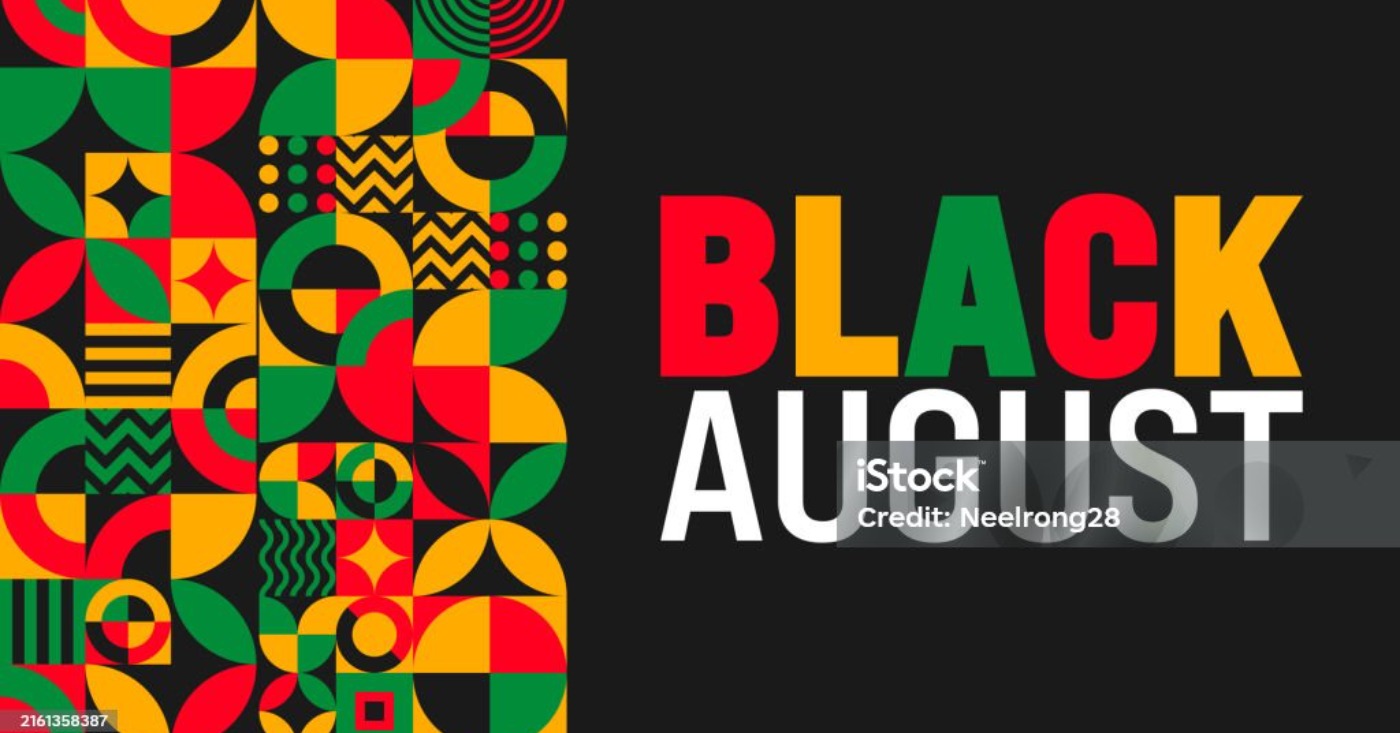
These are the four tenets of Black August, a month dedicated to commemorating the sacrifices of political prisoners and Black revolutionaries in the struggle for Black liberation.
Observers are urged to study the history of the Black struggle for freedom, train their bodies for health and self-defense, fast to cleanse the mind, body, and spirit, and fight ongoing oppression alongside their communities and local political organizations.
Beginning in 1979 in San Quentin State Prison, the Black Guerrilla Family called for the remembrance of political prisoner George Jackson and his brother Jonathan Jackson who were assassinated in the early 1970s. George Jackson was considered a political prisoner in that it was the anti-Black justice system that led to his incarceration for armed robbery with a sentence of one year-to-life in 1960.
While in prison, George befriended fellow prisoner W.L. Nolen, who introduced him to the works of Karl Marx, Vladimir Lenin, Mao Zedong, and Frantz Fanon. This radicalization coupled with his experiences of violence while imprisoned led to him writing and publishing two books, “Soledad Brother” (1970), and “Blood in my Eye” (1972). In January of 1970, George and two other prisoners were charged with murdering a corrections officer at Soledad State Prison in Monterey County.
On Aug. 7, 1970, Jonathan Jackson burst into a Marin County courtroom armed with a shotgun to demand the freedom of the Soledad Brothers. He, along with the inmates he freed, was shot and killed while driving away. This involved one of the Black Panther Party’s most notable associates, Angela Davis, because the shotgun was registered in her name. She was later acquitted of charges of conspiracy, kidnapping, and murder in 1972.
On Aug. 21, 1971, George Jackson was assassinated by a corrections officer after attempting to escape and free other inmates. As a result, there were uprisings and protests within prisons all over the country that year, calling forth resistance against racial oppression and mass incarceration.
Since its outset, Black August has evolved across the country, taking many forms to honor this history and embody the four tenets.
In Oakland, the upcoming Black August Experience, hosted by Youth Alive! and the East Oakland Boxing Association (EOBA), is a free, family-friendly event celebrating the legacy of Black August. Activities include free food and drinks, a kids’ activity zone, interactive workshops, live cooking and boxing demonstrations, and more.
Happening on Aug. 21 from 4-8 p.m. at the EOBA Patio, Carolyn Flynn, director of administration at EOBA, said the event, in its second year, will be an opportunity to engage with people in person through food, shared space, and education.
“We do regular classes in education, and those are ongoing programs that we offer, but we wanted to have [an opportunity] for our neighbors to utilize this space.” Combined with Youth Alive’s work in community violence prevention and youth leadership, this event surely aims to bring the Oakland community together to capture what Black August means today.
Here are additional Black August events happening in Oakland:
Forum and Community Discussion hosted by the Oakland Liberation Center, 1499 Fruitvale Ave., Aug. 14, 7 p.m.
“George Jackson/San Quentin” Screening hosted by Nostalgic for Nothing Cinema at Moments Co-Op, 410 13th St., Aug. 16, doors at 6 p.m., show at 6:30 p.m. (Masks required and scent-free)
Commemorating the Struggle, Building the Altar for Liberation: Black August at Bandung Books, 2269 International Blvd., Aug. 23rd, 1-5 p.m.
Building Opportunities for Self-Sufficiency (BOSS), will host “Black August: The Arc of Liberation” at Oakland City Hall on Sat. Aug. 29, from 11 a.m. to 3 p.m.

Activism
Oakland Post: Week of August 12 – 18, 2026
The printed Weekly Edition of the Oakland Post: Week of August 12 – 18, 2026

To enlarge your view of this issue, use the slider, magnifying glass icon or full page icon in the lower right corner of the browser window.
Art
Misty Copeland Shapes Ballet’s Tomorrow
THE POSITIVE COMMUNITY — Misty Copeland will curate the 2026 Joyce Ballet Festival, a two-week event in New York City from August 4-16. This role allows her to influence the future of ballet by showcasing a wide range of dancers, choreographers, and companies. The festival will present both established and contemporary works, blending classical traditions with new artistic expressions.

This summer, Misty Copeland will step into a different kind of spotlight. Instead of taking center stage as a dancer, she will help determine what audiences see onstage as curator of the 2026 Joyce Ballet Festival. Taking place August 4 through August 16 at The Joyce Theater in New York City, the two-week celebration will bring together dancers, choreographers and companies representing a broad spectrum of ballet. The festival gives Copeland an opportunity to share not only her appreciation for ballet’s traditions, but also her vision for its future.
Copeland understands better than most how powerful a ballet stage can be. Her historic career with American Ballet Theatre changed the conversation about representation in one of the world’s most traditional performing arts. When she became the company’s first Black woman to reach the rank of principal dancer, her achievement carried significance far beyond a personal milestone. It gave young dancers of color a new image of what was possible and challenged the industry to reconsider who belonged at the center of ballet.
That history informs the perspective she brings to the festival. Copeland has spent much of her career moving between performance, mentorship, advocacy and storytelling. Her curatorial role allows her to bring those interests together by creating a program that does not treat ballet as a museum piece. Instead, the festival presents dance as an evolving language capable of carrying classical traditions into new cultural and artistic territory.

Audiences will encounter a mixture of established works and contemporary creations during the festival. Classical ballet vocabulary will share space with choreography that pushes dancers toward different physical, emotional and theatrical possibilities. The result is intended to give audiences a broader understanding of the art form while demonstrating that tradition and innovation do not have to be competing forces.
The lineup also provides an opportunity to see dancers from different artistic environments. Performers connected to organizations including American Ballet Theatre, New York City Ballet, Paris Opera Ballet, Houston Ballet, Dance Theatre of Harlem and Complexions Contemporary Ballet are among those represented in the festival. Each company carries its own history and artistic identity, making their participation part of a larger conversation about the many ways ballet can be performed and interpreted.
The presence of Dance Theatre of Harlem is particularly meaningful within the larger story of Copeland’s career and the evolution of Black representation in ballet. Founded during a period when opportunities for Black dancers were severely limited, the company helped demonstrate that excellence and classical training could flourish in a Black cultural environment. Its legacy continues to influence dancers and audiences, making its connection to a festival curated by Copeland especially resonant.
The program also reaches beyond a single definition of contemporary ballet. Choreographers with different backgrounds and artistic philosophies contribute to an evening that can move from recognizable classical structures to works shaped by modern dance, theater, popular culture and new approaches to movement. That diversity reflects a generation of artists who increasingly see ballet not as a rigid vocabulary but as a foundation from which they can explore.
For New York audiences, the festival offers something that is increasingly valuable: the opportunity to experience outstanding dancers in an intimate setting. The Joyce is known for presenting dance in a theater where audiences can see movement and artistry up close. That environment can make a familiar ballet work feel newly personal while allowing experimental pieces to communicate with unusual immediacy.
Copeland’s role as curator also sends a message about the importance of artistic leadership. The people who select performers and choreography help determine which stories receive attention and which artists receive opportunities. By bringing a range of voices into the festival, Copeland is using that responsibility to broaden the conversation around ballet. Her choices can introduce audiences to artists they may not otherwise encounter while encouraging longtime ballet followers to look at the form from a different perspective.
The 2026 Joyce Ballet Festival ultimately arrives at an important moment for the art form. Ballet is carrying centuries of tradition into an era defined by changing audiences, broader representation and increasingly adventurous choreography. Copeland’s festival reflects that transition. For two weeks in August, The Joyce will become a meeting place for the familiar and the unexpected—a celebration of where ballet came from and a preview of where it may be going. And with Misty Copeland helping shape the conversation, the future of ballet promises to be as expansive as the dancers who are defining it.
Based on reporting by The Positive Community.

WORK FROM HOME
Home-based business with potential monthly income of $10K+ per month. A proven training system and website provided to maximize business effectiveness. Perfect job to earn side and primary income. Contact Lynne for more details: Lynne4npusa@gmail.com 800-334-0540


Four Candidates, Including Incumbent Barbara Lee, Qualify for Oakland Mayor’s Race

Oakland Observes Black August with Block Parties, Film Showings, Workshops

Oakland Post: Week of August 12 – 18, 2026

COMMENTARY: Why Local School Tax Measure G1 Will Not Be on the November Ballot

California Hispanic Chambers of Commerce Unveils: ‘Powering the Future’ Theme for 47th Annual Statewide Convention

Returning to Its Roots, the Oakland Black-Eyed Pea Festival Partners with the Freedom Farmers Market Sept. 12

Less Affluent School Districts, Including Sacramento City, Face Threat of State Takeover

From Blueprint to Breakthrough: Tackling Affordable Housing in Oakland

NPRC Scores First Advocacy Victory: David Shaw Finally Gets His Wish to ‘Go Home’

ESSAY: California Can Close Its Colorectal Cancer Gap

Car Wash Workers Cope with Lingering Impacts of ICE Raids

Misty Copeland Shapes Ballet’s Tomorrow

As Part of Your Back-to- School Checklist, Vaccinate

As Part of Your Back-to- School Checklist, Vaccinate

Congresswoman Simon Demands Investigation into Trump’s Abuse of Emergency Powers for Coal Export Terminal in West Oakland

Department of Homeland Security Demands California Secretary of State Shirley N. Weber Scrub Voter Rolls

Oakland Children’s Hospital Workers and Patients Rally for Pediatric Medical Care

New Judge Could Decide if Karmelo Anthony Gets a New Trial

“The Power to See Threats Sooner”: Gov. Newsom, Safety Officials Showcase California’s Investments in Hi-Tech Wildfire Prevention

Alpha Kappa Alpha Sorority, Inc. Celebrates New North Atlantic Regional Director

Surveillance Pricing Fight: State Senate Debates Bill Banning Retailers from Using AI to Set Prices Based on a Buyer’s Profile

Mount Zion MBC, Church of Jesus Christ of Latter-day Saints Partner to Bring 29,000 Meals to Alameda County

California Sen. Padilla Joins Colleagues to Introduce Bill Imposing Term Limits on Supreme Court Justices

Starting This Summer, California Car Buyers Can Get an Instant $3500 Off the Cost of Electric Vehicles

COMMENTARY: You Are Already Paying for the AI Boom

California Bill Would Let Abuse Victims Use Trauma as Legal Defense for Violent Crime
Car Wash Workers Cope with Lingering Impacts of ICE Raids

Fed Court to Decide Landmark First Amendment Case

Gov. Gavin Newsom Signs Law Streamlining Affordable Housing Rules

OP-ED: ‘The Trusted Messenger’ and the Black Vote

The Conversation With Al McFarlane 6/23/26

Media Monday 6/22/26

LIVE! ASK ALMA! — TUES. 6.23.26 7PM EST

Car Buying Secrets: 4 Hidden Checks Before You Sign!

Is This 550 HP Charger Worth YOUR Money? AutoNetwork Review

Celebrating Juneteenth – Frederick Douglass on education and resistance

LIVE! — ASK ALMA! — TUES. 6.19.26 7PM EST

Hyundai Ioniq 5 Parking, Safety, and 360 View #shorts

2025 Ioniq 5 New Wiper & Powerful Performance! #shorts

Electric SUV Range: Is 259 Miles Enough? #shorts

EV Charging: How Fast Can You Charge an Electric Vehicle? #shorts

Biometric Cooling… Messaging Seats…Come on! 2025 Infiniti QX80 Autograph 4WD

Charged Up: Witness the Magic of a Fully Electric Car! #shorts

Range Rover Sport PHEV Included…: See What’s Inside This Luxury SUV! #shorts

Invisible Hood View: Perfect Parking with X-Ray Vision! #shorts
-
 Featured6 days ago
Department of Homeland Security Demands California Secretary of State Shirley N. Weber Scrub Voter Rolls
-
 Business3 weeks ago
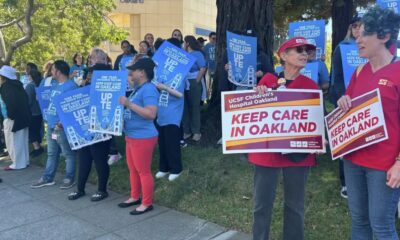
Oakland Children’s Hospital Workers and Patients Rally for Pediatric Medical Care
-
 #NNPA BlackPress2 weeks ago
New Judge Could Decide if Karmelo Anthony Gets a New Trial
-
 Environment7 days ago
“The Power to See Threats Sooner”: Gov. Newsom, Safety Officials Showcase California’s Investments in Hi-Tech Wildfire Prevention
-
 Black History2 weeks ago
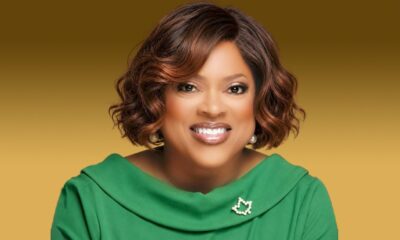
Alpha Kappa Alpha Sorority, Inc. Celebrates New North Atlantic Regional Director
-
 Business3 weeks ago
Surveillance Pricing Fight: State Senate Debates Bill Banning Retailers from Using AI to Set Prices Based on a Buyer’s Profile
-
 Business3 weeks ago
Mount Zion MBC, Church of Jesus Christ of Latter-day Saints Partner to Bring 29,000 Meals to Alameda County
-
 Featured6 days ago
California Sen. Padilla Joins Colleagues to Introduce Bill Imposing Term Limits on Supreme Court Justices
