
Commentary
COMMENTARY: #FirstThem Has Many Detractors, but Supporters want to ‘Stay on Code’
NNPA NEWSWIRE — Still, supporters argue that those reporting on #FirstThem need to “stay on code” because they say that many of the organizations behind those movements have racially tailored their agenda, and the mission of #FirstThem is to counter those who focus on race when targeting alleged perpetrators of sexual misconduct.

By Stacy M. Brown, NNPA Newswire Correspondent
@StacyBrownMedia
The #FirstThem movement has gained a lot of support, particularly among Twitter users who continue to highlight what they see as a wave of corporate-sponsored movements created under the narrative of addressing sexual misconduct, particularly in the entertainment industry.
However, in noting that the #MeToo movement has meet a crackling of backlash, an Oct. 29, 2018, New York Times analysis revealed that since the New Yorker Magazine investigation that outed movie mogul Harvey Weinstein as an alleged predator two years ago, at least 200 prominent men have lost their jobs after public allegations of sexual harassment.
A few, including Weinstein, face criminal charges, while at least 920 accusers have come forward to say that a powerful and/or prominent man subjected them to sexual mistreatment.
Nearly half of the men who have been replaced in their positions were succeed by women, according to the analysis.
Still, supporters argue that those reporting on #FirstThem need to “stay on code” because they say that many of the organizations behind those movements have racially tailored their agenda, and the mission of #FirstThem is to counter those who focus on race when targeting alleged perpetrators of sexual misconduct.

#FirstThem has also received some pushback from Tarana Burke and others that believe that the movement has wrongly targeted some white stars.
“While I agree completely with the premise here, I am compelled to speak out on behalf of someone I know is wrongly named,” Bob Ezrin wrote in an email response to a recent NNPA Newswire story about #FirstThem.
In the 1970s there was a group of underaged girls ranging from 13 to 17 called the “Baby Groupies” who were allegedly molested by several notable rock musicians like David Bowie, Jimmy Page, Mick Jagger, Jeff Beck, Marc Bolan, Alice Cooper, Robert Plant and Iggy Pop.#FirstThem pic.twitter.com/IbOzyruLlb
— Tariq Nasheed (@tariqnasheed) January 19, 2019
“Alice Cooper has been my friend and creative partner for nearly 50 years and, aside from being a devout Christian and committed monogamist, he’s also the most decent man I know,” Ezrin continued in response to a January 19th Tweet that implied that Cooper, among other rock stars of the same era, was involved in activity with underage girls.
Indeed, Cooper proved to be the only celebrity named by the #FirstThem movement in which NNPA Newswire could find no previous allegations of misconduct.
“The stage persona is just that,” Ezrin said of Cooper. “In all the years we have known each other, I have only ever seen Alice with two women: his wife Sheryl and before that, his girlfriend Cindy Laing. That’s it,” he said.
And, while supporters said it’s wrong to say #FirstThem founder Tariq Nasheed defended R. Kelly and the late Michael Jackson, Nasheed, a media personality who has a large presence on social media, has issued numerous tweets denouncing those who have shone a spotlight on Kelly and Jackson.
In a Jan. 28 tweet, Nasheed wrote:
“Shout out to the Jackson family for their strength. It’s painful to see a Black family having to endure these attacks, by a white supremacist-driven movement to take the focus off white predators. Targeting a deceased Black man with vicious lies is disheartening.”
While Nasheed may not have technically defended Kelly or Jackson, it can be argued that he is certainly guilty of what-aboutism: pointing out the alleged misdeeds of whites instead of also acknowledging those same deeds when they are perpetrated by blacks.
In a Jan. 15 tweet regarding R. Kelly, Nasheed wrote: “The media wants to keep using #RKelly as a smokescreen, but they stay quiet on actors like Don Johnson who was openly dating Melanie Griffith when she was 14 and he was 22.”
Nasheed may have been reacting to an article about Griffith on the site, NinjaJournalist, which stated, “At only 14 years of age, Griffith started seeing actor Don Johnson, who was 22-years-old at the time. Their romance became a heavily criticized one in the media, especially when it was exposed that Don had such a negative influence on the woman he would marry four years after meeting her.”
In another tweet on Jan. 17 about Kelly, Nasheed said the “people keep focusing on R. Kelly and there are literally sexual predators – monsters – out there.”
Mostly, though, Nasheed and those in the #FirstThem movement say they make sure that the hundreds of accused sexual predators from the dominant – or white – society, who work in the entertainment industry, will not be conveniently skipped over in order to target entertainers based on race.
“We will ensure that the focus will be on them first,” the founders wrote on their website.
It is why Nasheed has taken issue with Tarana Burke, the founder of the #MeToo movement, and others.
Following a planned rally by LGBTQ and other organizations to show solidarity with actor and entertainer Jussie Smollett who was viciously attacked late last month, Nasheed wondered in a Jan. 30 tweet:
“Why are all these rallies about violence towards Black LGBT people being held, and no one is talking about the dead gay Black men found in the home of Ed Buck,” after for the second time in two years, Los Angeles detectives in January found a man dead inside Buck’s apartment.
Nasheed has called out Burke and #MeToo, and as recently as Jan. 30, noted that “the #MeToo movement has rolled out a new campaign featuring Terry Crews talking about being sexually assaulted and how Black society is somehow complicit.”
But, Nasheed continued: “#MeToo is silent about the white man who sexually assaulted Terry Crews.”
Nasheed also posted Burke’s response in which she asks: “Why is it my job to go after white men?”
Disclaimer: The views and opinions expressed in this article do not necessarily reflect the official policy or position of BlackPressUSA.com or the National Newspaper Publishers Association.














Books
BOOK REVIEW: ‘Laws of Solomon’ Reveals Tender Heart of Former Child Soldier
The monsters that came to him early in his sleep were the easy ones. It was the later demons that stole Solomon Nangobi’s sleep, the spirits of all the people he killed when he was a child soldier in Uganda, and when he was a fixer in New York as an adult. Their ghosts called to him with urgent voices, though he left that life behind long ago.

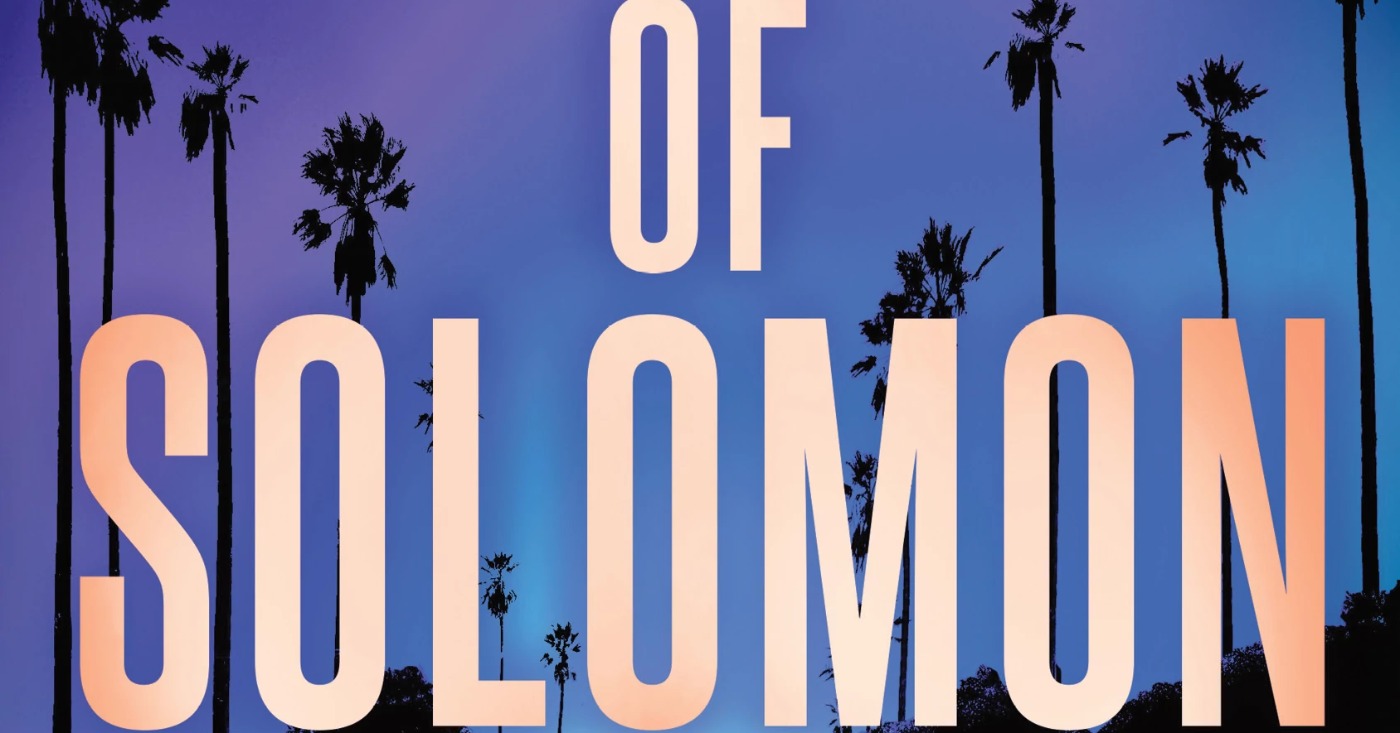
Author: Eriq La Salle, Copyright: c.2026, Publisher: Poisoned Pen Press, SRP: $18.99, Page Count: 304 pages
Finally, after so much work, you’ve left your past behind.
That’s what you tell yourself: what’s done is done and you can’t undo history. It’s over. You try not to think about last month, last year, a decade back because what does it matter? As in the new novel, “Laws of Solomon” by Eriq La Salle, remembering is too full of pain.
The monsters that came to him early in his sleep were the easy ones. It was the later demons that stole Solomon Nangobi’s sleep, the spirits of all the people he killed when he was a child soldier in Uganda, and when he was a fixer in New York as an adult. Their ghosts called to him with urgent voices, though he left that life behind long ago.
Now, his days were filled working the soil in gardens near Malibu, and he loved the quiet life.
Still, he kept his guns.
And he was glad: when Solomon recognized two Zeta gunmen stalking a well-dressed man, woman, and child through the gardens, he couldn’t walk away. He stopped the gangsters with bullets, but not before the adults and their bodyguards were dead. The child, an 8-year-old boy named Gaby, was safe, but Gaby couldn’t tell Solomon what was going on.
What became quickly certain, however, was that Solomon was now Gaby’s guardian, and the Zeta crime boss wanted them dead, too.
When he was the same age as Gaby, Solomon saw unspeakable things, the murder of his parents, the destruction of his homeland, and the atrocities that Uganda dictator Idi Amin’s soldiers committed. He learned to kill, he observed, and he was hardened, understanding as a small boy that revenge was often necessary and needed, and that blood would shed at those times.
But Gaby was pure, an innocent, a child.
Solomon reached out to his contacts to try to get the boy to safety, but being a contact of a marked man was likewise a dangerous thing: the monsters outside were worse than the ones inside him.
Two words for you: ‘Whoo weee.’ That’s what you’re going to say when you close the back cover of “Laws of Solomon,” knowing that you’ve just been taken on a wild up-and-down, around-and-round ride.
La Salle makes it impossible not to like Solomon, an African man who has, over time, lost nearly everything dear to him and who has no faith in much of anything. Readers get that part of the story eventually, and there’s historical authenticity in some of it, but we never really get to know Solomon, which makes the book feel dark and dangerous. Along the way, we meet and get to know his helpers, which buoys Solomon’s chase to find safety for the boy, and your heart won’t stop pounding.
Keep in mind that this is a thriller partially set in 1970s Uganda, so expect lots of violence but don’t expect a lot of people to live. If you’re up for that, find “Laws of Solomon.” You won’t be able to leave it behind.

Commentary
OPINION: The New American Fear – From 9-11 to AI
The terrorists didn’t invent American racism, xenophobia or political paranoia. We shouldn’t give 19 hijackers that much credit. But after 9/11, America built an enormous security structure around fear. Surveillance expanded. Wars followed. Congress created the Department of Homeland Security. TSA transformed airports. Immigration enforcement was reorganized and ICE was created.

I was quiet about 9/11 until this week, when terrorism got an upgrade.
Artificial intelligence.
I have taken 9/11 seriously every year. Twenty-five years later, I was all “feeled out.”
I’ve gone to Ground Zero. I’ve written about the dead, the survivors, the first responders and those who survived that day only to become sick years later.
But this isn’t another column about where we were.
It’s about what America became.
For me, September 11, 2001, marks the beginning of a New America. Not the diverse, multicultural America I hoped was emerging.
This is the America that fear built.
I was 3,000 miles away in the Bay Area watching CNBC.
Then the planes hit.
The markets shut down.
And something else opened.
Fear.
At first, fear brought us together. We had a common enemy and, briefly, rediscovered a common good.
But fear is a terrible foundation for democracy.
The person we feared was initially the terrorist.
Then the Muslim.
Then the Arab.
Then the Sikh mistaken for an Arab.
Then the immigrant. The undocumented. The person at the border.
The category continues to expand.
Maybe that’s the real 25-year story of 9/11.
We went from finding common ground to looking for flaws that prove somebody doesn’t belong.
The terrorists didn’t invent American racism, xenophobia or political paranoia. We shouldn’t give 19 hijackers that much credit.
But after 9/11, America built an enormous security structure around fear.
Surveillance expanded. Wars followed. Congress created the Department of Homeland Security. TSA transformed airports. Immigration enforcement was reorganized and ICE was created.
Temporary emergency became permanent infrastructure.
Recently, Anthropic researcher Jacob Coxon quit his job and warned that people building advanced AI genuinely believe it could kill humanity by the end of this decade.
He walked away two months before his Anthropic equity vested.
That’s credibility.
President Trump has taken a different view. On Sept. 14 he called fears of AI destroying humanity a “HOAX” and declared, “WHOEVER WINS AI, WINS!” He said the only guardrail AI needs is a “STRONG AND SMART (High IQ!) PRESIDENT.”
We have built the threat.
We finance it. We feed it our words, photographs, voices, art and knowledge. We invite it into our homes and carry it in our pockets.
Americans are confronting something genuinely frightening.
AI could eliminate or transform jobs. And its increasingly powerful systems raise questions even some of their creators say they cannot fully answer.
So, the question what do we do with fear without surrendering our common humanity.
That requires real leadership and oversight from Congress, if not the president.
Trump insists Iran can’t have a nuclear weapon. But on AI, his emphasis is winning the race, especially against China.
That’s the trap.
Fear of China becomes the argument for going full speed ahead.
Twenty-five years after 9/11, we have another chance to get fear right.
Be smart enough to know what to be afraid of.
And make sure we stay in control of the tech.
We’ve got to be smarter than the machines.
About the Author
Emil Amok Guillermo is an award-winning journalist, commentator and comic monologist. He hosts a micro-talk show on YouTube. See him at Comedy Day at Robin Williams Meadow in San Francisco’s Golden Gate Park, on Sept. 20, around 2:45 p.m. Free.
Commentary
Barbara Lee Mourns Gloria Steinem, Remembers a Friendship Rooted in Equality
Steinem became one of the country’s most recognizable advocates for women’s rights, reproductive alternatives and political representation. Lee said one of the most persistent inequities confronting Black women was inadequate access to reproductive healthcare, an issue Lee addressed throughout her years in the California Legislature and Congress.
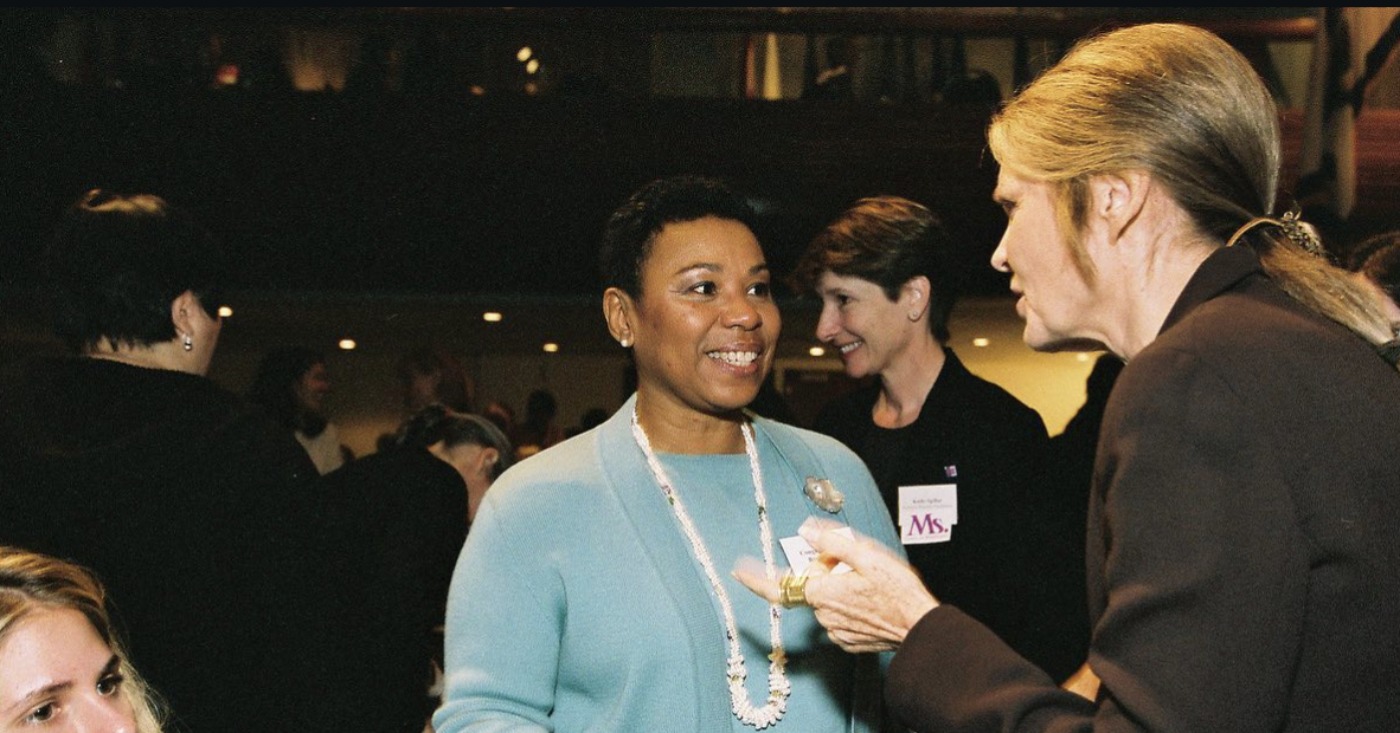
Oakland Mayor Barbara Lee is mourning the death of her longtime friend Gloria Steinem, remembering the feminist icon as a devoted ally who understood that the struggles for racial justice and gender equality were inseparable.
Steinem died Sept. 2 in New York City at the age of 92. A pioneering journalist, author and political activist, she spent more than six decades advocating for women’s equality and reproductive choices. She also co-founded Ms. magazine and the National Women’s Political Caucus.
“I called her recently and could hear the weakness in her voice,” Lee said. “She was also very fragile at my New York event, but she remained supportive.”
The friendship between Lee and Steinem grew from their connections to the late U.S. Rep. Shirley Chisholm, the first Black woman elected to Congress and the first Black candidate to seek a major political party’s presidential nomination.
Chisholm was Lee’s mentor and inspired her to enter politics. Lee worked on Chisholm’s historic 1972 presidential campaign and served as one of her delegates at the Democratic National Convention.

According to Lee, Chisholm helped Steinem deepen her understanding of racial inclusion and recognize that the women’s movement could not succeed without addressing the experiences of Black women and other women of color.
“Gloria really understood what racial equity was about as a white woman and knew the value of building coalitions,” Lee said.
Steinem became one of the country’s most recognizable advocates for women’s rights, reproductive alternatives and political representation. Lee said one of the most persistent inequities confronting Black women was inadequate access to reproductive healthcare, an issue Lee addressed throughout her years in the California Legislature and Congress.
Lee considered Steinem a genuine ally who recognized the intersections of race, gender, healthcare and economic opportunity. Steinem also understood the importance of elevating women into leadership positions and encouraging them to claim their rightful places at decision-making tables.
Their relationship extended beyond politics and public advocacy. Lee recalled joining Steinem and her husband for dinner in Manhattan Beach with Lee’s son, Tony.
“It was beautiful to see how she could be a wonderful wife, feminine and be a strong woman,” Lee said.
Tony Lee also had a professional connection to Steinem through the rerelease of “The Road to Galveston,” the 1996 television film he wrote about the life of his grandmother, Mildred Parish Massey. The film starred Cicely Tyson.
“My son’s tribute to Gloria on Facebook is very touching,” Lee said.
Lee expressed profound heartbreak over losing her friend and gratitude for Steinem’s support throughout her political career, including during reelection campaigns.
As Lee continues carrying forward the lessons of Chisholm and Steinem, she has also helped encourage a new generation of women leaders, including U.S. Reps. Lateefah Simon and Jasmine Crockett.



Doulas Are Helping Black California Moms Navigate Pregnancy–Even as High Mortality Rates Persist

Newsom Signs Addictive Social Media Law to Protect Kids

On Your November Ballot: Prop 38 Would Allocate $8.4 Billion to Immunology and Immunotherapy Funding

Ask California: Golden State Releases New AI Chatbot

Asm. Isaac Bryan’s Bill Banning California Police From ICE Side Jobs Reaches Newsom’s Desk

Assemblymember LaShae Sharp-Collins’s Bill Would Pause Law Enforcement’s Use of Shock Gloves Pending Study

BOOK REVIEW: ‘Laws of Solomon’ Reveals Tender Heart of Former Child Soldier

OPINION: The New American Fear – From 9-11 to AI

Passing for White, Fighting for Black America: The Courage of Walter White

Oakland People’s Arms Embargo Coalition Demands End to Military Shipments Thru Oakland

Barbara Lee Mourns Gloria Steinem, Remembers a Friendship Rooted in Equality

Event Preview: ‘Fashion v. Fascism’ – A Runway Revolution Is Coming to the Bay Area

Two Looming Threats Every Alameda County Elder Should Know About

Oakland Mayor Reads to Children at Bookout Block Party at Marcus Books Store

Tradition Comes to the Streets in 11th Annual Black-Eyed Pea Festival at the Freedom Farmers Market

Less Affluent School Districts, Including Sacramento City, Face Threat of State Takeover

ESSAY: California Can Close Its Colorectal Cancer Gap

California Hispanic Chambers of Commerce Unveils: ‘Powering the Future’ Theme for 47th Annual Statewide Convention

Four Candidates, Including Incumbent Barbara Lee, Qualify for Oakland Mayor’s Race

Oakland Post: Week of August 12 – 18, 2026

From Blueprint to Breakthrough: Tackling Affordable Housing in Oakland

Oakland Observes Black August with Block Parties, Film Showings, Workshops

COMMENTARY: Why Local School Tax Measure G1 Will Not Be on the November Ballot

Standoff for Justice: Our Homes Are Worth Fighting For

Returning to Its Roots, the Oakland Black-Eyed Pea Festival Partners with the Freedom Farmers Market Sept. 12

NPRC Scores First Advocacy Victory: David Shaw Finally Gets His Wish to ‘Go Home’

Oakland Post: Week of August 26 – September 1, 2026

Frontier Airlines’ Return to Oakland Airport Brings Flights, Jobs and Opportunity

Gubernatorial Candidate Steve Hilton Blasts California New Tire Rules; Newsom Hits Back

Chef Sharon Lee Blends Culinary Excellence, Education and Empowerment

The Conversation With Al McFarlane 6/23/26

Media Monday 6/22/26

LIVE! ASK ALMA! — TUES. 6.23.26 7PM EST

Car Buying Secrets: 4 Hidden Checks Before You Sign!

Is This 550 HP Charger Worth YOUR Money? AutoNetwork Review

Celebrating Juneteenth – Frederick Douglass on education and resistance

LIVE! — ASK ALMA! — TUES. 6.19.26 7PM EST

Hyundai Ioniq 5 Parking, Safety, and 360 View #shorts

2025 Ioniq 5 New Wiper & Powerful Performance! #shorts

Electric SUV Range: Is 259 Miles Enough? #shorts

EV Charging: How Fast Can You Charge an Electric Vehicle? #shorts

Biometric Cooling… Messaging Seats…Come on! 2025 Infiniti QX80 Autograph 4WD

Charged Up: Witness the Magic of a Fully Electric Car! #shorts

Range Rover Sport PHEV Included…: See What’s Inside This Luxury SUV! #shorts

Invisible Hood View: Perfect Parking with X-Ray Vision! #shorts
-
 Commentary4 weeks ago
Standoff for Justice: Our Homes Are Worth Fighting For
-
 Activism4 weeks ago
Oakland Post: Week of August 26 – September 1, 2026
-
 Business4 weeks ago
Frontier Airlines’ Return to Oakland Airport Brings Flights, Jobs and Opportunity
-
 Business4 weeks ago
Gubernatorial Candidate Steve Hilton Blasts California New Tire Rules; Newsom Hits Back
-
 Business4 weeks ago
Chef Sharon Lee Blends Culinary Excellence, Education and Empowerment
-

 Education4 weeks ago
Gov. Newsom’s Latest Appointees Include Sacramento Advocate for Formerly Incarcerated Students; State’s New Tech Chief
-

 Community4 weeks ago
Big City Mayors Ask for “Yes” Vote on Housing Bond Measure; Conservatives Say “No”
-

 Business4 weeks ago
Oakland Coliseum Project Opens Door for Small Businesses to Build Bigger

1 Comment