
Transportation
Car Review: 2016 Volvo XC90


By Frank S. Washington
NNPA Columnist
SANTA MONICA, CALIF. (NNPA) – Now that Volvo has been left alone by its new Chinese owners, an opposite tack from its former corporate parent, the Swedish automaker can get back to being itself. That was evident here as Volvo unveiled its XC90 three row sport utility.
The 2016 Volvo XC90 is a significant new vehicle on several levels. It signals Volvo’s climb into the ranks of luxury automakers. It also signals technological advancements. And it is the beginning of a product onslaught that will make the 2016 XC90 the oldest vehicle in Volvo’s lineup by 2018.
First up is power. For the U.S. market, the XC will be propelled by 2.0-liter, four cylinder Drive E engines. There will be two versions: one for the 2016 Volvo XC90 T6, the second for the T8. But it is not what you think; both engines are identical technologically advanced 2.0-liter four cylinders.
The T6 engine had a supercharger and turbocharger working together on the 2.0-liter, four cylinder that made 316 horsepower and 295 pound-feet of torque. The T8 XC90 had what Volvo is branding a twin engine. The same four-cylinder power plant, this time rated at 313 horsepower, is combined with an electric motor. Together they make 400 horsepower and 472 pound-feet of torque. The T8 is a plug-in hybrid; both engines were mated to eight-speed automatic transmissions.
All 2016 XC90s sold here will be all-wheel-drive models. But for fuel economy their AWD system will be front-wheel-drive based capable of sending half of the vehicle’s torque to the rear wheels when needed.
We test drove the T6 and the T8 and found neither lacking in power or agility. Handling was good, especially for a sizable sport utility with three rows of seats. And both of our testers had the top of the line air suspension.
The T6 got 20 mpg in the city, 25 mpg on the highway and 22 mpg combined. The T8 got 59 MPG in the city. Highway numbers were not available at the time of the test drive. The T6 could get from, zero to 60 mph in 6.1 seconds while the T8 could do it in 5.3 seconds and the pair have a top speed of 130 mph. Remember, both were hefty sporty utilities with curb weights of 4,627 pounds for the T6 and 5,059 for the T8. It was the low-end torque that moved them quickly from a standing start.
Still, neither felt overweight and both were fairly agile and they were well balanced as we drove through the mountains and canyons here with their twisting, tightly curved two lane roads. What’s more, the blowers enabled the T6 and the T8 to get up and over and through the mountain roads without the straining that normally comes with four cylinder engines at altitude. In addition, both the T6 and the T8 can tow up to 5,000 pounds.
Although an official said Sweden was not considered in the development of the new XC90, we don’t think so. Gasoline costs somewhere in the neighborhood of $8 per gallon in the Scandinavian country as well as the rest of Europe. That had to play a role in the company’s development of high-powered, small displacement fuel efficient Drive E engines.
Blown power for the long hauls that come in the expansive United States combined with the fuel efficiency of small four cylinder engines, makes for a globe-gripping vehicle. The Drive E engine family includes diesels but the oil burners will not be sold in this market; at least, not yet.
However, no doubt Volvo used its American design studio in Camarillo, Calif., to imbue the 2016 XC90 with the sense of American luxury needed for it to take on the German and Japanese luxury competitors in this market.
The interior of the XC was concept car quality. It was airy and loaded with matted walnut wood trim that looked almost natural. There was also a trim level that featured aluminum and chrome appointments. The T8 even featured a handmade crystal shift knob. Plus, the XC90 has a top of the line audio system that features 19 speakers and 1,400 watts of power. It includes an air-ventilated system in the wheel well that turns the entire interior into a giant subwoofer.
The seats were exemplary. They had what Volvo called an ergonomic shape that resembled the human spine. The XC90 took four years to develop; the seats took seven. Not only did they look good, like a pillowed new age office chair, they took up less space because they were thinner. Thus, they created more legroom for second and third row passengers.
We didn’t try them, but Volvo said the last row of seats, which folded creating a flat cargo floor, could accommodate someone 5’6” tall. The second row featured three individual seats with an optional child booster seat in the middle. All three could recline as well as slide forward, creating more space for third row passengers. The seats could be outfitted with adjustable side bolsters, seat cushion extensions and they had massage capability.
It was a digital interior. The 2016 XC90 had no knobs, save one, or buttons anywhere. There were steering wheel controls and what Volvo called the portrait screen. That screen controlled everything: climate, seats, media, navigation, phone – everything. Even the rear seat climate controls were digital. And the screen was based on infrared, thus, it detected what icon we were going to push when our finger got one milometer away. That means, Volvo said, that it could be operated while wearing gloves. To say that the premium audio system really thumped out sound is an understatement. It was something special.
Safety has long been Volvo’s hallmark. Those same spine-hugging seats had energy absorbing features to help prevent spine injuries if the XC90 runs off the road during an accident and experiences a hard landing. The sport utility will automatically brake at intersections when it detects an oncoming vehicle while making a left turn. And the XC90 will automatically brake when it encounters cyclists or pedestrians in front it.
Its adaptive cruise control will automatically follow the vehicle ahead in stop and go traffic. Acceleration, braking and steering are controlled automatically. The XC90 can park itself vertically or perpendicularly and four cameras will project a 360-degree view of the vehicle that includes elevation (you have to see it). The XC90 even has a rear collision warning system, in case somebody is going to hit you.
About the only quibble we’ve got is that Volvo says the control system is intuitive. We don’t know, there’s an awful lot to learn. Some sort of instructive software might not be a bad idea. All that new technology is wrapped in appealing sheet metal. Volvo’s grille has been returned to align the iconic arrow with the diagonal slash across the taller grille.
The DRLs form a “T” shape dubbed ‘Thor’s Hammer” that split the headlights. The XC90 has a clam shaped high hood. The beltline and shoulders were sharper and ran down the side connecting to more distinctive taillights. It was an understated elegance.
The XC90 signals that Volvo is back with a vision and the product to match it. What’s more, or worse for competitors, is that the Swedish automaker says it has more of the same type ground breaking products in the pipeline.
A special edition, 1,927 copies, signifying the year the company was founded is being delivered in June. The T6 goes on sale in July; the T8 follows in October. There are three trim lines for each model: Momentum, Inscription and R-Design. Base prices range from $48,900 to $71,600; neither includes a $995 freight charge.
Quality, safety and technology is what you expect from Volvo. It has been a long wait for the automaker to start funneling new products to market but we don’t think anyone is going to be disappointed. The challenge now is will Volvo put forth the marketing muscle, meaning money, to reclaim its niche in American car the market.
Frank S. Washington is editor of AboutThatCar.com.
###








Activism
New Bill, the RIDER Safety Act, Would Support Transit Ambassadors and Safety on Public Transit
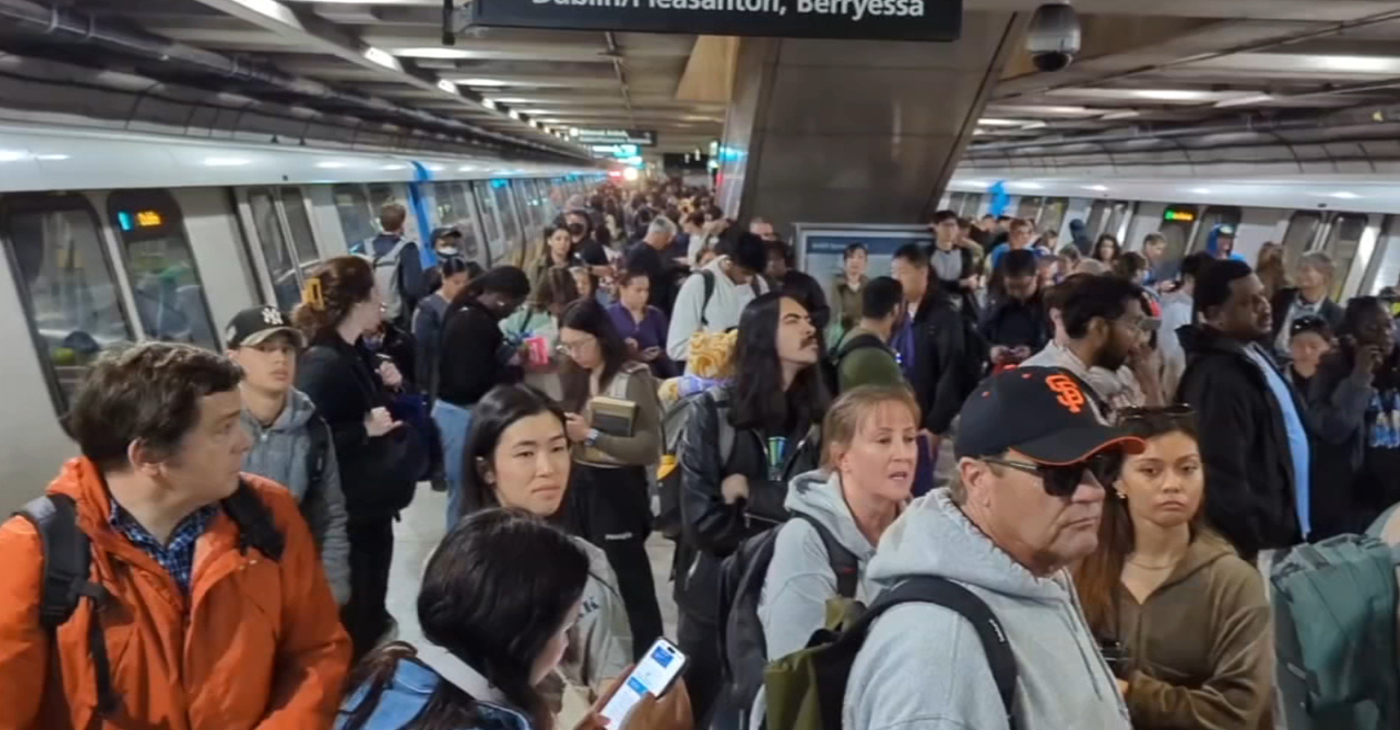
The RIDER Safety Act would allow public transit agencies to hire transit ambassadors trained in de-escalation, crisis response, and rider education and engagement. Acting as a visible, non-enforcement presence to deter low-level incidents and reduce conflict, transit ambassadors would ease the burden from law enforcement and enhance public safety.
By Post Staff
A new federal bill would support transit ambassador, or transit support specialist, programs at public transit agencies across the country.
The bill, (D-CA-12), H.R. 6069, the Rapid Intervention and Deterrence for Enhanced Rider Safety Act, or the RIDER Safety Act, was introduced Jan. 30 by Congresswoman Lateefah Simon. (D-CA-12), H.R. 6069, the Rapid Intervention and Deterrence for Enhanced Rider Safety Act, or the RIDER Safety Act.
This legislation is based on Congresswoman Simon’s work at Bay Area Rapid Transit (BART) to create a first-in-the-nation Transit Ambassador Program, which previously earned a prestigious nationwide award for “Innovation in Public Safety.”
She announced the bill at a press conference at the 19th Street BART Station alongside BART leaders and other supporters.
The RIDER Safety Act would allow public transit agencies to hire transit ambassadors trained in de-escalation, crisis response, and rider education and engagement. Acting as a visible, non-enforcement presence to deter low-level incidents and reduce conflict, transit ambassadors would ease the burden from law enforcement and enhance public safety.
This bill would also create jobs provide meaningful work, training opportunities, and a pathway for career growth in local communities. In the House of Representatives, the bill is also co-led by Representatives Shomari Figures (AL-02), Nellie Pou (NJ-09), Mark DeSaulnier (CA-10), and John Garamendi (CA-08).
“I am incredibly proud to champion the RIDER Safety Act in Congress and continue my work to ensure transit is safe, accessible, and affordable to everyone. We have seen the success of the transit ambassador programs here in the East Bay, and I am dedicated to bringing this proven public safety model to the rest of the country,” said Congresswoman Simon.
“These are strong local jobs for people who want to support public safety on transit and serve as a resource to individuals who may be in crisis or in need of services,” she continued. “Strengthening safety on transit benefits us all and helps ensure our public transportation systems remain places of opportunity, dignity, and trust.”
“This bill is critical to ensure the safety of every passenger who relies on public transportation across the country,” said Congresswoman Nellie Pou. “The RIDER Safety Act builds on successful transit models already implemented in communities, including the Bay Area Rapid Transit (BART) through the leadership of Congresswoman Lateefah Simon during her time as BART President. By providing transit stations with medically trained, unarmed personnel, we can strengthen safety standards, reduce fare evasion, and give riders a greater peace of mind when getting from one place to the next.”
Antonio Ray Harvey
$96 Million Allocated So Far to Black-Owned Firms as High-Speed Rail Project Expands Jobs, Boost Local Economies
Sen. Lola Smallwood-Cuevas (D-Los Angeles), a member of the California Legislative Black Caucus (CLBC) and Chair of the Senate Committee on Labor, Public Employment and Retirement, says the rail project “is exactly the kind of investment” California needs.

By Antonio Ray Harvey, California Black Media
As of May 31, the most recent data from the California High-Speed Rail Authority shows that 47 African American-owned firms are participating in the project as Disadvantaged Business Enterprises (DBEs).
A total of 936 Certified Small businesses are working on the high-speed rail program statewide, representatives of the high-speed rail project say.
The number of Black-owned DBE firms (5.2%) accounts for $96 million of the $1.136 billion allocated to minority firms thus far.
Sen. Lola Smallwood-Cuevas (D-Los Angeles), a member of the California Legislative Black Caucus (CLBC) and Chair of the Senate Committee on Labor, Public Employment and Retirement, says the rail project “is exactly the kind of investment” California needs.
Smallwood-Cuevas, speaking in Aug. 25 at the State Capitol Swing Space Annex — along with a coalition of Democratic state legislators and union leaders — provided an update on the California High-Speed Rail project and its efforts to employ people from the Black community and businesses.
“It builds a cleaner, more connected California while creating thousands of union jobs,” said Smallwood-Cuevas. “And we must ensure workforce equity, with pathways that open doors for workers who too often have been left out of good-paying careers.”
The remaining DBE minority-owned firms received the following amounts:
- Asian Subcontinent: 24 firms received approximately $65 million
- Asian-Pacific Islander: 52 firms received approximately $86 million
- Native American: 6 firms received approximately $39 million
- Hispanic/Latino: an unspecified number of DBE businesses received approximately $848 million
There are currently 328 certified DBEs participating in the project, according to the California High Speed Authority. The multi-billion-dollar project is billed to be committed to small, disabled, disadvantaged, and diverse businesses playing a major role in building the statewide high-speed rail project.
“As a Central Valley native, I know firsthand how transformative high-speed rail will be for our communities,” stated Assemblymember Lori D. Wilson (D-Suisun City) a member of the CLBC and Chair of the Assembly Transportation Committee.
“Stable and sustained funding is essential to delivering this project and fulfilling the promise made to voters.”
The news conference was hosted by Senate Transportation Chair, Sen. Dave Cortese (D-San Jose), who was promoting Senate Bill (SB) 545. He and the California High-Speed Rail Authority (CHSRA) urged the Legislature to commit to a steady, annual investment from a cap-and-trade program to fund the high-speed rail project.
Dr. Melanie Okoro, the Principal and Chief Executive Officer of Eco-Alpha, attended the briefing. Eco-Alpha is a Sacramento-headquartered small, women-owned, minority-certified firm.
The company, not classified as a DBE, earned its status as a certified small business and a certified women-minority small business through the California Public Utilities Commission (CPUC) and the Department of General Services (DGS). The certification allowed Eco-Alpha to be featured by CHSRA as a small business working on the project.
The Black-owned firm provides engineering and environmental services to the California High-Speed Rail project, primarily focused on facilities operation and Maintenance.
Okoro said laborers are not the only workers benefiting from the project. Professionals of color in engineering, with specialized knowledge and problem-solving skills to design, build, and maintain a wide array of structures, systems, and products, are looking forward to these “great opportunities.”
Bay Area
Former Mayor Willie L. Brown Endorses Dana Lang for BART Board District 7
Former San Francisco Mayor Willie L. Brown has announced his endorsement support for Dana Lang for BART Board District 7 Seat, which includes voters from both sides of the Bay, and in San Francisco includes Bay View Hunters Point and Treasure Island. Brown acknowledged that Lang has been a behind-the-scenes force in transportation funding for many years and can help BART manage its financial challenges.
By Oakland Post Staff
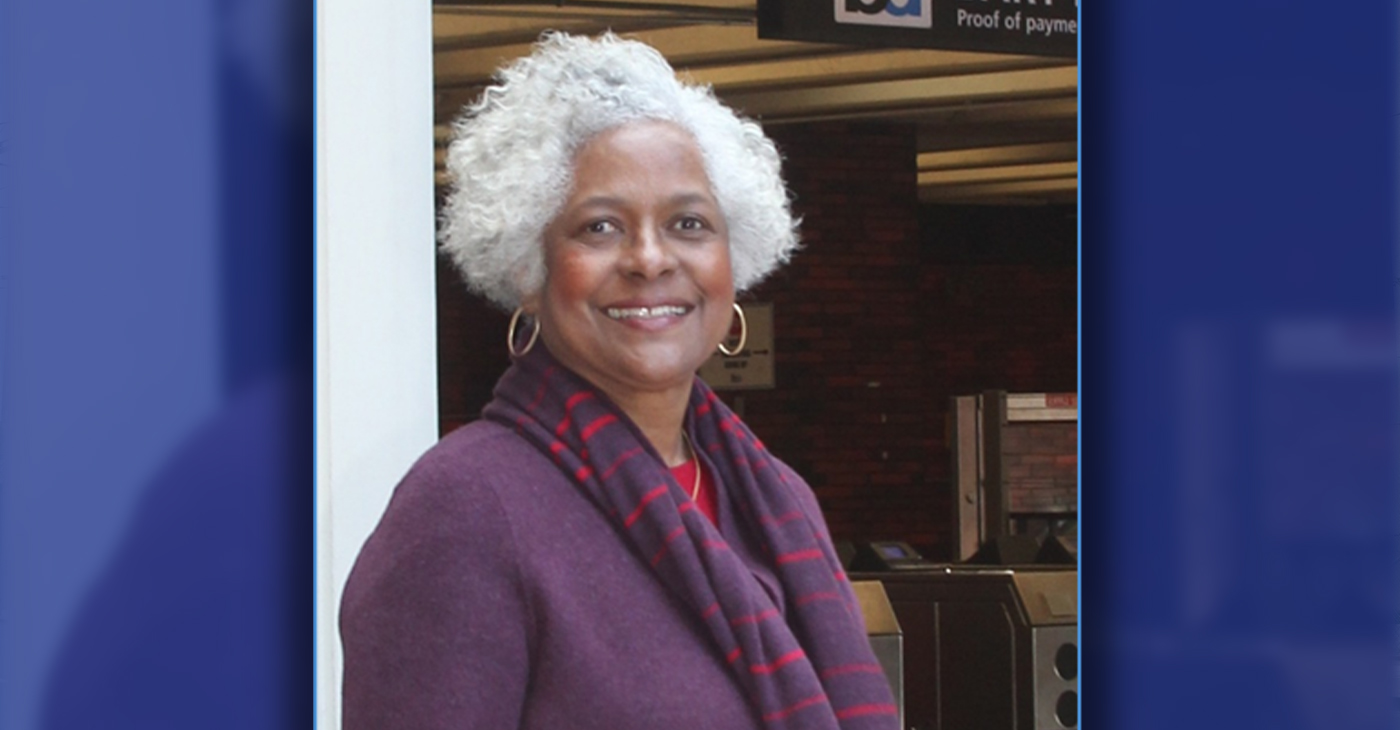
Former San Francisco Mayor Willie L. Brown has announced his endorsement support for Dana Lang for BART Board District 7 Seat, which includes voters from both sides of the Bay, and in San Francisco includes Bay View Hunters Point and Treasure Island.
Brown acknowledged that Lang has been a behind-the-scenes force in transportation funding for many years and can help BART manage its financial challenges.
“When I met with Dana Lang I asked many questions, then I asked others about her contributions. Getting to know her I realized that she truly understood transportation. At a time when BART is facing a “fiscal cliff” and an upcoming deficit of nearly $360 million per year, Dana is more than ready for this job, she is ready to meet the moment!”
Over the past 24 years Lang has been a funding and grants specialist with several municipal transportation agencies, including the Metropolitan Transportation Commission, San Francisco Muni, San Francisco Police Department and San Francisco International Airport (SFO).
Lang says, “I’ve faced a number of fiscal crises in my career — such as securing $52 million in new transit security funding for SFMTA (Muni) during the 2008 Great Recession, when others thought it was not possible. I have always managed to identify new funding and ways to make transit more secure. Facing a crisis is the best time to act, through advocacy and policy setting. We’ve got to keep BART running and make it safer and more vibrant in order to meet the needs of our riders, our work force, and our community.”
Lang grew up in the low-income minority community of East Palo Alto, CA, and knew that locating grants and resources could positively impact an entire city and its surrounding region — helping to create and retain agency jobs, getting transit riders to their workplaces, and encouraging small business development near transit hubs.
With that in mind, she pursued a bachelor’s degree in economics from Wellesley College, then an MBA from UC Berkeley’s Haas School of Business. She started her municipal career as a policy advisor to Mayor Elihu Harris and helped secure grants for the City of Oakland before moving to the Metropolitan Transportation Commission to serve as a transportation grants specialist.
During her 24-year career she has helped secure hundreds of millions of dollars for Bay Area transit agencies and municipalities. In addition to BART’s financial health, Lang’s priorities for BART also include safety, cleanliness, station vitality — and bringing riders back to BART. She has served on the BART Police Civilian Review Board since 2022.
Lang is also endorsed by BART Board Director Robert Raburn, former BART Board Director Carole Ward Allen, the Rev. Amos Brown, pastor of San Francisco’s Third Baptist Church, Alameda County supervisors Keith Carson and Nate Miley, former Oakland Mayor Elihu Harris, District 4 Oakland City Councilmember Janani Ramachandran, Oakland Chinatown leader Carl Chan, and many others.
Lang is seeking the BART Board District 7 Seat, which includes San Francisco’s Bay View Hunters Point and Treasure Island, a large portion of Oakland, the cities of Alameda, Emeryville, Piedmont, and a small portion of Berkeley.


WORK FROM HOME
Home-based business with potential monthly income of $10K+ per month. A proven training system and website provided to maximize business effectiveness. Perfect job to earn side and primary income. Contact Lynne for more details: Lynne4npusa@gmail.com 800-334-0540


Black Artists in America, Installation Three Wraps at the Dixon Gallery and Gardens

Grief, Advocacy, and Education: A Counselor Reflects on Black Maternal Health

Future of Florida’s Black History Museum in Limbo

New Research Shows the Many Benefits of Early Learning

South Hampton K-8 Students Among Top 10 Finalists for Samsung’s ‘Solve for Tomorrow’ Competition

Cuba: No Negotiation with US on the President or Political System

Brooklyn Academy of Music Names Jamaican-Born Tamara McCaw as President

Trinidad & Tobego – U.S. Launches WhatsApp Channel for American Citizens in the Country

Oakland Post: Week of March 18 – 24, 2026

AI Innovation vs. Ethics and Environmental Impact

AI, Web3, and Digital Reparations

What If You Owned Your AI Agent?

Season 7, Episode 3 – January Reporter’s Roundtable 📱

Season 7, Episode 3 – January Reporter’s Roundtable

AI, Media, and Power | Part 2, Real-World Impacts and Tradeoffs

Oakland Post: Week of February 11 – 17, 2026

Reflecting on Black History Milestones in Birmingham AL

CITY OF SAN LEANDRO STATE OF CALIFORNIA PUBLIC WORKS DEPARTMENT ENGINEERING DIVISION NOTICE TO BIDDERS FOR ANNUAL STREET OVERLAY/REHABILITATION 2019-21 – PHASE III

Oakland Post: Week of February 18 – 24, 2026

Oakland Post: Week of February 25 – March 3, 2026

PRESS ROOM: NBA Hall of Fame Nominee Terry Cummings Joins 100 Black Men of DeKalb County to Launch Victory & Values Initiative

Trump’s MAGA Allies are Creating Executive Order Plan to Steal the 2026 Midterms

U.S. manufacturing rebounds – how foundry services are adapting to rising demand

OP-ED: One Hundred Years of Black Workers Telling the Truth

Oakland Post: Week of March 4 – 10, 2026

Chase Oakland Community Center Hosts Alley-Oop Accelerator Building Community and Opportunity for Bay Area Entrepreneurs

Poll Shows Support for Policies That Help Families Afford Child Care

Advancements in solar technology that are changing the way we power the world

PRESS ROOM: Civil Rights TV Launches in Selma as the World’s First 24/7 Civil Rights Television Network

Woman’s Search for Family’s Roots Leads to Ancestor John T. Ward – A Successful Entrepreneur and Conductor on the Underground Railroad

Hyundai Ioniq 5 Parking, Safety, and 360 View #shorts

2025 Ioniq 5 New Wiper & Powerful Performance! #shorts

Electric SUV Range: Is 259 Miles Enough? #shorts

EV Charging: How Fast Can You Charge an Electric Vehicle? #shorts

Biometric Cooling… Messaging Seats…Come on! 2025 Infiniti QX80 Autograph 4WD

Charged Up: Witness the Magic of a Fully Electric Car! #shorts

Range Rover Sport PHEV Included…: See What’s Inside This Luxury SUV! #shorts

Invisible Hood View: Perfect Parking with X-Ray Vision! #shorts

AI Is Reshaping Black Healthcare: Promise, Peril, and the Push for Improved Results in California

ESSAY: Technology and Medicine, a Primary Care Point of View

Sanctuary Cities

The RESISTANCE – FREEDOM NOW

STATE OF THE PEOPLE: Freddie

ECONOMIC BOYCOTT DAY!!!!!

I told You So
-
 Activism4 weeks ago
Oakland Post: Week of March 4 – 10, 2026
-
 #NNPA BlackPress3 weeks ago
Woman’s Search for Family’s Roots Leads to Ancestor John T. Ward – A Successful Entrepreneur and Conductor on the Underground Railroad
-

 #NNPA BlackPress4 weeks ago
OP-ED: NNPA Launches 2026 “Leadership Matters” Video Series
-

 #NNPA BlackPress3 weeks ago
Advocates Raise Alarm Over ICE Operation, MOU and Detention Risks in Baltimore County
-

 #NNPA BlackPress3 weeks ago
COMMENTARY: Women of Color Shape Our Past and Future
-

 #NNPA BlackPress3 weeks ago
Pete Buttigieg to Join Mayor Randall Woodfin for Community Town Hall in Birmingham
-
 Activism2 weeks ago
Oakland Post: Week of March 11 -17, 2026
-

 #NNPA BlackPress4 weeks ago
PRESS ROOM: PMG and Cranbrook Horizons-Upward Bound Launch Journey Fellowship Cohort 2
