
Antonio Ray Harvey
California Celebrates Native American Heritage with New Laws Addressing Violence, Hate and Social Supports
As Native Americans celebrated 100 years of citizenship and the right to vote at the State Capitol, Gov. Gavin Newsom signed a proclamation declaring Native American Day and signed bills aimed at pushing tribal priorities forward. The package of bills, which includes policies to enhance laws for vulnerable Native American youth and increase access to social supports, was signed on Sept. 27.


By Antonio Ray Harvey, California Black Media
As Native Americans celebrated 100 years of citizenship and the right to vote at the State Capitol, Gov. Gavin Newsom signed a proclamation declaring Native American Day and signed bills aimed at pushing tribal priorities forward.
The package of bills, which includes policies to enhance laws for vulnerable Native American youth and increase access to social supports, was signed on Sept. 27.
“I’m proud of the progress California has made to reckon with the dark chapters of our past, and we’re committed to continuing this important work to promote equity, inclusion, and accountability for Native peoples,” Newsom stated.
Newsom signed seven tribal-related bills introduced by Assemblymember James C. Ramos (D-San Bernardino), including Assembly Bill (AB) 2695, which helps California track trends in domestic violence and collect accurate information concerning violence in tribal lands.
AB 2695 will require the California Department of Justice (DOJ) to align its records and data with the National Incident-Based Reporting System (NIBRS) to assist law enforcement agencies and other entities with identifying where incidents related to Missing and Murdered Indigenous People (MMIP) are taking place.
In addition, the bill requires law enforcement to document whether domestic violence incidents took place in Indian Country.
Ramos is the first Native American elected to the California legislature and the chair of the California Legislative Native American Caucus (CLNAC).
“This measure will help California deal with the lack of clear data about MMIP and where domestic violence occurs,” stated Ramos, a member of the Serrano-Cahuilla tribe. “That information will better inform us about how to deal with this issue as California ranks fifth in the nation in MMIP unresolved cases.”
Underreporting, racial misclassification, bias, and lack of resources to follow through and properly close cases are also obstacles when working on MMIP cases. The DOJ will now have the assets to address those issues.
“For the first time in California, law enforcement agencies will be required to collect data on crimes occurring on Indian lands and report that information to my office,” Attorney General Rob Bonta stated. “(AB 2695) will help all of us develop data-driven strategies to end the MMIP crisis in our state and improve justice for tribal citizens.”
As part of the CLNAC’s priority package, Newsom signed into law Assembly Bill 2795 authored by Assemblymember Joaquin Arambula (D-Fresno). Ramos is the co-author of the legislation.
AB 2795 lowers administrative barriers to CalWORKS and Temporary Assistance for Needy Families (TANF) services at Indian health clinics in the state.
“It is vital that we ensure members of tribal communities have equitable access to safety net programs when needed,” Arambula stated.
Tony Thurmond, State Superintendent of Public Instructions, co-sponsored AB 1821.
“This initiative supports California’s diverse students to be seen, heard, and understood in their instructional materials, and to foster a deeper appreciation for our Native communities’ history and cultures,” Thurmond stated.
This resource is supported in whole or in part by funding provided by the State of California, administered by the California State Library in partnership with the California Department of Social Services and the California Commission on Asian and Pacific Islander American Affairs as part of the Stop the Hate program. To report a hate incident or hate crime and get support, go to CA vs Hate.









Activism
Black Leadership Council Recognizes Assemblymembers Bonta, Jackson for Leadership and Service
“The Black Leadership Council has been imprinted in my heart because I first met with you all when I was a first-year legislator and we talked about what we wanted for our children and our families,” Bonta said. “It’s just an incredible honor to receive this award and share this honor with my partner in this work, Dr. Corey Jackson.”
By Antonio Ray Harvey, California Black Media
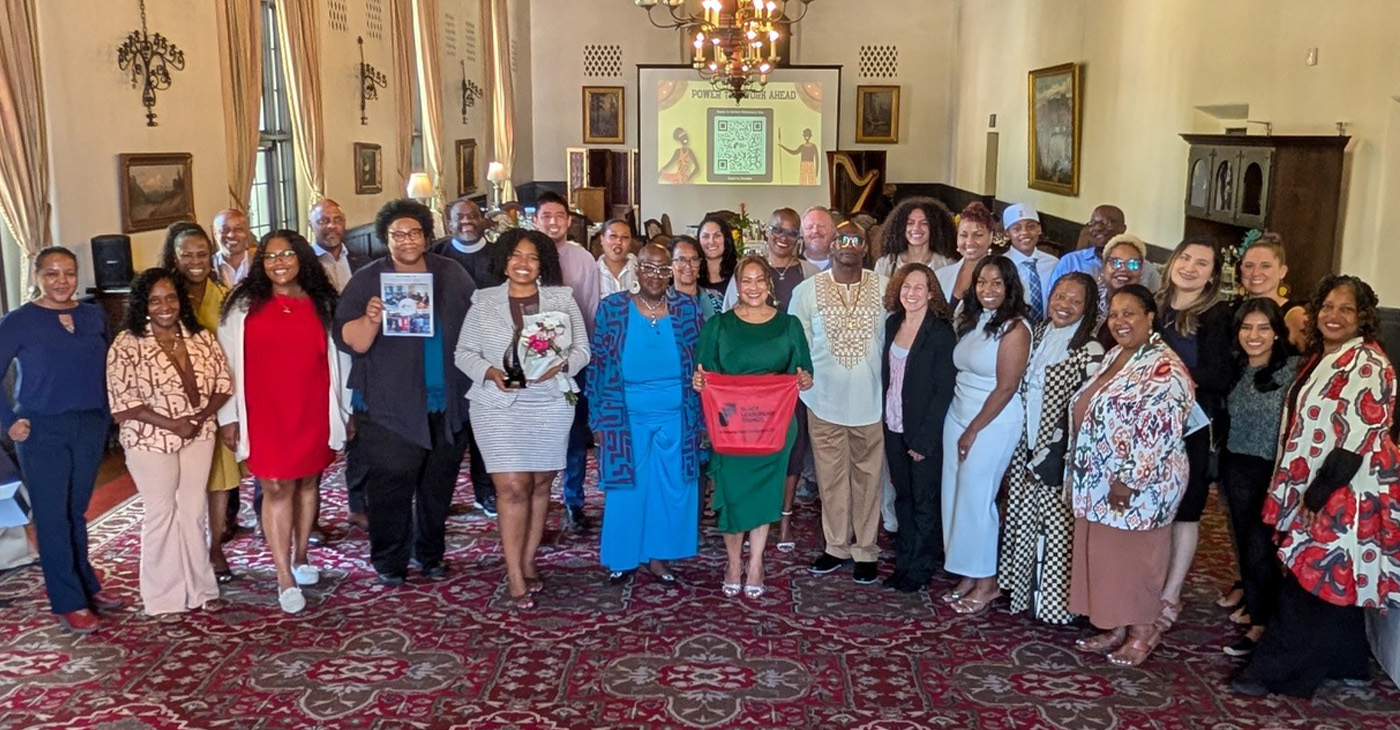
The Black Leadership Council (BLC) honored Assemblymembers Mia Bonta (D-Alameda) and Dr. Corey Jackson (D-Moreno Valley) during its annual Legislative Awards Luncheon for their leadership in advancing racial justice, economic opportunity and community investment.
Both members of the California Legislative Black Caucus (CLBC), Bonta received the Education Equity Champion Award, while Jackson was presented with the Wealth Equity Champion Award.
The luncheon was held June 17 at the Sutter Club in Sacramento following a morning of meetings between BLC members and CLBC senators, assemblymembers and Capitol staff.
“Whenever you’re in the same room and being honored alongside Oakland’s own Mia Bonta, you must be doing something right. One of the things that’s clear is that this nation needs Black leadership more than ever,” Jackson said.
Jackson was recognized for co-authoring legislation that expands economic opportunity, strengthens the social safety net and supports youth and vulnerable communities.
Bonta was honored for establishing the bipartisan California Legislative Children’s Caucus, a bicameral coalition that advocates for investments in childcare, health and education. The caucus promotes evaluating state budgets and public policy through the lens of children’s well-being.
BLC and the CLBC work together to translate community priorities into legislative action. Both lawmakers said the BLC was among the first organizations they met with after taking office.

“The Black Leadership Council has been imprinted in my heart because I first met with you all when I was a first-year legislator and we talked about what we wanted for our children and our families,” Bonta said. “It’s just an incredible honor to receive this award and share this honor with my partner in this work, Dr. Corey Jackson.”
Assemblymember LaShae Sharp-Collins (D-La Mesa) attended the luncheon to celebrate her legislative director, Jerika Edwards, who received the Next Generation Leadership Award. Sharp-Collins credited Edwards with building a distinguished record of civic engagement, public service, voting rights advocacy and social justice leadership.
Nikki A. Beasley, executive director of Richmond Neighborhood Housing Services, received the Housing Equity Champion Award. Carol F. Burton, a health care, criminal justice and behavioral health executive, received the Health Equity Champion Award. BLC member Joya Chavarin, a California-based education researcher, was presented with the Trailblazer Award.
“The Legislative Awards Luncheon offers a valuable opportunity to recognize impactful legislators, their staff, and community leaders,” said Meron Agonafer, a member of the BLC Executive Committee.
Established by PRC, formerly the Positive Resource Center, the BLC is a statewide coalition dedicated to advancing policy and systems change in education, housing, health and justice. Its overarching mission is to achieve “Black prosperity” through statewide advocacy and public policy.
“The council targets a high volume of legislation,” said Dr. Deborah Hawkes, PRC’s chief executive officer, who oversees the BLC’s statewide strategy and community initiatives.
“Freedom means opportunities. It means access to quality education, stable housing, good health, economic security, and the ability for every person to thrive,” Hawkes said. “That work requires investments, it requires leaders who are willing to speak up, organizations that are going to do the work, and partners who are willing to sustain the movement.”
Activism
Black Caucus Bill Requiring Major Corporations in California to Disclose Links to Slavery Moves Forward
“We have a public accounting of the ways that our civic institutions have benefited from chattel slavery and built wealth in the process,” said Asm. Isaac Bryan (D-Ladera Heights), vice chair of the California Legislative Black Caucus (CLBC). “We even had cost estimates of what is true accounting for what that (wealth) would be.”
By Antonio Ray Harvey, California Black Media
In August 2000, the California Legislature confronted a little-known chapter of American history after records uncovered in the state archives revealed that, before the Civil War, some insurance companies issued policies to slaveholders that insured enslaved people against injury, death or escape, treating human beings as property.
That same year, former state Sen. Tom Hayden (D-Los Angeles) authored Senate Bill 2199, landmark legislation requiring insurance companies doing business in California to disclose records of slaveholder insurance policies issued by them or their corporate predecessors.
More than two decades later, California lawmakers are seeking to expand that transparency.
Assembly Bill (AB) 2599, the Truth in Disclosure Act, authored by Asm. Isaac Bryan (D-Ladera Heights), builds on the disclosure framework established by SB 2199. The measure would require certain large corporations to search their historical records and submit sworn affidavits, under penalty of perjury, disclosing documented ties to chattel slavery or profits derived from slavery.
On June 23, AB 2599 passed the Senate Judiciary Committee, chaired by Sen. Tom Umberg (D-Santa Ana), on an 11-1 vote. The measure now heads to the Senate Public Safety Committee.
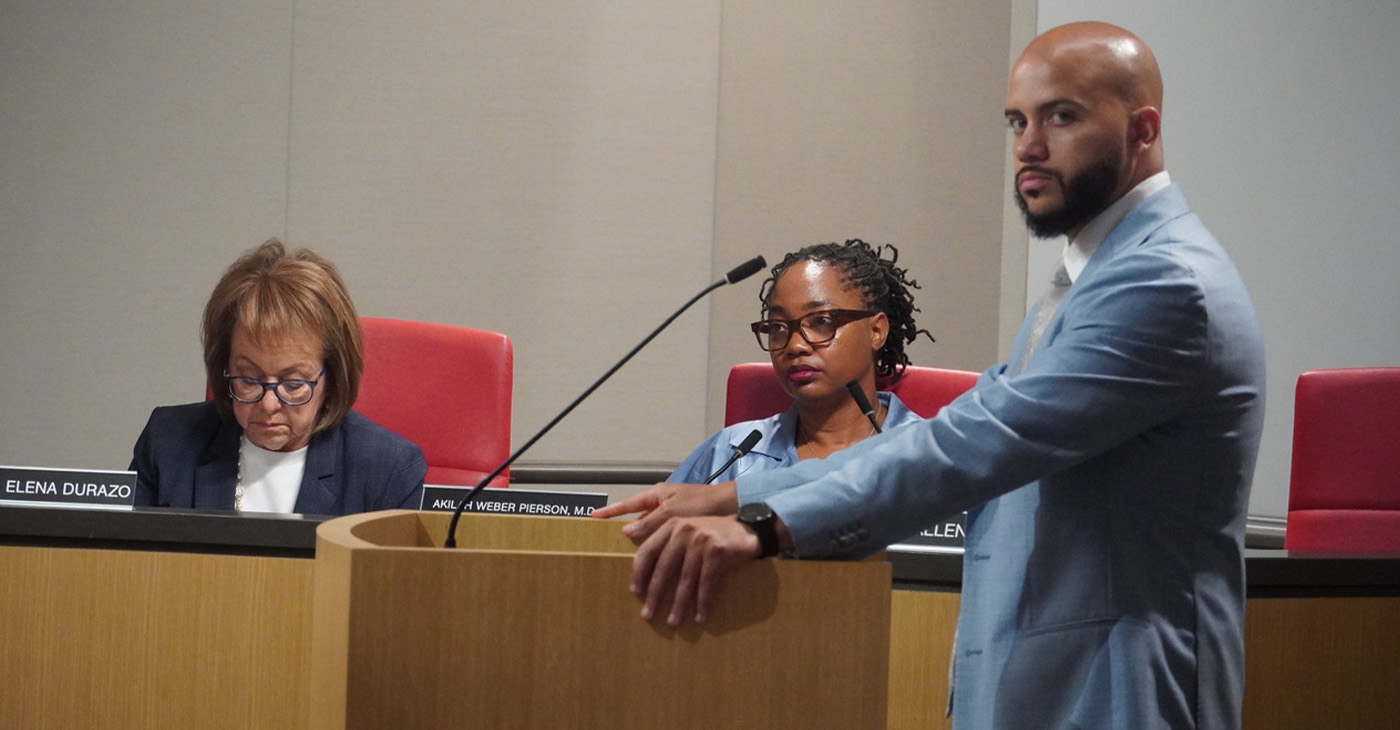
“We have a public accounting of the ways that our civic institutions have benefited from chattel slavery and built wealth in the process,” said Bryan, vice chair of the California Legislative Black Caucus (CLBC). “We even had cost estimates of what is true accounting for what that (wealth) would be.”

Bryan continued, “This bill is simply about disclosure. We’ve had a conversation about the private sector’s role in extracting that wealth, but this bill starts with that conversation around disclosure.”
Known as the Slavery Era Insurance Policies Act, Hayden’s SB 2199 required insurers licensed in California to examine their archives for antebellum policies covering slaveholders against the loss or death of enslaved people. The results were compiled by the California Department of Insurance.
AB 2599 would extend that transparency requirement beyond the insurance industry. It requires entities doing business in California with more than $100 million in annual worldwide gross receipts to review their records for historical involvement in slavery-related transactions.
The bill specifically identifies industries historically tied to the slave economy, including textile, tobacco, railroad, shipping, rice, sugar, financial and insurance companies.
AB 2599 is the CLBC’s sole priority bill this legislative session, according to Sen. Akilah Weber Pierson (D-San Diego), chair of the caucus and a member of the Senate Judiciary Committee.
Weber Pierson cited several financial institutions and insurance companies that have acknowledged or documented historical ties to slavery, including JPMorgan Chase, Citibank, Bank of America, Wells Fargo, New York Life, AIG and Aetna.
“This bill (AB 2599) is extremely important because it acknowledges that many disparities facing Black Americans did not happen by accident. It also talks about the fact that many of the economic opportunities that benefited major institutions did not also happen by accident — but by their participation in chattel slavery,” Weber Pierson said.
The bill’s primary co-sponsor is the Alliance for Reparations, Reconciliation and Truth. Other supporters include Black Women Organized for Political Action (BWOPA), Congregations Organized for Prophetic Engagement, the Ella Baker Center for Human Rights, Healing Justice Santa Barbara, the Black Power Network, the Inland Empire Black Worker Center, LA Voice, the League of Women Voters of California and Starting Over Inc.
Activism
The Ladies of Delta Sigma Theta Hold Day of Advocacy at the Capitol in Sacramento
A member of the “Divine Nine,” Delta Sigma Theta Sorority, Inc., was founded on Jan. 13, 1913, at Howard University in Washington, D.C. The organization was established by 22 women who sought to shift the group’s focus from social activities to public service, academic excellence, and social activism.
By Antonio Ray Harvey, California Black Media
On May 4, members of the Farwest Region of Delta Sigma Theta Sorority, Inc., convened at the California State Capitol for the organization’s 23rd annual Delta Days in Sacramento.
The two-day advocacy event brings together chapters from across California to engage directly in the legislative process, connect with lawmakers, and advocate for policies impacting Black communities.
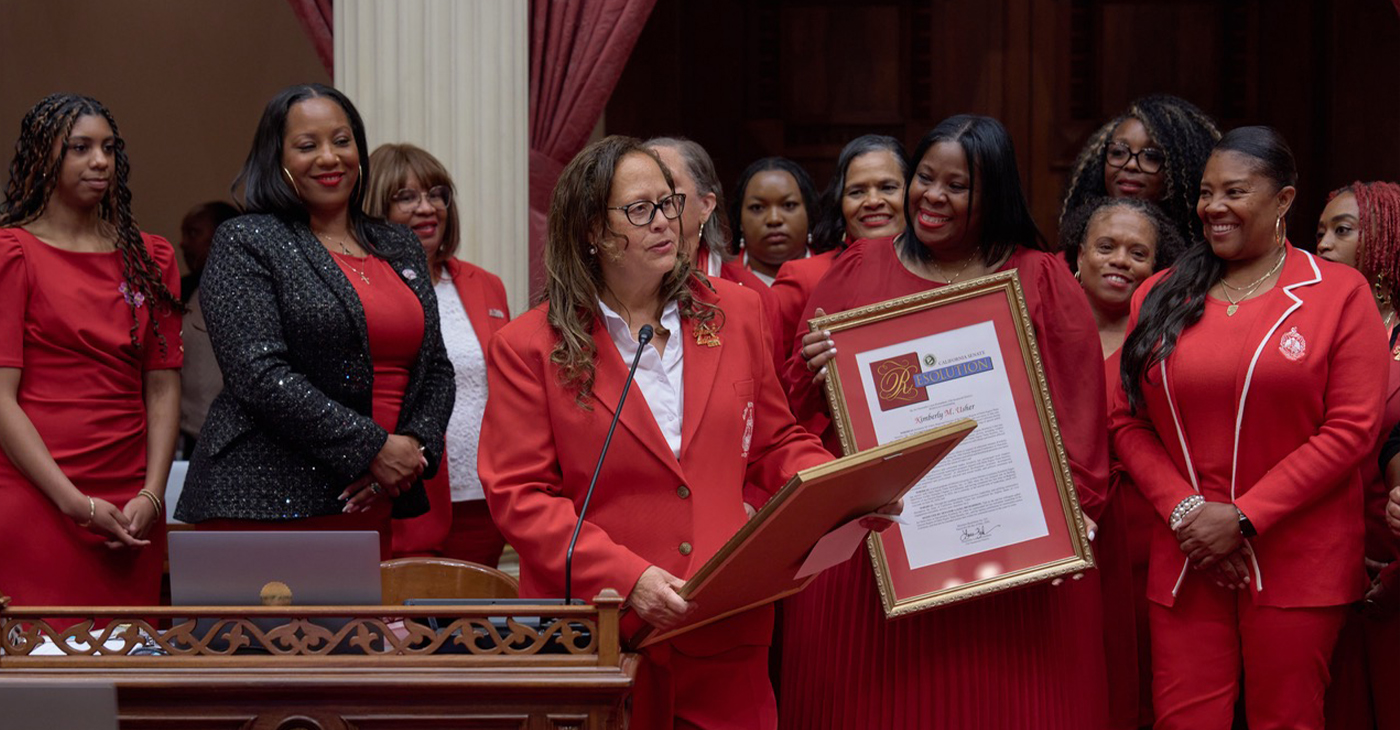
Members of the sorority were honored on the Senate floor by Sen. Laura Richardson (D-San Pedro), who is also a member of Delta Sigma Theta.
Richardson welcomed the Farwest Region during the presentation of a Senate resolution recognizing outgoing Regional Director Kimberly Usher for her leadership and service.
“In addition to the Far West Region, we are led by a fearless leader, regional director Kimberly Usher. She has now served her full term of what’s allowed,” Richardson said. “We are going to be having our regional conference, but we wanted to give it to her here, officially recognizing her service.”
The resolution was co-authored by Richardson and fellow members of the California Legislative Black Caucus (CLBC) and Delta Sigma Theta, Sen. Akilah Weber Pierson (D-San Diego) and Assemblymember Rhodesia Ransom (D-Stockton).
Usher has served in the leadership role since 2022.
A member of the “Divine Nine,” Delta Sigma Theta Sorority, Inc., was founded on Jan. 13, 1913, at Howard University in Washington, D.C. The organization was established by 22 women who sought to shift the group’s focus from social activities to public service, academic excellence, and social activism.
“We are founded on sisterhood that is deeply rooted in scholarship, service, and social action,” said Weber Pierson, a member of the Gamma Alpha chapter of Delta Sigma Theta Sorority.
“Today, we continue a legacy of empowering communities and upholding the high cultural, intellectual, and moral standards established by our founders over a century ago,” she added.



Asm. Corey Jackson Announces Launch of 24-Hour Childcare in His District

IN MEMORIAM: The Rev. Leon “Sonny” Clark, Longtime Orange County Pastor and Community Leader, Dies at 72

Poll: Becerra Widens His Lead Over Hilton; Californians Split on Wealth Tax

From Historic Memories to New Possibilities: Oakland Celebrates Coliseum 60

County Office of Education Says OUSD Finances Are Getting Healthier, Materially Stronger

LIVE FREE Sunday Dinner Brings Faith, Fellowship and Civic Conversation to Oakland

Remembering Chauncey Bailey as Student Journalists Face Threats to Truth-Telling

BLACspace Cooperative Invites Bay Area to Experience Oakland’s Black Cultural Ecosystem Through a BLAC Map Tour + Party

In Wake of Death on Doorstep, Williams Chapel Baptist Church Calls for Better Care, Funding for Unhoused

Oakland Centenarian Nuna McKee Honored!

Caribbean Nations Produce Action Plan Calling for UK Reparations Over Slavery

Oakland Post: Week of September 23 – 29, 2026

Doulas Are Helping Black California Moms Navigate Pregnancy–Even as High Mortality Rates Persist

Newsom Signs Addictive Social Media Law to Protect Kids

On Your November Ballot: Prop 38 Would Allocate $8.4 Billion to Immunology and Immunotherapy Funding

Four Candidates, Including Incumbent Barbara Lee, Qualify for Oakland Mayor’s Race

Oakland Post: Week of August 12 – 18, 2026

Oakland Observes Black August with Block Parties, Film Showings, Workshops

Standoff for Justice: Our Homes Are Worth Fighting For

Oakland Post: Week of August 26 – September 1, 2026

Frontier Airlines’ Return to Oakland Airport Brings Flights, Jobs and Opportunity

Gubernatorial Candidate Steve Hilton Blasts California New Tire Rules; Newsom Hits Back

Chef Sharon Lee Blends Culinary Excellence, Education and Empowerment

Jackie Wright Champions Bay Area Stories, Filmmakers and Cultural Institutions

Big City Mayors Ask for “Yes” Vote on Housing Bond Measure; Conservatives Say “No”

Gov. Newsom’s Latest Appointees Include Sacramento Advocate for Formerly Incarcerated Students; State’s New Tech Chief

Oakland Coliseum Project Opens Door for Small Businesses to Build Bigger

Misnamed ‘Parent’ PAC Seeks to Influence Oakland School Board Elections

Longtime BWOPA Member Brendalyn Goodall Appointed to California Workforce Development Board

Gov. Newsom Signs Law Shielding Immigration Aid Workers From Doxing Threats

The Conversation With Al McFarlane 6/23/26

Media Monday 6/22/26

LIVE! ASK ALMA! — TUES. 6.23.26 7PM EST

Car Buying Secrets: 4 Hidden Checks Before You Sign!

Is This 550 HP Charger Worth YOUR Money? AutoNetwork Review

Celebrating Juneteenth – Frederick Douglass on education and resistance

LIVE! — ASK ALMA! — TUES. 6.19.26 7PM EST

Hyundai Ioniq 5 Parking, Safety, and 360 View #shorts

2025 Ioniq 5 New Wiper & Powerful Performance! #shorts

Electric SUV Range: Is 259 Miles Enough? #shorts

EV Charging: How Fast Can You Charge an Electric Vehicle? #shorts

Biometric Cooling… Messaging Seats…Come on! 2025 Infiniti QX80 Autograph 4WD

Charged Up: Witness the Magic of a Fully Electric Car! #shorts

Range Rover Sport PHEV Included…: See What’s Inside This Luxury SUV! #shorts

Invisible Hood View: Perfect Parking with X-Ray Vision! #shorts
-
 Business4 weeks ago
Frontier Airlines’ Return to Oakland Airport Brings Flights, Jobs and Opportunity
-
 Business4 weeks ago
Gubernatorial Candidate Steve Hilton Blasts California New Tire Rules; Newsom Hits Back
-
 Business4 weeks ago
Chef Sharon Lee Blends Culinary Excellence, Education and Empowerment
-
 Black History4 weeks ago
Jackie Wright Champions Bay Area Stories, Filmmakers and Cultural Institutions
-
 Community4 weeks ago
Big City Mayors Ask for “Yes” Vote on Housing Bond Measure; Conservatives Say “No”
-
 Education4 weeks ago
Gov. Newsom’s Latest Appointees Include Sacramento Advocate for Formerly Incarcerated Students; State’s New Tech Chief
-
 Business4 weeks ago
Oakland Coliseum Project Opens Door for Small Businesses to Build Bigger
-
 Community2 weeks ago
Misnamed ‘Parent’ PAC Seeks to Influence Oakland School Board Elections
