
Black History
Cal Reparations Task Force: Yale Professor Traces Long History of Racism in Public Health
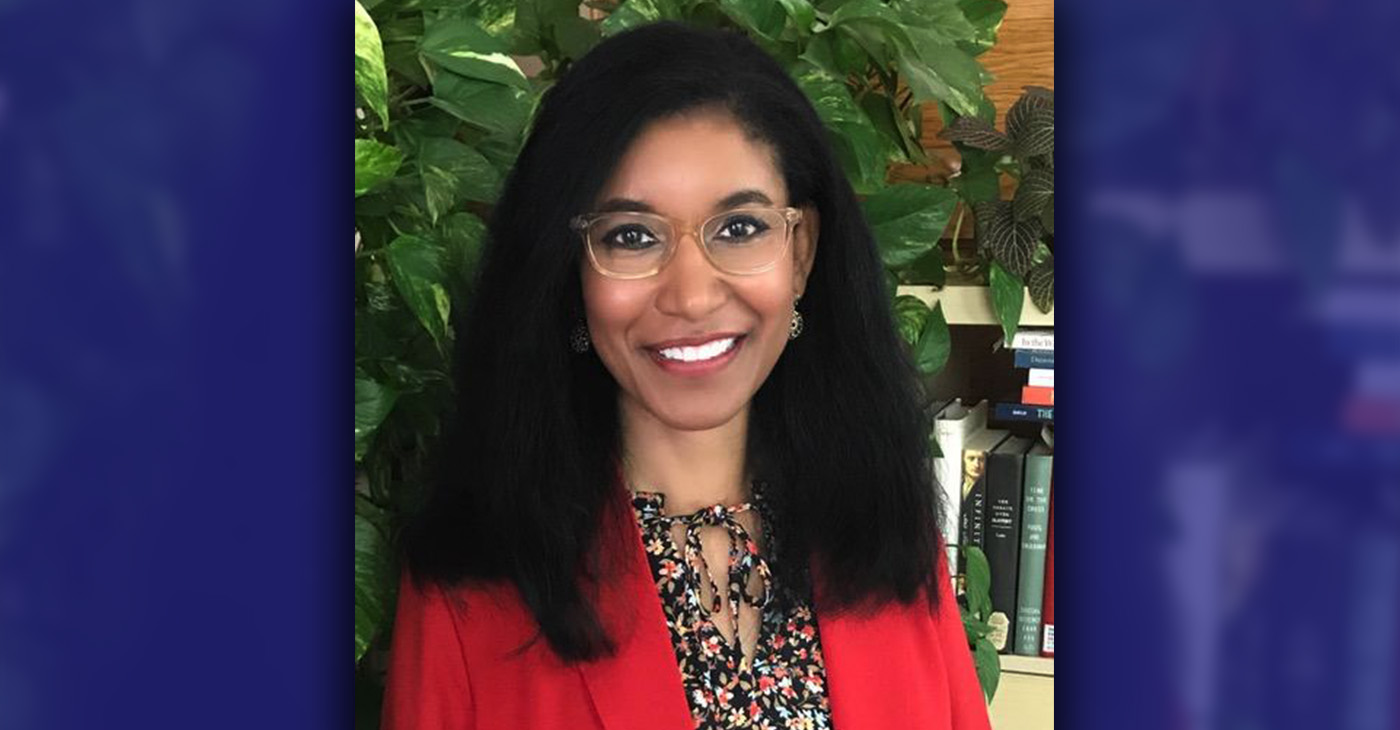
“It is important for us to recognize that many critical issues that we are wrestling with today have long, old, and deep historical roots,” said Dr. Carolyn Roberts, a professor at Yale University. “These include racial bias and disparate medical treatment, race-based medicine, and medical exploitation. In our historical analysis, we must consider not only American slavery and its afterlife, but also the transatlantic slave trade.”

By Antonio Ray Harvey, California Black Media
Dr. Carolyn Roberts, a professor at Yale University, provided to the California Task Force to Study and Develop Reparation Proposals for African Americans detailed descriptions, both verbal and visual, of the horrific experiences Africans endured during the transatlantic slave trade.
A historian of medicine and science, Roberts said the trauma descendants of enslaved Africans suffered during transportation to the United States was only the beginning of a “broken relationship” between African Americans and the United States’ healthcare system.
“It is important for us to recognize that many critical issues that we are wrestling with today have long, old, and deep historical roots,” Roberts said. “These include racial bias and disparate medical treatment, race-based medicine, and medical exploitation. In our historical analysis, we must consider not only American slavery and its afterlife, but also the transatlantic slave trade.”
The transatlantic slave trade was the “largest forced oceanic migration in human history,” a passage that was responsible for transferring between 10 million and 12 million enslaved Africans across the Atlantic Ocean to the Americas from the 16th to the 19th century, Roberts said.
A majority of the African people taken captive were young women and men who were on the cusp of starting families. This generation of Africans ended up contributing to the enrichment of the enslavers, Roberts said.

For the voyage, Africans were placed in tiers below the decks of cargo ships that would sail up to 5,000 miles across the ocean Roberts said. To make sure that the enslaved stayed healthy for the duration of the trip and arrive to their destination alive, slave traders hired medical doctors.
“A majority of enslaved people who arrived in the United States arrived onboard British slave ships,” Roberts said. “British slave ship medicine was based on systemic violence and dehumanization. (The doctors) performed invasive and forced medical inspections. Women and girls were pinned down and their legs were held open so that doctors could see if they had previously borne children.”
Drugs, whips, and pistols were used by slave traders if the enslaved women and men did not comply with the medical practitioners’ orders. Roberts said it was common for doctors to assume that Africans had the capacity to withstand extreme physical pain.
Roberts was one of several experts that spoke during the public, mental and physical health segment of the two-day meeting held in January.
Dr. Tina Sacks, an associate professor at UC Berkeley’s School of Social Welfare; Dr. Cassondra Marshall, UC Berkeley Public Health professor of Maternal, Child, and Adolescent Health; Brett Andrews, CEO of PRC (formally Positive Resource Center) in San Francisco; and Melissa Jones, executive director of Bay Area Regional Health Inequities Initiative (BARHII) were other panelists during the meeting.
Roberts did not stop with the horrific details captured Africans suffered on the high seas. She forewarned the nine-member panel about a graphic image she was about to display. It was a black-and-white photo of a human cadaver on a gurney. Surrounded by white doctors, the image depicted a surgical examination being performed on a Black man.
These acts of inhumanity had an adverse effect on Black Americans, Roberts said, and the resulting cruelty and racism endured 157 years after slavery was abolished in the United States.
“So, a new management of healthcare enters the world. This is a form of healthcare where medical violence against Africans and African descended people became an acceptable normative, an institutionalized practice for over a century in the context of the British slave trade. This forced Black people into a unique and troubling relationship with Western medicine before they set foot in the United States,” Roberts explains.
“It also created a new understanding of the doctor-patient relationship, a relationship that was violent, personalized, extractive, and exploitative,” she argues.
Over the years, the enslaved Africans and their freed descendants learned to trust themselves by concocting their own medicinal formulas.
“They developed their own medical systems. They blended medical knowledge from Africa with medicinal plants in the Americas,” Roberts said. “However, they could not avoid white doctors who began to use their bodies to advance medical science.
Roberts holds a joint appointment in the departments of History/History of Science and Medicine, and African American Studies and a secondary appointment at Yale School of Medicine.
Roberts’ research interests concern the history of race, science, and medicine in the context of slavery and the Atlantic slave trade.
“It’s a sobering moment when we began to understand the health impacts of multigenerational racism and oppression,” Dr. Cheryl Grills, a member of the Task Force, said.
The Task Force to Study and Develop Reparation Proposals for African Americans will have its eighth meeting at 9 a.m. on March 29 and March 30.







Art
Misty Copeland Shapes Ballet’s Tomorrow
THE POSITIVE COMMUNITY — Misty Copeland will curate the 2026 Joyce Ballet Festival, a two-week event in New York City from August 4-16. This role allows her to influence the future of ballet by showcasing a wide range of dancers, choreographers, and companies. The festival will present both established and contemporary works, blending classical traditions with new artistic expressions.


This summer, Misty Copeland will step into a different kind of spotlight. Instead of taking center stage as a dancer, she will help determine what audiences see onstage as curator of the 2026 Joyce Ballet Festival. Taking place August 4 through August 16 at The Joyce Theater in New York City, the two-week celebration will bring together dancers, choreographers and companies representing a broad spectrum of ballet. The festival gives Copeland an opportunity to share not only her appreciation for ballet’s traditions, but also her vision for its future.
Copeland understands better than most how powerful a ballet stage can be. Her historic career with American Ballet Theatre changed the conversation about representation in one of the world’s most traditional performing arts. When she became the company’s first Black woman to reach the rank of principal dancer, her achievement carried significance far beyond a personal milestone. It gave young dancers of color a new image of what was possible and challenged the industry to reconsider who belonged at the center of ballet.
That history informs the perspective she brings to the festival. Copeland has spent much of her career moving between performance, mentorship, advocacy and storytelling. Her curatorial role allows her to bring those interests together by creating a program that does not treat ballet as a museum piece. Instead, the festival presents dance as an evolving language capable of carrying classical traditions into new cultural and artistic territory.

Audiences will encounter a mixture of established works and contemporary creations during the festival. Classical ballet vocabulary will share space with choreography that pushes dancers toward different physical, emotional and theatrical possibilities. The result is intended to give audiences a broader understanding of the art form while demonstrating that tradition and innovation do not have to be competing forces.
The lineup also provides an opportunity to see dancers from different artistic environments. Performers connected to organizations including American Ballet Theatre, New York City Ballet, Paris Opera Ballet, Houston Ballet, Dance Theatre of Harlem and Complexions Contemporary Ballet are among those represented in the festival. Each company carries its own history and artistic identity, making their participation part of a larger conversation about the many ways ballet can be performed and interpreted.
The presence of Dance Theatre of Harlem is particularly meaningful within the larger story of Copeland’s career and the evolution of Black representation in ballet. Founded during a period when opportunities for Black dancers were severely limited, the company helped demonstrate that excellence and classical training could flourish in a Black cultural environment. Its legacy continues to influence dancers and audiences, making its connection to a festival curated by Copeland especially resonant.
The program also reaches beyond a single definition of contemporary ballet. Choreographers with different backgrounds and artistic philosophies contribute to an evening that can move from recognizable classical structures to works shaped by modern dance, theater, popular culture and new approaches to movement. That diversity reflects a generation of artists who increasingly see ballet not as a rigid vocabulary but as a foundation from which they can explore.
For New York audiences, the festival offers something that is increasingly valuable: the opportunity to experience outstanding dancers in an intimate setting. The Joyce is known for presenting dance in a theater where audiences can see movement and artistry up close. That environment can make a familiar ballet work feel newly personal while allowing experimental pieces to communicate with unusual immediacy.
Copeland’s role as curator also sends a message about the importance of artistic leadership. The people who select performers and choreography help determine which stories receive attention and which artists receive opportunities. By bringing a range of voices into the festival, Copeland is using that responsibility to broaden the conversation around ballet. Her choices can introduce audiences to artists they may not otherwise encounter while encouraging longtime ballet followers to look at the form from a different perspective.
The 2026 Joyce Ballet Festival ultimately arrives at an important moment for the art form. Ballet is carrying centuries of tradition into an era defined by changing audiences, broader representation and increasingly adventurous choreography. Copeland’s festival reflects that transition. For two weeks in August, The Joyce will become a meeting place for the familiar and the unexpected—a celebration of where ballet came from and a preview of where it may be going. And with Misty Copeland helping shape the conversation, the future of ballet promises to be as expansive as the dancers who are defining it.
Based on reporting by The Positive Community.

Black History
George Cook: The Inventor Who Made Fishing Smarter
George Cook was a Black American inventor from Louisville, Kentucky. He was born in 1863, during a time when Black Americans faced unfair laws, limited opportunities, and many barriers to education, jobs, and recognition. Even with these challenges, he became known for his intell

George Cook was a Black American inventor from Louisville, Kentucky. He was born in 1863, during a time when Black Americans faced unfair laws, limited opportunities, and many barriers to education, jobs, and recognition. Even with these challenges, he became known for his intelligence, honesty, and ability to think in practical ways. Some records say he worked as a cook for Buffalo Bill Cody and later as a chef on a private dining car for the Louisville and Nashville Railroad. He was even known by the nickname “Honest Mister Cook.”
As with many Black American inventors and scientists of that era, there is little biographical information about Mr. Cook.
Cook’s most famous invention was the Automatic Fishing Device. He received U.S. Patent No. 625,829 for it on May 30, 1899. His patent shows that he was not just someone with an idea, but someone who made it happen.
So, what did the Automatic Fishing Device do? Imagine fishing with a line in the water. Usually, you have to watch carefully and pull the line at just the right moment when a fish bites. Cook wanted to make that process easier. His device was designed to react when a fish pulled on the line. The tension from the fish would trigger a lever. That lever would release a spring-loaded part of the device, causing it to move quickly and help pull in the line. The device also had an alarm gong that would ring to let the fisher know something was happening.
This invention was important because it used simple mechanical ideas in a clever way. Springs, levers, rails, and alarms were not new by themselves, but Cook combined them to solve a real problem. His device showed how inventors often take familiar parts and arrange them in a new way to make life easier.
Cook looked at fishing and asked, “How can this be improved?” Then, he created a device that could respond automatically when a fish tugged on the line. His invention let fishermen relax instead of watching the line for hours, trusting the alarm to alert them.
Cook may not be as famous as some inventors, but his Automatic Fishing Device shows that creativity and innovation can be applied anywhere. His legacy lives on as part of the larger story of Black innovation in America.
Black History
Closing the Gap: What the Data and Frontline Experiences Reveal About Cancer in Black California
OAKLAND POST — According to a UC Davis study, “The Burden of Cancer Among Black/African Americans in California,” Black cancer patients were more likely than White patients to be diagnosed at a later stage and to have multiple health conditions, making treatment more difficult. They were also far more likely to live in low-income communities and rely on public insurance—evidence that economic inequality and barriers to care are helping drive disparities in the state’s cancer crisis.
Photo
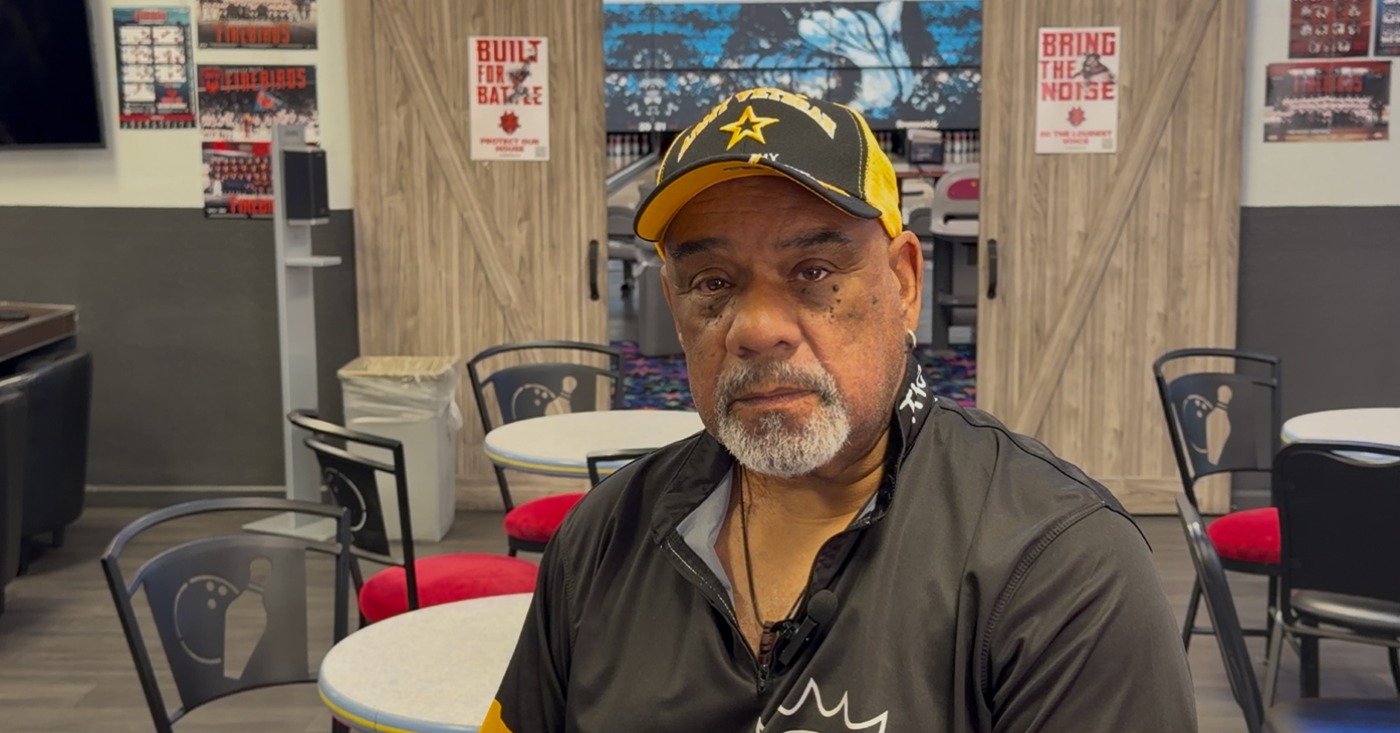
Kris Benz, a disabled Black veteran, is no stranger to cancer. In 2012, he was diagnosed with salivary duct carcinoma, a cancer so rare it strikes only about 1 in a million people each year.” But he beat it after six weeks of radiation and removal of his right salivary gland.
“I was cancer-free after six months,” he said.
Now, a new concerning mass has appeared in his neck despite months of scans. His doctor suspects it is cancerous, but Benz, who lives near Palm Springs, will not know for certain until a biopsy.
Compounding that uncertainty is a gap in his coverage. Benz is two work credits short of qualifying for Medicare, but returning to work could jeopardize his Department of Veterans Affairs (VA) disability status and funding. Buying Medicare Part A would cost $568 a month, leaving him “winging it.”
Benz is also frustrated that the VA will not schedule his scan and biopsy before his consultation, which will require another round of appointments afterward.
“It’s about money,” he said. “Doctor’s appointments, they get the money. There’s no preventive medicine here anymore.”
Although he calls the VA “a great organization,” he believes it is hampered by bureaucracy. For now, he remains “in limbo” waiting to complete his appointments.
His experience reflects one of the most persistent health equity challenges facing Black communities: access to care.
According to a UC Davis study, “The Burden of Cancer Among Black/African Americans in California,” Black cancer patients were more likely than White patients to be diagnosed at a later stage and to have multiple health conditions, making treatment more difficult. They were also far more likely to live in low-income communities and rely on public insurance—evidence that economic inequality and barriers to care are helping drive disparities in the state’s cancer crisis.
That same study reports that between 2014 and 2018, the ten cancers most frequently diagnosed among Black/African American women in California were, from one to ten, breast, lung, colorectal, uterine, pancreatic, kidney, non-Hodgkin lymphoma, thyroid, myeloma, and ovarian cancers. During the same period, the ten most commonly occurring cancers among Black/African American men in California were, from one to ten, prostate, lung, colorectal, kidney, bladder, liver, non-Hodgkin lymphoma, pancreatic, myeloma, and oropharyngeal cancers.
Researchers attribute the gaps not to biology but to social and economic inequality connected to structural racism. An American Cancer Society analysis found educational attainment was a stronger predictor of the mortality gap than race alone.
“These disparities are not because Black people are inherently less healthy,” said Rhonda Smith, executive director of the California Black Health Network. “They are the result of decades of inequitable policies, structural racism, unequal access to quality care, and chronic underinvestment in our communities.”
Dr. Flojaune Cofer, an epidemiologist and public health policy expert, said health outcomes are shaped as much by circumstances as by biology. She traced her understanding of disparities to her father’s death from heart disease at age 47. He began smoking as a child when tobacco companies marketed cigarettes aggressively and disproportionately to Black communities.
“My father’s story is not about individual choices,” Cofer said. “My father’s story speaks to institutional and systemic harm.”
“Health is not just what happens in the doctor’s office,” she added. Social determinants include neighborhood conditions, housing stability, nutritious food, transportation, and the ability to take time off work for care.
At federally qualified health centers, tight appointment schedules can make it difficult for medical providers to detect cancer early and earn the trust patients need to discuss troubling symptoms.
“We have only 15 minutes when you are working in a federally qualified health center — you have 15 minutes to assess, diagnose, treat, and write your note per patient,” said Jamie Garcia, a registered nurse who has been certified in oncology nursing for more than a decade and works at AdventHealth White Memorial in East Los Angeles.
Garcia said the rushed pace, driven partly by billing requirements tied to federal funding, leaves little time for providers to build relationships with patients. It can also allow health care professionals’ implicit biases to go unrecognized and unchallenged.
For Garcia’s patients, who are predominantly Black and Latino residents of surrounding communities, the consequences can be immediate and alarming. Many arrive with visibly advanced tumors after going without insurance, adequate coverage, a primary care physician or routine screenings.
Garcia recalled treating one patient whose tumor had grown large enough to be visible through the skin.
“The fact that I even got to see that is a failure and an atrocity,” she said.
Assemblymember Lori D. Wilson (D-Suisun City) sought to reduce another barrier through Assembly Bill 1570, which would have eliminated out-of-pocket costs for medically necessary diagnostic and supplemental breast imaging. It passed the Assembly Health Committee 16-0 but died in the Appropriations Committee. Wilson plans to reintroduce it during the next legislative session without biopsy coverage.
Wilson announced her breast cancer diagnosis in April 2023. She received timely, quality care but “saw others with similar diagnoses face different outcomes.”
“Some people who got diagnosed at the same time as me — their timing of their surgeries and treatment was delayed in comparison to my own,” she said. “Watching people go through and suffering unnecessarily was heartbreaking to me.”
Her follow-up imaging required only a $10 copay. “I’ve had friends have to pay $1,000 to get that secondary screening,” Wilson said.
Smith warned that policy changes could further erode access. California’s Every Woman Counts screening program is losing funding and being scaled back, she said. About one in three Black Californians relies on Medi-Cal, according to the state.
Smith also cited federal Medi-Cal work requirements projected to cause 1.1 million Californians to lose coverage by 2029-30. “Health equity is no longer simply about improving outcomes,” she said. “It’s about protecting access.”
Californians seeking low-cost cancer screening can contact a local federally qualified health center or the California Department of Public Health’s Every Woman Counts program. The California Black Health Network also offers referrals and advocacy resources.
WORK FROM HOME
Home-based business with potential monthly income of $10K+ per month. A proven training system and website provided to maximize business effectiveness. Perfect job to earn side and primary income. Contact Lynne for more details: Lynne4npusa@gmail.com 800-334-0540


Misty Copeland Shapes Ballet’s Tomorrow

As Part of Your Back-to- School Checklist, Vaccinate

As Part of Your Back-to- School Checklist, Vaccinate

Congresswoman Simon Demands Investigation into Trump’s Abuse of Emergency Powers for Coal Export Terminal in West Oakland

OPINION: The Philippines Isn’t Foreign When Your Family Still Lives There

Asm. McKinnor’s Bill Banning Drones Above Outdoor Entertainment Events Awaits Senate Decision

California Sen. Padilla Joins Colleagues to Introduce Bill Imposing Term Limits on Supreme Court Justices

Department of Homeland Security Demands California Secretary of State Shirley N. Weber Scrub Voter Rolls

George Cook: The Inventor Who Made Fishing Smarter

Gov. Newsom Announces $109.6 Million in Funding for 278 Supportive Homes in Bakersfield, Contra Costa, Sacramento and Fresno

Rep. Kamlager Dove Demands Care, Justice for Man Shot by ICE

“The Power to See Threats Sooner”: Gov. Newsom, Safety Officials Showcase California’s Investments in Hi-Tech Wildfire Prevention

100 Black Wings’ Team Oakland Youth Athletes Heading to Taiwan for 2026 International Children’s Games

Oakland ‘Port Serves as a Powerful Engine for Good Jobs and Economic Development

Oakland Faith Leaders Welcome New Police Chief, Mobilize Around Housing and Civic Action
Department of Homeland Security Demands California Secretary of State Shirley N. Weber Scrub Voter Rolls

Oakland Children’s Hospital Workers and Patients Rally for Pediatric Medical Care
“The Power to See Threats Sooner”: Gov. Newsom, Safety Officials Showcase California’s Investments in Hi-Tech Wildfire Prevention

New Judge Could Decide if Karmelo Anthony Gets a New Trial

Surveillance Pricing Fight: State Senate Debates Bill Banning Retailers from Using AI to Set Prices Based on a Buyer’s Profile

Mount Zion MBC, Church of Jesus Christ of Latter-day Saints Partner to Bring 29,000 Meals to Alameda County

Alpha Kappa Alpha Sorority, Inc. Celebrates New North Atlantic Regional Director
California Sen. Padilla Joins Colleagues to Introduce Bill Imposing Term Limits on Supreme Court Justices

Starting This Summer, California Car Buyers Can Get an Instant $3500 Off the Cost of Electric Vehicles

COMMENTARY: You Are Already Paying for the AI Boom

California Bill Would Let Abuse Victims Use Trauma as Legal Defense for Violent Crime

Fed Court to Decide Landmark First Amendment Case

Gov. Gavin Newsom Signs Law Streamlining Affordable Housing Rules

Oakland Celebrates $125 Million Coliseum Sale

Saving Black Mothers Starts Outside the Hospital

The Conversation With Al McFarlane 6/23/26

Media Monday 6/22/26

LIVE! ASK ALMA! — TUES. 6.23.26 7PM EST

Car Buying Secrets: 4 Hidden Checks Before You Sign!

Is This 550 HP Charger Worth YOUR Money? AutoNetwork Review

Celebrating Juneteenth – Frederick Douglass on education and resistance

LIVE! — ASK ALMA! — TUES. 6.19.26 7PM EST

Hyundai Ioniq 5 Parking, Safety, and 360 View #shorts

2025 Ioniq 5 New Wiper & Powerful Performance! #shorts

Electric SUV Range: Is 259 Miles Enough? #shorts

EV Charging: How Fast Can You Charge an Electric Vehicle? #shorts

Biometric Cooling… Messaging Seats…Come on! 2025 Infiniti QX80 Autograph 4WD

Charged Up: Witness the Magic of a Fully Electric Car! #shorts

Range Rover Sport PHEV Included…: See What’s Inside This Luxury SUV! #shorts

Invisible Hood View: Perfect Parking with X-Ray Vision! #shorts
-
 Featured3 days ago
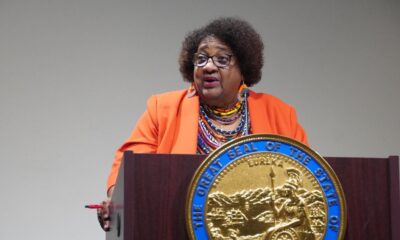
Department of Homeland Security Demands California Secretary of State Shirley N. Weber Scrub Voter Rolls
-
 Business2 weeks ago
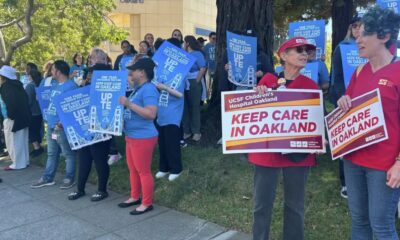
Oakland Children’s Hospital Workers and Patients Rally for Pediatric Medical Care
-
 Environment3 days ago
“The Power to See Threats Sooner”: Gov. Newsom, Safety Officials Showcase California’s Investments in Hi-Tech Wildfire Prevention
-
 #NNPA BlackPress2 weeks ago
New Judge Could Decide if Karmelo Anthony Gets a New Trial
-
 Business2 weeks ago
Surveillance Pricing Fight: State Senate Debates Bill Banning Retailers from Using AI to Set Prices Based on a Buyer’s Profile
-
 Business2 weeks ago
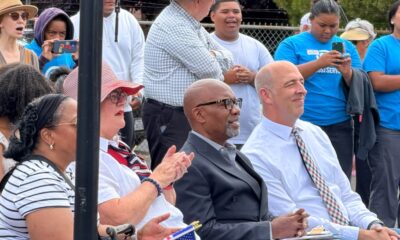
Mount Zion MBC, Church of Jesus Christ of Latter-day Saints Partner to Bring 29,000 Meals to Alameda County
-
 Black History1 week ago
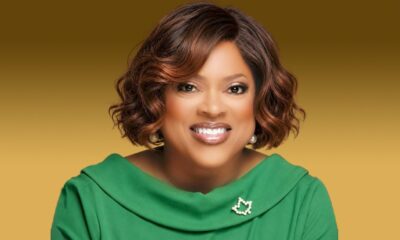
Alpha Kappa Alpha Sorority, Inc. Celebrates New North Atlantic Regional Director
-
 Featured3 days ago
California Sen. Padilla Joins Colleagues to Introduce Bill Imposing Term Limits on Supreme Court Justices
