
Uncategorized
Book Review: “Household Workers Unite”

There is not a speck of dust in your home.
The floors gleam, the kitchen shines, the bathroom sparkles, and rugs are fluffy again. You’ve changed bedsheets and you even washed windows.
You’re ready for fall and thankful for the help you had getting this way; if that help was paid, read ‘Household Workers Unite” by Premilla Nadasen, and you’ll be thankful for even more.
Picture this: a white reporter encourages African American maids to “speak out about their hardship” and the women who employ them. You know the movie, but did you recognize the “victimization theme”? Yes, says Nadasen, The Help “reinforces dominant stereotypes of passive household workers,” even though there was historically nothing passive about them.
In the years following the Civil War, the “Mammy” figure took hold in white America, becoming somewhat of a cult based on the idea of a loyal, maternal female slave. That vestige of slavery (and inherent racism) generally affected how African American domestic workers were treated by white female employers then, but “new ideas were germinating.”
In 1881, Black laundresses formed a “Washing Society” and eventually went on strike for higher wages. Activism never stopped, but there was a setback in the fledgling movement during the Depression, when black domestics found day-work by sitting in a street corner “slave market,” and that didn’t go unnoticed.
By 1934, journalists, activists, and other black feminists threw their support behind Dora Jones, who led the Domestic Workers Union (founded in 1934) in New York.

Photo Courtesy of Lelanie Foster
Nurse, midwife, and housekeeper Georgia Gilmore used her cooking skills to raise money for “The Club from Nowhere,” a group supporting activists and organizers both financially and with food.
Undoubtedly, the Civil Rights Movement spurred Atlanta ’s Dorothy Bolden to work with Dr. King on behalf of household workers. Cleveland ’s Geraldine Roberts founded the Domestic Workers of America. Edith Barksdale Sloan pushed the movement along when she became head of the National Committee on Household Employment.
Other influential women bore their share of the movement, just as today’s activists help protect the workplace rights of caregivers, personal helpers, and domestic workers of all races.
Imagine seeing a federally funded monument to the “black mammy,” standing in our nation’s capital. Yep, in 1924, the United Daughters of the Confederacy tried to build exactly that, and it was “furiously opposed.”
That’s just one of the stories you’ll read inside “Household Workers Unite.”
Stories, says author Premilla Nadasen, are what she tried to fill her book with, in fact, and she somewhat succeeds. There are, indeed, a lot of stories here, but there’s plenty of dryness, too, in the form of names, dates, and acronyms that ultimately become quite overwhelming.
My advice is to try and get through them; this book is powerful and inspiring, but the voices and their memories are what matters.
This isn’t your curl-up-in-front-of-a-fireplace kind of read but it is a pleasure, especially if you’re a historian, feminist, or domestic worker yourself. “Household Workers Unite” will make you think as it eats up every speck of your time.
“Household Workers Unite” by Premilla Nadasen, c. 2015, Beacon Press, $27.95, 248 pages.


Uncategorized
Rest in Peace: A.M.E. Pastor and L.A Civil Rights Icon Cecil “Chip” Murray Passes
The Rev. Dr. Cecil L. “Chip” Murray, former pastor of First African Methodist Episcopal Church (FAME) in Los Angeles, died of natural causes April 6 at his Windsor Hills Home. He was 94. “Today, we lost a giant. Reverend Dr. Cecil Murray dedicated his life to service, community, and putting God first in all things. I had the absolute honor of working with him, worshiping with him, and seeking his counsel,” said Los Angeles Mayor Karen Bass of the dynamic religious leader whose ministry inspired and attracted millionaires as well as former gang bangers and people dealing with substance use disorder (SUD).
The Rev. Dr. Cecil L. “Chip” Murray, former pastor of First African Methodist Episcopal Church (FAME) in Los Angeles, died of natural causes April 6 at his Windsor Hills Home. He was 94.
“Today, we lost a giant. Reverend Dr. Cecil Murray dedicated his life to service, community, and putting God first in all things. I had the absolute honor of working with him, worshiping with him, and seeking his counsel,” said Los Angeles Mayor Karen Bass of the dynamic religious leader whose ministry inspired and attracted millionaires as well as former gang bangers and people dealing with substance use disorder (SUD).
Murray oversaw the growth of FAME’s congregation from 250 members to 18,000.
“My heart is with the First AME congregation and community today as we reflect on a legacy that changed this city forever,” Bass continued.
Murray served as Senior Minister at FAME, the oldest Black congregation in the city, for 27 years. During that time, various dignitaries visited and he built strong relationships with political and civic leaders in the city and across the state, as well as a number of Hollywood figures. Several national political leaders also visited with Murray and his congregation at FAME, including Presidents George W. Bush and Bill Clinton.

Murray, a Florida native and U.S. Air Force vet, attended Florida A&M University, where he majored in history, worked on the school newspaper and pledged Alpha Phi Alpha Fraternity. He later attended Claremont School of Theology in Los Angeles County, where he earned his doctorate in Divinity.
Murray is survived by his son Drew. His wife Bernadine, who was a committed member of the A.M.E. church and the daughter of his childhood pastor, died in 2013.
Uncategorized
Court Throws Out Law That Allowed Californians to Build Duplexes, Triplexes and RDUs on Their Properties
Charter cities in California won a lawsuit last week against the state that declared Senate Bill (SB) 9, a pro-housing bill, unconstitutional. Passed in 2021, SB 9 is also known as the California Housing Opportunity and More Efficiency Act (HOME). That law permits up to four residential units — counting individual units of duplexes, triplexes and residential dwelling units (RDUs) – to be built on properties in neighborhoods that were previously zoned for only single-family homes.
Charter cities in California won a lawsuit last week against the state that declared Senate Bill (SB) 9, a pro-housing bill, unconstitutional.
Passed in 2021, SB 9 is also known as the California Housing Opportunity and More Efficiency Act (HOME). That law permits up to four residential units — counting individual units of duplexes, triplexes and residential dwelling units (RDUs) – to be built on properties in neighborhoods that were previously zoned for only single-family homes.
A Los Angeles Superior Court Judge ruled in favor of the cities, pointing out that SB 9 discredited charter cities that were granted jurisdiction to create new governance systems and enact policy reforms. The court ruling affects 121 charter cities that have local constitutions.
Attorney Pam Lee represented five Southern California cities in the lawsuit against the state and Attorney General Rob Bonta.
“This is a monumental victory for all charter cities in California,” Lee said.
However, general law cities are excluded from the court ruling as state housing laws still apply in residential areas.
Attorney General Bonta and his team are working to review the decision and consider all options that will protect SB 9 as a state law. Bonta said the law has helped provide affordable housing for residents in California.
“Our statewide housing shortage and affordability crisis requires collaboration, innovation, and a good faith effort by local governments to increase the housing supply,” Bonta said.
“SB9 is an important tool in this effort, and we’re going to make sure homeowners have the opportunity to utilize it,” he said.
Charter cities remain adamant that the state should refrain from making land-use decisions on their behalf. In the lawsuit, city representatives argued that SB 9 eliminates local authority to create single-family zoning districts and approve housing developments.
Uncategorized
Funds for Down Payments and Credit Repair Given to Black First Time Homebuyers
The California Civil Rights Department (CRD) won a $10,000 fair housing settlement last November against a property management company, CIM Group LP, a global real estate company headquartered in Los Angeles, and property owner, RACR Sora, LLC, for implementing a blanket ban on renting to tenants with criminal histories at Sora Apartments in Inglewood. Three months earlier, the department, which enforces California’s civil rights laws, won another $20,000 civil rights settlement against a Lemon Grove property manager, who had targeted a Black tenant with a series of racist actions and threats of violence.
By McKenzie Jackson, California Black Media
The California Civil Rights Department (CRD) won a $10,000 fair housing settlement last November against a property management company, CIM Group LP, a global real estate company headquartered in Los Angeles, and property owner, RACR Sora, LLC, for implementing a blanket ban on renting to tenants with criminal histories at Sora Apartments in Inglewood.
Three months earlier, the department, which enforces California’s civil rights laws, won another $20,000 civil rights settlement against a Lemon Grove property manager, who had targeted a Black tenant with a series of racist actions and threats of violence.
CRD Director Kevin Kish said the department investigates cases of apparent racial bias in housing and sometimes more subtle acts of prejudice like nuisance-free or crime-free housing policies or holding tenants to different standards based on their race.
Kish said, “People will get evicted if they call the police. This can negatively impact victims of domestic violence. We also see these no-crime ordinances, or no-crime policies, used in racially discriminatory ways. If there is some kind of incident, and the police are called and it involves a Black family, then they get evicted, but other folks aren’t necessarily evicted.”
On April 11,1968, a week after Rev. Dr. Martin Luther King, Jr. was assassinated, President Lydon B. Johnson signed the Fair Housing Act, which prohibits discrimination in the sale, rental, and financing of housing based on race, color, religion, and nationality.
Kish noted that William Byron Rumford, the first Black California State Assemblymember, who represented Berkley and Oakland, spearheaded the passing of the Rumford Act in 1963. That law sought to end discriminatory housing practices in the Golden State, five years before the Fair Housing Act became law.
Real estate agent and housing advocate Ashley Garner is the director of the CLTRE Keeper Home Ownership program. That organization gave 25 Black, indigenous, and people of color $17,500 each in down payment and credit repair support to purchase a home in Oak Park, a traditionally Black neighborhood in Sacramento, last fall. CLTRE obtained a $500,000 grant from the city of Sacramento to award the funds to the residents after they completed an eight-week homeownership program.
In 2021, the California Housing Finance Agency (CalHFA) noted that around four in 10 Black California families owned homes, which trails that of White, Asian-American and Latinos.
According to Forbes, the median price for a home in California is over $500,000, which is double the cost of a home in the rest of the country.
Black lawmakers recently introduced their Reparations Priority Bill Package that includes support for Black first-time homebuyers, homeowners’ mortgage assistance and property tax relief for neighborhoods restricted by historic redlining.
California Housing Finance Agency (CalHFA) spokesperson Eric Johnson said CalHFA helps prospective low-income and moderate-income Californians purchase homes by offering down payment and closing cost aid. “There are lots of people who have steady jobs, good credit scores, constant income, but they haven’t been able to save up the money that traditional banks need or want to see for a down payment,” Johnson stated. “We help those folks out. We give a loan for the down payment to get them over that hurdle.”
CRD and the Department of Real Estate hosted “Fair Housing Protections for People with Criminal Histories” Zoom call on April 10.
On April 25, CRD will also hold Zoom seminars focused on advocating for fair housing for people with disabilities.

WORK FROM HOME
Home-based business with potential monthly income of $10K+ per month. A proven training system and website provided to maximize business effectiveness. Perfect job to earn side and primary income. Contact Lynne for more details: Lynne4npusa@gmail.com 800-334-0540


Black Artists in America, Installation Three Wraps at the Dixon Gallery and Gardens

Grief, Advocacy, and Education: A Counselor Reflects on Black Maternal Health

Future of Florida’s Black History Museum in Limbo

New Research Shows the Many Benefits of Early Learning

South Hampton K-8 Students Among Top 10 Finalists for Samsung’s ‘Solve for Tomorrow’ Competition

Cuba: No Negotiation with US on the President or Political System

Brooklyn Academy of Music Names Jamaican-Born Tamara McCaw as President

Trinidad & Tobego – U.S. Launches WhatsApp Channel for American Citizens in the Country

Oakland Post: Week of March 18 – 24, 2026

AI Innovation vs. Ethics and Environmental Impact

AI, Web3, and Digital Reparations

What If You Owned Your AI Agent?

Season 7, Episode 3 – January Reporter’s Roundtable 📱

Season 7, Episode 3 – January Reporter’s Roundtable

AI, Media, and Power | Part 2, Real-World Impacts and Tradeoffs

Book Review: Books on Black History and Black Life for Kids

California Launches Study on Mileage Tax to Potentially Replace Gas Tax as Republicans Push Back

Community Celebrates Turner Group Construction Company as Collins Drive Becomes Turner Group Drive

Discrimination in City Contracts

COMMENTARY: The Biases We Don’t See — Preventing AI-Driven Inequality in Health Care

Black History Events in the East Bay

Post Newspaper Invites NNPA to Join Nationwide Probate Reform Initiative

Art of the African Diaspora Celebrates Legacy and Community at Richmond Art Center

New Bill, the RIDER Safety Act, Would Support Transit Ambassadors and Safety on Public Transit

COMMENTARY: The National Protest Must Be Accompanied with Our Votes

Oakland Post: Week of February 4 – 10, 2026

Oakland Post: Week of February 11 – 17, 2026

Dorothy Lee Bolden: Uniting Domestic Workers

After Don Lemon’s Arrest, Black Officials Raise Concerns About Independent Black Media

Reflecting on Black History Milestones in Birmingham AL

Hyundai Ioniq 5 Parking, Safety, and 360 View #shorts

2025 Ioniq 5 New Wiper & Powerful Performance! #shorts

Electric SUV Range: Is 259 Miles Enough? #shorts

EV Charging: How Fast Can You Charge an Electric Vehicle? #shorts

Biometric Cooling… Messaging Seats…Come on! 2025 Infiniti QX80 Autograph 4WD

Charged Up: Witness the Magic of a Fully Electric Car! #shorts

Range Rover Sport PHEV Included…: See What’s Inside This Luxury SUV! #shorts

Invisible Hood View: Perfect Parking with X-Ray Vision! #shorts

AI Is Reshaping Black Healthcare: Promise, Peril, and the Push for Improved Results in California

ESSAY: Technology and Medicine, a Primary Care Point of View

Sanctuary Cities

The RESISTANCE – FREEDOM NOW

STATE OF THE PEOPLE: Freddie

ECONOMIC BOYCOTT DAY!!!!!

I told You So
-
 #NNPA BlackPress4 weeks ago
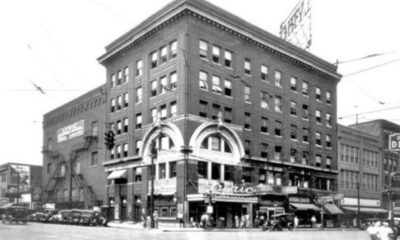
Reflecting on Black History Milestones in Birmingham AL
-
 #NNPA BlackPress4 weeks ago
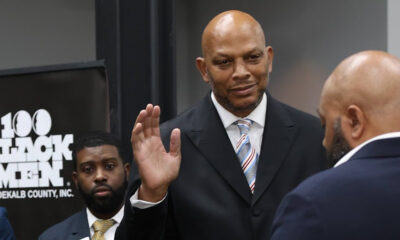
PRESS ROOM: NBA Hall of Fame Nominee Terry Cummings Joins 100 Black Men of DeKalb County to Launch Victory & Values Initiative
-

 #NNPA BlackPress4 weeks ago
U.S. manufacturing rebounds – how foundry services are adapting to rising demand
-
 Activism3 weeks ago
Oakland Post: Week of February 25 – March 3, 2026
-

 #NNPA BlackPress4 weeks ago
Trump’s MAGA Allies are Creating Executive Order Plan to Steal the 2026 Midterms
-

 #NNPA BlackPress4 weeks ago
OP-ED: One Hundred Years of Black Workers Telling the Truth
-

 #NNPA BlackPress4 weeks ago
Advancements in solar technology that are changing the way we power the world
-

 #NNPA BlackPress4 weeks ago
PRESS ROOM: Civil Rights TV Launches in Selma as the World’s First 24/7 Civil Rights Television Network
