
Activism
Black Solidarity Week 2020 in Oakland

Black Solidarity Week (BSW) is here and unlike inspirational quotes and memes found thru social media and on the internet, the concept is a living and breathing entity. So are the people behind it, as well as the issues that BSW seeks to tackle.
Launched in 2018 with a march through East Oakland, 1,000 people filled International Blvd, formerly known as East 14th Street, in the inaugural march through the streets. A series of week-long events also accompany the march each year. This year’s events include forums on Disaster Preparedness, Reparations and Art as a Tool for Solidarity.
“The overarching purpose objective is to be a launch pad for more organizing in the Bay Area,” says Tur-Ha Ak, co-founder of Community Ready CORPS (CRC), anchor organization for Black Solidarity Week. “This would create a space for us to talk about how we engage the conditions that are impacting us,” he said.
CRC’s purpose is to “build and/or contribute to self-determination in disenfranchised communities,” particularly in the Bay Area, according to its website.
The quest for unity brings to mind another internet/social media meme: the West Afrikan Adinkra symbol of the crocodile with two heads. The reasoning of the symbol states that they “share one stomach, yet they fight over food … a reminder that infighting and tribalism is harmful to all who engage in it.”
Ak’s reasoning for the need for a Black Solidarity Week is along these same lines. “What we are saying is Black folks here in the Bay area need to come together because its hard out here,” he said.
Statistics bear out his concern. Back in 2018, the East Bay Express wrote that if current trends continue Oakland’s Black population could fall to 70,000 people or fewer within the next 10 years, hovering at around 16 percent. That would be down from about 35 percent from the year 2000.
The Urban Displacement Project, an effort out of UC Berkeley, with the help of San Francisco’s Mayor’s Office of Housing and Community Development, stated back in 2015 that the “most vulnerable” in Oakland were under threat of being displaced. This displacement was due to stagnant low wages not keeping up with the price of housing in the area.
For Nehanda Imara, the Collaborative Coordinator for East Oakland Building Healthy Communities (EOBHC), support for Black Solidarity Week is practical as well as philosophical.
“When we look at East Oakland, the communities with the worst outcomes are Black people, Imara said.
EOBHC is a nonprofit dedicated to increasing the health and wellness outcomes in the East Oakland area.
“I am about uplifting African people, that’s why I support Black Solidarity Week. My lens has always been pan Africanist. Pan Africanism teaches me that wherever you are you should be working for your people. I’m in East Oakland. I’m working for my people,” said Imara.
The issue of housing in Oakland proper received international attention beginning last fall when four single mothers and their children in need of shelter took over an abandoned home.
The house, which had sat vacant for two years, had recently been purchased at auction by Southern California-based Wedgewood Properties, real estate firm that specialized in “flipping”: buying property for cheap; making repairs, sometimes cosmetic only; then, either selling the property at an enormous profit; or sitting on the property, allow it to remain empty until a buyer comes along.
The single mothers, known as Moms4Housing, staged this “intervention” to call attention to the fact that in Oakland, there are more abandoned dwellings than there are homeless people. According to the “Moms,” there are four empty homes for every one homeless person in the city.
SFCurbed, an online news publication, initially expressed doubt about the Moms’ claim. Using census estimates for the year 2018 (the most recent year available), the publication reported in December of 2019 that “Oakland’s homeless count came out to 4,071 in 2019, while home vacancies total 15,571 (plus or minus 2,415) … a ratio of about 3.8 to one.”
The publication reported that most of the 10 areas that make up the Bay have a similar ratio of more vacant dwellings than homeless persons – hence, the reason for the Moms’ intervention during a time that is considered to be a housing “crisis.”
Initially rebuffing the Moms’ offer to purchase the home, Wedgewood initiated eviction proceedings against them, culminating in a pre-dawn spectacle of militarized police complete with automatic rifles and a tank. Despite this display of force, the Moms able to eventually reach an agreement with Wedgewood to purchase the home.
For that and other reasons, Dominque Walker, one of the Moms4Housing who was evicted by Wedgewood says she absolutely supports Black Solidarity Week.
“It’s going to take all of us to fight against the oppression we are facing,” said Walker. “This is my first time participating. I will absolutely be involved in future events because it is absolutely important for us to come together; history has shown that … we have to put our differences to the side and come together.”
Joyce Gordon, owner of a downtown Oakland fine art gallery, echoed Walker’s sentiments.
“It’s the only way we’re going to survive; we must unite,” said Gordon.
Says Gordon, whose gallery has been an Oakland institution for the past 17 years, “I’m a conscious Black woman living in this America for these 73 years … it’s important for Black folks to come together and support and respect each other and listen to each other and work together and love on each other.”
Black Solidarity Week, which began on Monday and runs through this weekend, takes place between the birthdates of Huey Newton, co-founder of the Black Panther Party for Self-Defense, and the assassination date of Malcolm X, internationally known human rights fighter.
Tur-Ha Ak gave the following explanation for holding Black Solidarity Week during such important historical dates:
“The significance of Oakland being the birth of the Black Panther Party and Huey’s birthday of February 17, and what he meant to the movement of our people. And Malcolm X and what he meant to our movement. If these two individuals had not been victims of the state, they would have matured to a place of creating true solidarity amongst our people.”
For remaining events or more information on Black Solidarity Week, check www.blacksolidarity.org.
“If you want to go fast, go alone.
If you want to go far, go together.”
~ Afrikan Proverb








To enlarge your view of this issue, use the slider, magnifying glass icon or full page icon in the lower right corner of the browser window.

Activism
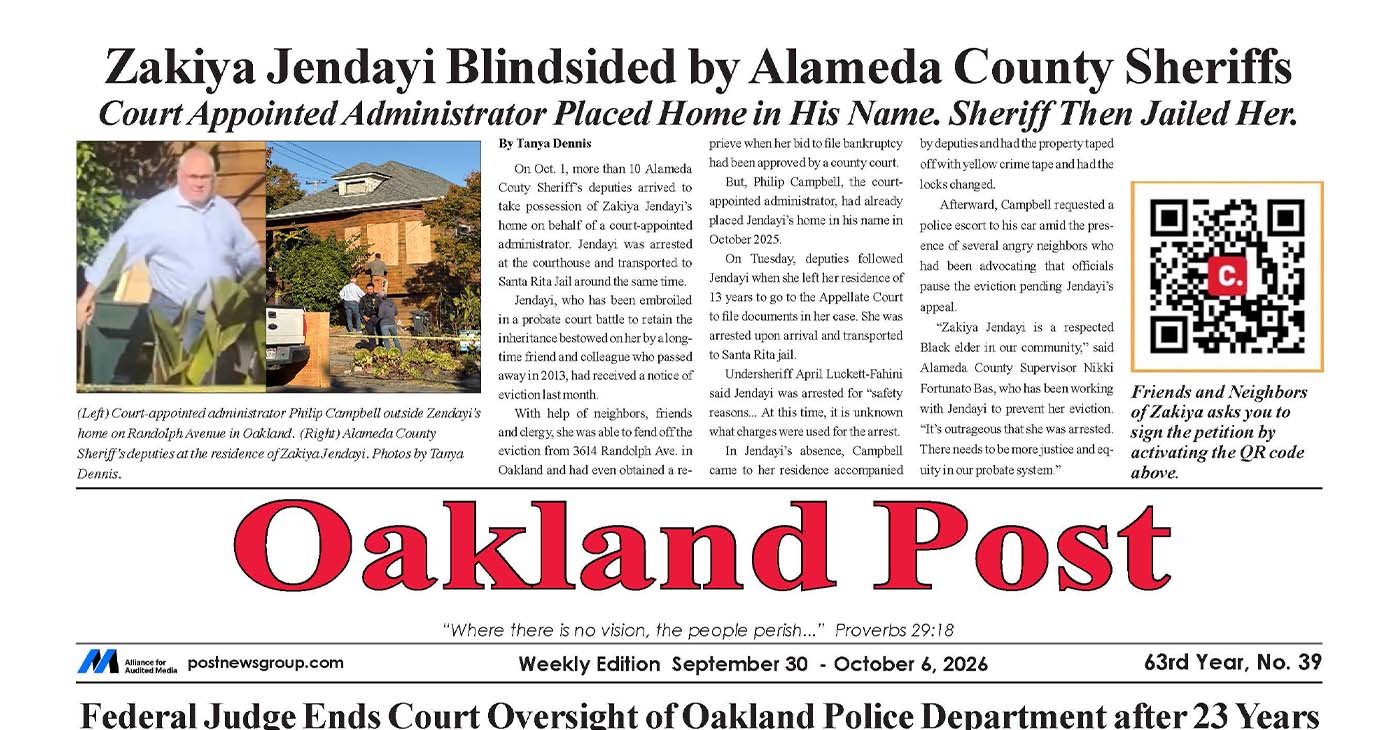
Oakland Post: Week of September 30 – October 6, 2026
The printed Weekly Edition of the Oakland Post: Week of September 30 – October 6, 2026

To enlarge your view of this issue, use the slider, magnifying glass icon or full page icon in the lower right corner of the browser window.

Activism
Oakland Post: Week of September 23 – 29, 2026
The printed Weekly Edition of the Oakland Post: Week of September 23 – 29, 2026

To enlarge your view of this issue, use the slider, magnifying glass icon or full page icon in the lower right corner of the browser window.


WCCUSD Joins Statewide Organic School Food Purchasing Cooperative

Democrats, Community Groups Back Measure EE to Change How Oakland Is Governed

Four Tips to Help You Plan a Holiday “Staycation”

Veterans Housing Project Proposed for South Richmond
PRESS ROOM: Transformative Justice Coalition 2026 Voting Rights Champion Awards Reception ‘Yesterday Is Today: The Battle For Voting Rights

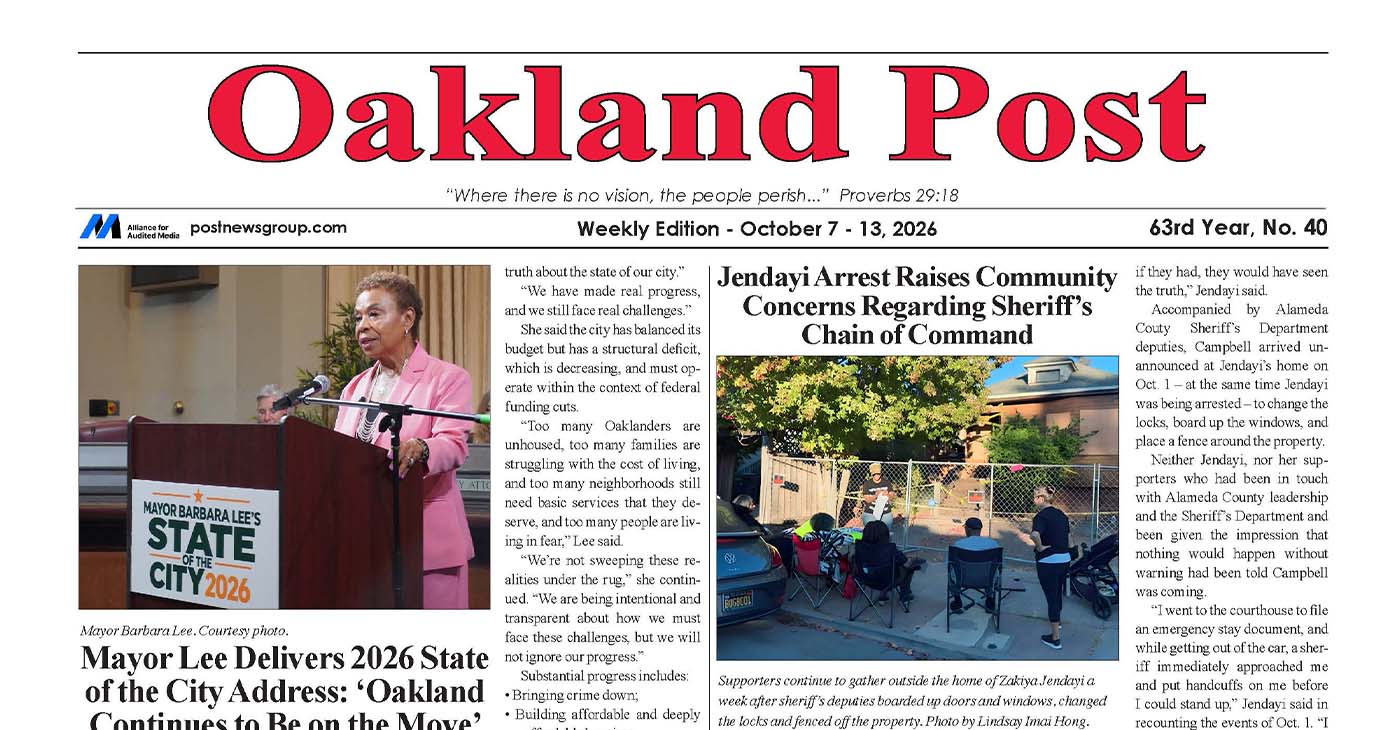
Mayor Lee Delivers 2026 State of the City Address: ‘Oakland Continues to Be on the Move’

Oakland Awarded More than $14 Million in State Funding

Jendayi Arrest Raises Community Concerns Regarding Sheriff’s Chain of Command

Marin County Supes Expand Small Business Options with Home Kitchen Pilot Program

Allen Temple Baptist Church Hosts Free Prostate Cancer Screenings on Oct. 17

AC Transit Labor Unions Back Director Joel Young

Locals Can Get Locally Grown Produce Delivered Through Urban Tilth

‘ICE-Free Marin’ Supporters Press Supervisors as County Drafts Enforcement Restrictions

Oakland Post: Week of October 7 – 13, 2026

Ghana’s Ministry of Foreign Affairs Publishes Global Circle’s Vatican Reparations Call in Special Edition Alongside Heads of State

Misnamed ‘Parent’ PAC Seeks to Influence Oakland School Board Elections

Oakland Post: Week of September 2 – 8, 2026

Oakland Post: Week of September 9 – 15, 2026

Richmond Tiny House Village Farm & Garden Set to Open Gates on Sept. 26

Latest Massacre in Haiti Reveals Cruelty U.S. Deportations

County Office of Education Says OUSD Finances Are Getting Healthier, Materially Stronger

Poll: Becerra Widens His Lead Over Hilton; Californians Split on Wealth Tax

OPINION: Nolan Wells’ Death One of Several Signifying Racial Terror Lives on in U.S. South

Mayor Lee Announces $1 Million Kaiser Permanente Grant for Pilot Program to Address Homelessness, Clean Up Public Spaces throughout Oakland

Democratic Clubs Interview Candidates for Oakland School Board

BLACspace Cooperative Invites Bay Area to Experience Oakland’s Black Cultural Ecosystem Through a BLAC Map Tour + Party

Oakland People’s Arms Embargo Coalition Demands End to Military Shipments Thru Oakland

Oakland Post: Week of September 16 – 22, 2026

Zakiya Jendayi Arrested, Locked Out of Home by Sheriff’s Deputies

Two Looming Threats Every Alameda County Elder Should Know About

The Conversation With Al McFarlane 6/23/26

Media Monday 6/22/26

LIVE! ASK ALMA! — TUES. 6.23.26 7PM EST

Car Buying Secrets: 4 Hidden Checks Before You Sign!

Is This 550 HP Charger Worth YOUR Money? AutoNetwork Review

Celebrating Juneteenth – Frederick Douglass on education and resistance

LIVE! — ASK ALMA! — TUES. 6.19.26 7PM EST

Hyundai Ioniq 5 Parking, Safety, and 360 View #shorts

2025 Ioniq 5 New Wiper & Powerful Performance! #shorts

Electric SUV Range: Is 259 Miles Enough? #shorts

EV Charging: How Fast Can You Charge an Electric Vehicle? #shorts

Biometric Cooling… Messaging Seats…Come on! 2025 Infiniti QX80 Autograph 4WD

Charged Up: Witness the Magic of a Fully Electric Car! #shorts

Range Rover Sport PHEV Included…: See What’s Inside This Luxury SUV! #shorts

Invisible Hood View: Perfect Parking with X-Ray Vision! #shorts
-
 Business3 weeks ago
County Office of Education Says OUSD Finances Are Getting Healthier, Materially Stronger
-
 Economy3 weeks ago
Poll: Becerra Widens His Lead Over Hilton; Californians Split on Wealth Tax
-
 Business4 weeks ago
Mayor Lee Announces $1 Million Kaiser Permanente Grant for Pilot Program to Address Homelessness, Clean Up Public Spaces throughout Oakland
-
 Art3 weeks ago
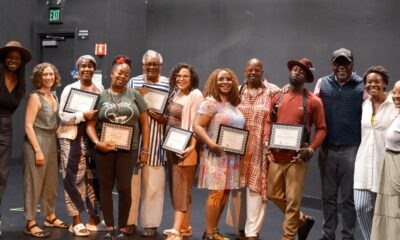
BLACspace Cooperative Invites Bay Area to Experience Oakland’s Black Cultural Ecosystem Through a BLAC Map Tour + Party
-
 Uncategorized4 weeks ago
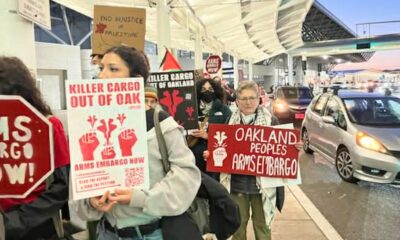
Oakland People’s Arms Embargo Coalition Demands End to Military Shipments Thru Oakland
-
 Activism4 weeks ago
Oakland Post: Week of September 16 – 22, 2026
-
 Lead Story2 weeks ago
Zakiya Jendayi Arrested, Locked Out of Home by Sheriff’s Deputies
-
 Community4 weeks ago
Two Looming Threats Every Alameda County Elder Should Know About
