
Lifestyle
Black Girls Ride: Women of Color Blaze New Trails in Motorsports
WASHINGTON INFORMER — Two hundred twenty-five unapologetic, fearless and trend-setting female bikers, brought together by Black Girls Ride (BGR), will ride nearly 200,000 miles, collectively, from more than 5 states for the largest African-American music and entertainment celebration in New Orleans July 5-7. The rides, powered by Indian Motorcycle and Polaris Slingshot© represent the growing emergence of African American and female motorcyclists in the country.

More than 200 Female Riders Set to Dispel Biker Stereotypes on Journey to New Orleans

By WI Interns/DTU Fellows
Two hundred twenty-five unapologetic, fearless and trend-setting female bikers, brought together by Black Girls Ride (BGR), will ride nearly 200,000 miles, collectively, from more than 5 states for the largest African-American music and entertainment celebration in New Orleans July 5-7. The rides, powered by Indian Motorcycle and Polaris Slingshot© represent the growing emergence of African American and female motorcyclists in the country.
Black Girls Ride Founder Porsche Taylor has made it her mission to increase the number of female motorcyclists across the nation, provide safe riding adventures and inspire riders through safety education and celebration.
“This is the ultimate girls’ trip,” BGR Magazine Founder Porsche Taylor said. “We are celebrating our femininity, individuality and showing the world that there’s an indescribable feeling of accomplishment and freedom that women get when they conquer their fears on a high-quality motorcycle.”
Taylor’s passion for riding mirrors that of legendary biker, Bessie Stringfield who crossed the country in the 1930s – solo on a motorcycle. Born in 1911, Stringfield’s life comes to life on the pages of the 1993 book Hear Me Roar: Women, Motorcycles and the Rapture of the Road written by Stringfield’s protégé and eventual biographer Ann Ferrar. Stringfield eventually became the first Black woman to ride a motorcycle in every one of the connected 48 states—a solo cross-country ride she undertook eight times during her lifetime, as well as riding abroad in Haiti, Brazil, and parts of Europe.

As reported in a 2018 Motorcycle Industry Council study, female motorcycle ownership doubled in the U.S. in the last decade, with nearly one in five motorcycle riders being female. Among African-American motorcycle owners, women dominate at 53 percent over men, according to another 2018 survey of American consumers.
The majority of the riders, some of which will be riding Indian Motorcycles or the three-wheeled Polaris Slingshot vehicles, will make the multi-state journey from five states: Texas, Florida, Alabama, Georgia and Louisiana. Other riders will come from as far as California. Riders will either make the joy ride solo or in a group. The 225 riders will bring their mission to the largest African-American female festival in the nation.
“Polaris has fueled the passion of riders, workers and outdoor enthusiasts for more than 60 years,” Polaris Marketing and Customer Engagement & Growth Manager Joey Lindahl said. “Indian Motorcycle and Polaris Slingshot are proud to support and celebrate the growing national sisterhood of riders as they blaze new trails in the industry.
“Women continue to break barriers and defy stereotypes in motorcycling, and the sport has brought us together like never before,” Taylor said. “Our fellow biker sisters come from all walks of life. We work in boardrooms and classrooms across the nation but on the free road, we are one. We are a family.”
This article originally appeared in the Washington Informer.












Business
Four Tips to Help You Plan a Holiday “Staycation”
“A great staycation starts when you treat your hometown like a destination – book one ‘anchor’ experience, stay somewhere that changes your scenery, and leave room for a little spontaneity,” said Steve Orens, President of FROSCH by Chase Travel, a leading travel agency. “My favorite staycation tip is to make it easy on yourself: choose a walkable area, plan one highlight each day, and let the hotel do the heavy lifting – warm beds, quick breaks, and fewer logistics.”


Holiday travel can be exciting, but between costs, crowded airports and packed schedules, sometimes the idea of staying home can be much more appealing.
If you still want to get away without the hassle of an actual getaway, consider a holiday staycation.
By remaining close to home, you can experience your city from a fresh perspective without the stress of a long trip. Whether you book a night at a local hotel, check out a new neighborhood or just finally get around to seeing that landmark attraction that’s been on your to-do list, you can make staying at home feel like a real getaway.
Here are four tips you can use to create an amazing holiday at home this season:
1. Treat your hometown like a destination
One common theme surrounding area attractions is that they’re more likely to be packed with tourists than locals. If that popular museum, tour or other institution is always “there,” it can be easy to avoid it and say you’ll get there eventually.
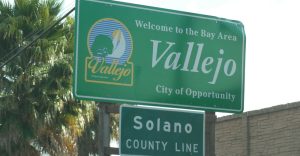
A staycation provides a great opportunity to approach those kinds of places like a tourist. Start by making a short list of places or experiences you’ve always wanted to try but never seem to prioritize. You might include a museum, holiday market, historic site, restaurant or neighborhood, or you might attend a holiday-related performance that’s an annual late fall or winter tradition in your area.
“A great staycation starts when you treat your hometown like a destination – book one ‘anchor’ experience, stay somewhere that changes your scenery, and leave room for a little spontaneity,” said Steve Orens, President of FROSCH by Chase Travel, a leading travel agency. “My favorite staycation tip is to make it easy on yourself: choose a walkable area, plan one highlight each day, and let the hotel do the heavy lifting – warm beds, quick breaks, and fewer logistics.”
2. Spend the night away
A hotel stay can provide a change of scenery that makes you feel like you’re enjoying a getaway.
Consider a traditional hotel, bed and breakfast or rental property where you can walk to restaurants, shopping, entertainment or holiday activities. An upscale hotel can also be the centerpiece of your staycation, allowing you to enjoy fine dining, a fitness center, spa services or other on-site experiences.
If you want a quieter, more relaxed experience, find a hotel “off the beaten path,” but still close to home, to enjoy the rhythms and sounds of nature.
3. Be flexible
If your schedule allows, plan your staycation for a weekday or less crowded period — like the days between Christmas and New Year’s Eve — rather than a peak weekend. Hotel rates in the middle of the week tend to be cheaper, and it might be easier to grab a restaurant reservation or performance tickets. Locations might be less crowded as well during the week, making it easier to get around.
Book some experiences in advance to save money but stay open to spontaneous opportunities once you arrive. You might find some great last-minute deals.
4. Try something new
Even if you think you’ve seen everything your hometown has to offer, there’s always something new to explore or discover.
Check out a neighborhood you usually drive through and visit the local shops and other businesses. You can also try a new cuisine at a neighborhood restaurant or kitchen.
Sometimes what’s old can be new again during the holiday season, so if you want to go back to your favorite restaurants and other popular spots, do so with fresh eyes. Order from the eatery’s holiday menu or take a walk when lights, decorations and seasonal programming transform many communities.
Other helpful tips
Although staying at home can eliminate major travel costs, expenses can still add up quickly. Make a staycation budget and then consider ways to help keep costs down.
“A ‘smart’ staycation is one you can pay for comfortably: choose dates with better rates, book flexible options, and keep a small buffer for surprises,” added Orens. “The goal of a staycation is a real reset. Even if you’re close to home, give yourself permission to unplug and find moments to treat yourself – say yes to room service, a spa hour, or a new restaurant you’ve been saving for ‘someday.’”
If you have rewards points from credit cards or loyalty programs, put them toward your hotel to get a free or cheaper night’s stay. Local museums, cultural institutions and attractions often have resident discounts, reduced-price admission days or seasonal offers. Community calendars can provide information about free or low-cost events like holiday concerts, light displays, markets, park activities and other events. If a performance doesn’t normally sell out, wait until the day before or day of to buy tickets, as prices are often reduced and you can find great seats.
With a little creativity, you might find everything you’d want in a holiday vacation. You can enjoy good food, new experiences and an escape from your daily routine – all right at home.
For more financial health tips, visit https://www.chase.com/travel/guide.
For informational/educational purposes only: Views and strategies described in this article or provided via links may not be appropriate for everyone and are not intended as specific advice/recommendation for any business. Information has been obtained from sources believed to be reliable, but JPMorgan Chase & Co. or its affiliates and/or subsidiaries do not warrant its completeness or accuracy. The material is not intended to provide legal, tax, or financial advice or to indicate the availability or suitability of any JPMorgan Chase Bank, N.A. product or service. You should carefully consider your needs and objectives before making any decisions and consult the appropriate professional(s). Outlooks and past performance are not guarantees of future results. JPMorgan Chase & Co. and its affiliates are not responsible for, and do not provide or endorse third party products, services, or other content.
Deposit products provided by JPMorgan Chase Bank, N.A. Member FDIC. Equal Opportunity Lender.
© 2026 JPMorgan Chase & Co.


To enlarge your view of this issue, use the slider, magnifying glass icon or full page icon in the lower right corner of the browser window.

Black History
Listening as a Lifeline: A Doula’s Witness to Black Maternal Health
OAKLAND POST — Maternal mortality and pregnancy-related mortality use different time frames and methods and are not interchangeable. Finalized 2024 CDC data recorded 649 maternal deaths nationally. The overall rate was 17.9 deaths per 100,000 live births, but for non-Hispanic Black women it was 44.8, compared with 14.2 for White women and 12.1 for Hispanic women.
Word Count: 1058
Note: Client A, B & C, names are withheld for privacy; these accounts reflect my recollections as their Doula.
Client A rocked her hips on a birthing ball, surrounded by pale wood and warm textiles in a softly lit Scandinavian-style office. I was her doula through a Southern California maternal health company combining nurse-led care, technology, and wraparound support.
She was a healthy Black woman in her thirties. Her baby girl was doing well; her partner took notes as we discussed labor and advocacy.
Then we turned to their chosen hospital. I knew it well—and remembered a phrase from another client’s experience: “Policy of Sovereignty.”
Client B had been told she needed a repeat cesarean as a precaution, though the reasoning was unclear. Her obstetrician, who performed her first cesarean two years earlier, had assured her throughout pregnancy that she was healthy, healed, and ready for a vaginal birth. We asked staff to review her chart, consult her obstetrician, and reconsider immediate surgery. Instead, they invoked the “Policy of Sovereignty.”

The physician on duty, we were told, had final authority, regardless of her established care plan. I asked whether an ultrasound or reassessing the baby’s position could offer clarity. Cesareans can be lifesaving. But were Client B’s history, informed consent, and circumstances guiding this decision—or was routine overriding individualized care? We kept asking for her obstetrician. Beneath every request was a deeper question: Was she being heard?
The Numbers Behind the Stories
Statistics arrive in clean columns. The experiences behind them do not.
Maternal mortality and pregnancy-related mortality use different time frames and methods and are not interchangeable. Finalized 2024 CDC data recorded 649 maternal deaths nationally. The overall rate was 17.9 deaths per 100,000 live births, but for non-Hispanic Black women it was 44.8, compared with 14.2 for White women and 12.1 for Hispanic women.
In California, Black birthing people experienced 56.5 pregnancy-related deaths per 100,000 live births during 2020–2022—3.8 times the White rate and four times the Asian rate.
As a doula serving Los Angeles and San Bernardino Counties, I see faces behind those numbers. I remember concerns raised softly, then firmly, then desperately. I am tired of watching Black families enter spaces meant to protect them, only to discover they must defend themselves while laboring, bleeding, trembling, or recovering.
Returning to Client A
Client A’s labor stretched nearly 48 hours. As her condition worsened, she, her partner, and I asked whether a cesarean should happen sooner. A provider questioned my place as a doula, then said she was next.
Six more hours passed.
She entered surgery visibly ill with a serious uterine infection, her baby malpositioned and stuck. Her partner later recalled the provider saying, “This baby would never have made it through the birth canal.”
Those words landed like a blow. Our urgency had been treated as ignorance. With Client B, we questioned why surgery was inevitable. With Client A, why it was delayed. Doula advocacy is not about one kind of birth. It is about informed consent, individualized care, and timely action. Hospital routine should never outweigh the person carrying the risk.
Survival Cannot Be the Standard
The Black maternal health crisis includes unequal care, untreated conditions, racial bias, delayed referrals, poor communication, and inadequate postpartum support. It is about birth plans respected only until a hospital becomes less busy and postpartum care that asks whether a mother survived, not whether she has what she needs to recover.
Survival cannot be the standard. Technology can support care, but it cannot replace human connection. An algorithm cannot detect fear in a patient’s eyes, and a mission statement alone cannot ensure adequate staffing or culturally responsive care.
The Story of Client C
Before I arrived, I heard the chaos through Client C’s phone. Staff struggled to locate her baby’s heartbeat on an external monitor as her fear and blood pressure rose. I pleaded for an internal electrode before surgery.
“There’s not enough time,” a nurse said.
“I would like to wait for my doula,” Client C called out.
But she was medicated, hurried through consent, and wheeled away while I listened.
In the operating room, after a shift change, another nurse placed an internal electrode and said, “The previous monitor wasn’t working.”
No one responded.
According to her father, the obstetrician avoided eye contact: “We need to move forward.”
Surgery may still have been necessary; that was not mine to determine. But if faulty equipment helped create the emergency, the family deserved acknowledgment and explanation—not silence. No family should have to wonder whether major surgery followed an unavoidable crisis or a machine failure no one recognized in time.
From Prevention to Accountability
After supporting nearly 100 families, I have learned that danger often begins before admission. I have urged clients to seek care—and heard why they feared returning: dismissed pain, harsh words, shame for asking questions.
Care cannot be holistic where Black families do not feel safe enough to speak or return. Representation matters, but providers of color cannot repair inequity alone. They need adequate staffing, mentorship, culturally responsive training, reliable equipment, and colleagues that are reflective of all the aforementioned. It’s not the Black providers job to care for just the Black patients, everyone should have the same goal.
The Momnibus Act, California’s Medi-Cal doula benefit, the Transforming Maternal Health Model and the Perinatal Equity Initiative require more than promises; they need sustained funding, reliable reimbursement and accountable implementation.
Birth should be sacred. Yet too many Black birthing people arrive carrying the burden of proving their pain is real. A doula can listen, educate, comfort, and advocate—but cannot repair a system that refuses to listen. The true measure of progress is what happens when a Black birthing person says, “Something is wrong.”
Are they believed? When equipment fails, is that failure acknowledged? Do families leave not merely alive, but safe, respected, supported, and whole?
Until those answers are consistently yes, California’s maternal health success story remains unfinished.
About the Author
Antoinette Stewart-Eneh is a mother of two, holistic maternal wellness advocate, and birth and postpartum doula who has supported families since 2019. She serves as program operations coordinator for Frontline Doulas, a volunteer client coordinator with the Joy in Birthing Foundation and a childbirth educator in South Los Angeles. She is studying to become a midwife and lactation educator.


OP-ED: The Black Church Writes AI’s Next Chapter

OP-ED: The Black Church Writes AI’s Next Chapter

WCCUSD Joins Statewide Organic School Food Purchasing Cooperative

Democrats, Community Groups Back Measure EE to Change How Oakland Is Governed

Four Tips to Help You Plan a Holiday “Staycation”

Veterans Housing Project Proposed for South Richmond
PRESS ROOM: Transformative Justice Coalition 2026 Voting Rights Champion Awards Reception ‘Yesterday Is Today: The Battle For Voting Rights

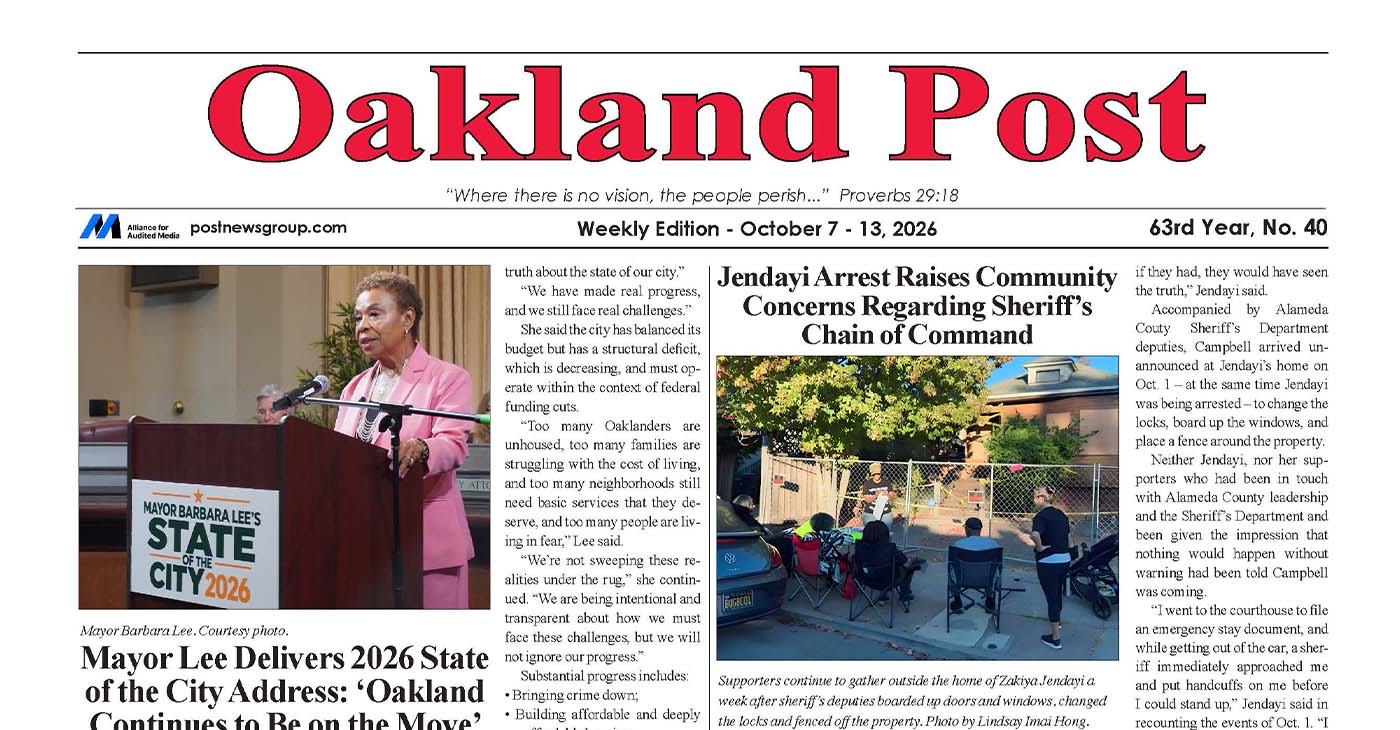
Mayor Lee Delivers 2026 State of the City Address: ‘Oakland Continues to Be on the Move’

Oakland Awarded More than $14 Million in State Funding

Jendayi Arrest Raises Community Concerns Regarding Sheriff’s Chain of Command

Marin County Supes Expand Small Business Options with Home Kitchen Pilot Program

Allen Temple Baptist Church Hosts Free Prostate Cancer Screenings on Oct. 17

AC Transit Labor Unions Back Director Joel Young

Locals Can Get Locally Grown Produce Delivered Through Urban Tilth

‘ICE-Free Marin’ Supporters Press Supervisors as County Drafts Enforcement Restrictions

Misnamed ‘Parent’ PAC Seeks to Influence Oakland School Board Elections

Oakland Post: Week of September 2 – 8, 2026

Oakland Post: Week of September 9 – 15, 2026

Richmond Tiny House Village Farm & Garden Set to Open Gates on Sept. 26

Poll: Becerra Widens His Lead Over Hilton; Californians Split on Wealth Tax

Latest Massacre in Haiti Reveals Cruelty U.S. Deportations

County Office of Education Says OUSD Finances Are Getting Healthier, Materially Stronger

OPINION: Nolan Wells’ Death One of Several Signifying Racial Terror Lives on in U.S. South

Mayor Lee Announces $1 Million Kaiser Permanente Grant for Pilot Program to Address Homelessness, Clean Up Public Spaces throughout Oakland

BLACspace Cooperative Invites Bay Area to Experience Oakland’s Black Cultural Ecosystem Through a BLAC Map Tour + Party

Democratic Clubs Interview Candidates for Oakland School Board

Oakland People’s Arms Embargo Coalition Demands End to Military Shipments Thru Oakland

Oakland Post: Week of September 16 – 22, 2026

Zakiya Jendayi Arrested, Locked Out of Home by Sheriff’s Deputies

Two Looming Threats Every Alameda County Elder Should Know About

The Conversation With Al McFarlane 6/23/26

Media Monday 6/22/26

LIVE! ASK ALMA! — TUES. 6.23.26 7PM EST

Car Buying Secrets: 4 Hidden Checks Before You Sign!

Is This 550 HP Charger Worth YOUR Money? AutoNetwork Review

Celebrating Juneteenth – Frederick Douglass on education and resistance

LIVE! — ASK ALMA! — TUES. 6.19.26 7PM EST

Hyundai Ioniq 5 Parking, Safety, and 360 View #shorts

2025 Ioniq 5 New Wiper & Powerful Performance! #shorts

Electric SUV Range: Is 259 Miles Enough? #shorts

EV Charging: How Fast Can You Charge an Electric Vehicle? #shorts

Biometric Cooling… Messaging Seats…Come on! 2025 Infiniti QX80 Autograph 4WD

Charged Up: Witness the Magic of a Fully Electric Car! #shorts

Range Rover Sport PHEV Included…: See What’s Inside This Luxury SUV! #shorts

Invisible Hood View: Perfect Parking with X-Ray Vision! #shorts
-
 Economy3 weeks ago
Poll: Becerra Widens His Lead Over Hilton; Californians Split on Wealth Tax
-
 Business3 weeks ago
County Office of Education Says OUSD Finances Are Getting Healthier, Materially Stronger
-
 Business4 weeks ago
Mayor Lee Announces $1 Million Kaiser Permanente Grant for Pilot Program to Address Homelessness, Clean Up Public Spaces throughout Oakland
-
 Art3 weeks ago
BLACspace Cooperative Invites Bay Area to Experience Oakland’s Black Cultural Ecosystem Through a BLAC Map Tour + Party
-
 Uncategorized4 weeks ago
Oakland People’s Arms Embargo Coalition Demands End to Military Shipments Thru Oakland
-
 Activism4 weeks ago
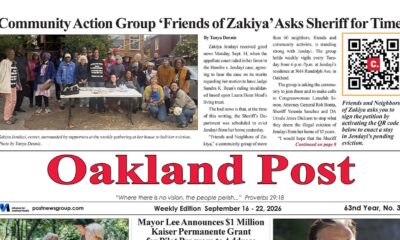
Oakland Post: Week of September 16 – 22, 2026
-
 Lead Story2 weeks ago
Zakiya Jendayi Arrested, Locked Out of Home by Sheriff’s Deputies
-
 Community4 weeks ago
Two Looming Threats Every Alameda County Elder Should Know About

1 Comment