
Bay Area
Black COVID-19 Patients in California Hospitalized 2.7 More Times Than Whites, Report Says

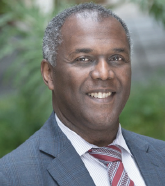
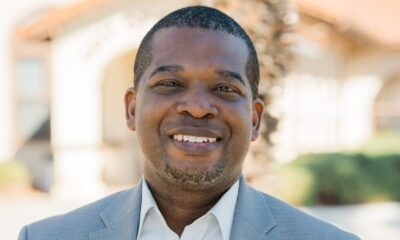
Dr. Stephen Lockhart
The cost of unequal healthcare is measured in human life, says Dr. Stephen Lockhart, the African American chief medical officer at Sutter Health, a non-profit healthcare network centered in Sacramento that serves 3 million people in 24 hospitals located across Northern California.
Lockhart made this chilling observation while talking about the growing body of evidence that is confirming that more minorities and disadvantaged people are getting infected, being hospitalized and dying from COVID-19 than white, middle class and wealthier Americans.
“The COVID-19 pandemic has ripped a Band-Aid off of the structural inequities that exist within our society. We must address these disparities right away,” Lockhart said, adding “We have a moral obligation to do so.”
Last month, Sutter Health’s Advancing Equity Team released a report in the journal Health Affairs, a publication that focuses on health policy. The study found that Black COVID-19 patients in California are 2.7 times more likely to be hospitalized than their Non-Hispanic, white counterparts. It also reported that they “tend to arrive at Sutter healthcare facilities sicker and with more severe symptoms.”

Even when Blacks in California have health insurance, the study revealed that African Americans may not seek testing and care until their illnesses become emergencies — when the likelihood of dying is highest. The report focused its research on areas in Northern California — including neighborhoods with historical African American enclaves like Hunters Point-Bay View in San Francisco and East Oakland in Alameda County.
Lockhart and the researchers at Sutter say the study points to how socioeconomic variables can factor into the high rates of African American infection, hospitalizations and death. For example, African Americans tend to travel farther to seek care hospital through emergency rooms than to visit health care centers located closer to their homes. And because a large number of Blacks work in “essential” jobs, they may not be able to get excused from work to get testing when they first start to experience COVID-19 symptoms.
For the study, Sutter collected data from patients ages 18 or older who had visited or been treated at Sutter Health facilities. Then, using its electronic health record (EHR) system, Sutter scientists broke the study’s subjects into two groups – suspected cases and confirmed cases. The researchers also applied the data to its Health Equity Index, a metric Sutter Health has used in a similar study on asthma, to come up with the findings of the COVID-19 report. The asthma study, much like this one, crystallizes the stubborn racial health gap that persists in California and around the country.
Across the United States, there have been a total of 1.7 confirmed million COVID-19 cases and over 100,000 deaths.
Black Americans represent nearly 13% of the total population. Yet, African Americans living in counties across the United States where the Black population ranges between 13% to 85% account for more than half of all COVID-19 infections, and they make up almost 60% of deaths. Researchers at Johns Hopkins University, Georgetown University, the University of Mississippi, and Emory University released those numbers in May.
So far, in California, there have been 110,583 confirmed cases and 4,213 deaths as of May 31. Blacks make up about 6% of the state population but account for more than 10% of all deaths. The majority of the deaths have been in Los Angeles County, where there have been 53,627 cases and 2,338 deaths. The Black death rate in Los Angeles county hovers around 12%.
“The real value of the study lies not in the disparities it reveals but in its utility to inform our work to develop solutions that will address the equity gaps we are seeing with programs such as community outreach and engagement in at-risk neighborhoods,” said Kristen M.J. Azar, a registered nurse, public health professional, lead author of the study and a research scientist at the Sutter Health Center for Health Systems Research.
According to Sutter, expanding health care coverage alone is not enough to close the health gaps in California between Blacks and whites and between the people at the bottom and at the top of our economic spectrum.
Health care institutions, the organization’s leadership believes, would have to rely on “community-based outreach and access to culturally competent care within the African American community” to arrest the problem.
“Additional research is needed to understand where healthcare disparities exist, what drives them, and what targeted interventions work best to address them. Sutter remains committed to continued advancement and leadership in this field,” the organization said in a statement.
“This pandemic underscores the need to develop innovative solutions that are specifically tailored to address the unmet needs of those at highest risk,” Azar concluded.

To enlarge your view of this issue, use the slider, magnifying glass icon or full page icon in the lower right corner of the browser window.


To enlarge your view of this issue, use the slider, magnifying glass icon or full page icon in the lower right corner of the browser window.
Activism
Oakland Post: Week of September 30 – October 6, 2026
The printed Weekly Edition of the Oakland Post: Week of September 30 – October 6, 2026

To enlarge your view of this issue, use the slider, magnifying glass icon or full page icon in the lower right corner of the browser window.



Mayor Barbara Lee Holds Special State of the City Address in Deep East Oakland

Practitioners of African Traditional Spirituality Offer Ancestral Reverence Ritual Oct. 31

It’s Time to Lose Weight Before the Holidays

Trader Vic’s Returns to Its Oakland Roots

Oakland Coal Terminal Backed by Trump Would Be Bigger, Dirtier Than Promised, Says Report

Opponents Smear Effective African American Transit Director as Election Nears

Oakland Post: Week of October 14 – 20, 2026

OP-ED: The Black Church Writes AI’s Next Chapter

OP-ED: The Black Church Writes AI’s Next Chapter

WCCUSD Joins Statewide Organic School Food Purchasing Cooperative

Democrats, Community Groups Back Measure EE to Change How Oakland Is Governed

Four Tips to Help You Plan a Holiday “Staycation”

Veterans Housing Project Proposed for South Richmond
PRESS ROOM: Transformative Justice Coalition 2026 Voting Rights Champion Awards Reception ‘Yesterday Is Today: The Battle For Voting Rights

Mayor Lee Delivers 2026 State of the City Address: ‘Oakland Continues to Be on the Move’

Misnamed ‘Parent’ PAC Seeks to Influence Oakland School Board Elections

Poll: Becerra Widens His Lead Over Hilton; Californians Split on Wealth Tax

Listening as a Lifeline: A Doula’s Witness to Black Maternal Health

Oakland Post: Week of September 9 – 15, 2026

County Office of Education Says OUSD Finances Are Getting Healthier, Materially Stronger

Richmond Tiny House Village Farm & Garden Set to Open Gates on Sept. 26

Mayor Lee Announces $1 Million Kaiser Permanente Grant for Pilot Program to Address Homelessness, Clean Up Public Spaces throughout Oakland

Latest Massacre in Haiti Reveals Cruelty U.S. Deportations

Zakiya Jendayi Arrested, Locked Out of Home by Sheriff’s Deputies

OPINION: Nolan Wells’ Death One of Several Signifying Racial Terror Lives on in U.S. South

Doulas Are Helping Black California Moms Navigate Pregnancy–Even as High Mortality Rates Persist

BLACspace Cooperative Invites Bay Area to Experience Oakland’s Black Cultural Ecosystem Through a BLAC Map Tour + Party

Oakland Post: Week of September 16 – 22, 2026

Oakland People’s Arms Embargo Coalition Demands End to Military Shipments Thru Oakland

Democratic Clubs Interview Candidates for Oakland School Board

The Conversation With Al McFarlane 6/23/26

Media Monday 6/22/26

LIVE! ASK ALMA! — TUES. 6.23.26 7PM EST

Car Buying Secrets: 4 Hidden Checks Before You Sign!

Is This 550 HP Charger Worth YOUR Money? AutoNetwork Review

Celebrating Juneteenth – Frederick Douglass on education and resistance

LIVE! — ASK ALMA! — TUES. 6.19.26 7PM EST

Hyundai Ioniq 5 Parking, Safety, and 360 View #shorts

2025 Ioniq 5 New Wiper & Powerful Performance! #shorts

Electric SUV Range: Is 259 Miles Enough? #shorts

EV Charging: How Fast Can You Charge an Electric Vehicle? #shorts

Biometric Cooling… Messaging Seats…Come on! 2025 Infiniti QX80 Autograph 4WD

Charged Up: Witness the Magic of a Fully Electric Car! #shorts

Range Rover Sport PHEV Included…: See What’s Inside This Luxury SUV! #shorts

Invisible Hood View: Perfect Parking with X-Ray Vision! #shorts
-
 Economy4 weeks ago
Poll: Becerra Widens His Lead Over Hilton; Californians Split on Wealth Tax
-
 Black History3 weeks ago
Listening as a Lifeline: A Doula’s Witness to Black Maternal Health
-
 Business4 weeks ago
County Office of Education Says OUSD Finances Are Getting Healthier, Materially Stronger
-
 Lead Story3 weeks ago
Zakiya Jendayi Arrested, Locked Out of Home by Sheriff’s Deputies
-
 Black History4 weeks ago
Doulas Are Helping Black California Moms Navigate Pregnancy–Even as High Mortality Rates Persist
-
 Art4 weeks ago
BLACspace Cooperative Invites Bay Area to Experience Oakland’s Black Cultural Ecosystem Through a BLAC Map Tour + Party
-

 Business4 weeks ago
From Historic Memories to New Possibilities: Oakland Celebrates Coliseum 60
-
 Community4 weeks ago
Asm. Corey Jackson Announces Launch of 24-Hour Childcare in His District
