
Oakland
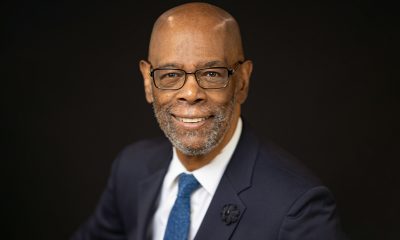
Benjamin James Yerger, 82

Benjamin James Yerger
December 8, 1930 -February 5, 2014
Ben died peacefully after being ill for several years. He was born in Hope, Arkansas to his parents Chester H. Yerger Sr. and Naomi L. Reddix Yerger. Ben graduated from Henry Clay Yerger High School, named after his grandfather who was the first teacher (in 1886). Ben’s grandmother, Ella J. Yerger, left her home on a Choctaw reservation to teach in the school, and later married Henry Clay. Together they inspired Ben’s lifelong devotion to educating others. Ben’s mother and aunts all taught at the school which was the center of his educational and cultural life. After graduating from high school with high honors in 1948, Ben entered Philander Smith College in Little Rock, Arkansas, on a music scholarship. He was also an avid football player in college. Ben graduated from Philander Smith in 1951 with majors in biology and chemistry.
After finishing college, Ben went to work in Malvern, Arkansas, as a science teacher and the football coach. Although he had intended to practice medicine like his uncle John Yerger, and was the first black admitted to the University of Arkansas’ School of Medicine, the sudden and tragic death of his twin brother led Ben to change his plans and travel to California. He moved to Richmond, California, where his older brother Chester lived with his wife Willie Mae and their three children. Ben worked for the Richmond post office from 1953 to 1955. He attended graduate school at San Francisco State in 1955-56 where he studied genetics. In 1956, Ben left school to become the first African American employed at the Chevron Research Laboratory (formerly California Research of Standard Oil) where he worked on the team that developed multi-viscosity oil and other projects until 1963. He met Bobbey Walker at SF State and they were married in 1957 and had two children, Valerie and Benjamin Jr.

After being inspired by a Malcolm X speech and talking directly with him in 1962, Ben decided to return to SF State and go into education, which he had always loved. He completed his master’s program in molecular biology, educational research, behavioral sciences and genetics in 1963.
An active participant in the War on Poverty Program in the 1960s, Ben worked with disadvantaged minority youth. Ben worked for the California Employment Services Department and then joined the Parks Job Corps Center in Pleasanton, California, as a teacher, supervisor, counselor, and curriculum developer (1965-66). He enjoyed working with disadvantaged students often from the South, and he made lifelong friends with other teachers. After losing confidence in the Job Corps because of its placement of its graduates in the military, Ben taught science, mathematics and history at Stanley Junior High School in Lafayette, California, and then worked at the Far West Lab on a National Science Foundation project on the “new science curricula” in public high schools.
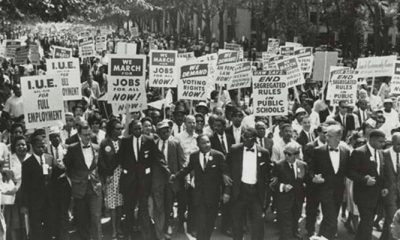
In 1968, Ben served as a consultant at Merritt College campus, located on the Old Grove Street site in Oakland, where he helped develop the first organized Black Studies course in the US (except for courses at Black Colleges in the South). With his experience working at Merritt Community College, Ben became the special assistant to Dr. Norvel Smith, who was the first black president of a California community college (Merritt). Ben served as a student ombudsman and became Director of Community Services (1969-73). He was the school liaison with a number of student groups, including the Black Panther Party and the Students for a Democratic Society, and he was responsible for keeping the peace and guns off the campus. In 1969, he was involved in making Merritt College the site of the country’s first organized department of Black Studies.
In the fall of 1970, Ben was recruited to the Ph.D. program in higher education at the University of California Berkeley, where he worked with his mentor, Professor Dale Tillery. In his doctoral class, he met Charlene Harrington. After both finished the doctoral program in 1975, they married in 1976 and made their home in the Berkeley hills for next 38 years. Ben won the California Association of Community Colleges dissertation award of the year for 1976.
After the Peralta Community College District decided to move Merritt College to the Oakland Hills with Dr. Norvel Smith as president, student activists demanded that the Grove Street campus remain open with Ben as president. In 1971, Ben was appointed president of the Grove campus by the Peralta board. Ben was quoted in the UCB Alumni report (1990): “I found it an exciting period in which to be involved. It was the era of student expression – a time when students were directly involved in campus decision-making. Schools were examining their institutions and trying to accommodate needs expressed by student unrest.” Ben’s efforts in working with students and developing a plan for North Peralta College earned him praise from community college organizations and the local media, as well as the 1971 Outstanding Educators of American Higher Education Award.
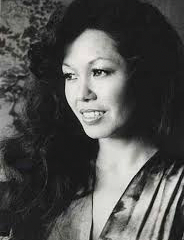
After the Peralta board changed its mind about keeping the Grove Street campus open, Ben returned to his position as Director of Community Services, Student Ombudsman, and Administrative Assistant to Dr. Smith at the new Merritt campus (1971-1976). In 1976, Ben became the Director of Community Services and program developer at the Peralta College for Non-Traditional Study (later called Vista College and now Berkeley City College). Working with President Dr. Nancy Tapper Hanawi, he supervised the Fruitvale Community Education Center and became Dean of Student and Community College Services (1978-85). Ben moved to a position as Dean of Student Services at the College of Alameda (1985-88) and returned to Merritt in student services and counseling until his retirement from Peralta Colleges in 1997. In 2002, he won the Philander Smith College Golden Alumnus Award with highest honors. He said at the time he wanted his epitaph to read: “An Educational Servant Who Did the Best He Could.”
After retirement, Ben returned to his lifelong passion of studying classical piano. Ben was actively involved in establishing the Henry Clay Yerger Museum in Hope, Arkansas, to honor his grandfather’s work. He also regularly attended the symphony, opera, and plays and loved to travel with his wife Charlene.
Those preceding Ben in death are: his parents Chester and Naomi Yerger; brothers Henry and Chester Yerger, Jr and his wife Willie Mae; his sister Ruth Ella Yerger; nephews Ronald Chester Yerger and Ralph Grant; and niece Ruth Yerger Coleman; and his first wife Bobbey Walker. Ben is survived by his wife Charlene Harrington; daughter Dr. Valerie B. Yerger and her former husband Craig Long Sr.; son Benjamin Yerger, Jr.; granddaughters Shannon Long (Phil Jackson) and Ainye Long (Saterah Moore); grandsons Craig Long, Jr. and Justin Long; great-granddaughter Tuesday Long-Jackson; sister-in-law Rita Harrington and husband Fred Schultz; niece Gloria Jean Grant; and cousins Rowena Reddix and Judy Smith.
A celebration of Ben’s life will be held in the Drawing Room at the Berkeley City Club at 2 pm on Sunday, March 2, 2014, located at 2315 Durant Avenue, Berkeley CA 94704. Friends are invited to attend and a reception will follow. Gifts may be made to the Ben Yerger Fellowship in the Graduate School of Education at UC Berkeley to support students from disadvantaged backgrounds to become educators at https://givetocal.berkeley.edu/egiving/index.cfm?Fund=FW8021000 or by mail to: Office of Development & External Relations, Graduate School of Education, 3615 Tolman Hall, #1670, UC Berkeley, Berkeley, CA 94720-1670. Or gifts may be sent to the East Bay Center for the Performing Arts, 339 11th St, Richmond, CA 94801, http://www.eastbaycenter.org/ .









Community
Mayor Barbara Lee Holds Special State of the City Address in Deep East Oakland
In partnership with Rise East and the 40×40 Council, Oakland Mayor Barbara Lee held a special 2026 State of the City East Oakland community conversation on Oct. 14. The purpose of bringing a State of the City address directly to the community was to celebrate East Oakland, highli

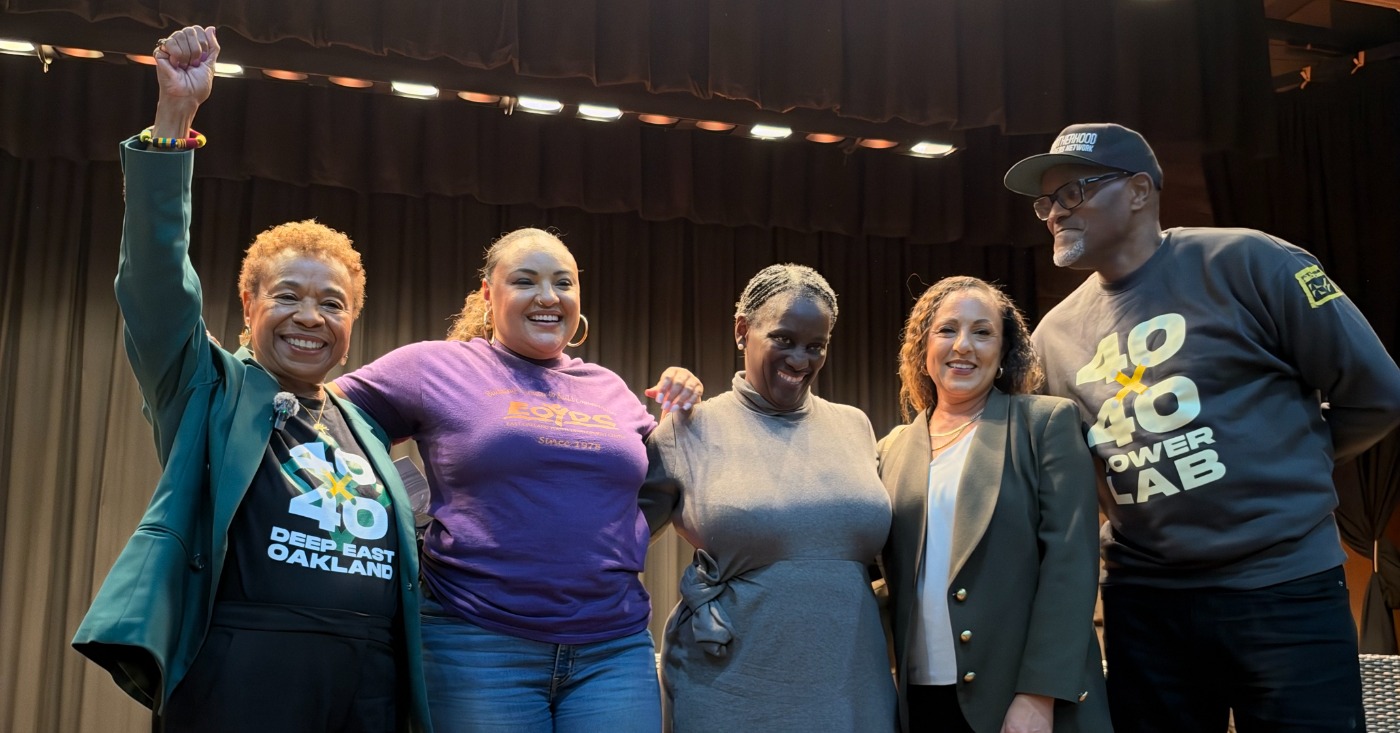
In partnership with Rise East and the 40×40 Council, Oakland Mayor Barbara Lee held a special 2026 State of the City East Oakland community conversation on Oct. 14.
The purpose of bringing a State of the City address directly to the community was to celebrate East Oakland, highlight the work underway, and look ahead to what neighbors, local businesses, youth, funders, community organizations, and partners can accomplish together.
Held at the Roots Community Health/Parker Elementary School Campus at 7929 Ney Ave., the event was emceed by special guest Mark Curry, Oakland native, comedian, and actor.
Lee shared how Rise East and the 40×40 Council have brought together the knowledge, relationships, and resources of people and organizations committed to East Oakland.
Residents bring lived experience, community organizations bring trusted relationships and philanthropy, and businesses bring resources and opportunity, she said, then turned to the government’s role: public investment, services and policy.
But, Lee intoned, City Hall has a responsibility to help connect those efforts.
“I am committed to listening to residents, working across departments and sectors, and helping open doors to opportunity. We must connect neighborhood priorities to the decisions we make about housing, economic development, safety, health and our young people.
City Hall “must be accountable for the results,” Lee said. “The measure of success is what families experience: greater stability, more opportunity and a stronger sense that they belong and have a future here.
“Tonight is an opportunity to listen to the leaders doing this work, learn what is making a difference and identify where we can do more together,” the mayor said.
Lee went on to moderate a ‘fireside chat’ on the theme: Building Oakland’s Future Together — From Neighborhood Investment to Community Empowerment with:
- Selena Wilson, CEO, East Oakland Youth Development Center
- Greg Hodge, CEO, Brotherhood of Elders
- Carolyn “CJ” Johnson, CEO, Black Cultural Zone
- Dr. Noha Aboelata, CEO, Roots Health Center
Mayor Barbara Lee’s media relations department provided this report.

Community
It’s Time to Lose Weight Before the Holidays
Licensed internist Dr. H. Geoffrey Watson has joined gastroenterologist Dr. Ralph Peterson at Oakland’s MacArthur GI to address the rising obesity epidemic. With U.S. obesity rates reaching 42.4%, the clinic offers supervised weight-loss programs and screenings for fatty liver disease. Treatments include dietary counseling and various medications, such as GLP-1 receptor agonists, which regulate digestion and appetite. As certain populations continue to be disproportionately affected by chronic health conditions, medical experts are highlighting new tools available to help patients reach their goals before the holiday season. Read more.
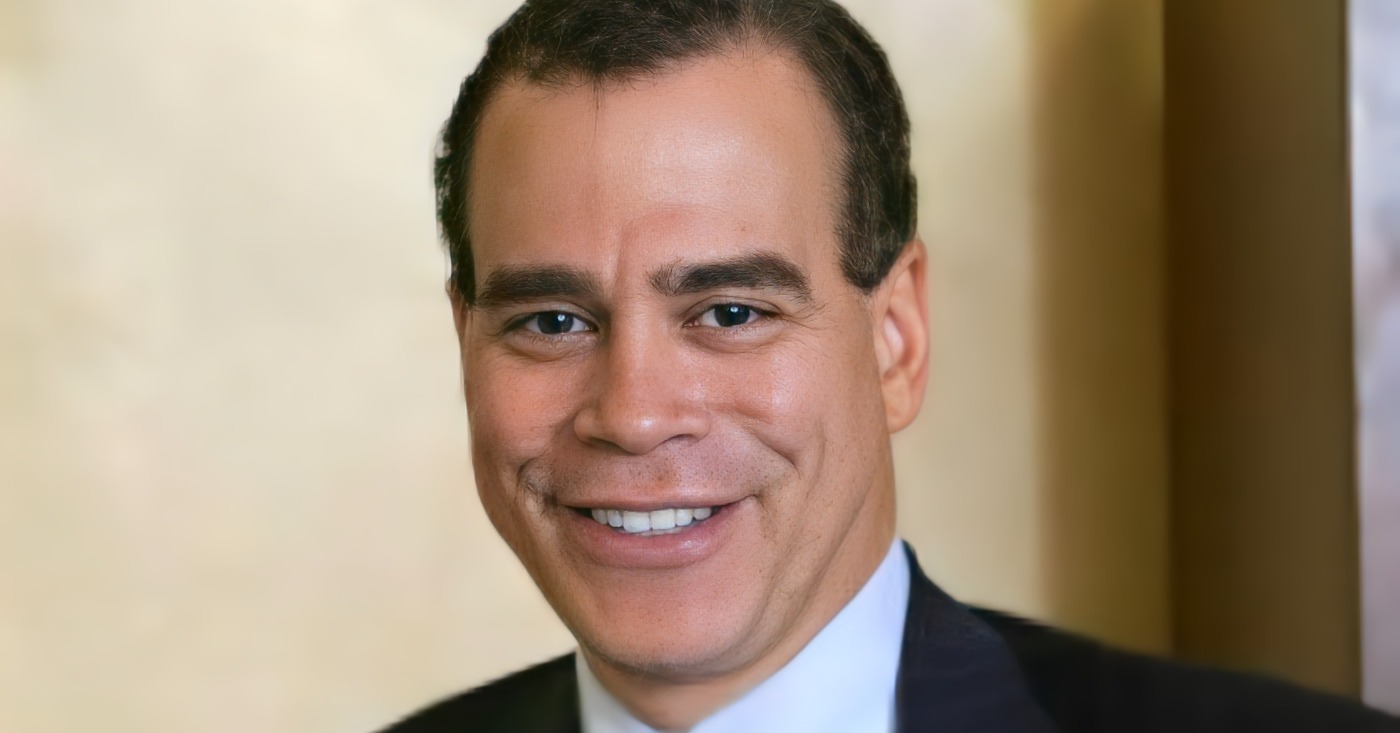
Dr. H. Geoffrey Watson, a licensed internist, has joined renowned gastroenterologist Dr. Ralph Peterson at MacArthur GI in Oakland to address obesity, provide supervised weight-loss programs including GLP-1 therapy, and screen for and treat fatty liver disease.
The Obesity Epidemic
Obesity is associated with numerous chronic health problems, including hypertension, diabetes, heart disease, sleep apnea, asthma, depression, joint disorders, fatty liver disease, and high cholesterol. Its causes include genetics, environment, stress, medication side effects, hormonal imbalances, and other factors.
Since 1999, the prevalence of obesity in the United States has risen from 30.5% to 42.4%. Childhood obesity rates are also climbing, with approximately 19.3% of children and adolescents now affected.
Measuring Obesity: Body Mass Index
Obesity is measured using a formula called the Body Mass Index (BMI). You can calculate your own BMI on most smartphones by searching “BMI calculator” and entering your height and weight. A BMI of 25 to 29.9 is classified as overweight, and a BMI of 30 or greater is classified as obese.
Populations Disproportionately Affected
Obesity affects certain populations at higher rates. Among U.S. adults, obesity prevalence is 49.9% in Black adults, 45.6% in Hispanic adults, 41.4% in White adults, and 16.1% in Asian adults.

Treatment Options
A variety of treatments are available for obesity, including dietary counseling, exercise programs, bariatric surgery, and anti-obesity medications.
Common oral medications include:
• Adipex (phentermine): A stimulant that works by suppressing appetite.
• Contrave (bupropion/naltrexone): A combination of an antidepressant and an anti-addiction medication that helps control appetite and cravings.
• Qsymia (phentermine/topiramate): A combination of a stimulant and an anti-seizure medication that reduces appetite and cravings.
GLP-1 Receptor Agonist Therapy
Glucagon-like peptide-1 (GLP-1) receptor agonists were originally approved to treat type 2 diabetes. GLP-1 is a hormone produced naturally by the body that regulates digestion, blood sugar, and appetite by communicating with GLP-1 receptor cells throughout the digestive tract. These medications reduce cravings, appetite, and food intake by influencing the hunger hormones ghrelin, which stimulates hunger, and leptin, which signals fullness.
What We Offer
Drs. Peterson and Watson provide FDA-approved tirzepatide injections, a GLP-1 receptor agonist medication indicated for weight management. Each patient receives a comprehensive history and physical examination to ensure the safety and appropriateness of the medication as part of an overall weight-loss protocol. Dr. Peterson also offers ultrasound screening for fatty liver disease.
We look forward to helping you reach your weight-loss goals and feel your best this holiday season.
H. Geoffrey Watson, M.D., runs the MacArthur GI Clinic at 10520 MacArthur Blvd., Oakland, CA. He can be reached at (510) 562-7467.
Business
Trader Vic’s Returns to Its Oakland Roots
Trader Vic’s, the internationally recognized brand and birthplace of the original Mai Tai, has officially returned to its roots in Oakland. Originally founded in 1934 on San Pablo Avenue before moving to Emeryville, the hospitality giant has launched Trader Vic’s Outpost at Oakland International Airport’s Terminal 2. The new full-service location offers travelers breakfast, lunch, dinner, and cocktails in a 108-seat space designed to celebrate the city’s status as a top national food destination. Visit the website to read more.
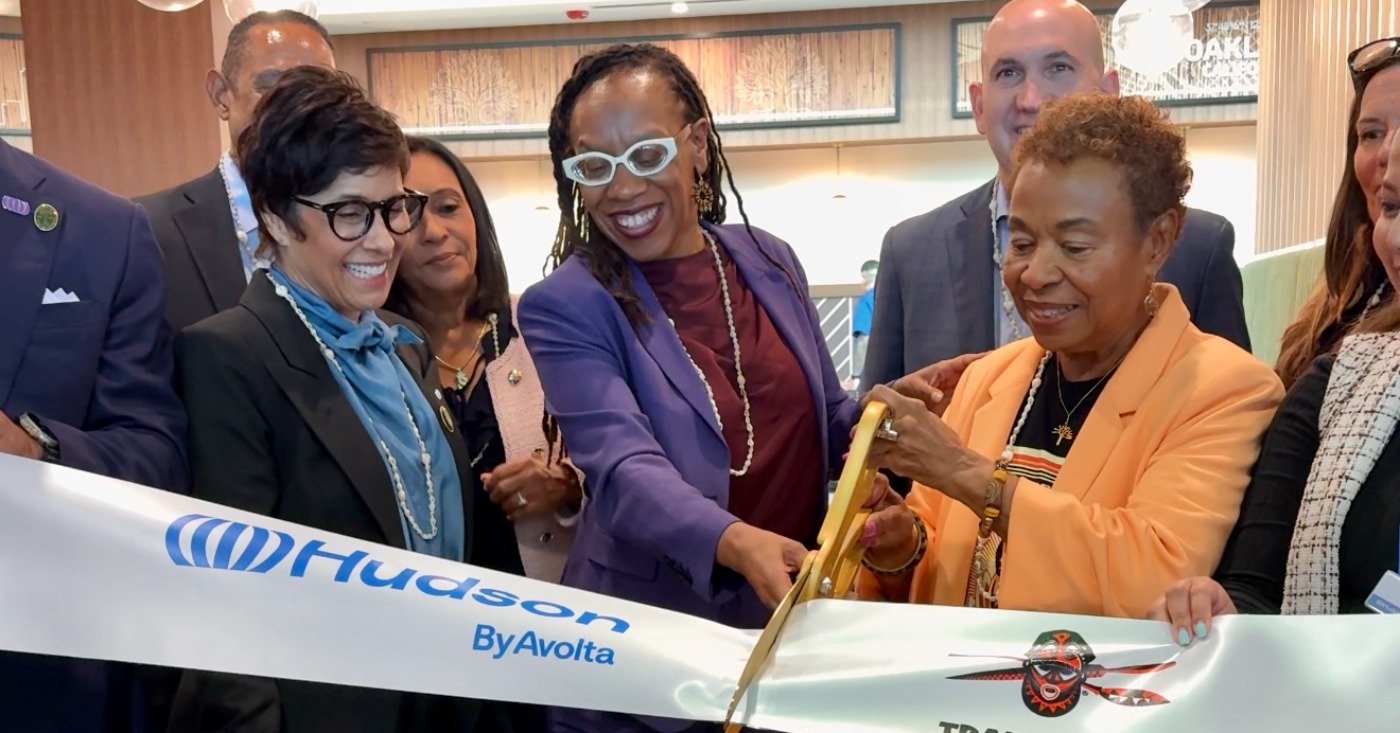
Oakland has always been a city of innovators, entrepreneurs, visionaries, and world-class hospitality. Trader Vic’s—the birthplace of the original Mai Tai – first opened in Oakland back in 1934 on San Pablo Avenue, long before becoming an internationally recognized global brand.
More than 50 years after it moved to Emeryville, Trader Vic’s is returning to its roots. Oakland Mayor Barbara Lee touts the return as another victory for Oakland.
“My administration is deeply committed to backing businesses like Trader Vic’s and Plum Market—partners who invest in our city, uplift our local workforce, and support thousands of local jobs,” Lee said.
The latest Trader Vic’s – called Trader Vic’s Outpost – is located at the Oakland International Airport in Terminal 2 near Gate 25 and had a soft opening in August.
With 108 dining seats, 28 bar seats and a counter for standing-room customers, travelers from around the world can have a full-service restaurant and bar experience or take-out for those with planes to catch.
Open from 6 a.m. to 10 p.m., breakfast, lunch, dinner, cocktails will be served.
Trader Vic’s returning to its roots confirms Condé Nast’s decision to name Oakland the #1 Food City in America two years in a row, and just earlier this month, ranked Oakland #6 on their list of Best Cities in the U.S.!
“The opening at OAK is incredibly meaningful for us,” said Rhett Rosen, CEO of Trader Vic’s Hospitality Group, according to the company website. “Trader Vic’s was born in the Bay Area, and this new location gives us the chance to welcome travelers with a taste of that original spirit before they take off. It brings together everything people love about Trader Vic’s — great cocktails, flavorful food, warm hospitality and a little sense of escape — in a place that connects Oakland to the world.”
Trader Vic’s is an Oakland institution and one of the region’s most recognizable hospitality brands, said Port of Oakland Director of Aviation Craig Simon on the web site.
“Travelers are increasingly seeking dining options that are memorable, locally rooted, and uniquely representative of the communities they are visiting. Trader Vic’s delivers all of that while providing a high-quality food and beverage experience for our guests. We are proud to welcome this hometown favorite to Terminal 2,”
The original Trader Vic’s in Oakland:
In 1934, with an investment of $500, Bergeron opened his initially small restaurant at 65th Avenue and San Pablo, serving comfort foods for lunch and dinner and beers and whiskeys. As his clientele grew, so did his restaurant, expanding space and menu options. After visiting this establishment, famed San Francisco Chronicle columnist Herb Caen proclaimed that the “best restaurant in San Francisco is in Oakland.”
There were as many as 25 franchises worldwide, including the U.S. Trader Vic’s is now headquartered in Martinez.


Mayor Barbara Lee Holds Special State of the City Address in Deep East Oakland

Practitioners of African Traditional Spirituality Offer Ancestral Reverence Ritual Oct. 31

It’s Time to Lose Weight Before the Holidays

Trader Vic’s Returns to Its Oakland Roots

Oakland Coal Terminal Backed by Trump Would Be Bigger, Dirtier Than Promised, Says Report

Opponents Smear Effective African American Transit Director as Election Nears

Oakland Post: Week of October 14 – 20, 2026

OP-ED: The Black Church Writes AI’s Next Chapter

OP-ED: The Black Church Writes AI’s Next Chapter

WCCUSD Joins Statewide Organic School Food Purchasing Cooperative

Democrats, Community Groups Back Measure EE to Change How Oakland Is Governed

Four Tips to Help You Plan a Holiday “Staycation”

Veterans Housing Project Proposed for South Richmond
PRESS ROOM: Transformative Justice Coalition 2026 Voting Rights Champion Awards Reception ‘Yesterday Is Today: The Battle For Voting Rights

Mayor Lee Delivers 2026 State of the City Address: ‘Oakland Continues to Be on the Move’

Misnamed ‘Parent’ PAC Seeks to Influence Oakland School Board Elections

Oakland Post: Week of September 2 – 8, 2026

Oakland Post: Week of September 9 – 15, 2026

Poll: Becerra Widens His Lead Over Hilton; Californians Split on Wealth Tax

County Office of Education Says OUSD Finances Are Getting Healthier, Materially Stronger

Richmond Tiny House Village Farm & Garden Set to Open Gates on Sept. 26

Listening as a Lifeline: A Doula’s Witness to Black Maternal Health

Latest Massacre in Haiti Reveals Cruelty U.S. Deportations

Mayor Lee Announces $1 Million Kaiser Permanente Grant for Pilot Program to Address Homelessness, Clean Up Public Spaces throughout Oakland

OPINION: Nolan Wells’ Death One of Several Signifying Racial Terror Lives on in U.S. South

Zakiya Jendayi Arrested, Locked Out of Home by Sheriff’s Deputies

BLACspace Cooperative Invites Bay Area to Experience Oakland’s Black Cultural Ecosystem Through a BLAC Map Tour + Party

Oakland Post: Week of September 16 – 22, 2026

Oakland People’s Arms Embargo Coalition Demands End to Military Shipments Thru Oakland

Democratic Clubs Interview Candidates for Oakland School Board

The Conversation With Al McFarlane 6/23/26

Media Monday 6/22/26

LIVE! ASK ALMA! — TUES. 6.23.26 7PM EST

Car Buying Secrets: 4 Hidden Checks Before You Sign!

Is This 550 HP Charger Worth YOUR Money? AutoNetwork Review

Celebrating Juneteenth – Frederick Douglass on education and resistance

LIVE! — ASK ALMA! — TUES. 6.19.26 7PM EST

Hyundai Ioniq 5 Parking, Safety, and 360 View #shorts

2025 Ioniq 5 New Wiper & Powerful Performance! #shorts

Electric SUV Range: Is 259 Miles Enough? #shorts

EV Charging: How Fast Can You Charge an Electric Vehicle? #shorts

Biometric Cooling… Messaging Seats…Come on! 2025 Infiniti QX80 Autograph 4WD

Charged Up: Witness the Magic of a Fully Electric Car! #shorts

Range Rover Sport PHEV Included…: See What’s Inside This Luxury SUV! #shorts

Invisible Hood View: Perfect Parking with X-Ray Vision! #shorts
-
 Economy3 weeks ago
Poll: Becerra Widens His Lead Over Hilton; Californians Split on Wealth Tax
-
 Business3 weeks ago
County Office of Education Says OUSD Finances Are Getting Healthier, Materially Stronger
-
 Black History2 weeks ago
Listening as a Lifeline: A Doula’s Witness to Black Maternal Health
-
 Lead Story2 weeks ago
Zakiya Jendayi Arrested, Locked Out of Home by Sheriff’s Deputies
-
 Art3 weeks ago
BLACspace Cooperative Invites Bay Area to Experience Oakland’s Black Cultural Ecosystem Through a BLAC Map Tour + Party
-
 Uncategorized4 weeks ago
Oakland People’s Arms Embargo Coalition Demands End to Military Shipments Thru Oakland
-

 Black History4 weeks ago
Doulas Are Helping Black California Moms Navigate Pregnancy–Even as High Mortality Rates Persist
-

 Community4 weeks ago
Two Looming Threats Every Alameda County Elder Should Know About
