
Bay Area
Among the Reasons COVID-19 is Worse for Black Communities: Police Violence

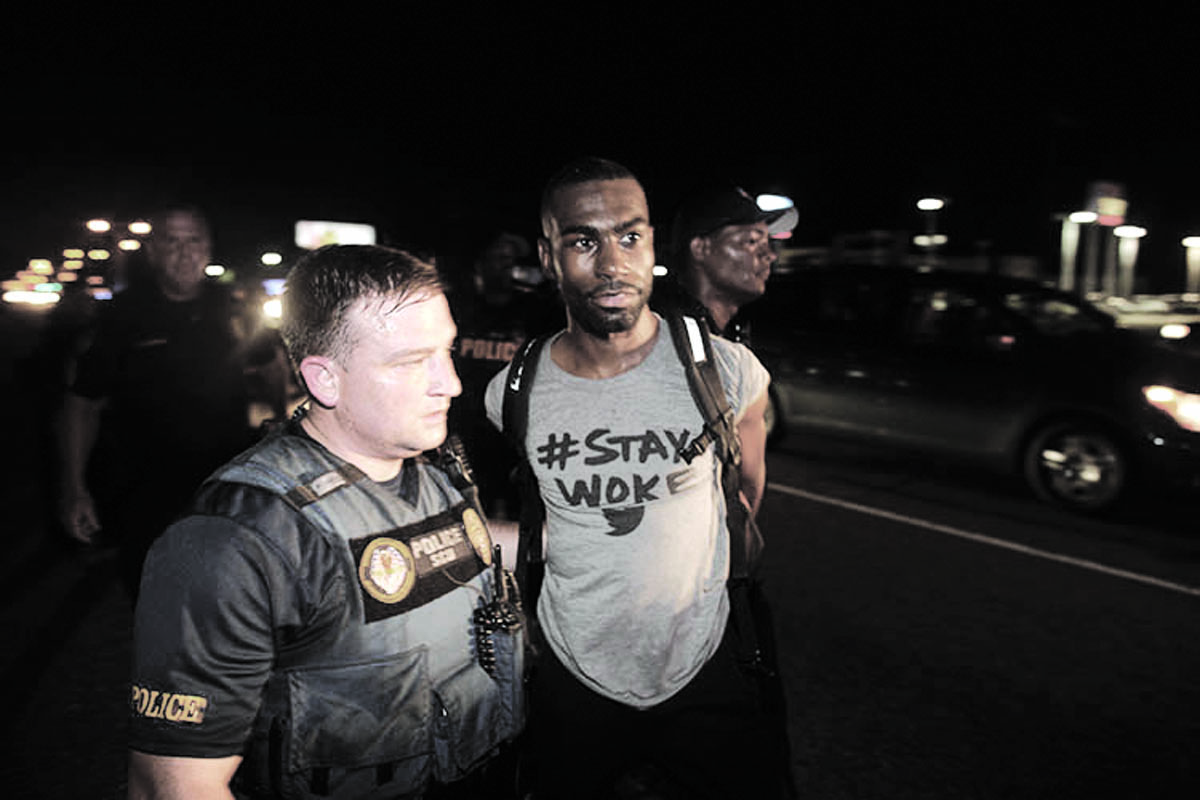
There are various reasons COVID-19 is killing Black people at six times the rate of white people, including a lack of access to health care, and poor environmental conditions in Black communities.
But one largely unexamined contributor to the disparity, according to a panel of UC Berkeley experts, is the trauma and stress caused by police violence in those communities, and the physical toll of that violence.
“There are levels of chronic stress associated with living in an environment that has more police violence, and the threat of that force on its residents,” said Denise Herd, a professor at the School of Public Health who recently examined how that stress can lead to disease in her paper “Cycles of Threat: Graham V. Connor, Police Violence and African American Health Inequities,” which will be published in an upcoming issue of the Boston University Law Review.
With the world still in the grips of the pandemic, there is no specific research relating COVID-19 cases to police violence, but Herd said the connection between the chronic stress caused by persistent police-related trauma, and diseases like asthma, diabetes, hypertension and heart disease, which has led to COVID-19 mortality, is clear.
“Those mental health issues often go untreated in African American communities and can lead to diseases that make them more compromised to COVID-19,” she added.
Another potentially complicating factor is that asking Black people, especially Black men, to wear masks, as many public health authorities are requiring, may invite unwarranted attention from police, who have falsely profiled Black men as criminals.
“It’s a corollary to the ‘hoodie’ argument from a few years ago, where it is not uncommon for racial minorities wearing hoodies to be considered a threat, while others freely wear them without fear of harassment,” said Osagie Obasogie, a Berkeley professor of bioethics.
“Everyday racism continues to be a more immediate concern to communities of color than a pandemic, so some people may decline to wear masks,” he added.
‘Two Americas, two epidemics’
Herd, who is also associate director of Berkeley’s Othering and Belonging Institute, pointed to an array of studies showing Black people are more likely to face poor treatment from law enforcement that includes being stopped, injured or even killed by police.
One study, conducted from 2001 to 2014, analyzed 683,000 injuries caused by police that prompted treatment in emergency rooms across the country. The data found that Black people were nearly five times more likely to experience police-related injuries than white people, and they also experienced a mortality rate from those injuries twice as high as white patients.
Moreover, Herd said the use of so-called Terry stops, or stop-and-frisk policies, that allow police officers to question, search or detain people they suspect are involved in criminal activity, have been used as a way to hyper-police Black communities, creating chronic stress that lowers a person’s resistance to disease.
Herd referenced data from the New York Civil Liberties Union that showed between 2004 and 2012, four million Terry stops were conducted predominantly on Black and Latino pedestrians. In 2011 alone, 90% of pedestrians stopped were either Black or Latino, and 20% of the time police used physical force.
Another study found that men who reported a high number of police stops in their lifetimes were also three times more likely to exhibit post-traumatic stress disorder symptoms and high levels of anxiety and stress.
There isn’t just one reason for the health problems in these communities, said Herd. Access to green spaces, affordable housing and other economic factors also play a role. But forms of discrimination and unfair treatment by law enforcement are linked with higher rates of disease in Black communities, she said.
In her paper, Herd pointed to research showing that in neighborhoods where pedestrians were more likely to be questioned by police, there was a prevalence of high blood pressure, diabetes, asthma and obesity; health outcomes proven to cause severe COVID-19 symptoms in patients infected with the disease.
“We don’t have all the data in yet, but it looks like it’s two Americas, two epidemics,” said Herd. “In the profile that we saw with affluent white people who had the disease first, it was because of international travel, and the cases tended to be within the older population. I don’t think that’s going to be true for the African American population. We do also see younger African American people dying.”
Wearing a face mask while Black
While wearing a face mask in public to stop the spread of COVID-19 may seem like common sense for some, for people of color, particularly Black men, wearing or not wearing a mask while out can be a double-edged sword.
Erin Kerrison, an assistant professor at Berkeley’s social welfare school who studies how law and legal institutions operate as social determinants of health, said that because of the distrust Black people have toward law enforcement, they may not wear masks in public to avoid being viewed as criminals.
“Due to the psychological harm and damage done in those stop-and-frisk encounters, and often the unwarranted harassment, there is a feeling that the police treat them as guilty until proven innocent,” Kerrison said.
For example, following the 2012 shooting and killing of Trayvon Martin, a young Black teenager walking around his Florida neighborhood, some people said the killing was justified because “he looked shady,” Kerrison said.
“What law enforcement views as a public-safety threat is deeply racialized,” said Kerrison. “So, it is a common practice for Black citizens to limit, if not altogether avoid, any sort of trigger that would lead to an encounter with a police officer.”
This Friday, Herd and Obasogie, along with other Berkeley public health experts, will host a live Berkeley Conversations video event, “Straight Talk: A Conversation about Racism, Health Inequities, and COVID-19.” It will be co-sponsored by the Othering and Belonging Institute and the School of Public Health.
Although she will not be present at the virtual event, Kerrison said she hopes the conversation extends the dialogue around the unique impact COVID-19 is having on communities of color.
“What’s important is to make sure the fullest truth does get out to as many people that will listen,” she said.


Activism
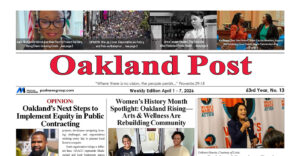
Oakland Post: Week of April 1 – 7, 2026
The printed Weekly Edition of the Oakland Post: Week of April 1 – 7, 2026

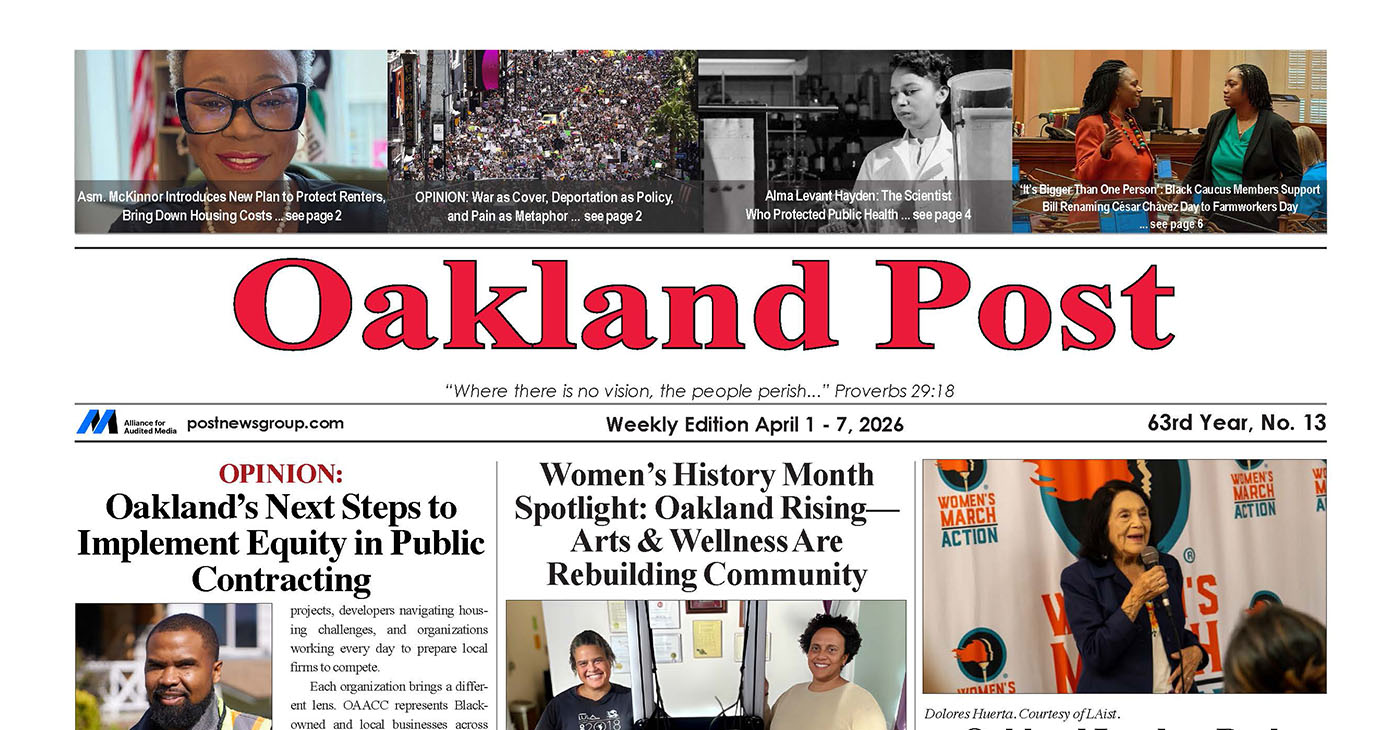
To enlarge your view of this issue, use the slider, magnifying glass icon or full page icon in the lower right corner of the browser window.

Activism
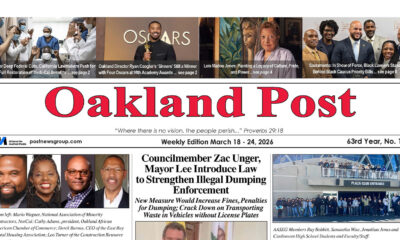
Oakland Post: Week of March 18 – 24, 2026
The printed Weekly Edition of the Oakland Post: Week of March 18 – 24, 2026
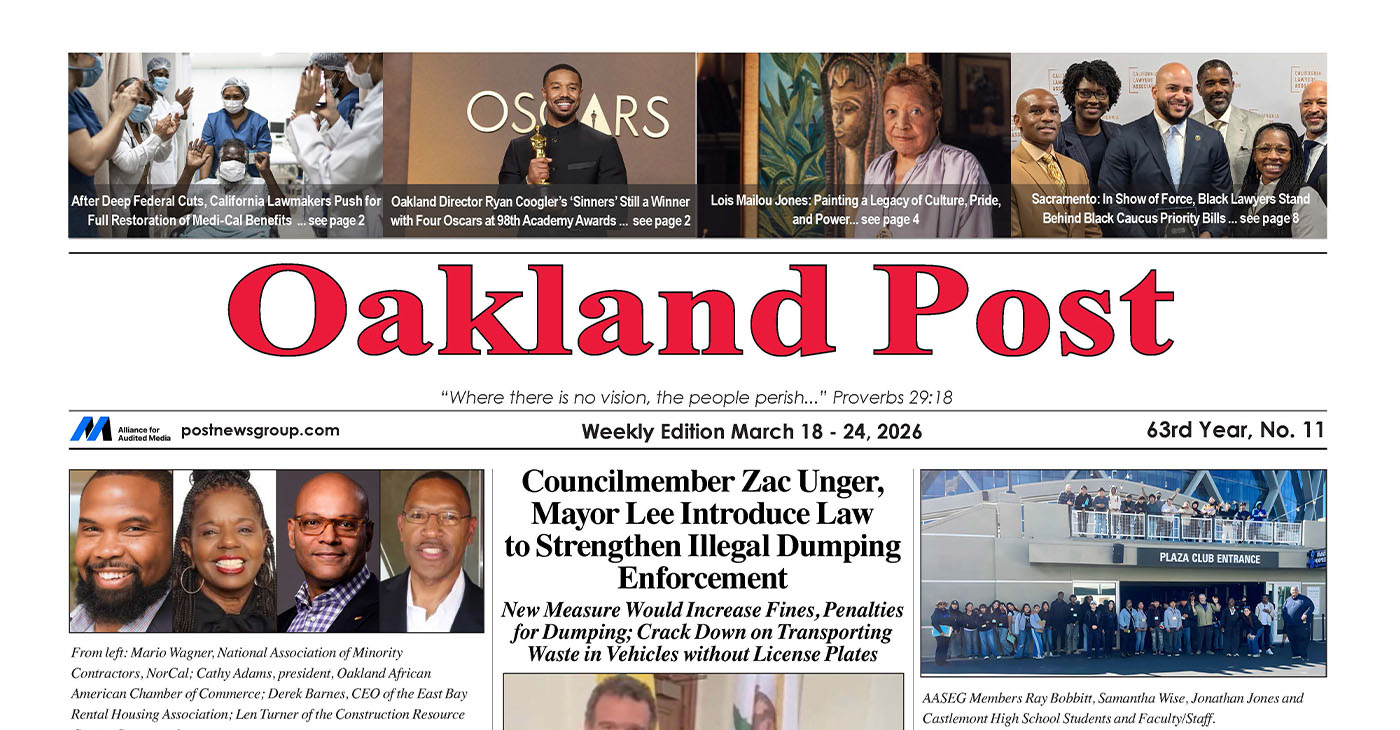
To enlarge your view of this issue, use the slider, magnifying glass icon or full page icon in the lower right corner of the browser window.
Activism
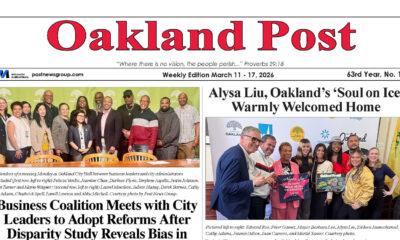
Oakland Post: Week of March 11 -17, 2026
The printed Weekly Edition of the Oakland Post: Week of March 11 – 17, 2026
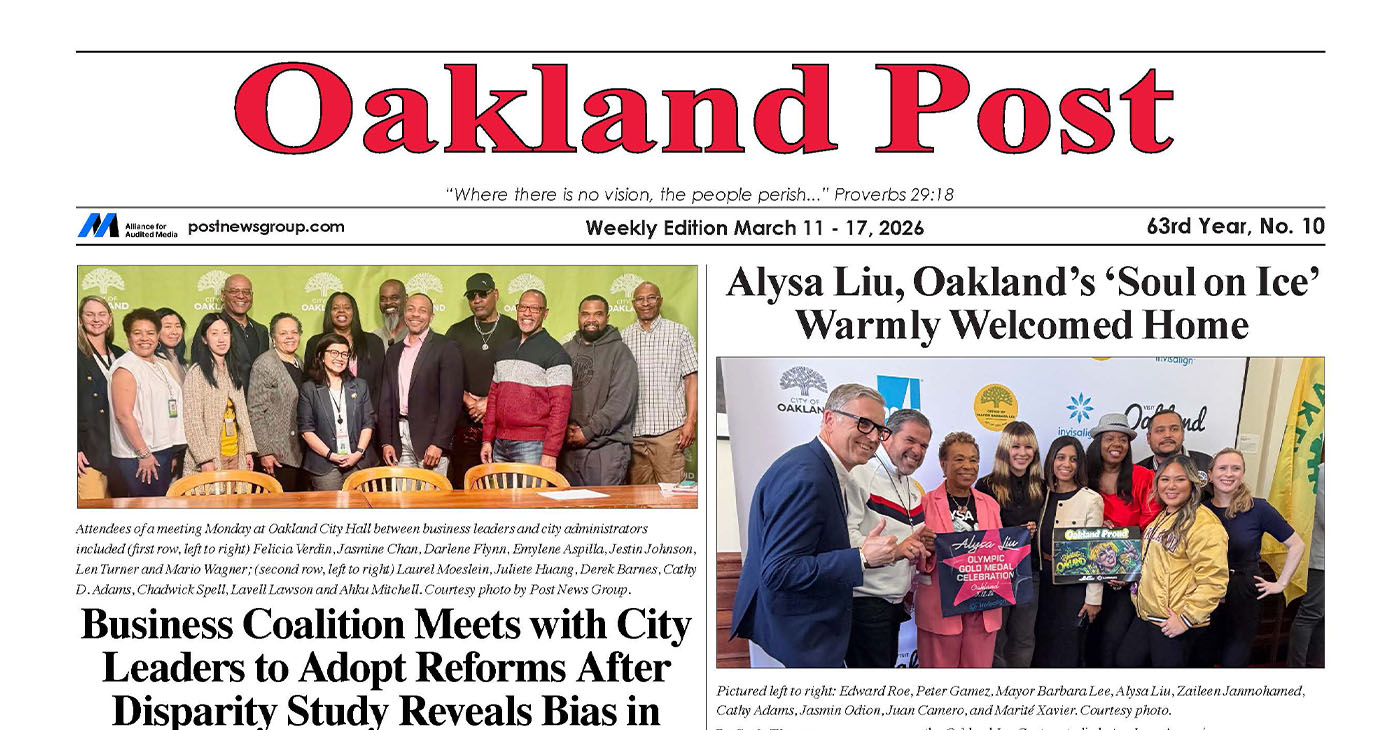
To enlarge your view of this issue, use the slider, magnifying glass icon or full page icon in the lower right corner of the browser window.

WORK FROM HOME
Home-based business with potential monthly income of $10K+ per month. A proven training system and website provided to maximize business effectiveness. Perfect job to earn side and primary income. Contact Lynne for more details: Lynne4npusa@gmail.com 800-334-0540


Oakland Post: Week of April 1 – 7, 2026

Black Artists in America, Installation Three Wraps at the Dixon Gallery and Gardens

Grief, Advocacy, and Education: A Counselor Reflects on Black Maternal Health

Future of Florida’s Black History Museum in Limbo

New Research Shows the Many Benefits of Early Learning

South Hampton K-8 Students Among Top 10 Finalists for Samsung’s ‘Solve for Tomorrow’ Competition

Cuba: No Negotiation with US on the President or Political System

Brooklyn Academy of Music Names Jamaican-Born Tamara McCaw as President

Trinidad & Tobego – U.S. Launches WhatsApp Channel for American Citizens in the Country

Oakland Post: Week of March 18 – 24, 2026

AI Innovation vs. Ethics and Environmental Impact

AI, Web3, and Digital Reparations

What If You Owned Your AI Agent?

Season 7, Episode 3 – January Reporter’s Roundtable 📱

Season 7, Episode 3 – January Reporter’s Roundtable

Reflecting on Black History Milestones in Birmingham AL

Oakland Post: Week of February 25 – March 3, 2026

PRESS ROOM: NBA Hall of Fame Nominee Terry Cummings Joins 100 Black Men of DeKalb County to Launch Victory & Values Initiative

Oakland Post: Week of March 4 – 10, 2026

Trump’s MAGA Allies are Creating Executive Order Plan to Steal the 2026 Midterms

U.S. manufacturing rebounds – how foundry services are adapting to rising demand

Poll Shows Support for Policies That Help Families Afford Child Care

Oakland Post: Week of March 11 -17, 2026

OP-ED: One Hundred Years of Black Workers Telling the Truth

Advancements in solar technology that are changing the way we power the world
Oakland Post: Week of March 18 – 24, 2026

Woman’s Search for Family’s Roots Leads to Ancestor John T. Ward – A Successful Entrepreneur and Conductor on the Underground Railroad

Financial Wellness and Mental Health: Managing Money Stress in College

COMMENTARY: Women of Color Shape Our Past and Future

PRESS ROOM: Civil Rights TV Launches in Selma as the World’s First 24/7 Civil Rights Television Network

Hyundai Ioniq 5 Parking, Safety, and 360 View #shorts

2025 Ioniq 5 New Wiper & Powerful Performance! #shorts

Electric SUV Range: Is 259 Miles Enough? #shorts

EV Charging: How Fast Can You Charge an Electric Vehicle? #shorts

Biometric Cooling… Messaging Seats…Come on! 2025 Infiniti QX80 Autograph 4WD

Charged Up: Witness the Magic of a Fully Electric Car! #shorts

Range Rover Sport PHEV Included…: See What’s Inside This Luxury SUV! #shorts

Invisible Hood View: Perfect Parking with X-Ray Vision! #shorts

AI Is Reshaping Black Healthcare: Promise, Peril, and the Push for Improved Results in California

ESSAY: Technology and Medicine, a Primary Care Point of View

Sanctuary Cities

The RESISTANCE – FREEDOM NOW

STATE OF THE PEOPLE: Freddie

ECONOMIC BOYCOTT DAY!!!!!

I told You So
-
 Activism3 weeks ago
Oakland Post: Week of March 11 -17, 2026
-
 Activism2 weeks ago
Oakland Post: Week of March 18 – 24, 2026
-
 Advice3 weeks ago
Financial Wellness and Mental Health: Managing Money Stress in College
-
 #NNPA BlackPress2 weeks ago
Brooklyn Academy of Music Names Jamaican-Born Tamara McCaw as President
-
 #NNPA BlackPress2 weeks ago
Grief, Advocacy, and Education: A Counselor Reflects on Black Maternal Health
-

 Advice3 weeks ago
Women & Wealth: Tips for Navigating Your Lifelong Financial Journey
-
 #NNPA BlackPress2 weeks ago
New Research Shows the Many Benefits of Early Learning
-
 #NNPA BlackPress2 weeks ago
Trinidad & Tobego – U.S. Launches WhatsApp Channel for American Citizens in the Country
