
#NNPA BlackPress
Ambitious New Initiative Strives To Dismantle The Poverty Trap In Memphis
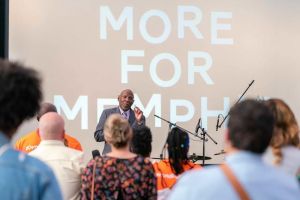
By David Waters Geoffrey Canada, president of the Harlem Children’s Zone, addressed in a launch of More for Memphis, an ambitious community development initiative to improve social and economic mobility in Memphis and Shelby County. (Photo courtesy of More for Memphis) For tens of thousands of children in Memphis, most of them children of color, poverty […]
The post Ambitious New Initiative Strives To Dismantle The Poverty Trap In Memphis appeared first on The Tennessee Tribune.
The post Ambitious New Initiative Strives To Dismantle The Poverty Trap In Memphis first appeared on BlackPressUSA.

By
Geoffrey Canada, president of the Harlem Children’s Zone, addressed in a launch of More for Memphis, an ambitious community development initiative to improve social and economic mobility in Memphis and Shelby County. (Photo courtesy of More for Memphis)
For tens of thousands of children in Memphis, most of them children of color, poverty is not a temporary living condition. It’s a trap constructed generations ago and maintained by adults, policies and systems that neglect, exclude and exploit.
A child who grows up in a low-income home in Memphis has about a 4 percent chance of becoming a high-income adult. That compares to a 6 percent chance for a child who grows up in a low-income home in Tennessee, and a 12 percent chance for a child in America.

The differences within Memphis are even more stark, according to a study by Tennessee’s Sycamore Institute.
A child who grows up in a low-income home in Midtown has a 16 percent of becoming a high-income adult. A child who grows up next door in North Memphis has a 1 percent chance. A child in Frayser has a 2 percent chance.
The list of reasons that poverty persists is as long, deep and convoluted as the Mississippi River in springtime.
“It’s complex,” said Mark Sturgis, executive director of Seeding Success, a local nonprofit that works to advance social and economic mobility in Memphis.
“But that doesn’t mean we can’t or shouldn’t do something about it. We have to do more and do better.”
That’s the goal of More for Memphis, the most ambitious local community development initiative since the 1979 Memphis Jobs Conference, convened by then-Gov. Lamar Alexander.
For the past three years, Sturgis and dozens of other representatives of local government, business, nonprofits, philanthropy, education, neighborhoods, and faith and arts communities have been meeting to envision, design and launch a “multi-sector, cross-community collaboration” to break the cycle of intergenerational poverty.
In short, to dismantle the Memphis poverty trap.
They plan to present their initial recommendations to city and county public officials in May.
The Memphis City Council, the Shelby County Commission, and the Memphis-Shelby County Schools board already have agreed to support the process, though there are no financial commitments yet. More for Memphis leaders are working to get similar commitments from this year’s mayoral candidates.
“If this works, it will be the most comprehensive and inclusive community development plan and have the largest social impact in the city’s history,” Sturgis said. “But there are a lot of challenges ahead.
T
he challenges are dauntMemphis, one of the nation’s poorest big cities, is overseen by four levels of government (city, county, state and federal) with everchanging leaders, and often com
The challenges are daunting.
Thirty years ago, about 1 in 5 Memphians lived below the poverty line. Now 1 in 4 do.
Poverty hasn’t deepened here, but it has spread.
There are about 80 Census tracts in Memphis that are experiencing high poverty — double the number 40 years ago, according to the Economic Innovation Group. Thirty-eight Census tracts have experienced persistent poverty since 1980.
More for Memphis leaders say loosening poverty’s local grip could be especially difficult here for several reasons.
Memphis is overseen by four levels of government (city, county, state and federal) with everchanging leaders, and often competing priorities and conflicting problems.
“Patchwork policymaking is the enemy of systemic change because everyone’s doing their own thing in their own corner,” said Haley Simmons, chief public policy officer for Seeding Success. “They’re not focusing on the connectedness of the world.”
Local policymakers face another challenge. Memphis (and Tennessee) have tax structures primarily built on property values and retail sales, which unevenly burden the working poor. Governments promote the city’s low-cost labor force and tax base, and often use tax incentives to reward companies that provide even more low-paying jobs.
“The whole system is designed to maintain the status quo,” said Cardell Orrin, executive director of Stand for Children and one of six “focus area” leaders of More for Memphis. “The status quo is so ingrained in our systems and mindsets that even our Black leaders are afraid to try something different. We’re a majority Black city that doesn’t value Black people.”
Meanwhile, the city’s entrenched generational poverty creates and sustains living and working conditions that generate and exacerbate trauma, blight, violence and other factors that further impair social and economic mobility, despite countless efforts to address those problems.
Memphis has more nonprofit organizations per 10,000 population than any other major city, and 60 percent of them work with low-income people.
“We are program rich and systems poor,” Sturgis said. “We have a lot of programs to help the poor, but our systems are designed to keep people in poverty. We need to dismantle those systems and build a new civic structure that is better coordinated, more efficient and equitable, more connected to the people who are living in poverty.”
That new civic structure will be crucial to the long-term success of More for Memphis.
“We’re not developing and funding a new organization or a new program,” said Jamilica Burke, chief strategy and impact officer for Seeding Success. “We’re funding a new collaborative that we’re building from the ground up.”
The new structure, still in the works, would establish a long-term public-private governance/management structure similar to Shelby Farms Park Conservancy or First 8 Memphis.
First 8 is a nonprofit corporation that partners with more than three dozen local governments and nonprofits to support, coordinate, and administer funding for early childhood care and education programs.
Shelby Farms Park Conservancy is a nonprofit organization that manages and operates Shelby Farms Park and Shelby Farms Greenline through a private-public partnership with Shelby County Government.
“These types of constructs are typical in public infrastructure projects, but have not been deployed as much in this form in the social impact space,” Sturgis said.
More for Memphis will require ample and sustained funding from public and private sources, but More for Memphis is starting strong.
The initiative is backed by a $50 million conditional commitment from Blue Meridian Partners, a national nonprofit that plans to distribute $2.5 billion in unrestricted grants to “high-performance nonprofits” that are helping people escape poverty.
More for Memphis leaders hope to use those funds to leverage another $50 million in local and state funds. The initiative also has received $500,000 from the Kresge Foundation and $1 million from Facebook.
“This will take time,” said Natalie McKinney, executive director of Whole Child Strategies and a member of the More for Memphis design team. “Generational poverty took generations to establish. There’s no quick fix. We don’t need reform. We need transformation.”
The More for Memphis process began in early 2021 with formation of a 33-member Design Committee representing various agencies, organizations and individuals from across the community.
The committee named the mission (More for Memphis) and wrote a mission statement: “To transform Memphis through dismantling unjust systems into an inclusive city with a deep sense of community, liberation, and access to wealth building systems.”
The committee established a 26-member governing body that includes six youth and six adult community members, and the leaders of six “Anchor Collaboratives”.
–Education & Youth led by Communities in Schools of Memphis.
–Health & Well-Being led by Common Table Health Alliance.
–Economic Development led by Collective Blueprint.
–Justice & safety led by Stand for Children.
–Community Development led by BLDG Memphis.
–Culture led by Memphis Music Initiative.
Each “Anchor” includes a number of partner organizations. For example, Health & Well-Being includes Legacy of Legends CDC, Shelby County Health Department, Church Health, Le Bonheur Children’s Hospital, Baptist Memorial Health Care, University of Tennessee Health Science Center, and Youth Villages.
Members of each “anchor” workgroup have been hosting public meetings, gathering data, and examining research to develop “targeted investment strategies that become the backbone of the community-wide improvement plan.”
Those strategies will be incorporated into a comprehensive More for Memphis plan that will be presented to city and county officials in May.
“This is where the real opportunity is to bring our work together, leverage those private dollars to do the things we wish we could do together and do them well, to do them right, and to build a lasting system of impact,” Sturgis said.
That lasting impact will depend on how well More for Memphis addresses the fact that equality isn’t equity. That economic growth and development aren’t the same as economic justice. That poverty and disparity are directly connected to the racial income and wealth gap.
The design team calls it The Big Idea:
“To improve social and economic outcomes in Shelby County through a multi-sector, cross-community collaboration, with an explicit focus on racial equity.”
The median income for Black families in Memphis has remained about half that of white families for more than five decades, according to the Memphis Poverty Fact Sheet, compiled by the School of Social Work at the University of Memphis.
Black families in Memphis have, on average, 6 pennies for every $1 white families have.
The net worth of Black residents with college degrees is less than 20 percent that of white residents. It’s barely 6 percent for the average Black family.
Local minority-owned businesses still only account for less that one percent of business receipts citywide.
“The people and organizations in distressed neighborhoods don’t have the capital they need to build equity, to start their own businesses, to transform their own communities,” said Orrin. “We’re talking about the destructive impact of generations of disinvestment.”
The emphasis on racial equity and economic justice is what makes More for Memphis fundamentally different from the 1979 Memphis Jobs Conference and its successors.
As Tom Jones of Smart City Consulting pointed out in an analysis published by MLK50 in 2017, the Memphis Jobs Conference focused on expanding the number of low-paying jobs. It worked.
From 1990 to 2012, the number of low-wage jobs in the Memphis region increased by 40 percent. Meanwhile, middle-income jobs increased by 10 percent, and high-income jobs went up 19 percent.
Hundreds of Memphians have been meeting regularly for three years to envision, design and launch More for Memphis, a “multi-sector, cross-community collaboration” to break the cycle of intergenerational poverty. (Photo courtesy of More for Memphis)
“The new economic agenda produced by the (Jobs Conference) reflected the influence of the powers-that-be that benefitted most from cheap labor,” Jones wrote. “Tourism, warehouses and distribution, and new agricultural methods were set as top priorities although university economists warned that low wages characterized all three sectors.”
The “low-wage” poverty trap isn’t just a Memphis problem, but it is a monumental problem in Memphis.
A larger share of workers in the United States (23 percent) make low wages — earning less than two-thirds of median wages — than in any other industrialized nation in the world.
By comparison, about 17 percent of workers in Britain make low wages, 11 percent in Japan, and 5 percent in Italy.
In Memphis, about 45 percent (212,000) of all workers make low wages (defined as less than $10 an hour).
“We’ve been selling this community as a low-wage, low-cost, low-taxes prize for employers and developers,” Orrin said. “All that has given us is a low-opportunity, high-poverty community. We’ve built poverty into our economic system.”
Low wages lead to substandard housing and high-interest debt.
Memphis has about 40,000 fewer affordable housing units than it needs, given its number of low-income residents, according to the National Low Income Housing Coalition.
Low-income renters generally spend more than 60 percent of their income on rent — double the national average.
That puts a severe strain on low-income household budgets, leading to another trap.
Memphis tops the list of U.S. cities with the worst payday lending problems, according to DebtHammer.
(Nashville and Chattanooga also make the Top Ten, thanks to state laws that allow predatory lenders to charge triple-digit interest rates on short-term loans. State laws also give predatory lenders repayment priority over mortgage, rental and utility companies and other debtors.)
There are more than 100 high-cost loan storefronts in the city, more than twice the number of Starbucks and McDonald’s combined, according to the Hope Policy Institute.
Payday, car title, and consumer installment loans are “charging up to 450 percent interest on loans that effectively ensnare the working poor into webs of long-term debt,” said Rev. J. Lawrence Turner, president of the Black Clergy Collaborative.
Payday lending practices was one of 54 “problem statement topics” considered at a recent More for Memphis gathering.
Others included: rental housing stability and eviction rates; vacant commercial corridors; disproportionate investment in incarceration and related systems; early education and literacy; impact of trauma on children, adolescents and adults.
The 54 “problems” covered economic and community development, banking and finance, housing, transportation, education, health care, public safety, and various other systems.
“All these systems are connected,” McKinney said. “All impact children, families and neighborhoods that are disproportionately affected by poverty. Applying short-term solutions to the enduring, generational nature of poverty simply doesn’t work.”
Jake Lankford, an intern for the Institute for Public Service Reporting and a graduate journalism student at the University of Memphis, contributed reporting to this story.
The post Ambitious New Initiative Strives To Dismantle The Poverty Trap In Memphis appeared first on The Tennessee Tribune.
The post Ambitious New Initiative Strives To Dismantle The Poverty Trap In Memphis first appeared on BlackPressUSA.



#NNPA BlackPress
Smooth Ride! Car Suspension & Comfort Tested #shorts
Smooth suspension meets surprisingly spacious legroom. Experience true comfort on any road!

 Watch the full video: https://youtu.be/l9Z571za5Gc
#NNPA BlackPress
61 years since Selma, Houston leaders say the bridge remains to be crossed
61 years after Selma, Houston leaders say the fight for equality continues. The issues that sparked the marches still impact Black Americans today.
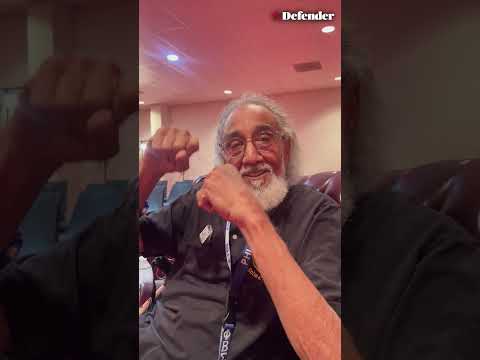
It has been 61 years since the Selma marches. But political leaders in Houston say that the issues protesters were marching for still plague the lives of Black Americans.
Visit Our Website
Read more stories by our team
https://defendernetwork.com/category/news/opinion/
Sign-up for the Top 5 newsletter
Donate/ Support Our Work
#NNPA BlackPress
Here is what you need to know about finding unique white elephant gift ideas that everyone wants to steal
The best white elephant gift ideas are funny enough to get a reaction but useful enough that people actually want to steal them. Look for gifts with a surprise factor, broad appeal, an inside joke, and just enough personality to spark some friendly competition. The wrapping paper comes off, the room goes quiet for half […]

The best white elephant gift ideas are funny enough to get a reaction but useful enough that people actually want to steal them. Look for gifts with a surprise factor, broad appeal, an inside joke, and just enough personality to spark some friendly competition.
The wrapping paper comes off, the room goes quiet for half a second, and suddenly everyone wants the same gift. That is the sweet spot. A great white elephant pick should make people laugh, lean in, and start plotting their next steal before the turn is even over.
Should a White Elephant Gift Be Funny or Useful?
A white elephant gift can be funny or useful, but the strongest choices usually give people a reason to laugh and a reason to keep the item. A practical gift with an odd design, unexpected feature, or playful theme can get a reaction without becoming something the recipient immediately wants to give away.
The right balance depends on the group. Close friends and family members may enjoy a ridiculous gag gift because they already understand one another’s sense of humor.
A workplace exchange, neighborhood party, or mixed-age gathering usually calls for something with broader appeal. In those settings, humor works better when it is built into an item people could still use afterward.
It also helps to think about how quickly the gift will make sense once it is opened. A strangely shaped kitchen tool, oversized mug, quirky desk accessory, or unexpectedly fancy everyday item can create an immediate reaction. Guests understand the joke right away, while the item still has enough practical value to attract a steal.
Pure gag gifts can be harder to pull off. Something that exists only for the punchline may get a big laugh during the reveal and then sit untouched for the rest of the game. If the goal is to bring one of the gifts everyone keeps fighting over, usefulness gives the joke staying power.
Memorable Present Ideas: Creating Inside Joke Gifts
Inside joke gifts can make a white elephant exchange feel much more personal, especially when most of the group shares the same stories. The trick is choosing a reference that people will recognize quickly instead of building the entire joke around something only two guests understand.
You can turn a memorable vacation mishap, office catchphrase, family story, or long-running group joke into the theme of the gift. A personalized comic book can work especially well when it turns familiar people or a ridiculous shared moment into part of the story.
Think carefully about who the joke involves before ordering anything permanent. The gift should make the person feel included in the fun, not singled out for the wrong reason.
Can You Bring Something You Already Own?
Holiday gift exchanges can be a good place to re-gift something you never used, especially if it is unopened and clean.
The following can all work if they still look presentable:
- A duplicate kitchen gadget
- An untouched game
- A decorative item
- A sealed gift set
- An unopened candle
- A new travel accessory
The goal is to give the item a second chance, not use the exchange as an excuse to clear out damaged or unwanted clutter.
Take a close look at the packaging before wrapping it. Faded boxes, missing pieces, visible wear, or anything that looks obviously used can make the gift feel careless.
Wrapping Budget-Friendly Gifts
Wrapping can make gifts more entertaining before anyone even knows what’s inside.
Misdirection works especially well for fun party games. Put a small gift inside a much larger box. Use packaging from an unrelated household item.
Add harmless weight so guests cannot guess what they are holding. The reveal becomes part of the joke without changing the gift itself.
You can also lean into the theme of the exchange. Bright paper, oversized bows, reusable bags, or deliberately over-the-top wrapping can make an ordinary item feel more memorable. If the gift itself is already funny, simple wrapping may work better so the surprise stays hidden until the last second.
Frequently Asked Questions
Is Picking Last an Advantage in White Elephant?
Picking last can be an advantage because you get to see almost every gift before making your move. Instead of choosing blindly from the remaining wrapped presents, you can steal something that has already caught your attention if the rules still allow it.
That advantage depends on the house rules. Some games limit how many times a gift can be stolen.
Others lock an item once it reaches a certain number of steals. If the most popular gifts are already unavailable, the final player may have fewer strong options than expected.
The first player can also get another turn at the end in some versions of the game. That rule can balance things out, since the person who started with the least information may get one final chance to steal.
How Do You Plan White Elephant for a Large Group?
For a large white elephant exchange, set a firm spending limit and establish the stealing rules in advance.
Create a clear turn order before the game begins. Drawing numbers as guests arrive can save time once everyone is ready to start.
Keep the number of steals per gift limited so the game does not drag on. It also helps to have one person track which creative holiday presents have been stolen and when they are locked, especially if dozens of people are participating.
Can You Play White Elephant Virtually?
A virtual white elephant exchange can work over a video call, with one person keeping track of the turn order and each steal. Guests can either mail physical gifts ahead of time or use digital gifts that can be delivered once the game ends.
Set the spending limit and stealing rules before everyone joins. It also helps to decide how gifts will be revealed and who is responsible for sending each one afterward so the exchange does not become confusing.
Choose a Perfect White Elephant Gift in a Snap
Look for a white elephant gift that fits some of these criteria, and everyone will be trying to grab it at your next celebration.
Do you need more gift-giving tips and tricks? Make sure you read some of our other posts.


Mayor Barbara Lee Holds Special State of the City Address in Deep East Oakland

Practitioners of African Traditional Spirituality Offer Ancestral Reverence Ritual Oct. 31

It’s Time to Lose Weight Before the Holidays

Trader Vic’s Returns to Its Oakland Roots

Oakland Coal Terminal Backed by Trump Would Be Bigger, Dirtier Than Promised, Says Report

Opponents Smear Effective African American Transit Director as Election Nears

Oakland Post: Week of October 14 – 20, 2026

OP-ED: The Black Church Writes AI’s Next Chapter

OP-ED: The Black Church Writes AI’s Next Chapter

WCCUSD Joins Statewide Organic School Food Purchasing Cooperative

Democrats, Community Groups Back Measure EE to Change How Oakland Is Governed

Four Tips to Help You Plan a Holiday “Staycation”

Veterans Housing Project Proposed for South Richmond
PRESS ROOM: Transformative Justice Coalition 2026 Voting Rights Champion Awards Reception ‘Yesterday Is Today: The Battle For Voting Rights

Mayor Lee Delivers 2026 State of the City Address: ‘Oakland Continues to Be on the Move’

Misnamed ‘Parent’ PAC Seeks to Influence Oakland School Board Elections

Oakland Post: Week of September 2 – 8, 2026

Poll: Becerra Widens His Lead Over Hilton; Californians Split on Wealth Tax

Oakland Post: Week of September 9 – 15, 2026

County Office of Education Says OUSD Finances Are Getting Healthier, Materially Stronger

Listening as a Lifeline: A Doula’s Witness to Black Maternal Health

Richmond Tiny House Village Farm & Garden Set to Open Gates on Sept. 26

Mayor Lee Announces $1 Million Kaiser Permanente Grant for Pilot Program to Address Homelessness, Clean Up Public Spaces throughout Oakland

Latest Massacre in Haiti Reveals Cruelty U.S. Deportations

OPINION: Nolan Wells’ Death One of Several Signifying Racial Terror Lives on in U.S. South

Zakiya Jendayi Arrested, Locked Out of Home by Sheriff’s Deputies

BLACspace Cooperative Invites Bay Area to Experience Oakland’s Black Cultural Ecosystem Through a BLAC Map Tour + Party

Oakland Post: Week of September 16 – 22, 2026

Democratic Clubs Interview Candidates for Oakland School Board

Oakland People’s Arms Embargo Coalition Demands End to Military Shipments Thru Oakland

The Conversation With Al McFarlane 6/23/26

Media Monday 6/22/26

LIVE! ASK ALMA! — TUES. 6.23.26 7PM EST

Car Buying Secrets: 4 Hidden Checks Before You Sign!

Is This 550 HP Charger Worth YOUR Money? AutoNetwork Review

Celebrating Juneteenth – Frederick Douglass on education and resistance

LIVE! — ASK ALMA! — TUES. 6.19.26 7PM EST

Hyundai Ioniq 5 Parking, Safety, and 360 View #shorts

2025 Ioniq 5 New Wiper & Powerful Performance! #shorts

Electric SUV Range: Is 259 Miles Enough? #shorts

EV Charging: How Fast Can You Charge an Electric Vehicle? #shorts

Biometric Cooling… Messaging Seats…Come on! 2025 Infiniti QX80 Autograph 4WD

Charged Up: Witness the Magic of a Fully Electric Car! #shorts

Range Rover Sport PHEV Included…: See What’s Inside This Luxury SUV! #shorts

Invisible Hood View: Perfect Parking with X-Ray Vision! #shorts
-
 Economy4 weeks ago
Poll: Becerra Widens His Lead Over Hilton; Californians Split on Wealth Tax
-
 Business4 weeks ago
County Office of Education Says OUSD Finances Are Getting Healthier, Materially Stronger
-
 Black History3 weeks ago
Listening as a Lifeline: A Doula’s Witness to Black Maternal Health
-
 Lead Story3 weeks ago
Zakiya Jendayi Arrested, Locked Out of Home by Sheriff’s Deputies
-
 Art4 weeks ago
BLACspace Cooperative Invites Bay Area to Experience Oakland’s Black Cultural Ecosystem Through a BLAC Map Tour + Party
-

 Black History4 weeks ago
Doulas Are Helping Black California Moms Navigate Pregnancy–Even as High Mortality Rates Persist
-
 Business4 weeks ago
From Historic Memories to New Possibilities: Oakland Celebrates Coliseum 60
-
 Community4 weeks ago
Asm. Corey Jackson Announces Launch of 24-Hour Childcare in His District
