
Activism
Advocates: Gov. Newsom Still Has Chance to Fund DV Prevention
The costs of sexual and domestic violence are astronomical, continued ValorUS. The lifetime economic burden of domestic violence in California is nearly $400 billion and sexual violence costs the state of California $140 billion annually, according to ValorUS’s recent report, “The Cost and Consequences of Sexual Violence in California.”


Charlene Muhammad | California Black Media
Gov. Gavin Newsom missed an opportunity to help prevent sexual and domestic violence when he failed to include funding for intervention and support programs in the state’s 2022-23 budget, advocates say.
In January, Newsom presented a $286.4 billion budget proposal titled the “California Blueprint” to the State Legislature for consideration. At that time, the governor announced an estimated $45 billion surplus. Last week, the Legislative Analyst’s Office projected the estimated surplus to be between $6 billion and $23 billion more.
Domestic Violence advocates say they are hopeful.
The California Partnership to End Domestic Violence (CPEDV) and over 100 supporting organizations submitted a request for $15 million per year ongoing. They point out their request was modest and well within the capacity for the state’s budget. Yet, for a second year, Newsom ignored the request, and along with it, promising strategies that address the root causes of violence, they say.
“In the world of politics and dollars, things are always changing, so absolutely, we are planning to redress, and we hope that things will change,” Dr. Aleese Moore-Orbih, CPEDV executive director, told California Black Media.
“Even though it wasn’t included, initially, in this budget, we know the governor has lots of power. He can make any change he wants to at any time, and so we will continue to try to inform him of the importance of including prevention funding in our state budget,” she continued.

In a recent press release, leaders of the coalition said they will keep pushing for funding. They remain optimistic that the Legislature and Governor will work together to provide funding in the final budget in June that will support the critical prevention work their organizations do across the state – especially successful programs that were previously funded.
Moore-Orbih says it is not a matter of changing Newsom’s mind. She believes he already understands the urgent need for the funding. But “something political” could have moved his office to not include it, Moore-Orbih said.
ValorUS, a national organization that works to prevent and end sexual violence, conducted research on how prevention could save thousands of lives lost to domestic violence every year. It found that one third of women and one quarter of men in California will experience intimate partner violence in their lifetimes.
The costs of sexual and domestic violence are astronomical, continued ValorUS.
The lifetime economic burden of domestic violence in California is nearly $400 billion and sexual violence costs the state of California $140 billion annually, according to ValorUS’s recent report, “The Cost and Consequences of Sexual Violence in California.”
“By preventing sexual assault or preventing an abusive relationship, the state can save billions in healthcare and law enforcement costs, reduce the cost of lost productivity, and improve mental health,” according to the report released in 2018.
According to the Little Hoover Commission, which began studying California’s response to intimate partner violence in late 2019, California does not have a substantial prevention or early intervention program.
In May 2020, the Commission released its first report on the topic, Intimate Partner Violence: Getting Money to Those on the Front Line.” It asked the Governor and Legislature to provide grant funding upfront to service providers.
“The state should create and adequately fund prevention and early intervention programs and ensure that those initiatives are included in all applicable statewide strategic plans ranging from early childhood education to reducing homelessness,” the authors wrote.
Moore-Orbih agrees.
“Something like 5,000 women lose their lives every year to domestic violence, and the numbers are probably even greater than that because there is a blurred area due to how law enforcement determines whether or not the death of a woman was as a result of domestic violence or some other issue,” she emphasized.
It is important to have a vision for prevention, backed up by dollars, not just an increase in how people respond to the crisis, Moore-Orbih went on, adding that the cycle of violence will continue until something meaningful is done to break it.
“If we don’t do prevention work, if we don’t start to shift our thinking, our culture, if we don’t start shifting our behavior, in terms of relationships, if we don’t start raising our children in safe and healthy environments, then that means what we have been experiencing, we will continue to experience which means children are going to grow up in violent environments, and they’re going to be traumatized,” she warned.












To enlarge your view of this issue, use the slider, magnifying glass icon or full page icon in the lower right corner of the browser window.
To enlarge your view of this issue, use the slider, magnifying glass icon or full page icon in the lower right corner of the browser window.
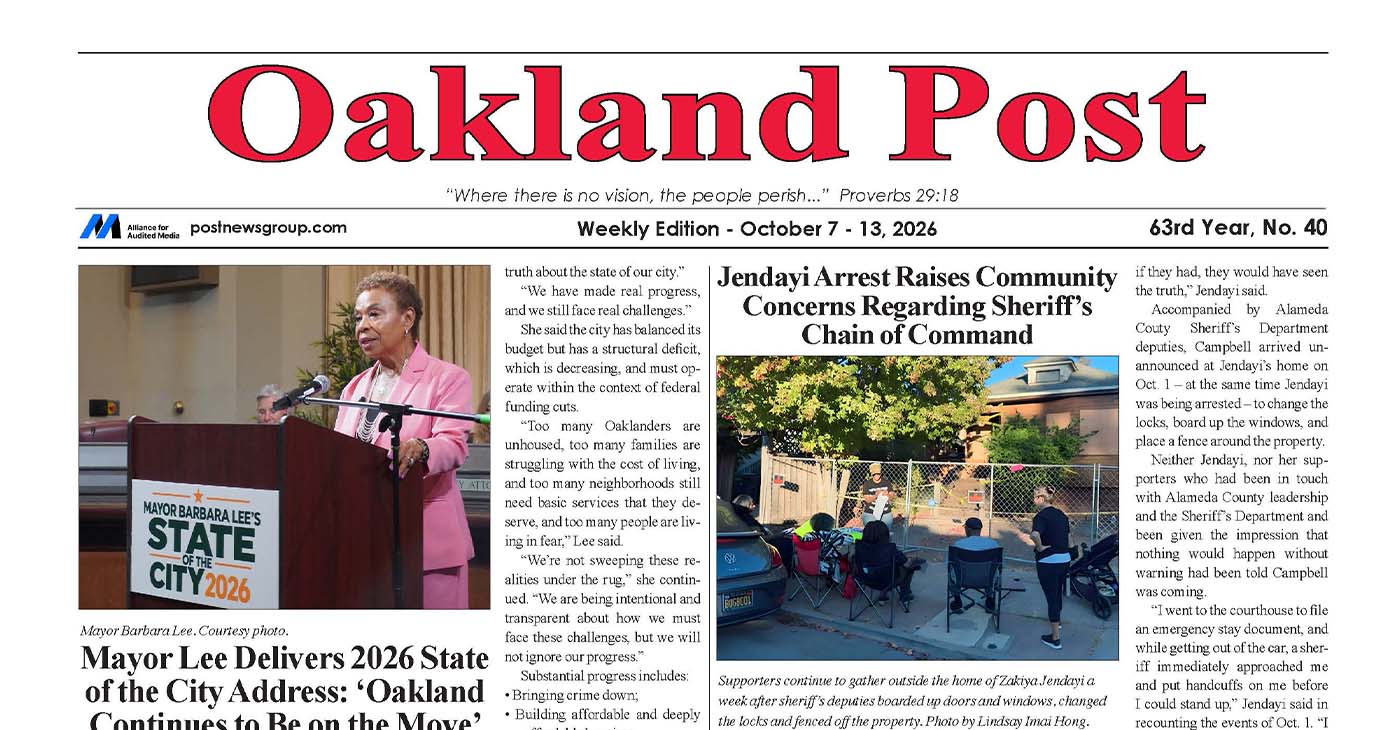
To enlarge your view of this issue, use the slider, magnifying glass icon or full page icon in the lower right corner of the browser window.



Oakland Probate Dispute Raises Questions About Court-Ordered Property Transfer and Missing Notice

‘Raising a Child Shouldn’t Break the Bank’: California Is Helping Families Save on Childcare Costs

Secretary of State Shirley Weber Pushes Back Against DOJ Demands Over California Voter Rolls

Chase Launches Fraud & Scam Prevention Month

U.S. Rep. Simon Secures More Than $1 Million for Public Safety at Mills College at Northeastern University Oakland, Surrounding Neighborhood

COMMENTARY: Valarie Bachelor and Jennfier Brouhard are Excellent School Board Members and Deserve to Be Reelected

Oakland Faith Leaders Gather to Revitalize the Interdenominational Ministerial Alliance of Oakland

Statue of ‘La Catrina,’ a Beloved Symbol of Dia de Los Muertos, Visits Oakland

Oakland Honors 60 Years of the Black Panther Party at the All Power to the People Gala

Fate of Bay Area Public Transit Hinges on Regional Transit Measure

Why AC Transit Director Joel Young is My Choice for AC Transit Board Ward 3

Oakland Post: Week of October 21 – 27, 2026

Mayor Barbara Lee Holds Special State of the City Address in Deep East Oakland

Practitioners of African Traditional Spirituality Offer Ancestral Reverence Ritual Oct. 31

It’s Time to Lose Weight Before the Holidays

Misnamed ‘Parent’ PAC Seeks to Influence Oakland School Board Elections

Listening as a Lifeline: A Doula’s Witness to Black Maternal Health

Poll: Becerra Widens His Lead Over Hilton; Californians Split on Wealth Tax

County Office of Education Says OUSD Finances Are Getting Healthier, Materially Stronger

Doulas Are Helping Black California Moms Navigate Pregnancy–Even as High Mortality Rates Persist

Oakland Post: Week of September 9 – 15, 2026

Zakiya Jendayi Arrested, Locked Out of Home by Sheriff’s Deputies

Mayor Lee Announces $1 Million Kaiser Permanente Grant for Pilot Program to Address Homelessness, Clean Up Public Spaces throughout Oakland

Richmond Tiny House Village Farm & Garden Set to Open Gates on Sept. 26

BLACspace Cooperative Invites Bay Area to Experience Oakland’s Black Cultural Ecosystem Through a BLAC Map Tour + Party

OPINION: Nolan Wells’ Death One of Several Signifying Racial Terror Lives on in U.S. South

Latest Massacre in Haiti Reveals Cruelty U.S. Deportations

Oakland People’s Arms Embargo Coalition Demands End to Military Shipments Thru Oakland

Oakland Post: Week of September 16 – 22, 2026

Democratic Clubs Interview Candidates for Oakland School Board

The Conversation With Al McFarlane 6/23/26

Media Monday 6/22/26

LIVE! ASK ALMA! — TUES. 6.23.26 7PM EST

Car Buying Secrets: 4 Hidden Checks Before You Sign!

Is This 550 HP Charger Worth YOUR Money? AutoNetwork Review

Celebrating Juneteenth – Frederick Douglass on education and resistance

LIVE! — ASK ALMA! — TUES. 6.19.26 7PM EST

Hyundai Ioniq 5 Parking, Safety, and 360 View #shorts

2025 Ioniq 5 New Wiper & Powerful Performance! #shorts

Electric SUV Range: Is 259 Miles Enough? #shorts

EV Charging: How Fast Can You Charge an Electric Vehicle? #shorts

Biometric Cooling… Messaging Seats…Come on! 2025 Infiniti QX80 Autograph 4WD

Charged Up: Witness the Magic of a Fully Electric Car! #shorts

Range Rover Sport PHEV Included…: See What’s Inside This Luxury SUV! #shorts

Invisible Hood View: Perfect Parking with X-Ray Vision! #shorts
-
 Black History3 weeks ago
Listening as a Lifeline: A Doula’s Witness to Black Maternal Health
-
 Economy4 weeks ago
Poll: Becerra Widens His Lead Over Hilton; Californians Split on Wealth Tax
-
 Business4 weeks ago
County Office of Education Says OUSD Finances Are Getting Healthier, Materially Stronger
-
 Lead Story3 weeks ago
Zakiya Jendayi Arrested, Locked Out of Home by Sheriff’s Deputies
-
 Art4 weeks ago
BLACspace Cooperative Invites Bay Area to Experience Oakland’s Black Cultural Ecosystem Through a BLAC Map Tour + Party
-

 Business4 weeks ago
From Historic Memories to New Possibilities: Oakland Celebrates Coliseum 60
-

 Community4 weeks ago
Asm. Corey Jackson Announces Launch of 24-Hour Childcare in His District
-

 Black History4 weeks ago
IN MEMORIAM: The Rev. Leon “Sonny” Clark, Longtime Orange County Pastor and Community Leader, Dies at 72
