
Bay Area
A Bold Agenda of Change is Vital to Beating Donald Trump

Sunday’s Democratic debate between Bernie Sanders and Joe Biden made one thing clear: Sanders may not be winning the most states, but he is winning the message battle of direction and priorities. He represents where most Democrats are — in their hearts and their heads — on the issues. Former Vice President Biden is winning on electability — on the belief that he would be the better candidate to take on President Trump.
Pundits paint Biden as a moderate and Sanders as a radical, but Biden clearly understands that Sanders and the movement he has helped to galvanize represent the moral center — and slowly, incrementally if you will, he is moving that way.
Early on, Biden embraced Sanders’ proposal for a $15-an-hour minimum wage. Just before the debate, he announced his support for Elizabeth Warren’s plan to reform the bankruptcy bill that Biden helped write and pass. He announced he was moving toward Sanders’ position on making public universities tuition-free (although limiting the pledge by imposing a means test on who would be covered). During the debate, he boasted about what “Senator Sanders and I both agree we need — health care should be a right, not a privilege. We both agree we have to deal with student debt. We both agree we have a New Green Deal to deal with the existential threat that faces humanity. We disagree on the detail of how we do it. But we don’t disagree on the principle.”
Delighted to be united? Well. That word “detail” is covering dramatic differences. Sanders is for Medicare for All; Biden’s “public option” isn’t likely to cover everyone and will leave millions underinsured. Sanders is for making college tuition free and eliminating student debt. Biden doesn’t get there. Sanders is serious about a Green New Deal — calling for investing trillions to move rapidly to meet the threat posed by climate change. Biden’s plan is much more modest, although he did, for the first time, agree that he was opposed to any new fracking.
Biden also announced in the debate for the first time that he would limit deportations of undocumented workers to those who committed felonies. He pledged that he would name a black woman to the Supreme Court (he said “courts,” but meant the former), something that Sanders had committed to me 10 days ago. Biden captured the headlines by committing to name a woman on his ticket. Sanders had already pledged to strongly consider an African American running mate.
Biden also agreed with Sanders that the government should ensure that people are made whole in the coronavirus crisis: that testing and treatment should be paid for by the government and that paychecks should be guaranteed, mortgages supported etc. Biden is essentially for Medicare for All in the crisis. He did not explain why a family that goes bankrupt when one member gets sick is less of a crisis for that family.
Biden, on the defensive for his vote for the Iraq War and for NAFTA and the corporate trade treaties that devastated America’s workers, went after Sanders for his early votes against gun control. He also bizarrely tried to indict Sanders for his praise for Cuba’s literacy program, or his statement of fact that China had been successful in reducing mass poverty. The latter statement, Biden argued hilariously, would shake our allies in South Korea and Japan. That turned what was coming uncomfortably close to red baiting into just silliness.
When asked how he would reach out to engage the voters — particularly young voters and Latinos who have overwhelmingly supported Sanders — Biden whiffed, arguing that he already had a broad coalition that was voting for him in large numbers.
But Joe is a smart politician. He knows which way the wind is blowing. He can sense the growing demand for far more fundamental reforms than simply a return to the old politics.
His incremental embrace of elements of the Sanders-Warren agenda demonstrates that he is not impervious to that demand. That’s a good reason for Sanders to keep running and challenging Biden, even if Biden keeps winning more primaries and delegates. Contrary to the alarms of Democratic operatives and deep-pocket donors, embrace of a bold agenda of change is vital to victory against Donald Trump.










Activism
Oakland Post: Week of September 23 – 29, 2026
The printed Weekly Edition of the Oakland Post: Week of September 23 – 29, 2026

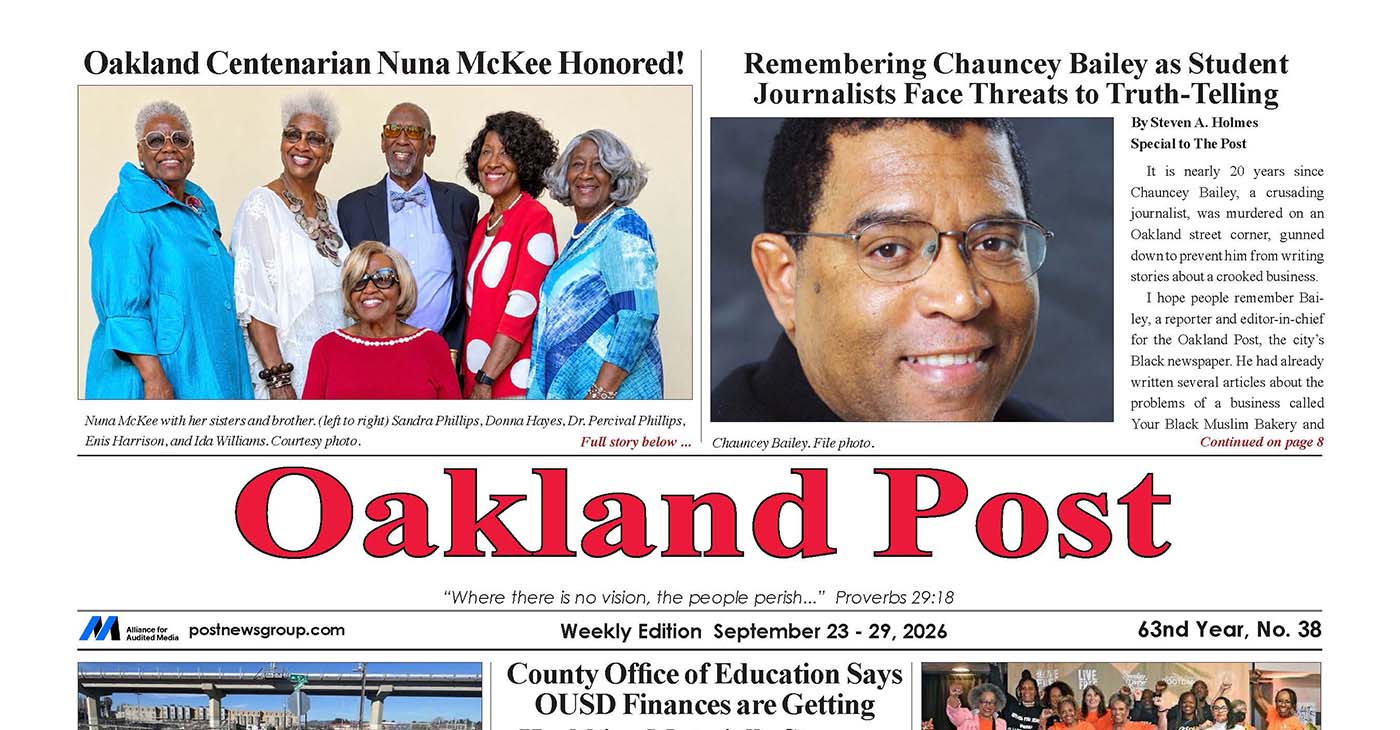
To enlarge your view of this issue, use the slider, magnifying glass icon or full page icon in the lower right corner of the browser window.

Activism
Oakland Post: Week of September 16 – 22, 2026
The printed Weekly Edition of the Oakland Post: Week of September 16 – 22, 2026
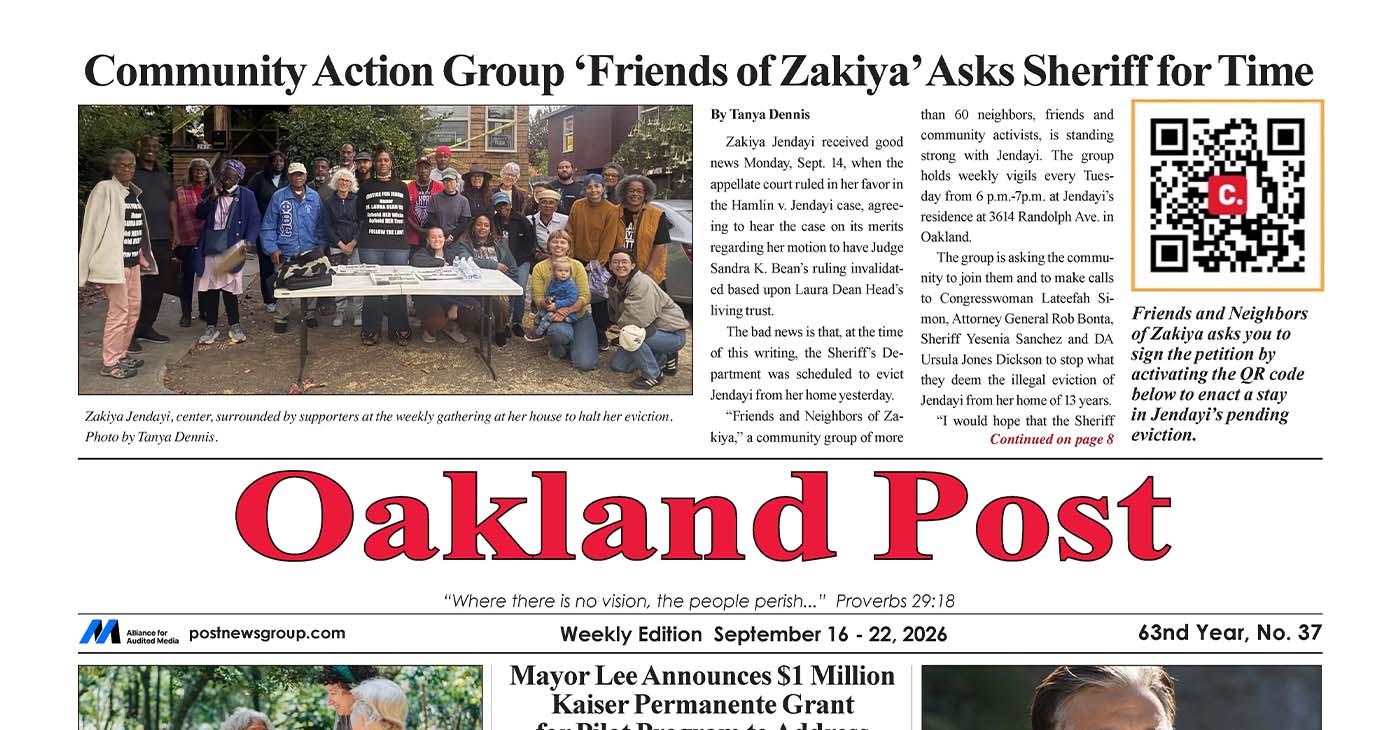
To enlarge your view of this issue, use the slider, magnifying glass icon or full page icon in the lower right corner of the browser window.
Activism
Oakland Post: Week of September 9 – 15, 2026
The printed Weekly Edition of the Oakland Post: Week of September 9 – 15, 2026

To enlarge your view of this issue, use the slider, magnifying glass icon or full page icon in the lower right corner of the browser window.


Asm. Corey Jackson Announces Launch of 24-Hour Childcare in His District

IN MEMORIAM: The Rev. Leon “Sonny” Clark, Longtime Orange County Pastor and Community Leader, Dies at 72

Poll: Becerra Widens His Lead Over Hilton; Californians Split on Wealth Tax

From Historic Memories to New Possibilities: Oakland Celebrates Coliseum 60

County Office of Education Says OUSD Finances Are Getting Healthier, Materially Stronger

LIVE FREE Sunday Dinner Brings Faith, Fellowship and Civic Conversation to Oakland

Remembering Chauncey Bailey as Student Journalists Face Threats to Truth-Telling

BLACspace Cooperative Invites Bay Area to Experience Oakland’s Black Cultural Ecosystem Through a BLAC Map Tour + Party

In Wake of Death on Doorstep, Williams Chapel Baptist Church Calls for Better Care, Funding for Unhoused

Oakland Centenarian Nuna McKee Honored!

Caribbean Nations Produce Action Plan Calling for UK Reparations Over Slavery

Oakland Post: Week of September 23 – 29, 2026

Doulas Are Helping Black California Moms Navigate Pregnancy–Even as High Mortality Rates Persist

Newsom Signs Addictive Social Media Law to Protect Kids

On Your November Ballot: Prop 38 Would Allocate $8.4 Billion to Immunology and Immunotherapy Funding

Standoff for Justice: Our Homes Are Worth Fighting For

Oakland Post: Week of August 26 – September 1, 2026

Frontier Airlines’ Return to Oakland Airport Brings Flights, Jobs and Opportunity

Gubernatorial Candidate Steve Hilton Blasts California New Tire Rules; Newsom Hits Back

Chef Sharon Lee Blends Culinary Excellence, Education and Empowerment

Jackie Wright Champions Bay Area Stories, Filmmakers and Cultural Institutions

Big City Mayors Ask for “Yes” Vote on Housing Bond Measure; Conservatives Say “No”

Oakland Coliseum Project Opens Door for Small Businesses to Build Bigger

Gov. Newsom’s Latest Appointees Include Sacramento Advocate for Formerly Incarcerated Students; State’s New Tech Chief

Misnamed ‘Parent’ PAC Seeks to Influence Oakland School Board Elections

Longtime BWOPA Member Brendalyn Goodall Appointed to California Workforce Development Board

Gov. Newsom Signs Law Shielding Immigration Aid Workers From Doxing Threats

Secretary of State Shirley N. Weber Urges Californians to Vote Early as Voter ID Battle Intensifies

From Palestine to Oakland: Seeds for Liberation Examines Shared Struggles for Freedom

IN MEMORIAM: Dolly Parton Dead at 80 — How She Built a Legacy of Love and Earned Her Place in Black Culture

The Conversation With Al McFarlane 6/23/26

Media Monday 6/22/26

LIVE! ASK ALMA! — TUES. 6.23.26 7PM EST

Car Buying Secrets: 4 Hidden Checks Before You Sign!

Is This 550 HP Charger Worth YOUR Money? AutoNetwork Review

Celebrating Juneteenth – Frederick Douglass on education and resistance

LIVE! — ASK ALMA! — TUES. 6.19.26 7PM EST

Hyundai Ioniq 5 Parking, Safety, and 360 View #shorts

2025 Ioniq 5 New Wiper & Powerful Performance! #shorts

Electric SUV Range: Is 259 Miles Enough? #shorts

EV Charging: How Fast Can You Charge an Electric Vehicle? #shorts

Biometric Cooling… Messaging Seats…Come on! 2025 Infiniti QX80 Autograph 4WD

Charged Up: Witness the Magic of a Fully Electric Car! #shorts

Range Rover Sport PHEV Included…: See What’s Inside This Luxury SUV! #shorts

Invisible Hood View: Perfect Parking with X-Ray Vision! #shorts
-
 Community2 weeks ago
Misnamed ‘Parent’ PAC Seeks to Influence Oakland School Board Elections
-

 Activism3 weeks ago
Oakland Post: Week of September 2 – 8, 2026
-

 Community2 weeks ago
Richmond Tiny House Village Farm & Garden Set to Open Gates on Sept. 26
-

 Black History2 weeks ago
OPINION: Nolan Wells’ Death One of Several Signifying Racial Terror Lives on in U.S. South
-

 Black History2 weeks ago
Latest Massacre in Haiti Reveals Cruelty U.S. Deportations
-

 Activism2 weeks ago
Oakland Post: Week of September 9 – 15, 2026
-

 Community2 weeks ago
Democratic Clubs Interview Candidates for Oakland School Board
-
 Featured2 weeks ago
‘Ready to See These Bills Become Law’: Sen. Weber’s Package of 15 Bills Advance to Gov. Newsom’s Desk
