
Black History
COMMENTARY: Cruelty Is the Point: Haiti, TPS, and the Politics of Punishment
SEATTLE MEDIUM — The Supreme Court has allowed the Trump administration to terminate Temporary Protected Status (TPS) for Haitians and Syrians. This decision impacts over 350,000 Haitians who have lived and worked legally in the United States, placing them at risk of deportation to a country currently facing a severe humanitarian crisis. Temporary Protected Status is described not as a gift, but as a recognition o

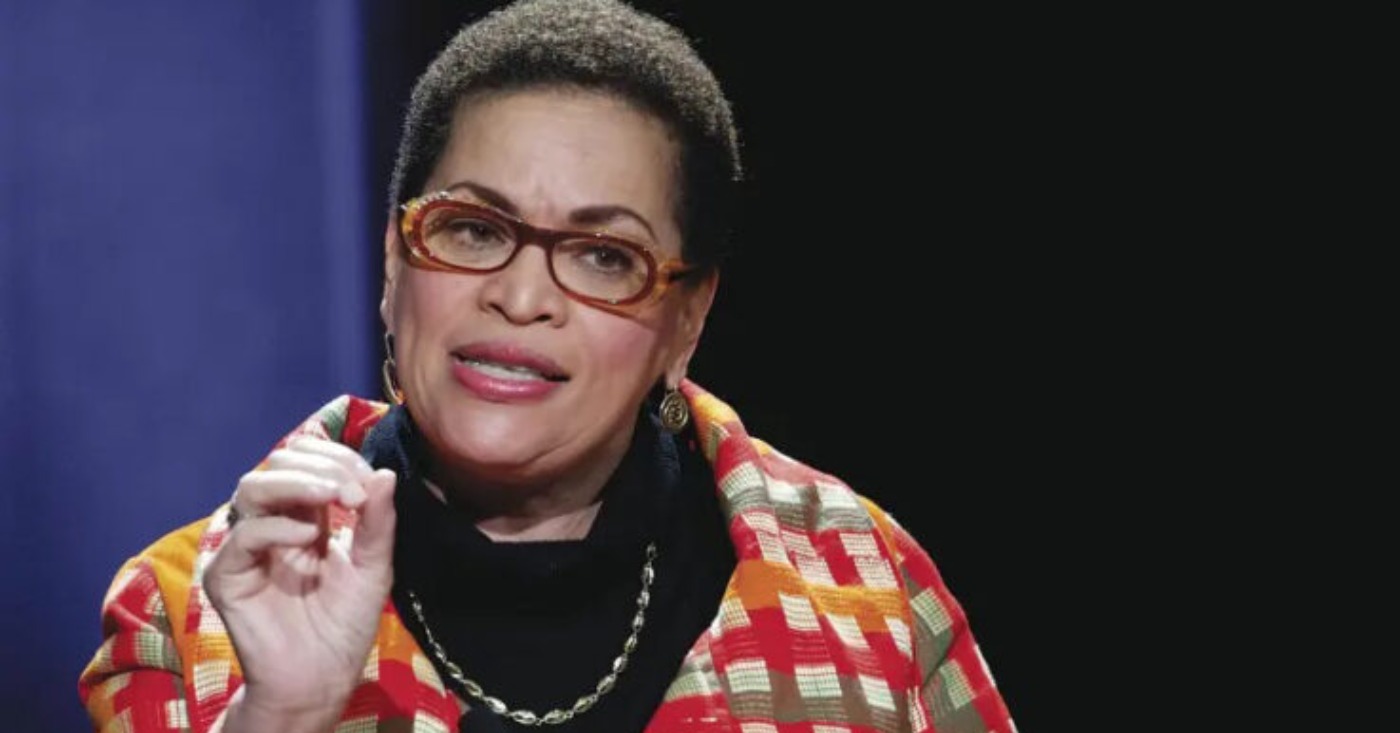
(Trice Edney Wire) – Haiti is not an abstraction. Haiti is a nation whose pain has too often been treated as policy collateral, a people whose labor is welcomed when needed and whose lives are discounted when convenient. Now, with the Supreme Court allowing the Trump administration to terminate Temporary Protected Status for Haitians and Syrians, more than 350,000 Haitians who have lived and worked legally in the United States face the possibility of deportation to a country the world knows is in crisis.

Temporary Protected Status is not a gift. It is a recognition of reality. It says that when a country is overwhelmed by violence, disaster, political collapse, or humanitarian emergency, deportation is not simply enforcement. It is endangerment. To strip Haitians of this protection now is to pretend that paperwork matters more than human life.
Haiti is facing one of the world’s most severe humanitarian crises. Armed groups control much of the country, violence has disrupted ordinary life, hunger is widespread, and humanitarian assistance remains far short of the need.
So what kind of country sends people back into that? What kind of country says to people who have built lives, paid taxes, raised children, staffed hospitals, opened businesses, cared for elders, cleaned rooms, cooked meals, driven trucks, and strengthened communities: your labor was welcome, but your life is disposable?
Cruelty is not an accidental byproduct of this policy. Cruelty is the point.
Haitians have long been punished for being Black, free, defiant, and inconvenient. The first Black republic in the world was born of revolt against slavery, and the nations that profited from slavery never forgave Haiti for proving that enslaved people could liberate themselves. France extracted a ruinous indemnity. The United States occupied Haiti. International lenders, foreign governments, and domestic elites have repeatedly treated Haiti as a problem to manage, not a sovereign nation to respect; a profit center, not a proud and sovereign nation. The present crisis cannot be separated from that long history of extraction, intervention, and contempt.
Now that contempt appears in the sterile language of immigration law. “Temporary” becomes the excuse. “Protected” becomes the promise broken. “Status” becomes the thin legal thread holding families together.
The Supreme Court’s ruling did not create the hatred of Haitian migrants, but it gives official permission to act on it. We have seen the ugliness before. Haitians have been accused of disease, criminality, dependency, and disorder. They have been stereotyped, detained, deported, and scapegoated. During the 2024 campaign, Springfield, Ohio became a national symbol of anti-Haitian hysteria after false claims about Haitians eating pets were amplified for political gain. That lie was not just ridiculous; it was dangerous. It turned neighbors into targets.
Springfield tells another story. Haitians came there to work. They filled jobs. They opened businesses. They joined churches. They enrolled children in schools. They helped revive a struggling city. After the Court’s ruling, many now face fear and uncertainty. Even Ohio Governor Mike DeWine, a Republican, reportedly called ending Haitian TPS a mistake, pointing to the conditions in Haiti.
That matters. Because the question is not whether Haitians belong in Springfield, or Boston, or Miami, or New York, or Washington, D.C. The question is whether the United States will acknowledge that Haitians already belong here because they are already here, already contributing, already woven into the fabric of our communities.
The numbers tell part of the story, and they are overwhelming. But they do not tell the whole story. Behind every number is a family deciding whether to pack, hide, fight, or pray. Behind every number is a child who may know no home but the United States. Behind every number is an employer wondering who will show up for work, a landlord wondering whether a tenant can stay, a congregation wondering whether its members will disappear. Behind every number is a disabled elder wondering whether the care attendant will come to bathe her, feed her, and help her live with dignity.
TPS holders are often described as if they are temporary people. They are not. They are people with temporary legal protection, many of whom have been here for years or decades because the conditions that displaced them have not been resolved. Temporary status can become a permanent limbo. It allows people to work but not fully settle, to contribute but not fully belong, to live under the shadow of a government decision that can turn a lawful worker into a deportable person.
That shadow is now darker.
We should be honest about what this is. It is not simply immigration enforcement. It is not simply administrative discretion. It is a choice to make vulnerable people more vulnerable. It is a choice to destabilize families and communities. It is a choice to ignore Haiti’s suffering while benefiting from Haitian labor. It is a choice to act as if Black migrant lives are expendable.
The United States has legal power. That has never been in doubt. The deeper question is whether it has moral sense. Haiti has been punished for its freedom, exploited for its labor, burdened by debt, occupied, stereotyped, and scapegoated. Sending Haitians back into danger continues that long, ugly pattern.
But cruelty does not have to have the last word. Congress can act. The administration can halt deportations. Communities can protect their neighbors. Churches, unions, employers, advocates, and people of conscience can refuse to let Haitian families disappear quietly into deportation machinery. At minimum, this country should extend TPS, halt deportations to Haiti, and create a path to permanence for people who have already built their lives here. The opposite of cruelty is not sentiment. It is solidarity, organized and insistent.
A humane nation would not send people back into danger. A just nation would repair some small part of the damage it has helped create. A grateful nation would recognize Haitian workers, families, caregivers, students, entrepreneurs, and neighbors as part of its own story.
Cruelty may be the point of this policy. Resistance must be the point of our response.
Dr. Julianne Malveaux is a DC based economist and author.
Based on reporting by Seattle Medium.










Black History
Practitioners of African Traditional Spirituality Offer Ancestral Reverence Ritual Oct. 31
The Council for Global Ancestral Reverence will host “Ancestral Souls Rising” from Oct. 31 to Nov. 2, featuring a three-day gathering of prayer and discussion. Led by elders and priests across the African diaspora, the seventh annual ritual honors those lost without traditional rites while addressing current social challenges. This year’s event connects ancestral wisdom with contemporary issues, including a two-day conversation inspired by Afro-Beat music focused on Black community solidarity and the sacred importance of voting. Read more for details on the ritual schedule and participants.
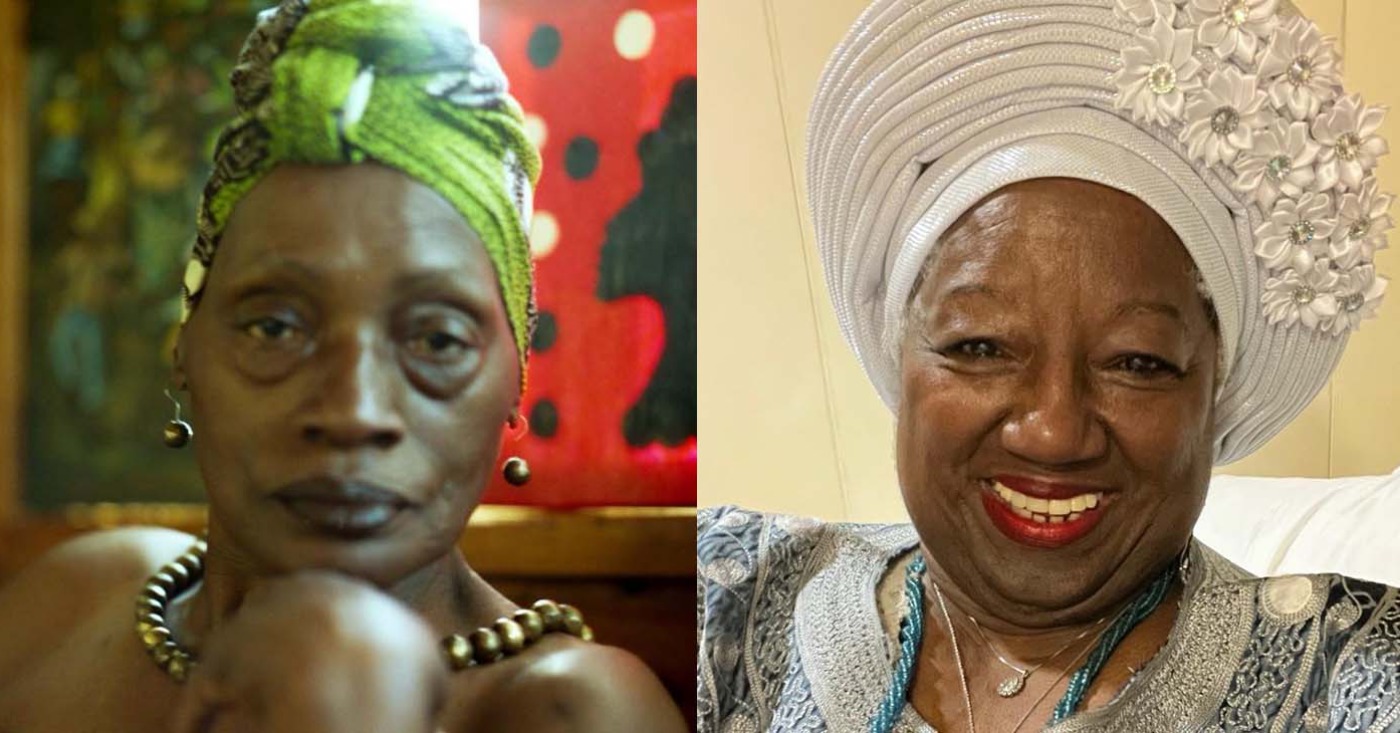
The Council for Global Ancestral Reverence (C4GAR), a group of elders who practice African traditional spirituality, will lead a three-day gathering of prayer and discussion from Oct. 31-Nov. 2.
Called ‘Ancestral Souls Rising,’ the council members and 21 priests will lead the prayers from many parts of the African diaspora: Africa, Portugal, and across the U.S. from Maryland to the Bay Area.
Now in its seventh year, the annual ritual began during the 2020 pandemic when hundreds of thousands of people died alone and were buried in mass graves without rites and rituals according to loved ones’ traditions.
This prayer event was and is intended to give peace to the departed and comfort for the living who still mourn. Each year, we gather names of new ancestors from living elders to elevate them into the “Great Hall of the Titans.”
In ensuing years, C4GAR added themes to the prayer gathering that referenced current events. In 2024, before the consequential presidential election, C4GAR called on people to vote, invoking the memory of Civil Rights Movement heroes and heroines like John Lewis, who urged “Good Trouble,” and Fannie Lou Hamer, who famously declared that she was “sick and tired of being sick and tired.”
The day of global Prayer on Oct. 31 will be followed by a two-day conversation inspired by “The Blueprint,” an Afro-Beat song by UyiosaEl, to write our new blueprint that supports solidarity and action in the Black community.
“Our elders have, for many generations, known the power of prayer, ritual and breath,” the council said in a statement.
It was and is their intention, then, to use the cultural wisdom, the gift of prayer “and the most sacred thing we have, our breath, to send energy into the world that invokes and honors our ancestors,” the council statement continued.
“Doing this creates a vibration that protects us and employs their ancient wisdom for the well-being of our communities,” the elders said.
The councilmembers, all over the age of 60, recognize that what is now history for so many was once their lived experience. And that history, those joys and sorrows, are now in their bodies.
To them, the uttered prayer and the sacred breath are oaths to an unfolding future that people can still shape.
The council members are Dr. Iyabeji Cathy Royal, Iyalocha Jennifer Dillard, Manbo Charlene Desir (Florida), Nana Sula Spirit (Louisiana), Baba Obafemi Feyemi, Ohen Nedra T. Williams, and Iyalocha Wanda Ravernell-Stewart Emeritus (Oakland).
This year, they also encourage everyone within their reach to VOTE because it is not only a secular and political act, but a sacred one. Remember, the ancestors were denied that right and died for it.
For tickets, go to:

To enlarge your view of this issue, use the slider, magnifying glass icon or full page icon in the lower right corner of the browser window.

Black History
OP-ED: The Black Church Writes AI’s Next Chapter
BLACKPRESSUSA NEWSWIRE — I implore my fellow faith leaders to use these tools. Start now and use them with wisdom. We count on each and every one of you to make sure our communities help write the next chapter of this story. This rapid change is not as unfamiliar as it may sound. My first understanding of AI came from using a calculator for the first time in grade school. We did not call it AI, but it was a tool that helped me work through mathematical equations hours more efficiently.

For generations, the Black church has stood strong in our communities through every historical change this country has experienced. During the civil rights movement and in recent times, faith leaders have helped uplift Black sanctuaries to register voters, keep food pantries open for people in need, and sit with families in hospital rooms in their most desperate moments. When our people faced new trials, they could always look to our faith leaders and the church to lean in to help us be included in these transformative changes.
Artificial intelligence is the latest revolutionary change to impact our society, and much like other transformations before us, underserved communities often get left behind.
I was recently featured in a report entitled “Faith, Community & AI” and it found that people send ChatGPT more than 70 million messages a week about religion. Nearly 22 million involve studying sacred texts, and 16 million ask about religious practices and holy days. Our members make up part of those numbers. They bring questions of faith to these tools every day.
Pastors have noticed, and according to a September 2025 Lifeway Research survey of 1,003 Protestant pastors, 42 percent said they use or experiment with AI in ministry. I count myself among them.

I write my sermons by hand, through prayer and study. When I finish a draft, I ask ChatGPT this question: “Where might this sermon become unclear or difficult to follow for someone early in their walk of faith?” It shows me gaps in my preparation, like where I incorrectly assumed everyone would know the context of who the Pharisees were. Then, change comes from my own pen, not the robot. The tool helps me reach the person in the back pew while the message still comes from me.
If I could have my wish, our whole community would take a similar posture. We must use these tools, understand them, and most importantly be present to help shape them if we want to be included in the coming change.
I implore my fellow faith leaders to use these tools. Start now and use them with wisdom. We count on each and every one of you to make sure our communities help write the next chapter of this story. This rapid change is not as unfamiliar as it may sound. My first understanding of AI came from using a calculator for the first time in grade school. We did not call it AI, but it was a tool that helped me work through mathematical equations hours more efficiently.
It starts with training; there is no involvement without understanding. Free AI trainings have begun in our churches and community centers across the nation. Every faith leader should sign up and, when possible, encourage members of your congregations to join you. By learning how to use AI, we can better understand what it can do, make up our own minds about its impact, and have a say in how it shapes our communities.”
Next, we must be at the tables where the builders of these tools make decisions. Presence is the first step toward understanding, and that gap is only bridged through a coordinated effort. How can any tool serve a community well if that community is not part of the conversation? Our traditions, needs, and concerns must be accounted for, and Black faith leaders are already making that happen. OpenAI’s recent Faith report states plainly that AI should never become an arbiter of religious truth. I fully intend to hold the company to its word, and the most effective way I can do that is from inside.
I will close with this––we must diligently protect what only the church can give. A believer in Seoul, Korea quoted in the report warned, “if you pour every struggle into a private chat, your pastor and your friends may never learn you need help.” A chatbot will not sit with a grieving family or pray with you at two in the morning. As we adopt this technology, it is up to us to ensure it keeps people connected to each other and to their church.
Rev. Dr. Adolphus Lacey is senior pastor of Bethany Baptist Church in Brooklyn, New York.


Mayor Barbara Lee Holds Special State of the City Address in Deep East Oakland

Practitioners of African Traditional Spirituality Offer Ancestral Reverence Ritual Oct. 31

It’s Time to Lose Weight Before the Holidays

Trader Vic’s Returns to Its Oakland Roots

Oakland Coal Terminal Backed by Trump Would Be Bigger, Dirtier Than Promised, Says Report

Opponents Smear Effective African American Transit Director as Election Nears

Oakland Post: Week of October 14 – 20, 2026

OP-ED: The Black Church Writes AI’s Next Chapter

OP-ED: The Black Church Writes AI’s Next Chapter

WCCUSD Joins Statewide Organic School Food Purchasing Cooperative

Democrats, Community Groups Back Measure EE to Change How Oakland Is Governed

Four Tips to Help You Plan a Holiday “Staycation”

Veterans Housing Project Proposed for South Richmond
PRESS ROOM: Transformative Justice Coalition 2026 Voting Rights Champion Awards Reception ‘Yesterday Is Today: The Battle For Voting Rights

Mayor Lee Delivers 2026 State of the City Address: ‘Oakland Continues to Be on the Move’

Misnamed ‘Parent’ PAC Seeks to Influence Oakland School Board Elections

Oakland Post: Week of September 2 – 8, 2026

Oakland Post: Week of September 9 – 15, 2026

Poll: Becerra Widens His Lead Over Hilton; Californians Split on Wealth Tax

County Office of Education Says OUSD Finances Are Getting Healthier, Materially Stronger

Richmond Tiny House Village Farm & Garden Set to Open Gates on Sept. 26

Latest Massacre in Haiti Reveals Cruelty U.S. Deportations

Mayor Lee Announces $1 Million Kaiser Permanente Grant for Pilot Program to Address Homelessness, Clean Up Public Spaces throughout Oakland

OPINION: Nolan Wells’ Death One of Several Signifying Racial Terror Lives on in U.S. South

Listening as a Lifeline: A Doula’s Witness to Black Maternal Health

Zakiya Jendayi Arrested, Locked Out of Home by Sheriff’s Deputies

BLACspace Cooperative Invites Bay Area to Experience Oakland’s Black Cultural Ecosystem Through a BLAC Map Tour + Party

Oakland Post: Week of September 16 – 22, 2026

Democratic Clubs Interview Candidates for Oakland School Board

Oakland People’s Arms Embargo Coalition Demands End to Military Shipments Thru Oakland

The Conversation With Al McFarlane 6/23/26

Media Monday 6/22/26

LIVE! ASK ALMA! — TUES. 6.23.26 7PM EST

Car Buying Secrets: 4 Hidden Checks Before You Sign!

Is This 550 HP Charger Worth YOUR Money? AutoNetwork Review

Celebrating Juneteenth – Frederick Douglass on education and resistance

LIVE! — ASK ALMA! — TUES. 6.19.26 7PM EST

Hyundai Ioniq 5 Parking, Safety, and 360 View #shorts

2025 Ioniq 5 New Wiper & Powerful Performance! #shorts

Electric SUV Range: Is 259 Miles Enough? #shorts

EV Charging: How Fast Can You Charge an Electric Vehicle? #shorts

Biometric Cooling… Messaging Seats…Come on! 2025 Infiniti QX80 Autograph 4WD

Charged Up: Witness the Magic of a Fully Electric Car! #shorts

Range Rover Sport PHEV Included…: See What’s Inside This Luxury SUV! #shorts

Invisible Hood View: Perfect Parking with X-Ray Vision! #shorts
-
 Economy3 weeks ago
Poll: Becerra Widens His Lead Over Hilton; Californians Split on Wealth Tax
-
 Business3 weeks ago
County Office of Education Says OUSD Finances Are Getting Healthier, Materially Stronger
-
 Business4 weeks ago
Mayor Lee Announces $1 Million Kaiser Permanente Grant for Pilot Program to Address Homelessness, Clean Up Public Spaces throughout Oakland
-
 Black History2 weeks ago
Listening as a Lifeline: A Doula’s Witness to Black Maternal Health
-
 Lead Story2 weeks ago
Zakiya Jendayi Arrested, Locked Out of Home by Sheriff’s Deputies
-
 Art3 weeks ago
BLACspace Cooperative Invites Bay Area to Experience Oakland’s Black Cultural Ecosystem Through a BLAC Map Tour + Party
-
 Activism4 weeks ago
Oakland Post: Week of September 16 – 22, 2026
-
 Uncategorized4 weeks ago
Oakland People’s Arms Embargo Coalition Demands End to Military Shipments Thru Oakland
